

What do you think?

Berlin: Portrait of a City Through the Centuries
A Washington Post Best Book of the Year Berlin is a city of fragments and ghosts, a laboratory of ideas, the fount of both the brightest and darkest designs of history's most bloody century. The once arrogant capital of Europe was devastated by Allied bombs, divided by the Wall, then reunited and reborn as one of the creative centers of the world. Today it resonates with the echo of lives lived. No other city has repeatedly been so powerful and fallen so low; few other cities have been so shaped and defined by individual imaginations .
Berlin tells the volatile history of Europe's capital over five centuries through a series of intimate portraits of two dozen key the medieval balladeer whose suffering explains the Nazis' rise to power; the genius Jewish chemist who invented poison gas for First World War battlefields and then the death camps; the iconic mythmakers like Christopher Isherwood, Leni Riefenstahl, and David Bowie, whose heated visions are now as real as the city's bricks and mortar. Alongside are portrayed some of the countless ordinary Berliners whose lives can only be the ambitious prostitute who refashioned herself as a baroness, the fearful Communist Party functionary who helped to build the Wall, and the American spy from the Midwest whose patriotism may have turned the course of the Cold War.
Berlin is a history book like no other, with an originality that reflects the nature of the city itself. In its architecture, through its literature, in its movies and songs, Berliners have conjured their hard capital into a place of fantastic human fantasy. No other city has so often surrendered itself to its own seductive myths. Berlin captures, portrays, and propagates the remarkable story of those myths and their makers.
Berlin tells the volatile history of Europe's capital over five centuries through a series of intimate portraits of two dozen key the medieval balladeer whose suffering explains the Nazis' rise to power; the genius Jewish chemist who invented poison gas for First World War battlefields and then the death camps; the iconic mythmakers like Christopher Isherwood, Leni Riefenstahl, and David Bowie, whose heated visions are now as real as the city's bricks and mortar. Alongside are portrayed some of the countless ordinary Berliners whose lives can only be the ambitious prostitute who refashioned herself as a baroness, the fearful Communist Party functionary who helped to build the Wall, and the American spy from the Midwest whose patriotism may have turned the course of the Cold War.
Berlin is a history book like no other, with an originality that reflects the nature of the city itself. In its architecture, through its literature, in its movies and songs, Berliners have conjured their hard capital into a place of fantastic human fantasy. No other city has so often surrendered itself to its own seductive myths. Berlin captures, portrays, and propagates the remarkable story of those myths and their makers.
432 pages, Paperback
First published February 13, 2014
About the author
Rory MacLean
36 books67 followersCanadian Rory MacLean is one of Britain's most expressive and adventurous travel writers. His twelve books include the UK top tens Stalin's Nose and Under the Dragon as well as Berlin: Imagine a City, a book of the year and 'the most extraordinary work of history I've ever read' according to the Washington Post. He has won awards from the Canada Council and Arts Council of England and was nominated for the International IMPAC Dublin Literary prize. His works – according to the late John Fowles – are among those that 'marvellously explain why literature still lives'. A Fellow of the Royal Society of Literature, he divides his time between the UK, Berlin and Toronto.
Ratings & Reviews
Friends & Following
Create a free account to discover what your friends think of this book!
Community Reviews
Displaying 1 - 30 of 141 reviews

August 4, 2016
Berlin
بعد الفراغ من هذا الكتاب اندفعت إلى أمازون بحثاً عن كتب مشابهة، أضفت لقائمتي كتب عن لندن وباريس ونيويورك، ولازلت ابحث عن كتاب جيد عن موسكو، كتب روري ماكلين عن برلين بملحمية، بحب، كتب فصولاً ملتقطة من برلين والبرلينيين، وهي أفضل طريقة لكتابة تاريخ مدينة، لا أجمل من تتبع الأزمنة التي مرت بها من خلال تتبع تأثيراتها على سكان المدينة، وفي كل مرة يمضي فيها ماكلين مع شخصية جديدة وزمن جديد، لا ينسى أن يذكرنا بالأزمنة الماضية، ونحن مع رجل فيتنامي مثلاً يعيش في برلين الشرقية، لا ينسى أن يشير إلى أنه ها هنا كان يخطب جوبلز، وفي هذا المبنى كانت تسكن ليني ريفنستال، لقد مرت برلين بأزمنة مجد، ومرت بأزمنة مرعبة، عانت الاحتلال والهدم والتقسيم، لهذا كانت ولازالت مادة ممتازة للمؤرخين، وكتاب روري ماكلين عنها لا يفوت.
بعد الفراغ من هذا الكتاب اندفعت إلى أمازون بحثاً عن كتب مشابهة، أضفت لقائمتي كتب عن لندن وباريس ونيويورك، ولازلت ابحث عن كتاب جيد عن موسكو، كتب روري ماكلين عن برلين بملحمية، بحب، كتب فصولاً ملتقطة من برلين والبرلينيين، وهي أفضل طريقة لكتابة تاريخ مدينة، لا أجمل من تتبع الأزمنة التي مرت بها من خلال تتبع تأثيراتها على سكان المدينة، وفي كل مرة يمضي فيها ماكلين مع شخصية جديدة وزمن جديد، لا ينسى أن يذكرنا بالأزمنة الماضية، ونحن مع رجل فيتنامي مثلاً يعيش في برلين الشرقية، لا ينسى أن يشير إلى أنه ها هنا كان يخطب جوبلز، وفي هذا المبنى كانت تسكن ليني ريفنستال، لقد مرت برلين بأزمنة مجد، ومرت بأزمنة مرعبة، عانت الاحتلال والهدم والتقسيم، لهذا كانت ولازالت مادة ممتازة للمؤرخين، وكتاب روري ماكلين عنها لا يفوت.

Read
September 26, 2017I should point out that despite my adoration for Wings of Desire, late '70s Bowie, etc., I've never actually been to the damn place, so I'm not the best barometer for the "accuracy," especially for a text that doesn't exactly prioritize truth. Hell, I can barely call this book "nonfiction" with a straight face. After all, there are so many fictive devices, so many origin-myth type tales, that Rory MacLean makes Truman Capote look like Edward R. Murrow. But I do know that I was wrapped up in each of these tales, in the story of how a Slavic swamp village became a million other, contradictory things over the course of its long history.

October 6, 2014
Part potted history, part fiction. The Isherwood and Dietrich (the latter includes a charming tale of the author meeting her late in her life) chapters were tremendous; the Fritz Haber chapter is an excellent summary. The wheels really fall off in the last few chapters, even on David Bowie, which also benefits from the author's personal experience. Of the fictional chapters, only the Brecht chapter stood out.

August 11, 2019
MacLean constructs a history of the city over the last 500 years through portraits in miniature of people who have lived there. Some of the characters were well known to me - Bowie, Isherwood, Dietrich, Goebbels, Speer, Brecht, JFK, Fred the Great... Others, drawn from more obscure aspects of the city's mythology, I hadn't encountered before.
The book was never less than interesting across its 25 chapters. MacLean writes very well, frequently novelising his material and keeping the reader gripped (no dusty old textbook narratives here). The history of Berlin it presented was overwhelmingly grim. Medieval barbarity, Prussian militarism and conquests, the First World War and chemical warfare, Nazism and the Holocaust, area bombing, the Stasi and the Wall... It was perhaps as well that the concluding chapter ended on a note of optimism. It's a timely reminder of the dangers we face, especially with the spectre of nationalism rising once again from the crypt, in Europe and elsewhere. Personally, I find learning about my European neighbours and the history we share rather more useful than slamming the Brexit door in their faces.
MacLean was a little too keen to point out - on several occasions - that he knew some of the principal characters. The text required some judicious editing here and there, I felt. These minor caveats aside, it's well worth reading.
Postscript. After completing my review, I had a look at what others had to say about the book. The major theme for carping/harping on about it seemed to be that it wasn't a straightforward history of Berlin. This to me doesn't seem germane (ha ha). A cursory read of the back cover and index clearly informs the potential reader that this is not a history textbook. It seems rather harsh to judge MacLean's book for not being something it wasn't intended to be in the first place.
The book was never less than interesting across its 25 chapters. MacLean writes very well, frequently novelising his material and keeping the reader gripped (no dusty old textbook narratives here). The history of Berlin it presented was overwhelmingly grim. Medieval barbarity, Prussian militarism and conquests, the First World War and chemical warfare, Nazism and the Holocaust, area bombing, the Stasi and the Wall... It was perhaps as well that the concluding chapter ended on a note of optimism. It's a timely reminder of the dangers we face, especially with the spectre of nationalism rising once again from the crypt, in Europe and elsewhere. Personally, I find learning about my European neighbours and the history we share rather more useful than slamming the Brexit door in their faces.
MacLean was a little too keen to point out - on several occasions - that he knew some of the principal characters. The text required some judicious editing here and there, I felt. These minor caveats aside, it's well worth reading.
Postscript. After completing my review, I had a look at what others had to say about the book. The major theme for carping/harping on about it seemed to be that it wasn't a straightforward history of Berlin. This to me doesn't seem germane (ha ha). A cursory read of the back cover and index clearly informs the potential reader that this is not a history textbook. It seems rather harsh to judge MacLean's book for not being something it wasn't intended to be in the first place.

October 19, 2014
I received a free copy of Berlin through the Goodreads First Reads program.
The author is a good writer. He is very knowledgable about his subjects and adds a lot of detail.
Overall, I was disappointed however. I was hoping for a biography more of the city itself, particularly its origins and how Berlin grew into the city it is today. The majority of the text is dedicated to the 1800s and beyond; it was not very balanced. Additionally, as an avid nonfiction reader, the recreated conversations were very difficult for me. I don't really care for historical fiction and that is how many chapters came across.
As the chapters went on, they overlapped well as the various figured made repeat appearances in subsequent chapters. That provided continuity and made the story as a whole more fluid.
As a side note, I also could have done without all the rehashing of Nazi Germany - but that may just be a personal preference, as I already know quite a bit about that time in history. I do appreciate the author holding the German people accountable though; of course they knew what was happening, how could they not?
Still, this is not truly a history of Berlin the city, but of Berlin's society through the ages. I guess I was just expecting something a little different.
The author is a good writer. He is very knowledgable about his subjects and adds a lot of detail.
Overall, I was disappointed however. I was hoping for a biography more of the city itself, particularly its origins and how Berlin grew into the city it is today. The majority of the text is dedicated to the 1800s and beyond; it was not very balanced. Additionally, as an avid nonfiction reader, the recreated conversations were very difficult for me. I don't really care for historical fiction and that is how many chapters came across.
As the chapters went on, they overlapped well as the various figured made repeat appearances in subsequent chapters. That provided continuity and made the story as a whole more fluid.
As a side note, I also could have done without all the rehashing of Nazi Germany - but that may just be a personal preference, as I already know quite a bit about that time in history. I do appreciate the author holding the German people accountable though; of course they knew what was happening, how could they not?
Still, this is not truly a history of Berlin the city, but of Berlin's society through the ages. I guess I was just expecting something a little different.

July 11, 2020
Berlin: Portrait of a City Through the Centuries is an enthralling narrative historical novel which will leave you yearning to discover more about the German capital. MacLean skillfully and colorfully takes readers on a enchanting journey from the end of the Medieval Period right up to the present day with each personal story adding layer upon layer of the fascinating yet tragically brutal history of Berlin. From Frederick the Great to the Second World War and later the Cold War, Berlin is haunted by an unmistakably dark and violent past, which despite the city's repeated rebirth still is intricately woven into it's very fabric. For me this novel captures the very essence of what Berlin is, echoing poignantly the words of writer, Karl Scheffler - "It is a placed doomed to forever become, never to be." It is a place where the tectonic forces of convention and rebellion have repeatedly collided leaving behind both dreadful destruction and wonderful creation. Berlin: Portrait of a City Through the Centuries has elevated my love for Berlin to new heights. Perhaps it will also peak your interest in this amazing city!

January 17, 2019
A strange book that grows on you. Not what I expected-I was looking for a history of Berlin. This is what it says in the title-a portrait of the city at various times through the eyes and/or experiences of fictional, semi-fictional and real persons. Novelistic approach to events and conversations. Three Stars overall, but some of the vignettes are very moving (Marlene Dietrich) or informative (the evil of Riefenstahl and Goebbels).

April 4, 2015
Odd book. Lots of little stories of Berlin personalities through history. Doesn't explain the relevant history very well, so it's all very confusing. Style tries to be touchy-feely and personal and dramatic, which doesn't work. I gave up after a while.
August 29, 2026
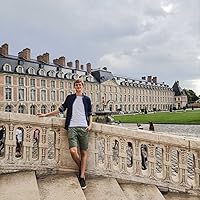
Excursions are always the most exciting kind of trips for me. I'd already been to Germany twice this summer - first a calm family holiday to Thuringia, and later a more high-paced social visit to friends in Münster and Göttingen - but the third one, to Berlin, was going to be The Trip of this year. The trip that I wanted to prepare and design thoughtfully, to make it a mark for 2026. So about three weeks before departure, I went to Van der Velde, where I knew a second-hand book about Berlin had been waiting to be bought for ages. It was still there. I bought it, started reading it, and felt right away that my trip had already begun.
McLean's Berlin might be classified as non-fiction, or as a fictionalised history of Berlin. It is more fitting to see it as a collection of short stories, mostly biographical, portraying a variety of characters whose main commonality is that they and their legacies were shaped by their stay in Berlin. Some of these characters are born Berliners, others are Zugewanderte from elsewhere in Germany, and a few even come from abroad (three Brits, two Americans, a Vietnamese). Many are famous, some are more niche or personal acquaintances of McLean's, and a few are made up. With each of them, Berlin allowed them - this is the main 'point' of McLean's book - to imagine. To imagine a better life, a better world.
By the time I got to Berlin last week, Berlin allowed me to imagine too. I imagined confused and conflicted communists building and guarding their wall at Bernauer Straße. I could see fanatical fascists constructing their vision at Tempelhof airport while concealing wartime reality in the Gesundbrunnen air raid shelters. I could imagine Berlin as the electric metropolis that helped Marlene Dietrich and Christopher Isherwood rise to fame and then as the iron monster that chased them away. In Potsdam, I could feel Frederick the Great's ambition to cultivate Brandenburg's swamps and enlighten its inhabitants. All around the city that Berlin is today, I could sense post-war (West) Berlin's drive for creativity and reinvention. And in the Marienkirche, Berlin's oldest church, I looked at the Totentanz and wondered if McLean had a point when he imagined this dance macabre as a metaphor for Berlin's very being: a city that has danced with death more often than was good for her, but bringing herself back to life every time.
It looks like I can't really separate my experience reading Berlin from my visit there. I suppose the fact that the book and the trip became intertwined means the reading paid off. Perhaps McLean depended a little too much on artistic liberty to fully close the circle of his narrative, and there were definitely big differences between the chapters/short stories. The ones about Kollwitz, Dietrich, and Riefenstahl stood out to me, and the one on David Bowie touched me in particular. The ones about Albany, Kennedy, and Lieu Van Ha were a bit weaker, but still offered new aspects of Berlin's history. With its two dozen windows into the city, this book was a precious travel companion to The Trip of 2026 and I can only hope to find something just as engaging next time I travel to a new place.
'Und wenn ich Sehnsucht hab', dann fahr' ich wieder hin.'
McLean's Berlin might be classified as non-fiction, or as a fictionalised history of Berlin. It is more fitting to see it as a collection of short stories, mostly biographical, portraying a variety of characters whose main commonality is that they and their legacies were shaped by their stay in Berlin. Some of these characters are born Berliners, others are Zugewanderte from elsewhere in Germany, and a few even come from abroad (three Brits, two Americans, a Vietnamese). Many are famous, some are more niche or personal acquaintances of McLean's, and a few are made up. With each of them, Berlin allowed them - this is the main 'point' of McLean's book - to imagine. To imagine a better life, a better world.
By the time I got to Berlin last week, Berlin allowed me to imagine too. I imagined confused and conflicted communists building and guarding their wall at Bernauer Straße. I could see fanatical fascists constructing their vision at Tempelhof airport while concealing wartime reality in the Gesundbrunnen air raid shelters. I could imagine Berlin as the electric metropolis that helped Marlene Dietrich and Christopher Isherwood rise to fame and then as the iron monster that chased them away. In Potsdam, I could feel Frederick the Great's ambition to cultivate Brandenburg's swamps and enlighten its inhabitants. All around the city that Berlin is today, I could sense post-war (West) Berlin's drive for creativity and reinvention. And in the Marienkirche, Berlin's oldest church, I looked at the Totentanz and wondered if McLean had a point when he imagined this dance macabre as a metaphor for Berlin's very being: a city that has danced with death more often than was good for her, but bringing herself back to life every time.
It looks like I can't really separate my experience reading Berlin from my visit there. I suppose the fact that the book and the trip became intertwined means the reading paid off. Perhaps McLean depended a little too much on artistic liberty to fully close the circle of his narrative, and there were definitely big differences between the chapters/short stories. The ones about Kollwitz, Dietrich, and Riefenstahl stood out to me, and the one on David Bowie touched me in particular. The ones about Albany, Kennedy, and Lieu Van Ha were a bit weaker, but still offered new aspects of Berlin's history. With its two dozen windows into the city, this book was a precious travel companion to The Trip of 2026 and I can only hope to find something just as engaging next time I travel to a new place.
'Und wenn ich Sehnsucht hab', dann fahr' ich wieder hin.'

March 15, 2014
Admittedly this is a hodgepodge of a book, half novel, half biography, half portraiture, and not everything melds together. But when you relax and realise this is going to more abstract than non fiction more Kandinsky than Friedrich then you can have some real fun with it. Okay I admit MacLean's foreshadowing is too much on the nose, it is like having Hitler coming up behind you and going 'Guess Who'. But when we reach the 20th century and his portraits of different members of the city start to interact, prostitutes, writers, artists, scientists, dictators, businesses men is when this book gets kinda brilliant. Each person is building on Berlin's ever changing mythology, Berlin's streets keep changing, whether from war or dictators or architects.
If London is the cool one who knows where that cool underground club is that serves real absinthe, and New York is that cute boy wearing the too tight jeans, and Melbourne is the snarky short black drinking hipster, then Berlin is Victor/Victoria, there is a powerful duality of Berlin. The free abandon of debauchery, creativity and creatvity and its need for order and empire.
This is a great urban book, even though it is not sure what kind of book it is. But really who cares.
If London is the cool one who knows where that cool underground club is that serves real absinthe, and New York is that cute boy wearing the too tight jeans, and Melbourne is the snarky short black drinking hipster, then Berlin is Victor/Victoria, there is a powerful duality of Berlin. The free abandon of debauchery, creativity and creatvity and its need for order and empire.
This is a great urban book, even though it is not sure what kind of book it is. But really who cares.

May 1, 2018
I thoroughly enjoyed this — by far my favourite of MacLean's books. He did a wonderful job of capturing the many facets of this city — its darkness, its bleak winters, its magnetism and creativity, and the ability of Berlin to constantly reinvent itself — through the stories of those who have lived here, both historical figures and everyday people.
MacLean's writing style is engaging, and he's great at telling a compelling story. While I've enjoyed his travel writing, I also have hesitations about his blending of factual journeys with fictional narratives, at least when I only learned about it afterwards through reviews. That left me feeling misled as a reader. But with Berlin, MacLean is explicit about his methodology from the start, and it works.
This book captures the feel of the city for me.
Then again, I might be biased. Like MacLean, I am one of those who fell under Berlin's spell. A random trip in 2013 led to increasingly longer annual visits, and finally a permanent move to the city early last year.
MacLean's writing style is engaging, and he's great at telling a compelling story. While I've enjoyed his travel writing, I also have hesitations about his blending of factual journeys with fictional narratives, at least when I only learned about it afterwards through reviews. That left me feeling misled as a reader. But with Berlin, MacLean is explicit about his methodology from the start, and it works.
This book captures the feel of the city for me.
Then again, I might be biased. Like MacLean, I am one of those who fell under Berlin's spell. A random trip in 2013 led to increasingly longer annual visits, and finally a permanent move to the city early last year.

October 11, 2015
It takes a bit of time to get into, but its worth persevering. Berlin is illustrated through the engaging, detailed, almost novel-like portraits of the characters that have inhabited the city over hundreds of years, and how their presence impacted the city and Germany and vice versa. Highly recommend this to anyone who likes reading about cities and urban life.

January 16, 2022
Shame he dies in the end.
September 26, 2024
Stunning writing. A semi-fictionalised portrait of Berlin through short accounts of some of its most famous residents. Kathe Kollwitz, Fritz Haber, Rathenau, Isherwood, Leni Riefenstahl, Marlene Dietrich…so much to savour and enjoy, especially for someone who’s just come back from Berlin.

August 28, 2026
體裁類似半虛構歷史小說/人物傳記,花了好幾個月零零散散地看完,內容豐富,不是很易讀,但看完後對柏林有了更立體的想像。覺得很特別的地方是,作者表面上在側寫歷史人物,卻好像能透過他的文字跟說故事、介紹人物的結構,感覺到他對這個城市的種種情懷和思念,柏林那綿長、哀愁的魅力在我心中也變得更生動了。

January 18, 2022
"Berlin is all about volatility. Its identity is based not on stability but on change. ... No other city has repeatedly been so powerful, and fallen so low. No other capital has been so hated, so feared, so loved. No other place has been so twisted and torn across five centuries of conflict, from religious wars to Cold War, at the hub of Europe's ideological struggle. Berlin is a city that is forever in the process of becoming, never being, and so lives more powerfully in the imagination." (1)
"...Berlin's identity is not set in stone, or brick. Its story is also ongoing. Again and again the city reinvents itself, reconciling a mythic idea of itself with its bitter, bloody, buoyant past." (392)
"Berlin is a living city, for all its ghosts. It is fresh and green because of its woods and lakes but especially because it is always reinventing itself. 'Berlin ist eine Stadt, verdammt dazu, ewig zu werden, niemals zu sein,' wrote author Karl Scheffler over a century ago. 'It is a place doomed to forever become, never to be.' In its streets, on its avenues, atop the Victory Column, the living walk alongside the dead, remembering, forgetting and, together, imagining the world anew." (394)
"...Berlin's identity is not set in stone, or brick. Its story is also ongoing. Again and again the city reinvents itself, reconciling a mythic idea of itself with its bitter, bloody, buoyant past." (392)
"Berlin is a living city, for all its ghosts. It is fresh and green because of its woods and lakes but especially because it is always reinventing itself. 'Berlin ist eine Stadt, verdammt dazu, ewig zu werden, niemals zu sein,' wrote author Karl Scheffler over a century ago. 'It is a place doomed to forever become, never to be.' In its streets, on its avenues, atop the Victory Column, the living walk alongside the dead, remembering, forgetting and, together, imagining the world anew." (394)
November 9, 2020
Had its moments. I really like this author's non-fiction work - travelogues and adventures. This book is a little more of a challenge, providing a series of short biographies of fictional and actual people against the backdrop of Berlin at certain significant times or periods over recent centuries. It's interesting, but the interweaving of fact and fiction is a bit tedious; I would have preferred a more strictly non-fictional accounting, omitting fictional characters or fictional/imagined segments in the lives of the actual characters. Overall interesting, but not one I would recommend.

May 18, 2018
Berlin is wrapped in an overwhelming amount of history, with the ghosts of power and evil everywhere you turn. Berlin the city gets five stars without question, so I was disappointed to only find about a third of the stories in this Edward Rutherfurd-esque compilation to be interesting, and the use of imagined memories from real people to portray moments in time felt contrived.

Read
September 3, 2018For some reason, I fell out of love with this book as quickly as I fell in love with it. I digested half of this book in one, long reading session then immediately ran out of steam thereafter. Perhaps it's because of the writing style; Rory MacLean, no doubt, knows how to turn a phrase, but the prose is thick as pea soup. It's beautiful writing but it's difficult to get through, at least for me.
November 16, 2020
3.5/5
I would describe this book as a collection of a short stories, the qualities of which vary significantly. Overall I enjoyed it as it gave a useful overview of the history of Berlin, however I couldn't recommend it if you aren't planning on visiting the city as it was long-winded and tenuous in sections.
I would describe this book as a collection of a short stories, the qualities of which vary significantly. Overall I enjoyed it as it gave a useful overview of the history of Berlin, however I couldn't recommend it if you aren't planning on visiting the city as it was long-winded and tenuous in sections.

January 21, 2022
It was a five star until near the end - the post-WW2 chapters are really not as strong as the preceding stories, and the JFK chapter presented as a screenplay was just not good at all. But otherwise a strong, effecting read.

April 11, 2022
Deels echt, deels fictie. Sommige hoofdstukken waren echt boeiend (Bowie, Ischerwood, Dietrich), anderen voelden net wat te oppervlakkig. Maar zeker de moeite waard voor een Berlijnliefhebber.

October 22, 2025
A captivating way to recount the history or a city that consistently reinvented itself through drama, trauma and darkness.

November 6, 2017
easily readable, fun, insightful, although adressing mostly kmown quantities of Berlin lore

August 27, 2022
I read this book in preparation for a trip to Berlin in September. It did not disappoint. It tells the story of Berlin- a tragic city in many ways- from early medieval times to present day in a series of chapters that read like short stories. It gave me a sense of the city throughout the ages that will hold me in good stead when I go there.

January 23, 2019
As a Berlin scholar I tend to buy any and all books I come across that have anything to do with Berlin, and so a few years back this book was purchased, and has since then sat quietly on my bookshelf, unread. I am not sure why I didn't start reading it right away, but I didn't, because for some reason the book never induced a spark of excitement to read it once it came home with me. I, in part, blame the not pretty cover.
But this is the year in which I put a ban on myself: I will not let myself buy any new books until I have read and donated all of the ones I already own that have been sitting around, neglected. This is hard for me. Sunday strolls and buying books after brunch is a ritual I love. But no more! And so I decided to start by tackling this book, and within a few pages my resolve was waining. The first 50 pages were utterly boring, and I was so tempted to give up, but that underlying desire to know everything about my adopted city spurred me on. (That, and that once started, I find it nearly impossible to not finish a book, even if I am not loving it.)
And the result? I am glad I kept reading. Once I got used to MacLean's writing style, and once the book progressed towards the 20th century, the stories about Berlin and its inhabitants' lives became fascinating. The book introduces us to well-know characters, such as the artist Käthe Kollwitz and the actress Marlene Dietrich, but also to many lesser known people, whose stories showcase aspects of life throughout Berlin's long history. By the end, I was loving the book, not only for the stories told, but because he throws in many references that forced me to continually put down the book and google something (like David Bowie's record produced during his Berlin years.) I love it when books inspire me to keep digging and learning more about things I wouldn't ever have thought to look up on my own.
So while I am still unimpressed by the first pages, by page 86 it starts getting good and keeps getting better after that. It does a great job of telling the story of a city through the story of people's lives, and in the end also includes a chapter on how Berlin has transformed itself from a city of terror to a city that nurtures creativity and radical inclusivity, which made me glad. Because so often people love focusing on WWII, or the GDR, but overlook the beautiful haven that is Berlin today.
But this is the year in which I put a ban on myself: I will not let myself buy any new books until I have read and donated all of the ones I already own that have been sitting around, neglected. This is hard for me. Sunday strolls and buying books after brunch is a ritual I love. But no more! And so I decided to start by tackling this book, and within a few pages my resolve was waining. The first 50 pages were utterly boring, and I was so tempted to give up, but that underlying desire to know everything about my adopted city spurred me on. (That, and that once started, I find it nearly impossible to not finish a book, even if I am not loving it.)
And the result? I am glad I kept reading. Once I got used to MacLean's writing style, and once the book progressed towards the 20th century, the stories about Berlin and its inhabitants' lives became fascinating. The book introduces us to well-know characters, such as the artist Käthe Kollwitz and the actress Marlene Dietrich, but also to many lesser known people, whose stories showcase aspects of life throughout Berlin's long history. By the end, I was loving the book, not only for the stories told, but because he throws in many references that forced me to continually put down the book and google something (like David Bowie's record produced during his Berlin years.) I love it when books inspire me to keep digging and learning more about things I wouldn't ever have thought to look up on my own.
So while I am still unimpressed by the first pages, by page 86 it starts getting good and keeps getting better after that. It does a great job of telling the story of a city through the story of people's lives, and in the end also includes a chapter on how Berlin has transformed itself from a city of terror to a city that nurtures creativity and radical inclusivity, which made me glad. Because so often people love focusing on WWII, or the GDR, but overlook the beautiful haven that is Berlin today.

March 26, 2014
Rory MacLean’s latest book is a significant departure from the travelogues with which he made his reputation. In some ways travel still sits at its core – MacLean, after all, is Canadian by birth – but there is very little travelling involved. Not in the spatial sense. What he attempts in Berlin: Imagine a City is instead, in many ways, a kind of time travel. Collected between its covers are a series of short biographies of the artists and personalities who have shaped Berlin across the centuries. Opening with proto-rebel Konrad von Colln – a 15th century poet who defied both the Mastersingers Guild and his patron – and reaching all the way to Berlin’s reunified present, the collection gives a patchwork impression of a city forever in flux.
Read my full review on the Litro.co.uk website.
Read my full review on the Litro.co.uk website.

January 2, 2015
The subtitle of the book says that it is a portrait of a city through the centuries. This is a portrait of mythos, of story, of legend. It is not concerned with rigorous historical accuracy, which I found problematic right from the beginning. I enjoy historical fiction and I enjoy fantasy, so I have no problems with authors rewriting history to suit their story. But I do find it annoying when people infuse fiction into a work of nonfiction. A particularly glaring example of this is the author writing about what a young soldier thought and felt minutes before he died.
I did find the author's narrative on Marlene Dietrich, Leni Renistahl, Goebbels, a young WWII architect and stories of cold war Berlin particularly riveting. And for that, mostly, I'm giving this three stars instead of 2.5.
I did find the author's narrative on Marlene Dietrich, Leni Renistahl, Goebbels, a young WWII architect and stories of cold war Berlin particularly riveting. And for that, mostly, I'm giving this three stars instead of 2.5.

November 25, 2015
Art, architecture, literature and more
Started reading this book weeks or months before heading off to Berlin. Finished while I was in the city. Couldn't be more pleased that I did that because what I read and saw just made the experience of this wonderful city so much better. The book provides some of the meaning you will attempt to grope at particularly in some places and spots where some of the unthinkable happened. Nevertheless it is a city that one would want to return again and again.
Started reading this book weeks or months before heading off to Berlin. Finished while I was in the city. Couldn't be more pleased that I did that because what I read and saw just made the experience of this wonderful city so much better. The book provides some of the meaning you will attempt to grope at particularly in some places and spots where some of the unthinkable happened. Nevertheless it is a city that one would want to return again and again.
April 11, 2018
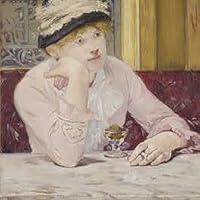
The best word would be... "lurid." Not just the Weimar period, but all of it, under MacLean's thick Expressionistic paint. History is still happening in Berlin, and I like how he pulls the threads of old stories ever forward to create a sense of continuity in the fragmented history of this city of fragments. The teeming, technicolor tales provide a stark contrast to the Prussian/Ostblock order of the city backdrop, but they get to be too much, too vivid, nearly too alive.
Displaying 1 - 30 of 141 reviews