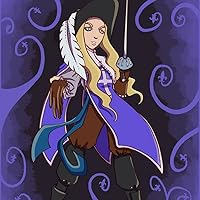
A land plagued by dragons. A mortal entranced by a Faerie Queen. A quest that could save his realm… or doom it forever.
Thomas Rymour is hopelessly infatuated with the Queen of Faerie. On a mission to find a way into the realm and reunite with his love, he makes a pact with an elf lord to steal a legendary magic sword in return for a way inside. But in a land where dragons prowl the skies, he starts to wonder if his quest could prove fatal.
When Thomas tricks a powerful duke, his plan backfires and soon he is running for his life. Forced to defend himself in a world of dragons and magic, he races to find his queen before the deadly flames catch up with him. If he fails, he may lose his own land to the Western Kingdom forever.
The Fey Man is book one in The Fair Folk epic fantasy series. If you like fierce dragons, flawed heroes, and faerie mythology, then you’ll love James T Kelly’s magical blockbuster.
Buy The Fey Man to take an epic magical adventure today!
My father lulled me to sleep with physics lectures. My mother took me to libraries to give other people a chance to tell me to be quiet. When I came of age I left the big city lights and moved out east to seek my future amongst words.
I write genre stories. That means my lies are a little more fantastical, and sometimes feature unicorns and monsters.
So first things first.... I loved this book!! I urge everyone to give this book a go, you will be genuinely pleased you did. The central character Thomas Is full of intrigue I just want to know everything about him, there is magic and mystery around him and yet you really get a sense of him also being a man who has loved and lost and finding his way through. I really like the way the characters link in and find their voice, how they lead on to each having an important part to play in this story. The interweaving of the characters, the mystery, the magic, the danger (at one point I could actually feel my heart racing in the hope the players remained safe (no spoilers so I won't add to that - you will just have to read it for yourself!!) And most importantly, not only do I HAVE to read this again, I WILL read it again (and I never do that). I absolutely cannot wait for book two.
I don't like to say to much about the plot in my reviews as i find this can sometimes spoil the story. So very briefly:
The story follows Thomas Rymour as he joins a quest to defeat the power of the Western Elfs. Their enemies are many and powerful, even their allies have their own agenda. Their path will be long and arduous and fraught with peril.
This story is very well crafted, well paced and has enough twists to keep it interesting. It has a little of everything, mystery and intrigue, action and heroics.
The stories lead, Thomas Rymour, starts the story depressed and maudlin about his lot in life after being ejected from faerie and forced to live in a time that is not his, but as the story moves forward he develops in to a more likeable and supportable character and I am looking forward to seeing how he develops as the series progresses.
A cast of very strong and believable characters ably support Thomas. They each add something to the story with no feeling of “dead weight” being dragged along. The myriad of relationships and the interplay between the characters give the story a fullness and complexity that is not an easy thing to achieve. Something I particularly like is that the author develops each character as the story moves forward without overloading or slowing the story down which can sometimes happen. The descriptions of the Fae and their duplicitous nature are interesting and I think really add to the story.
The world is rich and full with a large range of cultures and customs. I find the culture of the Eastern Elfs fascinating and I am quite eager to see this culture explored more as the series goes on.
All in all this is a very good story and one I would not hesitate to recommend to anyone.
Content warnings: this book contains implied sexual violence and some fairly visceral descriptions of violence and death
The Fey Man is written by a Norwich author and clearly the publisher, Skerry Books, is a small press or self-publishing outfit, so I was a little pessimistic about the whole thing, but a colleague lent it to me. I was pleasantly surprised by the quality of the world and story building in The Fey Man. It is the first of a series, and feels like it, but that doesn’t make it any less fun to read.
The Fey Man is a fantastical version of the Arthur legends (with a legendary king who is supposed to rise again, a wizard who helped him, and a magical sword that will supposedly save the day) as well as the story of Thomas Rymour (or Thomas the Rhymer from our world’s legends) who is carried away to Faerie and returns having gained the gift of prophecy and unable to tell a lie, but discovers that he had been away for 100 years and everybody he knew and loved is dead. The Fey Man is the story of what it is like to live with prophecies, enforced honesty and a 100-year gap in your history, always trying to return to the addictive world of Faerie. It’s also the story of three powers dividing a continent called Tir, two groups of elfs (yes, it’s elfs in this rather than elves) from the West and East with very different cultures, and the humans stuck in the middle, as they deal with the threat of war and the fear of ancient magic. Thomas is recruited by the Eastern Elfs to help them find a way into Faerie so they can bargain for the Sword of Emyr, a powerful weapon that they believe can destroy the magical monoliths the Western Elfs are using to control dragons for their armies.
It’s a political fantasy with a quest element, and honestly I really enjoyed it. The plot sounds slightly convoluted when explained but makes sense when read, and Kelly evokes a sense of wonder as Thomas and his companions travel through Tir that raises The Fey Man above a lot of faux-LOTR fare. The characters are interesting and very different from one another, though it takes a long time to introduce them all, and the ladies are pretty uniformly badasses in various and varied ways, often martial, but not always. My favourite bit was when they finally make it to Faerie – I love portrayals of properly frightening versions of fey, and this had some great inventions, like the dual nature of the fey across the year, relatively benevolent for half the year and horrifying monstrosities for the rest of it. In many ways, I grew a bit disheartened when the story left Faerie and returned to the war of the real world, which seems appropriate somehow! There was a lot of the setting (such as the death religion of the Eastern Elfs) that intrigued me and I wish to know more about, and there is a lot to enjoy here.
It did feel, especially near the end, as though the proof reading could have done with another pass. For the most part it wasn’t an issue but there were a few missed words at the end that made it hard to follow what was going on. The beginning is also pretty confusing – you have to take an awful lot in straight away, with names and places being thrown at you very quickly. However, stick with it – Thomas is a likeably flawed protagonist and the story is a good combination of political fantasy and grail quest, especially as it quickly becomes clear that obtaining the Macguffin is only part of the solution, which leaves plenty for the rest of the series to explore.
This entire review has been hidden because of spoilers.
That’s it, that’s basically the plot of the entire book. He’s a total self-absorbed asshole who cares about nothing except getting back to Faerie because he’s hopelessly addicted to the Queen. While he cannot lie, he can manipulate the truth and he does at every available opportunity as he pushes himself closer and closer to his goal. Who cares about the woman who found and saved him? Who cares that Tir is about to perish in flames?
He’s getting back to Faerie by hook or by crook.
If only you could hate him for it …
But, of course, you can’t. How could you expect anything else from a mortal who’d spend years as pet to the immortal? And how can you really stay mad at him when he behaves just like an addict, knowing what he’s doing is wrong and yet not being able to stop himself.
In fact, he’s so captivating a character that I can barely spare a moment to mention that James T. Kelly is a phenomenal writer and also a terrible sadist, leaving me hanging like that. I woke up this morning pumped to read more, only to remember that I’d run out of more. There was no more. I’d hit the cliff hanger of an epilogue and now I have to wait.
And it wasn’t until hours later that I remembered one of the events towards the end of the book that sucker punched me. I must have blocked it out when I originally read it. It was traumatic enough, after all, as it brought another tear to my eye just remembering it.
God it was … Well can you read the book already, so I can just talk about it with you? Please? I mean, if you’re a fan of epic fantasy, you’re basically guaranteed to love this book. Kelly has a way with words I could never even dream of having and has crafted a masterpiece.
And I’m not just saying that in the hopes that I’ll get an early edition of the second book.
(I should also point out the supporting characters are also fantastic. Especially Six, Draig, and Glastyn. They are my favorite. And not even conditionally like Rymour is.)
I’ve been running my book reviews page for almost 2 1/2 years now. In that time, I’ve read a fair number of stories that, while they weren’t exactly my cup of tea plot and/or genre-wise, the world-building and/or writing in general is good enough that it keeps my interest for the full read. I found that to be the case with The Fey Man.
The Fey Man reminds me a bit of a book that my older brother had me read last year, The Dwarves by Markus Heitz. The plots don’t really have anything to do with each other, other than the fact that they’re both fantasy with mythical creatures, but they’re similar in that I thought the world-building was great. The overall atmosphere of the stories would both appeal to the same kinds of readers, I think.
As mentioned above, the world-building in this book was definitely its strongest point, in my opinion. The plot wasn’t my thing, but the world itself was very easy to sink into and I can definitely see the time and detail that the author put into it. But, that said, the writing wasn’t perfect. In particular, there was one major error throughout whole book that was very glaring, especially given the subject matter.
The author kept writing the plurals of “elf” and “dwarf”... as “elfs” and “dwarfs.” As far as I’m aware, the plurals of “elf” and “dwarf” are supposed to be “elves” and “dwarves.” The ‘f’ is replaced with ‘ves.’
I say “as far as I’m aware” because I don’t know if that spelling could be different in, like, other countries or cultures... but as far as I’m aware, it is supposed to be “elves” and “dwarves” universally. The book “The Dwarves” by Markus Heitz is a good example — the author is German and the book was originally written in German, but the English translation still translates to “Dwarves.” Not “Dwarfs.”
Given the subject matter and how frequently elves and dwarves were brought up, I think you can see why that particular error was so distracting.
Overall though, grammar error aside, I think this book would definitely appeal to any avid fantasy reader. It wasn’t quite my cup of tea, but I liked the world-building a whole lot, and I think that you would especially like this particular read if you are already a fan of The Dwarves by Markus Heitz, or other similar books!
I enjoyed this book, despite, or perhaps because, it fell outside of my usual fantasy read. While I normally enjoy an action-packed book, there is relatively little fighting and bloodshed in this book, but there is plenty else to keep you interested. The story has a mixture of intrigue, mystery and danger which tie together well.
The story centres around Thomas Rymour, who comes across as an unpleasant man, although becomes strangely endearing through the course of the book as you find out more about him. He is a man obsessed, coming across a little bit like an addict, which is perhaps what makes up for otherwise deceitful, and at time, down-right nasty behaviour. The book has many other supporting characters who are all well thought out and well defined. While the main characters are well developed within the book, each of them has enough depth to warrant a story of their own.
The novel is well written. The book flows along at a good pace. The world is sufficiently defined; physically, politically, and historically that the events in the book make sense and give you the feeling that they are part of a greater whole. The characters are well defined and I did not feel this knowledge was imparted using info dumps; instead the character development and world building seems to flow naturally into the narrative.
The story ends on a cliff hanger (almost literally...) with no attempt to wrap up any of the plot elements started so far. A frustrating thing, although it does leave you wanting to read the next one. I only hope the next one is as good as this one!
Overall, I would say a well-deserved 5 stars and would recommend this book.
It took me a while to get into this book, but it was worth it. Thomas Rymour is a weak and selfish man,basically cowardly, who once spent time in Faerie, but since has returned to the mortal realm. On leaving he was gifted or cursed with foresight and cannot tell a lie. Because of these gifts he is summons to the court of Duke Regent. His land is in dire straits, continuing conflict from the Eastern Elves and war starting from the Western. An envoy comes from the Eastern realm, offering an alliance. They believe that only the sword of a legendary King can dispel the thrall on the dragons the Western King is using. The sword resides in Faerie. Thomas longs to go back the Faerie Queen Maev, whom he loves. He abandons Duke Regent and with Elven envoy and others, seeks entrance to Faerie. Once there he discovers that he really isn't sure if he wants to stay. The former wielder of the sword lives in Faerie and is Thomas's friend. The old King grants their wish, but with one condition, only Thomas can carry the sword. Thomas doesn't want the responsibility, but makes the promise. The companions leave Faerie and enter the mortal realm only to find it consumed in war. Plenty of combat and magic. All the characters are well drawn. Lovely story.
The Fey Man is part of The Fair Folk series by James T. Kelly. It's a humorous epic fantasy with plenty of adventure and colorful characters. The protagonist is a human named Thomas Rymour who grew up a farmer, but never had much ambition. He let life happen to him and ended up trapped for seven years in the land of the fairies. Later he is granted the ability to see glimpses of the future, but even that is not always a helpful gift. He might not be a typical hero, but he is a hero nonetheless, especially as the story unfolds. He ends up with a group of unlikely friends who also come with their own personal weaknesses. That's what I like so much about this book. Every character is flawed and their mission seems too big for them to fulfill it. Will they succeed? The first book will leave you hanging.
I have to say, I really did enjoy the story in this book. A mortal man is kidnapped by the fay and kept in Fairy for a few years. But in mortal time, that was 100 years. The fay release him and everyone he loves is gone. He must decide whether he wants to help the easterner's end the coming war. Does he want to help the people or does he just want a way back to Fairy? This was a very interesting story and I enjoyed reading the story, but the author had a different way of turning a phrase that I didn't understand at times. I could understand some of the characters talking this way but not the narration. I had to take a star away because I personally HATE cliffhangers. Guess what? Cliffhanger! We have to pick up the story in The Unquiet Sword, whenever I can pick up that story...
This is my first bookreview ever, so, I am just going to share my thoughts about this book. I liked this book. Like, I liked it a lot. There is such a mysterie when it comes to Thomas and his history. I just found myself needing to know more about him. Why did he want to go back to Faerie so badly? Why could he see the future? The quest to Fairie took, in my upinion, a little bit too long. Neither to say, that there was enough action during the quest. This made me wanting to read more and more when I could find the time to read. I would definitely recommend this book to anyone who likes fantasy that includes the Dark Ages.
My rating is more like a 3.5ish, instead of a straight 3 stars.
The Fey Man is a quick, solid read. I enjoyed it. I gave it three stars because I’m waiting to see how the rest of the series plays out. I would have liked to see more world building and by that I mean I want to know more about the races—Westerners and Easterners are great, they’re both elven races, one of them venerates death, but I’d like to know more than that. That being said the Fey are very well done, I like the Winter Court atmosphere.
I look forward to the next book and the hope of learning more about the people of Kelly’s world.
I had been intrigued by the title and loved the cover artwork so had very high hopes for this book however i was a bit disappointed as none of the characters struck a chord with me and Tom Reymour was such a whimp, scared of everything, i really did not take to him at all!! Also the fay realm could have been so much more magical and fun. The only character who has a bit of mystique and who i am interested in is Six, would love to know whether he turns out to be a traitor or a hero!!
I wasn't sure what to expect from this, as I picked it up from the library on a whim with 3 other books. I literally only picked it up because it had faerie and dragons. But I have to admit, I was pleasantly surprised by this book and I will be picking up the sequels if and whenever I find them. I'm not sure how I feel about Tom as a character, but so far, I think Six is my favourite character. A traitor elf, who is helpful in some ways, while occasionally a bit of an annoyance. I like the advice and talks he has with Tom. Katharine was interesting, I like that she's a Pathfinder and I did feel sorry for her, because of Tom's actions. Siomi was also a really cool and interesting elf character and I'm upset that she'd ended up dying at the end there. Faerie are really intriguing to me, because of all the different types of fae, plus you kinda both love and hate them. I mean they are as cruel as they are beautiful most of the time and they lure mortals into their realm to amuse themselves. I did like Glastyn at the start and was kinda wondering where he went after disappearing. When he reappeared under his winter form, Fenoderee, I was again surprised, but a little disappointed because it was short-lived. Oh, and yes, there is a cliffhanger. We love it when that happens.
I enjoyed The Fey Man, despite having lukewarm feelings about the protagonist. Not that he wasn't well written - I just found him to be...unlikeable. And that made me want to root for him to find the spine and the motivation to do "the right thing" and leave his fixations behind. As a study of a man in the throes of addiction, or maybe withdrawal, who only wants to get that first hit again, he was particularly well drawn. I've known a few characters of that sort in my own life, which is why I couldn't enthusiastically like him, but as I said, I found myself rooting for him.
The world building was good. I haven't read too much about fairies, so I don't know how original it all is, but I sure like that the (spoilers?) Winter and Summer courts are opposite aspects of the same characters.
Anne Kinslow. The Title THE FEY MAN & the Art on the cover of this book are what caught my eye, so I thought I would download it after reading the blurb on it. I had a short chat with the author after I downloaded this book and I discovered that he too has a great sense of humour! Thank you James for the laughs, it was good. I hope you enjoyed that imaginary fruit basket. I was enthralled with the story, it is full of humour and many colourful characters with lots of adventure. I thoroughly enjoyed this book and look forward to reading the next book THE UNQUIET SWORD which continues the story of their escape from being captured by the Westerners and locked up in the dungeons. This is one of the best Epic Fantasy Books that I have read recently. THIS IS A MUST READ BOOK.
This book had me hooked by the end of the first chapter. An intriguing tale that drew me in and left me curious about what would happen to the characters. I am looking forward to the next book and I hope it is as good as this one