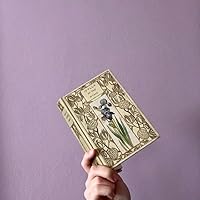
George and Mary were childhood friends. But then George's father discovers his thirteen-year-old son feels true passion for his bailiff's daughter. Determined to end the affair, George's father sacks the bailiff and takes his son to America. Years later George returns to his native Suffolk to trace his lost love. Though she has long gone, George is determined to find Mary at any cost.
Wilkie Collins was an English novelist and playwright, best known for The Woman in White (1860), an early sensation novel, and The Moonstone (1868), a pioneering work of detective fiction. Born to landscape painter William Collins and Harriet Geddes, he spent part of his childhood in Italy and France, learning both languages. Initially working as a tea merchant, he later studied law, though he never practiced. His literary career began with Antonina (1850), and a meeting with Charles Dickens in 1851 proved pivotal. The two became close friends and collaborators, with Collins contributing to Dickens' journals and co-writing dramatic works. Collins' success peaked in the 1860s with novels that combined suspense with social critique, including No Name (1862), Armadale (1864), and The Moonstone, which established key elements of the modern detective story. His personal life was unconventional—he openly opposed marriage and lived with Caroline Graves and her daughter for much of his life, while also maintaining a separate relationship with Martha Rudd, with whom he had three children. Plagued by gout, Collins became addicted to laudanum, which affected both his health and later works. Despite declining quality in his writing, he remained a respected figure, mentoring younger authors and advocating for writers' rights. He died in 1889 and was buried in Kensal Green Cemetery. His legacy endures through his influential novels, which laid the groundwork for both sensation fiction and detective literature.
I believe, after reading the Wikipedia entry for Wilkie Collins, that I have approached his work from the wrong end. I had previously read The Law and the Lady, Miss or Mrs.?, and (most recently) The Moonstone. Today I read that his work from the 1860's was his best (and The Moonstone was the last written during this decade). Beyond that, it is suggested that his work deteriorated, probably because of his addiction to laudanum.
If the difference between The Moonstone (1868) and this book (published in 1876), can be used as a measuring stick, I would have to agree. One could not argue with the brilliancy of The Moonstone. On the other hand, The Law and the Lady (1875) and The Two Destinies both felt a bit belaboured, repeating similar scenarios ad nauseam without any apparent point. Perhaps, since the story was originally published in serial form, Collins believed that the repetition was necessary as a courtesy to readers who may have forgotten where it "left off". Or maybe he himself (under the influence of an addictive substance) had forgotten?
Perhaps my modern sensibilities are showing (I admit to being very impatient with the slow-moving classics which were originally published as serials) -- or perhaps I am just being unkind. Whatever the case, I have not abandoned Wilkie Collins. I am happy that three more stories from his "better" decade are still in my reading future.
I'm not sure how I feel about this one. There were parts I loved and found fascinating, other parts I was confused by and disliked, and the ending was a little odd. Still, an interesting read, and I look forward to more Wilkie Collins in the future.
Opening lines: MANY years have passed since my wife and I left the United States to pay our first visit to England. We were provided with letters of introduction, as a matter of course. Among them there was a letter which had been written for us by my wife's brother. It presented us to an English gentleman who held a high rank on the list of his old and valued friends.
3* The Woman in White 4* The Moonstone 4* Who Killed Zebedee? 4* The Dead Alive 4* Mrs. Zant and the Ghost 3* A Fair Penitent 4* The Frozen Deep 4* The Haunted Hotel 4* The Law and the Lady 4* No Name 3* My Lady's Money 3* Mad Monkton And Other Stories 4* Armadale 3* The Traveller's Story of a Terribly Strange Bed 3* Stories by English Authors; England 3* Mr. Lismore And The Widow 3* The Dead Secret 4* Basil 3* The Two Destinies TBR Poor Miss Finch TBR Blind Love TBR Man and Wife TBR The Queen of Hearts TBR Hide and Seek
داستان رمانتیکی از سختی و دوری عشق و معجزاتی که تنها زمان می تواند سبب آنان شود..تغییراتی که در داستان زندگی ما طی زمان روی می دهد گاه آنچنان باور نکردنی اند که هرگز جرئت تصورشان را هم نداشته ایم. زندگی هر انسان سهمی محدود از این تغییر هاست..تغییر های زمان غالبا اما بهایی دارند که باید پرداخته شود..
I'm so over modern writers who believe, or are forced by their publishers to add gratuitous profanity, violence, and sex to their stories. Is that all our modern culture ascribes to as entertainment? I don't think so but they obviously do. Enough of my vent. THIS read was rich, the story, the language- so much higher than ours in this day of text jargon and emojis, was so fulfilling. I couldn't put it down. The characters and their saga was heartrending. I lived every minute with them. And knowing the ending from the beginning just made the travails that much more exciting. I'm glad I still have more of Willie Collins' books to read. They are long and dense and aren't over quickly, leaving me wanting. If you've never read him or Mary Elizabeth Braddon, 19th century writers, you're in for a treat. Would've given 6 or more stars for outstanding writing with no objectionable content.
Willie Collins wrote what is believed to be the first detective novel ever, "The Moonstone." That's quite a claim to fams, but that's not all. He also wrote "The Woman in White," another of Great Britain's first mystery novels.
Then, there is, "The Two Destinies." One word kept popping into my head as I read it, potboiler. Over and over. Potboiler. The great Willie Collins wrote a trash romance novel because he needed the money. Wowzers.
Two lovers are destined, probably before birth to be together. The meet as children, but are separated.
An old granny with the sight makes a prediction.
The two lovers meet again under tragic circumstances, but they don't recognize each other, and are separated again.
Rinse, repeat.
Oh, yes, at some point, the woman finds herself married to a bigamist, so she is a fallen woman for most of the book.
If Harlequin/Silhouette had been around in the 19th Century, this would have been a big seller for then. I would have found it on my cousin Jacquie's bookshelf for sure. That's not as much of an insult to my cousin Jacquie as you would think. Jacquie is a very bright woman and a huge reader, as we all are in our family. Her taste just runs to the sappily romantic.
Also, this book is on my bookshelf, so who am I to talk?
I just looked at three professional reviews of this book. They all called it a potboiler. Same word.
I didn't particularly care for this story. It wreaked of the author's pet causes and sympathies and nobody likes being beaten about the head with the same message for 10 hours. What is fun though is getting a feel for the utter silliness of the Victorian era. Mostly today we read Dickens and Hardy and think that's the Victorians covered, but Collins, while trying to champion his causes just like them, piles it on so heavy at times with the supernatural star crossed lovers thing that it can't help but be ridiculous. It's fun to imagine proper Victorian socialites swooning over such an over the top melodrama and realizing they had their soaps too. That said, The Woman in White really was very good.
Collins is a master of the Victorian sensational novel, and this one is a fine example. The outcome is told at the beginning, but the journey is fraught with enough drama and tragedy to prevent it from becoming too predictable. A supernatural bond connects the two protagonists, and to the modern reader not accustomed to these melodramas it may seem ridiculous. Read in the spirit of the times, however, the plot is thoroughly engrossing and even moving at times. As is typical of Collins, The Two Destinies is well-written, intelligent, and, for fans of this genre, completely entertaining.
I’m sad to say, this book was really dumb. It was such a let down after The Moonstone and The Woman and White which are the two other Wilkie Collins books I have read before. I didn’t like our leading characters, and the constant reminders of how close characters are at discovering hidden identities felt excessive. The most interesting character, Miss Dunross, is actually fairly pointless and her conclusion is very dissatisfying. I will say the story moves at a good pace and has a few poignant lines here and there.
A humdinger of a sensational novel even by Wilkie Collins standards! We have visions/ghosts, sickness, no-good husbands, young love, and suspense. However, I found it hard to believe these two people never compared notes and came to realize they knew each other as children. Not to mention the improbability that George would carry his puppy-love for Mary into adulthood. This book keeps your interest even though you want to slap them at times!
This is a tough one for me to rate because it is super melodramatic and predictable but deliciously mystical and reads like a suspenseful ghost story. I enjoyed the audiobook and suspect I may have tired of the repetitive tale of near discoveries if I had attempted to read it. In the end, I embraced the romantic, mystical melodrama and decided it was perfect for the Halloween season.
Well, they weren't kidding when they said that it was Victorian melodrama -- it was quite dramatic. It is the perfect book for visions, deformed and veiled mysterious women, Scottish moors, fake marriages, murder suicides and strange coincidences involving kindred spirits who fail to recognize each other in the flesh like 10 times over. I think that there is a reason why The Woman in White and The Moonstone are the only Collins we still read.
Usually I love Wilkie Collins but this one seemed so overly dramatic that I had a difficult time getting through it. Plus it used the ploy of continually omitting one very specific and important information from the characters to prolong the plot. When the one piece of information was finally shared, the book ended.
I very much wanted to like this book, as I loved Collins' The Woman in White, but it dragged on forever. I can't even remember when I began it, so had to guess, but happily (and finally) finished it this morning. There are endearing parts, but overall it is tedious, repetitive, and a little too "mystical" for me.
A delightful, super-natural romance from Mr. Collins, author of The Woman in White.
Can anything separate those truly destined to be together? Can destiny and pure love overcome distance, wealth and *gasp* social classes? Only Old Dame Dermody has the answer.
(Kindle as well as audiobook) The author, Wilkie Collins, was a prolific writer; he wrote numerous novels, short stories, plays, and essays. Like Dickens, Collins wrote about the social issues of the day. Collins put a special emphasis on the problems women faced in that period of time in England.
Wilkie Collins (1824-1889) writes in the style that was popular at the time. The modern reader may find the writing somewhat stilted and the story rather flowery and sentimental, but that seems to be the style of the day. Thus, this is really a period piece and should be judged as such. I found the story quite sweet and engrossing.
On the audiobook, the narrator, Sam West, did an excellent job of reading this classic. He narrated the story in such an expert manner that I was quickly drawn into the lives of the characters. He managed to project the emotions of the characters and make them believable inhabitants of an earlier period of time in English history.
The story takes place in England in the 1800s. Mary, age 10, and George, age 13, were childhood sweethearts. They were only happy in each other’s presence or when they anticipated seeing each other. “We obeyed the impulse to love one another, as a bird obeys the impulse to fly”. Dame Dermody, the bailiff’s mother, was a religious mystic who saw George and Mary’s bond as pure and beautiful. She predicted that they would be drawn to each other on earth and in heaven. They would find each other even though they were separated and miles apart, for they were meant to be together.
George’s father was away in America on business a good deal of the time and had not observed his son George’s relationship to Mary. The father had a large estate, and Mary was only the bailiff’s daughter and lived with her father and Dame in a cottage on the estate. However, George’s uncle did observe the relationship and was sure the bailiff was trying to take advantage of George’s fondness for Mary in order to advance his own interests. The uncle wanted to take George away to London and convinced George’s mother that this was the right decision. Determined to keep his relationship to Mary, George hid in Dame’s bedroom in the bailiff’s cottage.
George and Mary had spent so many joyful times together. One of their favorite pleasures was sailing in his boat on a nearby lake. One day Mary gave George a special gift, a little green flag that she had made for his boat. George delighted in the idea of flying the special flag while they sailed on his boat. Yet, Dame could see a tragic future unfolding for the children. She told George to hide the flag because it would be taken from him otherwise.
When George’s father returned from America, George told him that he wanted to marry Mary. His father was horrified, since Mary was of a lower class than his son. His father insisted on taking George and his mother back to America with him and imprisoned George in his room until they departed. Sadly, when George came home for a visit, he found the bailiff’s cottage deserted. His father had fired the bailiff, and the family had left for parts unknown.
Mary’s father took her to Scotland where they made a happy home together. However, when he knew he was ill and dying, he worried about her welfare. Who would take care of her? He encouraged Mary to marry a man who turned out to be a scoundrel and a thief, a man who periodically left her and their small daughter to fend for themselves, without a means of support. To her horror, Mary found out that he was already married. She was considered this man’s mistress, a loose woman. Mary was shunned by polite society and not invited to their homes.
Years later, George searches for Mary. Fate has torn them apart, but their paths cross again. Unfortunately, for a long time, they do not recognize each other. How destiny pulls them together and how their broken hearts are finally healed is the theme of the story. The little green flag has an important role to play.
The author, Wilkie Collins, was a prolific writer; he wrote numerous novels, short stories, plays, and essays. Like Dickens, Collins wrote about the social issues of the day. Collins put a special emphasis on the problems women faced in that period of time in England.
Wilkie Collins (1824-1889) writes in the style that was popular at the time. The modern reader may find the writing somewhat stilted and the story rather flowery and sentimental, but that seems to be the style of the day. Thus, this is really a period piece and should be judged as such. I found the story quite sweet and engrossing.
On the audiobook, the narrator, Sam West, did an excellent job of reading this classic. He narrated the story in such an expert manner that I was quickly drawn into the lives of the characters. He managed to project the emotions of the characters and make them believable inhabitants of an earlier period of time in English history.
The story takes place in England in the 1800s. Mary, age 10, and George, age 13, were childhood sweethearts. They were only happy in each other’s presence or when they anticipated seeing each other. “We obeyed the impulse to love one another, as a bird obeys the impulse to fly”. Dame Dermody, the bailiff’s mother, was a religious mystic who saw George and Mary’s bond as pure and beautiful. She predicted that they would be drawn to each other on earth and in heaven. They would find each other even though they were separated and miles apart, for they were meant to be together.
George’s father was away in America on business a good deal of the time and had not observed his son George’s relationship to Mary. The father had a large estate, and Mary was only the bailiff’s daughter and lived with her father and Dame in a cottage on the estate. However, George’s uncle did observe the relationship and was sure the bailiff was trying to take advantage of George’s fondness for Mary in order to advance his own interests. The uncle wanted to take George away to London and convinced George’s mother that this was the right decision. Determined to keep his relationship to Mary, George hid in Dame’s bedroom in the bailiff’s cottage.
George and Mary had spent so many joyful times together. One of their favorite pleasures was sailing in his boat on a nearby lake. One day Mary gave George a special gift, a little green flag that she had made for his boat. George delighted in the idea of flying the special flag while they sailed on his boat. Yet, Dame could see a tragic future unfolding for the children. She told George to hide the flag because it would be taken from him otherwise.
When George’s father returned from America, George told him that he wanted to marry Mary. His father was horrified, since Mary was of a lower class than his son. His father insisted on taking George and his mother back to America with him and imprisoned George in his room until they departed. Sadly, when George came home for a visit, he found the bailiff’s cottage deserted. His father had fired the bailiff, and the family had left for parts unknown.
Mary’s father took her to Scotland where they made a happy home together. However, when he knew he was ill and dying, he worried about her welfare. Who would take care of her? He encouraged Mary to marry a man who turned out to be a scoundrel and a thief, a man who periodically left her and their small daughter to fend for themselves, without a means of support. To her horror, Mary found out that he was already married. She was considered this man’s mistress, a loose woman. Mary was shunned by polite society and not invited to their homes.
Years later, George searches for Mary. Fate has torn them apart, but their paths cross again. Unfortunately, for a long time, they do not recognize each other. How destiny pulls them together and how their broken hearts are finally healed is the theme of the story. The little green flag has an important role to play.
First, I must say I am probably not the best audience for this story. I’m about as unromantic as they come, and don’t believe in soulmates. Perhaps I should have read the description of the book closer, but the audiobook came up deeply discounted, and I’ve enjoyed other books by this author before, so I gave it a shot. If you find codependent, dysfunctional-to-the-point-of-creepy relationships (a la Wuthering Heights) to be irresistibly romantic, you’ll probably enjoy this one more than I did.
The narrator of the book, Samuel West, did a fine job. I have no objection to how the material was presented, but the story itself.
It started off well enough when the main characters were cute little childhood sweethearts, but once they were grown up and generally miserable without each other, then miserable with each other, there was a lot of eye rolling and exasperation as I listened.
The ending I found totally ludicrous! So this dude, after the lady has turned down his proposals multiple times, lures her onto his boat with every intention of committing a murder/suicide right in front of the lady’s young child. And this chick, after knowing full well what he had in mind and being rightfully afraid for her life, as soon as she realizes that they were in puppy love as kids (they didn’t recognize each other until this point) all is immediately forgiven and forgotten and she just goes ahead and marries him?
Nooooope. Nope nope nope.
Not ok, Wilkie, not ok.
This entire review has been hidden because of spoilers.
Is it the Woman in White? The Moonstone? No it is not… but it’ was still enjoyable. I think what made this so much better was that it was an audiobook and had a fabulous narrator. Samuel West was a pleasure to listen to. Everyone says Wilkie Collins best writing years were long gone and perhaps that is true. But for me, I enjoyed the telepathic romance theme. I have a few more WC books in my library and look forward to reading and or listening to them as well.
I enjoyed this book as I have enjoyed every Wilkie Collins book ive read. My only criticism is that it took too long for the two characters to finally realize their true identities. Improbable but still enjoyable
Good writing. Interesting story until the end. Mary was annoying. Also, right before the conclusion it was too awful to be wrapped up in such an easy happy way. It ruined the book for me. On a positive note, I listened to it and the narrator was wonderful.
This book was supremely ridiculous and kind of slow. And I still didn’t really mind it. Not sure if it was the excellent narrator, or that small remaining bit of lyricism that is something I like about other Wilkie Collins’ books.
Well-written, solid characters and a decent plot. Too bad it's a romance. There is one part towards the end that was a little over the top, but hey, the main theme is that true love will find a way.
For Victorian readers, no better writers than Scott, Dickens, George Eliot and for that matter, Wilkie Collins existed. Give them a little drama, some tragedy, a woman wronged, add a touch of bigamy and sprinkle the whole with a nasty murder, and they lapped it up and begged for more. Whereas their European counterparts were far more realistic and sophisticated, who viewed life, marriage and family relationships with a more worldly and knowing eye, the Victorians were extremely judgemental and censorious about the same matters, and disgusted by physical deformities as they feared mental illness. Wilkie Collins and Dickens were just the ticket for the Victorians: a good plot, plenty of laughs, enough partings and brutal action to keep the tears flowing copiously, and that warm satisfaction at the end when the right guy gets the girl. Style? Characterisation? There are beautiful women and strong silent men. Do we need anything more? A villain, yes, a clown, maybe; a strict aunt, a stern father, and there is a complete cast
So it is in this novel by Wilkie Collins. ‘Two Destinies’ has a gripping plot, with all the elements so necessary to melodrama: tender young love parted before it has time to flower, a stern and cruel parent, a basely wronged bailiff, a grandmother who is a ‘wise woman,’ supernatural visions the heartbroken lovers have of each other, Swedenborgian theories of love and the afterlife, bigamy, a suicide attempt, a dramatic rescue to no avail…. And so on. The novel is unsatisfactory, not for these elements, but for two or three discrepancies in the plot. The first two are related: Van Brand is a Dutchman whose life has been saved from a shipwreck by the heroine’s father. He later lodges with them, and though he is more a contemporary of the father, asks to marry the daughter, and is accepted. He is an exemplary son-in-law and husband, but without warning, he turns out to be a bigamist, a runaway husband, an unkind parent, an embezzler and a debtor. When his ‘wife’ finds out from the lawful wife that her marriage is illegal, why does she stay with him?
The third oddity is the introduction of the mysterious veiled woman, Miss Dunross. Thanks to a nervous disease, she claims to be extremely vulnerable to light, and hence keeps herself black-veiled and in darkness while she nurses the hero back to health. Her photosensitivity is an excuse to cover some other, more hideous defect. She falls in love with the hero, and he finds himself falling in love with her, but is “rescued” by the apparition of his “true love.” Miss Dunross thus serves two purposes: she reminds the hero of his childhood sweetheart, and she is the maimed character seen in every one of Wilkie's novels. But this does not explain why her presence is so important. Her purpose being achieved, she dies, which is very weak-minded of Wilkie Collins.
And although it might sound cheesy, the tale as Wilkie tells it, has an unshakeable grip on you from the first moment you meet the lead characters at a dinner party, until the very end, after you have seen them reach a safe harbour. As usual with Wilkie Collins, the women here are vivid and occasionally even compelling, although the two main persons are sadly disappointing. Coupled with Wilkian irony and humour, this little gem might not occupy the same lofty position as some of his other tales, but it makes for a great read!
This late novel tells the story of Mary Dermody and George Germaine, who fall in love when they are little more than children. Circumstances force them apart, but the girl's grandmother insists that the two are destined to be together and that they will find a way to each other again. Many years later, George comes across a young woman attempting to drown herself. He saves her life, not realising that she is the girl he fell in love with ten years earlier. They both have different surnames (he under the terms of his step-father's will, she because she has married), and fail to recognise each other.
Over the course of the next few years, George receives what seem to be telepathic messages from the woman whose life he saved, and again he goes to her aid. He is in love with her, but her circumstances do not permit her to return his love.
Perhaps the most interesting section of the novel is when George goes to the Shetland Islands in an attempt to recover from his infatuation with the woman, and there stays at the house of Mr Dunross and his mysterious daughter, whose face is constantly shrouded by a heavy veil.
This is a love story pure and simple, with no sub-plots and none of the twists and turns one associates with Collins' best work. It doesn't quite work, because it seems incredible that Mary and George do not recognise each other, or that they don't at some point compare notes and realise they knew each other as children. The 'supernatural' elements of the story are not really a major part of the story and do not entirely convince. Enjoyable if you want a well-written romantic story, but it is one of Collins' least successful novels, to my mind.
This entire review has been hidden because of spoilers.