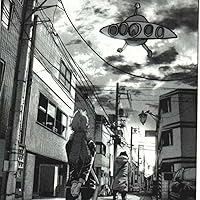
Kabar kematian Pak Tazaki, pencetus hukum tentang robot internasional membuat Profesor Abullah dipanggil oleh inspektur polisi, Tawashi. Ia adalah orang terakhir yang bertemu dengan Pak Tazaki sebelum kematiannya. Detectif Gesicht juga mulai curiga bahwa mungkin ada yang berusaha mengacaukan datanya
Urasawa Naoki (浦沢直樹) is a Japanese mangaka. He is perhaps best known for Monster (which drew praise from Junot Díaz, the 2008 Pulitzer Prize winner) and 20th Century Boys.
Urasawa's work often concentrates on intricate plotting, interweaving narratives, a deep focus on character development and psychological complexity. Urasawa has won the Shogakukan Manga Award, the Japan Media Arts Festival excellence award, the Kodansha Manga Award and the Tezuka Osamu Cultural Prize. In 2008 Urasawa accepted a guest teaching post at Nagoya Zokei University.
Series list (not including short stories collections): - Pineapple ARMY (パイナップルARMY) 1985-1988, written by Kazuya Kudo; - YAWARA! 1986-1993; - Master Keaton (MASTERキートン) 1988-1994, written by Hokusei Katsushika; - Happy! 1993-1999 - MONSTER 1994-2001 - 20th Century Boys (20世紀少年) 1999-2006 - 21st Century Boys (21世紀少年) 2007 - PLUTO 2003-2009, based on Tezuka Osamu's Tetsuwan Atom - BILLY BAT 2008-2016 - Master Keaton Remaster (MASTERキートン Reマスター) 2012-2014 - Mujirushi (夢印-MUJIRUSHI-) 2017-2018, collaboration with Musée du Louvre - Asadora! (連続漫画小説 あさドラ!) 2018-ongoing
Una historia intrigante que no pierde el hilo de la trama pero nos entrega pinceladas entre la relación de robots y humanos. Sobre la guerra, los derechos y por si fuera poco los prejuicios existentes contra la misma creación del ser humano.
Murders, murders everywhere, and hardly a shred of evidence to be found.
I am really liking the world building in this series. In this installment we meet members of KR - think future day KKK - and they want to get rid of all robots. Of course all us liberals would have a knee jerk reaction to these characters, but the back story reveal of one of them is very sensitively done. The cast of characters increases with each installment, and just when I thought no-one could be cuter than Atom, enter Uran. She's a delight. This volume is very slow paced, and the pieces are getting set to be played out, but I'm buckled in for the ride.
not only gesicht, even atom is now being targeted too!!! this is so freaking engaging!! so many mysterious keywords i've got to remember that are currently unknown and it's slowly unraveling the plot. the bits and pieces of what happened in the war years ago are starting to come together and we're slowly discovering who the enemy is. though overall, everything is still vague, but this is still so good!!
The third volume in the series takes a darker tone than it's predecessors, as if it wasn't already dark before. But I guess that's the direction the manga was always heading towards.
This volume is more of a commentary on 'how human are humans' when interacting with robots. The series has started exploring the nature of the dividing line between robots and humans, and the impact of high functioning AIs (like Gesicht) on human society, and the introduction of a group not unlike the Ku Klux Klan that's sole purpose is to destroy and eradicate robots' existense.
Vol. 03, unlike the first two volumes focuses on character development, and of the newly introduced sister of Atom, Uran. In this volume we get a clear picture certain people who are against the peaceful co-existence between man and robot.
Overall, it is another enjoyable volume that definitely is setting up for a major showdown between man and robot, or is it? Can Gesicht get to the bottom of things before something crazy happens?
This series is getting better and better. And this is only the third volume. Urasawa is deftly introducing his main characters and plot elements in a measured way, not dumping in front of the reader his narrative components all at once. We didn't see Atom until the tail end of the first volume, and Uran didn't appear until the very end of the second. And then in this third, not only were we more fully introduced to Uran, but Adolf Haas and the KR are added into the mix. Must read on!
“Pluto: Urasawa x Tezuka, Volume 003” by Naoki Urasawa and Takashi Nagasaki is the third book in an eight-book science fiction manga series Pluto. The whole series is based on “The Greatest Robot on Earth,” the most popular story arc in Astro Boy series by a legendary manga master Osamu Tezuka.
The mysterious villain, who is targeting the seven great robots of the world and might be responsible for the related homicides, is still unknown. Meanwhile, members of KR, a far-right group aiming to eliminate robot civil rights laws, come up with a sinister plan. Finally, Atom’s little sister Uran, a robot girl with ultra sensitive receptors, befriends an odd robot.
THUMBS UP:
1) Excellent story building. The story unfolds slowly, but I wouldn’t dare call it slow-paced as it is thrilling and completely engrossing. New background details and answers to the previous questions introduce new mysteries, moving the story along as well as keeping the suspense at its highest. The final three acts in “Pluto, Volume 003” are especially absorbing, and although quite a few puzzle pieces are revealed, I feel like I have even more questions than I had before and thus cannot wait to read the next volume to find out what’s going on.
2) Multidimensional characters. The more I get to know the characters in Pluto, the more I like and care about them. Also, background details and side stories not only make the story line more complicated, more relatable and more engaging but also add some layers to the main characters, making them multidimensional, realistic and more interesting.
3) Social commentary. This volume brings up a lot of interesting issues such as human and robot identity and human-robot conflict. A social commentary not only adds depth and complexity to the plot but also hints at a few universal topics such as humanity and compassion. For example, KR, a robot hater organization in Pluto, strongly resembles the Ku Klux Klan and its ideology.
COULD BE BETTER:
1) The last of the seven. I didn’t really enjoy the act in which the last of the seven great robots of the world was introduced. The episode was rather uneventful and the character itself didn’t strike me as likable or particularly interesting. Hopefully, my mind will change in later volumes.
2) Static and colorless illustrations. I know I talked enough about this issue in my previous reviews, but I still cannot get used to the artwork, which is truly stunning but too static for a comic book. The illustrations in the third volume seem more dynamic though, but only the ones picturing kids. The portrayal of adult characters is still too static (limited range of facial expressions and closed mouths when talking). What is more, in “Pluto, Volume 003,” only six first pages are colored and the rest of the illustrations are black and white, EXCEPT for two random panels towards the end of the book. Those few colored illustrations are SO MUCH better and just feel like a tease.
VERDICT: 3.5 out of 5
“Pluto: Urasawa x Tezuka, Volume 003” by Naoki Urasawa and Takashi Nagasaki exemplifies an excellent story building and character development and contains an intriguing social commentary, but the illustrations portraying adults are still too static for a comic book.
Buenooooooooo. Esto ya se pone interesante. Sobre todo si, como parece, ya están todos. Y tiene su gracia ver ciertas caracterizaciones semejantes a las de sus dos series inmediatamente anteriores (Monster y 20th Century Boys).
“Sentimento e caráter são geralmente frutos de circunstâncias externas ao indivíduo.”
Amor, ódio, empatia, violência… São inerentes ao ser humano ou construídas pelas experiências que vivemos? Se nossa personalidade é moldada por experiências, memórias e relações, então o que realmente diferencia o ser humano de uma máquina?
Adoro como Naoki Urasawa usa as situações em Pluto para refletirmos de que lado estamos. O desconforto da injustiça e a reflexão de até que ponto nós podemos humanizar uma máquina. Achei muito interessante a parte que Atom começa a imitar os comportamentos dos humanos, e isso se tornou natural pra ele. Mas fica o questionamento, é um desenvolvimento de uma identidade própria ou é pura e simplesmente reprodução de um padrão?
Mhh j'ai moins aimé que les deux premiers tomes que j'ai trouvé super. Celui ci est vraiment pas subtil dans sa façon d'aborder le "racisme" anti robot.
Pleins de nouveaux perso détestables contrebalancé par la très mimi Uran !
Le moment avec tout les insectes dégueu par contre HELP T^T
The story of Uran and the homeless person is the real highlight of this third book. Though the book gets bogged down a little in the middle, with the further mystery of Gesicht, his past, and then the back story for the man out to kill him, it finishes on just the right note. The introduction of a new character in Epsilon opens the way for some more interesting story, and the last two or three chapters shed a little light on some things, but reveal just as much shadow underneath what's now been highlighted.
But then, with Urasawa Naoki at the helm, you should have seen that coming.
Dalam volume ketiganya ini, Urusawa bermain-main dengan alegori rasisme dan trauma perang. Memotret dunia distopia dengan menyentil isu yang relevan dalam realita dan masih berulang hingga hari ini, Pluto seri ketiga ini masih solid dalam menceritakan prahara robot dengan akal imitasi yang makin menyerupai penciptanya, hingga segelintir manusia yang penuh praduga dan harap-harap cemas pada revolusi para robot yang bisa jadi kelak menggantikan posisi mereka sebagai makhluk dominan di muka bumi. Brilian!
I just barely like this. This is very moody and completely not my style. It continues to dump in more characters and events and I can not remember all of them. Most of the time reading this, I am just confused. I understand that it's a slowburn and it's building up but I don't feel like I like this. But it has a lot of acclaim so I'm still giving this a chance.
The anti-robot is a hate group modelled after the KKK. They called themselves KR, Kill Robot. They are politicians and other people in power in the group. They wear white robes and white pointy hats that cover their face.
Uran is the Atom's sister. She helps to gather the runaway big cats and saves a child. Atom and Uran still go to school.
Gesicht is investigating the case and found himself being a target too. Hercules is a good friend of Brando who just got killed. He wants to fight the robot killer. Epsilon stops him.
Uran is naive and finds a homeless robot. He runs out of energy and is sleeping in a restricted area. She bought him some energy drinks. He is a graffiti artist. He draws flowers. He can also make flowers grow.
Finally the horrifying Pluto, a robot made up of little insert-like robots.
All the main robots are now introduced in Volume 3.
In this volume, it sets the stage for how some humans come to hate robots. They blamed them for killing other robots in the war. After the war, laws prevent more intelligent robots from being made. So only seven robots could understand and behave like humans.
If AI developed to the stage that they are self-aware. With or without a body, humans can no longer treat them as mere machines. They do have the right as self-awareness comes with the feeling of suffering.
Some humans hate robots. It is their nature to hate something different from them. If they could treat them like slaves, they would have. This series is more philosophical than most manga, just for entertaining purposes.
This one slows down a lot and tus making it the weakest chapter so far (but still pretty damn good)
So we get a little time with Atom's sister "Uran" and she's honestly the most boring of the bunch. I really did enjoy Atom's introduction and then our Detective is still great, but Uran comes across kind of boring. We'll see if that changes. Also we get the KR group which is basically the KKK group of Robot Haters. They want them completely gone, and this "smart" group is skillful at building up their brand, and crushing the robots. This all leads up to a reveal of what could be the main villain of the series.
Good: I love how the KR group is actually smart and not just rabid crazy "fuck robot" groups. They are slowly thinking of ways to turn the public against robots similar to how the KKK has evolved in the last few years. I also enjoyed Atom's level of fear growing and making him more human like. His moments were great and the mystery growing is getting scarier.
Bad: I didn't love the stuff with Uran, found it pretty dull. I also thought the big reveal of the enemy wasn't all that surprising but it can also be a red hearing. So guess we will see.
Overall this is still really solid, a 3.5 out of 5, but not as good as volume 1-2. But I feel this is the bridge before the big major events occur.
Y bueno, si el volumen anterior le tocó a Astroboy, ahora era el turno de su hermana, y Uran estuvo increíble. Toda la presentación de Uran es magnífica, porque ella realmente se siente como una humana, tiene características que la hacen muy única, desde emocionarse con una pintura, hasta conversar con humanos sobre sus sentimientos. Justamente este tipo de cosas suman muchísimo a la trama, porque tratan de presentar muchas dicotomías sobre qué son los robots para los seres humanos, por lo que terminan siendo meras herramientas para algunos. Pero, ¿cómo van a ser sólo esto si muchos de ellos ponen su vida al servicio de la sociedad?
Lo más increíble de todo, es la construcción de la historia, porque posterior a todo el argumento anti-robots de los KR, nos presentan a Epsilon, quién es completamente pacífico. Es más, no quiso participar en el conflicto Centroasiático debido a sus principios, prefirió alejarse (siendo discriminado como cobarde) y acoger a las y los huérfanos que surgieron de la guerra. Si ya me parecía increíble la manera en cómo se planteaba este universo, utilizarlo todos los personajes de Astroboy, darles una vuelta de tuerca y presentarnos una thriller geopolítico, es una brutalidad.
Lots of great new characters introduced in this volume, especially Atom's little sister Uran, who is hypersensitive to animals and people in pain.
We also meet a new character whose human brother was killed by a robot with a rare type of weapon. I appreciated digging into his back story, seeing why his family hated robots so much.
The exploration of robots developing emotions and how humans think of them and treat them continues, too, a theme that keeps getting more and more complex.
The tone keeps getting darker, particularly surrounding a secret organization working to destroy the robots, as well as some truly creepy scenes at the end!
Obviously I love Uron. Bold, sassy, hypersensitive and relentlessly kind towards animals and robots alike, she embodies some of the highest traits we as humans, can (should) aspire to. In this serie so far, I can see an Urasawa mastering many arts. I did not expect less. What is really poignant for me in Pluto is crossing paths with these non human characters who act as a mirror - or as an inverted mirror - of ourselves humans. A core question across Sci-Fi is here beautifully explored: what it is to be human?
Her kitapla seviyesini korumak şöyle dursun, giderek iyileşiyor. Hikayenin cevapladığı her soru için yarattığı yeni onlarca soru işareti, okurun zihnini sürekli aktif tutuyor. İlk bakışta alakasız görünen her hikaye örgüsü, sonradan öyle güzel bağlanıyor ki hikaye kurgusunu takdir etmemek elde değil. Urasawa hem esinlendiği yerlere hakkını vererek selam çakıyor hem de anlatısını modern eksende tutmayı başarıyor. Pluto, 3. kitabıyla birlikte hala okuduğum en iyi işlerden.
I also think that the way the author took real, very evil organizations and reapplied them to the future setting was a good choice of showing how disgusting they are, and really shows that the author does not mean to have them be sympathetic or to have them be seen as having some type of moral ground to stand on. That being said, I would have liked to see more diversity in the robots and setting, especially since it is the future.
4 1/5 Sterne! Es geht stark weiter! Dieser Band ist ein wenig schwächer, aber immer noch genial. Hier spitzt es sich politisch zu und es wird einiges an Hintergrundinformationen aufgegriffen und erklärt. Mein Lieblingscharakter Gesicht kam hier leider zu kurz, aber diese Reihe beinhaltet viele wichtige Charaktere, deshalb bin ich frohen Mutes, dass noch einiges zu ihm kommen wird.
Can't believe I didn't meet Pluto from the hit series Pluto and I never thought about why the series was called Pluto before. And then to find out that's literally just Caleb Widowgast from hit series The Mighty Nein but in a different font. He's so cool.
This entire review has been hidden because of spoilers.