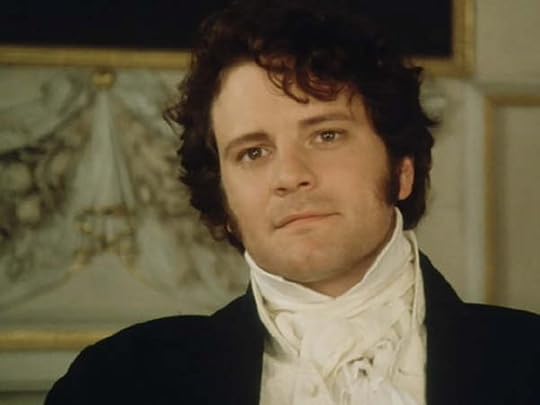
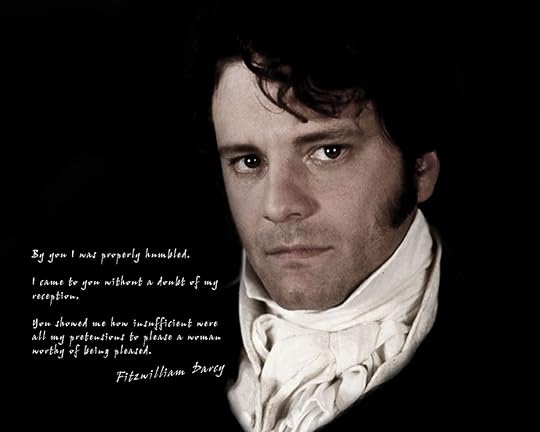
Enter the world of Fitzwilliam Darcy, landed gentleman, scholar, and very eligible bachelor, whose engaging and enthusiastic friend, Mr. Bingley, has acquired a new manor. Darcy accompanies his friend into the wilds of Hertfordshire, where each of them encounters the lady who will change his life. Follow the beginnings of a story that will take Darcy from the heights of wealth and status, to the depths of pain and self-condemnation, and, ultimately, to the safe haven of the love and respect of his heart's mistress.
This lovingly crafted companion to Jane Austen's Pride and Prejudice will give her fans a feeling of homecoming, and a chance to see this beloved story from a new perspective, all the while immersed in the endearing world of Regency England Austen so masterfully created. Darcy's Tale was written first for the readers who were enchanted by the original and wanted the chance to return, to learn more about one of the most popular characters in English literature. But it is also for those new to the Pride & Prejudice saga: Darcy was a wealthy, well-intentioned, intelligent, and educated man; how on Earth did he become so thoroughly tangled by his acquaintance with Miss Elizabeth Bennet? She, too, is among that rarefied firmament of favourite English characters: her pert manners, quick wit, and quiet beauty made her a strong, independent figure of a woman who was over a hundred years ahead of her time. The clash of their personalities and the nearly constant misunderstanding between them, founded on an unfortunate first impression, has delighted readers for two hundred years.
This, then, is a new view of their first year as seen through Darcy's eyes, and written by a man who insisted both that Darcy should be true to Austen's vision of him, and that he should be a man throughout: wrong, perhaps at times, but always prepared to stand up and do what he saw as necessary and right, especially when he found himself to be in the wrong.
Darcy's Tale is written in the richly textured style of Regency English, and even the most demanding Austen fan will find little here to cavil with--but they will certainly find many new thoughts, perceptions, and interpretations to revel in.
Volume 1 takes Darcy to Hertfordshire and the beginnings of his relationship with Elizabeth. In Volume 2: Into Kent, the two meet again at Rosings, the estate of Darcy's Aunt Catherine. In Volume 3: Back Home, Darcy's many trials and labours are concluded, and he finds his true place in life, at last
Stan Hurd is a Ph.D. neurochemist who currently occupies himself writing, teaching fencing and Karate, and polishing samurai sword blades. He was introduced to Jane Austen's works late in life, but became immediately captivated by the unlabored beauty of her prose. Having read one of the many adaptations written to extend the story of "Pride and Prejudice", while he was delighted to be back in that world, he found the exclusively female perspective of the author was at times intrusive; since he could not let himself complain if he did not attempt it himself, he set out to write "Darcy's Tale".
Many of his friends are amazed that he should be writing a Regency romance; he takes a particular delight in that fact.
I really, really enjoyed this retelling of Pride and Prejudice told through Darcy's point of view!! It was exactly like reviving P&P all over again, but through the hero's eyes. The writing is very Austenesque and the plot remains true to the original. This volume 1 of Darcy's Tale covers the scenes from Darcy's arrival in Hertfordshire with Bingley at Netherfield, to his departure for Town after the Netherfield Ball.
I loved being privy to Darcy's thoughts! I had always felt that I knew so little of him after reading P&P; he appeared so mysterious and reserved that I could never really understand why he acted the way he acted. But now thanks to this beautiful book, he seemed to come alive and I understand more of his values and feelings. Lizzie is clearly the right woman for him, and he recognizes that she's the only one whose wit and intelligence equals his own, and while he enjoys sparring with her, he forbids himself to fall in love with her, because her family seems to him to great a barrier to overcome. He has no idea that she overheard his comment about her not being handsome enough to tempt him (words spoken on the spur of the moment, when he was in a very bad mood, and which he regret not half a second after they were out!) and that she has been harboring feelings of dislike and contempt towards him ever since. He simply sees her remarks towards him as pure teasing and a wilful display of her intelligence.
If Elizabeth Bennet is said to be witty and smart, then so is Georgiana Darcy. I have always had a soft spot for her, and in this novel she appeared very darling! She was clearly gifted with a lot of perspicacity and penetration, as she interprets her brother's letters so well and so thoroughly, that even she feels Darcy might have unconsciously injured Elizabeth, given the latter's attitude towards him. The bond between Darcy and Georgiana is really felt in this retelling and enjoyed that aspect a lot. I loved how they were always there for each other, and how they are so completely honest and trustful.
The strong friendship between Darcy and Bingley is superbly demonstrated and I love reading about their interactions. I felt more inclined to forgive Darcy when he feels the need to meddle in Bingley's affair with Jane Bennet (circumstance which I had found hard to forgive heretofore), because I could really understand that he simply wanted to protect him and refrain him from being exposed to gossip about a future wedding with a bride who according to Darcy, did not love him as he deserved. In P&P I love seeing the bond between Lizzie and Jane, and in Darcy's Tale I loved seeing the one between Darcy and Bingley.
Darcy's falling for Elizabeth is so ob-vi-ous and cute! He keeps looking at her and following her around in Netherfield! I basically had this mental image of him throughout
Overall, I strongly recommend this wonderfully crafted retelling to any Pride and Prejudice fan who enjoys having the story told through Darcy's perspective.
I received this book through Goodreads First Reads, and all opinions expressed here are my own. I am very excited to get to the second volume Into Kent!
4 starts instead of five because the first volume of P&P (or any other Austen novel) moves slowly, and so even though it had my interest, it was not a I-forget-to-eat-and-sleep kind of book. 5 stars for the writing and quality, however!
Thanks to the efforts of Pamela Aidan, Amanda Grange, Regina Jeffers, Nancy Kelley, Maya Slater, Mary Street, and many others, readers have had the opportunity to enter the private thoughts of Mr. Darcy and explore his psyche! These authors have creatively and skillfully shared with us what Darcy is thinking, feeling, and where he goes when he is away from Elizabeth. In Darcy's Tale, we see Pride and Prejudice as well as Mr. Darcy from a man's perspective as debut author Stanley Hurd picks up his pen and joins the ranks of authors who show us the private thoughts and inner struggles of Fitzwilliam Darcy.
Just like Pride and Prejudice, Darcy's Tale is divided into three volumes, the first volume ends with Darcy and the rest of the Bingley party departing for London after the Netherfield Ball. (So don't expect to see it all in this one volume!) ;)
What I loved most about this trilogy so far is the very strong sense of truly being in Darcy's head. Mr. Hurd's portrays Darcy as a very thoughtful and analytical character. In his mind, he is philosophical, trying to figure people out, contemplative, and always carefully considering his actions. At the beginning of the novel we see Darcy ponder marriage, the happy union his parents shared, and the nine years he has spent out in society as a bachelor. He begins to doubt that the ideal marriage he always thought of himself as having will ever be a possibility. At the same time, Georgiana, still going through her heartbreak from Wickham, begins to question Darcy about the nature of love. A lot of reflection and introspection going with our Darcy!
Another element of this story I enjoyed was witnessing Darcy's relationship with his sister Georgiana. The two begin to exchange frequent correspondence with each other in this novel (which the reader gets to read in its entirety!). They openly discuss the Ramsgate affair, regret, love, and culpability; I loved seeing the two grow closer throughout Georgiana's healing, rather than become further separated. I also enjoyed how Darcy shared his thoughts and impressions of Elizabeth with Georgiana and how she encouraged him to stay for the Netherfield Ball.
Speaking of...probably one of my favorite experiences in this novel was witnessing The Netherfield Ball through Mr. Darcys eyes. We all know that it was a night of mortification and disappointment for Elizabeth Bennet, but in his novel, Stanley Hurd shows us how poor Mr. Darcy suffered just as much if not more that evening. Dreading Wickham's presence, having his dance with Elizabeth Bennet go decidedly against his plans and wishes, learning, for the first time, the gossip and expectations surrounding his friend Bingley, and catching wind of Mr Collins intentions towards Elizabeth – the night was truly a tumult of frustration and torture...I'm surprised Mr. Darcy's head didn't explode from all the stress and tension!
Perceptive, illuminating, and riveting – Stanley Hurd is off to a stellar start with his Darcy's Tale trilogy! I adored his thoughtful, sympathetic, and reverent portrayal of our beloved Mr. Darcy! I cannot wait to read Darcy's Tale, Volume II: Into Kent, which should be released some time in the near future!
I admit I only read the Kindle sample but I'm choosing not to continue and I'll try to explain why. The main reason is that I'm the type of Austen fan who holds Austen-related works to a higher standard than if they had been their own original art. I love Austen's books, but in cherishing those stories I kind of resent those who would lean on the masterwork with inferior goods. This is one such, though at least it isn't horrid.
The good: Hurd avoids the most common mistake with Darcy by making his beginning character consistent with the ending actions. Hurd's opening gives Darcy the kind of concerns I'd expect of a landed gentleman of means and goes further to show how the reserved Darcy can be the natural friend to the outgoing Bingley.
The bad: There are two main problems with the story that will prevent me from continuing. First, Hurd has an extremely heavy hand with exposition. Every nuance is explicated and every tangential thought detailed. Which at least partially explains why it is taking a trilogy for Hurd to detail the same events that Austen conveyed in one book. Second, Hurd's Darcy expresses himself very much in the mode of someone who is not only in touch with his feelings, but who has given them their own toothbrush and drawer. This is very much Darcy as played by Alan Alda.
The meh: I also had some minor qualms about some of the invented details Hurd has created to go with Darcy's backstory. First and foremost is setting it up so Darcy and Wickham have always been at odds with Wickham practically taunting him during their upbringing. Second, and nearly as serious, is the assertion that Darcy was as stand-offish in society at large as he is in Hertfordshire. And third, and barely serious at all, is making Darcy's parents a happy and loving couple who showed their children what a happy marriage looks like from the inside. All of these are possible, I suppose. I just find them unlikely.
Anyway, there wasn't a huge chance I'd find this interesting enough to purchase the full story. I knew that going in so if you want to discount my take on this you're perfectly justified. There's nothing terribly surprising about confirmation bias and my reaction could very well be a textbook example of that principle in action. I don't think that's the case, naturally, but then I wouldn't, would I?
Somewhat spoilerish but it's only Volume I and we all know the story.
Pride and Prejudice as told from Mr. Darcy's point-of-view. This story gets inside Darcy's head and could easily be called Darcy's Diary or Darcy's Thoughts for the most part. His thoughts are interrupted by his correspondence with Georgiana and her replies. The appendix in the back has the full set of correspondence, so there's two novels in one. This is exactly why I could not love this story. I didn't like the story being interrupted by lengthy letters. The letters are very dull and don't sound a bit realistic. As far as I've read, people in the 19th century didn't go around pouring their hearts out to each other, especially not to siblings so far apart in age. In the original it's clear Darcy does not treat Georgiana like an equal. She's in awe of him and thinks of him more as a father. It says so right in the text. In this version, they sound like they're the same age and tell each other everything. I also don't like that Darcy tells Bingley about Wickham (leaving out Georgiana and just hinting at a scandal). It ruins the element of surprise (even though we know it's coming) when it's revealed to the reader later.
The writing is rather dry and just doesn't grab me. There aren't many detailed descriptions in this book. I want to know what color Elizabeth's dress is and how it compliments her figure, not just it compliments her figure. Does it compliment her fine eyes or bring out chestnut highlights in her hair? I guess men don't think about those sorts of things? Anyway, at least tell me what her dress looks like and what she's reading, etc.
This Darcy is less snobby and reserved and more cool and logical. He leads with his head too much. He loves to read philosophy - both ancient and modern and thinks logic can be applied to any situation, especially marriage. He does believe in marrying someone of a like mind, someone he can respect and enjoy their company. Caroline Bingley does not fit the bill and neither do any of the Society misses he's met so far in his nine Seasons. (Why 9? He shouldn't have been on the town that young). He enjoys conversing with Elizabeth because he thinks her verbal sparring is actual logical debate rooted in theory and structure! He tells himself he just wants to be her friend but finds himself strangely attracted to her face and figure. Darcy's long letters to his sister reveal he's falling in love with someone he considers ineligible for any kind of good match because of her family. He feels sorry for her that she'll end up with someone who is not her intellectual equal and whom she can't respect. (Jane Austen's fate had she married Harris Bigg-Withers, I'm sure). He's not opposed to Bingley's marrying Jane, he's just worried about his friend's feelings because he thinks Jane doesn't return Bingley's affection.
Georgiana is a lot like Darcy but she's still young enough to believe in true love. She has a great deal of the Darcy pride but it doesn't seem as if she's a snob. She realizes that if Caroline Bingley is associating with the Bennet sisters they can't be too far beneath the Darcys socially. She recognizes her brother's feelings before he does and tries to move the relationship along. She has potential to be a bit mischievous. I look forward to seeing how she develops in the last two volumes.
I love Bingley. He's so sweet and caring. He's not stupid or slow, he's just a goodnatured man who takes things at face value. He seems to have good instincts and wants to be everyone's friend. In turn, everyone wants to be his friend. He falls in love easily but hasn't been sued for breach of promise yet.
I also really liked Darcy's valet, but he's not as awesome as Fletcher in Pamela Aidan's trilogy.
Caroline is as she appears in the original. Louisa is made out to be not very bright and she just echoes what Caroline has to say. I don't think that's true in the original, I just think both ladies need to make themselves feel superior to others because their origins are in trade so they're kind of outsiders.
I had a few quibbles with historical accuracy.
1. The Season. The Season is not in winter as Darcy keeps referring to it. The Season started after Easter and went all spring until London got too hot and everyone left for their country seats or followed the Prince to Brighton. Contrary to what Georgette Heyer and others wrote, there's no solid evidence of a Little Season and that was fall not winter.
2. Caroline Bingley attacking Elizabeth's dress as being 10 years out of date. That's a gross exaggeration even for Caroline! Elizabeth is perfectly capable of reusing an old dress and making it over in the latest fashion. A better insult would be plain or dowdy as in "Her dress was plain muslin! It lacked lace and ornamentation."
3. envelope - envelopes were no invented yet! A letter writer would write on every inch of the paper except a small square on the back. They'd fold the paper so the blank spot showed and write the address. They closed the letter with wax and pressed it with a seal.
4. Forms of address - Miss Bennet is for Jane and Miss Elizabeth is for Lizzy. I don't know if it's correct to say Miss Bennet when Jane isn't in the room though.
5. Manor houses - Pemberley wouldn't be Pemberley House. That might be their London residence. Pemberley should have a grand name like Pemberley Park or Pemberley Manor. In the original, they just say Pemberley so stick to that and don't say Georgiana is at Pemberley House.
6. The minuet always opened a dance. It was considered old-fashioned by this time. They were probably dancing a longways country dance with a lot of couples. The dance tune in P&P 1995 is also out of date for that period.
There's no excuse for inaccuracies in this day and age. It takes me out of the story and makes me think the author didn't care enough to do research.
Here are some websites for anyone who wants to fact-check a novel:
This is the second three-volume Austenesque retelling of Pride and Prejudice from Darcy’s point of view that I have read; Pamela Aidan’s Fitzwilliam Darcy, Gentleman series being the other. I loved her work (especially volumes 1 and 3 and especially in the second edition), and it is hard not to focus on comparing the two series. I should also say that I have some concern about reviewing this volume when I have not yet read all three; so let’s regard these remarks as provisional.
I read Darcy’s Tale, volume I: Into Hertfordshire in the second, corrected edition, and I must say the text is quite clean. I always read with a pencil in my hand, ready to pounce on errors, and didn’t find much work for it. Stanley Michael Hurd has a good mastery of Georgian prose, with sentences that fall pleasingly on the mind’s ear. He has also done a great job at getting into Mr. Darcy’s mind and telling us the motivations behind the character’s words and actions. This is a kind and ethical Darcy, thoughtful though (at least in the first volume, before the inevitable reform) a bit spoilt and self-centered. It was very pleasant to read, and led me to think of Darcy’s actions in ways I hadn’t previously. It also opened new windows on Elizabeth Bennet, showing her through the lens of Darcy’s attraction to her. I also liked the focus on his relationship with his sister, Georgiana, which is an intriguing but underdeveloped aspect of Pride and Prejudice.
Why do I feel something is lacking? Maybe it’s just that the field is already so thoroughly trodden; I might simply be getting tired of revisiting the same story (scandalous notion!). But in this case, I found myself missing a more well-rounded sense of who Darcy is, outside of his attraction to Elizabeth. There are references to his participation in the London Season but no scenes depicting it; ditto his business interests. I very much liked the discussions between him and Bingley about the Netherfield estate and wished for more of the same. In general, I wanted to see him more in his context and less in relation to his emotions. Perhaps the subsequent volumes will round him out more, but I would have expected that sort of broader view to come in the first volume, with subsequent volumes more focused on the romance. Part of the opportunity of telling Pride and Prejudice from a man’s point of view is that of widening the focus beyond personal life to give us a glimpse of the society in which the story is set, a perspective that must necessarily be more limited when the story is told from a woman’s point of view.
Still and all, this was a very enjoyable and sometimes insightful book, and I look forward to reading the subsequent volumes.
Darcy’s Tale: Into Hertfordshire is the first part of a trilogy based on Jane Austen’s Pride and Prejudice, written from Darcy’s perspective and, unusually for this sort of novel, the author is a man. We are offered insights into Mr Darcy’s thought processes during his first trip to Netherfield, including letters between himself and his still broken hearted sister, and his contrasting opinions of Miss Eliza Bennett and Miss Caroline Bingley.
It is probably impossible to write a version of Mr Darcy that every Jane Austen fan will agree with, but this one has to come close. The author displays a brilliant understanding of the characters, the book is very well written (though not in Jane Austen’s style,) and the additional scenes seem to fit in with the original without jarring.
The lasting impression is that a lot of thought, and care went into writing this book, and it does the characters justice whilst still having a sense of fun.
While most P&P inspired fanfiction has its own charm, I think this one stands out above the rest. I would highly recommend it and I look forward to the second instalment.
Jane Austen has admitted that as a woman leading a rather sheltered life, she truly could not write about what men thought or how they conversed when not with women. So, she left it to our imagination.
However, Stan Hurd can write from the male perspective, and very effectively. This take from Darcy's perspective of the Pride and Prejudice story is very true to Austen; very canon in nature. And, yet, we get to see the male perspective, as well as what Darcy is thinking or saying when not in company with women.
Stan provides a great insight and I can hardly wait to read volume 2.
4.5 rounded up. It was really fun to revisit the story that started it all and that I love so dearly from Darcy's POV. I think this author has done an amazing job capturing the essence of Fitzwilliam Darcy and absolutely love the picture he paints of him. I especially love how he has been so successful in portraying the depth and warmth of his character and shows us how deeply loyal and devoted he is to those who are important to him. Despite his reserve that is often mistaken for coldness and conceit, It demonstrates that he is a good man who wants nothing more than to do right by his name and by those he is responsible for even at the expense of his own desires and happiness, even if his sense of doing right is sometimes misplaced. He always seems to consider the needs of others, especially Georgiana, above himself. When he told her he would mortgage Pemberley itself if it would help her to be whole again, I wanted to cry! He proves this in the original P&P, I believe, when he arranges the marriage of Lydia and Wickham. He would have had to put out a whole lot of money, not to mention the time, effort and discomfort that whole situation would have required.
This portrayal of Darcy seemed very true to the Darcy that Austen created. I think of Darcy as a very pragmatic person who always makes thoughtful and rational decisions based on fact and sound judgement, so the struggle between heart and mind I think is very realistic and an argument that he wouldn’t give into easily and without a whole lot of thought and inner turmoil. It would be very out of character for a man like Darcy to just discard what seemed rational and reasonable on the first wave of attraction. He would require much more than an attraction or infatuation for him to truly consider acting. This quote from one of his letters to Georgiana puts it so well: “to be able to love and esteem with the mind is, I believe, much more difficult than to love with the heart, as the heart requires no proofs of worthiness to love. The heart can accept an object of love with as little as one look at that object, if we are to believe the romantic version of love that abounds in literature; but the mind must take longer: it must be convinced again and again, and belief must wait on many proofs in many guises, before it can be admitted. How then can one expect to love with both the heart and the mind; the two work within such different periods of time, how can they ever harmonise? Yet one without the other is only half a love, surely.” I love this quote and it definitely fits how I would imagine Darcy’s mind to work and that he knows himself well enough to understand he would require the complete package- heart and mind together to truly achieve contentment and happiness.
This book was delightful to me and had so much to offer. I fell even more in love with Darcy and thought it was not only true to the characters, but also very true to the period of time and the customs and proprieties that existed then. The writing was filled with beautiful prose and sentiments as well as witty and fun dialogue. Two quotes that made me laugh were these: 1- When Caroline Bingley wanted to coordinate their clothing for the assembly, “Perkins hastened to explain his activities. “Not knowing, Sir, how best to manage, I thought it as well to give you a selection. These,” he pointed to one grouping, “will match with the lady’s dress admirably, while those,” and here he pointed to another group, “will neither make nor mar her looks. But these,” and here he pointed with a hint of a flourish, “will quarrel so with her gown that no one could bear looking at the two of you together.” He was too well schooled to so much as smile, but there was an impish twinkle in his eye.”😂 2- When Mrs. Bennet was being hostile and insulting Mr. Darcy at Netherfield, “he might have had something to say in response to her; but as it was, to speak one’s disapprobation would be rather like starting an argument with a barking dog”
Great read and I highly recommend, just know that the complete story is told in three volumes and this is only the first, so the ending of this volume is not the ending of the story.
I bought this for my new kindle just within the last several months so I was able to buy both Vol. I & II. I read this Vol. I twice. I do have at least two other authors' books written from the male POV, but it has been years since I read them. I did pull out Regina Jeffers' book so that I can compare that with this one, but have not yet re-read hers. I must say that I am very impressed with the excellent detail and development of characters done here. There are, of course, no real surprises since it is just a retelling from a different point of view. (Although I agree with another reviewer that Caroline's attempt to coordinate their wardrobes for the assembly was an interesting addition.) I read all the reviews and comments and was surprised to read Mr. Hurd adding to some of the comments. Generous of him to take that time as I am sure he is immersed in writing Vol. III. I can't add much to all of the reviews and comments. The second time through in reading the letters at the end I must say I skimmed them to just read the parts that mentioned Elizabeth. I, too, found Darcy so much more open with his thoughts to Georgiana in his letters and pondered whether of not I thought this realistic. But, then, I am not a man. I don't have a brother who would share his thoughts in that fashion. I kept thinking about the paper and ink used if it were in the regency period! LOL Mr. Hurd left no stone unturned in exposing all Darcy's innermost thoughts and feelings. I look forward to re-reading Vol. II and to the release of Vol. III.
In writing Darcy’s Tale, I began what I thought would be a pastime, and found it evolved into a passion. Jane Austen famously never wrote of a gentleman’s inner thoughts, but when I began the endeavor, I found that she had nonetheless a very clear vision of who he must be. In combining Darcy’s thoughts and actions, then asking myself just what he had to be feeling, and what sort of man would act as he did or say what he did, I realized that Austen must have done so in great detail, even to have shown us what little she did of his inner workings.
Before I published Darcy’s Tale, I had read only one trilogy, Ms Aidan’s, and it was that work that moved me to write my version; while I was delighted to be back in Austen’s world and among her characters, there were many places that I simply could not accept her characterization of Darcy. So, beginning with the precept that Darcy was a good, well-intentioned man always, not just after he had had his heart broken, I set out to write his story.
I have done my best to maintain the style, spellings, and diction of Regency English, so that fans of Miss Austen will feel at home. I have also tried to ensure that nothing enters into my work that could not have occurred in the original telling; I did so out of respect for the author, and because as a reader myself, I just wanted more of the story, not a new and different story.
I hope you enjoy the result as much as I did the journey.
Bias alert: This is my dad's book, and I have been editing/beta reading his books since I was eight or so. This means I am a lifetime fan and also a fairly unrelenting critic of his.
While writing this story line, my dad realized that Jane had thought out Darcy's actions. She knew how the misunderstanding took place, but she didn't have a great way of framing his thinking, or perhaps was uncomfortable assuming how the masculine mind worked, and so she left it out, leaving us a very clear picture of Eliza's confusion.
But this meant, Jane being a very rational lady, that there was another equally valid side to the story. And so, like my father does with all his carving, sword sharpening, and teaching, he found the raw material and then polished and honed it until it looked like new.
This book will not add "new" information; the series takes place right alongside Pride And Prejudice. However, the story will flesh out a few additional characters, and give an exact timeline of Darcy's thoughts and movements as Elizabeth came to realize he was the love of her life. This isn't for you if you're wondering what would have happened if instead of Regency England the story took place on Mars, and you will be sorely disappointed if you're hoping for smut. If, however, you want something else from Jane's world, this is a keeper.
I love this author's take on my favorite novel. I have read several variations and Mr. Hurd's definitely stands out as one of my favorites. From start to finish, this is a wonderful and engaging read. I would hope many more variations come from his pen!
If you like diaries… Reviewed in Canada on September 13, 2019 I accidentally came across this series earlier this week and just finished it. It’s not a direct first-person account, but it is from Darcy’s point of view. The first book runs close to canon and was a bit slow for me, but I persevered to book two which I found deeply moving at the end. Book three deals in more detail on how Darcy might have dealt with Wickham through to his marriage. Throughout the three volumes, there is correspondence between Darcy and Georgiana in which they share many personal thoughts. Overall, I found it all well written and was more interesting than some of the Darcy-related “diary” books I have read.
Note: My original review for this book somehow disappeared off Amazon, so I’m using my summary review from Volume III, as I know I read the entire series.
It is difficult to take a well-loved English classic like Jane Austen's "Pride and Prejudice" and recreate the story from a different perspective, but that is exactly what Stanley Michael Hurd has cleverly accomplished. "Darcy's Tale " which I won from Goodreads Giveaways reunites Elizabeth Bennet and Fitzwillam Darcy in a clash of temperaments at Rosings the estate of his aunt Catherine de Bourgh, a sharp-tongued, controlling matron.
When the story begins Darcy has discouraged his friend from making a disastrous decision to become engaged to the beautiful Jane Bennet and making an inferior family connection although he cannot forget his blossoming attraction to her sister Elizabeth. As he struggles to overcome his obsession and re-enter London Society with his friend Charles, little does Darcy imagine that he will become the target of a bewitching schemer or that his unrequited love for Elizabeth will lead him to the depths of despair and condemnation.
The narrative is written from Darcy's perspective from his first introduction to Elizabeth at Hertfordshire (Vol. 1), to their reunion at Rosings (Vol. II ) and Darcy's declaration of love for the feisty young woman who inadvertently captured his heart. With skilful dexterity Stanley Michael Hurd captures the spirit of Regency England with its propriety and privilege, its class distinction and responsibility inherent in a family name. As the threads of the plot weave together many of the themes of the story become transparent: respectability, honour, protection of the family name and purity of the bloodline. All these have Darcy confronting the demons that keep him from love and happiness with Elizabeth.
Most of the heart-warming characters are familiar and very realistic for that period with all their weaknesses and strengths especially Fitzwilliam Darcy, a landed gentleman, scholar, and very eligible bachelor. He seems arrogant, brusque and reserved, hiding a tender, thoughtful and considerate nature which he considers a weakness. In contrast his sister Georgiana is quiet, gentle and sweet. With little confidence and continually berating herself, only the love of her brother seems to give her strength. Charles Bingley is good-natured, kind-hearted but easily coerced and weak-willed, a stark contrast to his harsh, snobbish and contentious sisters. Susan Chesterton is the lovely, clever and accomplished conversationalist who catches Darcy's eye. But underneath her gentility she hides a scheming, malicious and audacious heart. Elizabeth Bennet a quiet, graceful beauty is a spark of energy in a staid English setting with her quick wit, teasing cheerfulness, high spirits, honest and forthright opinions. All these personalities and more heighten the drama and power of this memorable story.
I continue to love Elizabeth and Darcy's clash of wills, their blossoming love story and the family interaction in "Darcy's Tale" . For lovers of "Pride and Prejudice I highly recommend this companion novel.
*Disclaimer (?--I suppose? ): I won this book in a Goodreads Giveaway.*
First, I think it has to be said given the great (and seemingly ever-growing) number of P&P adaptations and continuations that it's very, very easy to tell an author who knows and loves the source material from one who doesn't. Thankfully, Mr. Hurd is of the former. His grasp of the language and pacing of Austen's works is quite good, and his characterizations are accurate to the original work.
Would I have picked this book up at the store? Probably. Eventually. I've been burned by authors who seem to profess love for Austen's work, yet seem to have attained their scholarship via Hollywood alone. Let's not travel that tangent in this review, though, shall we. Will I pick up the other two volumes? Probably.
Though it began a little slower than I'd prefer and I did have some difficulty "getting into" this perspective of a world that I love so very well, I did find myself engrossed soon enough. It has been reported that Jane Austen herself said that she never wrote scenes where only men were present as she had never been privy to such conversations. Mr. Hurd, as a gentleman, has no such compunctions. I think that this perspective was the largest selling point for his interpretation; it certainly was the most enjoyable part for me.
At the end of P&P, and in subsequent re-readings, it's easy to see how Elizabeth Bennet has been incorrect and misled. In his version, Mr. Hurd gives Mr. Darcy's view of events and conversations in such a way as to allow the reader to see how he has been the same. We get a more stark contrast of these two people who, though very similar in personality, are also very, very different in approach and temperament. I very much enjoyed reading Darcy's bafflement at a poor turn of events that we readers had already seen via Lizzy's perspective and understood as she did.
Also, I had a clearer view of how short a time it had actually been since Miss Darcy's escapade with Mr. Wickham. On further thought, Mr. Hurd seems to be quite correct. Given her age and the time that is reported to have elapsed, this would have been a very recent development, especially a young woman who has led a very slow and sheltered and uneventful life.
Verdict: Enjoyable. If you're a fan (and would you be reading this at all if you weren't?), you shouldn't be disappointed. I did waver between three stars and four, but didn't feel that my time had been wasted as a reader, so four it is.
Well done, Mr. Hurd, in a blooming literary sub-genre that is over-populated with inferior works.
The eloquent, deftly woven narrative takes an innovative slant on Austen-esque themes.
Jane Austen’s Pride & Prejudice is a story that has lived on in the hearts and minds of aspiring authors and enthusiastic readers for many years, and so it is a delight to encounter an entirely new rendition of a much loved classic. Stanley Michael Hurd’s novel is lovingly crafted with special consideration as to not tarnish the true essence of Austen’s creation, or alter it excessively as to reshape it out of all recognition. As an Austen fan I felt comforted by the familiar little details within that link back to P&P, whilst also relishing in the contemporary ‘feel’ and distinct style of this *new* interpretation.
Volume 1 – Into Hertfordshire catches the eye instantly by its exquisite cover; perfectly suited for the Edwardian/ Victorian bookcase! Darcy’s Tale is told with depth of feeling and wrought with such intense passion, so as to encapsulate his situation in life and social obligations that he is bound. Reading this book is like opening a window into the heart of a well-known character, presenting you with such an exclusive new insight and interesting angle as not encountered before.
The depth of his inner turmoils, pain and self-condemnation is a battle expressed so fervently through detailed descriptions and resonating words. Your personal opinions on Fitzwilliam Darcy may greatly alter once you have read this stirring account which projects an entirely unique and evocative, dramatic slant on him.
I loved immersing myself in the splendour of Regency England that was so masterfully brought to life. The atmosphere, the wealth and most of all the social expectations of society were all captured so precisely that it was like being transported back in time. This book is a must read for all fans of Jane Austen and one that I thoroughly enjoyed reading.
*I won a copy of ‘Darcy’s Tale: Volume 1 – Into Hertfordshire’ by Stanley Michael Hurd through a First-Read giveaway on GoodReads. *
Title and Author: Darcy's Tale: Into Hertfordshire, Stanley Michael Hurd Type: P&P Parallel (true to the original plot, told from a different perspective) Perspective: Darcy Romance Level: Austen-esque Recommend: Yes, 4 stars
Darcy's Tale is broken into three parts (much like the original Pride and Prejudice). The First book, Into Hertfordshire, covers the time from just before Darcy and Bingley travel to Netherfield to when Darcy follows Bingley back to London (so he can persuade Bingley not to pursue Jane Bennett). It follows the original story closely, adding Darcy's reactions and thoughts as well as letters to his sister.
Things I liked: * Darcy is such a minor character in the original story that it was fun to get his background. As a charcter, he makemore sense in the context of his losses and the society he inhabits (where he has not met a suitable wife in 9 seasons). * Georginana is a fun addition to the story. The letters and her reaction to themhelp explain how Darcy is feeling and his struggles with those feelings. It also explains some of his actions (like dancing with Elizabeth at the Netherfield ball. It also explains why Georginana knows enough about Elizabeth to want to meet her later in the story.
Things I didn't like: * Darcy. This Darcy is proud, very impressed with his station in life and, in general, impressed with himself. I think this is true to the original story, but it doesn't make him likeable. * The end. Because the story is divided, it ends rather abruptly, so be ready to dive into book 2: Into Kent.
I must start off by saying I do not like "fan fiction" of any kind. I usually find that the authors do not do a good job and they spoil my enjoyment of the original author's work. That being said, this tale is a different story all together. As other reviewers have commented, I've really enjoyed the male perspective in this piece. And hearing Darcy's voice does explain all of Darcy's mannerisms in the original P&P. I agree with another reviewer that Darcy's openness to his sister in his letters seems out of character but I can understand the author's purpose and do see that it is not necessarily so far-fetched as they grew quite close after their father's death. Hurd does a lovely job of staying true to Austen's spot-on writing. When I read Austen I marvel at how she picks out just the most perfect word or turn of phrase and I see that Hurd can do that too. Now I must go back and reread P&P before I read volumes 2 & 3 (which are coming out soon?).
This is probably the best version of Pride & Prejudice told from Darcy's perspective I've read to date. Many of the Darcy retellings strike the wrong note or don't fit the characterization of Darcy from the original. This is not the case here. Hurd presents a version of Darcy and lays out his internal thoughts and motivations that ring very true to the original. I especially liked how Hurd showed the relationship between Darcy and Georgiana that we didn't really get to see in P&P.
If you enjoy Jane Austen retellings, I highly recommend this book and its following volumes (it's split into three volumes to match the original structure of Pride & Prejudice but I consider it one book).
Gosh, what to say. I read the three book series today so I am reviewing them as a whole. As usual, I don't want to give anything away so don't look for an in-depth review here. This is a Darcy POV book series with, in my opinion, little heart and zero passion. The most passionate scene with Darcy in it is with Wickham. In fact, the Wickham scenes were the highlight. The book faithfully adheres to the original and the scenes imagined are better than some but all the charm and love felt from the original P & P was lacking.
A rehash of Pride and Predudice, from Darcy's point of view. The author tries to get inside Darcy's rational head and it goes on and on and on. It stays with the original story so I found myself skipping a lot of it. I wouldn't recommend it.
Out of all the Darcy retellings I’ve read, this is the best. A few others I have read just retell the same scenes in Pride and Prejudice but don’t really expand on what Darcy may have been doing when Lizzy wasn’t interacting with him or not in Hertfordshire. He also gives very plausible explanations to Darcy’s character. There were many parts that I found funny; the style and language he uses mimics Austen’s well and that includes the humor of the original text. The only thing I’d personally argue about is that I truly believe that Darcy truly overlooked Elizabeth when he slighted her at the assembly; I think he started to like something about her the second time they met. But that’s minor and up to interpretation.
I like that we get to see his relationships with Georgiana, the Bingleys, and even his manservant; thinking back on the other Austen books, I don’t think we really see any of the characters really interacting with their servants in a familiar and friendly way so I like that we get to see Darcy do so (and it makes him seem like a more likable person!).
The author has clearly done a lot of research and wrote the book with care; I think he did a brilliant job in reinforcing the themes of the original book but introducing them in a different way. I like that he added the letters at the end. I was very surprised to find that the author was a neurochemist… I was so sure he was an Austen scholar! I have already started the second book and hope to finish this series soon. I can only stan my man Stanley!!
I have by now read a lot of P&P fanfiction works and so far I like this the best. Darcy’s objective view of Lizzy in the beginning is the closest I’ve read that matches my own. He does not look at her with the typical “love at first sight” something I very much appreciated as that is not how I’ve thought of him when reading the original book.
Another great thing in this book is that Darcy reflects a great deal on his sister’s wellbeing after her traumatic heartbreak. The correspondence between the two is also written is such a fashion that gives both Darcys a greater depth I found very appealing.
This book is so well written that even though the story matches that of the original it is so very focused solely on Darcy that this book never feels like a “copy —> paste” fanfiction. Some of the dialogue is the same, but Darcy’s view of himself is so different from that of those studying his character that one hardly notice the sameness. This author also leave out some of the dialogues with quite cleaver descriptions of them (as if we nerds doesn’t already know them by heart) and then adds to the dialogue that we haven’t already read from the original. Yes, this author is quite the genius.
Story/Plot: 3.5 - My thoughts on this story fall between both "liked it" and "really liked it." Primarily, this is Pride and Prejudice through Mr. Darcy's POV. Similar to An Assembly Such as This by Pamela Aidan, Stanley Michael Hurd breaks up the story into three volumes - as P&P truly is - & this, Darcy's Tale: Into Hertfordshire is the first volume. I enjoyed it, much as I do when reading & re-reading An Assembly Such as This, because although I know P&P by heart, I always long to know how Mr. Darcy thinks and feels during the same situations. Someday, I am going to try and alternate reading P&P at the same time as reading either Ms. Aidan's or Mr. Hurd's interpretations. The reason I didn't give this a 4 was the long thought provoking prose - which at times seemed to last 3 or 4 pages, when 1 or 2 would have done - and sometimes, my questioning if a man would really respond in that way and manner, especially towards his sister. The thing I value about this volume is it IS written by a male author, rather than a female author, who sees things more easily from a female perspective.
Re-read Value: 3 - I am putting this at 50/50, but in truth, I have to admit I will probably re-read this series. Maybe when I finally make good on my challenge of re-reading P&P along with a reading another volume featuring the male perspective.
Continue Series: 5 - I have already got Darcy's Tale: Into Kent ready to go on my kindle and have only stopped to write this quick review/note before I forget. I am highly anticipating both the second volume (mainly because I didn't rate Ms. Aidan'sDuty and Desire very high and usually skim through it) and the third volume, which has yet to be released.
Characters: 4 - I know, you're probably asking yourself, why didn't she give this a rating of 5, after all, these are the exact same characters from P&P and you would give them a HUGE 5. Primarily, my issue lies with my thoughts on Mr. Darcy. I know every woman in the world would probably say this, but I love Mr. Darcy - even at the beginning of P&P when he is so haughty and proud, offending everyone with his arrogance and insults. I cannot help myself and blame Colin Firth. More on this below in Personal Involvement if you care to know my reasoning. On this point though, I wonder sometimes at how Mr. Darcy thinks - or over thinks everything - and some of his thoughts and feeling expressed to his sister, Georgiana. One thing I did value in this volume is wherein P&P we hear and see so little of Georgiana Darcy, here, we see her and watch her growth from a young woman who was dealt a horrible blow to a young woman who will become a true Lady. I did enjoy the brother and sister interaction between the two and look forward to reading more in the following volumes. My other thought was on this and I apologize for the SPOILER if it is one, but Mr. Hurt christened Col. Fitzwilliam - another favorite of mine - with the first name Edmond. For some reason this irked me, but then that might just be me.
Cover: 4 - The cover is very masculine and displays a gentleman - this case representing Mr. Darcy - and could at first glance be considered a biography on a gentleman for the past. Upon seeing the title, a reader would of course recognize it is a work featured in the world of P&P.
Genre Fulfillment: 5 - P&P retelling, check.
Personal Involvement: 4 - Another one where I feel I have to justify my lower rating than what I would have liked to put on here. I gave this a 4 because as mentioned above there was a lot of prose where my eyes just wanted to skim or slide over it and get back to the true story of P&P. Did I not think the prose was justified, no, actually I thought it was very thought provoking, but sometimes I thought to myself: Do guys really think so much about things, because this has not been my experience with them. And this was written by a male author, so indeed it must be true then right? Well that was me and my own personal bias. As mentioned up in the character comments, Mr. Darcy for me IS Colin Firth. I enjoyed the 2005 P&P interpretation very much, but the 1995 BBC P&P is my favorite. I had read P&P when I was younger - prior to HS - and I thought it was merely ok (shocking news for anyone who knows me now, but it's the sad truth). Then, a few years later, I watched the BBC production of P&P. Colin Firth had me from the first arrogant heated look. After watching the show, falling in love with Mr. Darcy and of course Lyme Park - where the outside scenes of Pemberley was shot - I dug out my copy of P&P and re-read it. I was hooked. I laughed, sighed and cried. I had a million "feels" and wondered why it didn't impact me as much when I read it the first time. Every year since then, I re-read P&P kind of like a tradition. I devour re-tellings and sequels. But above all this, every time Mr. Darcy graces the pages or is thought of, Colin Firth's portrayal of Mr. Darcy appears before my eyes. I admit this makes me shallow and I apologize.
Although there is nothing here that is new, this account of the events in P&P presented from the pov of Mr. Darcy is true to the tone of the original story, and easy to accept as reasonable. There is some of Georgiana Darcys pov here and there, but this is because Darcy is corresponding with her frequently throughout this installment.
As in the original book, it's hard to believe Darcy could be so oblivious to Elizabeth's attitude towards him, but it seems to be a factor of his deeply ingrained expectations of women he encounters. There are several times where it says he smiled when making conversation with her, yet from what I remember from the original, he is never seen to smile at much.
This insight into his inner feelings is satisfying and believable. The book is well written and well edited. I recommend it highly.
I absolutely loved this book. I have also read Pamela Aidan's Darcy Trilogy, but this one far surpasses it in my opinion based on this first book at least. This one may not have the same romantic giddiness of Aidan's series, but it feels much more true to the characters and the genre. Darcy is very well fleshed out without getting into romantic cliche territory. I also greatly enjoyed getting some chapters from Georgiana's perspective. Helped me see Darcy and her in a new light. Looking forward to reading the remaining two books in this trilogy.
This book had too much of Mr Darcy's inner monologue and very less of actual incidents and dialogue. And, although the interactions between Elizabeth and Mr Darcy were largely the same as the canon, we don't get to see enough of Elizabeth's charm and wit that makes Mr Darcy fall in love with her. I think this was mainly because we were not privy to Elizabeth's thoughts and emotions. I never thought I would feel so but it was too much of Mr Darcy (!) and too less of Elizabeth. In general, the JAFFs that I have loved have been the ones that presented the points of view of both.