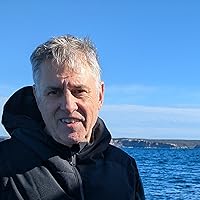
Michael J. Benton FRS is Professor of Vertebrate Palaeontology at the University of Bristol. He is particularly interested in early reptiles, Triassic dinosaurs, and macroevolution, and has published over 50 books and 300 scientific articles. He leads one of the most successful palaeontology research groups at the University of Bristol, and has supervised over 60 PhD students.
This is a nicely written, broad overview of various extinction events, examining how life dies, adapts and survives. Extinctions are an end... but also a beginning.
I really enjoyed this book. If you like evolution, paleontology and/or geology then you'll probably like this book.
It goes into detail about the 5 mass extinctions, how they happened, the result, and how animals came back from them. It does have technical terminology but the author does well to explain it.
Paleontology Professor Michael J. Benton tells readers of 'Extinctions – How Life Survives, Adapts, and Evolves' that his book is about “paleobiophilia… meaning the love of ancient life for its own sake. There are no arguments here that fossils should be in some way useful or carry a moral lesson. They don’t have to be related to a living species or show some amazing property… It’s enough that they really existed, and we can know something about them and wonder at their stories. Each fossil species had a beginning and an end. The end is the extinction of the species… for each species there was a reason why it finally disappeared.”
“Extinctions happen on different scales. What we usually think of are extinctions of a single species, such as … the dodo or quagga… No species lasts forever, …species of mammals and birds typically last for about a million years, and for some other groups, such as mollusks and some plants, individual species might last for ten million years.” “An extinction event is when many species die out at the same time, perhaps for related reasons.” “Some extinction events were much larger, and so huge they are called Mass Extinctions.”
The Five Mass Extinctions were named, and occurred at approximately: • End-Ordovician 450 million years ago, • End-Devonian 375 million years ago, • End-Permian 250 million years ago, • End-Triassic 200 million years ago, and • End-Cretaceous 75 million years ago,
Michael J. Benton proposes an alternative way to view extinction events, namely as a biological form of creative destruction: “… mass extinctions also have a creative aspect. Life always bounced back. After the killing agency has gone – whether a meteor or a huge volcanic eruption – the surviving species take over.” “What is often seen in times of recovery is something completely new…. Something special can happen during the rebuilding of ecosystems when the removal of dominant plants and animals gives others their opportunity to take over. …there is a kind of inertia in ecosystems, where the same stable system goes on …because the effort, in terms of ecology or evolution, is too much to shake up the old regime. This is what ecologists Michael Rosenzweig and Robert McCord called 'incumbent advantage'. If you are part of the ruling system, you are protected simply by being there. The best example of 'incumbent advantage' and replacement in the fossil record is probably the case of dinosaurs and mammals 66 million years ago… The winning model was ‘release and radiate’, meaning mammals had been held back ...and could only freely diversify after the dinosaurs had been removed ...” “Paleontology shows us that many billions of species that once existed are now extinct, and their natural extinctions enabled new species to inherit the earth… living species probably represent less than 1% of all that have existed on the earth.”
The Earth was initially molten, and the lava needed time to cool. The first rocks formed ~ 4.3 billion years ago. The Earth’s crust did not cool enough for the formation of continents and the beginnings of life until ~ 2.5 Billion years ago. Between 2.5 and .5 Billion years ago (Proterozoic Eon), simple lifeforms, such as bacteria and algae, developed. The current Phanerozoic Eon began ~540 Million years ago; it includes the Paleozoic, Mesozoic, and Cenozoic Eras. The Cambrian period (541 – 485 Million years ago) was the first part of the Paleozoic Era.
Charles Darwin (1809-1882) had predicted the existence of pre-Cambrian (540 million years ago) life, but until 1947, no fossils had been found to support his claim. The simplest forms of life, such as prokaryotic cells, might not fossilize easily or well. Without fossils, paleontologists can’t identify lifeforms. All species and all fossils have a beginning and an end. Stromatolites, or layered fossils, from the pre-Cambrian period, were first found in Shark Bay, Australia. Charles Walcott (1850-1927) explored the Grand Canyon River looking for fossils. Walcott also discovered the Burgess Shale fossils in British Columbia. Additional Precambrian (602-450 million years ago) fossils have been found in Russia, Namibia, and Ontario, Canada.
DNA sequencing allowed scientists to compare lifeforms differently. Information from DNA was incorporated with anatomic and chemical data to identify relationships and create a taxonomy of life. Evolutionary theory has been refashioned repeatedly as new information became available. The Cambrian Explosion, arguably the largest animal evolution, lasted ~36 million years; it was called an explosion because of its large diversification. Documentation of the Cambrian Explosion has come from the Haikou Quarry (oldest fish – Haikouicthys), the Burgess Shale in British Columbia (Stephen Gould described lifeforms like Hallucigenia, Wiwaxia, and Opabinia), and the Chengjiang Biota, among many fossil sources.
Stephen Gould ('Wonderful Life – The Burgess Shale and Nature of History ') argued for a different evolutionary model. Gould noted many species from the Burgess Shale which have not subsequently been found anywhere else. These observations emphasized the broad extinction of species. Gould called his model 'decimation and diversification' rather than a branching tree, or an 'evolutionary cone' of successive improvement.
The Steptoean Positive Carbon Isotope Excursion (SPICE) was a ~3-million-year cycle of death (487-494 million years ago); it was thought to be a series of extinctions that ended the Cambrian period. Geochemists explored the roles of ocean anoxia and high sulfur. The Great Ordovician Biodiversification Event (GOBE) (485-444 million years ago) produced corals, plankton, and phytoplankton (using photosynthesis). Volcanoes added minerals to the oceans and oxygen levels were rising. Coral reefs were associated with forms of life, such as brachiopods. Extinction occurred in two steps: global freezing after glaciation and later, warming and decline in oxygen on the seabed. Gondwana was a giant continent that included parts of modern Africa, South America, Antarctica, and Australia; it drifted over the South Pole. Ocean anoxia and euxinia (excess sulfur) contributed to volcanic hyperthermal extinctions.
The end-Permian Mass Extinction was the largest of all of the mass extinctions, killing 90-95% of all species. Paleontologists give their best estimates from the limited fossil evidence they have. Benton tells readers that scientists are more confident of their estimates regarding extinctions of families and genera than of species. Doug Erwin of the Smithsonian Institution summarized much of the available evidence regarding the end-Permian Mass Extinction in his book, 'The Great Paleozoic Crisis'. He advanced the ‘Murder on the Orient Express hypothesis’, after the Agatha Christie novel in which all 12 of the suspects had jointly murdered their victim, each stabbing him with a knife. The ‘murderers’ Erwin identified included: massive volcanic eruptions in Siberia (called Siberian Traps, 240-200 million years ago), rising levels of carbon dioxide, falling sea level, loss of oxygen (anoxia) on seabeds, global warming, pushing down the thermocline (contact of warmer surface and cooler deeper water) which ordinarily favors circulation and capture of oxygen from the air, and interactions of these and other factors. Many questions remain unanswered. Resetting evolution or recovery – Statistical paleontologists have made calculations regarding the rich diversity of life that occurred in the Triassic period after the largest end-Permian extinction.
The Carnian Pluvial Episode (234-232 Million years ago) was caused by massive volcanic eruptions off the coast of modern North America that pumped immense amounts of carbon dioxide (CO₂) into the atmosphere, and greenhouse warming that included a massive CO₂ spike.
Paleologist Benton described 'Components of the Universal Hyperthermal Crisis Model': volcanic eruptions; expulsion of greenhouse gases (carbon dioxide, methane, water vapor); global warming; acid rain; soil wash-off; ocean acidification; seabed anoxia; euxinia or high sulfur concentrations leading to phosphates in water and sediment, among other things. There have been Five Hyperthermal Crises, only two of which were mass extinctions: • End-Capitanian (259 million years ago or Ma) • End-Permian Mass Extinction (252 Ma) • Carnian Pluvial Episode (234-232 Ma) • End-Triassic Mass Extinction (201 Ma) • Early Toarcian Oceanic Anoxic Event or OAE (183 Ma).
Benton tells his readers: “The erupted volcanic gases (of the hyperthermal model) have an uncanny resemblance to the polluting gases that humans today are releasing into the atmosphere by burning coal and fossil fuels… we are already seeing global warming, acid rain, and ocean acidification. These are the predictable consequences of the hyperthermal model – it doesn’t matter whether the carbon dioxide comes from gas-guzzling cars or a volcano. The killing of life on land by heat and acid rain, and life in the sea by heat, acidification, anoxia, and euxinia, have (previously) been consequences of massive eruptions.”
‘The Day the Dinosaurs Died’ was ~ 66 Million years ago, when an asteroid 6 miles across crashed in Chicxulub, Yucatan Peninsula, Mexico. Benton tells readers of many controversies surrounding this theory of dinosaur extinction, including multiple discoveries that have helped to focus the inquiry. The evidence for the meteor strike include the formation of two unusual forms of silica, coesite and stishovite, that both require pressures too high to be formed by volcanic eruptions, by petrologists Chao and Shoemaker; a worldwide iridium (from a meteor or asteroid) layer that dates to the time of the extinction; identification of the crater (in an area of limestone and sulfur-rich salts) by geologist Alan Hildebrand in 1990; the discovery of Boron isotopes that support ocean acidification; and the timing of termination of photosynthesis, presumably caused by meteor dust blocking light from the Sun.
1930s to 1950s ‘Modern Synthesis’ – “This was when modern evolutionary theory was established, based firmly on Darwin, and incorporating the laboratory-based science of genetics, and after 1953 and the discovery of the structure of DNA, the science of molecular biology.” “… in drawing together the threads of our exploration of extinction events, the evidence shows; • The end-Precambrian events enabled the origin of modern animal groups in the Cambrian Explosion; • The end-Cambrian Mass Extinction triggered the Great Ordovician Biodiversification Event, when so many marine groups expanded and life crept onto land; • The end-Permian Mass Extinction triggered the Triassic Revolution, with all those …meaty, sea creatures and insulated, warm-blooded proto-dinosaurs and proto-mammals; • The end-Cretaceous Mass Extinction gave angiosperms (flowering plants), mammals, and birds their chance to flourish.” Paleontologist Michael J. Benton concludes: “Through this review, a novel finding has been revealed: these past extinction events, viewed from the present-day, all make remarkably creative contributions to the overall history of life.” I recommend this remarkable story of cycles of life to readers who are curious to learn about life’s origins.
Written very clearly and entertaining as far as extinction events could go. It is a great natural history of extinctions occurring as far as the geological evidence can go. The only part where it wasn't ringing true was in the last chapter dealing with humanity. I feel sure that the publisher asked for a more upbeat assessment of humanity's chances but frankly, anything that shows the rise of mankind and the environmental effects will have a devastating effect upon the world. Meanwhile propaganda from humanity's spin doctors and deniers of climate change stupidly bury our heads in the sand. This feels like humanity's death spiral if we are honest with ourselves. Barring a cataclysmic geological or biological event, humanity as a parasite seems about to kill the host.
This is a fantastic introduction to life on Earth. Only, it is so much more than that- it is concise, it is engaging, and it is almost impossible to put down. And the breadth of ideas is so astonishing that you won't find much excluded from it either. Anyone interested in how we got here will surely enjoy this book. I certainly did.
I find it hard to find anything specific to criticise here - it's rigorous and thorough all the way through - it's just a bit... boring.
I don't know why, I usually love this stuff, but I kept getting the feeling I had read this before. Probably I have in many smaller parts and if you haven't then this will probably be enlightening and informative.
I was really excited to read this book at first. I was hoping it would be an overview of several extinction events and that it would delve into them in detail. Instead I found the book to be pedantic and boring. I really had a hard time finishing it. If I were reading it again, I would probably have DNF'd it.