

What do you think?

Bark Tree
Seated in a Paris cafe, a man glimpses another man, a shadowy figure hurrying to the train. Who is he? he wonders, and how does he live? Instantly the shadow comes to life, precipitating a series of hilarious encounters involving a range of disreputable and heartwarming characters that prove as incredible as real life. The Bark Tree is an enchantment itself. A supreme example of the novel poem. Claude Simonnet
283 pages, Paperback
First published October 11, 1933
About the author
Raymond Queneau
221 books612 followersNovelist, poet, and critic Raymond Queneau, was born in Le Havre in 1903, and went to Paris when he was 17. For some time he joined André Breton's Surrealist group, but after only a brief stint he dissociated himself. Now, seeing Queneau's work in retrospect, it seems inevitable. The Surrealists tried to achieve a sort of pure expression from the unconscious, without mediation of the author's self-aware "persona." Queneau's texts, on the contrary, are quite deliberate products of the author's conscious mind, of his memory, and his intentionality.
Although Queneau's novels give an impression of enormous spontaneity, they were in fact painstakingly conceived in every small detail. He even once remarked that he simply could not leave to hazard the task of determining the number of chapters of a book. Talking about his first novel, Le Chiendent (usually translated as The Bark Tree), he pointed out that it had 91 sections, because 91 was the sum of the first 13 numbers, and also the product of two numbers he was particularly fond of: 7 and 13.
Although Queneau's novels give an impression of enormous spontaneity, they were in fact painstakingly conceived in every small detail. He even once remarked that he simply could not leave to hazard the task of determining the number of chapters of a book. Talking about his first novel, Le Chiendent (usually translated as The Bark Tree), he pointed out that it had 91 sections, because 91 was the sum of the first 13 numbers, and also the product of two numbers he was particularly fond of: 7 and 13.
Ratings & Reviews
Friends & Following
Create a free account to discover what your friends think of this book!
Community Reviews
Displaying 1 - 30 of 69 reviews

April 27, 2017
What may one see just sitting in a café? One may see life. One may observe human beings caught in the routine of living.
And if one keeps watching long enough then one would surely see the entire life in all its quotidian absurdity. And then one would understand that all the human quotidian pursuits are pitiful and ridiculous.
Witch Grass is an absurdist philosophical mystery bordering on the surrealistic comedy…
Such was the fate of a rooster… A typical human fate isn’t much different…
If we don’t think we don’t exist.
He noticed, not on purpose, though, that his shoes were down-at-the-heels; so were those of the next man next to him, and of the next man, too. He suddenly had a vision of a civilization of down-at-the-heel shoes, a culture of worn-away soles, a symphony of suede and box calf, in the process of being reduced to the remarkably minimal thickness of the paper tablecloths in restaurants for the hard up.
And if one keeps watching long enough then one would surely see the entire life in all its quotidian absurdity. And then one would understand that all the human quotidian pursuits are pitiful and ridiculous.
Old Taupe had his own idea of happiness; he had acquired it in poverty; he had elaborated it in penury. Happiness, for him, consisted in excessive security. Since he had been ruined, he no longer feared ruin. Having reached the minimum of existence, he was afraid of going beyond it. Supported by a heap of junk and scrap iron, he thought himself happy; he thought himself wise; he was, moreover, alcoholic and lecherous.
Witch Grass is an absurdist philosophical mystery bordering on the surrealistic comedy…
In its youth, this animal had fallen on its head; ever since, it had crowed at sundown, even when there was the extra hour for summertime; it was roasted, the following year, and its flesh delighted the omnivorous palate of its stupid owners.
Such was the fate of a rooster… A typical human fate isn’t much different…
If we don’t think we don’t exist.

January 19, 2012
Certain people who think a lot about these things and then have their thoughts published point to the years 1938-39 as the beginning of postmodernism in literature. Those were the years that saw the publication of Finnegans Wake, At Swim-Two-Birds and Beckett’s Murphy. Stellar. They were also years in which the world was falling apart into total fucking cataclysm, what with that generation- and continent-destroying World War thing going on, and shattered art begins to reflect shattered space and all of that. Fine. I suggest they take a look six years back, because Queneau pretty much anticipated the whole postmodern deal- characters aware of their being characters, collage of styles, disconnected voices, unreliable narrative realities, circumradiant plot lines, dreams and errors of perception mattering as much as the “truth” of the book, form determining content, etc.- in 1933 with his first novel Witch Grass.
What’s Queneau’s book about? Let’s say it’s about how people see, or how when they go about trying to see things they see everything incorrectly. Or let’s say it’s about how people don’t exist until they think, but then when they begin to exist, because of the thinking, they realize that thinking too much negates existence, or twists existence into absurdity. It’s about surfaces and depths. Or let’s say this is a book about how stupid people can be, or how clever they can be. This is a book about voyeurism versus interaction and participation, and habit versus spontaneity. Let’s say it’s about corruption and innocence (because it is) but let’s also say it’s a book about not being able to know what or who is corrupt or innocent, or what the words “corrupt” or “innocent” signify. Let’s say this is a book that questions if words can contain meanings (that’s why so many of the words are distorted, or misspelled, or made up- but the words are also that way because of how people speak), or if what we see is anything but a mirage, or if the mirages we see can be translated into sets of correlative cognitive symbols at all. Let’s say it’s a book about how we don’t know the people we interact with everyday. And about how every cigarette butt hides its own truth. Let’s say the plot of the book is the surface of a swiftly moving river over which someone is skipping stones*, and the points of impact and ricochet of the stones are creating radials, and those radials are intersecting, and all the points of impact and ricochet and points of intersection of the radials as well as the swiftly moving surface of the river are the book. Let’s say Witch Grass is about how frenetic perceiving things while being alive can be. The book is dripping with philosophy, but it’s not like insisting on it or anything. It’s also really funny, I mean it’s a comedy, and elements of it are noirish, or parodies of film noir, and it is a lot of other things too.
Anyway, I highly recommend reading this, it’s probably better than anything you are reading right at this moment, which includes this review. So I’ll wrap it up.
*Research undertaken by a team led by French physicist, Lydéric Bocquet, has discovered that an angle of about 20° between the stone and the water's surface is optimal. Bocquet and his colleagues were surprised to discover that changes in speed and rotation did not change this fact. Work by Hewitt, Balmforth and McElwaine has shown that if the horizontal speed can be maintained skipping can continue indefinitely. Earlier research reported by Bocquet calculated that the world record of 38 rebounds set by Coleman-McGhee, unchallenged for many years, required a speed of 12 m/s (25 mph), with a rotation of 14 revolutions per second.
What’s Queneau’s book about? Let’s say it’s about how people see, or how when they go about trying to see things they see everything incorrectly. Or let’s say it’s about how people don’t exist until they think, but then when they begin to exist, because of the thinking, they realize that thinking too much negates existence, or twists existence into absurdity. It’s about surfaces and depths. Or let’s say this is a book about how stupid people can be, or how clever they can be. This is a book about voyeurism versus interaction and participation, and habit versus spontaneity. Let’s say it’s about corruption and innocence (because it is) but let’s also say it’s a book about not being able to know what or who is corrupt or innocent, or what the words “corrupt” or “innocent” signify. Let’s say this is a book that questions if words can contain meanings (that’s why so many of the words are distorted, or misspelled, or made up- but the words are also that way because of how people speak), or if what we see is anything but a mirage, or if the mirages we see can be translated into sets of correlative cognitive symbols at all. Let’s say it’s a book about how we don’t know the people we interact with everyday. And about how every cigarette butt hides its own truth. Let’s say the plot of the book is the surface of a swiftly moving river over which someone is skipping stones*, and the points of impact and ricochet of the stones are creating radials, and those radials are intersecting, and all the points of impact and ricochet and points of intersection of the radials as well as the swiftly moving surface of the river are the book. Let’s say Witch Grass is about how frenetic perceiving things while being alive can be. The book is dripping with philosophy, but it’s not like insisting on it or anything. It’s also really funny, I mean it’s a comedy, and elements of it are noirish, or parodies of film noir, and it is a lot of other things too.
Anyway, I highly recommend reading this, it’s probably better than anything you are reading right at this moment, which includes this review. So I’ll wrap it up.
*Research undertaken by a team led by French physicist, Lydéric Bocquet, has discovered that an angle of about 20° between the stone and the water's surface is optimal. Bocquet and his colleagues were surprised to discover that changes in speed and rotation did not change this fact. Work by Hewitt, Balmforth and McElwaine has shown that if the horizontal speed can be maintained skipping can continue indefinitely. Earlier research reported by Bocquet calculated that the world record of 38 rebounds set by Coleman-McGhee, unchallenged for many years, required a speed of 12 m/s (25 mph), with a rotation of 14 revolutions per second.

June 5, 2011
This isn’t some magazine for curious botanists, oh no. It’s Queneau’s debut showcase novel, a bright blazing epic of comedic splendour, and a love letter to Paris and its pond life.
At the present moment I feel a little languorous, so further observations or reductive summaries will have to hang fire until the liveliness of spirit is once again reinstated in my brain. In the meantime, here is a general piece of advice: don’t read Eggers. Read Queneau instead. Don’t read Coupland. Read Queneau instead. Don’t read Amis. Read Queneau instead. Don’t read Palahniuk. Read Queneau instead. Don’t read Coetzee. Read Queneau instead.
Let’s face it, we waste too much time not reading Queneau.
At the present moment I feel a little languorous, so further observations or reductive summaries will have to hang fire until the liveliness of spirit is once again reinstated in my brain. In the meantime, here is a general piece of advice: don’t read Eggers. Read Queneau instead. Don’t read Coupland. Read Queneau instead. Don’t read Amis. Read Queneau instead. Don’t read Palahniuk. Read Queneau instead. Don’t read Coetzee. Read Queneau instead.
Let’s face it, we waste too much time not reading Queneau.

August 2, 2021
I'm now a confirmed Queneau fan and looking to read more of his metafictional fun.

July 15, 2013
Sometimes a book will fail us and sometimes we will fail a book. I failed “Witch Grass” , on paper it’s something that I should have been all over, characters talk for pages at a time talk turns into philosophy , there’s houses with unfinished rooms, waterproof hats with rubber ducks , people are affected by a man ran over my a bus and killed the scene is told and retold by different ways through different characters’ accounts, it’s a book with great original prose , Raymond Queneau’s writing is playful and never serious though it deals with heavy themes and ideas (Death!!!), it loops to form full circles and form realizations in not only the story by realization in the reader’s mind(your mind, ), it’s wacky , insane , zealous , spastic, tight, angry , happy, sad, melodrama all at once, and a lot of french fries are eaten by the characters things in a book I love. That is till the whole damn thing just grew so tiresome to read, I usually love books like this that go behind plot, that aren’t for most casual readers, that are stylized, but this one I failed it didn’t fail me, no it didn’t , I just want to eat some french fries. Zello have you tried Wendy’s new french fries zey reel good much better then McDonald’s and french fries found in many a fine restaurant, hey there was this restaurant on the Food Network , that deep fried their french fries in duck fat, and garnished them spuds in duck fucking skin!!!!!! can you fucking believe that. Nothing is real.

March 4, 2025
4.5 stars
Gobsmacking that this insanely accomplished and utterly unclassifiable novel was Queneau's debut. For 7/8 of its span, "Witch Grass" is the ultimate Queneau text - funny, surreal, slapstick, philosophical, entertainingly plotted, dazzlingly structured with a dense mix of memorable characters whose foibles eventually intersect. It feels like the ur-source from which so many of his subsequent novels would spring. So read it, will ya?
Gobsmacking that this insanely accomplished and utterly unclassifiable novel was Queneau's debut. For 7/8 of its span, "Witch Grass" is the ultimate Queneau text - funny, surreal, slapstick, philosophical, entertainingly plotted, dazzlingly structured with a dense mix of memorable characters whose foibles eventually intersect. It feels like the ur-source from which so many of his subsequent novels would spring. So read it, will ya?

October 24, 2017
The silhouette of a man appeared in profile; so, simultaneously, did thousands. There really were thousands. He had just opened his eyes, and the teeming streets were seething; seething, too, were the men who worked all day. This particular silhouette emerged from the wall of an enormous, unbearable building, an edifice which looked as if it were designed for suffocation, and which was a bank. The silhouette, detached from the wall now, oscillated, jostled by other shapes, not visibly behaving as an individual, pushed and pulled in various directions, less by its own anxieties than by the sum of the anxieties of the thousands of people surrounding it. But this oscillation was only apparent, in reality, it was the shortest distance between toil and sleep, between affliction and boredom, between suffering and death.That's one hell of an opening paragraph for a first novel. But, then again, this is one hell of a first novel.
Even here at the start of things Queneau was already beginning to formalize his writing into an outline that would eventually become the OuLiPo: “A novel is a little like a sonnet, though it is much more complicated. I believe in things being highly constructed. I don’t expect everyone to do as I do, but that’s the way it is with me. I like my characters’ entrances and exits to be very precise. If there are repetitions, they are intentional. That’s how I work. I hope it isn’t obvious. It would be terrible if it were obvious." This work is structured into seven chapters, each consisting of 13 sections. If you missed this, Queneau has helpfully named the last (and only this one) section "XCI" (I suppose he at a bare minimum expected the reader to figure it out from there). Each chapter's 13th section is obviously - it's set in italics for one, but each is significantly more poetic and stylized than the other sections - different that the other sections, and these final sections all kind of string together. The final (named) section is different than the previous six "thirteenth" sections, but also ties the book together into one endless loop.
Oh, and the book is also mostly a novelization of Descartes' Discourse on Method written in "a living language, the language of the ordinary man", with the main character being the embodiment of "cognito, ergo sum". It kind of reads like an existentialist (think the fiction of Sartre and Camus) novel written by Ilf and Petrov - but 5 years before Nausea, 7 years before The Stranger, and years and years before Ilf and Petrov would be translated from Russian. And if that doesn't make you want to read it, then I really don't know what else to say to you.

November 4, 2011
This is a very disorienting and odd read that seems almost like picaresque Jarry. Q. is a very intelligent writer that doesn't expect to be liked by people that won't bother to let him have free reign in creating a new experience for them. Witch Grass is a very bookish book that is aware of other bookish books. Pardon my lazy writing but Witch Grass has sort of unraveled my clarity at the moment and I feel labored in writing a review of a book that doesn't lend itself to easy comprehension. But often some of the best bonwhatevers require you to unlearn, relearn and digest. Schoenberg, Jarry, Rabelais, Svankmajer, Rchard Gerstle all achieve this same effect by wrenching you out of the typical, threatening to outpace your mental capacities or possibly drink you under the table. This is a bit of a boozy read that sort of works like Krudy at times with its descriptions of man as defined by what he drinks. In Witch Grass people drink: lemonade, Pernod, white wine, beer, Campari and more but abstain from the essence of fennel.
This will be great and important and when you're ready for it - you'll appreciate it and the changes IT brings.
But IT can be really obfuscating at times. I found it almost impossible to maintain any identification with characters, their existence, and their physical characteristics and while I know this confusion would ease with better reading skill, repeated sitting, less crying infants in my house etc - it's obvious that Q doesn't really have intention of providing any linear understanding of his writing. In this way the experience becomes something like not interrupting a story you walked in on late to have a barnstorming storyteller lose his pace and place. As if somehow Q would just as well mince the whole text, pack it into a shell and shoot you in the ass with it. So at times it's a bit painful. I've read enough Jarry and the long list-making antics of Rabelais and his sons to not be thrown off course by a non-linear plot. I don't think you go out and buy Q books without having a notion that you are going to be tossed around and off a bit and there's no lack of brilliance present to reward your attention. You might get a similar experience from standing in front of Balthus' The Street" from 1933: Which character is flat, a sign? Why is sexual prowess reserved for adolescents? Does what I see matter or isn't it HOW I see that should be considered? Do the characters have any understanding or awareness of each other apart from their collective presense at the current moment?
Ultimately the book seems primary focused on the function of interpretation in general. Barbara Wright's states - it's a book about HOW things are, not what. And there’s no doubt that if you're interested in how people like Proust, Kosztolanyi and Stendhal examine and negotiate characters and their interactions - you'll find something to love about Witch Grass. I enjoyed reading We Treat Women Too Well and Blue Flowers more - but both are far less important than this first novel. This requires more work - that's not bad if you are up for some surreal heavy lifting.
I read once that Schoenberg's Pierrot Lunaire is like hugging a porcupine, this one is more like practicing questionable wrestling moves with one.
This will be great and important and when you're ready for it - you'll appreciate it and the changes IT brings.
But IT can be really obfuscating at times. I found it almost impossible to maintain any identification with characters, their existence, and their physical characteristics and while I know this confusion would ease with better reading skill, repeated sitting, less crying infants in my house etc - it's obvious that Q doesn't really have intention of providing any linear understanding of his writing. In this way the experience becomes something like not interrupting a story you walked in on late to have a barnstorming storyteller lose his pace and place. As if somehow Q would just as well mince the whole text, pack it into a shell and shoot you in the ass with it. So at times it's a bit painful. I've read enough Jarry and the long list-making antics of Rabelais and his sons to not be thrown off course by a non-linear plot. I don't think you go out and buy Q books without having a notion that you are going to be tossed around and off a bit and there's no lack of brilliance present to reward your attention. You might get a similar experience from standing in front of Balthus' The Street" from 1933: Which character is flat, a sign? Why is sexual prowess reserved for adolescents? Does what I see matter or isn't it HOW I see that should be considered? Do the characters have any understanding or awareness of each other apart from their collective presense at the current moment?
Ultimately the book seems primary focused on the function of interpretation in general. Barbara Wright's states - it's a book about HOW things are, not what. And there’s no doubt that if you're interested in how people like Proust, Kosztolanyi and Stendhal examine and negotiate characters and their interactions - you'll find something to love about Witch Grass. I enjoyed reading We Treat Women Too Well and Blue Flowers more - but both are far less important than this first novel. This requires more work - that's not bad if you are up for some surreal heavy lifting.
I read once that Schoenberg's Pierrot Lunaire is like hugging a porcupine, this one is more like practicing questionable wrestling moves with one.

March 20, 2012
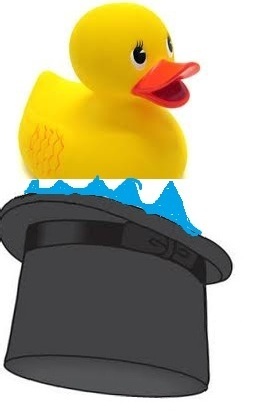
(Proper review pending.
In the meantime, read Geoff's review.
(p.s. It took forever to copy and combine the images of the duck and the top hat and to draw in the water. Totally worth it, though.)
(p.p.s. While reading, I couldn't help thinking that this would make a perfect Guy Ritchie movie--in the same vein as Lock, Stock and Two Smoking Barrels or Snatch. The more farcical it got, though, the more I thought it would make a perfect Wes Anderson movie--in the same vein as The Royal Tenenbaums or Moonrise Kingdom. Somebody write up a screenplay!)
Favorite Quotations:
-"I'm not a philosopher. No, really not. But it just happens, every so often, that something very ordinary seems beautiful to me and I'd like it to be eternal. I'd like this bistro, and that dusty light bulb, and that dog dreaming on the marble, and even this night--to be eternal. And their essential quality is precisely that they aren't" (24).
-"The stairway had forty-seven steps; that of Obonne station had the same number. Etienne had just made this discovery and, comparing it with that of the little ducks and that of the place where they sold French fries, he concluded that the world is big and fearsome, full of mysteries and even, as you might say, enigmas" (55).
-"Supported by a heap of junk and scrap iron, he thought himself happy; he thought himself wise; he was, moreover, alcoholic and lecherous" (93).
-The entire exchange of letters between Theo and Nercense (52+).

April 13, 2008
I just reread this as part of my Oulipian bender (thank YOU, Daniel Levin Becker), and I loved it even more than I did the first time. I think that's maybe because I'm a better reader now than I was a decade ago, which, to be honest, sort of makes me feel like a bad-ass (I'm progressing in life and learning!), but also makes me want to reread EVERYTHING.

Read
April 4, 2014Hard to say what I made of this. It was hard to find a paragraph I didn't like. But the whole thing didn't cohere at all, and I made the mistake of reading it in translation-- altogether to many puns based on regional accents and broad working-class Parisian dialect here to be read in anything other than the original-- and furthermore this book was just trop, trop français. Queneau's own Zazie in the Metro is practically a man in a mustache and a stripy shirt well-armed with a satchel full of baguettes rendered as a short novel, but this takes that level of Frenchiness and reorganizes it into a scattershot form with repeated mentions of ducks floating in hats and a serious obsession with fries. Intriguing enough, but a bit incoherent.

November 5, 2022
However I’ve structured my life thus far has lead to me discovering this amazing man.

March 6, 2019
NYRB never fails! I had not read anything by Queneau, and I enjoyed this very much. His use of language, his humor, and poetry, philosophy, everything he combines here is wonderful. Truly enjoyed this one, I was in need of a really good novel, and it did the trick.

May 17, 2020
I read this under the original title, The Bark Tree. It's my favorite novel ever.

November 3, 2010
It starts with the evening rush hour, the usual stream of people heading from banks and offices to the train; among them is an observer, a person who doesn't work, but who sits at a café at this time of the day, to watch. The people are all the same to the observer, each a silhouette in a sea of silhouettes, but then one becomes familiar over the course of several days. We see the silhouette, the man, go home; we see his wife, his stepson, his cat, the unfinished house they live in, out in the suburbs (the money ran out). The observer follows the man one day; another man, by chance, follows his wife. It's strange and unsettling but also funny, a series of chance encounters and crossing of paths. And I like the style of Queneau's writing, the unexpected images and turns of phrase, like the moment when, right at the start of the book, the observer opens his eyes "just as the silhouette was being pocketed by the metro, and disappearing" (5). Or this: "Saturnin taught Etienne how to work the elevator, and the two latter immediately took flight toward the upper floors of the uninhabited apartment house" (106).
I like, too, the everyday-ness of the start of the book: routines and their disruption, the daily commute and those days when everyone on the train seems to be getting on one another's nerves more than usual, people eavesdropping, people staring, people lost in thought. "Such is life, such is life, such is life," our original silhouette, whose name turns out to be Etienne Marcel, repeats to himself one day, and of course it's apt (36). There are moments of humor and absurdity: a woman who, having seen an accident from a table in a certain café, keeps going back in hopes of seeing another one. There are moments, too, of offhand cruelty, of cold-heartedness, things that rather made me squirm.
As the book goes on, Etienne has a philosophical awakening/crisis: he feels he's never existed before (though he's never been aware of it) but now, suddenly, he does; this matches with the sense that the observer (whose name is Pierre Le Grand), has, the sense that Etienne is filling out, becoming three-dimensional. And as the book goes on, Etienne keeps on thinking, which is new for him. The philosophical parts of the book (including some metafictional moments) are pretty great and pretty hilarious, like Etienne going off about how he doesn't know anything, how you can't know anything, how he doesn't even know who he himself is, how he can't even say if the verb "to be" has any meaning at all. To which Pierre, deadpan, replies: "You've made great progress in metaphysics" (156). Meanwhile, things keep on getting weirder and funnier, though with bits of sadness, too, but mostly humor: everyone meddling and manipulating and misjudging one another, with intrigues and double-dealings and wild goose chases centered around, among other things, an old junk dealer who lives in a shack by the railway. I think that Barbara Wright, in her introduction to this novel, sums it up better than I could: "How it is—that is what Queneau, in his own way, is always describing. How life is" (xii).
I like, too, the everyday-ness of the start of the book: routines and their disruption, the daily commute and those days when everyone on the train seems to be getting on one another's nerves more than usual, people eavesdropping, people staring, people lost in thought. "Such is life, such is life, such is life," our original silhouette, whose name turns out to be Etienne Marcel, repeats to himself one day, and of course it's apt (36). There are moments of humor and absurdity: a woman who, having seen an accident from a table in a certain café, keeps going back in hopes of seeing another one. There are moments, too, of offhand cruelty, of cold-heartedness, things that rather made me squirm.
As the book goes on, Etienne has a philosophical awakening/crisis: he feels he's never existed before (though he's never been aware of it) but now, suddenly, he does; this matches with the sense that the observer (whose name is Pierre Le Grand), has, the sense that Etienne is filling out, becoming three-dimensional. And as the book goes on, Etienne keeps on thinking, which is new for him. The philosophical parts of the book (including some metafictional moments) are pretty great and pretty hilarious, like Etienne going off about how he doesn't know anything, how you can't know anything, how he doesn't even know who he himself is, how he can't even say if the verb "to be" has any meaning at all. To which Pierre, deadpan, replies: "You've made great progress in metaphysics" (156). Meanwhile, things keep on getting weirder and funnier, though with bits of sadness, too, but mostly humor: everyone meddling and manipulating and misjudging one another, with intrigues and double-dealings and wild goose chases centered around, among other things, an old junk dealer who lives in a shack by the railway. I think that Barbara Wright, in her introduction to this novel, sums it up better than I could: "How it is—that is what Queneau, in his own way, is always describing. How life is" (xii).

May 12, 2008
Literature's a funny thing, we've tried since the beginning to establish concrete standards for greatness, or even just for what's good and what's not; but there's no getting around the fact that people read books and people change and so our experiences of books always change. A reading of a book today can vary considerably from a reading of the same book ten years ago, regardless of objective standards. I for one don't need no stinkin "objective standards."
So a few years ago I loved this book. It could've been because I was surprised that so lightly comic, sometimes silly, sometimes deceptively profound, and so inventive a novel could exist between the old musty smelling covers of my flea market New Directions copy (entitled The Bark Tree) which had been sitting on my shelf for years. At the time I would've given it 5 stars, but I tried reading it again over the weekend and it just kind of annoyed me, my mind kept drifting from the text, I couldn't keep the characters straight, and it all just seemed too padded with unnecessary stuff.
I'm sure the book's still good. I just hope my next reading of it occurs when my particular mind at the time is more in tune with the mind of the book.
So a few years ago I loved this book. It could've been because I was surprised that so lightly comic, sometimes silly, sometimes deceptively profound, and so inventive a novel could exist between the old musty smelling covers of my flea market New Directions copy (entitled The Bark Tree) which had been sitting on my shelf for years. At the time I would've given it 5 stars, but I tried reading it again over the weekend and it just kind of annoyed me, my mind kept drifting from the text, I couldn't keep the characters straight, and it all just seemed too padded with unnecessary stuff.
I'm sure the book's still good. I just hope my next reading of it occurs when my particular mind at the time is more in tune with the mind of the book.

February 11, 2008
This surrealist novel is the first by Raymond Queneau, and the first of his I have read (working my way towards Zazie in the Metro which I am told I will especially like). In Witch Grass a man sitting in a cafe in Paris sees another man and wonders who he is and what his life is like. Immediately the other man comes to life and the reader is taken through this bizarre sequence of events which is often compared to Lewis Carroll in style. There are normal everyday objects that become very central to the story, objects which come up time and again, pulling the story back into a simple knot from which it had previously fallen apart.
Mostly a fun read, often times frustrating for me (really need to stop reading some books on the bus in short spurts). I have not been turned off by Queneau, but the idea that possibly he is not an author for me is there. I started with his first novel (not disappointing for a first novel by any stretch of the imagination) and I will find his second and go from there.
Mostly a fun read, often times frustrating for me (really need to stop reading some books on the bus in short spurts). I have not been turned off by Queneau, but the idea that possibly he is not an author for me is there. I started with his first novel (not disappointing for a first novel by any stretch of the imagination) and I will find his second and go from there.

August 2, 2013
Perhaps Pynchon did not read this book but I'd be surprised. Queneau gets into postmodernist mode in the final 2 chapters and it's worth the read. Up to that point, his portrayal of identity and perception is also worthwhile. The plot unravels a bit at the end but he makes it appear that it was supposed to do that. Shame that more postmodernists don't have that skill.

May 3, 2014
Łuskanie postaci
Wariacka powieść podmiejska osnuta na kanwie zabawy w głuchy telefon – tak w skrócie można opisać „Psią trawkę” Queneau. Kto mieszkał kiedyś w malutkich miasteczkach albo bywa na wsi, kojarzy być może duszną atmosferę, w której ludzie podsłuchują to, co nie przeznaczone dla nich, słyszą z tego tylko połowę, rozumieją jeszcze mniej i dopowiadają sobie całą resztę. Na farsę – materiał idealny. Tyle tylko, że z początku nic jej nie zapowiada. Czytałam blurb z tylnej części obwoluty, obiecujący mi jakiś skarb, polowanie. Tymczasem mija kilkadziesiąt stron i widzę coś zupełnie innego. O co chodzi?
Piotr Wielki, miłośnik obserwowania przemykających przez miasto płaskich ludzkich sylwetek, po kilku latach rutynowego przesiadywania w kawiarni całkiem niespodziewanie skupia się na jednej, a im więcej uwagi jej poświęca, tym bardziej ta wyodrębnia się, tym bardziej się uniezależnia i tym mniej wiadomo o niej z góry. Zaintrygowany, podąża za nią aż na przedmieścia, jak autor, który znienacka postanowił wkraść się pomiędzy swoich bohaterów, albo kolejna postać, albo diabli wiedzą, kto jeszcze. A tam, wśród zbyt ciekawskich oczu i zbyt chłonnych uszu, okładkowe zapowiedzi zaczynają się spełniać.
Przetłumaczona po raz pierwszy na język polski powieść może się wydawać surrealistyczna i przypadkowa, jednak tylko wtedy, kiedy czytelnik nie wie nic o OuLiPo, o pisarskim credo Autora, słowem – kiedy nie ma pojęcia, co tak naprawdę czyta. Nie dajcie się zwieść. Queneau był jak Flaubert: programował dzieła z bezlitosną skrupulatnością; elementy zazębiają się, odbijają i rymują w nich wedle skalkulowanych wytycznych, zaś wszelki chaos jest jedynie pozorem. Zresztą, o „Psiej trawce” można pisać tak, jak pisze się czasem o arcydziele Flauberta. Niezbyt uważni czytelnicy „Pani Bovary” zarzucają autorowi miałkość bohaterów, którym trudno współczuć, z którymi nie bardzo da się utożsamić i w ogóle nie wiadomo, co z nimi począć. Rzeczywiście, bez zdolności do zauważenia korespondujących ze sobą znaczących detali arcydzieła formowane w oparciu o szacunek dla ścisłej dyscypliny tracą część swej urody. Czy dzieje się tak w przypadku nowego Queneau? Niekoniecznie. Ponieważ Pan Raymond był świetnym pisarzem, teoretyczny szkielet może spokojnie pozostać niezauważony pod solidną warstwą mięśni i dopóki nie uznacie za cel swojego życia wyławianie „reguł równie ścisłych jak reguły sonetu” przy pogłębionej lekturze, nie musicie poświęcać temu zagadnieniu ani chwili, by całkiem dobrze bawić.
Wariacka powieść podmiejska osnuta na kanwie zabawy w głuchy telefon – tak w skrócie można opisać „Psią trawkę” Queneau. Kto mieszkał kiedyś w malutkich miasteczkach albo bywa na wsi, kojarzy być może duszną atmosferę, w której ludzie podsłuchują to, co nie przeznaczone dla nich, słyszą z tego tylko połowę, rozumieją jeszcze mniej i dopowiadają sobie całą resztę. Na farsę – materiał idealny. Tyle tylko, że z początku nic jej nie zapowiada. Czytałam blurb z tylnej części obwoluty, obiecujący mi jakiś skarb, polowanie. Tymczasem mija kilkadziesiąt stron i widzę coś zupełnie innego. O co chodzi?
Piotr Wielki, miłośnik obserwowania przemykających przez miasto płaskich ludzkich sylwetek, po kilku latach rutynowego przesiadywania w kawiarni całkiem niespodziewanie skupia się na jednej, a im więcej uwagi jej poświęca, tym bardziej ta wyodrębnia się, tym bardziej się uniezależnia i tym mniej wiadomo o niej z góry. Zaintrygowany, podąża za nią aż na przedmieścia, jak autor, który znienacka postanowił wkraść się pomiędzy swoich bohaterów, albo kolejna postać, albo diabli wiedzą, kto jeszcze. A tam, wśród zbyt ciekawskich oczu i zbyt chłonnych uszu, okładkowe zapowiedzi zaczynają się spełniać.
Przetłumaczona po raz pierwszy na język polski powieść może się wydawać surrealistyczna i przypadkowa, jednak tylko wtedy, kiedy czytelnik nie wie nic o OuLiPo, o pisarskim credo Autora, słowem – kiedy nie ma pojęcia, co tak naprawdę czyta. Nie dajcie się zwieść. Queneau był jak Flaubert: programował dzieła z bezlitosną skrupulatnością; elementy zazębiają się, odbijają i rymują w nich wedle skalkulowanych wytycznych, zaś wszelki chaos jest jedynie pozorem. Zresztą, o „Psiej trawce” można pisać tak, jak pisze się czasem o arcydziele Flauberta. Niezbyt uważni czytelnicy „Pani Bovary” zarzucają autorowi miałkość bohaterów, którym trudno współczuć, z którymi nie bardzo da się utożsamić i w ogóle nie wiadomo, co z nimi począć. Rzeczywiście, bez zdolności do zauważenia korespondujących ze sobą znaczących detali arcydzieła formowane w oparciu o szacunek dla ścisłej dyscypliny tracą część swej urody. Czy dzieje się tak w przypadku nowego Queneau? Niekoniecznie. Ponieważ Pan Raymond był świetnym pisarzem, teoretyczny szkielet może spokojnie pozostać niezauważony pod solidną warstwą mięśni i dopóki nie uznacie za cel swojego życia wyławianie „reguł równie ścisłych jak reguły sonetu” przy pogłębionej lekturze, nie musicie poświęcać temu zagadnieniu ani chwili, by całkiem dobrze bawić.

August 26, 2009
A complex but surprisingly accessible novel - I'm not sure where you would classify this one in the pantheon of 20th century literature...existentialist? (but without the dour hopelessness that sometimes pervades those works) or something else altogether? Oh well, it doesn't matter. It's a funny, unique book. At times it rings of satire, but Queneau pays far more attention to crafting a thorough and believable physical setting for his book than most satirists would. There are descriptive passages and flights of character interiority that will knock you on your ass, and you can at times see a presaging of American dirty realism in Queneau's commitment to cataloguing ordinary people forced into uncomfortable situations.
This must have been a nightmare to translate, but Barbara Wright has done an admirable job capturing Queneau's outlandish puns and wordplay. I can only imagine she must have put a great deal of her own creative energy into it.
NYRB has never let me down. I'm looking forward to reading more of Queneau's work.
This must have been a nightmare to translate, but Barbara Wright has done an admirable job capturing Queneau's outlandish puns and wordplay. I can only imagine she must have put a great deal of her own creative energy into it.
NYRB has never let me down. I'm looking forward to reading more of Queneau's work.

August 6, 2015
Le Chiendent, or Witch Grass is an extremely difficult book to read in translation. From what I can tell, Queneau’s style in French was purposefully disorienting—constant use of pronouns before names, unattributed dialogue, ambiguous names, etc.—but brought out of French it becomes even more obfuscating. Even in the first chapter I was wishing for the French version as well to try and figure out if certain things were meant to be puns in the original French, and whether other things were persistent typos or deliberate misspellings. I give the translator a lot of credit for her effort! But it’s hard to communicate the colloquialisms in the original and try to make it clearly understood in another language. Even the title itself has been translated a couple different ways into English, each time losing some of the associations and meanings that the proper French title carries.
All the same, I’m very interested in the book (completely wacky!) and I’d like to read the original version.
All the same, I’m very interested in the book (completely wacky!) and I’d like to read the original version.

May 5, 2009
The French title is Chiendent (dogtooth) - though "Witch Grass" may be the North American plant name for the exact species that French name refers to (Dichanthelium boreale), it seems like the pun or multiple meanings of the title could have been echoed in translation with a little less botanical fidelity - how about "Hound's tongue" (of the genus Cynoglossum, a family which includes wild comfrey), or "horehound" (brothels are a persistent theme in the book), a folk term for a flowering plant of the Lamiaceae family, which includes mint?
Queneau is considered a remarkably original writer, which I don't dispute, but a couple of plausible reference points could include Ubu Roi and Berlin Alexanderplatz.
Queneau is considered a remarkably original writer, which I don't dispute, but a couple of plausible reference points could include Ubu Roi and Berlin Alexanderplatz.

April 3, 2007
Pre-dating Perec, but very influential in the modern French novel is Queaneau. 'Witch Grass' is a good starting point to his writings. Full of humour, constructed around around a number of intersecting misunderstandings, this is definitely a non-conventional novel, accessible, and difficult to describe.

April 27, 2007
This was terrific: a book that could only be a book, despite some really cinematic elements. It playfully razzed me for my tendency to identify the voyeur with the artist and the ending blew my mind. Q. apparently wrote a huge book on literary madmen that hasn't been published in English : there's one for the "to-read" shelf.
May 2, 2008
I shall never forget thee, Bebe Toutout.

December 28, 2024
Delightful. The plot, or plotlets, are beside the point, if there is a point. It is the absurd style and the characters and the wordplay that make this fun.
There is a complex structure which is the sort of thing Queneau would later develop further with OULIPO. But that structure is not intended to be noticed, and was not described by Queneau nor by the preface. The preface says that the starting idea was to write Discourse on Method in contemporary spoken French, but that nobody would ever guess that origin if Queneau hadn't said so, and that genesis really is irrelevant to what this eventually turned out to be. The idea to use spoken French, and sometimes badly-spoken French, rather than the stuffy language usually printed, remained, and comes through pretty well in Barbara Wrights translation.
Anyway, I found this mostly delightful. I had more laughs with We Always Treat Women Too Well, but I appreciate the diversity of his output. I would like now to read Pierrot Mon Ami, which I already tried to read in French many, many years ago when I was in no way ready for the challenge.
There is a complex structure which is the sort of thing Queneau would later develop further with OULIPO. But that structure is not intended to be noticed, and was not described by Queneau nor by the preface. The preface says that the starting idea was to write Discourse on Method in contemporary spoken French, but that nobody would ever guess that origin if Queneau hadn't said so, and that genesis really is irrelevant to what this eventually turned out to be. The idea to use spoken French, and sometimes badly-spoken French, rather than the stuffy language usually printed, remained, and comes through pretty well in Barbara Wrights translation.
Anyway, I found this mostly delightful. I had more laughs with We Always Treat Women Too Well, but I appreciate the diversity of his output. I would like now to read Pierrot Mon Ami, which I already tried to read in French many, many years ago when I was in no way ready for the challenge.

September 18, 2026
Le chiendent a marché pour que game of thrones puisse courir.
Plus sérieusement, c'est quoi cet ovni? C'est à la fois hyper grossier et fin, très ancré dans la réalité puis complètement hors-sol. Mais surtout, hilarantissime. On voit que l'auteur est poète et aime manier la langue, parce qu'elle a été tordu dans tous les sens comme mon estomac après avoir tant ri.
Plus sérieusement, c'est quoi cet ovni? C'est à la fois hyper grossier et fin, très ancré dans la réalité puis complètement hors-sol. Mais surtout, hilarantissime. On voit que l'auteur est poète et aime manier la langue, parce qu'elle a été tordu dans tous les sens comme mon estomac après avoir tant ri.

December 6, 2022
Masterful

June 28, 2012
Sometimes one badly wants to like an author because a person one respects has recommended him so enthusiastically. Such is the case with Raymond Queneau, about whom a brilliant friend has written a book. Perhaps this particular Queneau novel, his first, is not the right place to start. I found it engaging for the first twenty or so pages, as we encounter a "flat" character who really is flat (but slowly begins to take on three-dimensionality!), and for the final twenty or so pages wherein France goes to war with the ancient Etruscans and loses. But I had a very difficult time staying on track for what stretched out in between, all too long and all too confusing for this reader. Queneau is sometimes described as a highly philosophical novelist. I obviously missed the philosophy--which may indeed be some sort of anti-philosophy, just as this particular novel may be an anti-novel. Should I give Queneau another chance? Perhaps. But not quite yet.

August 18, 2021
At times this novel seems in a particular way to be deeply influenced by fellow countrymen Proust, whose In Search of Lost Time had its last volume published only five years previous to this one, in the sense where sudden (or "involuntary") memories and imagination coalesce in Proust's half-awake mental flights while tossing in bed in his cork-lined room. It is in this sense, a conjuration so to speak, in which Queneau's protagonist arises (at first a mere silhouette, after all) and animates a quite absurd tale that makes it so unique and good.
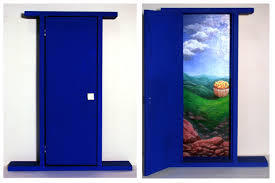
The sequence of incidents that had led him from a waterproof hat to a fake door seemed to him to be a marvelous adventure, and the time it had taken him, a time of bliss. But, as he still doubted appearances, he doubted, and then realized that never, never had he been so unhappy.
Displaying 1 - 30 of 69 reviews