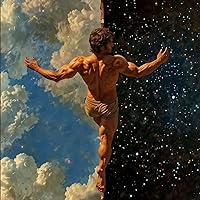
In Frankenstein, Mary Shelley delivers a haunting tale of ambition, isolation, and the limits of scientific exploration. When Victor Frankenstein dares to play god and animates lifeless matter, he sets in motion a chain of tragedy, reflection, and horror that still captivates readers two centuries later.
Widely regarded as the first true science fiction novel, Frankenstein is both a chilling Gothic tale and a profound exploration of what it means to be human.
🔦 This special edition
The original, uncensored 1818 text
Atmospheric, gothic-style illustrations
Kindle-optimized formatting for effortless reading
📚 Perfect for fans of dark classics, science fiction origins, and philosophical horror.
Read the novel that sparked a genre and continues to shape it. Get your illustrated, unabridged edition now.
Mary Shelley (née Mary Wollstonecraft Godwin, often known as Mary Wollstonecraft Shelley) was an English novelist, short story writer, dramatist, essayist, biographer, travel writer, and editor of the works of her husband, Romantic poet and philosopher Percy Bysshe Shelley. She was the daughter of the political philosopher William Godwin and the writer, philosopher, and feminist Mary Wollstonecraft.
Mary Shelley was taken seriously as a writer in her own lifetime, though reviewers often missed the political edge to her novels. After her death, however, she was chiefly remembered only as the wife of Percy Bysshe Shelley and as the author of Frankenstein. It was not until 1989, when Emily Sunstein published her prizewinning biography Mary Shelley: Romance and Reality, that a full-length scholarly biography analyzing all of Shelley's letters, journals, and works within their historical context was published.
The well-meaning attempts of Mary Shelley's son and daughter-in-law to "Victorianise" her memory through the censoring of letters and biographical material contributed to a perception of Mary Shelley as a more conventional, less reformist figure than her works suggest. Her own timid omissions from Percy Shelley's works and her quiet avoidance of public controversy in the later years of her life added to this impression.
The eclipse of Mary Shelley's reputation as a novelist and biographer meant that, until the last thirty years, most of her works remained out of print, obstructing a larger view of her achievement. She was seen as a one-novel author, if that. In recent decades, however, the republication of almost all her writings has stimulated a new recognition of its value. Her voracious reading habits and intensive study, revealed in her journals and letters and reflected in her works, is now better appreciated. Shelley's recognition of herself as an author has also been recognized; after Percy's death, she wrote about her authorial ambitions: "I think that I can maintain myself, and there is something inspiriting in the idea". Scholars now consider Mary Shelley to be a major Romantic figure, significant for her literary achievement and her political voice as a woman and a liberal.
Frankenstein is a classic that I enjoy reading every few years. The story is dark and very sad. What amazes me is that a young woman in her teens wrote this novel in the 1800s. She crafted this story with advanced thinking and knowledge.
*Frankenstein* is much more than the story most people know from movies and popular culture. Mary Shelley's novel is darker, sadder, and more thoughtful than the image of a monster brought to life in a laboratory.
What stayed with me most was the question of responsibility. Victor Frankenstein becomes consumed with proving that he can create life, but once he succeeds, he cannot face what he has done. The real horror is not simply the creature's appearance. It is what happens when someone creates something, gives it life, and then refuses to accept responsibility for the consequences.
The creature is also far more tragic than I expected. He begins wanting companionship, understanding, and some place in the world. Rejection changes him. That does not excuse the terrible things he eventually does, but Shelley makes you understand how loneliness, anger, and abandonment have shaped him. There are times when Victor and the creature almost seem like reflections of one another—both isolated, both consumed by what has happened, and both unable to escape the consequences of their choices.
I especially enjoyed the Gothic atmosphere. The mountains, storms, lonely roads, frozen landscapes, old rooms, and long stretches of isolation are not just scenery. The landscape often seems to carry the emotional weight of the story.
The writing can be slow for a modern reader, and there are passages where Shelley spends a great deal of time inside the characters' thoughts. But I think the slower pace is part of why the story still works. It gives the consequences time to build.
More than two hundred years later, *Frankenstein* still asks questions that feel surprisingly modern: What do we owe the things we create? How much responsibility do we have for the harm caused by our ambition? And what happens when knowledge moves faster than wisdom?
A true Gothic classic—not because of the monster, but because of the human choices that created him.
Horror is not really my thing, so I never considered reading Frankenstein until I came across a gorgeous Peter Pauper Press edition last weekend. I’m a sucker for pretty books. Now I’m wondering how I made it this far in life without reading it. The themes on morality and mortality are far more developed than I expected them to be- I’m amazed that a 19 year old was able to wrestle through them with such depth and wisdom. The imagery- especially in chapter 10-is so lovely, and the writing flows beautifully. This is one that everyone should read.
He sentido odio hacia la criatura, compasión con el creador, pero dudas al final con la criatura, pensando en su situación me hace reflexionar, pero es complicado cuando lo "odias". Mucho que pensar, muy buen libro, recomendado la verdad.