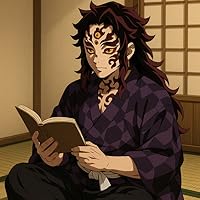
We can dance. So let us stand in a more beautiful world! Yakuza and Kabuki. Two young actors with different backgrounds and talents devote their youth to the path of the arts. This is a monumental novel about the arts , which won both the Minister of Education, Culture, Sports, Science and Technology's Art Encouragement Prize and the Chuokoron Literary Prize, and marks the 20th anniversary of his career as a writer. On New Year's Day in 1964, Nagasaki was home to a long-established restaurant called "Hanamaru" - amid the shouts and screams of gangsters, an actor who would become a treasure of this country was born. The man's name was Kikuo Tachibana. Although he was born into a clan of gangsters, his otherworldly beauty drew people in and took Kikuo's life to an unexpected level. The story moves from Nagasaki to Osaka, and then to Tokyo after the Olympics. As Japan grows, these men hone their skills and struggle to master their ways.
Shūichi Yoshida (吉田 修一) was born in Nagasaki, and studied Business Administration at Hosei University. He won the Bungakukai Prize for New Writers in 1997 for his story "Saigo no Musuko", and the Akutagawa Prize in 2002 (the fifth time he'd been nominated for the prize) for "Park Life". In 2002 he also won the Yamamoto Prize for Parade, and for winning both literary and popular prizes Yoshida was seen as a crossover writer, like Amy Yamada or Masahiko Shimada. In 2003 he wrote lyrics for the song "Great Escape" on Tomoyasu Hotei's album Doberman. His 2007 novel Villain won the Osaragi Jiro Prize and the Mainichi Publishing Culture Award, and was recently adapted into an award-winning 2010 film by Lee Sang-il.
I loved the first volume of this series, so I decided to read the second volume. Similar to the first volume, the story continues to revolve around the two main characters - Shunsuke and Kikuo. The silent conflict between Kikuo's talent and Shunsuke's lineage continues. Although Shunsuke is still counted on to inherit the name "Hanai", the difference in talent with Kikuo becomes more prominent, building on his inferiority complex. On the other hand, Kikuo continues to perfect his art with his talent and almost obsessive devotion. Because he is obsessed with becoming the art itself, he has no hesitation with discarding personal relationships and his private life, becoming gradually isolated from the world around him. Instead, his world is reduced to an exclusive, one-on-one relationship with Kabuki alone. The escalating distortion in both main characters' lives as they become swayed by the art is so well written, gradually showing up as numerous events lead to a significant difference in their lives. Although Kikuo lives up to becoming a Living National Treasure, his fate is far from rewarding.
June's recommendation, her favorite book of 2026 and no surprise, one of the best books I have read in a while. Amazing authorial voice (omniscient narrator with a story-teller or documentary narrator's tone but still warm and close perspective to all the main characters.) Immensely rich cast of characters each so multidimensional. I love each and every one of them so much (is there really a villain in this story?) But of course, the greatest triumph, the piece de resistance of this book is the description of the kabuki performances and works. It is a masterclass on how to write about performance art. He exquisitely lays out the plots, sketches out the costumes, sets, lights, movements (especially movement!) in a way that it feels as though the stage take shape in front of the reader's eyes. But more impressively, he captures the scent, the mood, the ineffable effect of a performance. These scenes are most compelling when the kabuki performance mirrors the reality of our actors' lives and their art and life blend on the kabuki stage. An absolute masterpiece. I can't wait to reread the book(s) and watch the movie!
I feel like this novel came into my life at exactly the right time. When a person begins to recognize the path ahead, every experience—whether uplifting or difficult—becomes a chance to shape the soul and move toward a state where what you believe, what you do, and the universe around you seem to aligned.
Finishing this book left me with many emotions. I was so immersed in the story that, while reading, it was difficult to focus on anything else in my life. It felt as if I had stepped into another world, and all I wanted was to keep turning the pages to see what would happen to every character. I cried, I felt heartbroken, and I also felt moments of deep warmth. What moved me most was seeing how much humanity, dignity, and quiet depth existed even in the smallest characters.
It echoes the most important questions that always come to my mind when I’m facing decisions: Who are you? What do you really want in life? What kind of person do you want to be?
So, what does this second part have to offer? Little, really, it is more of the same as the first part, but not so well done, and there are too many characters to really care about them. Kikou's friend from childhood Tokuji gets sidelined, but he is not the only one. Yoshida seems to have gotten too drunk with his own novel and this could have been three hundred pages less and it would have been better. The plot's big moments feel as staged as a kabuki performance (maybe it is the point?) and so soap opera-ish as to become risible. Also, both main characters are overpowered and female characters play the role of supporting the male because they are ACTORS.
I really liked the first book, and it ended in a way that made me really excited to see what would happen next. Unfortunately, the second book kind of plodded along. The major plot points of the first book all resolved with a whimper. New plot points were introduced without much purpose or resolution. Then, in the last 40 pages or so, the author tried to bring about a resolution to the story that was ultimately only mildly satisfying.