

What do you think?

Píldoras azules
El suizo Frederik Peeters, dotado de un vibrante genio creativo, cuenta con humor, nervio y profundidad una emocionante historia de amor con el VIH como referente determinante.
200 pages, Paperback
First published January 1, 2001
About the author
Frederik Peeters
56 books223 followersFrédérik Peeters (born 13 August 1974, in Geneva) is a contemporary Swiss graphic novelist. He received his bachelor of arts degree in visual communication from the École Supérieure d’Arts Appliqués in Geneva in 1995. Peeters currently lives with his partner Cati, her son, and their daughter in Geneva.
His autobiographical graphic novel Blue Pills received the Polish Jury Prize at the Angoulême International Comics Festival, where it was also nominated for Best Book. Blue Pills also won the Premios La Cárcel de Papel in Spain for Best Foreign Comic. This is his first work to be translated into English.
His autobiographical graphic novel Blue Pills received the Polish Jury Prize at the Angoulême International Comics Festival, where it was also nominated for Best Book. Blue Pills also won the Premios La Cárcel de Papel in Spain for Best Foreign Comic. This is his first work to be translated into English.
Ratings & Reviews
Friends & Following
Create a free account to discover what your friends think of this book!
Community Reviews
Displaying 1 - 30 of 693 reviews

August 7, 2017
Comprei esse livro na promoção da amazon, já tinha ouvido falar sobre ele e mesmo assim nunca li a sinopse. Eu sinto que estragaria saber mais do que a capa me mostrava, e estava certa, porque me surpreendi TANTO com a narrativa que precisei vir correndo aqui relatar sobre a leitura.
É tão difícil ler uma história que aborda uma doença sem romantizá-la, e eu diria que essa graphic novel foi o oposto disso: o autor não somente poupou o drama, como foi extremamente sincero, cru e real ao relatar o cotidiano de alguém soropositivo. Sem espaço para sentimentalismo exacerbado e com uma escrita fluída a ponto de me fazer começar e terminar a leitura em uma manhã tediosa. É preciso muita coragem para escrever sobre uma rotina exaustiva, dolorosa e incompreendida pela maioria que não sabe como ela funciona, fora a aula de informação que temos desde o exato momento que abrimos o livro.
Se alguém me perguntasse "Bel, sobre o que é o livro?", eu responderia que Pílulas Azuis é um livro sobre questionamentos. Da vida, do ser humano, das nossas limitações e mais um bocado de coisa que só quem leu vai sentir também.
Altamente recomendado. 💚
É tão difícil ler uma história que aborda uma doença sem romantizá-la, e eu diria que essa graphic novel foi o oposto disso: o autor não somente poupou o drama, como foi extremamente sincero, cru e real ao relatar o cotidiano de alguém soropositivo. Sem espaço para sentimentalismo exacerbado e com uma escrita fluída a ponto de me fazer começar e terminar a leitura em uma manhã tediosa. É preciso muita coragem para escrever sobre uma rotina exaustiva, dolorosa e incompreendida pela maioria que não sabe como ela funciona, fora a aula de informação que temos desde o exato momento que abrimos o livro.
Se alguém me perguntasse "Bel, sobre o que é o livro?", eu responderia que Pílulas Azuis é um livro sobre questionamentos. Da vida, do ser humano, das nossas limitações e mais um bocado de coisa que só quem leu vai sentir também.
Altamente recomendado. 💚

December 2, 2020
Çizerin özel yaşamını bu kadar açık biçimde paylaşması mı, yoksa HIV üzerine, hele de içinde bir çocuk da içeren bir hikayenin bu denli insanı yıkıp geçmekten uzak anlatımı mı beni daha çok etkiledi, bilemiyorum.
Konuyu okuduğumda yüreğimin darmadağın olmasından korkmuş, yine de şans vermek istemiştim. Dağılmadım, hatta beklemediğim şekilde içim ısındı ve bilgilendim.
Çizer de, ben de HIV hakkında aynı bilgilere sahipmişiz. Onun "bulaştı mı" korkularını aynen paylaştım, doktor kontrollerinde benzer rahatlamayı yaşadım ve her çıkışta daha da bilgili bir insan oldum çıktım. Cati'ye olan aşkına ortak oldum, Cati'nin oğluna karşı aynı endişeyi, zaman zaman aynı acımayı ve yer yer aynı uzaklığı hissettim.
Fazlasıyla gerçek, ama bir şekilde de peri masalı hissi veren, farklı bir deneyimdi. Dünyada Frederik Peeters gibi insanların olmasından mutluluk duydum. Cati gibi annelerle empati kurdum ve hayata karşı duruşundaki enerjiyle söz konusu oğlu olunca içinde kopan fırtınaları benimsedim.
Grafik roman severleri mutlaka bir şans vermeli. Ayrıca 13 sene sonra gelen ve yazarın, Cati'nin, oğlunun ve yeni bir karakterin şimdiki durumunu gösteren ek bölüm de harika bir kapanış sağlıyor.
Çeviri, editörlük ve uygulama tertemiz. Baobab Yayınları bu konuda çok iyi zaten. Kalitelerinden ödün vermemişler.
Konuyu okuduğumda yüreğimin darmadağın olmasından korkmuş, yine de şans vermek istemiştim. Dağılmadım, hatta beklemediğim şekilde içim ısındı ve bilgilendim.
Çizer de, ben de HIV hakkında aynı bilgilere sahipmişiz. Onun "bulaştı mı" korkularını aynen paylaştım, doktor kontrollerinde benzer rahatlamayı yaşadım ve her çıkışta daha da bilgili bir insan oldum çıktım. Cati'ye olan aşkına ortak oldum, Cati'nin oğluna karşı aynı endişeyi, zaman zaman aynı acımayı ve yer yer aynı uzaklığı hissettim.
Fazlasıyla gerçek, ama bir şekilde de peri masalı hissi veren, farklı bir deneyimdi. Dünyada Frederik Peeters gibi insanların olmasından mutluluk duydum. Cati gibi annelerle empati kurdum ve hayata karşı duruşundaki enerjiyle söz konusu oğlu olunca içinde kopan fırtınaları benimsedim.
Grafik roman severleri mutlaka bir şans vermeli. Ayrıca 13 sene sonra gelen ve yazarın, Cati'nin, oğlunun ve yeni bir karakterin şimdiki durumunu gösteren ek bölüm de harika bir kapanış sağlıyor.
Çeviri, editörlük ve uygulama tertemiz. Baobab Yayınları bu konuda çok iyi zaten. Kalitelerinden ödün vermemişler.

September 28, 2025
Sem ter lido a sinopse, achava que este livro seria sobre um senhor com disfunção eréctil. Bem, não é.
É um livro sobre o amor e sobre o medo de que uma doença possa interromper esse sentimento. Foi uma agradável surpresa.
É um livro sobre o amor e sobre o medo de que uma doença possa interromper esse sentimento. Foi uma agradável surpresa.

August 12, 2026
Choroba, która stała się piętnem, a później tożsamością… nawet wyrokiem. Piękne świadectwo, bo tak ludzkie i prawdziwe

February 12, 2021
Píldoras azules ( 2001 ) de Frederik Peeters ( 1974- ) es una novela gráfica con una intensa y emotiva historia y sin duda muy bien contada. Se agradece el tratamiento sincero, sin tremendismo, ni falsa compasión en un tema (madre e hijo seropositivos) que en el momento en que se escribe estaba muy estigmatizado.
Peeters pone la voz en la nueva pareja de esa madre. Nos muestra cómo la cercanía y la confianza va superando poco a poco los prejuicios y logra enseñarnos que la normalización es el único modo de entender estas enfermedades tan duras.
“Confórmate solo con apreciar a tiempo las cosas que tienen un final”
Llegué a Píldoras azules a través de Castillo de arena , donde Peeters era solo el ilustrador. Son obras claramente diferentes. Peeters aquí también es el escritor y, quizá por la seriedad del tema, el dibujo está claramente supeditado a un magnifico texto, enmarcado entre viñetas en blanco y negro con muchos silencios y singulares perspectivas, que llaman a la reflexión.
En cualquier caso, una novela gráfica para adultos, dura, pero con mensaje optimista que sin duda merece la pena.
Peeters pone la voz en la nueva pareja de esa madre. Nos muestra cómo la cercanía y la confianza va superando poco a poco los prejuicios y logra enseñarnos que la normalización es el único modo de entender estas enfermedades tan duras.
“Confórmate solo con apreciar a tiempo las cosas que tienen un final”
Llegué a Píldoras azules a través de Castillo de arena , donde Peeters era solo el ilustrador. Son obras claramente diferentes. Peeters aquí también es el escritor y, quizá por la seriedad del tema, el dibujo está claramente supeditado a un magnifico texto, enmarcado entre viñetas en blanco y negro con muchos silencios y singulares perspectivas, que llaman a la reflexión.
En cualquier caso, una novela gráfica para adultos, dura, pero con mensaje optimista que sin duda merece la pena.

December 8, 2015
I have pretty mixed feelings about this book. I know that some of it stems from having higher expectations than what I actually got. It wasn't strictly bad, but I don't know that I enjoyed it that much.
First off, I didn't like the art and found it very off-putting from page one. It really just didn't do a lot for me visually, which can make it pretty hard to enjoy a graphic novel. Then, there's the issue of emotion. Given that this book is a real life love story of a couple where one party has been diagnosed HIV positive, I was expecting this book to make me feel something. It was nearly two hundred pages and I think maybe five of those pages gave me those feelings. I wanted this book to make me feel something and it didn't, and that just may be an issue of my own expectations. Of course, it may also have been a result of not really liking the author. Not the writing, but as an actual person within the context of his story. He came off very pretentious, like the kind of person I would be annoyed to spend time with in real life. My final issue rests with either the translation or the writing. It's hard to tell which when the work was not originally in English. The actual language used wasn't enjoyable to read and the punctuation... was annoying... after a few pages!!!!
Now for what I actually enjoyed. It was nice to see that despite the subject matter that the author was able to avoid doom and gloom, was able to make it a truly "positive" love story. Actually, this book is a subject overall that I wish was dealt with more, both in fiction and non-fiction. I would love to see more autobiographies and novels both that deal with relationships in the context of HIV. I'm glad that the author was able to present his own story of something so personal, especially when it never once felt to me like he was being disrespectful to Cati's own story. He never gave us a "why" and I am glad for it.
Overall, while I didn't really love this book, it wasn't strictly a bad book. It just wasn't for me. I probably wouldn't recommend this to someone, but I also would not dissuade someone from reading it.
First off, I didn't like the art and found it very off-putting from page one. It really just didn't do a lot for me visually, which can make it pretty hard to enjoy a graphic novel. Then, there's the issue of emotion. Given that this book is a real life love story of a couple where one party has been diagnosed HIV positive, I was expecting this book to make me feel something. It was nearly two hundred pages and I think maybe five of those pages gave me those feelings. I wanted this book to make me feel something and it didn't, and that just may be an issue of my own expectations. Of course, it may also have been a result of not really liking the author. Not the writing, but as an actual person within the context of his story. He came off very pretentious, like the kind of person I would be annoyed to spend time with in real life. My final issue rests with either the translation or the writing. It's hard to tell which when the work was not originally in English. The actual language used wasn't enjoyable to read and the punctuation... was annoying... after a few pages!!!!
Now for what I actually enjoyed. It was nice to see that despite the subject matter that the author was able to avoid doom and gloom, was able to make it a truly "positive" love story. Actually, this book is a subject overall that I wish was dealt with more, both in fiction and non-fiction. I would love to see more autobiographies and novels both that deal with relationships in the context of HIV. I'm glad that the author was able to present his own story of something so personal, especially when it never once felt to me like he was being disrespectful to Cati's own story. He never gave us a "why" and I am glad for it.
Overall, while I didn't really love this book, it wasn't strictly a bad book. It just wasn't for me. I probably wouldn't recommend this to someone, but I also would not dissuade someone from reading it.

May 24, 2023
Cudownie jest przeczytać historię o chorobie z tak pozytywnym przesłaniem, bez negatywnych emocji i z ogromem nadziei. Przy okazji ma również istotny walor edukacyjny, dzięki któremu można wyzbyć się uprzedzeń i uwrażliwić na drugiego człowieka.

October 17, 2019
L'amore non uccide.
Il titolo del commento di una mia vicina diceva semplicemente «Leggetelo. Vi piacerà. Ne sono certa», e io, che generalmente sono più selettiva nelle mie scelte, mi sono lasciata convincere dalla sua disarmante semplicità e dalle poche emozionate parole che lo accompagnavano.
L'ho cercato tanto, era introvabile (adesso invece credo sia stato ristampato) per cui ci ho messo parecchio per riuscire ad averlo; il mio ordine su Amazon è rimasto in sospeso per molto tempo, ma poi, quand'è arrivato, come succede a molte cose che tanto si desiderano avere, è rimasto là in attesa che tornasse il suo momento.
Ieri poi, che avevo finalmente deciso di leggerlo, non riuscivo più a trovarlo, ma oggi alla fine è saltato fuori.
E mi è piaciuto, aveva ragione Eleonora.
Mi è piaciuto perché è delicato.
È delicato nel parlare di qualcosa che delicato non è affatto.
È delicato perché racconta l'amore di Frederik, giovane disegnatore di fumetti svizzero (già, è autobiografico), e del suo amore per Cati.
Frederik e Cati si sono conosciuti molto tempo prima, poi persi e ritrovati.
Cati adesso è sola e ha un bambino, e a Frederik Cati è sempre piaciuta.
Ma la vita non è stata affatto delicata con Cati e il suo bambino perché sono sieropositivi, e all'improvviso, insieme a loro, anche la vita di Frederik piomba in un mondo fatto di ospedali, di paure e di tante pillole blu che prima non conosceva.
Non sappiamo perché, Frederik non ce lo racconta, ma a noi, e a lui, non interessa sapere il perché.
Ha paura però, tante diverse paure.
Paura per Cati e per il suo bambino, e paura anche per sé perché, si domanda, due persone che si amano possono essere libere di fare l'amore quando una delle due può essere una minaccia per l'altro?
Frederik Peeters racconta tutti i suoi dubbi e le sue incertezze, spesso frutto di quella che è la sua e la nostra disinformazione, ma anche la sua tenacia e il suo desiderio di essere vicino alla sua compagna, con una tenerezza immensa, e il suo racconto e i suoi disegni sono la più bella dichiarazione d'amore che Cati potesse mai ricevere.
Eccoli
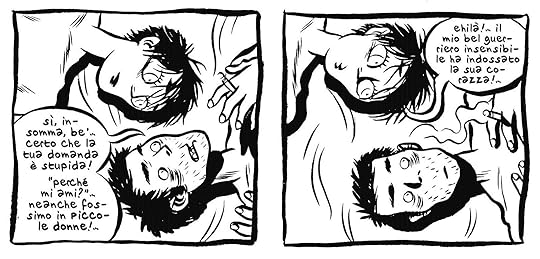
Il titolo del commento di una mia vicina diceva semplicemente «Leggetelo. Vi piacerà. Ne sono certa», e io, che generalmente sono più selettiva nelle mie scelte, mi sono lasciata convincere dalla sua disarmante semplicità e dalle poche emozionate parole che lo accompagnavano.
L'ho cercato tanto, era introvabile (adesso invece credo sia stato ristampato) per cui ci ho messo parecchio per riuscire ad averlo; il mio ordine su Amazon è rimasto in sospeso per molto tempo, ma poi, quand'è arrivato, come succede a molte cose che tanto si desiderano avere, è rimasto là in attesa che tornasse il suo momento.
Ieri poi, che avevo finalmente deciso di leggerlo, non riuscivo più a trovarlo, ma oggi alla fine è saltato fuori.
E mi è piaciuto, aveva ragione Eleonora.
Mi è piaciuto perché è delicato.
È delicato nel parlare di qualcosa che delicato non è affatto.
È delicato perché racconta l'amore di Frederik, giovane disegnatore di fumetti svizzero (già, è autobiografico), e del suo amore per Cati.
Frederik e Cati si sono conosciuti molto tempo prima, poi persi e ritrovati.
Cati adesso è sola e ha un bambino, e a Frederik Cati è sempre piaciuta.
Ma la vita non è stata affatto delicata con Cati e il suo bambino perché sono sieropositivi, e all'improvviso, insieme a loro, anche la vita di Frederik piomba in un mondo fatto di ospedali, di paure e di tante pillole blu che prima non conosceva.
Non sappiamo perché, Frederik non ce lo racconta, ma a noi, e a lui, non interessa sapere il perché.
Ha paura però, tante diverse paure.
Paura per Cati e per il suo bambino, e paura anche per sé perché, si domanda, due persone che si amano possono essere libere di fare l'amore quando una delle due può essere una minaccia per l'altro?
Frederik Peeters racconta tutti i suoi dubbi e le sue incertezze, spesso frutto di quella che è la sua e la nostra disinformazione, ma anche la sua tenacia e il suo desiderio di essere vicino alla sua compagna, con una tenerezza immensa, e il suo racconto e i suoi disegni sono la più bella dichiarazione d'amore che Cati potesse mai ricevere.
Eccoli

October 18, 2025
PT Confesso que me deixei enganar pelo título deste livro — não é, de todo, o que possa parecer. Não trata do famoso comprimido azul, mas de algo muito mais profundo e interessante.
O autor conduz-nos por uma viagem íntima, relatando a sua experiência pessoal ao lado de uma companheira portadora do vírus VIH, assim como o filho dela. Entre o choque inicial, a aprendizagem sobre o vírus e os cuidados necessários, nasce uma reflexão comovente sobre o amor, a empatia e a força humana perante o medo e o desconhecimento que ainda rodeiam esta doença.
É igualmente fascinante perceber como um vírus que outrora ceifou tantas vidas — incluindo as de figuras públicas como Freddie Mercury — é hoje uma condição totalmente gerível, graças aos avanços da medicina. A evolução dos tratamentos permite às pessoas viverem com o VIH de forma plena e praticamente normal. Se isto não prova o valor da ciência e da investigação científica, nada o fará.
Uma leitura profundamente humana, que nos enriquece e nos ajuda a compreender melhor o que significa amar em tempos de fragilidade.
--
EN I must admit, I was misled by this book’s title — it’s not at all what it might seem. It’s not about the famous blue pill, but about something far deeper and more meaningful.
The author takes us on an intimate journey through his personal experience living with a partner who is HIV positive, as well as her child. Between the initial shock, the process of learning about the virus, and the necessary precautions, emerges a moving reflection on love, empathy, and human strength in the face of fear and the ignorance that still surrounds this condition.
It’s equally fascinating to see how a virus that once claimed so many lives — including public figures like Freddie Mercury — is now a fully manageable condition, thanks to medical advances. Modern treatment allows people living with HIV to lead full, almost normal lives. If this doesn’t prove the value of science and scientific research, nothing will.
A deeply human and enriching read that helps us better understand what it means to love in times of vulnerability.
O autor conduz-nos por uma viagem íntima, relatando a sua experiência pessoal ao lado de uma companheira portadora do vírus VIH, assim como o filho dela. Entre o choque inicial, a aprendizagem sobre o vírus e os cuidados necessários, nasce uma reflexão comovente sobre o amor, a empatia e a força humana perante o medo e o desconhecimento que ainda rodeiam esta doença.
É igualmente fascinante perceber como um vírus que outrora ceifou tantas vidas — incluindo as de figuras públicas como Freddie Mercury — é hoje uma condição totalmente gerível, graças aos avanços da medicina. A evolução dos tratamentos permite às pessoas viverem com o VIH de forma plena e praticamente normal. Se isto não prova o valor da ciência e da investigação científica, nada o fará.
Uma leitura profundamente humana, que nos enriquece e nos ajuda a compreender melhor o que significa amar em tempos de fragilidade.
--
EN I must admit, I was misled by this book’s title — it’s not at all what it might seem. It’s not about the famous blue pill, but about something far deeper and more meaningful.
The author takes us on an intimate journey through his personal experience living with a partner who is HIV positive, as well as her child. Between the initial shock, the process of learning about the virus, and the necessary precautions, emerges a moving reflection on love, empathy, and human strength in the face of fear and the ignorance that still surrounds this condition.
It’s equally fascinating to see how a virus that once claimed so many lives — including public figures like Freddie Mercury — is now a fully manageable condition, thanks to medical advances. Modern treatment allows people living with HIV to lead full, almost normal lives. If this doesn’t prove the value of science and scientific research, nothing will.
A deeply human and enriching read that helps us better understand what it means to love in times of vulnerability.

February 1, 2021
Loş bir ışık, şarap, mum, hafif bir müzik ve Mavi Haplar. Güzel bir geceydi. Bazı eksiklikler hissettim ama kitapla ilgisi yok.

October 4, 2020
Alışılmışın dışında bir aşk hikayesini anlatıyor Mavi Haplar. Eskiden beri beğendiği bir kadınla sonunda bir fırsat yakalayan adam, işler biraz ilerleyince kadının ve onun beş yaşındaki oğlunun hiv pozitif olduğunu öğreniyor. Otobiyografik olan bu hikaye bana HIV konusunda ne kadar cahil olduğumu gösterdi. Resmen ergenliğimde televizyondaki korkunç AIDS imgelerine saplanıp kalmışım ve ne tedavideki ilerlemeden ne HIV (+)'lerin gündelik yaşamdaki değişiklerden haberim olmuş. Çarpıcı ve öğretici bir hikaye. 3.5/5

May 4, 2015
Que história linda! Tirou várias dúvidas que eu tinha sobre o HIV e me ensinou centenas de coisas novas. Fiquei com um pouquinho de vontade de chorar no final, foi tudo muito bonito. Poética, esclarecedora e sincera :) Leitura recomendada!

December 15, 2015
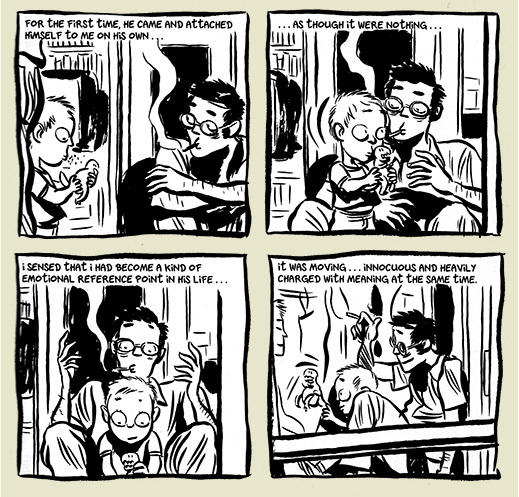
His eyes are huge. Tremendous balls of a beautiful fury of life. Vibrant with hope and wonder, completely without guile. They are set in his face like saucers from space. Only identifiable at all because they hover so serenely with no intentions toward darting or flight. He looks into you. And about you. And through you. He is amazing. And you have romanticized every bit of him. Even though his eyes, while lovely, are really just normal lovely child-eyes. You have turned him into a unicorn, a rarity, a celestial gift. Because he’s dying. Or if not dying then at least close to it. Or if not close, then at least he is in some sort of danger. He lives under threat. And I mean, as do we all, right? But maybe he’s more at risk than you or anyone else you know. Probably. Maybe. And your heart breaks.
It was 1983 when I first heard about AIDS. I was in fourth grade. It would be another couple years before I realized it was an actual thing and not just a playground game the children played to ostracize their fellows according to the arbitrary rules of the schoolyard—a kind of cooties for the Reagan era. It had something to do with being gay or being a homo, whatever that was. But by the sixth grade I knew everything that anyone knew about AIDS and HIV. I knew it several times over and so did my classmates. We had the privilege of a handful of mandatory school assemblies devoted to the subject. I only actually remember two assemblies through junior high: the drug one and the AIDS one. And we had those two assemblies at least five times each. Probably more actually. I was a sixth-grader who had never seen real drugs in real life and had no idea how one could obtain them, but I knew all about pot and ludes and angel dust and coke and heroin and acid and how, basically, if I took any one of them, I’d probably be swallowing a mug of Drain-O within three months. I also knew about condoms and monkeys and sailors and homosexuals and dentists and needles and toilet seats and oral sex even though it would be a millennia until I would see a real girl in real life for real naked.
It was a weird and awkward time. AIDS and drugs were all anyone ever talked about for a while. The Russians too, I guess. And then eventually, the LA gangs and their inevitable spread south. But for a while, it was AIDS and drugs. Then I was in high school and nobody talked about drugs anymore. Mostly because they were all procuring and consuming drugs, probably. (I still had no idea how one could obtain drugs.[1) And then I was in high school and Magic Johnson happened and suddenly no one cared about AIDS anymore either. I’m sure it was still a thing. It had to be. I just hadn’t heard about it in forever. No matter, I knew everything about it. After all, I was in junior high once.
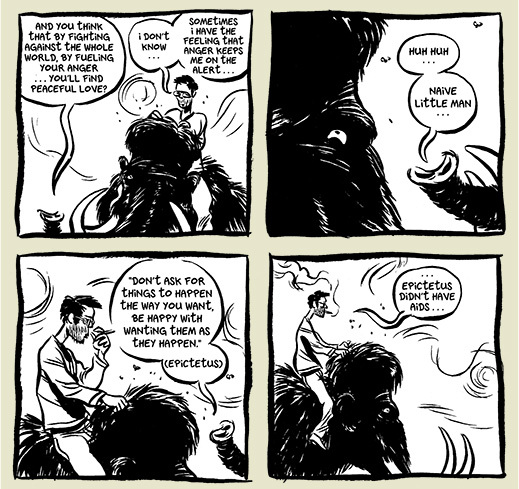
The fact is, I don’t believe I’ve ever known anyone with HIV. I’ve known people who’ve died, sure. Old age, cancers, hiking accidents, suicides, ODs, even spontaneous exsanguination. Nobody AIDS though. And Magic Johnson is still alive, so maybe it’s not hard to stay alive with HIV. But he’s rich. And who knows. Maybe that matters. And of course it’s possible that they just haven’t told me they’ve got it. Not for fear of judgment likely, but maybe more just for whatever the reason is that people don’t talk about the very serious things that exert a kind of rule over their lives. Awhile back, I was afraid I was going to lose a nut or two. I didn’t really talk about it. If you’re reading this, it’s likely the first time you’ve heard of it. Even if we’re best friends. And man, as I write this it’s becoming increasingly clear that I really don’t know anything about HIV.
And of course this is all a put-on. I was well aware exactly how much or little I know about HIV before sitting down to write. But there’s still a scent of honesty here because it’s the book we’re talking about that alerted me to my deficiency on the subject. Blue Pills, even apart from and above being a fantastic comic, dropped hammers into the ceiling of the greenhouse in which I kept and cultivated the entire treasure of my AIDS and HIV knowledge.
I didn’t know that Blue Pills was autobiographical when I began it. And now I’ve ruined you for having the same experience as me. I didn’t realize it until maybe two-thirds through. Then it clicked and the whole thing became amazing. That Frederik Peeters was writing this story and writing this story about himself and those he held dear staggered me.
Backing up slightly.
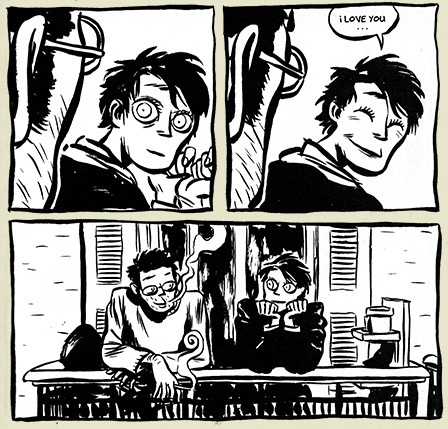
Fred meets Cati a few times over the years that comprise their young twenties. He’s a sometimes shy, sometimes exuberant, sometimes moody guy trying to figure out life. She’s young and free and, well, Fred really knows so little about her that he can’t really describe her with any accuracy but to say: “One: What kind of girl is this who allows herself to drink champagne in a swimming pool with a wet t-shirt, while managing to remain classy and in good taste? Two: Good God… what magnificent breasts!” After crossing paths several times, he runs into her at a party and they strike up a comfortable rhythm and remain together for the rest of the book. Despite Cati dropping the other shoe soon after the party.
It’s 1999. Cati is divorced with a child. And that’s not the shoe. The clunk or thud or whatever sound that echoes through the rest of Fred’s life (and a thud that Cati certainly heard years earlier) is that both Cati and her son are HIV-positive. And Fred—who knows about what I learned from a bunch of junior high assemblies in 1986—is so entranced, comfortable, and at home with Cati that he says with a kind of passive-aggressive eff-yoo at fate: “So what?” Sure he’s terrified and confused and has no idea the import of what he’s agreeing to,[2] but he knows he wants into this life that is Cati’s. He wants a piece and a part. And so they work at it and they make things work.

And all of that, the fact of the set up and the fact that they love each other dearly and the fact that there’s a sick kid in the picture and the fact that fifteen years later they’re all still alive and that Frederik and Cati have an HIV-free child[3] isn’t really the point of the book. The plot elements merely build the foundation for the point of the book: the evolution of Fred’s thoughts on the whole situation.
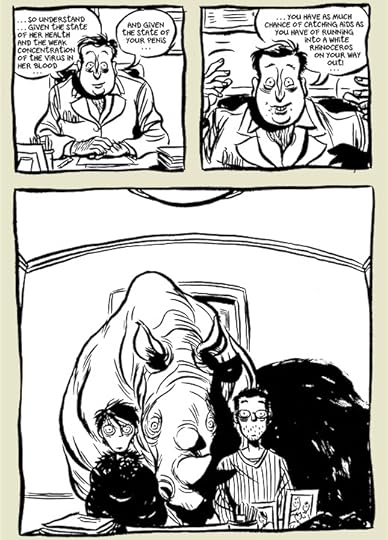
What does it mean that every time you stick your penis into the person you love more than anything—an act you mean for pleasure and to give pleasure—you might be pulling the trigger on your own demise? What does it mean for the woman you’re with that every time you have sex, she might have accidentally killed you? What about this sweet little boy? How will he get through those awkward teen years? It’s hard enough to talk to girls you’re into when the culmination of your youthful horniness won’t kill them. And what if that kid doesn’t even survive to be a teenager? Nothing, after all, is certain. And the anger. At science, at fate, at friends, at society. At death. What do you do about the anger?

This is what Blue Pills is about. The stuff that often matters so much more than the summary of events that make up our lives (and deaths). And Peeters does a good job keeping this from feeling pedantic—even when by the end he’s strayed almost entirely into rumination. He keeps the book feeling real, feeling close, feeling intimate. And that’s why when we look into the kid’s bright wide eyes, we can’t help but romanticize. Because there’s magic there. A magic that Peeters, through art and through script, unveils. And Peeters could have done that thing that everybody does when telling a story about something tragic like HIV: he could have made it tragic. He could have pulled at hearts and strings. He could have cultivated pity and mournfulness in the reader, but that’s the last thing he wants. Blue Pills is not a sad story. And there’s magic in that too.
_______
[Review courtesy of Good Ok Bad.]
_______
Footnotes
1) I was so cool.
2) Not really he doesn’t because, like, who could?
3) These last two things aren’t revealed within the book (as it was published in 2001) but through simple Googling. Still, this is one of those things I didn’t know about HIV that is unveiled through the course of the story: HIV can be manageable enough that a man can safely reproduce with a woman who is positive. Safely for both himself and for their child. That’s like a lightning bolt revelation to me—and one that I might have been aware of had I actually known anyone with HIV.]

April 9, 2021
İkiside Hiv+ anne-oğul ile aşk hayatını, aniden baba olma durumunu ablatıyor yazar. Eski ve zorlu tedaviler ve bugün bir hapla geçirilen hastalık. Hastalıktan zor olan insanların cahil önyargıları aslında. Tedavi ile kandaki virüs oranı sıfıra iniyor, günlük alınan hapla hayat normal devam ediyor aslında. Ama biz tabii ne gerek var bilgilenmeye canım deyip, 40 yıl önceki Aids bilgimizle hastalara öcü muamelesi yapıp, kaçıyoruz onlardan. Kitap yazarın kendi ile savaşı aslında, özellikle yeni baskılarda kitabın ilk yaygınlanışından 13 yıl sonra bir ek var, ah kalbimi bıraktım o bölüme. Arkadaşlar hepimizin elinde akıllı telefonlar var, bilmediğimizden korkmak yerine, açıp, araştırıp doğrusunu öğrenelim lütfen. Çünkü korkumuzdan ettiğimiz bir laf, birinin hayatı boyunca peşini bırakmıyor bazen.

March 24, 2024
frederik peeters’ın otobiyografik çizgi romanı “mavi haplar” biraz kamu spotu gibi açıkçası ama sonuçta hayat bunu onun başına getirmiş ve bu konuda hâlâ çok cahiliz.
birlikte olmaya başladığı kadının ve küçük oğlunun hiv+ olması herkesin hayatını değiştiriyor. bir kere twiterda filan tartışıldığı üzere söylemek zorunda mıyım gibi bi olay yok, tabii ki söylemek zorunda ve kadın daha sevişmeden, ilişkilerinin en başında söylüyor.
bilinmezler o kadar çok ki yazar-çizer bunu son derece açıklıkla anlatmış. bilmediğim pek çok şeyi öğrendim. kondom zorunluluğu, oral seks, ilaçla azalan virüs etkisi, hatta aşılama ve sezaryenle hiv- çocuk bile yapabilme ihtimali… neler neler.
hikayede ana kahraman bence bu durumun vicdan azabını çeken, ömrü boyunca da çekecek olan, oğlu doğduğunda ona oğlunun ölümünü göreceğinin söylenen, uyulması gereken kurallar, hiçbir zaman risk almama, güçlü olma zorunluluğu sebebiyle cati.
neyse ki hayat bazen güzel gidiyor, mutlu sonlar da oluyor. kitabın sonunda 13 yıl sonra eklenen bölüm çok tatlı. ayrıca tedavinin ne denli geliştiği, aids’in artık tedavi edilebilir bir hastalık olması (tabii kurallara uymak şartıyla) yine bilime tapmamızı sağlıyor. neydi o 90’larda peş peşe kaybettiğimiz ünlüler…
kitabın kamu spotu elbette aids’lilere karşı önyargısız olmamız. en azından yıllardır öğretilmeye çalıştığı üzere öpmekle, normal temasla bulaşmadığı. ama insanlık olarak hâlâ gidecek yolumuz olduğu da malum.
bunların dışında aşk, sekste sınırlar ve üvey babalık üzerine de çok hoş şeyler söylüyor.
birlikte olmaya başladığı kadının ve küçük oğlunun hiv+ olması herkesin hayatını değiştiriyor. bir kere twiterda filan tartışıldığı üzere söylemek zorunda mıyım gibi bi olay yok, tabii ki söylemek zorunda ve kadın daha sevişmeden, ilişkilerinin en başında söylüyor.
bilinmezler o kadar çok ki yazar-çizer bunu son derece açıklıkla anlatmış. bilmediğim pek çok şeyi öğrendim. kondom zorunluluğu, oral seks, ilaçla azalan virüs etkisi, hatta aşılama ve sezaryenle hiv- çocuk bile yapabilme ihtimali… neler neler.
hikayede ana kahraman bence bu durumun vicdan azabını çeken, ömrü boyunca da çekecek olan, oğlu doğduğunda ona oğlunun ölümünü göreceğinin söylenen, uyulması gereken kurallar, hiçbir zaman risk almama, güçlü olma zorunluluğu sebebiyle cati.
neyse ki hayat bazen güzel gidiyor, mutlu sonlar da oluyor. kitabın sonunda 13 yıl sonra eklenen bölüm çok tatlı. ayrıca tedavinin ne denli geliştiği, aids’in artık tedavi edilebilir bir hastalık olması (tabii kurallara uymak şartıyla) yine bilime tapmamızı sağlıyor. neydi o 90’larda peş peşe kaybettiğimiz ünlüler…
kitabın kamu spotu elbette aids’lilere karşı önyargısız olmamız. en azından yıllardır öğretilmeye çalıştığı üzere öpmekle, normal temasla bulaşmadığı. ama insanlık olarak hâlâ gidecek yolumuz olduğu da malum.
bunların dışında aşk, sekste sınırlar ve üvey babalık üzerine de çok hoş şeyler söylüyor.

January 26, 2025
Дуже вразив цей комікс, емоційно було дуже потужно. Особливо другий епілог.

August 4, 2017
Delicato, romantico, intimista.
Se potessi paragonarlo a un colore sceglierei sicuramente un blu sfumato, una tinta tenue ma comunicatrice di positività, coraggio e ottimismo. Già, perchè in questo meraviglioso graphic novel, attraverso la storia d'amore tra se stesso e la sieropositiva Cati, Frederik Peeters affronta un tema scabroso, quello dell'AIDS, ma lo fa con una freschezza e una positività capaci di straniare e per questo stupire piacevolmente anche il lettore più allergico a una simile problematica: non si indaga il modo con cui Cati è entrata in contatto con la malattia, non c'è obiettivo di morale o giudizio nei confronti di chi ne soffre, non è prevista alcuna lezione sulle regole per non cascarci. Tutto si concentra sul "poi", sui dubbi, le riflessioni, le speranze di chi convive quotidianamente con questa malattia e di chi ama chi ci convive e impara ad accettarla riparandosi con disinvoltura e distacco dai pregiudizi e dalle paure della società. A dimostrazione che amare, ma amare veramente, significa accettare, condividere e superare quello che la vita ci presenta, ed è grazie all'amore, solo all'amore, che tutto, anche una montagna invalicabile, potrà apparirci come un sassolino.
Complimenti a Peeters per essere stato in grado di raccontare graficamente una storia difficile senza sconfinare nella moralità o nel melodramma, come sarebbe stato facile. E l'ultima vignetta in particolare racchiude in sè il senso dell'intera storia...impossibile non sentirsi aprire un vortice di emozioni dentro. Bellissimo!
Se potessi paragonarlo a un colore sceglierei sicuramente un blu sfumato, una tinta tenue ma comunicatrice di positività, coraggio e ottimismo. Già, perchè in questo meraviglioso graphic novel, attraverso la storia d'amore tra se stesso e la sieropositiva Cati, Frederik Peeters affronta un tema scabroso, quello dell'AIDS, ma lo fa con una freschezza e una positività capaci di straniare e per questo stupire piacevolmente anche il lettore più allergico a una simile problematica: non si indaga il modo con cui Cati è entrata in contatto con la malattia, non c'è obiettivo di morale o giudizio nei confronti di chi ne soffre, non è prevista alcuna lezione sulle regole per non cascarci. Tutto si concentra sul "poi", sui dubbi, le riflessioni, le speranze di chi convive quotidianamente con questa malattia e di chi ama chi ci convive e impara ad accettarla riparandosi con disinvoltura e distacco dai pregiudizi e dalle paure della società. A dimostrazione che amare, ma amare veramente, significa accettare, condividere e superare quello che la vita ci presenta, ed è grazie all'amore, solo all'amore, che tutto, anche una montagna invalicabile, potrà apparirci come un sassolino.
Complimenti a Peeters per essere stato in grado di raccontare graficamente una storia difficile senza sconfinare nella moralità o nel melodramma, come sarebbe stato facile. E l'ultima vignetta in particolare racchiude in sè il senso dell'intera storia...impossibile non sentirsi aprire un vortice di emozioni dentro. Bellissimo!

January 29, 2009
An autobiographical comic about a young man who learns his girlfriend and her young son are HIV+. The relationships (between Fred and his gf, his friends, and especially the little boy) are sweet and feel true, and the art is really good. His ink is fluid but nevertheless conveys a great deal of information. That said, the language often feels clunky and overwrought. The artist has a long conversation with a mastadon about his confused feelings about science. He overuses ellipses. There's a lot of talk about the brambles of darkness and such. The sort of thing that's a bit pretentious and more interesting to the artist himself than to strangers like me.
Also, there's this weird conversation wherein a friend is like, "seriously? You'll never have condom-less sex? EVER? How could you stay in such a relationship?" and the artist goes,"well yeah, it's very difficult." Wait, what? Even if she *wasn't* HIV+, there should've been condoms! Aren't condoms used in most adult sex, regardless of sereostatus?
Also, there's this weird conversation wherein a friend is like, "seriously? You'll never have condom-less sex? EVER? How could you stay in such a relationship?" and the artist goes,"well yeah, it's very difficult." Wait, what? Even if she *wasn't* HIV+, there should've been condoms! Aren't condoms used in most adult sex, regardless of sereostatus?

December 31, 2022
Цей свіжодрук від Видавництва я так само, як і "Алхіміка", дочитував у переддень Нового року. Ця чорно-біла та дуже стильна в своїй графічности книга оповідає історію кохання, страху та зламу упереджень. Та попри усю щемкість і нагромадження гарних візуальних образів, "Блакитні пігулки" залишаються світлими, оптимістичний та легкими у своїй освітній місії.
Титульні пігулки - це терапія від ВІЛ, що її проходять кохана головного героя та її чотирирічний син. Та не можна уникнути й двозначності, бо ж сленґово "блакитні пігулки" - то ще й віагра, а мальопис Петерса сильно просякнутий сексуальністю: спочатку обережною, а потому, після просвіти, піднесеною та радісною.
"Блакитні пігулки" є автобіографічною історією, що покликана не лише надати авторові впевненості у майбутньому, але й допомогти людям краще зрозуміти ВІЛ/СНІД, що є крім того що небезпечним ще й дуже міфологізованим.
Дарма очікувати від цієї книжки драматичного одкровення чи моралізаторства, боротьби зі нерозуміючим та ворожим суспільством абощо, бо ж натомість "Блакитні пігулки" є дуже теплою оповіддю любові, у якій для двох закоханих, наче на обкладинці, навколо не існує весь світ, поки вони вдвох проживають спільні миті та несуться кудись хвилями життя.
Титульні пігулки - це терапія від ВІЛ, що її проходять кохана головного героя та її чотирирічний син. Та не можна уникнути й двозначності, бо ж сленґово "блакитні пігулки" - то ще й віагра, а мальопис Петерса сильно просякнутий сексуальністю: спочатку обережною, а потому, після просвіти, піднесеною та радісною.
"Блакитні пігулки" є автобіографічною історією, що покликана не лише надати авторові впевненості у майбутньому, але й допомогти людям краще зрозуміти ВІЛ/СНІД, що є крім того що небезпечним ще й дуже міфологізованим.
Дарма очікувати від цієї книжки драматичного одкровення чи моралізаторства, боротьби зі нерозуміючим та ворожим суспільством абощо, бо ж натомість "Блакитні пігулки" є дуже теплою оповіддю любові, у якій для двох закоханих, наче на обкладинці, навколо не існує весь світ, поки вони вдвох проживають спільні миті та несуться кудись хвилями життя.

April 15, 2019
Baobab'dan sıra dışı bir grafik roman daha, Mavi Haplar...
Sevdiğiniz insan HIV Seropozitif olsa idi, ilişkiniz nasıl etkilenirdi?
Gerçek bir yaşam öyküsüne dayanan bu grafik roman, hayat, sevgi, ilişkiler üzerine düşündürücü kareler/metinler içeriyor...
Bir solukta okunan keyifli bir grafik roman... Akıcı, düzgün bir Türkçe çeviri için Doğan Şima'ya, özenli grafik tasarım için Veli Okulan'a, baskı kalitesi için Baobab yayınlarına teşekkürler...
Sevdiğiniz insan HIV Seropozitif olsa idi, ilişkiniz nasıl etkilenirdi?
Gerçek bir yaşam öyküsüne dayanan bu grafik roman, hayat, sevgi, ilişkiler üzerine düşündürücü kareler/metinler içeriyor...
Bir solukta okunan keyifli bir grafik roman... Akıcı, düzgün bir Türkçe çeviri için Doğan Şima'ya, özenli grafik tasarım için Veli Okulan'a, baskı kalitesi için Baobab yayınlarına teşekkürler...

July 8, 2017
Uma graphic muito bonita e informativa! O traço não foi um dos meus favoritos mas acostumei depois de um tempo. Ela flui muito bem e apresentou bastante informação sobre o HIV.
Recomendo à todos para poderem se manter informados de maneira bem poética e didática sobre a doença. ;)
Recomendo à todos para poderem se manter informados de maneira bem poética e didática sobre a doença. ;)

July 31, 2011
Frederik Peeters tells the story of his relationship with his wife Cati and her 3 year old son, both of whom are HIV positive. He meets Cati years after meeting her for the first time to find that since their last meeting she has had a child, been divorced, and contracted AIDS. This doesn't stop him from being with her but we learn of the obstacles that come with it. The cautious beginnings of their physical love, the vigilance of maintaining a normal life for the child despite a regime of pills and syrups, and a scare when a condom breaks and Peeters thinks he's contracted the virus (he hasn't).
The book shows a deep and fulfilling love between Peeters and Cati, one that has the spectre of AIDS in the background but never dominating their life to the point where they can't live. They live their life as normal couples do and their relationship is both moving and sweet. The relationship between Peeters and his stepson is also very well told here. The scene when during a house party the 3 year old moves through the guests to where Peeters is sitting on the balcony and then sitting between his legs to play with his toy dinosaurs is very touching and not at all sentimental.
The stark realism of the story is belayed in the final part of the book where the author works out his frustrations and anger with a wise mammoth as they roam the prehistoric plains, the mammoth quoting everyone from Oscar Wilde to Burt Reynolds. The magical realism works and the author comes to realise how he cherishes his wife and son more because of the illness and how through the challenges they have developed a stronger love for each other.
Peeters draws as beautifully as he tells his story, the illustrations being somewhere between Craig Thompson and Jeff Lemire, both masters. The book is a beautiful and moving evocation of love in the face of adversity. Very easy to read, a fascinating story told expertly and lovingly, I recommend it to any and all.
The book shows a deep and fulfilling love between Peeters and Cati, one that has the spectre of AIDS in the background but never dominating their life to the point where they can't live. They live their life as normal couples do and their relationship is both moving and sweet. The relationship between Peeters and his stepson is also very well told here. The scene when during a house party the 3 year old moves through the guests to where Peeters is sitting on the balcony and then sitting between his legs to play with his toy dinosaurs is very touching and not at all sentimental.
The stark realism of the story is belayed in the final part of the book where the author works out his frustrations and anger with a wise mammoth as they roam the prehistoric plains, the mammoth quoting everyone from Oscar Wilde to Burt Reynolds. The magical realism works and the author comes to realise how he cherishes his wife and son more because of the illness and how through the challenges they have developed a stronger love for each other.
Peeters draws as beautifully as he tells his story, the illustrations being somewhere between Craig Thompson and Jeff Lemire, both masters. The book is a beautiful and moving evocation of love in the face of adversity. Very easy to read, a fascinating story told expertly and lovingly, I recommend it to any and all.

January 28, 2023
3.5*
Зворушлива непогана історія, але їй не вистачає освітньої складової, яку, імхо, має містити будь-який твір, що бере на себе відповідальність розповідати про ВІЛ.
Також не скажу, що зафанатіла від ілюстрацій – часом від них втомлювалися очі.
Зворушлива непогана історія, але їй не вистачає освітньої складової, яку, імхо, має містити будь-який твір, що бере на себе відповідальність розповідати про ВІЛ.
Також не скажу, що зафанатіла від ілюстрацій – часом від них втомлювалися очі.

February 28, 2017
Uma graphic novel a preto e branco que fala o cotidiano de um casal onde ela tem HIV. Gostei muito da arte, da escrita é que esperava um pouco mais mas mesmo assim aconselho.

August 31, 2026
Increíble novela gráfica que aborda el tema del VIH a través del propio autor, quien relata cómo es que se relacionó con Cati y su pequeño hijo, ambos seropositivos.
Es una obra muy humana que habla de la realidad de la relación: el amor, el miedo al contagio, el trato con el niño (esta parte es muy buena) y las visitas al genial médico que intentaba que sus pacientes vieran las cosas en forma realista de acuerdo con los avances médicos.
Me encantó.
Es una obra muy humana que habla de la realidad de la relación: el amor, el miedo al contagio, el trato con el niño (esta parte es muy buena) y las visitas al genial médico que intentaba que sus pacientes vieran las cosas en forma realista de acuerdo con los avances médicos.
Me encantó.

April 23, 2022
Demorei muito pra terminar essa leitura. Nao gostei da arte, isso normalmente me atrapalha qndo estou lendo hq. Eu tenho essa mania de querer ler hq so de arte bonitinha.
Mas é uma hq muito importante sobre HIV, muito informativa mesmo. Imagino sendo usada em salas de aula e etcs.
Mas é uma hq muito importante sobre HIV, muito informativa mesmo. Imagino sendo usada em salas de aula e etcs.

September 9, 2016
Acho que um texto não mexe tanto comigo desde que li, 20 anos atrás, o conto "O Corpo", do livro 4 Estações, do Stephen King, que originou o filme "Conta Comigo".
"Pílulas Azuis" é uma história de amor que tem como protagonista o próprio quadrinista Frederik Peeters. Ele conta como depois de muitos encontros e desencontros começou a namorar Cati, uma mulher portadora do vírus HIV. E como sua convivência com ela e com o filho pequeno, também portador, mudou a vida dos dois. É um relato incrivelmente humano, sincero, que não faz a linha "todo mundo é bem resolvido com isso", não cai no preconceito, não cai no coitadismo, ou seja, foge de todos os clichês possíveis sobre o assunto.
Além do modo inteligente de tratar o assunto, o texto em si também é muito muito bom, e o traço do cara é pra lá de eficiente em ressaltar a agonia deles dois. Você se sente um amigo deles, vivendo tudo aquilo junto e tendo que encarar seus próprios preconceitos sobre o assunto.
Pra fechar, as cenas "pós-créditos" são de deixar os olhos cheios d'água.
Recomendo fortemente a leitura.
De verdade.
"Pílulas Azuis" é uma história de amor que tem como protagonista o próprio quadrinista Frederik Peeters. Ele conta como depois de muitos encontros e desencontros começou a namorar Cati, uma mulher portadora do vírus HIV. E como sua convivência com ela e com o filho pequeno, também portador, mudou a vida dos dois. É um relato incrivelmente humano, sincero, que não faz a linha "todo mundo é bem resolvido com isso", não cai no preconceito, não cai no coitadismo, ou seja, foge de todos os clichês possíveis sobre o assunto.
Além do modo inteligente de tratar o assunto, o texto em si também é muito muito bom, e o traço do cara é pra lá de eficiente em ressaltar a agonia deles dois. Você se sente um amigo deles, vivendo tudo aquilo junto e tendo que encarar seus próprios preconceitos sobre o assunto.
Pra fechar, as cenas "pós-créditos" são de deixar os olhos cheios d'água.
Recomendo fortemente a leitura.
De verdade.

September 23, 2017
Devo confessar que nunca me interessei por essa HQ, mas numa das minhas vastas compras de livros na amazon a empresa colocou uma edição dela por engano na minha caixa, assim pude lê-la e certamente não me arrependi, é uma bela e instrutiva HQ.

March 28, 2020
HIV ile ilgili önyargıları ve yanlış bilinenleri önümüze sade ve samimi bir dille seren düşündürücü ve akıcı bir eser.
4/5
4/5

Displaying 1 - 30 of 693 reviews