

What do you think?

風の谷のナウシカ [Kaze no Tani no Nausicaä] #5
Nausicaä of the Valley of the Wind, Vol. 5
The Torumekian army is moving house, destroy all in its path, the remaining Doroks have set their sights on Torumekia and Emperor Namulith is plotting to form a joint Dorok-Torumekian kingdom. Meanwhile, four bodies of mold have spawned, expelling heavy miasma and eating everything in their path as they try and merge. Has the long period of purification begun?
151 pages, Paperback
First published January 1, 1991
About the author
Hayao Miyazaki
376 books3,645 followersHayao Miyazaki (Japanese: 宮崎 駿) is a celebrated Japanese animator, filmmaker, screenwriter, and manga artist, widely regarded as one of the most influential figures in the history of animation. He is the co-founder of Studio Ghibli, the animation studio responsible for producing many of Japan’s most beloved and internationally acclaimed animated films. Over the course of a career spanning decades, Miyazaki has developed a reputation for creating visually rich, emotionally resonant stories that often explore themes such as nature, pacifism, flight, childhood, and the human condition.
Miyazaki was born in Tokyo and developed an early interest in drawing and animation. His father’s work in the aviation industry had a significant influence on him, particularly in fostering his fascination with aircraft and flight, motifs that would become prominent throughout his later works. After studying political science and economics at university, Miyazaki began his professional career in animation when he joined Toei Animation. There, he worked under the mentorship of directors like Isao Takahata, with whom he would later form a lifelong creative partnership.
In his early years at Toei and other studios, Miyazaki contributed to several television series and animated films. He worked as a key animator and storyboard artist, gradually gaining recognition for his storytelling abilities and attention to detail. Among his early projects were contributions to series such as Heidi, Girl of the Alps and Future Boy Conan. His directorial debut in feature films came with The Castle of Cagliostro, a film adaptation of the Lupin III manga series, which already showed signs of his distinctive style and sensibilities.
Miyazaki's breakthrough came with the film Nausicaä of the Valley of the Wind, based on his own manga. The success of that film prompted the establishment of Studio Ghibli, which he co-founded with Takahata and producer Toshio Suzuki. From that point forward, Miyazaki directed and wrote many of Ghibli’s most iconic works, including My Neighbor Totoro, Kiki’s Delivery Service, Porco Rosso, Princess Mononoke, and Howl’s Moving Castle. His films are known for their hand-drawn animation, strong character development, and philosophical underpinnings.
In 2001, Miyazaki directed Spirited Away, which became one of the most critically and commercially successful animated films of all time. The film received numerous awards and international recognition, including an Academy Award for Best Animated Feature. It also became the highest-grossing film in Japanese history at the time of its release. The film’s success further solidified Miyazaki’s reputation as a master storyteller and a visionary in global cinema.
Despite announcing his retirement several times, Miyazaki repeatedly returned to filmmaking. His later works, such as Ponyo and The Wind Rises, continued to showcase his evolving themes and storytelling maturity. His most recent project, The Boy and the Heron, marked a highly anticipated return to the director’s chair and once again captivated audiences with its dreamlike visuals and emotional depth.
Miyazaki’s films are often distinguished by their complex female protagonists, environmental messages, and moral ambiguity. Rather than presenting clear-cut villains and heroes, his stories explore the nuances of human behavior and often focus on characters finding their place in the world. Throughout his career, he has received numerous accolades and honors for his contributions to the arts, including lifetime achievement awards recognizing his impact on both Japanese and international cinema.
His legacy continues to influence generations of animators and filmmakers worldwide, and Studio Ghibli remains one of the most respected names in animation.
Miyazaki was born in Tokyo and developed an early interest in drawing and animation. His father’s work in the aviation industry had a significant influence on him, particularly in fostering his fascination with aircraft and flight, motifs that would become prominent throughout his later works. After studying political science and economics at university, Miyazaki began his professional career in animation when he joined Toei Animation. There, he worked under the mentorship of directors like Isao Takahata, with whom he would later form a lifelong creative partnership.
In his early years at Toei and other studios, Miyazaki contributed to several television series and animated films. He worked as a key animator and storyboard artist, gradually gaining recognition for his storytelling abilities and attention to detail. Among his early projects were contributions to series such as Heidi, Girl of the Alps and Future Boy Conan. His directorial debut in feature films came with The Castle of Cagliostro, a film adaptation of the Lupin III manga series, which already showed signs of his distinctive style and sensibilities.
Miyazaki's breakthrough came with the film Nausicaä of the Valley of the Wind, based on his own manga. The success of that film prompted the establishment of Studio Ghibli, which he co-founded with Takahata and producer Toshio Suzuki. From that point forward, Miyazaki directed and wrote many of Ghibli’s most iconic works, including My Neighbor Totoro, Kiki’s Delivery Service, Porco Rosso, Princess Mononoke, and Howl’s Moving Castle. His films are known for their hand-drawn animation, strong character development, and philosophical underpinnings.
In 2001, Miyazaki directed Spirited Away, which became one of the most critically and commercially successful animated films of all time. The film received numerous awards and international recognition, including an Academy Award for Best Animated Feature. It also became the highest-grossing film in Japanese history at the time of its release. The film’s success further solidified Miyazaki’s reputation as a master storyteller and a visionary in global cinema.
Despite announcing his retirement several times, Miyazaki repeatedly returned to filmmaking. His later works, such as Ponyo and The Wind Rises, continued to showcase his evolving themes and storytelling maturity. His most recent project, The Boy and the Heron, marked a highly anticipated return to the director’s chair and once again captivated audiences with its dreamlike visuals and emotional depth.
Miyazaki’s films are often distinguished by their complex female protagonists, environmental messages, and moral ambiguity. Rather than presenting clear-cut villains and heroes, his stories explore the nuances of human behavior and often focus on characters finding their place in the world. Throughout his career, he has received numerous accolades and honors for his contributions to the arts, including lifetime achievement awards recognizing his impact on both Japanese and international cinema.
His legacy continues to influence generations of animators and filmmakers worldwide, and Studio Ghibli remains one of the most respected names in animation.
Ratings & Reviews
Friends & Following
Create a free account to discover what your friends think of this book!
Community Reviews
Displaying 1 - 30 of 94 reviews
January 24, 2024
An ecological disaster of epic scale is occurring, so Nausicaä must take action and she has no fear. Other characters do what they can to save some part of their world or lives. It's intriguing to see Miyazaki's soft art style used for such a dark and brutal story. He is definitely making sure that the readers realize how serious environmental destruction is.

June 27, 2021
La penúltima entrega de la princesa Nausicaäa del Valle del Viento prepara el giro final para la epopeya ecológica creada por Miyazaki. Las líneas argumentales se unen poco a poco y la advertencia ambiental que el autor quiere hacer se hace más directa que nunca. Miyazaki se empeña en mostrar todos los lados del espectro en esta contaminación: los que causan el desastre, los que lo intentan evitar por todas sus fuerzas y los que solo intentan sobrevivir. Todo ello rodeado de una abrumadora potencia visual, escenas de acción impresionantes y un final cuanto menos inesperado. A por el final.

July 31, 2019
Still love this series but this volume was more action than any character or plot development.

August 7, 2019
And here I thought this series was turning a corner with the last volume. This one I found even more obscure, even more hard to follow. As always the art is still cool. And there may still be a story buried under there somewhere. But it was hard for me to track anything in this one.

March 2, 2023
It reads like a movie. More so than the others, I felt this book to be cinematic.

June 30, 2026
Un número conmovedor que da voz al dolor que produce la catástrofe ambiental provocada por los humanos.

December 18, 2018
A must read for any one, but especially for Miyazaki fans. A hatd hitting environmental warning story. Is man kind doomed to destroy itself? This volune has some good charactet development and a suprise ending. I love the interactions between all the characters as well as we find out different sides to them all.


March 3, 2025
Tarinana ei ole ihan sitä mistä normaalisti tykkään, vaikka tykkään monenlaisista jutuista. Mustavalkoiset ruudut haittaavat ja ovat sekavia. Heti on eri asia jos kuva on riittävän iso tai ei ole mustaa niin paljon - saa paremmin selvää. Tarina tuntuu liian pitkältä. Olisiko voinut supistaa muutaman osan verran? Minusta olisi ehkä voinut. Nyt on vielä kaksi osaa minulla jäljellä sentään. No ei voi tietää mihin tämä vielä etenee.

January 17, 2025
More mystical stuff. I keep forgetting which evil empire is which, and the action scenes remain mysterious to me. But I’m enjoying it.
October 5, 2025
Muestra y defiende la condición humana.

November 23, 2018
Tuli yliannostus Nausicaän seikkailuja, joten pidin pienen tauon sarjan etenemisessä. Tuulen laakson Nausicaä on jollain tapaa jopa pakahduttava ja tukahduttava sarjakuva kaikessa sekasorrossaan ja visuaalisessa yltäkylläisyydessään.
Viides osa tuo taistoon uudenlaisia pahoja otuksia... kutsutaan niitä vaikkapa kaktusmiehiksi. Luonto on entistäkin enemmän sekaisin myrkyllisten pilvien levitessä yhä syvemmälle asutuille seuduille. Myös nuo mainiot oomut vaeltavat jättilaumana kuolemaan. Mutta miksi? Nausicaä näkee monenlaisia unia, joissa tapaa henkiolentoja. Valveillaolojan hän käyttää yrittäen ymmärtää luontoa ja päästä sen kanssa ykseyteen. Tässä osassa luonto nappaa tarinan pääosan edellistä osaa kuljettaneelta sodalta.
Upeaa visuaalista ilotulitusta ja kerronnan juhlaa. Viidennessä osassa on täsmälleen samat hienoudet ja heikkoudet kuin aiemmissakin sarjan julkaisuissa. Pakollista luettavaa sarjakuvien ystäville.
Viides osa tuo taistoon uudenlaisia pahoja otuksia... kutsutaan niitä vaikkapa kaktusmiehiksi. Luonto on entistäkin enemmän sekaisin myrkyllisten pilvien levitessä yhä syvemmälle asutuille seuduille. Myös nuo mainiot oomut vaeltavat jättilaumana kuolemaan. Mutta miksi? Nausicaä näkee monenlaisia unia, joissa tapaa henkiolentoja. Valveillaolojan hän käyttää yrittäen ymmärtää luontoa ja päästä sen kanssa ykseyteen. Tässä osassa luonto nappaa tarinan pääosan edellistä osaa kuljettaneelta sodalta.
Upeaa visuaalista ilotulitusta ja kerronnan juhlaa. Viidennessä osassa on täsmälleen samat hienoudet ja heikkoudet kuin aiemmissakin sarjan julkaisuissa. Pakollista luettavaa sarjakuvien ystäville.
January 19, 2021
This is my absolute favorite volume so far. It has all been incredible, but this was especially moving. Nausicaa is a beautiful human, and her need to save the ohmu and the planet at large is both inspiring and heartbreaking. She is willing to die for her cause, and the immense passion she evokes is such a blessing to experience. Miyazaki knocked this one out of the park. I think I like it even more than the film, which is so surprising. His illustrations are breathtaking and haunting and sometimes downright terrifying. What a gift this manga is.
January 23, 2023
4.5 stars
I really enjoyed this volume
i loved the characters, the art work and story
I love how some characters are good, some are grey and some are just simply evil.
its a great story show humanity in an end of the world situation
i can't wait to read the next volume , especially with this volumes ending
I really enjoyed this volume
i loved the characters, the art work and story
I love how some characters are good, some are grey and some are just simply evil.
its a great story show humanity in an end of the world situation
i can't wait to read the next volume , especially with this volumes ending

May 28, 2024
This series is really getting good! I was disappointed when this volume ended where it did because I wanted to keep reading. 😭
(Random note: The themes and worldbuilding have been giving me Dune vibes even though the two stories are different in a lot of ways.)
(Random note: The themes and worldbuilding have been giving me Dune vibes even though the two stories are different in a lot of ways.)

January 28, 2026
I wish Nausicaä was a full anime series rather than a movie.
Nausicaa of the Valley of the Wine Review
5/5 stars
This will be a spoiler free review. Onto the review!
I watched the movie version of this for the first time about a year ago, and although I liked it, I felt like something was missing. It didn’t wrap up as neatly thematically as the other Ghibli movies I love so much. This one felt like we got a tiny glimpse of a much larger world. And now that I’ve read the manga, I know for sure that is the case.
For those wondering, the movie is approximately the first 2 manga omnibuses. And there are 7 total, which leaves a lot of story untold. It makes sense, because Hayao Miyazaki made the movie pretty early on into drawing the manga, but it still left me wishing more from the movie. I would love to see him revisit this as a full anime before he dies. Will we get that? Probably not. And I don’t trust anyone else’s interpretation of this, not even his son’s, so I’ll just have to spend the rest of my life advocating for the manga to every Nausicaa movie fan I can.
The story follows a girl named Nausicaa who is from a small town in this valley that’s very windy. Who could have guessed that from the title? It also follows a few other characters who only played minor roles in the movie. The world in this is actually quite large, much bigger than what little bit of the world we see in the movie. I highly recommend paying close attention to the maps. That really helped me keep track of where we were in the world.
There are two major countries who are at war with each other. They’ve both been using this ancient flying technology that no one remembers how to build to fight each other. In the process, they’ve been ravaging the world itself. If you thought the movie was full of bugs, just wait until you get to the manga. Bugs are used as a metaphor for all the ecological damage the war is doing to the world. If you don’t like bugs, maybe skip this manga. I could really tell just how much love Hayao Miyazaki has for nature by the reverent way he sees even the tiniest of creatures. I don’t think that man could even hate a mosquito.
Nausicaa gets dragged into this war, despite her village wanting to stay neutral. She’s always been very close with nature, but the longer the war drags on, the more she knows how important it is to remember that this isn’t just about territory or power. The armies definitely think it’s just a power struggle, but they’re not the ones rescuing babies who have been left behind after their parents got killed in a bomb strike and helping the giant Ohmu bugs find a new home after theirs got gassed.
The movie version of Nausicaa did a great job talking about those themes in a succinct way, I personally feel like it works so much better in the manga. There’s actually enough time to explore all the different sides of the “is war ever justified?” argument fully. Let’s be real here. Nausicaa is sometimes a part of the problem. She starts out like in the movie, thinking she can fix everything through true pacifism and peace. But even she ends up with blood on her hands. Having that part left out of the movie due to time constraints is in my opinion its greatest fault, and why I prefer this so much over the movie.
One of my favorite parts of this is the ancient technology. I love it for two reasons. First of all, it’s just really cool. Who doesn’t want to fly around in alien biotech airships? But secondly, it does a great job showing us how much we lose if we forget our history. This tech was used to fight in wars before, but no one remembers what war, or why. There isn’t even anyone left who knows how to build this stuff, and very few who have tinkered enough with it to know how to repair it if something breaks in battle. This conversation being only in the manga is a huge plus for the manga for me. Had this been in the movie, I might have not felt like it was so incomplete when I watched it.
I cannot stress enough how much of the themes of this story are missing in the movie. Yeah, the movie was fun to watch, and it has all the classic Ghibli things I love about Miyazaki’s movies. But it felt so simplistic as compared to some of his other movies. It was like, nature good, please protect the Ohmu, war bad, please don’t fight. Meanwhile the manga is a deep dive into how they got to the point they were at, what it’s like to be in that sort of world, and how to get out of it.
If you’re a fan of the movie version of Nausicaa, or like the Ghibli movies in general, I can’t recommend this enough. It is so incredibly phenomenal. This was so good that I now have it tied with Princess Mononoke for my favorite work of Hayao Miyazaki, and that’s saying something about this since Princess Mononoke is not only my favorite Ghibli movie, but my favorite movie ever. If Princess Mononoke didn’t have the feral wolf girl, this might be my favorite thing Miyazaki has ever made.
Have a nice day/night everyone!
Nausicaa of the Valley of the Wine Review
5/5 stars
This will be a spoiler free review. Onto the review!
I watched the movie version of this for the first time about a year ago, and although I liked it, I felt like something was missing. It didn’t wrap up as neatly thematically as the other Ghibli movies I love so much. This one felt like we got a tiny glimpse of a much larger world. And now that I’ve read the manga, I know for sure that is the case.
For those wondering, the movie is approximately the first 2 manga omnibuses. And there are 7 total, which leaves a lot of story untold. It makes sense, because Hayao Miyazaki made the movie pretty early on into drawing the manga, but it still left me wishing more from the movie. I would love to see him revisit this as a full anime before he dies. Will we get that? Probably not. And I don’t trust anyone else’s interpretation of this, not even his son’s, so I’ll just have to spend the rest of my life advocating for the manga to every Nausicaa movie fan I can.
The story follows a girl named Nausicaa who is from a small town in this valley that’s very windy. Who could have guessed that from the title? It also follows a few other characters who only played minor roles in the movie. The world in this is actually quite large, much bigger than what little bit of the world we see in the movie. I highly recommend paying close attention to the maps. That really helped me keep track of where we were in the world.
There are two major countries who are at war with each other. They’ve both been using this ancient flying technology that no one remembers how to build to fight each other. In the process, they’ve been ravaging the world itself. If you thought the movie was full of bugs, just wait until you get to the manga. Bugs are used as a metaphor for all the ecological damage the war is doing to the world. If you don’t like bugs, maybe skip this manga. I could really tell just how much love Hayao Miyazaki has for nature by the reverent way he sees even the tiniest of creatures. I don’t think that man could even hate a mosquito.
Nausicaa gets dragged into this war, despite her village wanting to stay neutral. She’s always been very close with nature, but the longer the war drags on, the more she knows how important it is to remember that this isn’t just about territory or power. The armies definitely think it’s just a power struggle, but they’re not the ones rescuing babies who have been left behind after their parents got killed in a bomb strike and helping the giant Ohmu bugs find a new home after theirs got gassed.
The movie version of Nausicaa did a great job talking about those themes in a succinct way, I personally feel like it works so much better in the manga. There’s actually enough time to explore all the different sides of the “is war ever justified?” argument fully. Let’s be real here. Nausicaa is sometimes a part of the problem. She starts out like in the movie, thinking she can fix everything through true pacifism and peace. But even she ends up with blood on her hands. Having that part left out of the movie due to time constraints is in my opinion its greatest fault, and why I prefer this so much over the movie.
One of my favorite parts of this is the ancient technology. I love it for two reasons. First of all, it’s just really cool. Who doesn’t want to fly around in alien biotech airships? But secondly, it does a great job showing us how much we lose if we forget our history. This tech was used to fight in wars before, but no one remembers what war, or why. There isn’t even anyone left who knows how to build this stuff, and very few who have tinkered enough with it to know how to repair it if something breaks in battle. This conversation being only in the manga is a huge plus for the manga for me. Had this been in the movie, I might have not felt like it was so incomplete when I watched it.
I cannot stress enough how much of the themes of this story are missing in the movie. Yeah, the movie was fun to watch, and it has all the classic Ghibli things I love about Miyazaki’s movies. But it felt so simplistic as compared to some of his other movies. It was like, nature good, please protect the Ohmu, war bad, please don’t fight. Meanwhile the manga is a deep dive into how they got to the point they were at, what it’s like to be in that sort of world, and how to get out of it.
If you’re a fan of the movie version of Nausicaa, or like the Ghibli movies in general, I can’t recommend this enough. It is so incredibly phenomenal. This was so good that I now have it tied with Princess Mononoke for my favorite work of Hayao Miyazaki, and that’s saying something about this since Princess Mononoke is not only my favorite Ghibli movie, but my favorite movie ever. If Princess Mononoke didn’t have the feral wolf girl, this might be my favorite thing Miyazaki has ever made.
Have a nice day/night everyone!
April 7, 2023
The ending didn't deliver but everything else was top-notch.

October 23, 2025

Review for complete series

A thousand years have passed since modern civilization collapsed leaving most animals extinct and humans living under almost medieval conditions. The pollution of the world has raised a toxic forest which none but the giant insects can inhabit. Small kingdoms have formed where the remainder of humanity now lives and where life is filled with fear of the toxics reaching them. Despite the constant decline of the population, humans still wage war against each other in which they use the last technologies that are left from the old world. Young Nausicaä is summoned to the war but decides to take a different path – one that leads her alongside the toxic forest and its insects.
Oh my, where to start? Nausicaä was the first Ghibli (or pre-Ghibli) movie I have seen. I loved it so much that I instantly grabbed all the Ghibli films I could get my hands on. I was skeptical when hearing that the manga it is based on has so much more detail to offer. The movie is absolutely wonderful and I felt I could not ask for more. The first two volumes of the manga show various scenes, perhaps in slightly different order, as seen in the movie. When the movies final scene was shown at the end of the second volume, I was really surprised – after all, there were still five more volumes to go. I was absolutely not prepared for the depth of the world this was opening up to.
The world Nausicaä is set in has its beautiful sides to it but I have never come across a more bleak, harsh and depressing one. It has so much detail to offer with its various kingdoms and their different cultures and customs. As expected of author Hayao Miyazaki, the creatures are incredibly imaginative in their strange and unique way. This holds true for the insects, animals and plants alike. Despite its toxic nature, the toxic forest is actually beautiful – a beauty our main heroine Nausicaä sees. It is also particularly vivid when one has seen its movie adaption. I love Nausicaä’s association of how the toxic spores look like snow.

The Ohmu are wonderful. They are the largest of the insects and seem to act as the toxic forest’s guardians. You get the sense early on that there is something more to them. Although they are not the most expressive, one can easily find an emotional attachment to them and their sacrifices. Any scenes involving Nausicaä with young Ohmu are heart warming.
Nausicaä is an amazing heroine. Although she may appear too perfect at times – I just cannot help but feel that I have never seen a more compassionate and kind-hearted character as her. She has such a big heart that considers even the cruelest. She never winces from the terrible mutilations some of the characters have suffered in this dying world and embraces all. Yes, it can make her seem too good. But it is desperately needed in the setting where this tale takes place.
The manga introduces a large cast which allows multiple points of view and is therefore not constantly fixed on Nausicaä. The main cast is a colourful mix as rarely seen in manga; they come in all shapes and sizes and we get representatives from all age groups. While my personal favourites do not get as many scenes as I would have liked (Asbel!!), all characters are so engaging that it almost does not matter. There is not a single boring moment in this epic story.
Also, unlike the movie, I was sorry and almost surprised to see so much death. On one hand, it is to be expected given the tales circumstances. But having seen the movie – I was shocked to see some of the different fates our main cast met while they received their ‘happy ending’ in the film version. I was mighty glad I had my cats around me when reading the final volumes for I was crying bitter tears (something not even all the deaths in Harry Potter have caused me to do). The story was also never short of surprises. You thought you had it figured out and then there is another unexpected twist.
However! Just like anything else - Nausicaä has its flaws as well. My only issue with this manga series was the actual format. The good thing about it was that the print was in sepia – a nice change from the usual black and white manga. But there were other things that set it apart from other manga which did not agree so well with me; the books are about twice the size of a usual manga. That could be a good thing – but I did not feel that the large space was used wisely. One could have had wonderfully large and detailed panels. But in the end, there were only few. The panels were about the same size, or even smaller than a regular manga’s would be and it sometimes made reading tough and long. The panel layout was generally more like that of western comics. That, however, is a mere personal taste for some might love just that aspect of it. But I think I would have preferred more volumes with larger panels rather than 7 volumes with mini panels.
Anyway! Now that I have seen the movie and read the manga it was based on, I have to agree that there is an incredible lot more to the manga compared to the movie. Nevertheless, the movie is wonderful in its own right. It is slightly more light-hearted and shorter which makes it the better of the two if you are looking for pure entertainment. It also brings more colours to the world and therefore gives you a better image of the toxic forest and all the creatures. It captures most of the manga’s messages and brings them across nicely – simpler, yes – but it is still a very rewarding movie to watch. If you have not watched it – be certain to do so! And if you have not read the manga – be sure to read them as well! I think seeing the movie before reading the books is a nice order but either way works. This is one of the very few manga that I would happily recommend to any non-manga fan without worrying that it might not appeal to them. But then, Ghibli and Hayao Miyazaki have never been the most typical ‘manga’ in my mind anyway.
Whether movie or manga - Nausicaä is a most astonishing tale that has just completely blown me away. Now, I think I shall leave for another round of tears.


December 3, 2020
The Purification has begun. The mutated mold continues to spread its killing miasma. The Ohmu journey towards the mold bringing the original sea of corruption with them. And the Dorok and Torumekian armies retreat in the presence of such awesome powers.
We also finally get to meet the Divine Emperor Namulith (definitely a sociopath) as well as some of his disturbing genetic experiment soldiers as he seeks to combine the two empires and rule them both in the aftermath.
The action definitely ramps up in this volume. In fact, I felt like there was so much going on that I was rather confused. I definitely need to not leave so much time between this volume and volume 6. Oh and we get a cliffhanger ending!
We also finally get to meet the Divine Emperor Namulith (definitely a sociopath) as well as some of his disturbing genetic experiment soldiers as he seeks to combine the two empires and rule them both in the aftermath.
The action definitely ramps up in this volume. In fact, I felt like there was so much going on that I was rather confused. I definitely need to not leave so much time between this volume and volume 6. Oh and we get a cliffhanger ending!

January 12, 2010
It's still a love/hate relationship with this series, but I'm going to truck through to the end. In this volume, the mutant spores are spreading and the forest is beginning to grow in the villages. Thousands are dying and there doesn't really seem to be a happy end in sight.
My favourite parts about this are the environmental musings, from both Nausicaa and other characters, as they destroy their world yet again. It's an interesting idea to be writing a story set in a future where the world has already been destroyed once and rebuilt, only to be on the brink of destruction again.
My favourite parts about this are the environmental musings, from both Nausicaa and other characters, as they destroy their world yet again. It's an interesting idea to be writing a story set in a future where the world has already been destroyed once and rebuilt, only to be on the brink of destruction again.

January 14, 2015
Este tomo está lleno de acción de principio a fin. Además todos los interrogantes se van respondiendo y se está preparando el final de todo lo que se ha estado gestando hasta ahora. No creo que aguante mucho antes de leer el último tomo.
March 3, 2020
This volume ties so much of the first stuff together that it is almost like waves crashing on a beach. It seems as if it should be over but there is another wave that is coming behind. Still connected to the ocean but also apart.
Really crafty writing.
Really crafty writing.

April 13, 2020
Nausicaa has proven to be one of the greatest stories of ecological disaster. It shows all sides of the spectrum of human involvement; those causing the disaster, those trying to prevent it, and those somewhere in the middle just trying to survive.

August 11, 2015
20250318 12th read
--
20231027 11th read
--
20201006 10th read
--
2009/03/12 1st read
2016/10 7th read
2018/04/09 8th read
2019/02/11 9th read
--
20231027 11th read
--
20201006 10th read
--
2009/03/12 1st read
2016/10 7th read
2018/04/09 8th read
2019/02/11 9th read
July 22, 2016
struggle
existence of humans = corruption of the world
rtc
existence of humans = corruption of the world
rtc

September 15, 2023
Lots of blood and gore in this volume. Creepy insects and terrifying heedra. Mold and spores look like they are moving. Turns my stomach but it really is amazing and unique.

November 23, 2025
Chronique complète :
https://sunread26.wordpress.com/2025/...
Extrait :
J’approche doucement de la fin de la série et cela commence à se ressentir avec les enjeux qui deviennent vraiment importants. Certains personnages se rejoignent, tandis que d’autres se séparent, ce qui fait que l’on continue de suivre l’histoire sur plusieurs fronts. C’est une bonne chose tans l’intrigue et le iore sont complexes et je pense qu’ils finiront tous par se rejoindre de tout manière. Il n’y a pas que la tension qui monte, mais aussi les sentiments de Nausicaä, la pauvre se sent impuissante face à ce qui se produit autour d’elle, elle hésite entre totalement abandonner et continuer à se battre, quel choix fera-t-elle ?
On reprend l’intrigue alors que le prince Dork que Nausicaä a repoussé semble bien mal en point. Ses subalternes tentent de le sauver, mais celui-ci refuse la méthode la plus simple par peur. Le fait que certaines cases comptent des dialogues dans une langue inconnue est très intéressant. Je me demande si ce dialogue est logique (dans le sens où il pourrait réellement être utilisé pour communiquer, comme d’autres langues fictives). C’est un plus qui paraît anodin, mais qui rajoute une touche de plus au iore d’un titre où des langages différents sont présents. Pour information, Nausicaä ne parle pas toutes les langues, elle utilise aussi une sorte de télépathie avec les autres et c’est cela qui lui permet de communiquer autant avec les insectes, qu’avec les autres humains à distance ou non. Enfin, quand je dis avec les insectes c’est surtout avec les Omus, pour les autres, elle ressent juste leurs émotions. Ce récit est autant futuriste (après une civilisation qui s’est épanouie) que fantastique avec ce côté super-pouvoir. Après, ça peut aussi être dû à une évolution liée à de la radioactivité aussi, mais rien n’est vraiment donné comme information à ce sujet et c’est plutôt logique. Les peuples ont perdus non seulement de la technologie, mais aussi des informations, ils ne doivent pas savoir eux-mêmes d’où viennent ses capacités étranges mais bien utiles. On le voit d’ailleurs bien lors de la lecture, notamment avec les guerriers géants qu’ils ont trouvés, sans comprendre leur fonctionnement complet. Bon par contre, je ne m’attendais pas du tout à l’arrivée de cactus humanoïdes bien flippants et qui semblent en plus immortels d’après les dire d’un personnage. C’est à se demander comment les humains peuvent encore ressembler à des humains et n’avoir que des pouvoirs psychiques en différence alors que tout autour le reste a bien changé !
Est-ce là aussi une image pour dire que l’Homme n’évoluera jamais et refera toujours les mêmes erreurs ? Je pense qu’on peut dire que oui, surtout avec les événements actuels… Ce qui est bien triste, surtout quand on est censé être l’une des espèces les plus intelligentes. Le fait que l’on soit également plus sensibles aux spores et que les insectes prennent une taille démesurée (comme c’était le cas avant durant des périodes avec les dinos de mémoire) a de quoi effrayer et faire réfléchir pourtant. Malgré cela, les humains restent ce qu’ils sont arrogants, avides de pouvoirs et surtout, de le montrer. Je l’ai déjà dit dans d’autres chroniques, les chefs des deux camps sont pareils sur ce point, mais j’ai l’impression que pour les autres, leur point de vue commence à changer. Si je trouvais le prince Dork déjà bien arrogant et méchant, son frère qui est l’empereur (je crois) semble encore pire que lui niveau caractère. Un mec qui essaie de se faire passer pour un gentil, mais qui est tout aussi cruel. Je doute que Nausicaä puisse le faire changer lui aussi, mais pour l’instant, elle est auprès des insectes et non des humains. Elle continue de suivre le fongus mutant, mais aussi les Omus qui se dirigent là où tous ses morceaux vont se rejoindre. Je n’ai pas tout saisi sur le cycle de la vie de ses créatures, mais elles n’ont aucun problème à se sacrifier pour faire ce qui leur paraît juste et ça c’est beau et triste à la fois. De ce que j’ai compris, pour éviter que le fongus ne se propage trop, il faut qu’il soit dévoré, mais pas entièrement non plus, afin de trouver une sorte d’équilibre. C’est comme pour tout, si on ne fait pas attention à équilibrer les choses ça part en sucette. En tout cas, avec la fin de ce tome, j’ai très envie de découvrir le suivant, mais il va falloir attendre encore un peu…
[...]
https://sunread26.wordpress.com/2025/...
Extrait :
J’approche doucement de la fin de la série et cela commence à se ressentir avec les enjeux qui deviennent vraiment importants. Certains personnages se rejoignent, tandis que d’autres se séparent, ce qui fait que l’on continue de suivre l’histoire sur plusieurs fronts. C’est une bonne chose tans l’intrigue et le iore sont complexes et je pense qu’ils finiront tous par se rejoindre de tout manière. Il n’y a pas que la tension qui monte, mais aussi les sentiments de Nausicaä, la pauvre se sent impuissante face à ce qui se produit autour d’elle, elle hésite entre totalement abandonner et continuer à se battre, quel choix fera-t-elle ?
On reprend l’intrigue alors que le prince Dork que Nausicaä a repoussé semble bien mal en point. Ses subalternes tentent de le sauver, mais celui-ci refuse la méthode la plus simple par peur. Le fait que certaines cases comptent des dialogues dans une langue inconnue est très intéressant. Je me demande si ce dialogue est logique (dans le sens où il pourrait réellement être utilisé pour communiquer, comme d’autres langues fictives). C’est un plus qui paraît anodin, mais qui rajoute une touche de plus au iore d’un titre où des langages différents sont présents. Pour information, Nausicaä ne parle pas toutes les langues, elle utilise aussi une sorte de télépathie avec les autres et c’est cela qui lui permet de communiquer autant avec les insectes, qu’avec les autres humains à distance ou non. Enfin, quand je dis avec les insectes c’est surtout avec les Omus, pour les autres, elle ressent juste leurs émotions. Ce récit est autant futuriste (après une civilisation qui s’est épanouie) que fantastique avec ce côté super-pouvoir. Après, ça peut aussi être dû à une évolution liée à de la radioactivité aussi, mais rien n’est vraiment donné comme information à ce sujet et c’est plutôt logique. Les peuples ont perdus non seulement de la technologie, mais aussi des informations, ils ne doivent pas savoir eux-mêmes d’où viennent ses capacités étranges mais bien utiles. On le voit d’ailleurs bien lors de la lecture, notamment avec les guerriers géants qu’ils ont trouvés, sans comprendre leur fonctionnement complet. Bon par contre, je ne m’attendais pas du tout à l’arrivée de cactus humanoïdes bien flippants et qui semblent en plus immortels d’après les dire d’un personnage. C’est à se demander comment les humains peuvent encore ressembler à des humains et n’avoir que des pouvoirs psychiques en différence alors que tout autour le reste a bien changé !
Est-ce là aussi une image pour dire que l’Homme n’évoluera jamais et refera toujours les mêmes erreurs ? Je pense qu’on peut dire que oui, surtout avec les événements actuels… Ce qui est bien triste, surtout quand on est censé être l’une des espèces les plus intelligentes. Le fait que l’on soit également plus sensibles aux spores et que les insectes prennent une taille démesurée (comme c’était le cas avant durant des périodes avec les dinos de mémoire) a de quoi effrayer et faire réfléchir pourtant. Malgré cela, les humains restent ce qu’ils sont arrogants, avides de pouvoirs et surtout, de le montrer. Je l’ai déjà dit dans d’autres chroniques, les chefs des deux camps sont pareils sur ce point, mais j’ai l’impression que pour les autres, leur point de vue commence à changer. Si je trouvais le prince Dork déjà bien arrogant et méchant, son frère qui est l’empereur (je crois) semble encore pire que lui niveau caractère. Un mec qui essaie de se faire passer pour un gentil, mais qui est tout aussi cruel. Je doute que Nausicaä puisse le faire changer lui aussi, mais pour l’instant, elle est auprès des insectes et non des humains. Elle continue de suivre le fongus mutant, mais aussi les Omus qui se dirigent là où tous ses morceaux vont se rejoindre. Je n’ai pas tout saisi sur le cycle de la vie de ses créatures, mais elles n’ont aucun problème à se sacrifier pour faire ce qui leur paraît juste et ça c’est beau et triste à la fois. De ce que j’ai compris, pour éviter que le fongus ne se propage trop, il faut qu’il soit dévoré, mais pas entièrement non plus, afin de trouver une sorte d’équilibre. C’est comme pour tout, si on ne fait pas attention à équilibrer les choses ça part en sucette. En tout cas, avec la fin de ce tome, j’ai très envie de découvrir le suivant, mais il va falloir attendre encore un peu…
[...]
January 21, 2026
I must admit that this was one of my favorite books, the pictures were amazingly drawn and the story was fantastic. The story really held my suspance and because of that I finished both books in about 3 days.
I love stories that use a lot of imagination because you never know what is going to happen. And specially when someone else invented some kind of creature (in this case the Uhmu, Yanma, Heedra…) and then even draw them. For about the first 100 pages I was having a hard time understanding what was going on because of all the ships and people that looked the same. Even longer it took me to distinguish the Dorok from the Torumekian and the Torumekian from the Dorok and who were allies with Nausicaa and who not. And whenever the insects came around my body lit up with excitement. The whole thing about staying away from the miasma was fun to. It would also be really cool to know more about the Industrial times and what happened in the seven days of fire. At first I thought that the Worm handlers were disgusting creatures, but in the end they were very loyal.
My favorite scene, no, my favorite scenes were all the times were the God warrior was on the paper. My favorite character was definitely Nausicaa because she cares for all the animals just like I do, but I also really liked her pet Teto because it looks like a fox and I like foxes.
The whole thing about the God warriors and the rock that went in the box to turn the God warrior on was super interesting, if someone wrote a book of stories about what happened in the seven days of fire or the technologies people had in the Industrial ages then I would definitely read it because I think that its super interesting.
If someone asked me if they should read this book or not then I would definitely tell them to. If someone asked me how the book is and what its about then I would say: It is a very fun story that takes place when the whole earth is covered in sea of spores and the survival humans (spoiler: actually not survivals they were made by the humans of before.) are fighting the insects that rome the place and “fighting” the miasma that is in the air.
Reading this after someone having told you what happened would be really boring because the thing that was good about the book was that you did not know what was going to happen.
I did not, and still do not understand why the God warrior was calling Nausicaa his “Mama”, I am guessing it is because she saved him but I still am not sure. And another thing I don’t understand is why the rock just broke when she held it in front of the God warrior, but maybe it was made to not know on purpose.
I love stories that use a lot of imagination because you never know what is going to happen. And specially when someone else invented some kind of creature (in this case the Uhmu, Yanma, Heedra…) and then even draw them. For about the first 100 pages I was having a hard time understanding what was going on because of all the ships and people that looked the same. Even longer it took me to distinguish the Dorok from the Torumekian and the Torumekian from the Dorok and who were allies with Nausicaa and who not. And whenever the insects came around my body lit up with excitement. The whole thing about staying away from the miasma was fun to. It would also be really cool to know more about the Industrial times and what happened in the seven days of fire. At first I thought that the Worm handlers were disgusting creatures, but in the end they were very loyal.
My favorite scene, no, my favorite scenes were all the times were the God warrior was on the paper. My favorite character was definitely Nausicaa because she cares for all the animals just like I do, but I also really liked her pet Teto because it looks like a fox and I like foxes.
The whole thing about the God warriors and the rock that went in the box to turn the God warrior on was super interesting, if someone wrote a book of stories about what happened in the seven days of fire or the technologies people had in the Industrial ages then I would definitely read it because I think that its super interesting.
If someone asked me if they should read this book or not then I would definitely tell them to. If someone asked me how the book is and what its about then I would say: It is a very fun story that takes place when the whole earth is covered in sea of spores and the survival humans (spoiler: actually not survivals they were made by the humans of before.) are fighting the insects that rome the place and “fighting” the miasma that is in the air.
Reading this after someone having told you what happened would be really boring because the thing that was good about the book was that you did not know what was going to happen.
I did not, and still do not understand why the God warrior was calling Nausicaa his “Mama”, I am guessing it is because she saved him but I still am not sure. And another thing I don’t understand is why the rock just broke when she held it in front of the God warrior, but maybe it was made to not know on purpose.

August 13, 2025
Read this fifth of 7 volumes of Hayao Miyazaki's Nausicaä of the Valley of the Wind Series for Reddit Fantasy's 2025 Bingo Square Published in the 80s. This was published in 1982 and qualifies for hard mode as it was written by Hayao Miyazaki, an author of color.
The 4 mega out of control molds are converging at a point, basically hosing the Dorok empire. Emperor Namulith isn't standing idle, he's playing a new card, saving Princess Kushana to make her his bride so they can jointly rule both countries (or what is left with them).
Meanwhile the 4 mutated molds merge, and at their epicenter Nausicaä see the cycle of life and death and comes to a realization, a realization that makes this perfect for my food themed bingo card.
The insects weren't attacking it, they were eating it. They were trying to eat up the mold's suffering as they would the suffering of the forest. That is the love between the insects and the plants.
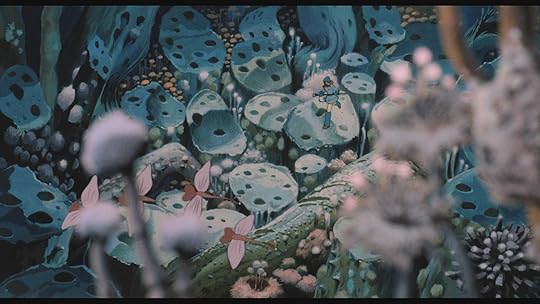
This volume goes deep into the biological AND ecological angle. The art style is in black and white, but despite the juxtaposition of the softness of the greys there is some harsh negative space and deep blacks that underscore the seriousness of everything that is happening. It is very much like they have to go through having The Blob do it's thing first,
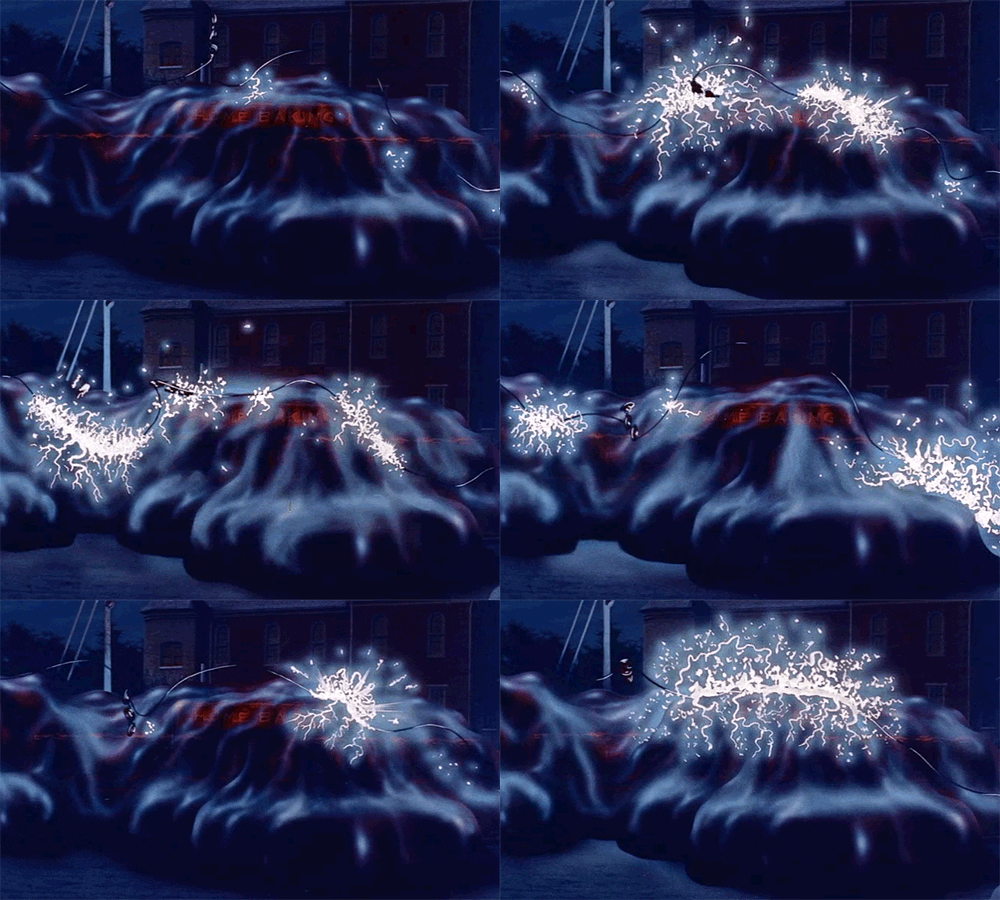
before the environment can be saved.
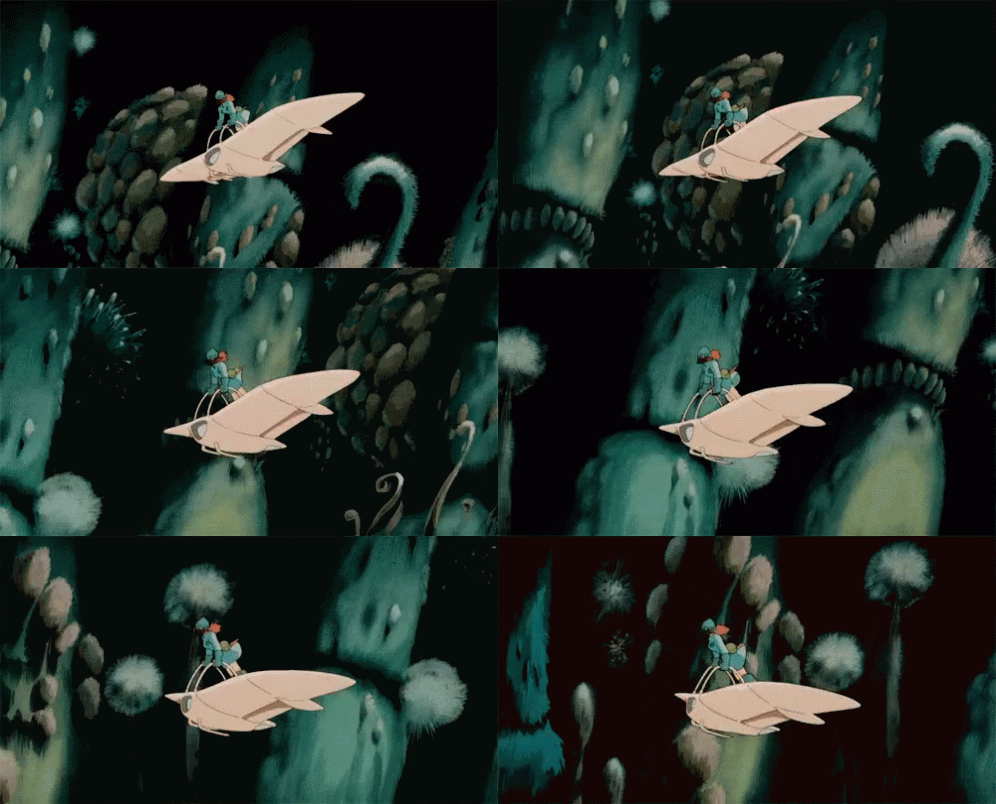
There's also a lot of philosophy and existentialism in this volume, which may cause younger or more innocent readers to get impatient or wonder what is going on. Some of it is not easily digestible, I had to read certain passages more than once to ensure I really got the messaging as it's subtle and more profound than what was in previous issues.
The 4 mega out of control molds are converging at a point, basically hosing the Dorok empire. Emperor Namulith isn't standing idle, he's playing a new card, saving Princess Kushana to make her his bride so they can jointly rule both countries (or what is left with them).
Meanwhile the 4 mutated molds merge, and at their epicenter Nausicaä see the cycle of life and death and comes to a realization, a realization that makes this perfect for my food themed bingo card.
The insects weren't attacking it, they were eating it. They were trying to eat up the mold's suffering as they would the suffering of the forest. That is the love between the insects and the plants.
This volume goes deep into the biological AND ecological angle. The art style is in black and white, but despite the juxtaposition of the softness of the greys there is some harsh negative space and deep blacks that underscore the seriousness of everything that is happening. It is very much like they have to go through having The Blob do it's thing first,
before the environment can be saved.
There's also a lot of philosophy and existentialism in this volume, which may cause younger or more innocent readers to get impatient or wonder what is going on. Some of it is not easily digestible, I had to read certain passages more than once to ensure I really got the messaging as it's subtle and more profound than what was in previous issues.
Displaying 1 - 30 of 94 reviews