In the aftermath of a Memory War, society is fragmented into strange new cultures, castes and coalitions. Set against a backdrop of retrofitted food garages, microchip-sorting factories and hyperloop terminals, Whitney French brings us a dazzling novel-in-verse where memory is the highest currency and love, like all revolutions, is dangerous, unruly and singed with hope.
O and Z are two young women searching for purpose in a world where a decades-long earthquake reverberates through the Earth’s crust, and the population scrambles to hide from deadly acid rain. Descended from space pirates, O is drawn to the sky, while Z is earthbound, a skilled forager with connections to the black market. The two become travel companions and lovers until, torn between choosing their values or each other, a fateful decision must be made at the el Corazón space station.
In this speculative and intoxicating novel, French offers readers an intricate future-world that resonates so powerfully with our own, as it explores a people gripped in the war-torn politics of migration, memory-keeping, labour, and survival.
Whitney French is a writer based in the Toronto area although she does most of her eating, sleeping and actual writing in her hide-out north of the city. Her writing interests include character-driven fiction, children’s literature, screenwriting, poetry, speculative fiction and essaying. She recently graduated from Concordia University for Creative Writing and Child Psychology and works as a freelance writer.
But if you really want to know what Whitney is like…
She loves anime
She ties her shoes sitting down, always
She talks smack on the basketball courts but she’s really no good
She has an irrational fear of metal jewelry touching her skin
I received this book from River Street Writes in exchange for a fair review.
Lyrical and complex, Syncopation is a fascinating blend of verse and story.
It took me a bit to really connect with this one, namely because rather than being an epic poem that tells a continuous story in a more conventional format, this book begins as stand-alone but related poems that you slowly realize are telling a narrative. Some poems fit directly with those before or after them, but some seem disparate from the rest.
Yet, once I got further into it, and one of the major themes of the book is explained in a sense, the way it’s told actually worked more for me. This is the idea of Syncopation itself (which is the use of off-beats or weak beats to break up the typical musical cadence. It features heavily in jazz and funk). The author does this with the narrative being told in poetry, but also how the poetry itself is formatted. It’s very clever!
The thing is, this limits the poems thematically in a way, making them about the overall story more than sort of lofty takes on various topics. There was really only one poem I loved, and that was Parched III.
Yet the book does manage to tell the journey of two characters, O and Z, and give them personality, conflict, and motives. I did find their love story could have had a bit more focus, and that certain sci-fi worldbuilding elements actually suffered from being in verse, as I wasn’t sure if the descriptions were metaphors or literal.
But I definitely enjoyed the references and allusions to the various locations in southwestern Ontario, which is where I live!
Overall, it’s a hard book to review but if you enjoy narrative verse, poetry in general, or are looking for something a little different and ambitious, it’s well worth the read.
The only way I can describe Syncopation is like hearing a song for the first time. It has a rhythm that immediately catches you. You might not understand every word right away, but you feel the story underneath it, and that feeling is beautiful.
Once I settled into the rhythm of the writing, I was completely locked in. There were moments where the passages felt abstract or confusing, but instead of stopping to dissect every line, I let the story move the way music does. And that approach worked. Syncopation tells its story in a unique way, using very few words while still managing to convey something layered and emotional.
Set in the aftermath of a Memory War, Syncopation unfolds in a fractured future where memory has become the most valuable currency. Amid acid rain, constant earthquakes, and a society divided into new cultures and coalitions, two young women—O, a sky-dreaming descendant of space pirates, and Z, a grounded forager with ties to the black market—travel together in search of purpose. As companions and lovers, they navigate a world shaped by survival, migration, and political unrest until a choice at the el Corazón space station forces them to decide between their ideals and each other.
What impressed me most is how much meaning the author manages to convey with such restraint. The structure is unconventional, but it feels intentional, like each line is part of a larger composition.
This isn’t a book meant to be rushed. It’s one to sit with, read slowly, and let the rhythm guide you through the story.
If you’re looking for something different, something that reads almost like a piece of music, Syncopation is absolutely worth experiencing.
Thank you to NetGalley and the publisher for an ARC of this book.
A novel in verse is an ambitious undertaking, for the author, yes, but also for the reader. I was drawn to the concept of this story and the writing itself is undeniably beautiful. French has a style that works wonderfully in verse format, and many individual passages felt vivid and atmospheric.
That said, I struggled to fully connect with the narrative as a whole. It took me about 35% of the book to settle into the cadence of it and begin understanding how the story was unfolding. By the time it started to click, I wondered if perhaps I would benefit from starting over. Alas, I didn’t.
For me, the story felt fragmented, and I had difficulty consistently connecting the different POVs, timelines, and memories into a single continuous narrative. Rather than forcing it, I eventually changed my approach and focused on appreciating the writing itself and the individual moments within the text.
As someone who has spent half her life in Toronto and half in Montreal, I enjoyed recognizing familiar (and a little obscure) neighborhoods and locations woven into the story.
Readers who enjoy experimental structures or novels in verse may have a very different experience with this book. While I sometimes struggled to piece together the full narrative, I truly appreciated the uniqueness of the approach and the beauty of the writing.
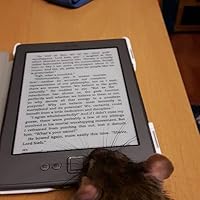
This is also a quick read, and I’m curious whether experiencing it in its final printed format where the visual structure of the verse may be clearer, might change my experience with it. I did try changing font size on my Kindle to see if perhaps that helped (it did a little).
My rating ultimately reflects my appreciation for the author’s writing and ambition, even though the story itself didn’t fully come together for me.
I have never read anything like this. The closest comp I can think of is This is How You Lose the Time War. I will admit that I got lost a few times, but that only makes me more excited to reread this in the future.
Syncopation is a novel written in verse by Whitney French. This story takes place 50 years in the future after the Memory War where the remnants of civilization on Earth are divided into different factions, struggling to survive as constant earthquakes and acid rain plague the landscapes. Humanity has advanced to the point of space travel, with many fleeing Earth as it has become a toxic environment. Humans also have memory chips where they can view the memories of others or delete their own stored memories.
O and Z are the two protagonist women in this story. O is descended from space pirates and has always looked to the sky for her future. Z has connections to Earth and wants to forage and be one with the Earth while also helping it heal. They are always on the move due to the environment and due to other people in unfortunate circumstances that might cause them harm. These women fall in love and have a deep romance, but they must make the decision of staying together or following their passions.
Rating: 5.0/5.0
My thoughts: I loved this story. This is my first 5-star review for an ARC this year. I loved the pacing and the setting of the world. This story really calls to me about my own life. It makes me ask, “How do I navigate love through dystopic realms and times?” But this question is not far from what one can experience in reality. Our world is not to the extent of decay that requires looking to the stars for survival like in the story, but the whispers are there. There are places with acid rain due to industrialization and the toxification of water sources and rivers. We (people from the West) see vast amounts of political instability and political violence that have decimated places such as Gaza but remain privileged due to the roll of the dice of the place of our birth and also the color of our skin. Even though atrocities still occur, people prevail and continue to work hard and fall in love, such as O and Z do in the story, and they ask themselves (if they have the ability), do we stay with our home and each other and try to heal and rebuild, or do we leave and abandon it for our hopes and dreams?
Overall, this read was mesmerizing and will put you in a trance. I found myself breathless through the romance scenes and could feel the intensity of O and Z’s emotions. I would love to hear how it would sound in an audiobook or performed live. This book is for anyone who enjoys LGBTQ+ romance along with dystopian and science fiction themes. A huge thank you to Wolsak and Wynn Publishers Ltd. for providing this book for review consideration via NetGalley. All opinions are my own.
I received a copy of this book from NetGalley in exchange for my honest review.
Syncopation is set 50 years into an alternate future divided by how memory is stored and traded. French tells the story of O and Z, and how their lives intertwine in a post-apocalyptic North America. The poetry is evocative, painting images of a world ravaged by—and perhaps healing from—war and climate change. I would classify the ethos driving Syncopation as both solarpunk and afrofuturist.
While I'm enchanted by French's poetic style, with its driving rhythms and words dancing across the page, I think Syncopation falls somewhat short as a novel. The worldbuilding is ambitious—probably too much so for a medium like the verse novel. I often found myself a little bit lost as new elements were thrown in: voices like bombs, memory as currency, characters with long introductions who only nudge the plot forward. I think what I expected to be the heart of the story—the complicated love between O and Z—gets lost among the trees.
This is still a work well worth reading for the poetry alone, but I would caution anyone approaching the novel expecting the straightforward storytelling of, say, Ellen Hopkins. Syncopation will appeal to readers who enjoyed the worldbuilding of Janelle Monae's The Memory Librarian, and the lyrical prose of This Is How You Lose the Time War by Amal El-Mohtar & Max Gladstone. I have fewer comparisons to offer readers coming from the poetry world, but from a popular standpoint I think French carries echoes of Ocean Vuong, especially his poems about Vietnam.
Whitney French’s “Syncopation” is a novel-in-verse that drops the reader into the fractured aftermath of a ‘Memory War,’ where civilization has splintered into evolved new cultures, castes and coalitions. Fifty years after the war, Earth has become increasingly hostile. There are earthquakes that fracture the landscape, acid rain makes travel dangerous and a toxic environment has driven many humans toward the possibility of life beyond the planet.
Against this landscape of ecological collapse and technological transformation, French constructs a distinctly solarpunk and Afrofuturist world populated by retrofitted food garages, microchip-sorting factories, hyperloop terminals and memory technologies capable of storing or erasing human experience.
In the ‘Acknowledgements’ section of the novel, French identifies the work as a queer science-fiction novel in verse, a description that captures the striking convergence of its form and topical ambitions. The fragmented verse mirrors a civilization whose history has itself been thrust apart, while the novel's speculative technologies ask what remains of the self when memory, the record of who we have been and where we root identity, can become something manipulated or erased.
At the centre of this fractured world are the characters O and Z, two women whose encounter becomes both a love story and a collision between competing visions of the future. They find one another during an acid rain storm and become travelling companions and lovers, moving through a world in which survival requires constant adaptation.
Yet their intimacy cannot erase the fundamental differences between them. O, descended from space pirates, has always looked toward the sky and imagines her future among the stars. Z is earthbound, a forager whose relationship with the damaged planet is rooted in care, restoration and a desire to help the Earth heal. Their love therefore develops within a tension between departure and belonging, between the desire to escape a dying world and the determination to remain and repair it.
This tension gives “Syncopation” its emotional pulse. O and Z are not simply choosing between two places, they are choosing between two philosophies of survival. Their romance is tender and deeply felt, but French refuses the easy resolution in which love automatically conquers ideological difference. Instead, the women must confront the painful possibility that loving another person does not necessarily mean sharing the same vision of the future. Their decision to follow their respective passions transforms the novel's love story into something larger, an exploration of the sacrifices required when personal desire collides with ecological and philosophical conviction. Love, like revolution, becomes dangerous precisely because it refuses to remain orderly.
The title “Syncopation” offers a resonant key to the novel's form and emotional structure. Syncopation disrupts an expected rhythm by placing emphasis where the listener does not anticipate it, and French's verse similarly unsettles conventional narrative rhythms.
Other reviewers have noted that reading the novel can feel like ‘hearing a song for the first time.’ The rhythm catches before every word has been fully understood. Meaning arrives through sound, repetition, interruption and image as much as through conventional narrative structure. The result is a book that asks to be experienced as much as interpreted, its language carrying the reader through a future in which memory has become currency and the remnants of humanity are struggling to determine what, and whom, is worth carrying forward.
There are the Chip-Users, people who store their memories via brain implantation and they are the “ones who use Earth Technology.” They are the ones who work with nature.The Chip-Users tried to upload the system, “but only had access to expired microchips & outdated software.” There are the Griots, they were raised amongst sound, they “leaned into the anonymity of a chorus.” The Adorners were raised to be draped in heavy cloth, they “assembled [themselves] as stitches among stitches among stitches of an unrelentless seam.” Then, there is the Earth Tech, raised in the bush and in the mangroves, “[they] faded into greenlush.” Evocatively, there is differentiation between the named and nameless, the nameless, a mysterious group that defies categorization.
To have a name is something that ensures rising above the atrocities of the Memory War.
“yet all of us were ushered into a world where birthers, siblings, neighbours & entire households were named, labelled, quarantined and killed based on an entire community’s ability to remember. especially during the war. & what little coin there was to be collected to bless us with a baby name was later spent to honour the dead. we were unaware that their memory surpassed our necessity for being remembered.”
A name becomes currency. A name is powerful capital in a society of categorization and segmentation.
Yet, there is a timelessness of being nameless. The nameless haunt.
“we are the shiver down your spine, the legion of labourers forgotten, the thing you work hard to remember, but often forget. a fleeting recollection. we, the flash of ancestral repetition made flesh, the phantom saying this, feeling that. we are your before…look! in your peripheral without moving your head, in the corner of your eye. yeah that’s us. the nameless.”
The narrative voice is powerful. The narrative voice demands acknowledgement. In the section titled “Deja vu suite: I,” the narrative voice explains: “we were born into a world that demanded we have a name. & when we refused, we grew into the shape of burden.” Refusal and burden become something of a weapon. French succeeds in her world-building.
“Syncopation” is organized with a prologue and epilogue. The novel is divided into seven sections, “Aria,” “Stay,” “Overture,” “Go,” “Dig,” “Diminishing Chord,” and “Fly.” These sections can be entered at different angles and lenses. The novel does not have to be read cover-to-cover. The reader will understand what they can, when they are ready to.
The beauty of French’s world-building within a futuristic society, is the continued connection of the human to the earth. In the part “Overture,” and in the poem titled, “A Brief History of Memory War One (MWI), part IV,” French shows this earthen connection. “We were once co-conspirators with rock, plants, kin, once as electric as dirt/ toothing the rings of a black oak, Earth she absorbs our electrons & our anxieties & our pains, she’s strong/ enough to hold some for ourselves.” This connection is not severed, and in that continuity, there is hope. “Our blood/ a weighted, heirloomed root system/ compressed into our spines.” And, in that bloodstream, memory resides.
The title “Syncopation” offers the first key to the novel. In music, syncopation disrupts the expected rhythm, placing emphasis on the offbeat rather than the anticipated downbeat. It is irregular and surprising, a break in the pattern that catches the ear precisely because it refuses to move as expected. French makes that disruption in writing. Syncopation eventually emerges as part of a plan that may offer the fractured world a possible future, with O and Z drawn into its uncertain possibilities, but the novel's most compelling syncopations are more intimate. The relationship between O and Z moves in its own broken rhythm, stopping and starting, separating and converging. There is always something fractured yet still whole.
The same principle shapes French’s language. Her lines resist predictable patterns, her verses break and reform, repetitions arrive at unexpected moments and unusual word choices can suddenly shift the reader’s footing. Meaning is therefore never entirely settled or confirmed. The reader is repeatedly asked to pause and reconsider what has just been encountered.
Like a syncopated rhythm, the novel's disruptions become its source of energy. What initially feels irregular gradually becomes a new kind of music, one in which the broken beat is not a failure of rhythm but the rhythm itself. French invites us not merely to follow the story but to listen to it, allowing its interruptions, repetitions and unexpected stresses to create the pulse of O and Z’s world.
Syncopation is referred to explicitly on several occasions within the novel. In the section, “Go,” a poem titled “rainy train ride to Vancouver,” syncopation is used for the first time. “A man/ teaches his daughter syncopation/ lest no one else learn his lineage: aligning/ pattern & pulse; lest the Chip-Users/ wipe them out again.” Survival is found within the off-beat, what cannot be said. Here, there are still family ties, there is still another generation to speak to. There is still opportunity to control the narrative of identity and familial affiliation. All is not lost. A second reference, in “When martyrs run,” Part II, “she gurgled a weak syncopation, sound requires something else, someone else to bounce off of: the harshest punishment isn’t silence, it’s severance.” And, perhaps, that is exactly what this novel-in-verse accomplishes, something to bounce off of, a connection to be made.
In the same poem, French repeats a question without the stamp of punctuation. “How much can a body/ abide,” is repeated three times between three different stanzas. A body, to remain or stay. A body, to tolerate and to endure. A body, to obey, to accept a rule or a decision.
On a page alone, there are three arrows pointing from the left in, and there are three arrows from the right pointing to a centre. Below, the word syncopation is captured between two singular arrows. Like this:
>>><<<
Arrows that converge to an unspecified centre. Two opposing forces that meet in the middle. The second line could be translated as notation, the angle brackets could function like coding, a tag, the indication of an opening tag. But, regardless, the appearance of this final reference to the word syncopation suggests what is pushing back from the middle, a displacement, in being able to hear what we are not accustomed to listening to.
The title of the novel is obviously an entry-point. The musical practice of disrupting an expected cadence by emphasizing the off-beat or weaker beat, a technique particularly associated with jazz and funk. French translates that principle into both narrative and form. The story arrives in verse, but the poetry itself is arranged to interrupt expectation of what poetry typically accomplishes. Through broken lines, shifting rhythms and repetitions, these mechanics can suddenly alter the reader’s sense of what is literal and what is metaphorical. What initially feels disorienting gradually becomes purposeful. The novel asks its reader to listen differently.
Whitney French is a Toronto writer, multidisciplinary artist, educator, editor and publisher whose literary practice moves freely across poetry, fiction, children’s literature, screenwriting, speculative fiction and essays. A graduate of Concordia University’s Creative Writing program, where she also studied Child Psychology, French has developed a body of work deeply attentive to memory, technology and Black futurism. She has taught creative writing at Toronto Metropolitan University and the University of Toronto. As the editor of the award-winning “Black Writers Matter and Griot: Six Writers’ Sojourn into the Dark,” and as co-founder and publisher of Hush Harbour, a Black queer feminist press, she has extended that literary practice beyond her own writing, helping to create space for voices and stories historically marginalized within Canadian publishing.
Thank you to Whitney French, Wolsak & Wynn and River Street Writing for a complimentary copy in request for an honest review.
Thank you River Street Writing for sending me this book in exchange for an honest review!
While I struggle at the start with understanding this book in it's verse storytelling, once I got familiar with the rhythm I completely fell in love. I loved the poetic language, the world, and the stories of these two characters. It made me realize I really need to add more sci-fi to my TBR!
Thank you to Netgalley, the author, and the publisher for the opportunity (and honestly, the HONOR) of reading a copy of this book in exchange for an honest review.
This book is positioned as a queer sci-fi / dystopian novel in verse. And it very much is that. It is also music. And confusion. And a love story. And poetry for the modern era. 5 stars.
syn-co-pa-tion: the practice of displacing the beats or accents in music or a rhythm, so that strong beats become weak and vice versa.
This entire book is an exercise in syncopation, both literally and metaphorically. The verse is full of words and phrases that mimic offbeats. The alternating of different types of prose/verse in each chapter mimic syncopation in structure. And the characters all move and speak and interact with each other in their own syncopated rhythms that is equal parts jarring and perfect.
For real, though, I don’t think I’m smart enough to appreciate all the nuances woven throughout this book. I was looking for a book to honor Black History Month and came across this on Netgalley. However, I don’t think you have to be a literary genius like Whitney French to appreciate this book. I really loved getting lost in the verse (sometimes literally)! And I am glad I picked this as my BHM read, as while it is set in the future, it is very much a direct reference to the past as well as the present. (“Legacy is as strong as its weakest memory.” What a perfectly relevant and perfectly-timed quote from the author!)
The last chapter before the epilogue, “Liftoff” is probably one of the most beautiful things I’ve read in a long time. It’s a poetic re-enactment, and I really can’t say more without spoiling the book. But man, way to land a book with a takeoff!!!
I loved this fabulous collection that I received from Net Galley in exchange for my review. I began reading it on a kindle, only to realize I wanted to underline half of the text. My experience was hindered in reading it via kindle, and my review is less detailed because of that. I probably will buy this to re-read it again in paper. It's a huge feat, to pull off a speculative, futuristic novel in verse. And it works so well. It works because author Whitney French has a mastery of poetry and verse like few others. The collection begins with the first of several iterations of deja vu, this one with a specific ocean pattern. It sets the structure for the novel as being non-linear, one that is gentle on the reader and makes it easy to follow along in what would, in other hands, probably be too complex. Yet, French alternates prose poems/lyric essays with free form verse that sticks to familiar poetic elements (specifically, she excels at enjambment). The mix of long form with short, a mix of dialogue only, with slash poems, even a new form, one based on a geographic timeline, connects it all. I definitely would read this in paper form, not in a reader.
This was SUCH a cool novel. I'll be honest, I didn't quite realize what I was getting into when I requested it from River Street Writes, other than knowing it was a dystopian novel featuring a queer romance. When it arrived, I was surprised to see the irregular text layout inside its pages. I flip through and then back to the cover and see it's described as 'a novel in verse' - oh right, verse, not prose. Okay, hmm. So it's a novel made up of poems?
And yes, that's (kind of) exactly what it is - a series of poems in different formats, telling a queer love story that takes place in a dystopian North America, similar to our own but heavily impacted by war and environmental destruction. I'm sure I missed some of the nuances, but wow! What an amazing book. The creativity to come up with something like this, and then execute it, is astounding. It took some time to get used to the format, but I did grasp the overall narrative. If you're looking for something totally unique, give this one a try!
This novel in verse is so beautifully written! French gives us a mesmerizing tale of O and Z in a post-apocalyptic North America. It has been a long time since I’ve read poetry and this novel is a work of art!
O and Z are trying to navigate romance and love in a post-apocalyptic world—and just trying to survive that world.
I am sure that there were some nuances that I didn’t necessarily pick up on, but even still, this book was amazing!! It is definitely worth a read to witness the beauty of French’s poetry!
Thank you to NetGalley for the review copy. All thoughts and opinions are my own.
I loved this novel in verse. It does such a wonderful job of weaving memory, nature, and futurism together in a satisfying and tragic love story. I was especially pleased with the way it queered some classic YA dystopia tropes in the form of its factions. It's hard to pick out individual stand out poems when its a novel-in-verse and yet there are some truly fantastic stand outs that display French's technical poetic prowess while the whole uses the sensory intensity of poetry to worldbuild a specific and emotive vision of what our present metaphorically means for our future.
This novel blew my mind a little. It was perplexing, in the way where I didn't feel as though I needed to know everything all at once. I let the story unfold through the twists and turns of experimental form. It was an experience in itself.
Most of the writing went over my head - what is the writer saying? There were moments, however, when the words were beautifully written and I reread the poem because it touched me so much.
Even though I didn't always know what was going on reading it, this novel in verse is beautiful in its telling. Memory is currency, is trauma, is legacy, is future. Beautiful work.