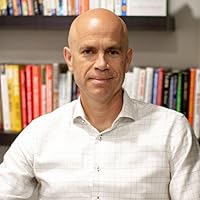
Robert Farrar Capon was a lifelong New Yorker and served for almost 30 years as a parish priest in the Episcopal Church. His first book, Bed and Board, was published in 1965 and by 1977 left full-time ministry to devote more time to writing books, though he continued to serve the church in various capacities such as assisting priest and Canon Theologian. He has written twenty books on theology, cooking and family life.
His lifelong interest in food intersected with his writing and led to his becoming food columnist for Newsday and The New York Times and also teaching cooking classes.
Whew what to say about this book! It was fun, light, goofy, and extremely deep all at once. Such an engaging way to look at theology and the way we talk about God and the church. I was simultaneously challenged and encouraged. I think the way he handles words, meaning, images, and sacrament is top, top notch! It feels as if is joking yet gravely serious as he encourages the reader to seek and embrace the vastness of the God we love and who loves us!
Will be wrestling with his approach to the Mystery for a long time. For the over thinkers, add this to the queue
I just LOVED this book. I’ve read two other of the author’s books, both about food and feasting. This one was about the care we need to exercise great care (“mind the Christian tongue”) when “when we talk about the Mystery that is God.
The book is full of delightful, if not unusual, word pictures like this one:
“You are about to skid yourself into the world's all-time pile-up on the Jersey Turnpike of theology: A dump truck (Galatians) and a tractor trailer (Romans) owned by Paul & Co. are going to jump the divider and clobber you. Reformation Brothers' Towing will take a hundred years to unscramble the mess, and not even Twentieth Century Body and Fender will be able to get the dents out. All because you thought it was safe to take your eye off "when God decided...”
And this one:
And it is definitely not true that Jesus can safely be said to do whatever the church does. Mother Church has said and done some of the damndest things. She has at times been heavily into the cooking sherry. There have been centuries which found her pretty much confined to her room with the vapors.
Here is the conclusion of the book, but it’s not a spoiler—I don’t think. He’s using a fireworks metaphor.
The Signs and the Promises detonate each other, and the freight of imagery, accumulated over a thousand years, bursts out in one blinding flash: For the Temple has become Jerusalem, and Jerusalem has become the Bride, and the Bride has become the Mystical Body, and the Lamb and his Wife are one. And everything is Christ, and everything is the Bride, and everything is the City where there is no temple, sun or moon, but only the Lamb who is its light. And the River flows back from the dawn of creation, and the Tree of Life returns from Eden, and the Gates of Jerusalem are not shut at all by day, and there is no night there. The tears, the sorrow, the crying and the pain are gone. It is all gardens, gallant walks and silver sounds.
I liked this book--it has the wit and imagination I loved in The Supper of the Lamb--but I would be hesitant to recommend it to everyone.
Capon's insistence on the limitation of our knowledge when talking about "the Mystery" is welcome, and I liked his treatment of words and images. His chapter on the humanity/divinity of Christ is worth the price of admission all by itself. I also appreciate his insistence that much of our faith deals in paradoxes. As for how to "resolve" those paradoxes into practical theology, I think he moves beyond the tension point in one direction (although he might argue the same about me in the other direction). And in order to explore an image, he has to explore the boundaries of it, which for some might border on (or push fully into) irreverence. I found this mostly delightful, although there were several places where I was uncomfortable--and I don't think that's a bad thing.
In Kurt Vonnegut's Palm Sunday sermon, he ends by saying that people don't come to church "to hear preachments but to daydream about God." I think this is a good book to "daydream about God" to.
Capon - ‘quoting’ an imaginary padre: ‘If only they could see that Christianity starts by telling you that you have no place left to go because you’re already home free; and no favour to earn because God sees you in his beloved Son and thinks you’re the greatest thing since sliced bread. All you have to do is explore the crazy mystery of your acceptance. .why do they always want to do it the hard way?’
This was my second reading of this book, and as always, Capon's approach to so many familiar things is fresh and enlightening. He's not always right, I suspect, in his theology, and sometimes his imagination takes him off the wall, but in general he's worth reading.
Capon's playful (and too playful as usual) romp through the broadest of Christian theology land.
Though this is not my favorite of his, his use of language is always arresting
If theologians were at a party some would be downright smug party poopers, others would be enjoying themselves professionally, and he'd be the one who was a ton of fun--but had a few too many.
This is a theological book that makes you enjoy the beauty and precision of words while you are being captivated by the analogies. It is one of those books that if you were to begin highlighting the best parts you would, in the end, have a neon yellow fully highlit book.
Robert Farrar Capon suggests that, "You will be interested in God's existence only if, in advance of proof, you care about the subject. And that depends on more than mere existence. What does it matter to you if I can prove that lobsters exist, if you don't like lobsters? The theologian's real job should be to work up your enthusiasm for the Lobster Himself. Only after that can he talk about the Unlobstered First Lobster without putting you to sleep."
Theologians, Capon contends, should be judged by the quality of the information they give than by the evidential force of the arguments they make.
Like discovering a whole new country. I can't remember the last time I've been so delighted with a new-to-me author, or have enjoyed a "theology" book so much.
Did you know that theology is supposed to be playful? The science surrounding "play" has gotten some serious attention in recent years, and no more so than the world of faith and religion has been due for some humor and joy itself! Capon's book is just such a playful gem. I don't mean that Capon does not take faith seriously, it is because he *does* that he wants to free the idea that only bearded serious men can dare have conversations about God! No! Open your Bible, ask questions, and do so knowing that the final chapter of your story has already been written, so, in light of that, how should we "hunt the divine fox" other than with lightness of heart and joyful travels? If you are looking for an entry into the language of "theology", as an individual or even a small group, this is the book to start with!
One of my favorite books -- EVER! Speaks of the metaphorical nature and power of words. Shows how misguided (and relatively recent) doctrines of "the literal word of God" and "inerrancy" of scripture actually strangle the very meaning and power of words. Exposes (without directly addressing it) how fear and ignorance led to these two doctrines becoming political litmus tests for faithfulness to God's word in many of our fundamentalist churches.
I've been revisiting this book, in preparation for a sermon I'm preaching at an ordination in a couple of weeks. Capon says these wonderfully outrageous things about ordination - and eucharist, penance, and just about every other marker in the life of the church - which are at the same time so fundamentally true. And his take on the theological quest as being an ongoing hunt for the Divine Fox? Theology should always be this fun. Read this book.
2.5 stars. I *almost* liked it. I've read at least one other book by Capon and really liked it, though he and I are severely misaligned theologically. I had a much harder time connecting with him here. As always, he is a masterful writer and incredibly thoughtful, and the book contained some real gems of wit and wisdom. I would probably not recommend this book. No hard feelings.