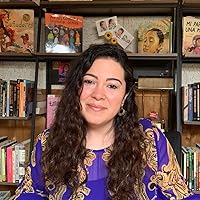
Veteran teacher and author Colleen Cruz has seen it all and done it all in the writing classroom-and she's got something to this is hard work. Real hard. In The Unstoppable Writing Teacher she takes on the common concerns, struggles, and roadblocks that we all face in writing instruction and helps us engage in the process of problem solving each one. From dealing with writing workshop skeptics to working with students both gifted and challenged, and of course combating that eternal barrier-lack of time-Colleen offers tried-and-true strategies to address and overcome obstacles. For the struggles unique to you, she includes a " Name Your Monster " section that helps you identify your own individual roadblocks and even offers sustainable support through her blog, colleencruz.com. "We can't solve all the problems we're faced with in writing instruction," Colleen promises, "but we can choose how to respond to them. And our responses will make all the difference." What makes you unstoppable, or what's stopping you? Connect with Colleen on her blog at or on Twitter, #unstoppablewritingteacher.
In addition to being the author of The Unstoppable Writing Teacher, M. Colleen Cruz is the author of several other titles for teachers, including Independent Writing and A Quick Guide to Helping Struggling Writers, as well as the author of the young adult novel Border Crossing, a Tomás Rivera Mexican American Children’s Book Award Finalist. Colleen was a classroom teacher in general education and inclusive settings before joining the Teachers College Reading and Writing Project where she is Director of Innovation. Colleen presently supports schools, teachers and their students nationally and internationally as a literacy consultant.
I picked up this book in August during a summer writing workshop, had to hand it back to the literacy coach, and then borrowed it again this week. She doesn’t know it’s missing. There are some helpful tips for all kinds of issues relating to writing workshop, and then there’s a lot of rehashing of petty issues that I would claim a good teacher would be able to figure out to lead a better writing workshop for his/her students. The “unstoppable” adjective in the title is a bit much.
There are many times where teachers have felt helpless when faced with a new challenge in the classroom and don’t know where to start. The Unstoppable Writing Teacher is a book set up to conquer those many concerns teachers have as to how to help their students. These all familiar concerns consist of ‘I never have enough time’, ‘I’m not sure how to work with students new to English’, and ‘I can’t seem to get my students to stay writing unless I’m sitting beside them’. The author, M. Colleen Cruz, is very relatable in her quest for a successful writing classroom. She approaches each of these challenges with the realization that they are going to possibly happen and a drive on how to face them. Each chapter with the concerns has a section of reflecting on what stops us from tackling this challenge, where we can see an opportunity to help the students, the ‘experiment’ which gives the reader an idea of activities to work with the students on, and then the ongoing work section on how to help continue working on this challenge. Cruz also included student work samples, charts, and model lessons throughout the book depending on each concern. This book ends with chapters for the teacher to reflect on his or herself as a teacher of writing and how to keep marching on through the many challenges they will face.
I found myself relating to many of the concerns that this book discussed and found the sections within the chapter very helpful. Especially the chapter dealing with students new to English. There were some great tips on how to view the problem in a different way by focusing on what they can do already. Cruz also included a chart on the stages of language acquisition. This chart showed what each stages characteristic is and possible strategies to teach. I know that this challenge is becoming more relevant to more teachers lately.
The chapter on never having enough time is relatable to all teachers. With all the assessments that are given these days and meetings galore, we all seem to never have enough time to get certain things done or taught a certain way. This chapter is dedicated to the teacher him/herself. Cruz tells the reader to set priorities and boundaries and to reflect on what is really important. She also gives suggestions on how to utilize the minimal time we have. This included having students be in a routine to get started on work and collect materials, utilizing any waiting periods within the day, and even how students copy their homework. This section does not specifically talk about writing instruction, but if teachers do not have adequate time for a good writing lesson then it does not benefit anyone.
I thought this book was very helpful. Cruz was straight to the nitty gritty about the challenges we face as writing teachers and teachers as a whole. The book was an easy read and set up very nicely. It can also be used throughout the grade levels. I recommend this book to anyone who is wanted to face these challenges head on.
I had the privilege to listen to Colleen Cruz in a writing conference in New York last summer and I have since stayed a fan of her work. When looking for a book to read to enhance my writing instruction in the classroom, I tend to look for books that will improve my instruction and will keep me entertained. "The Unstoppable Writing Teacher" is that book that helped me gain the confidence that I needed, made my thoughts of being a failure as a writing teacher seem less like a failure and more like an obstacle that every teacher goes through with teaching writing. The chapter sections are the most common obstacles that writing teachers come across; students that are brighter than us, ESL students, no resources, limited time, unproductive behaviors, lack of grammar, intrinsic motivation and more. In each chapter, or the "monster" in the classroom, Colleen reflects on her own professional practice to reassure her readers that this is a normal battle in writers workshop, to study those problems and have the opportunity to learn from them, experiment with some problem solving techniques that are highlighted in the book and finally to plan for ongoing work in our reflections.
As an elementary teacher who teaches writing, I can see myself pulling this book back out when I have challenge in the classroom that I can't seem to get my head around. This book is not set up chronologically, choose the section you need most and save yourself some time. Another great aspect of the book is the final chapter, Colleen titles it "Name Your Monster" which can apply to any problem in our writing workshop time that does not fit in with her main chapters. Teachers know that this is crucial because not all challenges fit into eleven categories. With some reassurance, studying the challenge and trying out some techniques, we will be able to surpass our many different faced monsters year after year.
Most of these techniques that Colleen describes are not foreign, teachers have heard them before, possibly tried a lot of them too. With years of experience and hundreds of students who are each unique in their accomplishments and struggles, our schooling, professional development and academic journal readings seem to blend together with an over abundance of information. "The Unstoppable Writing Teacher" gives teachers the power back, to remember what we are truly great at, meeting the needs of all of our students.
A terrific read for all writing teachers. The writing style was approachable and made the reading of this professional book a pleasure. I loved that the author offered problem solving approaches to so many different scenarios because I think I've experienced all of them at one time or another. The ending was spectacular. It praises the hard work that teachers are experiencing in today's climate and inspired me to begin a new school year with excitement.
I used this book for a summer course, hoping it would help me improve my teaching of writing. I was sorely disappointed, as one can see from the star rating.
This feels like a book that would better be used in a college classroom -- for teachers-in-training, because much of the information contained within very common-sense to someone who's been working in a classroom already. For example, "make your lessons interesting!" Well, yeah, no duh. Or, "try to incorporate pop culture into your lesson plans." These tidbits, among others, make an experienced teacher wonder who the audience for this book is.
But what's slightly more infuriating are other aspects of it. Among them, just misguided advice. At one point, Cruz suggests asking your administration to email out the morning announcements if you find they are taking up too much class time being read over the PA. When I saw this, I had to go back and make sure I hadn't misread it. I could only imagine the looks a teacher would get if they had the tenacity to do this. Cruz writes, "It couldn't hurt to ask!" Well, yes, it most certainly could! Can you imagine a teacher telling a principal to alter their practice because it's taking too much time? Not to mention, wouldn't X amount of teachers reading announcements take approximately the same amount of time as one person reading it over the school's PA system?
Nowhere in the title of this book does it indicate its intent is to strengthen the writer's workshop model. Having never done a writing workshop in my classroom, I would've appreciated at least a paragraph about what a writer's workshop IS, rather than just assume the reader knows. Certainly I could read other books to help me in this understanding, but I feel some minor description of it should be given here as well.
In general, this book feels more oriented to elementary school classrooms. I teach middle school, and while I may be able to adapt it to fit my needs, it's more geared towards younger students. Many of the suggestions, and even whole chapters, are not really suggestions to improve writing, but more to improve your overall teaching, so the book feels a little misleading to me.
What's even odder is that there are many awkward writing choices made by the author. Her wording throughout the book made me reread some sentences to understand their meaning. For a book on writing, the writing is difficult to parse at some points.
Definitely not one I would recommend, keep in my collection, or cause me to pick up this author's other publications.
Overall I liked this book, but it wasn’t what I hoped it would be. I thought it would be full of ideas and solutions, activities to try with my students. Instead, I found it heavily described problems that arise in teaching writing and then briefly went through suggestions that may or may not help. I also felt like the book made the assumption that I am highly in favour of writing workshops, without giving me any reason to believe I should be. That being said, there were some interesting ideas that I will likely try in my in classroom, but I certainly don’t feel the need to buy the book.
The semester has started and I keep returning to texts that I’ve used to support preservice and teachers just starting out. This is one of them. I appreciate Colleen’s accessible approach and so have my students in student teaching seminars, literacy, and curriculum courses in teacher ed programs. I’ve also brought this into my work with teachers when designing curriculum.
I was hoping for more from this book. Mostly, I felt that information was a pretty common solution that I already knew. I didn't really glean anything new. I do think this may be helpful for students who are just graduating, or in predatory programs.
Good book on dealing with common issues that come up when teaching writing. Practical ideas for addressing them. Will use the suggestions to help the teachers I work with.
I borrowed this book from a colleague in hopes of infusing some new powerful strategies into my writing teaching practice. The book's organization, short chapters and conversational writing voice made it an easy, accessible read. Unfortunately, the book lacked substance and specificity. It was heavy on inspirational sound bytes and motivational advice to encourage teachers with Cruz's "I've been there too," approach. I'm glad I read it and it gave me a few ideas. I'd recommend this to new teachers who are feeling unsure of themselves.
Not much new here. Young teachers may find uses. Veterans there is very little fresh ground tilled in this. I do agree with Cruz on many points, but one strives for new and fresh approaches that this could not provide me.
I did not enjoy the book, but give it 2 stars because I do know that it can help others.
When the chapter titles are longer than the summary I would make for the chapter after reading it entirely it isn't a book to me, but a bloated listicle. I know this is overly harsh.
It was both comforting and beneficial to read this book. The author validates feeling many teachers of writing have, and she offer practical and doable solutions to get you moving forward in your writing workshop. Additional resources are mentioned throughout the book for those wanting to do further investigation.
This book was disappointing. I love Colleen's work, so I was excited to read it. I loved the structure, and I assumed that it would provide more practical tips and strategies than it did. For teachers just starting out who need to know they aren't alone in their struggles, this book would likely be beneficial.
Straight forward, helpful advice presented in a logical way. Especially found the sections on helping strong writers and repetitive writing applicable to my classroom. Look forward to implementing some of these ideas in to my writing instruction.
I got to meet this author over the Summer at Heinemenn in Portsmouth. Great book with strategies teachers can use working with children at all different ages. I highly recommend for all my teacher friends.
This book acknowledges that we are not alone. It addresses many issues that we could possibly have as writing teachers and writers. It gives us strategies on how to help our student.
Phenomenal book from a rock star educator and a fellow pessimist. I appreciated her candor, honesty, and thoughts on grammar instruction. If you are a writing teacher, you should read this book!
Good information, just very repetitive. It was like having a conversation with someone who keeps making the same point over and over. There were many good points made about writing workshop.