The Liberal Imagination is one of the most admired and influential works of criticism of the last century, a work that is not only a masterpiece of literary criticism but an important statement about politics and society. Published in 1950, one of the chillier moments of the Cold War, Trilling's essays examine the promise --and limits--of liberalism, challenging the complacency of a na�ve liberal belief in rationality, progress, and the panaceas of economics and other social sciences, and asserting in their stead the irreducible complexity of human motivation and the tragic inevitability of tragedy. Only the imagination, Trilling argues, can give us access and insight into these realms and only the imagination can ground a reflective and considered, rather than programmatic and dogmatic, liberalism.
Writing with acute intelligence about classics like Huckleberry Finn and the novels of Henry James and F. Scott Fitzgerald, but also on such varied matters as the Kinsey Report and money in the American imagination, Trilling presents a model of the critic as both part of and apart from his society, a defender of the reflective life that, in our ever more rationalized world, seems ever more necessary--and ever more remote.
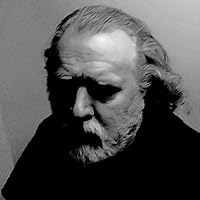
Lionel Mordecai Trilling was an American literary critic, short story writer, essayist, and teacher. He was one of the leading U.S. critics of the 20th century who analyzed the contemporary cultural, social, and political implications of literature. With his wife Diana Trilling (née Rubin), whom he married in 1929, he was a member of the New York Intellectuals and contributor to the Partisan Review.
To read Lionel Trilling is to confront the mysterious gulf that separates intellectuals from academics. Of course, Trilling taught under the auspices of Columbia University; but how little a mark his professorial career left on him. When one opens this book, one will find no trace of jargon, no name-dropping or ‘plugs’ of his colleagues, and scant reference to the then trendy Freudianism and existentialism. (In the heat of Freud's influence, Trilling's essay on his work is cool and critical.) One will only find the honest thoughts of a man who cared deeply about literature, and who wished to communicate this care in prose that is both direct and that does justice to the complexity of his subject.
While reading The Liberal Imagination, I had a similar feeling as I did when reading W.E.B. Du Bois’s book, The Souls of Black Folk. It was a feeling hard to account for. Trilling’s writing style is neither elaborate nor gnomic. His large vocabulary was only used to add an extra flavor to a sentence here or there—never with extravagance or pretension. The subject matter did not involve any conceptual difficulties. So why did I feel exhausted after a mere 20 pages?
The answer must lie in the subtlety of Trilling’s approach. Few authors have expressed themselves more carefully. He includes a caveat with every thought, he qualifies every statement, he weighs every assertion. The sentences seem to close in on themselves—doubling back, moving forward, and then circling round. But this does not lead him to tip-toe around issues. Rather, this constant dialogue with himself turns his prose into a sort of sieve. All he has to do is shake an issue, and the extraneous material falls away, leaving only gold.
As a result, this book held my interest even when the topic at hand bored me. Many of the authors and books he discussed I hadn’t read. Nevertheless, the experience of watching the wheels of his mind spin as he slowly circled and closed in on his main point was exhilarating, even humbling.
Despite the title, the political message of this book is mostly hinted at. Trilling refrains from all partisan politics. For me, the value lay more in contemplating possible connections between literature and politics than in any definite conclusions on the matter. And it is a subject worth considering.
Here is a thought of mine that I’ve been toying with. It is characteristic of liberal thinking to make negative arguments concerning rights. You have a right to any activity or freedom that won’t directly harm another person. It is the negative version of the golden rule: do not do unto others as thou would’st not have done unto thyself. To me, and to many others, this seems to be a wise and logical basis for political freedom. Yet there is a danger.
Let’s take freedom of speech. Barring special circumstances, we have the right to say or write anything, because doing so couldn’t harm anyone else. Noam Chomsky and Neo-Nazis, men's rights and and gay rights activists, all are permitted to send their messages over the airwaves. On one level, this is a marvelous thing. But think about the logic of it. For a government to say that you can say or write anything because it couldn’t possibly be harmful is to place a very low premium on language and knowledge. It is, in a sense, a self-fulfilling prophecy.
So, in some strange way, governments much concerned with censorship—like Orwell’s imagined dystopia—value ideas more than we do. They feel threatened by ideas, threatened enough to dedicate time and resources to squash them; whereas we think of ideas as harmless. Of course, I’m playing devil’s advocate here, but it's worth thinking about. Why not this: don’t argue for the freedom of speech and the press by declaring that such freedoms could result in no damage. But rather argue that ideas and language have the potential to do an enormous amount of damage, and therefore have the potential to do an enormous amount of good as well.
What a subtle and scrupulous intellect! I love that Trilling insists on the social, political and moral mission of literature out of a love for art, out of a feel for its centrality, and without ever scolding writers, as is the tic of too many social-minded critics, for disdaining bald polemic and the other artless travesties of true engagement. On the contrary, the idiosyncratic perceptual sophistication of the Jamesian novel, its "moral realism" about the cost and complexity of any action, are for Trilling humane correctives to the reductive materialist dogmas of politics:
[the novelist:]is, as Fielding said, the historian's heir; but he will also be indifferent to History, sharing the vital stupidity of the World Historical Figure, who of course is not in the least interested in History but only in his own demands upon life and thus does not succumb to History's most malign and subtle trick, which is to fix and fascinate the mind of men with the pride of their foreknowledge of doom. There are times when, as the method of Perseus with Medusa suggests, you do well not to look straight at what you are dealing with but rather to see it in the mirror-shield that the hero carried.
In his introduction Louis Menand calls The Liberal Imagination a "Cold War book," which unfortunately makes Trilling sound like some former Trotskyite reborn as a Neocon. Menand's real point is that Trlling is writing in an intellectual world characterized, to a degree almost unimaginable today, by ideological debates and doctrinal hair-splitting (in an essay on the future of the novel, Trilling even suggests that if novelists can no longer take social upheaval and class fluidity as indicated by manners and mores for their subject, as Stendahl, Balzac and James did in the 19th century, then the "range of passions" and "complex system of manners" brought about by the various allegiances within an ideological society could serve just as well; and from what I've skimmed, Trilling's one novel, The Middle of the Journey, is about just that; as it turned out, the ideological gloom lifted and most American fiction, at least, went it way with either postmodern playfullness or domestic realism). The task Trilling undertakes in so many of these essays is to clear a space for imaginative literature amidst the ideological allegiances of the educated classes. The Liberal Imagination stands as the most ambitious repudiation, by a midcentury liberal intellectual, of the aesthetic--and therefore human--compromises compelled by the previous three decades of fellow-traveling, by even the mildest armchair sympathy with a Leninist view of culture:
Our liberal, progressive culture tolerated Dreiser's vulgar materialism with its huge negation, its simple cry of "Bunk!," feeling that perhaps it was not quite intellectually adequate but certainly very strong, certainly very real.
...because our fate, for better or for worse, is political. It is therefore not a happy fate, even if it has an heroic sound, but there is no escape from it, and the only possibility of enduring it is to force into our definition of politics every human activity and very subtlety of human activity.
That last extract can sound too doom-laden, and even a bit silly, to our ears, but remember Trilling was writing in the late 1940s. The Liberal Imagination seems to me dated--but not dated in the pejorative sense of being obsolete, but of being readably illuminating about a past but crucial period. Reading Trilling I kept thinking of a book I just read, Lesley Chamberlain's The Philosophy Steamer: Lenin and Exile of the Intelligentsia. Chamberlain places Lenin's expulsion of a mass of religious thinkers and literary critics in the larger context of his attempt to reorient the intellectual life of Russia along positivist and materialist lines. Lenin and Stalin and beyond murdered, exiled and co-opted the Russian intelligentsia so that the life of the nation's mind--including its science, as witnessed by Stalin's official sanction of various quack biologists--was always conducted under the sway of ideology. The left-leaning intellectuals of Europe and America obviously weren't experimented on in this way, but Soviet cultural policy rippled outward to determine progressive opinion, particularly in the arts, where even very gifted and subtle readers, critics and theorists struck populist poses from a sense of the eschatology of ideological conflict. Trilling's great work was to remind his readers of the humane essence of imagination and art. Trilling's career doesn't share the aura of almost mythic heroism seen in the life of, say, Nadezhda Mandelstam, who memorized her murdered husband's unpublished poems because she was unwilling to entrust them to confiscatable paper, but he did his part to keep minds free.
The job of criticism would seem to be, then, to recall liberalism to its first essential imagination of variousness and possibility, which implies the awareness of complexity and difficulty. To the carrying out of the job of criticizing the liberal imagination, literature has a unique relevance, not merely because so much of modern literature has explicitly directed itself upon politics, but more importantly because literature is the human activity that takes the fullest and most precise account of variousness, possibility, complexity, and difficulty.
No one reads Lionel Trilling anymore. For someone as massively important to American intellectual history, he seems to have largely been forgotten, especially as his compadres drifted rightwards and started rubbing shoulders with Wolfowitz and his merry gang of motherfuckers. These are the sorts of detailed studies, ranging from views on classics like Fitzgerald and Henry James up through the Kinsey Report that bespeak a wide-ranging, analytical intelligence (although he falls for a few more Freudian fraudulences than I like). My generation namechecks Foucault, Nietzsche, Benjamin, etc., but I would advise all of them to check out Trilling as well. He deserves a revival of interest.
Do I agree with everything Trilling says? Of course not: he's disturbingly keen on a very orthodox Freud, and he's not immune to the old 'the cure for the problems of democracy is more democracy line;' and I'm not sure how those two tendencies mesh. Also, early 21st century America is a very different place than mid 20th century America. It's hard to imagine a moment in history when the rationalists were on the offensive and everything was being quantified. Today I would say the irrationalists are definitely on the defensive. But Trilling's book is still fabulous: first, he argues that the question is not limited to reason on the one hand, and the irrational on the other. There are kinds of reason, and kinds of the irrational. You can't just pick a side. Second, he's willing to get in the trenches and shout it loud: books matter! They help you think better! Literature has a purpose! I'd like to throw a few dozen copies of this at Stanley Fish's head on the right, and at the heads of people on the left who think it's cool to disdain rational argument.
In the essays in this landmark collection, Lionel Trilling discusses the meaning and importance of literature for liberal society. He believes that serious, complex literary art questions naive liberal beliefs about reality, progress, justice, culture, and science. A healthy literary culture which is relatively independent of political activity, then, plays an essential role in keeping democratic society itself healthy. Inadequate literature on the other hand merely reproduces naive progressive values at the cost of intellectual and moral depth and at the risk of devolving into crude, hedonistic nihilism: for Trilling, this tendency's masthead is Theodore Dreiser, and today we must include all the mediocre novels about identity and history that win literary prizes year in and year out. (By the way, the liberalism Trilling has in mind really does not align with much modern usage -- I think the most honest equivalent for what he's supporting has to be democratic socialism). The essays that take a broader perspective (like "Freud and Literature") or a narrower one ("Huckleberry Finn") are especially rewarding, but throughout one has to be impressed with Trilling's thoughtfulness, guile, and craft. But does literature deserve to offer anything besides an artistic expression of critical liberalism? Can it speak for itself, or say something consequently different? In the final analysis, I believe it can't on Trilling's view, or not for long and not on his watch. Often in his wishy-washy world, the apolitical writers have bad politics, the political writers are inadequately political, anything worthwhile is leftist by default, and no writing is seriously evaluated as writing. This last is the most troubling because, as a result, his judgements on aesthetics and literary merit generally go unsupported. Occasionally, they desperately need support: something has to have gone awry when Henry James repeatedly earns his highest praise for The Princess Casamassima.
The novel is, as many have said of it, the least 'artistic' of genres. For this it pays its penalty and it has become in part the grave as well as the monument of many great spirits who too carelessly have entrusted their talents to it. Yet the headlong, profuse, often careless quality of the novel, though no doubt wasteful, is an aspect of its bold and immediate grasp on life.
I certainly don't share Mr. Trilling's politics, but I find his ideas about literature and its relationship to society and culture more or less agreeable. His insistence on social relations, money and class being at the heart of the novel, and on the historicity of prose and poetry alike, would hardly be out of place in an explicitly historical materialist framework. Likewise Mr. Trilling's invocations of Freud are non-dogmatic without collapsing into neo- or anti-Freudian truisms. Plus I live for the critique of New Criticism that parallels the best in Kazin.
I read books like this -- old collections of critical essays by major-at-the-time intellectual figures -- for a few reasons:
1) I like absorbing historical contexts, seeing what moved someone to write -- for instance, Trilling was fired up about proving that Theodore Dreiser and Sherwood Anderson were not really very good authors, in defiance of popular opinion at the time. Even though I've never read either Dresier or Anderson, I liked seeing Trilling break down their work according to his own ideas and identify the problems and the good points. Similarly, his strong feelings about Freud and the Kinsey report tell me a lot about Trilling's concerns and ideas around sexuality and psychoanalysis, even though I don't really care about the Kinsey report in itself.
2) I like acquiring new tools for own critical kit; when Trilling analyses Dreiser's use of pity in his novels, for instance, and explains what he thinks is wrong of it, I get new ways to think about how authors use pity in fiction. Ditto Trilling's belief that Anderson's celebration of life is undercut by the fact that he talks too much about emotions and not enough about the actual concrete experience of living -- I think I've felt that myself, about other authors, but now I have much more useful words to consider it with.
3) I like being inspired to read new things -- for instance, Trilling's in-depth analysis of The Princess Casamassima made me remember how much I enjoyed The Portrait of a Lady when I read it nearly 20-something years ago, so if I am going to read more James, why not that one, and then I can reread Trilling's essay afterwards and see what I think of it in context?
All of which are, of course, very particular and personal pleasures, which may not translate well to other readers. Still, for me, this was an interesting and soothing read during trying emotional times.
Explores the relationship between emotions, ideas, and ideology and how fiction acts as a vehicle for their communication. More or less, fiction in service of ideology remains thin, but when able to confront complex ideas based on conflicting emotions, the novel can still achieve an active relevance.
“A culture is not a flow, nor even a confluence; the form of its existence is struggle, or at least debate”
“There is no single meaning to any work of art; this is not true merely because it is better that it should be true, that is, because it makes art a richer thing, but because historical and personal experience show it to be true. . . . Even if the author’s intention were, as it cannot be, precisely determinable, the meaning of a work cannot lie in the author’s intention alone. It must also lie in its effects.”
“Too often we conceive of an idea as being like the baton that is handed from runner to runner in a relay race. But an idea as a transmissible thing is rather like the sentence that in the parlor game is whispered about in a circle; the point of the game is the amusement that comes when the last version is compared with the original.“
“When we try to estimate the power of literature, we must not be misled by the fancy pictures of history. Now and then periods do occur when the best literature overflows its usual narrow bounds and reaches a large mass of the people. . . . It is what we must always hope for and work for. But in actual fact the occasions are rare when the best literature becomes, as it were, the folk literature, and generally speaking literature has always been carried on within small limits and under great difficulties.”
“But from this very sense of its immediacy to life we have come to overvalue the novel. We have, for example, out of awareness of its power, demanded that it change the world; no genre has ever had so great a burden of social requirement put upon it (which, incidentally, it has very effectively discharged), or has been so strictly ordered to give up, in the fulfillment of its assigned function, all that was unconscious and ambivalent and playful in itself.”
“Ideas, if they are large enough and of a certain kind, are not only not hostile to the creative process, as some think, but are virtually inevitable to it. Intellectual power and emotional power go together. . . . In any extended work of literature, the aesthetic effect . . . depends in large degree upon intellectual power, upon the amount and recalcitrance of the material the mind works on, and upon the mind’s success in mastering the large material. . . . But the extreme rationalist position ignores the simple fact that the life of reason, at least in its most extensive part, begins in the emotions. What comes into being when two contradictory emotions are made to confront each other and are required to have a relationship with each other is, as I have said, quite properly called an idea. . . . And it can be said that a work will have what I have been calling cogency in the degree that the confronting emotions go deep.”
Trilling, Lionel. The Liberal Imagination. 1950. Introduction by Louis Menand. New York Review of Books, 2009. Lionel Trilling’s classic collection of essays from such journals as the Partisan Review in the 1940s provides a refreshing antidote to the tweets and blog posts that often serve for critical thought these days. Trilling was, according to Louis Menand, a “liberal anticommunist” with a grudge against the American Marxism typified by the literary historian V. L. Parrington. Parrington, he said, had a narrowly materialist view of reality. Trilling’s critique of Marxism made old-school radicals like Irving Howe say he lacked social conscience. Trilling has a sharp eye for the overly simple. He admires Freud but is critical of Sherwood Anderson and others who oversimplified Freudian insights. Even Freud, he says, does that at times. He praises Henry James and Mark Twain, both of whom he said had a well-nuanced realism. In talking about Twain, he quotes Pascal’s comment that a river is a road that moves. Huckleberry Finn, he says, has moral passion and a good blend of romantic imagination and social realism. Trilling also admires the blend of realism and romanticism in the early Wordsworth. Wordsworth’s Immortality Ode, he says, is not a poem about growing old but a poem about growing up. He appreciates Tacitus for having a more nuanced view of history than he is usually credited with. He deplores Kipling for oversimplifying nationalism and Kinsey for dehumanizing sex. He likes the moral realism of European comedy of manners, a form he says is rare in American literature. F. Scott Fitzgerald he sees as a moralist who depicts an unresolved struggle between free will and circumstance. Trilling does not think the novel is a dead form, but he does not like writers he thinks ideological or self-indulgent, like Dos Passos, O’Neill and Wolfe. He prefers writers like Faulkner and Hemingway who express all the contradictions in American culture. In sum, Trilling’s attack on Parrington may be beating an already dead horse, and I am not sure many would agree that The Princess Casamassima is the best novel by Henry James. But his discussions of Twain and Wordsworth are thoughtful and his warnings against ideological excesses are more apt than ever. 4 stars.
This book is very much of its time, a great illustration of New Criticism or whatever, the last bastion of American critical thought unsullied by the dread French invasion of the 1960s. It's almost quaint. Nevertheless, Trilling was a wonderfully perceptive reader, and this volume of essays contains several real gems.
When you read a lot, and make some effort to read old stuff, and commentary and criticism about old stuff, you get these funny layers of reception history over your own takes. Anyway, I do. Lionel Trilling was one of the dons of midcentury American literary criticism. As such, he’s been interpreted and re-interpreted almost as much as he, himself, interpreted literature. And then add the filter onto that that, other than weirdos like me, nobody knows his name now!
That’s too bad, because some of the discussions around Trilling are interesting, his own work was often top notch, and the whole scene indicates how much less seriously the educated public takes literature. Yes yes, a broader swath of the populace goes through college, and yes, many books are sold, and sure, there’s whole online subcultures, even on platforms dedicated to the ephemeral like TikTok, dedicated to talking about books. But most of it is so many Yelp reviews, advice for what entertainment products you might or might not enjoy. On the higher end, your N+1 type journals, they essentially LARP the life of the “little magazines” Trilling writes about in this collection (and wrote for), back when magazines like Partisan Review and Commentary really felt relevant… and there’s more than a little consumer advice there, too, but more about what books to posture next to to convey that you’re smart to other bougie youths looking to breed.
Say what you want about Trilling, or the other midcentury New Criticism or American Studies types (he was neither, exactly, but was close with both), but they really did believe literature meant something, independent of – which isn’t to say unrelated to – its social value. Ironically, given that Trilling has been made to stand in for the depoliticized literary sphere of post-WWII, pre-1968 America, most of the essays here have something to do with literature’s relationship to politics. It isn’t Trilling’s smallest accomplishment that he could both pick off very specific partisan targets and keep the larger goal of what he thought literature was supposed to be in his sights throughout.
You can tell a lot about a critic by tracking where they are specific and where they are vague. Trilling reacts to the general atmosphere of conformity, sentimentality, lack of interest in the arts (with undercurrents of terror) as the Cold War sets in around him- he’s no booster of the coming Eisenhower America. But he’s much more specific when he wants to “punch left,” as they say. He has corruscating essays directed at the likes of Vernon Parrington and Sherwood Anderson, idols of the progressive, romantic, “soft” literary left of his time. Vagueness creeps back in when he attacks the general tendency towards ideological conformity that characterized left-leaning intellectual circles in the thirties, the “Popular Front” era. He names fewer names, here. It could be that there just weren’t many names to name, that socialist realist literature in America just didn’t produce much, and even less of merit- I think that’s how Trilling might have defended himself. Everyone just came out of college in the Depression, assumed the Communists had some answers, sat around mouthing slogans and expecting someone to come up with something… they didn’t, and then everyone slunk home embarrassed. That seems to be the implicit story here.
I don’t remember if Lionel Trilling was enlisted into old Tony Judt’s canon of good, liberal/social democratic saint figures, the “tough-minded,” often ex-communist, “travelers in the century” he thought we were at risk of forgetting (ironically, I, someone who no longer agrees with Judt’s ideological project, am probably one of the better rememberers, going along with the meta-project) at our grave cost. But he’s for sure “the type,” smart, skeptical, nice prose style. That said… you look at his target list, where he’s vague and where he names names, and it really does seem less like a principled defense of literature and philosophy against Stalinist ideological canting, and more hedging against the classical bourgeois fate worse than death- embarrassment. American Communists weren’t responsible for the gulag, the Molotov-Ribbentrop Pact, or the Katyn massacre, even if they either signed off on or denied all those things, to their discredit. But they got stuff wrong, and it was embarrassing. They especially got stuff wrong culturally, if socialist realist literature is as bad as everyone says (I haven’t read much, does Mikhail Solokov count? How about Dashiell Hammett?), or if you cringe at the corniness of stuff like “Ballad of an American” or Washington Square folk revival material. The core of Trilling’s attack on Sherwood Anderson is, basically, that he wrote like a big, earnest kid, that it played a bit when it was restricted to Winesburg but got real old, real fast. Parrington, dean of the old Progressive School historians (that the Consensus School, at that time, was in the midst of rendering verboten in the American academy), got got more or less the same way- sentimental, sloppy.
Well, they were, both of them, Anderson and Parrington, sloppy, sentimental, risibly so. It’s worth noting that the sloppiness of Parrington and other old school Progressive historians – at least one major figure on the scene, Harry Elmer Barnes, let his hate for the American government and all it promoted lead him to support for the Nazis and Holocaust denial – in his prose and categorization schemes also let Trilling, and the Consensus School guys, duck their larger points about the material interests that drove much of American history… but that doesn’t make Trilling’s critiques wrong.
I don’t want to call it a shell game, exactly. But it has some of the same dynamics. Pay attention to the cringeworthy, ignore the rest of it- especially given how small, how internally-divided and messed up the American left, from the softest of soft progressives to the hardest-edged commies, were (and are), it’s easy enough. Ironically, it was their very strength in the thirties, as Trilling and his generation were coming up, that allowed the likes of Trilling to define a literary attitude against their thing at all.
Further irony- communists, especially American communists playing to liberals in the Popular Front era, made the right, the other enemy, out to be anti-intellectual, no fit background for the likes of Trilling to posture against. What literary stance did Joe McCarthy have other than “I don’t like it”? New Criticism largely came from conservative-leaning critics — Eliot, Leavis, the Fugitive school — but all that did was make their epigones like Trilling feel a little frisson. They were a —safe— right. For those keeping score, in Trilling’s world, you could blame Katyn on American reds, in large part because their values (and sometimes orders from the party, ultimately from Moscow) insisted that they show solidarity with the USSR, but one didn’t feel the need to blame Auschwitz (or Selma) on fascist sympathizers or segregationists, as long as said sympathizers were sneaks with a facade of class. It was, in some ways, a better era in terms of seriousness of engagement- but it’s not like everyone was noble, that they didn’t play with a lot of the same incentives.
Anyway! With all this in mind, Trilling doesn’t so much lay out an Anglo-American canon for the Cold War era — he lets others play that much more vulnerable role — but patrols its edges, keeping some out, bringing others in, and instructing the reader as to the logic of it all. Arguably the crown piece here is Trilling’s essay on Henry James. I never got into Henry James — I might give him another try, not entirely on the strength of Trilling’s recommendation but partially — but still found this essay a fascinating piece of criticism and of rhetoric. Henry James was one of the more purely “literary” writers of his or any time, and it’s that quality that Trilling praises- but he spends thousands of words and achingly close readings of both James’s written work and his letters to prove that James’s aloofness from any questions that didn’t come down to sentence structure and comparative upper class manners was, actually, the bravest, and politically soundest, stance anyone could have taken… especially next to that battle ax of a feminist sister (Trilling, like most of his cohort, built a very male literary world) and goofball do-gooder of a brother of his! To do this, Trilling raises from the dead one of James’s less well known books, makes some very dicey generalizations about anarchists, “whirls like a dervish and bawls fluent Babylonian” as Vonnegut once put it, to prove that what literature is for is mature, somber reflection on the basic contradictions of the world and the inevitability of failure of all great dreams, whether of youth, love, or ideology. And, well- it is for that. It’s for other stuff, too, but it’s definitely for that. But for whatever reason, this is hard for people to take on board sensibly, without falling into snobbish complacency, or a rebellion against the tragic sensibility that, wouldn’t you know it, also leads to complacency, just the complacency of formalism, sentimentality, whatever else you’ve got.
So, I don’t agree with Trilling’s arguments all around. But his work is impressive, and it shows that to make a world where we could be blasé, complacent half-readers of stories of upper middle class divorce (and, after that, enthusiastic, complacent consumers of YA), the critical enforcers of consensus in midcentury could not afford to be blasé and complacent themselves. Trilling was clearly a masterful reader, a great prose-lawyer sometimes making cases out of little, and this shit had stakes for him, and one has to assume for at least some of his readers. It’s this, that the content and the form of literature means something in and of itself, not purely art for art’s sake but because art ties into everything else and vice-versa… well. We’re missing that, today, we try, some of us, like so many cargo cultists to wave the cargo plane of meaning back on to our island with our feeble imitations of earlier eras, or cackhanded inventions, and get nowhere. How much responsibility does Trilling and his cohort have for this state of affairs? To what extent did their definition of the zone of literature in the postwar period lay the groundwork for both a useless literature of navel-gazing and various poorly-considered rebellions against it? The cohort, a fair amount, Trilling himself… well, he taught Ginsberg at Columbia, tried to nurture the Beats. I’m not a big Beat fan but this implies Trilling saw something outside of his canon and its contemporary imitators. And he left us this, to think over and with and against, which is something, too, for what it’s worth. ****’
John Stoehr, a writer on Alternet, promoted The Liberal Imagination in a couple of his recent columns. Reading the book's preface, I was seduced by a paragraph which included this sentence: "But the conservative impulse and the reactionary impulse do not, with some isolated and some ecclesiastical exceptions, express themselves in ideas but only in action or in irritable mental gestures which seek to resemble ideas."
So, Lionel Trilling called out to me from the mid-20th Century. The book is no political tract, though, but a collection of essays of literary criticism. A good bit of the intellectual life of 1949 is unfamiliar to me, and Trilling's writing is challenging, and sometimes over my head, but I'm not averse to having my mind stretched a little, so I stuck with it.
Among other things, Trilling was an admirer of Freud, and he believed that ideas arise from the emotions. I won't attempt to say any more about that, but I'll mention that Trilling also admired Twain, Hemingway, Fitzgerald, and Faulkner. Some targets of his criticism included O'Neill, Dos Passos, Thomas Wolfe, and The Kinsey Report.
Lionel Trilling’s The Liberal Imagination comprises fifteen essays that range in time from 1946 to 1948. The book was first published in 1950. The collection provides a potpourri of intellectual refinements on the state of American literature in the late 1940s. He starts with a focus on the relation between literature and society, and how that relationship has changed over time.
As a side note: Trilling wrote these essays just a few years before people started watching TV, when reading habits rapidly declined—so the book provides a time capsule when there was still a dynamic relationship between the novels, poetry, and essays of the day, and society’s values, ideas, and norms. The average person today might be surprised at how influential literature once was to society and prevailing ideologies.
Back to Trilling’s time: Society and literature were inextricably linked in the 1940s and earlier, and this book provides analysis and criticism of that interplay. As examples of this evolution, Trilling references dozens of authors, from Plato to Faulkner, with varied representatives from the many eras in between.
Some authors suffer significantly under Trilling’s scrutiny: Dreiser, Dos Passos, O’Neill, Sherwood Anderson, Thucydides, Kipling, among others, he considers lesser figures. To paraphrase, these authors are viewed as naïve and self-absorbed, with limited intellectual faculties, and less in touch with the complicated subtleties of the social and psychological realities around them. They give us only a meager façade of literary art instead of the real thing.
Conversely, authors faring better include Henry James, Faulkner, Hemmingway, Tacitus, Aristotle, Fitzgerald, T. S. Eliot, Stendhal, Dickens, Flaubert, Balzac, and several others. These authors are viewed as giving us deeper and more powerful insights into the complexities of life, offering more profound and rewarding experiences for the reader. These greater authors also played a more significant rôle in the development of human societies, according to Trilling.
Of course, rattling off names of lesser and greater authors sounds dégagé and presumptuous out of context. I should emphasize that Trilling provides persuasive arguments and à propos examples to support his appraisals. The lesser authors have in common a tendency to over-confident declarations about a contrived self-serving version of reality. They emphasize brute emotional force that indicates a limited range of intellect and experience. Readers are manœuvred to feel good short-term, but there is little long-term learning or reward after the reading. Conversely, the greater authors have in common a more astute analysis of real-life experience that helps us better understand our social and psychological realities. According to Trilling, these preëminent authors reflect wider experience and deeper intellect in their works.
The general public, however, is not so coöperative—popular preferences do not seem to align with Trilling’s appraisals. Trilling points out that his so-called lesser authors are in fact more popular than the greater authors. The apparent difference lies in an affinity for emotional impact (lesser authors), regardless of expositional incoherence; versus a public mistrust of intellectuals (greater authors), regardless of deeper insights and æsthetic quality.
Another tension that Trilling highlights is the historical scholarship of a literary work’s context, versus the New Critics who say that a “work of art” stands alone outside of history. New Critics were Trilling’s coævals in the 1940s, and they dominated literary criticism at the time. New Critics discount any information about the author’s era, culture, social milieu, personality, etc., in their study of a literary work. New Critics treat the work as a bubble-wrapped ænigma isolated from the roots and atmosphere of its creation. Trilling disagrees with this view of a novel, for example, being a self-contained, self-referential æsthetic object. Trilling takes the position that “a literary work is ineluctably a fact of history, and, what is more important, that its historicity is a fact in our æsthetic experience” (184).
Culture changes over time, and a literary work is the product of its particular moment in a changing culture. Trilling notes the life-art interplay: culture influences art, and art influences culture, in the ongoing cycle of cause and effect. Trying to extract a work from its culture and time (New Criticism) strips away much of the meaning and significance of a literary work. Trilling argues that scholarship into the period, and into the author, give us a more thorough comprehension of the complex layers of literary art, and a more accurate critical appraisal. For Trilling, the roots and the atmosphere are vital to understanding our art as part of our existence.
The book touches on other topics such as the Romantic poets and epistemology, Mark Twain’s Huckleberry Finn, the rôle of Little Magazines, a look at Freud’s influence on criticism, and other topics.
As a bonus above and beyond this potpourri of intellectual refinements on the state of American literature, we discover that Trilling himself is a great writer. Academic books like The Liberal Imagination can be intimidating, stereotypically dreaded like reading an encyclopædia. Not so for this book. This book is lively and well written, every page drawing the reader forward. Every essay stimulates interesting thought vis-à-vis life, society, culture, and literature. Trilling’s insights and perspective reward the reader and make the time commitment to read this book very much worthwhile.
Nostalgiagasm. Bedtime stories for aging American men of a certain age and political disposition. Also, I want to add that one always hopes (sometimes against hope) that ones heros are also good people. Trilling was the teacher of a friend and I don't >really< know but, on the page, he seems like such a very good man -- and it's rare and encouraging and sad to find goodness & intellect of such a caliber together. Anyway, I really loved these. I started with the Scott Fitzgerald essay, which perhaps put me in the correct mood, before reading the others in order and they were wonderful in the old American way of being wonderful.
Reading this highly-esteemed essay collection by Trilling is like finding a literary time capsule. One that, while reflecting another time -in this case, the start of the McCarthy Era when all Federal workers were compelled to take "loyalty oaths," continues to offer a cornucopia of insights on literature and society that still resonate. Yet for all that, it is difficult to read. While the author is clearly brilliant, while perusing this work, lines from a Simon and Garfunkel song come to mind: "You read your Emily Dickinson and I my Robert Frost,/and we mark our page with bookmarks,/to measure what we've lost." One wishes more of his essays displayed the direct, accessible, (OK, understandable), writing style found in his best ones. "Huckleberry Finn," for example, offers fresh clear praise on Mark Twain's classic. And his "Manners, Morals, and the Novel," perhaps because it was a speech, shows a refreshing flow and weaving of disparate topics. Also his essays "Sherwood Anderson" and "F. Scott Fitzgerald" provide incisive glimpses into each writer's literary struggles and gift. Yet finally, I came away rather disappointed - inevitably perhaps when one had expected more: more cohesion, more political musings and more clarity. In the end, his prose almost resembles poetry - dense, tangential and at times, even cryptic. Perhaps Trilling's genius was wary of running afoul of demagogic Senator McCarthy and his henchmen. Because no real "liberal" anything was evident. Or maybe relishing the author's style is an acquired taste not all of us have developed. Might I return to it one day? Perhaps. Time capsules, after all, should best be handled with reverence and considerable diligence.
Знаменитая книга литературного критика Лайонела Триллинга "Либеральное воображение: эссе о литературе и обществе" проясняет связь между общественной жизнью и литературой, причем скорее "показывает", чем объясняет ее.
Воображение для Триллинга -- совместный проект эмоций и разума, подпитываемый эмоциями и мертвый без разума. "Что если..." в литературном воображении представляется вещью не столь уж далекой от "что если..." научного эксперимента.
Тем, кому из двух заявленных тем, точнее целей, в которые метят эссе, подобно моему выбору "общество" ближе "литературы", особенно советую эссе про вышедшее в 1948 году исследование "Сексуальное поведение самца человека" (также известно как "отчет Кинси"). Триллинг симпатизирует намерению Кинси показать, что сексуальное поведение мужчин довольно разнообразно, что оно не всегда соответствует общественному идеалу, и что по крайней мере в некотором статистическом смысле понятие нормы шире, чем принято думать. Однако при этом он не не без юмора показывает, сколь бедны избранные ученым средства, сколь бедна вообще идея редукции мужчин к "самцам человека" или разделения когда-то одной-на-все-случаи "любви" на идеализированную "любовь" и чересчур уж человеческую "похоть", которую приходится облагораживать научной латынью "секса".
Отдельное удовольствие -- эссе про Тацита, римского историка с ясной республиканской жилкой, рисующего историю во многом как историю злоупотреблений череды начальников, но при этом претора, консула и проконсула империи, подчиняющегося ненавистному Домициану. История на все времена!
Well, this guy is brilliant. His essays are investigations into the political ramifications of our literature: not in any foolish way either, but talking about the deep assumptions of the culture and how the stories we tell and the way that we tell them interacts with those assumptions. He is learned and wry. His raised-eyebrow regard is winning and makes an absolute pleasure to read another essay: Henry James, Freud, Fitzgerald--heck--Tacitus and the Kinsey Report (this one is fascinating) all show up in here and you will know more about them all by the time you're done reading. He reminds me of no one so much as Orwell, a view that was reinforced on reading his toughminded essay on Kipling, in which he approvingly footnotes Orwell's own toughminded essay on Kipling. This book is a collection of gems.
There’s nothing like some good old-fashioned dense, mid-century American literary criticism. I have read practically no lit. criticism since college and it took me a moment to get back into the groove of reading theory, but once I did these essays proved surprisingly timely. What connects each essay (spanning from Huck Finn to The Kinsey Report) is the political discourse around liberalism and Trilling’s call for more rigorous intellect among his contemporaries, in literature, and in public discourse. Trilling is somewhat pessimistic (I can only wonder what he would think of the state of the novel in 2021, since he discusses its death in the 1950s), and his admiration for Freud is excessive, to say the least, but his prose and argumentation are exacting. Trilling is an imposing critic, one that is both challenging and thrilling to read.
Trilling. God, what to say? I really feel like there’s nothing I can or should say because presumably it’s already been said and I couldn’t possibly improve on that. All I know is the man is a legend for a reason and A) if for some reason you’re unfamiliar, perchance you should feel ashamed and quickly rectify that and B) even if you ultimately find he’s not your cup of tea, that’s fine - he’s not for everyone. However it’s impossible to ignore his influence in the field and on many critics and scholars, which can’t be ignored. Is he my favorite? No. Is this an excellent text? Yes. Recommended!
Have been savoring each essay as I worked my way through this book. I'm surprised that I've never read it before. Anyone seriously interested in writing should have a copy so it can be reread from time to time. Sample essays are "The Meaning of a Literary Idea", "Freud and Literature", "Manners, Morals, and the Novel", "A Sense of the Past", "The Function of the Little Magazine". I can't say enough about all of them.
Inspiring, still, to me; it seems like no matter how much you read, or how much you love reading, the hardest thing to do is to tell someone why. Trilling gives you a possible response, but the problem, of course, is justifications get dated, and they can only be partial, and all theories are doomed by necessary competition. Trilling remains a relevant endorser, though, of appreciating a true, complicated vision of life.
In an early moment of synchronicity, Trilling accounts for Henry James' chimeric ideal of intellectual honor in the following terms: he says he was of no political use in that he did not put liberalism in the forefront of his books, which failed in the sense that they were not novels whose main characters saw the role of art as the forward march of a self that was beholden to progressive causes. In this way Trilling faults James for not understanding evil as a positive, active and enterprising principle; it is as if Trilling faults James for believing in the devil, whom he actually felt, for leading him to a belief in a God whom he did not actually feel. In his review of James' novel, The Princess Casamassima, Trilling gave his loyal support to what James published and those who dared voice their opposition became nothing more than literary corpses to be sent to the crematorium. None of us can be satisfied with this outcome and the bitterness of this experience is the culminating moment of a whole generation which no longer even has the desire to defend itself when attacked by the most vocal critics, such as Sherwood Anderson, who suggested that James' novels had the distinction of being filled with hate. Trilling contends that this did not imply that they were works of art in whose genesis a neurosis may be found but meant simply that James' moral attitude towards his characters is irrelevant nor does it in any way diminish in value the artistic worth of his novels because of the outcome of the lives of his characters. I wonder if these examples of baroque art have not suffered irremediably by vulgarizing the prosody in accordance with James' unique time scales. I also question whether the statements of these critics were the predictions of dead men who spoke as representing a foreknowledge of death or of an early literary obsolescence.
As I have recently finished Henry James' three volumes of autobiographical writings, I cannot but disagree; but our opinions on the history of cultural values and the reflexivity of history as a political science leads me to believe that what James' critics saw as the ostentatious luxury of his novels was merely the reflection of the crass consumerism he had to appeal to in order to succeed in his craft as an artist and assume the pedigree his parents created for him by establishing him with an unorthodox and somewhat un-American youth traveling to and from Europe, where each nation claimed its right to existence and its ambition to revolt against oppression and where the only admissible classicism is one that makes a sacrament of obedience. His resulting literary persona and his engagement in an eclectic world of books and libraries and worldly personalities could perhaps be one of the reasons that peers such as Sherwood Anderson called James a writer whose novels were filled with hate. Perhaps Anderson saw James' classicism as hateful because he saw it as oppressive and repressive. It looks like Anderson blames James for his astonishment at the beginning of his philosophical education and it also seems that, for most of his career, he had no wish to go beyond it. The idea that an educated America would bow before the histrionics of James' The Tragic Muse or the hyper-aesthetic emotions of The Wings of the Dove is absurd; the relationship between artistic need and public satisfaction has changed and that is why Henry James is largely unread today. Nonetheless, Sherwood Anderson showed his sense of his own importance on this occasion by sneering at Henry James' works and making himself an exhibition in front of them. However, I believe that it was by embracing the myth of his distance from the process of production that Henry James made a virtue of his status as a literary artist who is not yet fully within the grasp of society.
In the case of Henry James, the historians of literature would continue their attack in the name of power. As T.S. Eliot said, "James's critical genius comes out most tellingly in his mastery over, his baffling escape from, Ideas; a mastery and an escape which are perhaps the last test of a superior intelligence. He had a mind so fine that no idea could violate it." Do we not see a satisfactorily psychoanalytic analysis of the comment? I foresee a long audience requesting commentary from the actors who urge them to communicate their enthusiasm for the literary lion that was Henry James and his unimpeachable artistic career. As I see it, T.S. Eliot saw James' art as an example of the experience of unforeseen events that were, paradoxically, the result of an author treacherously misleading his reader. Once we have got rid of the fetish of original authorship, and recognize that we are in a more objective world, we can see many unities of a different kind. In the postmodern future, ordinary critical essays are out of the question and the sorely taxed notion of the descent of majesty from above is called into question. Historians like Oswald Spengler tell us that it is possible to calculate the unknown in history as far as possible, but whether or not we can evaluate the past is still a matter of high dispute.
Surely, Anderson's dispute with James is something that could be corrected nowadays in five minutes over the telephone with all the vividness of a children's picture book. He merely assumed his role as a literary artist meant he had attained the radius of action of the diplomat, as he romantically overemphasized himself as a soldier; however, someone should have told Sherwood Anderson that he must learn to control his actions and restrict what he says to his own knowledge-base. In my opinion, the distinctive relationship between Henry James and the public bears an analogy between God, who Created the world through the pleasure of His own inclinations and the literature artist who, through his sense of the majesty and splendor of nature creates artistic works whose greatness is the result of authorial intentionality. He recognizes the artifice of his craft as the second life of decomposing things because nothing has substance for him but what has already been mediated by memory. Trilling makes the mistake of assuming that James' primary social identity was of spiritual importance and he castigates James for being unrepentant. However, the kingdom of God and the utopia of a paradise on earth are ideas which ultimately spring from the sources of creative and productive artistic work, of which Henry James was a Master.
I came to this book after an enthusiastic comment I read in the the cultural suplement of a newspaper. I am afraid that, since I am not a scholar and I have not got any degree in Literature, may have diminish the amount of value the book may provide to those kind of readers.
Because I found the author’s style very hard to follow. It is not only that the prose is 90 years old. He writes using abstract terms and barely emphasizes anything. It is not significant that I can only remember one exclamation mark in the whole book, because there are other, far better ways to emphasize your statements, but the fact that I noticed this small detail astonished me.
This permanent abstract speaking and lack of emphasis took me off the book often. I returned to it because I like the topics he is talking about, and because it is clear reading the essays it contains that Trilling was a very educated, intelligent person whose opinions are worth reading even though.
I would only recommend this book either to schoolars or very patient readers.
I read THE PRINCESS CASAMASSIMA in part so I could read Trilling's essay and finish this book. For whatever reason Trilling is probably the author I've had the most mental engagement over the past decade. Reading the five essays I hadn't yet read, I concluded that the book's main ethos is that of maturation; the characteristic mood of his writing and many of the authors he admires is what we might call the other side of disillusionment, and Trilling would probably call "knowledge." The parody of this movement might be the young radical aging into the middle-aged centrist, but I don't think that's a trajectory underwritten by the book. The guiding agents are Freud and Wordsworth, each of whom have theories of human development that entail a bittersweet transition from "sense" to "knowledge," liberality to conditioning, continuity to individuality.
These essays are how things were looked at that many decades ago, one hopes to perceive. Not insightful, and not quite eloquent either, but something close to those praiseworthy attributes, a remarkable pursuit of detail able to latch onto mechanical elements of conceptual matters, without sacrifice of devoted precision. Sloppiness isn't entirely erased however, the intent that may be, buried a meter deeper, but still suited for the digging. A fine endeavor then, the topics are fascincating, right or no, and again it in itself is elucidating.
Additionally: my cheatcode for a headstart on ie Mark Twain, Fitzgerald, Henry James etc through the formal criticism of their works.
“Manners, Morals, and the Novel” is stunning, for the epitome of what Trilling does and says so eloquently. A careful, nuanced, parsing itnellct. Ah the days of public intellectuals, when, despite a long American tradition of anti-intellectualism, a lot of people took experts and intellectuals more seriously. Those were the salad days, in that regard. The 1940s-1950s had many, many flaws, don’t get me wrong. But voices like Trilling’s, when they do exist now, are less widely listened to, and drowned out by the tidal flood of noise, small mindedness, and mediocrity that is the post-social media/tik tok world.
an author who claims that our problems arise not from ideas as such, but our ways of thinking, Lionel Trilling brilliantly examines the relation of literature to politics and the seeming contradiction between the dominance of liberalism and the lack of great literature which extols those values. in doing so, he never allows his criticism to devolve into mere cynicism. the thread running through the essays—on such diverse subjects as freud, henry james, the kinsey report, etc—is the idea that the main thing literature has to offer to us is what we are most lacking in our politics: imagination
Of most interest to aspiring writers. Trilling's challenge to (liberal) belief in rationality, progress, and the panaceas of economics and other social sciences, and asserting in their stead the irreducible complexity of human motivation, is nothing not found explicitly in Johann Herder (1744-1803) and others. The Romantic movement was a reaction to those beliefs.