

What do you think?
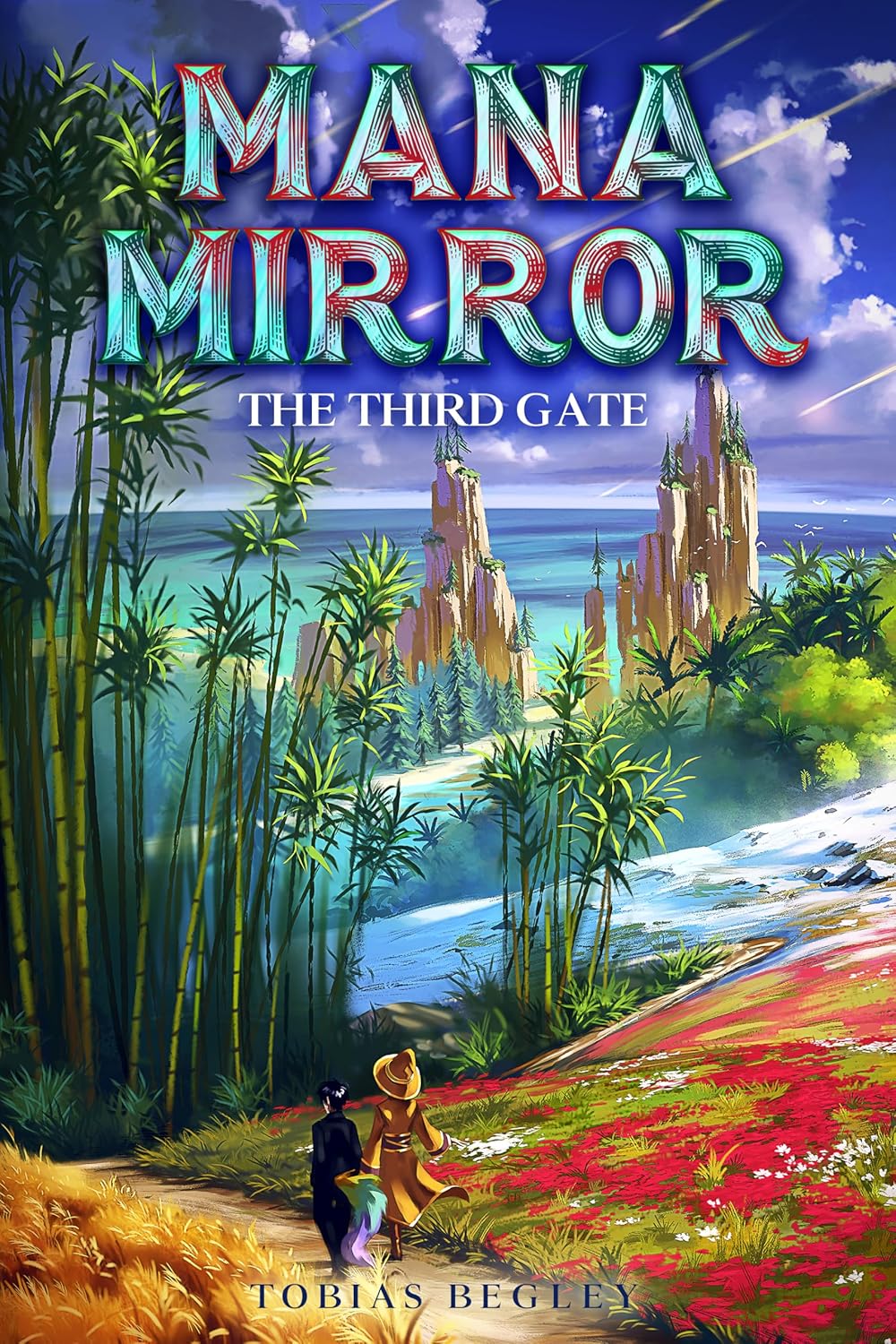
Mana Mirror #4
The Third Gate
Malachi has finally reached third gate, the point where the average mage stops training and working. But for Malachi, the path has only just begun.
After his forced break due to the injuries sustained on the Beastgate Trial Trail, as well as from bonding to power well beyond his ability to handle, Malachi must adapt to the changes to his body and spirit while waiting for the mantle estragon eggs to hatch in their new home. As soon as he's healed, it's back to advancement, with the hint of future competitions and work on the horizon.
But all the while, Kene's curse is growing worse, and Malachi is forced to cut a deal with his old mentor for the possibility of saving their life.
After his forced break due to the injuries sustained on the Beastgate Trial Trail, as well as from bonding to power well beyond his ability to handle, Malachi must adapt to the changes to his body and spirit while waiting for the mantle estragon eggs to hatch in their new home. As soon as he's healed, it's back to advancement, with the hint of future competitions and work on the horizon.
But all the while, Kene's curse is growing worse, and Malachi is forced to cut a deal with his old mentor for the possibility of saving their life.
- GenresFantasy
534 pages, Kindle Edition
Published September 4, 2025
Ratings & Reviews
Friends & Following
Create a free account to discover what your friends think of this book!
Community Reviews
Displaying 1 - 2 of 2 reviews

September 18, 2025
again
Nothing new to add, really. I still don’t like the modern references (“programming”, “fridge”, etc) because there is no basis for those particular concepts in the world. But the magic system remains interesting.
Oh, one thing else that bothered me: long lists of potential rewards that the MC only gets ONE of. It’s kind of interesting, but it also drags things out.
Still, I keep reading.
Nothing new to add, really. I still don’t like the modern references (“programming”, “fridge”, etc) because there is no basis for those particular concepts in the world. But the magic system remains interesting.
Oh, one thing else that bothered me: long lists of potential rewards that the MC only gets ONE of. It’s kind of interesting, but it also drags things out.
Still, I keep reading.

October 20, 2025
This book is kind of an interlude between The Twin Trials and the next adventure. There isn't much action -- just one climactic scene -- and a lot of magic development. And the magic development is more tedious and harder to follow than the prior books.
Overall, not as good as books 1-3, but the story progression and world building bode well for what book 5 should bring.
I like the magic system in general, but there are times when the author is trying too hard. I read this book (not audiobook or anything), and had to re-read parts when Malachi was talking about his mana garden. And, even with rereading, couldn't really understand what was going on. Just too much theory.
There are a couple writing style annoyances that don't generally bother me too much, but in a slower-paced book show up more. One is that the author just LOVES using ellipses. Things like: "It was...strange." He's using the ... to get the reader to pause the cadence, but he does this trick all. The. Time. Including in scenarios where it really adds zero. A little editing would help. The other stylistic thing in this book -- and this one was NOT in the previous 3 nearly as much -- is the author using opposites to make something magical and mysterious. It was somehow both scalding hot and freezing cold somehow, both a void of nothingness and overflowing, all colors and none. Those kinds of things. Cool when used, once, or when used consistently around a specific thing, but this was maybe a dozen times throughout the book. Some light editing would really help fix these issues.
Overall, not as good as books 1-3, but the story progression and world building bode well for what book 5 should bring.
I like the magic system in general, but there are times when the author is trying too hard. I read this book (not audiobook or anything), and had to re-read parts when Malachi was talking about his mana garden. And, even with rereading, couldn't really understand what was going on. Just too much theory.
There are a couple writing style annoyances that don't generally bother me too much, but in a slower-paced book show up more. One is that the author just LOVES using ellipses. Things like: "It was...strange." He's using the ... to get the reader to pause the cadence, but he does this trick all. The. Time. Including in scenarios where it really adds zero. A little editing would help. The other stylistic thing in this book -- and this one was NOT in the previous 3 nearly as much -- is the author using opposites to make something magical and mysterious. It was somehow both scalding hot and freezing cold somehow, both a void of nothingness and overflowing, all colors and none. Those kinds of things. Cool when used, once, or when used consistently around a specific thing, but this was maybe a dozen times throughout the book. Some light editing would really help fix these issues.
Displaying 1 - 2 of 2 reviews