'The Haunted' is the first truly comprehensive social history of ghosts. Using fascinating and entertaining examples, Davies places the history of ghosts within their wider social and cultural context, and examines why a belief in ghosts continues to be vibrant, socially relevant and historically illuminating.
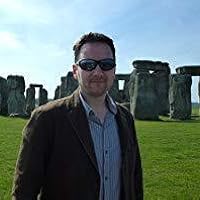
Owen Davies is a reader in Social History at the University of Hertfordshire. His main field of research is on the history of modern and contemporary witchcraft and magic.
His interest in the history of witchcraft and magic developed out of a childhood interest in folklore and mythology, which was spawned in part from reading the books of Alan Garner. From around the age of sixteen, he also became interested in archaeology and began to get involved with field-walking and earthwork surveying. He then went on to study archaeology and history at Cardiff University and he spent many weeks over the next six years helping excavate Bronze Age and Neolithic sites in France and England, mostly in the area around Avebury. He developed a strong interest in archaeology in general, and the ritual monuments and practices of the Neolithic and Bronze Age.
From Cardiff, he went on to write a doctorate at Lancaster University, working on a thesis looking at the continuation and decline of popular belief in witchcraft and magic from the Witchcraft Act 1735 to the Fraudulent Mediums Act 1951 (1991-1994).
A lot of interesting deep-cuts sprinkled through a loose outline of social-historical perspectives on ghosts. An interesting book that seems geared towards a more casual audience than others in the genre of ghost sociology though not without its share of obscure content too.
The most interesting chapter is the first one which basically outlines the most prevalent kinds of ghost folklore motifs from the early modern period up to the end of the 19th century. It's always interesting to see how a commonplace idea you take for granted has changed so significantly over the years. For example it was once common in Europe to see ghosts in a child form, not the age at which they died. This was informed or perhaps retroactively explained away by the Protestant idea of the soul being literally reborn in the afterlife and beginning a second, angelic childhood. A big theme of this book is the different roles ghosts have played in the development of church and state, and how they have signified radically different things at different times. The same church that waged fiery campaigns of terror against the witches and necromancers of the peasantry were just a century later nostalgically reminiscing for the superstitions of yore, bemoaning the decline in ghost beliefs as a sign of the lumpen masses succumbing to Atheism. Yet during the height of anti-Catholic hysteria, the Protestant majority was not feeling so warm and fuzzy towards ghosts; even demonstrating open-mindedness to their possibility was a damning sign of crypto-Catholicism, an admittance that the soul may remain in a purgatorial state. At many times in many ways ghosts have been a central argument in paradigmatic moments of Western thought. The ghost was a central figure in the last gasp of Neo-Platonism and aether studies, just as it would become for mesmer studies and in turn psychoanalysis. Today the idea of a Freudian subjectivity ie. that our brains could conjure up something we do not anticipate and scare us unconsciously is basically the go-to for any ghost story. But the idea of something we take for granted today, hallucination, was unknown to people of the 1700s. They actually found it harder to believe that the human mind could create something out of nothing than holy or demonic forces at work behind meaningful visions: "The philosopher Henry More believed he knew the answer as to why 'Apparitions haply appear oftener in the Night than in the Day'. It was, he suggested, to do with the quality of night-time air and the ability of spirits to spin a physical form for themselves out of aerial matter. He thought that the damp, clammy air of the night was 'more easily reduced to visible consistency' by the 'imagination of spirits. He was adamant, though, that human imagination could not generate such physical materialisations" (p.17). Interestingly today even many believers in ghosts do not consider them external agencies at all but the projection (somehow) of internal mental states onto material reality. This is the generally accepted explanation for 'Poltergeists' in paranormal circles. So whereas today even the 'believers' in ghosts rationalize their existence by a strictly psychological human agency, the quote above would suggest that the idea of a human agency extending onto the non-human world of creation was borderline profane. Yet to explain the activity of ghosts without ascribing to them the agency of dead souls which would de-legitimize Jesus' claim to a singular resurrection and bolster the Catholic superstition of purgatorial states of lost souls, the Protestant church had to admit to the workings of demon in the natural world. Yet if these demons were able to create apparitions were they not aspiring gods in themselves?
Another interesting point the author makes is the arrival of historical ghosts coinciding with our modern discovery of the earth's true age and the true depth of human history compared to the paltry six thousand years of church orthodoxy. Perhaps owing to the lateness of these discoveries and the spread of public education teaching archaeological history the first historical ghosts such as Romans and English civil war soldiers only start popping up with any frequency in the 1950s. And even then Romans are the oldest you tend to get, and the historical figures are all from periods widely covered in the English school curriculum. Nowadays we associate ghosts with olden times because they tend to be wearing gothic Victorian-Edwardian style get-ups but back in those times a ghost was associated with white fabrics, especially night gowns. Today a ghost showing up in a nightgown or even a white bedsheet would be comical but this was the main image of the ghost for over a century.
Another fascinating angle in this book is the role ghosts played in early scientific experiments especially in alchemy. In 1660 Sir. Kenelm Digby claimed he had succeeded in resurrecting new crayfish from th ashes of dead ones, an alchemical proceed called Palingenesis. Based on the "Doctrine of signature" that plants were symbolically shaped by God to correlate to parts of the human body. Later alchemists like Parcacelsus would take this concept further, arguing that sympathies were '"inherent to the microcosmic, internal essences of living things. One could destroy and break down living matter through heat, reduce it to its elementary substances and then, through chemical processes, recreate the original form because its signature was encoded in its fundamental constituents" (p.117). This formed the basis of 'Digbys Proof.' It sounds absurd to us today but this was actually considered a scientific advancement for rationalism in disproving the existence of ghostly spirits. Graveyards, it was argued, were full of dead bodies generating boggy subterranean heat believed to produce ignis fatuus or will o' the wisps. It was argued that these lights produced by marshy soil heating tight packed dead bodies could occasionally take on the form of the whole human being as they appeared in life under ideal conditions. No gods or spirits needed, just pure chemical processes and sound science.
This is a much more generalized overview of the idea of ghosts in the early modern period up the 1800s than Spectres of the Self by Shane McCorristone or Spirits of an Industrial Age by Jacob Middleton. However, it doesn't provide a clean structuralist framework for how ghost ideas evolved either like in Parapsychology: A Concise History by John Belof. The material is not ordered chronologically but by folkloric theme ie. 'Headless ghosts' 'Churchyard Ghosts' 'Animal Ghosts' etc. It reminded me of a book I recently read about supernatural nature folklore themes in bigfoot legendry, Where the Footprints End by Joshua Cutchin. Like in that book, this is a smattering of different ideas and theories and obscure stories, just pure reference fodder. And there's nothing wrong with that, the author is upfront that this is taking as broad a view as possible. Still, I found myself wanting for a little more thesis statement, a bit more genealogy or material cause and effect to ground these spooky ghost stories. Some chapter themes begin to feel arbitrary, such as the last one on ghost representation in the theatre. While interesting the connective tissue felt lacking- why not a chapter on ghosts in gothic novels, in illustration and fine arts, in early film? All these subjects have been explored under a tight lens by other authors in more microscopic studies so there is no reason to recapitulate two decades of 'Hauntology' studies into any more than a few paragraphs per chapter.
The Haunted: A Social History of Ghosts by Owen Davies was first published in England in 2007. A paperback was released in the United States in 2009. The Haunted is not a traditional or linear history. Davies looks at trends spanning several centuries, from the Reformation to the present day. By exploring these trends, he hopes to explain how and why England has become so “haunted.”
Debates over ghost belief reveal much about England’s social and intellectual history. Davies makes a compelling argument that being haunted by the dead is part of the human condition, at least for a significant portion of the population, as all attempts to eradicate ghost belief over the past 500 years have failed.
Davies divides his book into three parts: Experience (what did ghosts look like, where were they found, and how have people tried to find them?), Explanation (how have people made sense of ghost sightings?), and Representation (how have people sought to replicate or reproduce ghosts and ghostly phenomenon?). The Haunted runs the gamut of English (and some Continental) cultural and intellectual experience, but its organization opens these topics to the reader in an easy to digest format. Every chapter explains the key players, arguments, and trends, while offering plenty of primary examples.
Most studies of ghosts from 1700 on primarily rely on four authors who collected hundreds of accounts, but these accounts were collected from the middle and upper classes. They say little about the beliefs of rural and urban working classes, who made up the majority of the population. Davies scours a grab bag of sources to add these voices to the discussion, while never losing sight of the dominant intellectual trends.
Davies goes beyond a simple recounting of Spiritualism, the Society for Psychical Research, and other well-worn topics. He demonstrates how familiar arguments for and against the existence of ghosts were continually repurposed as ammunition in the intellectual and spiritual battles of the day. Meanwhile, ghosts continued to be a source of popular entertainment. Hoaxers overturned assumptions about who were society’s fearful, as servant girls turned the tables on their masters. On stage and in early film, slapstick comedy taught people to laugh at their fears and robbed the white sheet of its power to scare.
The cultural aspects of ghost belief are interesting enough, but where the author truly shines is in his discussion of technological trends. The few attempts I’ve read to explore technology and the paranormal have floundered. Davies finally gets it right. Chapter 7: Projecting Ghosts in particular describes how technology has evolved to allow us to more closely replicate ghosts, from “camera obscura,” mirrors, and smoke in the sixteenth century to cinematic portrayals in the twentieth. He mercifully avoids the current “gadget” fetish among self-described paranormal investigators.
During the late Medieval period, the Catholic Church taught that ghosts were the souls of the dead in Purgatory, a halfway point between earth and Heaven. Protestant theology officially rejected the idea of ghosts as a Catholic holdover and ignorant superstition. As a Protestant country, England should have rejected ghosts centuries ago. Instead, people feel more free to express their belief in ghosts than ever before. So continued ghost belief tells more about English tradition, culture, and psychology than religious persuasion.
Owen Davies is a professor of Social History at the University of Hertfordshire, United Kingdom. He has appeared as an authority on witchcraft and magic in television programs including People Detectives (BBC2, April 2001) and The Real Harry Potter (Channel 4, November 2001). He is the author of Witchcraft, Magic and Culture 1736-1951, A People Bewitched: Witchcraft and Magic in Nineteenth-Century Somerset and Cunning-Folk: Popular Magic in English History.
The Haunted: A Social History of Ghosts by Owen Davies was published by Palgrave Macmillan (London, England) in 2007. The softcover edition is 299 pages but is no longer in print. Used copies are available on Amazon.com and other book resale websites.
Again I felt like the social history was really missing. Rather the focus seemed to be on elite intellectual thought. The last section however, finally got around to some social history and, to me, was the strongest section of the book. The last section looked at people pretending to be ghosts and fictional representations of ghosts. It covered people dressing up as ghosts, ghosts on stage, magic lanterns and phantasmagorias. I thought this was the most interesting and unique section of the book. I can definitely recommend this as a nice academic study of ghosts from the 17th century on. However, it is much less of a social or cultural history than it claims. It could also have benefited from a bibliography. While a lot of the sources he quoted were fairly standard, it would have been nicer to have been able to find the more obscure texts more easily. Parts that stood out for me, were the mention of children’s bones that were on display at the Cheshire Cheese pub in Fleet street (one of my favourite pubs) proving the existence of a 17th century ghost (63). A really odd bit which seemed to have a Freudian theory that blamed the belief in ghosts on bad relationships between parents and children, and the increased belief in ghosts in the 20th century on the fact that women worked(!) (162). There was an interesting discussion on servant girls in the 19th century becoming victims of hauntings, this was compared with spirit possession and witchcraft for the same powerless group in earlier centuries (177). Whether or not they believed in these hauntings, or were simply trying to trick gullible masters it made for an interesting change of agency and power within the household (186).
England is a famously haunted place. Go no further than pop music: Genesis did a song about ghosts, "Home by the Sea." Owen Davies has a little fun with this in the first paragraph of his book _The Haunted_, suggesting that there might be as many as 50,000 ghosts in the country. He quickly qualifies this claim, though, noting that there is no way to say that England is extreme in its specters, but that it is possible to say why people think England so haunted. He intends to do just that.
And in this throw-off introductory statement are all the problems with the book. Of course it is possible to say whether England is excessively haunted--it would take a comparative study. Not easy, but also not impossible. Further, though Davies suggests he's going to look at why people think of England as haunted, he never gets around to that question until the very last chapter. There's also the problem of the subtitle: a social history. This book is not a social history. A bit later in the first chapter, Davies also muses a bit over what counts as a ghost, but never reaches a satisfactory conclusion and just lets the mater drop.
So we have to cast aside what Davies says he intends to do with the book and look at what it is.
Davies is an expert in the history of the English occult, particularly witchcraft and magic. What this book does is summarizes the history of ghosts in England from roughly the seventeenth century to the twentieth. It is arranged thematically: the first section is the most folkloristic, giving an overview of the history of sightings, where these take place, and the people who consciously hunt ghosts. The second and third are really more intellectual histories, discussing debates over the meaning of ghosts (and the role of psychology), stories of people imitating and creating ghosts and fictional representations of ghosts. The sections are further broken by themes, the first chapter, for example, looking at the characteristics of those who see ghosts, the time of ghosts arrivals, etc. Within these smaller sections, he deals with chronology, noting how different ideas about ghosts changed over times, and the intellectual traditions that prompted such changes.
This broad overview is sometimes less than exciting to read--there is no narrative pulse. But there are many fun stories of hauntings. And insights are sprinkled here and there. Davies, notes, for example, that it was a problem for believers in ghosts to explain why specters appeared mostly at night (page 17): if ghosts were spirits authorized by God to return, why did they not show up in the day? He also points out that while elite observers associated ghosts with the rural world--the place where stubborn superstition hung on--actual English people in actual urban environments saw and hunted ghosts, too (60). This tradition was ignored, and lost. Also, he makes the excellent point that with the rise of spiritualism in the 19th century, followed by the founding of ghost clubs and the Society for Psychical Research, histories of haunting lose track of the continued belief in normal (if that is the right word) ghosts, ones uninflected by spiritualist religion.
The broad canvassing of debates over ghosts and reports of experiences with them points out the dry--and unhelpful--approach that Davies thankfully gave up in the introduction, trying to define ghosts, Ghosts are what people say they are. Restricting the term in some ways--to the returned souls of the dead--cuts out other experiences that people think of ghostly--such as the frequent reports of ghost digs and animals, or even unidentifiable creatures. He comes to a similar conclusion at the end of the chapter on fictional representations of ghosts (239): for all that there is a feedback between individual experiences and their representations in literature, fiction was more limited, constrained by its own conventions and history. People continued to see ghosts in unexpected ways, whatever they read.
The books scope, then, is what makes it most impressive. Davies has clearly canvassed an amazing amount of sources, obvious and not, and put it all down here, encyclopedically, almost, no small feat in less than three hundred pages (although the type is on the small size).
What becomes clear from this overview is that talk about ghosts--not experiences, but discourse--has always been phrased in terms of belief, always strung out between skepticism and credulity (although those are anachronistic terms, the sense that they get at is right.) It doesn't seem that there was ever a time when reports of ghosts were blithely assumed to be correct--although plenty of people did believe, and continue to believe. At times, this belief could be useful--Davies points out times when houses were said to be haunted to drop real estate prices. (183) (He doesn't draw the obvious comparison to Scooby Doo, but it is interesting to know that there is a historical basis, however distant in time, for the Scooby Gang's exploits.) And of course there are times when ghosts are more accepted than others: they suffered some at the end of the eighteenth century, only to be reinvigorated by Mesmerism and Methodism (89).
Indeed, Davies own voice portrays this tension. He seems torn at times between his own seemingly secular, materialistic, modern view that ghosts are bunk, and an appreciation between for the many people who have claimed to see them, and the resilience of belief in them. Witches, he notes, are no longer really believed in (although, witches do exist), but even as intellectual climates changed, a space was found for ghosts (120). He starts his concluding chapter, "The extraordinary fact about the history of ghosts is that it is not a story of decline, unlike hat of those related supernatural beings witches and fairies." In fact, there's been a rise in belief since the 1950s, with more than a third of the English taking the existence of ghosts as certain.
Frustratingly, despite his opening gambit, Davies does not have any really good answers for why this is. He suggests that the recent rise in polls is spurious--that back in the 1950s, women and minorities were reluctant to confess their belief because they did not want to risk their recently won civil rights being taken away based on their heterodox beliefs. But as to why ghosts continue to haunt England, he only gestures at a religio-cultural explanation: the Protestant Revolution removed angels and saints from the English imagination, leaving ghosts as the soul representatives of the dead. (In France, by comparison, belief in ghosts is much smaller, because saints and angels are accepted.) One problem with this interpretation is that, as Davies himself notes elsewhere, angels are still widely believe in.
So, again, why ghosts?
That Davies cannot answer this question is no shame, really. It's one of those really difficult questions, maybe unanswerable. The problem is that he set the book out to answer the question. What makes the book worth reading is the vast detail in the center of the book. Although this book is a broad overview, don't go into it looking for big insights. Its charms are small and intimate--like the witnessing of a ghost.
The Haunted is an overview of (dis)belief in ghosts in early modern and modern England. Davies covers a wide array of topics, from changes in how people described apparitions to debates over the existence of ghosts to how people faked supernatural occurrences to portrayals of ghosts in popular culture. I had a few issues with the style of the book. Most of the chapters were mostly lists of examples and stories with relatively little interpretation. I know that the book was intended to be an introduction to the topic and wasn't intended to have an argumentative thesis, but it still felt like it was missing a "so what." Whenever he did proffer an explanation for changes in ghost belief, etc., his explanations often seemed way too simplistic and were based on an analysis of a few anecdotes. At other times, he would give a single psychological or religious reason for why people behaved a certain way and describe his reason as apparent or obvious. I'm not sure that we can assume anything is apparent or obvious when we're talking about cultural phenomena several centuries in the past.
Still, I'm giving it four stars because it held my attention and was a good introduction to the topic. The last two chapters on how theater and early photography and film portrayed ghosts and how ghost belief was shaped by them were totally fascinating. Also, despite the very academic tone in the rest of the book, he ended with the observation, "We may be living longer, but that gives us more time to think about death," which caused me to burst out laughing before soberly considering just how grim the sentence was. Honestly, the guy deserves a high rating just for that.
I had to add a new shelf for this one: "paranormal". I very nearly called it "woo" but that would have been unfair to Davies, who is certainly not banging about trying to lure in ghosts with headlamps and crystals and whatever those people on ghost-hunter shows use in the middle of the night when they can't see anything clearly anyway. No, this is an academic volume which looks at the history of how people interacted with ghosts - or with the idea of ghosts - in England. It covers things like representations of ghosts on the stage, or various religious responses to ghosts, or how frequently people used to dress up as ghosts to scare the shit out of other people (this last has a long and storied history, and clearly it has been a favourite practical joke for hundreds of years). And mostly it's all mildly interesting, although there's often such a welter of detail it can come across as a little repetitive. There is one chapter, however, which is genuinely very interesting, and I was sorry to see it end. Chapter six, "Imitating the Dead", looks at a lot of those practical jokes. Some were rather less jokey than others, with young people of both genders taking the opportunity to take revenge on others or to manipulate employers, for instance. It upends the idea of both the poorer classes and women and the young as being particularly credulous, and shows them actively exploiting the fears of the people around them for personal gain. Which is not really admirable, of course, but it is interesting.
Owen Davies è sempre una garanzia, che je voi dì? In questo caso, però, gli si potrebbe dire che il suo saggio dedicato ai fantasmi è così particolare da essere diverso da qualsiasi altro libro che abbia letto sul tema: non procede in ordine cronologico, raccontando l'evoluzione della figura del fantasma della storia, quanto più in ordine tematico (qual è l'iconografia dei fantasmi? Quali luoghi vengono più frequentemente associati alle infestazioni fantasmatiche? Etc). La cosa può risultare spiazzante se si sta cercando un saggio storico che abbia un approccio di tipo "cronologico" (se volete sapere come si è evoluta la figura del fantasma attraverso i secoli leggete Maxwell-Stuart, giusto per capirci), ma al tempo stesso rende questo saggio totalmente diverso da qualsiasi altra monografia sul tema. Non è un doppione, e anzi integra aspetti meno trattati su altri volumi dello stesso genere. Ma, per contro, da solo non basta a fornire un'evoluzione della figura del fantasma attraverso i secoli, se è quello che principalmente vi interessa.
As with many academic books this was quite dense in places. Still a fascinating social history of ghosts that illustrated how long folk have been ghost hunting as well as various fakes.
Not a book that I'd think would be to everyone's taste.
Now I know why there are so few ratings for this book. No one reads it. And they shouldn't. It was like reading a history textbook. Worse, even. I felt like it was more of an excuse to drop English place names and history than anything else, and the ghosts were the side topic. Ugh.
An interesting book that discusses the way societies view and deal with ghosts. This is not a book filled with "ghost stories." It is a book that discusses how society viewed/s ghosts over history. Well researched book.