American Dad is Tama Janowitz's hilarious first novel. Through the eyes of the young Earl Przepasniak ("a name unwieldy as a tumour"), it narrates the outrageous and tender story of Mavis, poet and mother, and Robert, the American dad. Earl's life revolves around the deeply wounding split of his parents and his attempts, through a less-than-idyllic childhood and the inexorable onslaught of manhood, to overcome the irresistible force of his father. But it is only when his parents meet their respective fates that Earl can feel not only loyal and guilty, but also free...
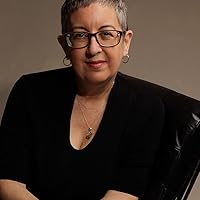
Tama Janowitz is an American novelist and a short story writer. The 2005 September/October issue of Pages magazine listed her as one of the four "brat pack" authors, along with Bret Easton Ellis, Mark Lindquist and Jay McInerney.
Born in San Francisco, California to a psychiatrist father and literature professor mother who divorced when she was ten, Janowitz moved to the East Coast of the United States to attend Barnard College and the Columbia University School of the Arts and started writing about life in New York City, where she had settled down.
She socialized with Andy Warhol and became well-known in New York's literary and social circles. Her 1986 collection of short stories, Slaves of New York brought her wider fame. Slaves of New York was adapted into a 1989 film directed by James Ivory and starring Bernadette Peters. Janowitz wrote the screenplay and also appeared, playing Peters' friend.
Janowitz has published seven novels, one collection of stories and one work of non-fiction. She lives in Brooklyn with her husband, Tim Hunt, and their adopted daughter.
This novel opens with our 10-year-old protagonist, Earl Przepasniak, telling us that his father accidentally maimed himself with a chainsaw and, several years prior to that, accidentally murdered his mother. Look, any book that starts with such a high octane revelation ought to be a clue to the fact that what you're about to read is something very dull. You can't open your book with the exciting parts then say... now sit there and wait until we get to that part. Because sure enough, with those monumental declarations dispensed with we are then treated to several pages of horrifically boring stuff about Earl and his brother Bobo going on a trip with their father to the seaside. They eat sandwiches and go fishing. For many many pages. Then have some more sandwiches. Then go for a walk. Then have more sandwiches.
After this we essentially get a soap opera of a novel where Earl tells us how his mother and father got divorced, how this traumatised the family, how they both used he and his brother, Bobo, as pawns in their fight. This very dull stuff continues all the way to the halfway point (when dad finally kills mum... and all you had to do was read all this dull daytime crap to get there). After this, in part two, we jump ahead to when Earl is at college, falling for a girl called Maggie. His father is occasionally allowed furlough from prison but hasn't fully forgiven Earl for speaking against him at his trial. Earl then goes to London and meets another girl called Emily. This part of the book was mildly more engaging to me, with occasional wafts of Holden Caulfield and the intriguing experiences of starting out in life. But it still wasn't very good. Then we finally get to the chainsaw incident. Yipeee!
Gotta say, this was very dull. It's pacing was genuinely atrocious and the characters were bland and forgettable (poet mum was potentially the most interesting but she doesn't last). I'm reliably informed this is also supposed to be funny. Hmmm no. I can only describe it as bubble gum soap opera divorce porn. Not for me
I am nearly in love with this book. Took me a long, long time to really understand what this novel was trying to do, but as soon as I really sat down with it and concentrated on it I managed to read the majority of it in one night because I was absolutely entranced.
This is a coming of age novel following Earl Przepasniak through his childhood and into young adulthood, and focuses on his relationship with his family and especially his father. Earl spends his whole life trying to please his father and not really understanding why, whilst at the same time trying to come to grips with his identity as an American, as a brother and son, and at the end as a father himself.
Much of Earl's narrative really reminded me of Holden Caulfield's voice which I am so happy about because I think I can confidently compare them with each other in terms of both the adolescent voice but also some other bigger themes. I'm definitely going to re-read this and I'm so excited to be able to, because I think I'm going to love it even more on a second read.
"My mother's hair, black and wild cascaded down her shoulders. She wore a venomous black rain hat; we wore venomous expressions of rage and boredom on our faces, the inexpressive anger of iguanas." This is a description of a depressed mother and son going to the grocery store to stock up on food so they can avoid life. If you like Disneyland or any kind of artificial happiness then you will despise this book. If you are weird, grew up in the 1970s and find it interesting to scuba dive into a dysfunctional family's matrix then this book is for you. These are heartbreaking stories about divorce, the loss of pets and the strangeness of parents. The father's character was so vivid and disturbing it moved this book into overdrive. I feel like I know this man...his literary ghost following me around for a few days after finishing the book. The sign of a great writer. I embraced the melancholia floating with odd bits of surrealism like a delicious, warm bowl of soup that filled me up. This book is deep. Drink it.
Really enjoyed the first half, about his family breaking down. Quite funny writing. But then the second half was like a totally different book - suddenly he's all grown up and it just gets really really random - he's wandering through the french country side looking for a playwright, oh now he's in love with an anorexic in his dorm, oh now he's talking to a model across the aisle and suddenly they're living together. Oh, and the kid's actually now a total jerk as an adult like like dad was and I'm not sure I even care. Strange. First half was great though, loved his poet mom.
Al netto dell’irritante numero di refusi (fra cui un “sù” ripetuto ben due volte), un libro discontinuo, disordinato, poco fluido (non so se per problemi di traduzione). Personaggi mediamente odiosi (e discretamente implausibili). La prima metà nettamente superiore alla seconda, ma, a mio avviso, non basta per arrivare alla sufficienza.
This is such a talented filled is the gloom and disaster as I have never read before, I definitely cannot find it in good taste to laugh at other's misfortune even if it brought upon themselves through their own sheer stupidity. I will always have sympathy for the main character.
[…] I personaggi sono delineati con la precisione di un’allegoria psicologica. Il padre — carismatico, autoritario e spiritualmente esausto — incarna al tempo stesso il trionfo e la decadenza del capitalismo patriarcale. Il figlio, insieme complice e resistente, rappresenta la coscienza frammentata di una generazione cresciuta nell’abbondanza ma priva di autenticità. [...] L’ambivalenza di Earl — attratto e respinto dal padre — incarna questo conflitto: la sua coscienza, plasmata dalle stesse strutture che vuole di criticare, che crede di rifiutare, non riesce mai a liberarsene completamente — almeno fino a quando non vedrà il padre come uomo. [...]
“American Dad” è un romanzo che non si limita a raccontare, ma a rivelare. La sua forza non risiede nel dispiegarsi della trama, bensì nel silenzio che rimane dopo l’ultima pagina — un silenzio che non è vuoto, ma eco: dell’incomunicabilità, della perdita, della fragile bellezza di ciò che sopravvive al disincanto, della possibilità di ricostruirsi interiormente proprio partendo dal riconoscere realmente la figura ingombrante e scomoda del padre.
Il romanzo non è solo una satira della società americana, ma un’elegia della condizione umana moderna — un testo che, dietro la sua ironia corrosiva, custodisce una malinconia profonda, la nostalgia per un’autenticità ormai irrecuperabile.
Janowitz scrive come chi incide il vetro: con mano ferma, sapendo che ogni linea sarà indelebile. E dentro quelle linee sottili si disegna l’anatomia di un tempo, il ritratto spietato di un paese e, in filigrana, il nostro stesso riflesso. “American Dad” lascia con la consapevolezza che la verità non si trova nella ribellione né nell’adesione, ma nell’attimo fugace in cui il velo dell’ironia si solleva, e la vita — spogliata di ogni illusione — mostra il suo volto più nudo e più umano.
Una finestra su quella che è la frammentata realtà di Earl P,le difficoltà con il padre che risulta una figura difficile lo portano a risolvere anche il suo enigmatico essere
La figura del "padre americano" raccontata da Tama Janowitz in questo romanzo è un'entità che si vuole porre come eroe, salvatore, empio conoscitore e padre modello ma finisce per rivelarsi un eclettico, soverchiante e inflessibile tuttofare dall'atteggiamento onnisciente, sfociando nel grottesco e nel tragicomico.
La narrazione di questo caotico romanzo è composta da una serie di assurdi e surreali episodi legati al ricordo che ha il protagonista del proprio padre, descritti attraverso la prosa minimalista e asettica di Janowitz. Proprio lo stile di scrittura tuttavia risulta incurante, incapace di infondere interesse in racconti di quotidianità già di per sé a tratti insignificanti, rendendoli semplicemente noiosi.
I've never read a book in which there is not a single compelling character. This book is cast full of horrible, damaged, and, most unfortunately, boring people who don't manage to evoke an ounce of empathy. I'm finished reading Janowitz's books and wish I'd stopped after reading Slaves of New York. Everything I've read since has soured me on her writing.