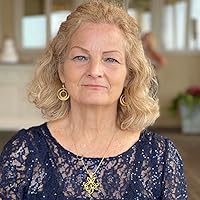
With a message of hope that is both timely and timeless, Upside-Down Love is an extraordinary memoir—irreverent, funny, and profoundly uplifting—of an Israeli lawyer, a Palestinian professor, and a love that transcends all division.
Osama is a Palestinian professor, originally from Gaza, who cannot leave the West Bank city of Ramallah. Sari is an Israeli-American lawyer and long-distance runner who petitions Israel’s Supreme Court for his right to travel freely. When the case began, neither expected to fall in love—and when it was over, nobody expected their love to endure.
First published in Hebrew in 2021, Osama and Sari’s star-crossed romance—an intimate, vulnerable portrait of an astoundingly resilient Israeli-Palestinian relationship—has since become a beacon of hope in the aftermath of October 7, 2023. Now on its way to becoming an international cult sensation, Upside-Down Love speaks to the unique circumstances of this specific moment in history, while also illustrating a timeless Love will triumph over bigotry and destruction.
Holy star crossed lovers Shakespeare…with wisdom, depth, and time and thankfully no teenage angst and stupidity. But in all seriousness, relationships work when you choose put in the work and can you even imagine what this one takes?
I think at some point, for some reason, we’ve all been horrified to have to claim our government. The other side of that is we have to live somewhere, and everyone has a government to be put up with that’s also a home to love, to defend. If you can’t find empathy for Sari and Osama, I worry for you. This is the story I wanted to read, the insight and perspective that I’d like to focus on instead of talking heads and propaganda. Real people like me just trying to live their lives.
Vond het heel knap van dit boek hoe een liefdesrelatie de complexiteit van het Israël-Palestina conflict en de ineffectiviteit van Palestijnse politici illustreert. Wel vond ik het bij vlagen langdradig, en dat maakte het soms moeilijk geboeid te blijven ondanks het belangrijke thema. Zonde!
Tengo que hacerle reseña a fondo porque tengo mucho que decir, y he tenido muchos sentimientos con esta obra, pero me parece buena e interesante, y lo más importante de todo: muy necesaria ahora.
The authors are not pretending to tell a grand story (although they effectively do) or anything other than their very own personal story, wrapped in an extremely frustrating, painful and at times outright humiliating reality. The insight into their daily life in the West Bank is as provocative as it is impressive, as painful as it is thought-provoking. Saris awe-inspiring running comes across as symbolic on so many levels. I wish there was a map somewhere on the book cover, so readers could follow her routes.
At several points I read with tears in my eyes and was genuinely wondering how this part of their story would end, would they make it. Thank you, Sari and Osama, for sharing part of your extraordinary journey. You remind us clearly, strongly and warmly of the many individual and important human stories behind the global headlines. A highly recommended read. I enjoyed it so much I was sad when the story came to an end. Perhaps there will be a sequel?
4.5 rounded up. A difficult subject even when it was written (2021), let alone now with what is happening in the Middle East. The format helps, by switching points of view the voices speak for themselves. Useful because it is easy to misinterpret actions and feelings, and inevitably we get some of it wrong, even about those closest to us. Not many books cover the reality of crossing religious, cultural and even physical walls in a conflict where sides continue to become more and more entrenched. This is worth reading.
I came to this book with relatively little expectation; romantic narratives aren't typically my thing, and this wasn't a book I would have instinctively selected for myself. That said, it didn't take long for the novel to quietly disarm me. Within a handful of chapters, I found myself pretty invested. Sari and Osama emerge as deeply textured, disarmingly human figures, each shaped by their own histories and contradictions. By the midpoint, I felt as though I knew them, understood them, in a way that only the most carefully rendered character work can achieve. Stands to reason though, as this is a real-life love story.
What elevates this novel further is its structural elegance. The alternating perspectives (each chapter switches between his and her perspective) do more than simply advance the narrative; they create a kind of dialogic tension that mirrors the broader sociopolitical landscape in which the story unfolds. Osama, a Palestinian Muslim academic navigating life between Gaza and the West Bank, and Sari, a Jewish Israeli lawyer advocating for human rights, are not merely positioned as romantic counterparts but as embodiments of intersecting worlds. The dual narration allows the reader to inhabit both realms, revealing not just affection, but friction, vulnerability, and the persistent negotiation of identity and belief.
Perhaps most surprisingly, though, was the book's momentum. I had anticipated a slower, more contemplative reading experience, but instead found myself moving through it with unexpected urgency. It is quite gripping; not propelled by spectacle, but by emotional acuity and narrative restraint. This book manages to be both intimate and expansive, tender yet intellectually engaging. While it may sit slightly outside my usual literary preferences, it's precisely that deviation that made the experience feel so refreshing. A thoughtful, compelling read that lingers well beyond its final pages.
I read this book in Hebrew. It is a sensitive and deeply revealing account of an unlikely relationship between a Jewish Israeli-American and a Palestinian man. Sari Bashi shares intimate, eye-opening insights into human interaction in highly difficult circumstances. She captures how two very different people, herself and her partner, learn about each other’s very different worlds and manage, often with difficulty, to navigate their love through the dense web of controls that Israel imposes on the occupied West Bank. The narrative enables the reader to grasp, in a new and vivid way, the overwhelming power of bureaucratic occupation.
This is one of the hardest love stories I’ve ever read, and one of the most important. I still can’t believe it’s a true story, a memoir told in both voices, which made it feel so raw and unique. I was completely invested in each of their stories, both separately and together.
Now…. Imagine living less than two hours away from your family and not being able to visit them. Not being able to see your dying mother for over a decade. Not being able to freely travel, protest, touch the ocean, or farm the land you live on. Having all electricity shut off without a moments notice. Having to worry about food supply and water supply being cut off and even more terrifying being at the wrong place at the wrong time .This is not fiction… this is not prison…this is the lived reality for millions of people in the West Bank and Gaza today.
At its core, this is the story of an Israeli and a Palestinian falling in love and trying to build a life together despite unimaginable barriers. It is unforgettable and if you are wanting to just learn an ounce about what life is like in another country dealing with occupied forces, I highly recommend just giving this a try because it is not too much information dumping more than it is empathy and understanding building.
3,5* - Maqloubah beschrijft het onmogelijke liefdesverhaal van de Israëlische schrijfster Sari Bashi en haar Palestijnse man Osama Fahed. Sari Bashi werkt als advocaat en mensenrechtenactivist voor Gisha, een door haarzelf opgerichte organisatie die opkomt voor rechten van Palestijnen met verzoekschriften om te reizen en andere zaken. Zo ontmoet ze ook Osama, die afkomstig is uit Gaza maar als docent werkt op de Westelijke Jordaanoever en wil promoveren in Engeland. Het boek beschrijft het ontstaan van hun liefde en de moeilijke situatie waarin Osama leeft. Meer nog dan een liefdesverhaal is het dus een aanklacht tegen de onmenselijke behandelingen van de Palestijnen.
Sari Bashi is oorspronkelijk geen schrijfster en dat merk je. Ze heeft de neiging veel uit te leggen. Zeker in de eerste helft van het boek ligt de nadruk daarom erg op achtergronden en gebeurtenissen en minder op de emotionele ontwikkeling. In de tweede helft wordt dit beter, maar het blijft stilistisch allemaal niet geweldig. Wat ook niet helpt zijn de twee voorwoorden in het boek, waarin de uitkomst van het verhaal al wordt verklapt. Dit hadden absoluut nawoorden moeten zijn en ik zou iedere lezer aanrader om ze pas na afloop te lezen! Begin gewoon bij deel 1 (pagina 15) en bewaar ze voor later, dan is de spanningsboog van het boek veel beter!
Ondanks deze mindere punten blijft het indrukwekkend om te lezen hoe Palestijnen zitten opgesloten in hun eigen land en hoe ze worden onderdrukt door de Israëliërs. Het verhaal van Sari en Osama geeft meer inzicht in de leefomstandigheden dan een krantenartikel of nieuwuitzending kan bieden. Daarom is dit boek toch een waardevolle leeservaring!
I graduated high school with Sari Bashi, and for more than 30 years I have watched her do extraordinary things in the world. As an Israeli American human rights lawyer, the founder of Gisha, and now the author of Maqluba: Upside Down Love, she has spent her life showing up for people whose voices are erased. She has shaped lives, told Palestinian stories the world tries not to hear, and crossed barriers most of us will never fully understand. Maqluba: Upside Down Love is marketed as a love story, but that barely scratches the surface. It is about Sari and her partner Osama, and the impossible reality they live in simply because of where he was born. Sari moves freely. Osama does not. The most basic human rights, like seeing your family, become years long battles. Gaza and the West Bank are only 50 miles apart, yet it took Osama 17 years to get home. What makes this book so powerful is how honest and human it is. Sari does not soften the story or pretend that love makes the occupation disappear. She shows the small, daily battles, the fear, the bureaucracy, and the mix of hope and despair that keeps them going. Reading it, you see not just a love that survives impossible circumstances, but a life dedicated to justice, to telling stories, and to fighting for what is right. I could not be prouder of her, and this book is a testament to everything she stands for. Please read it. It will stay with you.
Is love stronger than war? This book is not the banal account of a romantic affair under difficult circumstances. It is the honest and thrilling story of two people who decide not to give up their hopes and principles in front of an upside-down reality, and to dismantle the logic of being "enemies". Their love is therefore also a political act, that signs the pledge for a better future. A brave, heart-warming, witty, at times hilarious ray of light on the promised land of Israel-Palestine.
I already posted my thoughts on this book on my Substack, "Rik Tok," and am reposting them here.
Disclosure: Sari Bashi, author of “Upside-Down Love,” is a former colleague and a friend. She left Human Rights Watch in 2025, one year after I retired, and now heads the Public Committee against Torture in Israel.
***
“Osama” is an educated Palestinian from Gaza, trapped in the West Bank without an Israeli permit allowing him to be there, fearful that soldiers will stop him and ship him back to Gaza, separating him from his son and his job, and upending his life. Sari is an Israel-American lawyer living in Tel Aviv, the founder of Gisha, a human rights organizations dedicated to helping Gazans obtain permission from Israel to move freely. They meet by telephone when he seeks Gisha’s help in getting a permit from Israeli authorities to exit the West Bank to pursue his doctoral studies.
Israeli authorities refuse to grant Osama a permit to enter Israel to enroll at Tel Aviv University, which has admitted him, but allow him to travel abroad. They also permit him to return to Ramallah, but won’t legalize his residence in the West Bank.
Long story short: Osama gets his PhD at the University of London and returns to Ramallah, he and Sari stay in touch as lawyer-client, grow friendlier, and then in 2010, Osama invites Sari to visit him in Ramallah and they fall in love. They start writing separate diary entries about their courtship and efforts to build a life together, which becomes the basis for “Upside-Down Love: A Memoir in Two Voices,” first published in Hebrew in 2021, now out in a seamless English translation.
It’s rare for Jewish Israelis and Palestinians to pair up – and even rarer when the Palestinian partner resides in the occupied territories with no permit to enter Israel or occupied East Jerusalem. Osama and Sari seem poised to work together on the usual couple issues of personality and cultural differences. They are also primed to brave the hostility that most Palestinians and Israelis feel toward such a match.
But there’s an elephant in the relationship: the occupation. How to nurture a love between an American-Israeli who lives a largely secure and borderless life and a Palestinian whose existence is defined by walls, checkpoints, uncertainty, arbitrariness, and fear for the lives of his relatives each time Israeli jets bomb the Gaza Strip. She can get on a plane to visit her mother in New York whenever she wants; he has been prevented from visiting his mother for a decade, though only 60 miles separate them.
Sari’s hobby of running ultra-marathons is the perfect metaphor for her freedom. Place her feet on the ground anywhere and she’ll run 50, 80, 100 kilometers in any direction. Up and down the beach in Tel Aviv, through a forest inside Israel, and criss-crossing Palestinian villages and Jewish settlement lands in the West Bank. By day, the world is Sari’s oyster. At night, she sleeps like a log.
Osama, meanwhile, is brooding by day and an insomniac at night. He resents that Sari “gets into a taxi and crosses through gates in the walls and fences that surround the West Bank and keep me from my mother [in Gaza] and the sea. I hear in her phone conversations the language of the prison guards. She walks through Ramallah fearlessly, as if she doesn’t know what it means to spend your whole life feeling unsafe.”
“I don’t hate Israelis. I am angry at them....I hate Israel as an occupying power,” Osama writes, “I hate Israel because I miss my mother and my brothers and sisters, and my friends, my childhood, Gaza… I don’t want to miss Gaza over the phone, as I have been doing for seventeen years. I want to miss its messiness, the smiles of its residents, their jokes – the way a person misses his people or city after being away from them for a week or a month.”
Osama’s voice is more melancholy than hateful or angry. The most poignant passages of the book are when Osama describes how the occupation saps him from within, making him doubt his capacity to love and his desire to bring more children into the world – a deal-breaker for Sari. (Osama has one son from a previous marriage.)
The couple takes a vacation in Karak, Jordan. Sari breezily settles into this new city, and heads out for one of her epic runs. “Good morning, Karak,” Sari writes. “I’m pleased to meet you. I love the transient familiarity and ownership that running gives me over places that don’t belong to me.” Meanwhile, Osama, noticing a group of Jordanian soldiers, experiences a flashback to his torture by Israeli soldiers in Gaza decades earlier. He cannot sleep:
I had tried to tell her, to tell Sari, Those experiences shaped who I am and what I bring to our relationship. They shape my ability to tolerate risk, to trust her. “How can you be so confident in a place you’ve never been?” I asked her that morning….“The ground has never been stable beneath my feet,” I said….Sari listened. I don’t know how much she understood.
Both diarists provide vignettes of life in Israel-Palestine. When in 2012, Egypt opens its border with Gaza, Osama visits his family and childhood home. But the return trip to Ramallah is a nightmare. It starts with hours spent waiting in a departure hall in Khan Yunis that is crowded, smoky, with people screaming and workers drilling through concrete, before he boards a bus to the Rafah crossing only to learn that Egypt has decided to close the border. Not only must he repeat the process on another day but he now has to get the Israeli army to change the date that they will allow him to cross back into the West Bank after he transits Jordan.
Sari starts working the phone for him. She describes her exchanges with soldiers, who are neither rude nor hostile in response to her persistence, just oblivious to how the decisions they make or communicate turn lives upside down.
Not all the vignettes are directly about the occupation. Sari commiserates with a fellow woman human rights lawyer whose son is determined to do his military service in a combat unit. Osama is exasperated by grade inflation at the university where he teaches. Visiting Gaza, he drinks in the scene at his beloved seashore:
During the day, the beach is mostly filled with men and teenage boys, and they are shouting. The children on the beach shout each time a wave approaches. As with falafel in Gaza, which you learn to eat by biting at the sides that aren’t too crispy, the children approach the water delicately, letting it wash over them from wave to wave….The Palestinian flag flies next to the FC Barcelona flag. The women swim fully clothed, with pants and shirts, covered with a jalabia….People in Gaza were always traditional, but I saw in my family, too, how their relationship to religion has changed, become stricter.
When we worked together at Human Rights Watch, Sari liked to remind me, “In your interactions with colleagues, always be aware of the power relationship between you and the other person.” “Upside -Down Love” applies this insight to Sari’s romantic life, where the power imbalance, imposed by political realities, nearly tanks the relationship.
In 2011, Sari and Osama break up. In Osama’s words, they are unable to cohabit the “no-room room we created...to share our lives inside it,” unable to put “distance between ourselves and our crazy reality….I really didn’t know that our reality – Israeli and Palestinian – was so ugly. I really didn’t know the occupation is so extraordinarily successful. I don’t know any of your friends, I never visited you in your apartment, and I never kissed you there, by the sea.” He’s sad but also resentful: “She thinks she can come and go whenever she pleases, and that I’m stuck here and will never move?”
Sari and Osama find their way back together, and the book ends with the birth of their first child, in 2014. Osama, lacking an Israeli permit, can’t be with Sari when she delivers in a Tel Aviv hospital. He has to sit at home and wait to meet his daughter, who was born underweight and must remain for weeks in intensive care before Sari can take her to Ramallah.
Sari Bashi is a woman on a mission. She draws readers in with her personal love story but wants them to come away with more. Not just in this memoir but in the very life that she leads with her partner and their children, and continues to blog about, at www.ummforat.com. She and her Palestinian partner have built a haven of humanity in defiance of the occupation and the conflict that divides the two peoples.
By living with her partner and their children in a West Bank city – one of the handful of Israeli Jews to do so – Sari challenges the assumption held by many Israeli Jews that if they set foot in a Palestinian city they’d surely be lynched (which did happen to two reservists during the second Intifada). Sari also challenges the assumptions of her Palestinian neighbors, transforming the way they view Judaism, the Hebrew language, and other elements of Israel that they associate with the occupation, she told me.
The title of the book in Hebrew, “Maqlouba,” is the name of a Palestinian stew that is flipped upside down before serving. Food is a sub-theme that serves the book’s not-so-subtle pedagogy, especially the linkages between Palestinian cuisine and the Iraqi dishes that Sari came to know from her father, who emigrated to Israel from Iraq. In brief, Jews and Palestinians, have much in common, coexisted peacefully in the past and it is not maktoob (foreordained) that they should butt heads forever.
Nathan Thrall’s Pulitzer Prize-winning “A Day in the Life of Abed Salama: Anatomy of a Jerusalem Tragedy” is another nonfiction book that focuses on one slice of life – the fatal crash in 2012 of a schoolbus transporting Palestinian children -- to provide a panoramic view of the occupation’s cruelty. While Thrall is a master story teller, the book lacks interiority. We observe its many characters, both Palestinian and Israeli, from the outside. What “Upside-Down Love” lacks in suspense – there is little doubt, for instance that Sari’s and Osama’s break-up will be short-lived -- it makes up for in the introspection of its co-writers.
“Upside-Down Love” describes a world prior to the Hamas-led slaughter of Israelis on October 7 and Israel’s genocide in Gaza. Sari has had to increase precautions living in a Palestinian city. She and her partner have watched helplessly as the IDF has displaced his family in Gaza time and again, forcing them to live between tents and make-shift housing. Israeli bombs killed a nephew of Sari’s partner and damaged the family home. Other nephews and nieces have been accepted to universities abroad but for now can’t get out Gaza. Her partner’s mother managed to get out but now cannot get back in because travel through Rafah has been reduced to a trickle.
The hope that animates “Upside-Down Love” seems that much more fragile in a post-October 7 world. Many left-wing Israelis have moved to the right while others have moved abroad. But Sari is no quitter; she is an ultra-marathonner.
The political is personal. This profound and beautifully written memoir provokes us to explore love and life thwarted at every turn by government obstacles. Bringing the reader intimately into the relationship between Israeli-Jewish human rights lawyer Sari and Palestinian Muslim professor Osama, this book implores us to recognize the deeply personal consequences of geo-political conflict, offers a human face to the often dehumanizing war, and challenges us to find hope in the resilience of love. Everyone needs to read this book now.
A book about love and family against the odds and against the norms of two communities engaged in one of the world's most volatile conflicts. So much has been written about the Arab-Israeli conflict in the news, editorials and history books. However, little of that shines a light on the personal stories, including the difficulties and challenges that people face in daily life. This book is a story of a relationship that, under other circumstances, would be unremarkable: two highly educated professionals who meet, fall in love, get married and have a couple of kids. Indeed, the love is not "upside-down", but rather the unique circumstances surrounding the couple at the story's center. The engaging storytelling gives unique insight into the impact of the conflict on the lives of those living through it, without be polemic or preaching. A highly engaging and intriguing book, even for those well versed in the politics of the region.
I discovered this book through the JWA podcast, and I’m so glad I did. The two lovers began working on the book at the beginning of their relationship, and it chronicles their ups and downs over the years as they grow closer and pull away, again and again. Both Sari and Osama write powerfully about their love and the forces that threaten their relationship. The book lays bare how their physical distance reflects their emotional roadblocks and how the external forces keeping them apart become embedded in their psyches as trauma and wariness, despite the love and courage they both share. (Two images that keep resurfacing: Sari encountering unexpected checkpoints and threats on her daily runs between their two worlds, and Osama’s frustration that he can’t visit Sari’s home or workplace, or go meet her friends, but instead always has to wait for her to visit him. Especially given our current moment, this is a powerful and beautiful book.
Maqluba: Amor a dos voces immediately stands out for the way it tells a deeply human love story through two different perspectives. Osama, a Gazan professor trapped in Ramallah, and Sari, an Israeli-American lawyer representing him, find themselves connected by circumstances that are far bigger and more complicated than either of them. Their relationship gives the story an intimate center while the surrounding conflict creates constant emotional and practical obstacles.
What I found especially compelling is the two-voice structure. Seeing the situation through both Osama and Sari allows the story to feel personal rather than distant, bringing the consequences of conflict down to the level of ordinary people, relationships, and difficult choices. Their growing connection is touching, but the circumstances around them make it impossible to treat their relationship as a simple romance.
What stayed with me is the way the book seems to encourage reflection without losing sight of the people at its heart. The fact that it is based on a real story adds another layer to the experience, making Osama and Sari's journey feel particularly immediate. With a 4.00 Goodreads rating from 5 ratings and 2 reviews, Maqluba already has an initial reader response while still having significant room to build a wider conversation around its story.
This is a true story of an Israeli lawyer and a Palestinian professor who defy the odds to have a relationship. In their two opposing voices, readers are given insights into the difficulties of being seen together, speaking different languages in different settings, and finding a home where they can live safely and peacefully.
Osman and Sari wrote separately about their thoughts and feelings as they navigated their relationship. Despite relaying her sadness and fear, I found Sari's writing a bit stiff and unemotional. Osman's thoughts, feelings, and emotions seemed more genuine to me. For a love story, and despite being political in nature, Upside-Down Love didn't keep my interest as I thought it would.
Thank you author, publisher, and Netgalley for this ARC.
I read the Italian translation of this memoir from Sari Bashi and it is one of these books that made a long-standing impression on me and one I keep thinking of.
This is the beautifully written story of love among two people, who are geographically very close and yet very far away due to the political and historical circumstances.
Everyone should read this story to understand more about what it means to fall in love and raise a family in Palestine.
Bashi's writing style makes the reading experience extremely powerful and authentic. I am grateful to the author for having shared her personal story.
Amazing memoir in two voices, a young Israeli human rights lawyer Sari and her Palestinian client turned boyfriend., a college professor, Osama. The book explores each of their individual feelings about the feasibility of their relationship at different points and periods of time. . Particularly disturbing is hearing Osama’s frustration at being trapped in Gaza, despite being born in Ramallah, where his mother, his son and siblings live, as well as the arbitrary restriction’s placed on him as a Palestinian man.
Originally published in Hebrew in 2021. The English translation was just released in March 2026 in response to the war in Gaza.
This book pulls at your heartstrings since it is about all the turmoil and war between Palestine and Israel. It was somewhat enlightening to learn about what it is to live in those areas and the constant fears and restrictions they have to endure. It was written before Trump started his unofficial war in the Mideast (unofficial because it was not declared a war by the US Congress). It was hard to imagine what those people (both Israeli and Palestinian) go thru but impossible to imagine now with the Trump war.
I sometimes got put off with the extensive descriptions of the runs that Sari took (too long a description) and sometimes got put off thinking if only they would leave there and start over somewhere else - but that is not easily done and it certainly does not solve the problems there. I wonder what Sari thinks now; she must be heartbroken over all the devastation. Wondering if she is still with her husband and if they and their children are safe. This is a book that everyone should read just to gain a smattering of understanding of the Mideast. We are all too naive.
I read the original Hebrew version of the book and could not stop reading. It is a fascinating, moving, beautiful, and also painful personal story about a very challenging bi-national relationship between an Israeli and a Palestinian from Gaza. It is a remarkable illustration of how politics brutally penetrates every aspect of personal life in the Palestinian occupied territories. A must-read if you want to better understand daily life there.
This memoir is a page turner that can warm your heart on one page and tie you up in knots on the next. The style is unique hearing how two people from different worlds experience the same event...and share their raw feelings. It's a love story. It's a political statement on the current Middle East crisis. And it's a story about two people who find each other, fall in love and despite all odds, make it work! A good read.
Upside Down Love is a beautifully written, deeply nuanced memoir about Israelis, Palestinians, and love. Thoughtful and courageous, it challenges assumptions and pushes readers beyond simple narratives and easy binaries. The book does what so few works on the Israeli–Palestinian conflict attempt: it humanizes both Palestinians and Israelis. While it is not neutral, it refuses caricatures, offering instead a complex and honest portrayal that lingers long after the final page.
I listened to this book and thought it was eye opening and excellent until I got to the epilogue which was so one sided that I then questioned the honesty of the entire book. In 2025 it was impossible not to feel the pain of the people of Gaza but for Bashinto fail to mention the pain of hostage families or October 7 or the displacement of tens of thousands of Israelis from the north …. Really! Only Gazans suffered?