

What do you think?

The Stranger's Companion
October 1933 Sark is the smallest of the Channel Islands. With a population of 500 souls it has a reputation for being 'the island where nothing ever happens'. Until, one day, the neatly folded clothes of an unknown man and woman are discovered abandoned at a coastal beauty spot.
The islanders speculate that some kind of bathing tragedy has occurred, but as the search for the missing couple catches the attention of first the local and then national newspapers, Sark finds itself front page news.
When young islander Phyllis Carey returns to Sark from England she throws herself into solving the mystery, reporting on the case under the moniker P. Carey. As Phyll digs through swirls of gossip in search of the truth she crosses paths with Everard Hyde, a surprise visitor from her past. As press coverage builds to fever pitch, long suppressed secrets from Phyll and Everard's shared, shadowy history begin to surface.
The islanders speculate that some kind of bathing tragedy has occurred, but as the search for the missing couple catches the attention of first the local and then national newspapers, Sark finds itself front page news.
When young islander Phyllis Carey returns to Sark from England she throws herself into solving the mystery, reporting on the case under the moniker P. Carey. As Phyll digs through swirls of gossip in search of the truth she crosses paths with Everard Hyde, a surprise visitor from her past. As press coverage builds to fever pitch, long suppressed secrets from Phyll and Everard's shared, shadowy history begin to surface.
352 pages, Paperback
Published May 8, 2025
Ratings & Reviews
Friends & Following
Create a free account to discover what your friends think of this book!
Community Reviews
Displaying 1 - 30 of 61 reviews

April 21, 2024
An intriguing novel with wonderful characterisation and a rich, distinctive narrative voice. It reminded me of The Trouble with Goats and Sheep – at once a mystery, a coming of age story and the tale of a small community.

June 18, 2024
The Stranger’s Companion is the second novel by Australian-born British art curator and author, Mary Horlock. Twenty-two-year-old Phyll Carey has mysteriously given up a job with a Southampton publishing company to return to Sark, where she says she’ll concentrate on writing, determined to make it on her own.
When, in late September 1933, Everard Hyde, also recently returned for unstated reasons, comes across two neatly-folded piles of good quality clothing just above the tide line, he brings them to Sark’s tiny prison, where the island’s policeman, Chief Constable John de Carteret encourages all islanders to view them.
With residents and visitors all accounted for, an appeal for information is made in the Guernsey Evening Press, but it is intriguing enough to eventually make the national press, The Times and The Daily Mail, no less. Having already typed up a detailed description of the clothing for the local press, Phyll begins to investigate, and sends her reports to the press under P. Carey, hoping they will assume her a male correspondent and print. They do.
There’s lots of speculation amongst islanders, but Phyll has her own theory of thwarted lovers faking their suicides. But the presence of Everard, after a ten-year absence and a humiliating lack of reply to her steadfast correspondence, is distracting, reminding her of the mischief the two, as pre-teens, ravaged on the island back in 1923, and its aftermath.
Over the following days and weeks, various islanders report seeing, or encountering an unknown couple on various parts of the island in the days preceding the discovery of the clothing. Scant trace is found at a certain location, but the truth remains a mystery. Even when, eventually, bodies are pulled from the sea, exactly what happened to the pair remains unresolved.
In this close community where privacy may be difficult to achieve, other island truths are, however, coming to light: affairs, domestic violence, possible suicides, sexual predation, cruelty, and murder. Gossip, grief, guilt, petty jealousies, and quite a few secrets feature. Women whom some might refer to as witches play a role, and there are ghosts, both real and fake.
Horlock gives the reader a diverse cast of islanders who are perhaps more interesting that the main protagonists: an ageing midwife with extensive knowledge of natural remedies; a bombastic retired major; artists, both bohemian and traditional; a once-psychic postmistress who now relies on other means to keep her finger on the pulse; an excitable constable’s daughter who shares her theories with her inquisitive some-time playmate.
Her prose can be charming: “Word has spread. It has also jostled, nudged, skipped and elbowed” but also perceptive “it is very easy for a routine to become a ritual, and from there it is only a hop and a skip and you have a superstition. If it helps, where is the harm? When life is hard, we all need a few rules to tame the randomness of fate.” Each chapter is prefaced by a passage about some feature of Sark that reads like a tourist brochure, addressed to the reader as if a visitor to the island. A pertinent press article also precedes the narrative in many chapters.
That narrative is from the perspective of certain group of Sark islanders who know all, and the tone of whose commentary is chatty, often irreverent and humorous or tongue-in-cheek: “Many islanders have more than one job. Frederick de Carteret, for example, is schoolteacher and island magistrate, both posts secured through the sole qualification of legible handwriting” and “Paul was handsome and witty and popular with women, which was useful as there were a lot of spare women since the War” are examples.
Horlock takes inspiration from a real event, giving the reader a mix of reality and imagination, interweaving fact with fiction, all of it rich in descriptive detail about the island. Enhancing this brilliantly-plotted, captivating page-turner is a wonderfully evocative cover. More of Mary Horlock will be eagerly anticipated.
This unbiased review is from an uncorrected proof copy provided by NetGalley and John Murray Press/Baskerville.
When, in late September 1933, Everard Hyde, also recently returned for unstated reasons, comes across two neatly-folded piles of good quality clothing just above the tide line, he brings them to Sark’s tiny prison, where the island’s policeman, Chief Constable John de Carteret encourages all islanders to view them.
With residents and visitors all accounted for, an appeal for information is made in the Guernsey Evening Press, but it is intriguing enough to eventually make the national press, The Times and The Daily Mail, no less. Having already typed up a detailed description of the clothing for the local press, Phyll begins to investigate, and sends her reports to the press under P. Carey, hoping they will assume her a male correspondent and print. They do.
There’s lots of speculation amongst islanders, but Phyll has her own theory of thwarted lovers faking their suicides. But the presence of Everard, after a ten-year absence and a humiliating lack of reply to her steadfast correspondence, is distracting, reminding her of the mischief the two, as pre-teens, ravaged on the island back in 1923, and its aftermath.
Over the following days and weeks, various islanders report seeing, or encountering an unknown couple on various parts of the island in the days preceding the discovery of the clothing. Scant trace is found at a certain location, but the truth remains a mystery. Even when, eventually, bodies are pulled from the sea, exactly what happened to the pair remains unresolved.
In this close community where privacy may be difficult to achieve, other island truths are, however, coming to light: affairs, domestic violence, possible suicides, sexual predation, cruelty, and murder. Gossip, grief, guilt, petty jealousies, and quite a few secrets feature. Women whom some might refer to as witches play a role, and there are ghosts, both real and fake.
Horlock gives the reader a diverse cast of islanders who are perhaps more interesting that the main protagonists: an ageing midwife with extensive knowledge of natural remedies; a bombastic retired major; artists, both bohemian and traditional; a once-psychic postmistress who now relies on other means to keep her finger on the pulse; an excitable constable’s daughter who shares her theories with her inquisitive some-time playmate.
Her prose can be charming: “Word has spread. It has also jostled, nudged, skipped and elbowed” but also perceptive “it is very easy for a routine to become a ritual, and from there it is only a hop and a skip and you have a superstition. If it helps, where is the harm? When life is hard, we all need a few rules to tame the randomness of fate.” Each chapter is prefaced by a passage about some feature of Sark that reads like a tourist brochure, addressed to the reader as if a visitor to the island. A pertinent press article also precedes the narrative in many chapters.
That narrative is from the perspective of certain group of Sark islanders who know all, and the tone of whose commentary is chatty, often irreverent and humorous or tongue-in-cheek: “Many islanders have more than one job. Frederick de Carteret, for example, is schoolteacher and island magistrate, both posts secured through the sole qualification of legible handwriting” and “Paul was handsome and witty and popular with women, which was useful as there were a lot of spare women since the War” are examples.
Horlock takes inspiration from a real event, giving the reader a mix of reality and imagination, interweaving fact with fiction, all of it rich in descriptive detail about the island. Enhancing this brilliantly-plotted, captivating page-turner is a wonderfully evocative cover. More of Mary Horlock will be eagerly anticipated.
This unbiased review is from an uncorrected proof copy provided by NetGalley and John Murray Press/Baskerville.

June 23, 2024
I adored the setting of this book, on the island of Sark in the 1930s. The narrative alternates between two timelines, 1933 and 1923, slowly revealing some of the island's well hidden dark secrets. A set of folded clothes are found on the beach, sparking a quest for the missing couple. The main character Phyllis Carey, has returned to her home in Sark from England and is drawn into the investigation.
The writing exudes an atmospheric, gothic quality, and I was captivated by the vivid descriptions of the island. The book is firmly rooted in the 1920s and 1930s, reflecting thorough research that brings the era to life.
However I did find the large cast a bit confusing, and the pace lacked momentum at times. Despite those issues, I enjoyed the book and thought it well worth my time.
The writing exudes an atmospheric, gothic quality, and I was captivated by the vivid descriptions of the island. The book is firmly rooted in the 1920s and 1930s, reflecting thorough research that brings the era to life.
However I did find the large cast a bit confusing, and the pace lacked momentum at times. Despite those issues, I enjoyed the book and thought it well worth my time.

June 14, 2025
An der Südküste der Kanalinsel Little Sark, der beschaulichen kleinen Schwester von Guernsey und Jersey, wird im Sommer 1933 die zusammengelegte Kleidung eines Mannes und einer Frau gefunden. Da weder Einwohner noch Gäste vermisst werden und die Ermittlungen an die Polizei von Guernsey abgegeben werden müssen, tritt der konkrete Fall bald in den Hintergrund. Nicht abgeschlossen ist damit jedoch das Raunen darüber, ob die legendäre Weiße Frau der Insel mit dem Schicksal der Verschwundenen zu tun haben könnte oder Ereignisse vor ziemlich genau 10 Jahren, als die heute 25-Jährigen im passenden Alter für allerlei Unfug und erste Liebesgeschichten waren.
Die isolierte Gemeinschaft auf Sark wird durch traumatisierte Heimkehrer aus dem Ersten Weltkrieg ebenso geprägt wie durch Klassenunterschiede zwischen Oberhaupt/Großgrundbesitzer, wohlhabenden Feriengästen der Malerkolonie und der arbeitenden Bevölkerung. Im Mittelpunkt des Rätselns steht die Beziehung zwischen Phyllis, der Tochter der Posthalterin, und Everard, Sohn des Hotelbesitzers Ernest. Besonders Phyllis Mutter Elise steht stellvertretend für die Familien, in denen ein heimkehrender, traumatisierter Soldat die Rolle des Haushaltsvorstands nicht mehr schultern kann und seine Frau sich verpflichtet fühlt, dennoch nach außen den Schein einer konventionellen Ehe zu wahren. Phyllis, vor kurzem vom Festland wieder auf die Insel zurückgekehrt, hat im Fall der herrenlosen Kleidungsstücke die Rolle der Korrespondentin für eine Zeitung übernommen. Da Everard, mit dem sie als Jugendliche eng verbunden war, 10 Jahre zuvor ohne Abschied von der Insel verschwunden war, reißt der Fall des verschwunden Paares bei ihr jedoch alte Wunden wieder auf.
Die Zeitebenen 1933 und 1923 wechseln mit Phyllis‘ Nachrichten ab, die mit Fortschreiten der Ereignisse ihr Motiv enthüllen, die Insel in gutem Licht zu zeigen und mögliche Feriengäste nicht abzuschrecken. Eingebunden in diese drei Handlungsstränge finden sich vielfältige Themen vom Aberglauben, der Hexenverfolgung auf den Inseln, Familienkonflikten aufgrund der Ständegesellschaft, Spannungen zwischen Einheimischen und Gästen, Fortgehen und Zurückkehren und dem offensichtlichen Männermangel als Kriegsfolge.
Weil die Ermittlungen im Vermisstenfall (für den Mary Horlock einen realen Fall von 1933 als Vorbild nutzte) im Grunde nur Anlass für einen Gesellschaftsroman mit True-Crime-Elementen sind, habe ich zunächst nach dem Hauptthema des Romans gesucht. Als Kriminalroman empfehle ich ihn nicht. Wer sich jedoch gern in ein Insel-Setting vertieft und Geduld für zahlreiche Verknüpfungen vieler Personen und Einzelthemen aufbringt, findet hier einen Urlaubsschmöker mit liebevoll gezeichneten Figuren und einem empathischen Blick in die Zeit nach dem Ersten Weltkrieg.
Die isolierte Gemeinschaft auf Sark wird durch traumatisierte Heimkehrer aus dem Ersten Weltkrieg ebenso geprägt wie durch Klassenunterschiede zwischen Oberhaupt/Großgrundbesitzer, wohlhabenden Feriengästen der Malerkolonie und der arbeitenden Bevölkerung. Im Mittelpunkt des Rätselns steht die Beziehung zwischen Phyllis, der Tochter der Posthalterin, und Everard, Sohn des Hotelbesitzers Ernest. Besonders Phyllis Mutter Elise steht stellvertretend für die Familien, in denen ein heimkehrender, traumatisierter Soldat die Rolle des Haushaltsvorstands nicht mehr schultern kann und seine Frau sich verpflichtet fühlt, dennoch nach außen den Schein einer konventionellen Ehe zu wahren. Phyllis, vor kurzem vom Festland wieder auf die Insel zurückgekehrt, hat im Fall der herrenlosen Kleidungsstücke die Rolle der Korrespondentin für eine Zeitung übernommen. Da Everard, mit dem sie als Jugendliche eng verbunden war, 10 Jahre zuvor ohne Abschied von der Insel verschwunden war, reißt der Fall des verschwunden Paares bei ihr jedoch alte Wunden wieder auf.
Die Zeitebenen 1933 und 1923 wechseln mit Phyllis‘ Nachrichten ab, die mit Fortschreiten der Ereignisse ihr Motiv enthüllen, die Insel in gutem Licht zu zeigen und mögliche Feriengäste nicht abzuschrecken. Eingebunden in diese drei Handlungsstränge finden sich vielfältige Themen vom Aberglauben, der Hexenverfolgung auf den Inseln, Familienkonflikten aufgrund der Ständegesellschaft, Spannungen zwischen Einheimischen und Gästen, Fortgehen und Zurückkehren und dem offensichtlichen Männermangel als Kriegsfolge.
Weil die Ermittlungen im Vermisstenfall (für den Mary Horlock einen realen Fall von 1933 als Vorbild nutzte) im Grunde nur Anlass für einen Gesellschaftsroman mit True-Crime-Elementen sind, habe ich zunächst nach dem Hauptthema des Romans gesucht. Als Kriminalroman empfehle ich ihn nicht. Wer sich jedoch gern in ein Insel-Setting vertieft und Geduld für zahlreiche Verknüpfungen vieler Personen und Einzelthemen aufbringt, findet hier einen Urlaubsschmöker mit liebevoll gezeichneten Figuren und einem empathischen Blick in die Zeit nach dem Ersten Weltkrieg.
October 19, 2025
Es steckt sooo viel mehr in diesem Buch als ich erst gedacht habe. So viele Themen die zwischen den Zeilen angesprochen werden. Es war wunderschön das Buch zu lesen.

June 9, 2024
The Stranger's Companion is an historical mystery, set on the island of Sark, and is based on true events on the island in the same time period. The year is 1933, the month is October. Two sets of clothes, belonging to a man and a woman, are found on a cliff top. Of their owners, there is no sign.
The story has two timelines, 10 years apart. The narrative contains newspaper headlines from the real life Sark mystery, and excerpts from a guidebook of Sark. It is written in the first person, but we never learn the identity of the narrator.
What I loved about this book was the sense of foreboding throughout the story, and the superstitions that seemed to abound on the island, not to mention the possibility of witches abroad. Who doesn't love superstitions and witchcraft? I also loved the expert weaving together of fact and fiction.
I devoured this book. It was an engaging and easy read. It has made me very curious about Sark and its history, something I hope to look up at a later date.
Thanks to John Murray Press and Netgalley for the digital ARC in exchange for an honest review.
The story has two timelines, 10 years apart. The narrative contains newspaper headlines from the real life Sark mystery, and excerpts from a guidebook of Sark. It is written in the first person, but we never learn the identity of the narrator.
What I loved about this book was the sense of foreboding throughout the story, and the superstitions that seemed to abound on the island, not to mention the possibility of witches abroad. Who doesn't love superstitions and witchcraft? I also loved the expert weaving together of fact and fiction.
I devoured this book. It was an engaging and easy read. It has made me very curious about Sark and its history, something I hope to look up at a later date.
Thanks to John Murray Press and Netgalley for the digital ARC in exchange for an honest review.

June 12, 2024
The Strangers Companion is the tale of a missing persons case wrapped up in strands of superstition, folklore and history of the island of Sark
It’s quite a gentle read and it took me a few chapters to get in to but once in, I enjoyed the quirky and sarcastic voice of the narrator and the characters were really well drawn - Phyll in particular
There is a dual time narrative here as we work through the case in the 1930s and look back to the earlier lives of the characters and life on the island in the 1920s. I usually love a dual timeline but have to admit that I felt that this time it disrupted the flow of the story for me.
I loved learning a bit more about Sark with its rich traditions and past as previously I knew next to nothing about it
One of those books I enjoyed while I was reading but wasn’t in a hurry to pick up once I’d put it down. Perhaps just a case of right book wrong time though
Many thanks to Baskerville for a copy in exchange for an honest review
It’s quite a gentle read and it took me a few chapters to get in to but once in, I enjoyed the quirky and sarcastic voice of the narrator and the characters were really well drawn - Phyll in particular
There is a dual time narrative here as we work through the case in the 1930s and look back to the earlier lives of the characters and life on the island in the 1920s. I usually love a dual timeline but have to admit that I felt that this time it disrupted the flow of the story for me.
I loved learning a bit more about Sark with its rich traditions and past as previously I knew next to nothing about it
One of those books I enjoyed while I was reading but wasn’t in a hurry to pick up once I’d put it down. Perhaps just a case of right book wrong time though
Many thanks to Baskerville for a copy in exchange for an honest review

September 22, 2024
This was such a disappointment. The opening set up such an intriguing mystery but the story reaaaally lacked momentum throughout and it felt like so many different stories clumsily tied into one. The real life mystery was so much more interesting than the fictional lives of the Sark people and I wish it had focused on the mystery instead.
September 21, 2024
I was so excited for this cause the vibes just seemed right up my alley but idk there were just so many characters and backstories and I got so lost

April 16, 2024
I was very intrigued at the premise of this story, with elements of intrigue and mystery. It looked bound to entertain and even from the front cover, it sweeps you into the story - into mystery, suspense and drama.
It had a slow and gentle rhythm and you had to ride the waves of mysteries as the story was filled in around you. Once picked up, it’s easy to keep going but occasionally, I have to admit, I did drop out of the story for a few days and then getting back into it, I had to get back into the pace. I’m a fast paced, high action kinda girl so I need a separate mind frame for slower paced books! My own issue here and no reflection on the writing.
The split time perspectives could get a little confusing too and added a bit of a disjointed element for me so I could never get into the flow. Engagement was a little hard for me on this one!
As you read along, you feel like there’s something about to make the disappearance make sense. Clothes found on the beach without their owners and no seeming explanation for who they may have been. Ooo the plot thickens.
I did love the setting and it gave the book a whole feel of its own. I think this is all down to personal preference and it just wasn’t hitting my mood at the time!
Thank you to the author and publisher for this book on NetGalley in return for my honest thoughts and review.
It had a slow and gentle rhythm and you had to ride the waves of mysteries as the story was filled in around you. Once picked up, it’s easy to keep going but occasionally, I have to admit, I did drop out of the story for a few days and then getting back into it, I had to get back into the pace. I’m a fast paced, high action kinda girl so I need a separate mind frame for slower paced books! My own issue here and no reflection on the writing.
The split time perspectives could get a little confusing too and added a bit of a disjointed element for me so I could never get into the flow. Engagement was a little hard for me on this one!
As you read along, you feel like there’s something about to make the disappearance make sense. Clothes found on the beach without their owners and no seeming explanation for who they may have been. Ooo the plot thickens.
I did love the setting and it gave the book a whole feel of its own. I think this is all down to personal preference and it just wasn’t hitting my mood at the time!
Thank you to the author and publisher for this book on NetGalley in return for my honest thoughts and review.

February 15, 2024
The Stranger's Companion is a historical mystery set on the island of Sark, inspired by a real-life crime. The story starts in 1933 with the discovery of two piles of clothing found by the beach and the mystery surrounding them.
The contents of the book include “excerpts” from a tourist information guide to Sark and updates to the investigation all weaved in between stories of the islands residents and ghosts hauntings. Theres also time hops between the past and the present with regard to Phyll and Everard's relationship as children and the mischief they got up to!
A lovely easy and truly enjoyable read which made me delve more into Sark.
The contents of the book include “excerpts” from a tourist information guide to Sark and updates to the investigation all weaved in between stories of the islands residents and ghosts hauntings. Theres also time hops between the past and the present with regard to Phyll and Everard's relationship as children and the mischief they got up to!
A lovely easy and truly enjoyable read which made me delve more into Sark.

May 12, 2024
2.75 stars. I was so looking forward to reading this. A mystery set on Sark, and historical? Yes please! However… it just wasn’t for me. I can’t say I liked any of the characters really, barring maybe Everard a little. The setting jumped between 1923 and 1933, and narration jumped between third person and a random “we” - added to which, is the anonymous narrator referring to things only to say “but we don’t talk about that”. After this happening several times, it grated. It would have been 2 stars, but things did come together towards the end a bit more. Ultimately, I was hoping to like it more, but it wasn’t for me unfortunately. I am glad other people have liked it however, and hope I’m just the outlier.
I received a free ARC copy of this via NetGalley and the publishers in return for an unbiased review.
I received a free ARC copy of this via NetGalley and the publishers in return for an unbiased review.
January 24, 2025
A book of two halves. Thought it was wonderful at first, a mystery based on true events of the tiny island of Sark in the Channel Islands. Through the second half it became very supernatural with some unpleasant themes. I had no idea what or who was real or not towards the end. And I didn’t care. On a positive note, it described an excellent sense of place.

September 27, 2025
A fascinating premise. A small, isolated island, the abandoned clothes of a man and a women found on a beach, no missing people. 'The Stranger’s Companion' by Mary Horlock, set on the island of Sark, starts with a mystery based on true fact but merges into a blend of Mary Stewart and Agatha Christie.
'The Stranger’s Companion' is a ghost story set in a place where folklore is just below the surface, a story of two teenagers who meet again as adults and the history that lies between them, a disappearance story that spreads from regional to national newspapers. The story is unveiled in two timelines, 1923 and 1933, that uneasy inter-war period occupied by ghosts of the Great War and premonitions of 1939. Sark’s bleak geography adds to this; towering cliffs that fall to the sea, stark weather, empty space, the island almost divided in two by La Coupée, a thin isthmus of rock connecting Big Sark and Little Sark, a dangerously exposed footpath.
The start is slow, confusing because the two timelines involve the same two teenagers, Phyll and Everard, and it all swirls into one so 1923 and 1933 merge. The voice switches back and forth between different people, adding to the feeling of disorientation and the uncertainty about what is real. There is an undisputed oddness to the tale, things sensed, people glimpsed, strange noises, unexplained happenings. There are rumours of witches. And then there is the tale of the Stranger Woman, a female ghost always dressed in white.
It took a while to separate out the omniscient narrator from the various 1923 and 1933 voices. Phyll is an observer, at the edge of things, as a teenager she loves stories, true stories, ghost stories, her own inventions. As an adult she writes stories, news and fictional. I was less clear about Everard, a visitor rather than resident, but who clearly has secrets to hide. At times the disappearance of the unidentified couple, the owners of the clothes, is lost in the spooky atmosphere, vanishings, unexplained appearances, old stories. As the narrator says, ‘Doesn’t everyone love a ghost story? It means the ending is never that, because life continues, just in a new shape or form. We could argue that every story is a ghost story, because once a tale is told, it is over, it is past. All we can do is keep going back over it, to for from the end back to the start.’
I found the mystery more intriguing than the characters and remained slightly confused to the end about the historical connections and who was who. Perhaps too difficult themes are tackled in too many sub-plots, but at its heart is a most surprising secret. Sark is probably the most important presence in the book. A great promotion of the island. Despite its ghostly history, this novel made me want to visit the real place.
Read more of my book reviews at http://www.sandradanby.com/book-revie...
'The Stranger’s Companion' is a ghost story set in a place where folklore is just below the surface, a story of two teenagers who meet again as adults and the history that lies between them, a disappearance story that spreads from regional to national newspapers. The story is unveiled in two timelines, 1923 and 1933, that uneasy inter-war period occupied by ghosts of the Great War and premonitions of 1939. Sark’s bleak geography adds to this; towering cliffs that fall to the sea, stark weather, empty space, the island almost divided in two by La Coupée, a thin isthmus of rock connecting Big Sark and Little Sark, a dangerously exposed footpath.
The start is slow, confusing because the two timelines involve the same two teenagers, Phyll and Everard, and it all swirls into one so 1923 and 1933 merge. The voice switches back and forth between different people, adding to the feeling of disorientation and the uncertainty about what is real. There is an undisputed oddness to the tale, things sensed, people glimpsed, strange noises, unexplained happenings. There are rumours of witches. And then there is the tale of the Stranger Woman, a female ghost always dressed in white.
It took a while to separate out the omniscient narrator from the various 1923 and 1933 voices. Phyll is an observer, at the edge of things, as a teenager she loves stories, true stories, ghost stories, her own inventions. As an adult she writes stories, news and fictional. I was less clear about Everard, a visitor rather than resident, but who clearly has secrets to hide. At times the disappearance of the unidentified couple, the owners of the clothes, is lost in the spooky atmosphere, vanishings, unexplained appearances, old stories. As the narrator says, ‘Doesn’t everyone love a ghost story? It means the ending is never that, because life continues, just in a new shape or form. We could argue that every story is a ghost story, because once a tale is told, it is over, it is past. All we can do is keep going back over it, to for from the end back to the start.’
I found the mystery more intriguing than the characters and remained slightly confused to the end about the historical connections and who was who. Perhaps too difficult themes are tackled in too many sub-plots, but at its heart is a most surprising secret. Sark is probably the most important presence in the book. A great promotion of the island. Despite its ghostly history, this novel made me want to visit the real place.
Read more of my book reviews at http://www.sandradanby.com/book-revie...

June 20, 2024
The poet William Wordsworth coined the phrase “The child is father to the man”. On the Channel Island of Sark, in 1922, Phyll, Everard and Miranda are children aged about ten. The girls are native to the island but the boy is only there for the summer, staying with his divorced father. The island is small, population about 500, and very safe so the children, particularly Phyll and Everard, roam freely. However, there isn’t much to do so they start playing practical jokes, riffing on the local legends about ghosts, particularly the Stranger a woman dressed in white who appears as a portent of tragedy. Things get out of hand, Everard’s father takes him away, Phyll is bereft.
In 1933, a couple are reported missing. The report is based on the discovery of two sets of clothing on an isolated beach, but otherwise there is no information. At least initially no one seems to be missing, nor are there any visitors unaccounted for. Phyll has been working in Southampton, but has recently returned to the island, where she intends to become a writer. She is surprised when Everard reappears, having heard nothing from him in the eleven-year interval. They rapidly reestablish their friendship, but the islanders still remember the chaos they caused as children. Are the repercussions from that time going to open up old wounds, old secrets? Is there a connection to the couple who went missing? Are there really ghosts on the island? Do the adult characters echo their childish personalities?
This is a complicated plot, not just because of the dual timelines but also because of the interrelationships of the various people on the island, including the past and present events surrounding Phyll and Everard. In addition, the construction of the story is a major factor in keeping the reader overloaded with Information. There are extracts from reports in the press, Local and National, concerning the mystery of the missing couple, which outline the days and quaint extracts from a tourist guide to Sark add details which are not always evidently useful. The Omniscient Narrator is not just a viewpoint for the story, for she uses authorial intrusion liberally (I say ‘she’ because the voice I heard in my head was that of Lady Whistledown from “Bridgerton”). Overall it’s an entertaining story.
In 1933, a couple are reported missing. The report is based on the discovery of two sets of clothing on an isolated beach, but otherwise there is no information. At least initially no one seems to be missing, nor are there any visitors unaccounted for. Phyll has been working in Southampton, but has recently returned to the island, where she intends to become a writer. She is surprised when Everard reappears, having heard nothing from him in the eleven-year interval. They rapidly reestablish their friendship, but the islanders still remember the chaos they caused as children. Are the repercussions from that time going to open up old wounds, old secrets? Is there a connection to the couple who went missing? Are there really ghosts on the island? Do the adult characters echo their childish personalities?
This is a complicated plot, not just because of the dual timelines but also because of the interrelationships of the various people on the island, including the past and present events surrounding Phyll and Everard. In addition, the construction of the story is a major factor in keeping the reader overloaded with Information. There are extracts from reports in the press, Local and National, concerning the mystery of the missing couple, which outline the days and quaint extracts from a tourist guide to Sark add details which are not always evidently useful. The Omniscient Narrator is not just a viewpoint for the story, for she uses authorial intrusion liberally (I say ‘she’ because the voice I heard in my head was that of Lady Whistledown from “Bridgerton”). Overall it’s an entertaining story.
actually-no
January 1, 2025Yeah, nah.
Sorry. Not for me.
DNFed at page 60 odd.
I mean ... I picked it off the shelf in the bookstore because the cover reminded me of one of those Batsford 'British Heritage' books from the 1940s*.
Flimsy reason one might think, but it was clearly a deliberate strategy as it was about Sark in the 1930s. Well, why not give it a try over the break, I told myself.
Support your fast disappearing bricks and mortar bookshop and all that.
Okay, duty done. So I don't have to actually read the thing.
What is this book?
It was in the mystery section, but is it actually a mystery?
I got 60 pages in and literally all we have is abandoned clothing.
Apparently this was a celebrated mystery on Sark.
You'd have thought an isolated community with terrible weather most of the year, full of weapons-grade eccentrics would have more going on in that regard, wouldn't you?
Well, perhaps that's actually the point, but I can't be bothered finding out, I'm afraid.
You see, we also have a dual timeline, a device beloved by authors of the kinds of books I don't usually enjoy. In the earlier one, we are busily exploring Troubled Adolescence.
So ... it's not a mystery is it? Not really. It's Trouble in a Small Community. Or possibly Family Trouble done up as a mystery. A sub-genre I politely hate.
Then, to make it worse—a quirky present-omniscient-plural narrator.
I think it's supposed to be as though you were reading a guidebook or ... being shown round by some ladies of the parish, or the Eldest Inhabitants or something. And it might have worked out, if we'd been given some more interesting characters—or something.
I mean—I was supposed to find them interesting. I could tell. But, as usual, I failed.
I blame the publishers for deciding it belonged in the mystery section, quite honestly. I'm sure it's loveable, if you like Trouble in a Small Community books. Lit Fic, basically.
*Very distinctive cover art. Brian Cook.
https://www.briancookbatsford.com/the-british-heritage-series
Sorry. Not for me.
DNFed at page 60 odd.
I mean ... I picked it off the shelf in the bookstore because the cover reminded me of one of those Batsford 'British Heritage' books from the 1940s*.
Flimsy reason one might think, but it was clearly a deliberate strategy as it was about Sark in the 1930s. Well, why not give it a try over the break, I told myself.
Support your fast disappearing bricks and mortar bookshop and all that.
Okay, duty done. So I don't have to actually read the thing.
What is this book?
It was in the mystery section, but is it actually a mystery?
I got 60 pages in and literally all we have is abandoned clothing.
Apparently this was a celebrated mystery on Sark.
You'd have thought an isolated community with terrible weather most of the year, full of weapons-grade eccentrics would have more going on in that regard, wouldn't you?
Well, perhaps that's actually the point, but I can't be bothered finding out, I'm afraid.
You see, we also have a dual timeline, a device beloved by authors of the kinds of books I don't usually enjoy. In the earlier one, we are busily exploring Troubled Adolescence.
So ... it's not a mystery is it? Not really. It's Trouble in a Small Community. Or possibly Family Trouble done up as a mystery. A sub-genre I politely hate.
Then, to make it worse—a quirky present-omniscient-plural narrator.
I think it's supposed to be as though you were reading a guidebook or ... being shown round by some ladies of the parish, or the Eldest Inhabitants or something. And it might have worked out, if we'd been given some more interesting characters—or something.
I mean—I was supposed to find them interesting. I could tell. But, as usual, I failed.
I blame the publishers for deciding it belonged in the mystery section, quite honestly. I'm sure it's loveable, if you like Trouble in a Small Community books. Lit Fic, basically.
*Very distinctive cover art. Brian Cook.
https://www.briancookbatsford.com/the-british-heritage-series

July 20, 2024
I do like a book that is based on a true event. This book is set on Sark, The Channel Islands, and it is set on an event that happened in 1933. The author has researched the archives and books for information to create a story about a missing couple's death.
There are two timelines in this story, one is the present day of the time when the discovery of two sets of clothes are found on the island. The other is of the summer Phyll and Everard spent time together as children and what they got up to.
The islands are full of stories and superstitions. The author has used these, as well as the flora and fauna, geological features, and weather, to bring the story to life. Using the past and present, the story gradually unearths some interesting and alarming secrets. After years of not knowing the full tale of what occurred when they were children, as adults, Phyll and Everard are now starting to learn the missing parts, and eventually finally understand what happened and why.
This is a slower-paced story, but it fits the time well. The author gives the island a good deal of time as she outlines the various aspects and features that people visit. The weather plays a large part in this as well and again it is used to great effect within the mystery of the plot.
I liked how the two times were mixed in and how people interacted. Given that this is a small and close-knit community, there is also a lot that is secret or known only to a select few. This gives the added extra of weaving in suspicion and doubt as well as second guessing for the characters.. did they do the right thing or did they go too far?
This is a mystery that has many different genres, but it is essentially a murder mystery. It has been cleverly done and I really enjoyed it. I would happily recommend this book.
There are two timelines in this story, one is the present day of the time when the discovery of two sets of clothes are found on the island. The other is of the summer Phyll and Everard spent time together as children and what they got up to.
The islands are full of stories and superstitions. The author has used these, as well as the flora and fauna, geological features, and weather, to bring the story to life. Using the past and present, the story gradually unearths some interesting and alarming secrets. After years of not knowing the full tale of what occurred when they were children, as adults, Phyll and Everard are now starting to learn the missing parts, and eventually finally understand what happened and why.
This is a slower-paced story, but it fits the time well. The author gives the island a good deal of time as she outlines the various aspects and features that people visit. The weather plays a large part in this as well and again it is used to great effect within the mystery of the plot.
I liked how the two times were mixed in and how people interacted. Given that this is a small and close-knit community, there is also a lot that is secret or known only to a select few. This gives the added extra of weaving in suspicion and doubt as well as second guessing for the characters.. did they do the right thing or did they go too far?
This is a mystery that has many different genres, but it is essentially a murder mystery. It has been cleverly done and I really enjoyed it. I would happily recommend this book.

June 7, 2024
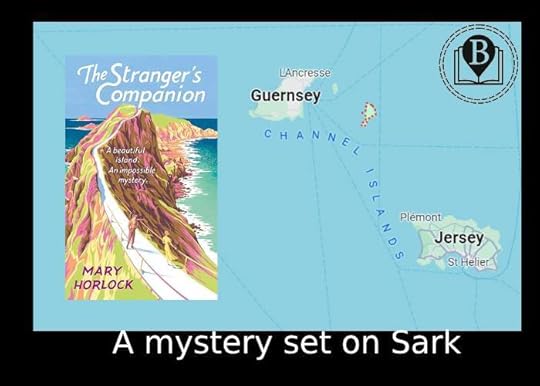
Discover the locations in the novel here
This was intriguing from the off – a mystery novel set on Sark. A location I have not read much about and one I have never been to in real life. The author takes us back to the island in the 1930s, and it’s a place, an island community she knows well having grown up there.
The real life crime happens in 1933 and starts when a pile of clothes is found on the beach. There are so many questions of course and you know from the start that the crime remains unsolved to this day. However, the book is very clever as it reads like a tourist guide in parts when there are snippets to showcase the island alongside stories of the island’s residents. There’s flashbacks and even a few ghostly stories so it felt like reading and sharing a story around a campfire. Add to this the updates of what the investigation reveals and you have quite the story!
I admit to loving the story but what I really loved was the look at the island of Sark. An island community, an island of secrets but also stunning beauty. The rawness of the land and the way it shaped the people on it was compelling reading. It’s somewhere I have not really thought about or read about much before so this book was a real eye- opener. I want to visit now, it has that magic that has started the wanderlust juices flowing.

October 26, 2024
Part supernatural mystery, part coming-of-age, The Stranger's Companion infiltrates small-town secrets that must be faced eventually.
I was instantly drawn to the cover of this novel and its isolated setting on one of the often-forgotten Channel Islands. The year is 1933, and on the tiny island of Sark (where nothing ever happens), a mystery is unfolding. Two pairs of clothes have been abandoned by the cliffs, with their owners nowhere to be seen. With everyone on the island accounted for, it's not long before questions arise and a body finally surfaces. Was this an act of suicide, an unfortunate slip on the rocks... or murder?
For some reason, I struggled to get into this book. I loved the setting, the mystery surrounding the disappearances, and the supernatural influences but there felt like too many characters to keep track of, with most hardly explored. I think less is more with many character-driven novels, and in this case, I would have cut quite a keep the spotlight on the main islanders. I did enjoy the gothic-style writing and vivid descriptions, but at the same time, I sometimes felt a little bogged down in them.
I wasn't a fan of the second-person intros at first, however, they became clear in the end and worked well as the 'voice' of the novel.
Rating breakdown
Plot/narrative - 3.5
Writing style/readability - 3.8
Characters - 2.7
Diverse themes - 2.5
Ending - 3
Overall - 3.1
Thank you to NetGalley for sending me a digital copy of this book in exchange for an honest review.
I was instantly drawn to the cover of this novel and its isolated setting on one of the often-forgotten Channel Islands. The year is 1933, and on the tiny island of Sark (where nothing ever happens), a mystery is unfolding. Two pairs of clothes have been abandoned by the cliffs, with their owners nowhere to be seen. With everyone on the island accounted for, it's not long before questions arise and a body finally surfaces. Was this an act of suicide, an unfortunate slip on the rocks... or murder?
For some reason, I struggled to get into this book. I loved the setting, the mystery surrounding the disappearances, and the supernatural influences but there felt like too many characters to keep track of, with most hardly explored. I think less is more with many character-driven novels, and in this case, I would have cut quite a keep the spotlight on the main islanders. I did enjoy the gothic-style writing and vivid descriptions, but at the same time, I sometimes felt a little bogged down in them.
I wasn't a fan of the second-person intros at first, however, they became clear in the end and worked well as the 'voice' of the novel.
Rating breakdown
Plot/narrative - 3.5
Writing style/readability - 3.8
Characters - 2.7
Diverse themes - 2.5
Ending - 3
Overall - 3.1
Thank you to NetGalley for sending me a digital copy of this book in exchange for an honest review.

May 12, 2024
Tries to do too much : Dual Timeline, Greek Chorus, Genre Mashups
Unfortunately this didn’t work for me. An imaginative riff on a real live ‘mystery’ of the 30’s on Sark, this really felt as if almost every idea and genre was being crammed in to service : Romance, Murder, Dysfunctional Families, Supernatural, a Greek style chorus in the first person plural voice explaining issues, witchcraft, feminism, childs view, adult’s view, it all became a bit of a mish mash for me, and I was neither gripped by ‘what happens next’ nor really engaged with the characters.
In brief : 3 teenage children in 1922 are involved in various tricks and games which go wrong, and there are skeletons in cupboards aplenty. The reader is continually ‘teased’ with various revelations to try and keep them on the edge of their seats
Some 10 years later the children are now in their 20’s and there have been various mysteries and things going on. They have come back to the island, and another mystery happens, the clothes of a man and a woman left abandoned on the shore. But no people are missing on the sparsely populated island of Sark
I also found the book jacket design most peculiar, as it didn’t really convey what I felt the writer was aiming for
I was reminded by what I felt this author was trying to do, of the writer Mary Stewart, who wrote in the ‘romantic Gothic’ territory – and this is sending me thence, to re-read
Unfortunately this didn’t work for me. An imaginative riff on a real live ‘mystery’ of the 30’s on Sark, this really felt as if almost every idea and genre was being crammed in to service : Romance, Murder, Dysfunctional Families, Supernatural, a Greek style chorus in the first person plural voice explaining issues, witchcraft, feminism, childs view, adult’s view, it all became a bit of a mish mash for me, and I was neither gripped by ‘what happens next’ nor really engaged with the characters.
In brief : 3 teenage children in 1922 are involved in various tricks and games which go wrong, and there are skeletons in cupboards aplenty. The reader is continually ‘teased’ with various revelations to try and keep them on the edge of their seats
Some 10 years later the children are now in their 20’s and there have been various mysteries and things going on. They have come back to the island, and another mystery happens, the clothes of a man and a woman left abandoned on the shore. But no people are missing on the sparsely populated island of Sark
I also found the book jacket design most peculiar, as it didn’t really convey what I felt the writer was aiming for
I was reminded by what I felt this author was trying to do, of the writer Mary Stewart, who wrote in the ‘romantic Gothic’ territory – and this is sending me thence, to re-read

June 22, 2024
An historical mystery based on true events that took place in 1933 on the Island of Sark in the Channel Islands. Told in dual timelines, 10 years apart, and from multiple POV’s, unusually the voice of the narrator is written in the second person plural, present tense in the present and past tense in 1923, interspersed with guidebook descriptions of points of interest on the island and newspaper headlines. Confused? I did find it a bit strange at first but I soon found the narrative incredibly compelling.
Briefly, in the past, Sark is a safe placed and children wander around freely, but it’s also not very exciting so two young children Phyllis ‘Phyll’ Carey and Everard Hyde start playing practical jokes, often rooted in local superstitions, until they go too far... In the present, the clothes of two unknown people are found on the beach and no sign of the man and woman. Phyll has returned to live on the island and is determined to work out the mystery. However, she is surprised to bump into Everard who she hasn’t seen for 10 years and their close proximity causes old memories to surface.
This is quite a complex story and for such a small community there are a plethora of secrets and shocking events being revealed! The characters are all well drawn and the descriptions of the island authentic. I liked the asides to the reader and the hints of the supernatural and there is a good feeling of suspense running through it. An intense and captivating read.
Briefly, in the past, Sark is a safe placed and children wander around freely, but it’s also not very exciting so two young children Phyllis ‘Phyll’ Carey and Everard Hyde start playing practical jokes, often rooted in local superstitions, until they go too far... In the present, the clothes of two unknown people are found on the beach and no sign of the man and woman. Phyll has returned to live on the island and is determined to work out the mystery. However, she is surprised to bump into Everard who she hasn’t seen for 10 years and their close proximity causes old memories to surface.
This is quite a complex story and for such a small community there are a plethora of secrets and shocking events being revealed! The characters are all well drawn and the descriptions of the island authentic. I liked the asides to the reader and the hints of the supernatural and there is a good feeling of suspense running through it. An intense and captivating read.

May 12, 2024
I was looking forward to reading this book - a mystery of clothing left on a beach sounded intriguing and I love the 1930's as a setting too. But immediately I found the narration of the story jarred - chapter 1 begins with 'welcome, stranger, to Sark...' - I don't want to be spoken to directly by the author. I prefer the characters to tell me their story.
The narrative alternates between the years 1923 when a group of three children get together and 1933 when two of those children are adults and have to face the consequences of their earlier actions. After the initial rush of clothing find, the story slows and for a long time not much happens. The pacing picks up towards the end as various strands come together and we make sense of things but I have to confess that by that time I didn't care much for any of the characters, most of whom appear very self centred or thoroughly unpleasant.
The redeeming feature for me is the setting on the island of Sark which back in teh 1930's must have been quite remote and isolated. That they believe in ghosts and supernatural wasn't a hard step to make.
All in all a book I found hard to engage with and I didn't feel it lived up to the blurb although I'm sure it will appeal to others.
With thanks to Netgalley and John Murray Press for an arc in return for an honest review.
The narrative alternates between the years 1923 when a group of three children get together and 1933 when two of those children are adults and have to face the consequences of their earlier actions. After the initial rush of clothing find, the story slows and for a long time not much happens. The pacing picks up towards the end as various strands come together and we make sense of things but I have to confess that by that time I didn't care much for any of the characters, most of whom appear very self centred or thoroughly unpleasant.
The redeeming feature for me is the setting on the island of Sark which back in teh 1930's must have been quite remote and isolated. That they believe in ghosts and supernatural wasn't a hard step to make.
All in all a book I found hard to engage with and I didn't feel it lived up to the blurb although I'm sure it will appeal to others.
With thanks to Netgalley and John Murray Press for an arc in return for an honest review.
June 8, 2024
I am sure that a lot of readers will really enjoy this book but sadly it wasn't for me.
It was a fictional story based on some facts and set on the remote island of Sark.
I am glad that the author included a character list at the beginning because I found myself constantly referring back to it.
The story is set over two timelines and sometimes I found it confusing as to which timeline we were on. The island of Sark is portrayed as one with myths, legends, ghosts, witchcraft and superstitions, in 1922 Two children, Phyll and Everand were able to fake " happenings" and put even more fear into the small community.
Phyll and Everard are back on the island ten years later when two bundles of clothes are found neatly folded with no trace of the owners........have they drowned whilst swimming in the sea ?, have they fallen onto the rocks and been swept away ?, no one was missing from the small community, it had to be a visitor, but who ?
This had the bones of a great story but the format didn't do it for me, it flittered between the 1920s and the 1930s, I love a good mystery but this one didn't have me eagerly waiting for the outcome and I really didn't warm to the characters.
As stated previously, there are readers out there who will love this story, especially people who have visited Sark but it wasn't for me.
I received a free copy of this book and my review is voluntary
It was a fictional story based on some facts and set on the remote island of Sark.
I am glad that the author included a character list at the beginning because I found myself constantly referring back to it.
The story is set over two timelines and sometimes I found it confusing as to which timeline we were on. The island of Sark is portrayed as one with myths, legends, ghosts, witchcraft and superstitions, in 1922 Two children, Phyll and Everand were able to fake " happenings" and put even more fear into the small community.
Phyll and Everard are back on the island ten years later when two bundles of clothes are found neatly folded with no trace of the owners........have they drowned whilst swimming in the sea ?, have they fallen onto the rocks and been swept away ?, no one was missing from the small community, it had to be a visitor, but who ?
This had the bones of a great story but the format didn't do it for me, it flittered between the 1920s and the 1930s, I love a good mystery but this one didn't have me eagerly waiting for the outcome and I really didn't warm to the characters.
As stated previously, there are readers out there who will love this story, especially people who have visited Sark but it wasn't for me.
I received a free copy of this book and my review is voluntary

June 23, 2024
A slow-burn, coming-of-age island mystery full of twists and turns
Filled with a profusion of voices and narrative styles, The Stranger's Companion reveals its secrets and those of its lively cast of characters in surprising and unexpected order, never taking the straight path to a denouement or an action.
At the heart of the book are Phyll and Everard, in twin timelines when they are both twelve and twenty-two. As parallel mysteries of the human kind develop around their innocent but magic-filled relationship, the mythology and folklore of the island of Sark provides a further deepening of all the stories in this complex novel. Based on a real incident, the novel resolves almost al of the plot lines, leaving only one major thread dangling: are there ghosts on Sark?
I must admit that I liked each strand of story, even though the actual omniscient narrator remains anonymous even after finishing the whole thing. But colourful characters and a delightful interest in the lives of pre-tweens in the so-called innocent inter-war years can only take you so far, and thankfully the book picks up pace, as well as all of the threads, around the halfway point, like a gentle uphill slope that takes you to a seaside cliff, as Sark appears to have in droves.
A great summer read, I give it four stars.
Filled with a profusion of voices and narrative styles, The Stranger's Companion reveals its secrets and those of its lively cast of characters in surprising and unexpected order, never taking the straight path to a denouement or an action.
At the heart of the book are Phyll and Everard, in twin timelines when they are both twelve and twenty-two. As parallel mysteries of the human kind develop around their innocent but magic-filled relationship, the mythology and folklore of the island of Sark provides a further deepening of all the stories in this complex novel. Based on a real incident, the novel resolves almost al of the plot lines, leaving only one major thread dangling: are there ghosts on Sark?
I must admit that I liked each strand of story, even though the actual omniscient narrator remains anonymous even after finishing the whole thing. But colourful characters and a delightful interest in the lives of pre-tweens in the so-called innocent inter-war years can only take you so far, and thankfully the book picks up pace, as well as all of the threads, around the halfway point, like a gentle uphill slope that takes you to a seaside cliff, as Sark appears to have in droves.
A great summer read, I give it four stars.

February 21, 2024
I loved it!
Based on true events, The Stranger's Companion takes you back in the beginning of the 20th century to the island of Sark (I've been lucky enough to have visited the island and can highly recommend it). It all starts with a mystery of two missing people, but it turns out that there is a lot more going on the small island, that we get to witness. We follow two timelines that are 12 years apart and we get to know the characters quite well. I loved that the author really put her time into painting the picture of the island for us, so that we can truly feel like we are there.
The beginning was a bit slow for me, but after around the 30% mark things really picked up. I also didn't really care for some of the overly explained things, that had no connection with the story itself, but for me it is something that I can easily ignore (or just skim over)
I am really grateful that I got the opportunity to read the book throughout NetGalley and give my honest review (my first NetGalley book and I am really happy that it ended up not only good, but also my first 5* for the year)
#TheStrangersCompanion #NetGalley
Based on true events, The Stranger's Companion takes you back in the beginning of the 20th century to the island of Sark (I've been lucky enough to have visited the island and can highly recommend it). It all starts with a mystery of two missing people, but it turns out that there is a lot more going on the small island, that we get to witness. We follow two timelines that are 12 years apart and we get to know the characters quite well. I loved that the author really put her time into painting the picture of the island for us, so that we can truly feel like we are there.
The beginning was a bit slow for me, but after around the 30% mark things really picked up. I also didn't really care for some of the overly explained things, that had no connection with the story itself, but for me it is something that I can easily ignore (or just skim over)
I am really grateful that I got the opportunity to read the book throughout NetGalley and give my honest review (my first NetGalley book and I am really happy that it ended up not only good, but also my first 5* for the year)
#TheStrangersCompanion #NetGalley
July 23, 2024
I read this book for The Reading Agency book club, I found it a very easy and relaxing read, and was drawn into the story straight away. I loved the descriptions of Sark and spent my time between reading the book going off down a rabbit hole of research about the real place - this is always an indication that a story holds my interest. The premise of the story is the mystery of the disappearance of a couple on one of the island's beaches where their clothing is found laid out with no sign of the owners. The story moves between decades of 1923 and 1933 and whilst at first, I found this distracting, I soon got used to the characters and was invested in what happened to them and how their story comes together. I wont' say more for spoilers but as I love this era, am a fan of the 'cosy mystery', and also like anything with a suggestion of ghosts, superstitions and spirits, this made ideal reading for me. A bonus is the beautiful cover. I'd say this is slightly more intelligent that the general cosy mystery. I'm going to get a new copy for my daughter for her birthday. I'd give it a healthy 4 out of 5 and am looking forward to reading more by this author.

September 6, 2024
📚 Book Review 📚
The setting for this book, the island of Sark, is stunningly described during the 1930’s and is set against the strange true story of two sets of clothes left, neatly folded, on a cliff.
The writing is atmospheric, gothic like and interestingly describes the ancient folklore and traditions of the island and its inhabitants. It took me a while to get into it, but when I did, I loved the ghostly overtones with reference to witchcraft.
The story has a dual timeline between 1923 and 1933 which again, took a short while for me to get to grips with but then became more clear as I read. The characters are interesting and felt real.
I ended up really enjoying this book, although it took a little while for me to get there. The interesting way the author leads the reader into learning about the role of the prominent women in the community gives a fantastic edge and raises questions about the treatment and accusations levied at intelligent women in generations past.
I’d like to thank Baskerville, NetGalley and the author for the arc and the fantastic opportunity, in exchange for my honest feedback 😊
Book released on 20th June 2024
⭐️⭐️⭐️
The setting for this book, the island of Sark, is stunningly described during the 1930’s and is set against the strange true story of two sets of clothes left, neatly folded, on a cliff.
The writing is atmospheric, gothic like and interestingly describes the ancient folklore and traditions of the island and its inhabitants. It took me a while to get into it, but when I did, I loved the ghostly overtones with reference to witchcraft.
The story has a dual timeline between 1923 and 1933 which again, took a short while for me to get to grips with but then became more clear as I read. The characters are interesting and felt real.
I ended up really enjoying this book, although it took a little while for me to get there. The interesting way the author leads the reader into learning about the role of the prominent women in the community gives a fantastic edge and raises questions about the treatment and accusations levied at intelligent women in generations past.
I’d like to thank Baskerville, NetGalley and the author for the arc and the fantastic opportunity, in exchange for my honest feedback 😊
Book released on 20th June 2024
⭐️⭐️⭐️

March 15, 2024
The Stranger's Companion is a historical mystery and gothic thriller which is inspired by real events in Sark, a small island, part of the British Channel Islands, in 1933. The clothes of a man and a woman was found neatly folded on the edge of a cliff, but no one knew whom they belong to. And that's how this story also begins.
The main attraction of this book is the writing style. I love how the writer put some "excerpts", either from tourist information guide, or from the news containing updates on the investigation, to open the chapters. They provide a refreshing touch to the otherwise rather gloomy story with superstitious, ghost hunting, seance, and of course, murder.
Here's the complete review: https://klasikfanda.blogspot.com/2024...
The main attraction of this book is the writing style. I love how the writer put some "excerpts", either from tourist information guide, or from the news containing updates on the investigation, to open the chapters. They provide a refreshing touch to the otherwise rather gloomy story with superstitious, ghost hunting, seance, and of course, murder.
Here's the complete review: https://klasikfanda.blogspot.com/2024...

May 20, 2024
I think from the cover and description I was expecting an old fashioned “British Library” type murder mystery but the narrative was more complicated than this.
I enjoyed the mixture of guidebook description and Sark folklore throughout the story but unfortunately the main narrative kept escaping my grasp (because of incidental side plots maybe?) and I think it needed more concentration than I could devote at the time. There are different timelines that focus on Phyll and Everard’s relationship as young teenagers and then later in their twenties. It says something good about the writing that because of the character development you could soon work out which time we were in (there are dates in the chapter headings as well) and it was wise to have a character list at the beginning.
Thank you to NetGalley for the ARC pre publication
I enjoyed the mixture of guidebook description and Sark folklore throughout the story but unfortunately the main narrative kept escaping my grasp (because of incidental side plots maybe?) and I think it needed more concentration than I could devote at the time. There are different timelines that focus on Phyll and Everard’s relationship as young teenagers and then later in their twenties. It says something good about the writing that because of the character development you could soon work out which time we were in (there are dates in the chapter headings as well) and it was wise to have a character list at the beginning.
Thank you to NetGalley for the ARC pre publication
June 19, 2024
Atmospheric and a fabulously immersive. I love how we get to experience the Island's lore, customs and ghost stories.
Set on an Island, we're presented with the mystery of two piles of clothes and intrigue builds as we build up a picture of the events via a duel timeline.
We might wonder if the clothes belong to a couple who couldn't be together so made a tragic pact to end their lives together.
Perhaps it's a murderer who has become too self assured and wants to see just how many clues they can leave before they're found.
Maybe it's a couple faking their own deaths to flee in to the sunset or just an elaborate prank by a board individual who wants to shake things up on the sleepy island.
I won't spoil what happens but it's thoroughly enjoyable trying to work it out and see it unfold.
A wonderful summer (or any time really!) read.
Set on an Island, we're presented with the mystery of two piles of clothes and intrigue builds as we build up a picture of the events via a duel timeline.
We might wonder if the clothes belong to a couple who couldn't be together so made a tragic pact to end their lives together.
Perhaps it's a murderer who has become too self assured and wants to see just how many clues they can leave before they're found.
Maybe it's a couple faking their own deaths to flee in to the sunset or just an elaborate prank by a board individual who wants to shake things up on the sleepy island.
I won't spoil what happens but it's thoroughly enjoyable trying to work it out and see it unfold.
A wonderful summer (or any time really!) read.
Displaying 1 - 30 of 61 reviews