

What do you think?
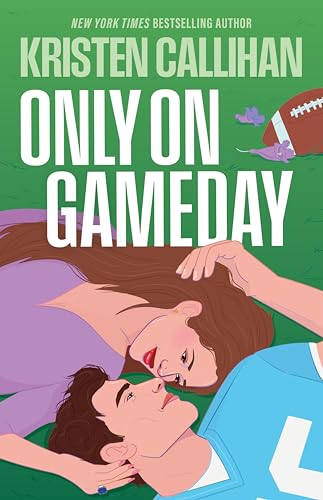
Game On #5
Only on Gameday
An ALL-NEW sports romance from New York Times bestseller Kristen Callihan with high emotional stakes and a slow-burn, steamy heat level.
A “fake” fiancée is just the trick to help a bad-boy football player clean up his image. Trouble is, there’s nothing fake about the way August feels about his “pretend” fiancée.
August Luck is on the brink of greatness: top NFL draft pick, a great team, multiple corporate sponsorships, but he keeps messing it up with bonehead moves. After his latest shenanigan goes viral, everyone is telling him to get his act together.
Penelope Morrow grew up with August. Their mothers were best friends. Unfortunately, Pen always fled the room with a look of disapproval on her pretty face whenever August was around. But Pen has a problem too: she inherited her grandparent’s house and can’t pay the estate tax.
On a whim, August decides a temporary public engagement is the solution to both their problems—he’ll pay her taxes, and she’ll help his image. Win-win.
But, when it comes to Pen, nothing is certain or safe. Because Pen isn’t so reserved anymore. This time, she’s smiling back at him. And he likes it. A lot. Will they each survive the ruse unscathed?
Game on...
Perfect for readers who love:
• Shy girl/sunshine boy
• Hero in hot pursuit
• Unrequited love + epic yearning
• Fake dating (or is it?)
• Delicious slow-burn romance
• Childhood nemeses (all grown up)
A “fake” fiancée is just the trick to help a bad-boy football player clean up his image. Trouble is, there’s nothing fake about the way August feels about his “pretend” fiancée.
August Luck is on the brink of greatness: top NFL draft pick, a great team, multiple corporate sponsorships, but he keeps messing it up with bonehead moves. After his latest shenanigan goes viral, everyone is telling him to get his act together.
Penelope Morrow grew up with August. Their mothers were best friends. Unfortunately, Pen always fled the room with a look of disapproval on her pretty face whenever August was around. But Pen has a problem too: she inherited her grandparent’s house and can’t pay the estate tax.
On a whim, August decides a temporary public engagement is the solution to both their problems—he’ll pay her taxes, and she’ll help his image. Win-win.
But, when it comes to Pen, nothing is certain or safe. Because Pen isn’t so reserved anymore. This time, she’s smiling back at him. And he likes it. A lot. Will they each survive the ruse unscathed?
Game on...
Perfect for readers who love:
• Shy girl/sunshine boy
• Hero in hot pursuit
• Unrequited love + epic yearning
• Fake dating (or is it?)
• Delicious slow-burn romance
• Childhood nemeses (all grown up)
450 pages, Kindle Edition
First published January 6, 2026
About the author
Kristen Callihan
40 books14.1k followersKristen Callihan is an author because there is nothing else she'd rather be. She is a RITA winner and three-time nominee and winner of two RT Reviewer's Choice awards. Her novels have garnered starred reviews from Publisher's Weekly and the Library Journal, as well as being awarded top picks by many reviewers. Her debut book FIRELIGHT received RT Magazine's Seal of Excellence, was named a best book of the year by Library Journal, best book of Spring 2012 by Publisher's Weekly, and was named the best romance book of 2012 by ALA RUSA. When she is not writing, she is reading.
Ratings & Reviews
Friends & Following
Create a free account to discover what your friends think of this book!
Community Reviews
Displaying 1 - 30 of 744 reviews

Read
January 2, 20264 stars
What a fun fake dating/sports romance. I enjoyed reading Penelope and August’s story. The Luck siblings were a fun family and I hope we get some books about them!
August is a rookie playing his first season of professional football. He’s made some questionable decisions lately, and decided that ‘settling down’ would be good for his image. Penelope is a family friend he’s basically known his whole life.
Penny has always been closer to the other Luck siblings than August but she gets to know him on a deeper level the more time they spend together. I enjoyed their banter and relationship. The book was great for me and I especially loved the narration!
What a fun fake dating/sports romance. I enjoyed reading Penelope and August’s story. The Luck siblings were a fun family and I hope we get some books about them!
August is a rookie playing his first season of professional football. He’s made some questionable decisions lately, and decided that ‘settling down’ would be good for his image. Penelope is a family friend he’s basically known his whole life.
Penny has always been closer to the other Luck siblings than August but she gets to know him on a deeper level the more time they spend together. I enjoyed their banter and relationship. The book was great for me and I especially loved the narration!
Audio book source: Netgalley
Story Rating: 4 stars
Narrators: Teddy Hamilton & Maxine Mitchell
Narration Rating: 4.5 stars
Genre: Romance
Length:13h 28m

October 10, 2025
I don’t know why this isn’t the start of a new series. It has no connection, and so much time has passed, to the previous books and spends a lot of time setting up an entirely new cast of characters. It’s an odd choice. (UPDATE: The book has now been removed from it’s listing as Book #5 in the Game On series)
There’s a lot going on and it doesn’t have a good flow. A little bit of everything just thrown in and mixed about. I craved more focus and a solid build. There were many times throughout where I feel like a previous book or backstory were missed.
The constant “he’s finally paying attention to me! But that doesn’t mean he likes me. He’s flirting with me! But obviously he doesn’t mean it. He’s stating his attraction to me! But that’s not real.” was sooooo tiring.
The sandwich. A freaking sandwich! I will not give spoilers… but I’ll just say this was the moment the book hit two stars ‘cause I was laughing so much at the absurdity. I cannot.
Listen, I LOVE Callihan’s novels. Her VIP series is one of my faves and I’ve reread the earlier football books numerous times. But I don’t know what happened here. This was not it.
* I received a free early copy from the publisher.
There’s a lot going on and it doesn’t have a good flow. A little bit of everything just thrown in and mixed about. I craved more focus and a solid build. There were many times throughout where I feel like a previous book or backstory were missed.
The constant “he’s finally paying attention to me! But that doesn’t mean he likes me. He’s flirting with me! But obviously he doesn’t mean it. He’s stating his attraction to me! But that’s not real.” was sooooo tiring.
The sandwich. A freaking sandwich! I will not give spoilers… but I’ll just say this was the moment the book hit two stars ‘cause I was laughing so much at the absurdity. I cannot.
Listen, I LOVE Callihan’s novels. Her VIP series is one of my faves and I’ve reread the earlier football books numerous times. But I don’t know what happened here. This was not it.
* I received a free early copy from the publisher.

January 19, 2026
not sure if I was in a reading slump or if it was the book itself, but this was an absolute punishment to get through.

January 14, 2026
2.5 - 3⭐️
Kristen Callihan has written some of my old favourites- The Game Plan, Fall, Exposed. Books that I have read multiple times. So I was THRILLED when she announced she would be releasing this book, her first in a few years. And honestly I think my expectations being too high might have had a lot to do with my disappointment here, because I didn't enjoy this at all
There was nothing glaringly awful here- just a long list of small things that totalled to a bad book. I'm also the type of reader that once I get that "oh I don't like that" feeling and start to question if I will like a book, it's really hard to win me back over. And this book opened on the back foot for me.
We start with Penelope on the phone with her mom, driving to see the Luck family. We're given some small details right off the bat but not enough for the full picture- we're told that Pen is super close with the Luck family, but somehow hasn't seen any of them in years. She walks in like she's a fixture at their house but she didn't grow up in the area? And her mom doesn't currently live there? And her grandparents live in California? So how exactly and they all so close
Then there's the Luck family banter. I get that KC was going for this super close family who playfully ribs each other with love, but it did NOT work for me. It all felt so stilted and awkward. Every Luck child is this louder-than-life character in a way that also didn't feel authentic. Their family shenanigans and text conversations went on the entire book and just added more noise in a negative way for me
Honestly with everything else wrong with this book the lack of chemistry between Pen and August was the last thing on my mind. Again, they are supposed to be super tight family friends but the two of them always had a more stand-offish relationship (because they were both secretly crushing on the other I guess?...). It didn't feel like these two had ever even met before, let alone grown up together. I think it's hard to make your main characters have chemistry when neither of them has any personality
The whole chicken dance thing... I'll join all of the other reviews saying this really made no sense. At the beginning of the book August gets caught doing the chicken dance at a win celebration? Aside from the fact that this was super out of character for him and then never really addressed, I didn't really see what the big deal was? He's a young QB at a party, celebrating a win. A little moronic sure, but not the end of the world everyone treated it as. I truly don't even see why he didn't to "rehabilitate" his image after this. If Jason Kelce can jump out of a box shirtless and chug a beer, August can do the chicken dance.
The house situation also made little sense to me. Pen has inherited her grandparents home in LA that is currently worth 10 million because of the land it sits on. She can't afford the yearly property taxes on it and when her mother turns her down for a loan, August suggests she be fake-engaged to him and he'll help pay. (She turns this down and helps him out just because- he also offered to straight up give her the money as her friend, which she also turned down). Her mom tells her to just sell it if she can't afford the upkeep- it's a $10 million house! But of course Pen refuses, because apparently it's the only place that has ever felt like home (again, where the hell did she grow up?) But we never hear of her plans to raise the money? Like this is a beautiful house in LA with historic ties to old Hollywood- surely you can rent it out or do tours or let people film there. But she just asks her mom to borrow 125K "until she figures something out" but ZERO ideas on how to pay her back. She doesn't even have a job for goodness sake I wouldn't have lent her money either
Thank you to Netgalley and the publishing team for the ARC in exchange for an honest review.
Kristen Callihan has written some of my old favourites- The Game Plan, Fall, Exposed. Books that I have read multiple times. So I was THRILLED when she announced she would be releasing this book, her first in a few years. And honestly I think my expectations being too high might have had a lot to do with my disappointment here, because I didn't enjoy this at all
There was nothing glaringly awful here- just a long list of small things that totalled to a bad book. I'm also the type of reader that once I get that "oh I don't like that" feeling and start to question if I will like a book, it's really hard to win me back over. And this book opened on the back foot for me.
We start with Penelope on the phone with her mom, driving to see the Luck family. We're given some small details right off the bat but not enough for the full picture- we're told that Pen is super close with the Luck family, but somehow hasn't seen any of them in years. She walks in like she's a fixture at their house but she didn't grow up in the area? And her mom doesn't currently live there? And her grandparents live in California? So how exactly and they all so close
Then there's the Luck family banter. I get that KC was going for this super close family who playfully ribs each other with love, but it did NOT work for me. It all felt so stilted and awkward. Every Luck child is this louder-than-life character in a way that also didn't feel authentic. Their family shenanigans and text conversations went on the entire book and just added more noise in a negative way for me
Honestly with everything else wrong with this book the lack of chemistry between Pen and August was the last thing on my mind. Again, they are supposed to be super tight family friends but the two of them always had a more stand-offish relationship (because they were both secretly crushing on the other I guess?...). It didn't feel like these two had ever even met before, let alone grown up together. I think it's hard to make your main characters have chemistry when neither of them has any personality
The whole chicken dance thing... I'll join all of the other reviews saying this really made no sense. At the beginning of the book August gets caught doing the chicken dance at a win celebration? Aside from the fact that this was super out of character for him and then never really addressed, I didn't really see what the big deal was? He's a young QB at a party, celebrating a win. A little moronic sure, but not the end of the world everyone treated it as. I truly don't even see why he didn't to "rehabilitate" his image after this. If Jason Kelce can jump out of a box shirtless and chug a beer, August can do the chicken dance.
The house situation also made little sense to me. Pen has inherited her grandparents home in LA that is currently worth 10 million because of the land it sits on. She can't afford the yearly property taxes on it and when her mother turns her down for a loan, August suggests she be fake-engaged to him and he'll help pay. (She turns this down and helps him out just because- he also offered to straight up give her the money as her friend, which she also turned down). Her mom tells her to just sell it if she can't afford the upkeep- it's a $10 million house! But of course Pen refuses, because apparently it's the only place that has ever felt like home (again, where the hell did she grow up?) But we never hear of her plans to raise the money? Like this is a beautiful house in LA with historic ties to old Hollywood- surely you can rent it out or do tours or let people film there. But she just asks her mom to borrow 125K "until she figures something out" but ZERO ideas on how to pay her back. She doesn't even have a job for goodness sake I wouldn't have lent her money either
Thank you to Netgalley and the publishing team for the ARC in exchange for an honest review.

December 12, 2025
While I am delighted to see Kristen Callihan back with a brand new book (it's been several years since her last book), I did not expect to read two books this year with the niche trope of a football player secretly in love with his childhood friend and asking said friend to pretend to be his fiancée in order to rehab his reputation and public image, but here we are.
I wanted to like this book, in fact, I wanted to love it. But the fact that it took me 5 days to finish this book is never good sign. For a lot of this book, I was bored. I discovered Kristen Callihan 15 years ago when I discovered New Adult romances. I read a lot of sports romances in that time featuring characters still in or fresh out of college, in their early 20s. However, it's not particularly a subgenre I enjoy as much anymore and these characters (he's a 23 y.o. NFL rookie, she's 22 and still in college) read as very, VERY young to me.
Secondly, he does something wholly out of character at the very beginning of this book but the book really doesn't delve very deeply into why he acts so completely out of character except for a quick throwaway line towards the last quarter of the book. There are signs of anxiety and the pressure to perform at a high level getting to him which would be great emotional avenue to explore, and this author has done remarkable work in the past exploring mental health issues in her books so I'm entirely unsure why she did not delve a little deeper in this book. A lot of this book dragged in some places but also felt like a first draft that needed more depth in others, which is frankly uncharacteristic for her.
Then August asks Penelope to be his fake fiancée to rehab his image and yet, neither one of these ding dongs remember to tell their family that they're engaged and that it's fake before August announces his engagement live on the air in a press conference. So obviously, his siblings, May and June show up and his other siblings March and January are like "WTF?!?" as is her mom who thankfully is not named for a month. When May and June show up, they immediately assume that Penelope, a woman they have known all their lives since both their moms are besties, is only after August for his money. That felt really offensive to me.
Penelope, who has her own issues with a father who abandoned her and left her mom for the nanny, has inherited a home from her late grandparents that is worth a lot of money. Except, to keep the house, she must pay the property taxes which are well beyond her means. But she’s adamant that she won’t accept August’s financial help. Penelope also spends much of this book wondering how a guy like August could be possibly interested in her, a young beautiful woman and this incessant “I’m just a nobody” mentality gets really old and tired real fast.
These two encapsulate the idiots in love trope in that they have both been in love with each other for years and have treated the other like they don’t even like each other. And that is really the crux of the whole story, that these two have secretly been pining for the other. And when that reveal happens at the very end, it almost feels anticlimactic.
The sex scenes are hot, in typical Kristen Callihan fashion (lots of good girls, etc.) but there’s this reveal of Penelope being a virgin who has never even been kissed until she and August have their first fake kiss for appearances sake because she couldn’t even imagine being with anyone other than August. (August however is not a virgin, shocking absolutely no one).
The other thing that really bothered me about Penelope’s character development is that she has no other friends outside of August’s family. Even the one other friend she makes in this book is due to August (his teammate’s movie star girlfriend). She’s not particularly close to her roommate who eventually kicks her out. She’s labeled shy and has spent almost 4 years in college and has not managed to cultivate even one single friendship in that time? But she loves entertaining and cooking for people and none of this really adds up for me.
My final thought – why is this part of the Game On series and not just kicking off a brand-new series? I’m assuming (though I could be wrong) that the rest of the Luck siblings will also get books (I am invested in January’s story and was hoping for a second chance romance for him with his ex-fiancée, but that hope has been eradicated for REASONS).
Anyway, I have ranted long enough about this book.
ARC from publisher, review is all mine.
Content notes: toxic father, car accident with side character off page in the past, anxiety related to professional pressures; FMC gets physically attacked and her motorcycle is destroyed
I wanted to like this book, in fact, I wanted to love it. But the fact that it took me 5 days to finish this book is never good sign. For a lot of this book, I was bored. I discovered Kristen Callihan 15 years ago when I discovered New Adult romances. I read a lot of sports romances in that time featuring characters still in or fresh out of college, in their early 20s. However, it's not particularly a subgenre I enjoy as much anymore and these characters (he's a 23 y.o. NFL rookie, she's 22 and still in college) read as very, VERY young to me.
Secondly, he does something wholly out of character at the very beginning of this book but the book really doesn't delve very deeply into why he acts so completely out of character except for a quick throwaway line towards the last quarter of the book. There are signs of anxiety and the pressure to perform at a high level getting to him which would be great emotional avenue to explore, and this author has done remarkable work in the past exploring mental health issues in her books so I'm entirely unsure why she did not delve a little deeper in this book. A lot of this book dragged in some places but also felt like a first draft that needed more depth in others, which is frankly uncharacteristic for her.
Then August asks Penelope to be his fake fiancée to rehab his image and yet, neither one of these ding dongs remember to tell their family that they're engaged and that it's fake before August announces his engagement live on the air in a press conference. So obviously, his siblings, May and June show up and his other siblings March and January are like "WTF?!?" as is her mom who thankfully is not named for a month. When May and June show up, they immediately assume that Penelope, a woman they have known all their lives since both their moms are besties, is only after August for his money. That felt really offensive to me.
Penelope, who has her own issues with a father who abandoned her and left her mom for the nanny, has inherited a home from her late grandparents that is worth a lot of money. Except, to keep the house, she must pay the property taxes which are well beyond her means. But she’s adamant that she won’t accept August’s financial help. Penelope also spends much of this book wondering how a guy like August could be possibly interested in her, a young beautiful woman and this incessant “I’m just a nobody” mentality gets really old and tired real fast.
These two encapsulate the idiots in love trope in that they have both been in love with each other for years and have treated the other like they don’t even like each other. And that is really the crux of the whole story, that these two have secretly been pining for the other. And when that reveal happens at the very end, it almost feels anticlimactic.
The sex scenes are hot, in typical Kristen Callihan fashion (lots of good girls, etc.) but there’s this reveal of Penelope being a virgin who has never even been kissed until she and August have their first fake kiss for appearances sake because she couldn’t even imagine being with anyone other than August. (August however is not a virgin, shocking absolutely no one).
The other thing that really bothered me about Penelope’s character development is that she has no other friends outside of August’s family. Even the one other friend she makes in this book is due to August (his teammate’s movie star girlfriend). She’s not particularly close to her roommate who eventually kicks her out. She’s labeled shy and has spent almost 4 years in college and has not managed to cultivate even one single friendship in that time? But she loves entertaining and cooking for people and none of this really adds up for me.
My final thought – why is this part of the Game On series and not just kicking off a brand-new series? I’m assuming (though I could be wrong) that the rest of the Luck siblings will also get books (I am invested in January’s story and was hoping for a second chance romance for him with his ex-fiancée, but that hope has been eradicated for REASONS).
Anyway, I have ranted long enough about this book.
ARC from publisher, review is all mine.
Content notes: toxic father, car accident with side character off page in the past, anxiety related to professional pressures; FMC gets physically attacked and her motorcycle is destroyed

February 22, 2026
2.5 Stars
Super Quick Opinion: I stuck with this because it was Kristen Callihan. I figured, it had to get better, right?! It didn't. I was bored. The MCs were meh. Their connection was meh. They were secretly in love the whole time, so there was no development or angst. It was fluffy and very low conflict, so if that's your jam - here ya go! The only mild conflict was with miscommunication, which was annoying. I took forever to read this because I was feeling this weird need to be loyal, but I really should have put it on my DNF list a long time ago.
This is probably Safe for safety gang:
Super Quick Opinion: I stuck with this because it was Kristen Callihan. I figured, it had to get better, right?! It didn't. I was bored. The MCs were meh. Their connection was meh. They were secretly in love the whole time, so there was no development or angst. It was fluffy and very low conflict, so if that's your jam - here ya go! The only mild conflict was with miscommunication, which was annoying. I took forever to read this because I was feeling this weird need to be loyal, but I really should have put it on my DNF list a long time ago.
This is probably Safe for safety gang:

November 30, 2025
I will probably always read Kristen Callihan. Her books always make me feel light and bubbly, I like her characters - the whole ensemble.
Here, heavy effort was put into May and June, but they don't feel super distinct. Nor does March. I liked their interplay but there's not much in the way of flaws or developing the characters. They give a bit of context and a bit of a character rough -in for the principals but for so much page space I felt it could be better fleshed out.
Which brings me to the leads. Penelope, the reserved heroine, and August the seemingly-starchy but not. There's a comfort in callihans humor and the good nature of her leads, but they really felt a little too drawn for each other here. And at the end, that's exactly so.
I did read it non-stop and it was comforting. It didn't rise to the heights of my favorite Callihan new adult/sports romances, but that may be because they are great for me in the context they were in. This feels a little stuck in that place-while having a lot of content but being a bit underdeveloped. If you're a Callihan fan, pick it up. This novel is more satisfying and engaging than many sports romances.
Thank you to the publisher and netgalley for the ARC which did not affect my review.
Here, heavy effort was put into May and June, but they don't feel super distinct. Nor does March. I liked their interplay but there's not much in the way of flaws or developing the characters. They give a bit of context and a bit of a character rough -in for the principals but for so much page space I felt it could be better fleshed out.
Which brings me to the leads. Penelope, the reserved heroine, and August the seemingly-starchy but not. There's a comfort in callihans humor and the good nature of her leads, but they really felt a little too drawn for each other here. And at the end, that's exactly so.
I did read it non-stop and it was comforting. It didn't rise to the heights of my favorite Callihan new adult/sports romances, but that may be because they are great for me in the context they were in. This feels a little stuck in that place-while having a lot of content but being a bit underdeveloped. If you're a Callihan fan, pick it up. This novel is more satisfying and engaging than many sports romances.
Thank you to the publisher and netgalley for the ARC which did not affect my review.

February 28, 2026
I took me a while to finish Only on Gameday. Not because the story is bad but I have some personal matter to take care.
Miss Callihan delivers the best story on this series. I read the other books on this series long time ago. I kind of forget about it.
Only on Gameday is cute, funny and engaging love story. sort of childhood enemy turns into lover. I like the banter. I like the characters.
4 stars
Miss Callihan delivers the best story on this series. I read the other books on this series long time ago. I kind of forget about it.
Only on Gameday is cute, funny and engaging love story. sort of childhood enemy turns into lover. I like the banter. I like the characters.
4 stars

February 20, 2026
4 ⭐️'s
This childhood friends to lovers fake engagement story was really sweet. August and Penelope just fit together and I loved their banter.
However, I think what made the story better was August's family. I wouldn’t be surprised if we get more stories about the brothers.
This childhood friends to lovers fake engagement story was really sweet. August and Penelope just fit together and I loved their banter.
However, I think what made the story better was August's family. I wouldn’t be surprised if we get more stories about the brothers.

January 20, 2026
I have outgrown New Adult with few exceptions and one of those exceptions is Kristen Callihan.So I am really bummed that this book didn't work for me.
I generally avoid Friends to Lovers and Fake Dating because I find those tropes are really hard to pull off in any satisfying way. And also they are boring af, but this author wrote The Friend Zone and made me like it against my will. Sadly this book was not that. It was everything I hate about F2L like: oh guess what? I've been into you my whole life but didn't tell you and never acted on it because....? Well the answer to that Because better be something compelling and not "I was afraid to say something" for YEARS for no good reason whatsoever. In this case August is a hot shot football player and Pen is the daughter of his mother's best friend. They grew up together and both developed feelings for each other but they never act on them because who knows? Anyway, August does something stupid, needs an image rehab and voila here's Pen ready to play the fake gf ::yawn::
Sooo the conflict is that Pen is convinced August couldn't possibly be into her because she's not that pretty and he's like sooooo pretty and so famous. And even though he's basically like Pen I'm Really Into You, Pen is like, nah you're not. As the yoots say: Bruh 🤦🏽♀️
Besides Pen the Ding Dong, August has a huge family full of big personalities and they take up a huge chunk of the book. I guess their banter is supposed to be super witty and funny but instead felt forced. I found every single one of them really annoying with maybe the exception of March (they are all named after the months they were born or conceived? It's really as dumb as it sounds) who I think is getting his own book. There were some really good moments and the love scenes were hot but those things were buried under pages upon pages of tres droll group texts between all the siblings that had me cringing myself into orbit. The dual narration was excellent though and probably the only reason I finished it.
⭐⭐.5/5
🔥🔥/5
Tropes:
Friends to Lovers
Fake Dating
Found Family
I received an ALC from the publisher for review. All opinions are my own.
I generally avoid Friends to Lovers and Fake Dating because I find those tropes are really hard to pull off in any satisfying way. And also they are boring af, but this author wrote The Friend Zone and made me like it against my will. Sadly this book was not that. It was everything I hate about F2L like: oh guess what? I've been into you my whole life but didn't tell you and never acted on it because....? Well the answer to that Because better be something compelling and not "I was afraid to say something" for YEARS for no good reason whatsoever. In this case August is a hot shot football player and Pen is the daughter of his mother's best friend. They grew up together and both developed feelings for each other but they never act on them because who knows? Anyway, August does something stupid, needs an image rehab and voila here's Pen ready to play the fake gf ::yawn::
Sooo the conflict is that Pen is convinced August couldn't possibly be into her because she's not that pretty and he's like sooooo pretty and so famous. And even though he's basically like Pen I'm Really Into You, Pen is like, nah you're not. As the yoots say: Bruh 🤦🏽♀️
Besides Pen the Ding Dong, August has a huge family full of big personalities and they take up a huge chunk of the book. I guess their banter is supposed to be super witty and funny but instead felt forced. I found every single one of them really annoying with maybe the exception of March (they are all named after the months they were born or conceived? It's really as dumb as it sounds) who I think is getting his own book. There were some really good moments and the love scenes were hot but those things were buried under pages upon pages of tres droll group texts between all the siblings that had me cringing myself into orbit. The dual narration was excellent though and probably the only reason I finished it.
⭐⭐.5/5
🔥🔥/5
Tropes:
Friends to Lovers
Fake Dating
Found Family
I received an ALC from the publisher for review. All opinions are my own.

January 16, 2026
Spoilers ahead
August and Penny grew up together as their mothers are best friends. They, as well as their families actually, thought they didn't like each other and most actually thought Penny had a crush on his brother March. Fast forward to the present and August is now a pro football player who's having a not so good time publicly. He keeps messing up and his reputation is taking a bit of a hit. Penny has inherited her grandparents house but the amount of the taxes required to keep the home is huge....... solution to both problems? a fake engagement! August gets an image boost of a settled relationship to a sweet wholesome college student and Penny gets help with the taxes. Only being around each other shows these childhood friends that their perception of each other may not be quite what they thought.
*******
Man this had some of *the* best moments!!!!!!!! ughhhhhh I loved it
BUT 😭 they both wanted each other I was so over the faking mess and just wanted them to confess and just BE together because whyyyyyyyyyy is more time being wasted????????
Then 😑😑😑😑😑😑Penny was a virgin 🥴😤😠🙄 like seriously 😒 girl!??
August wasn't*quite* a manwhore but.......... ughhhhh
Anyways I'll forever hate friends to lovers 😂😂😂😂😂
I love this author though
Much of this felt like filler to me too, I just wanted them to just get it together ya know, they were absolutely fantastic together. August was allllllllllll about Penny omgggggggggg I just wanted more of them together
******
no cheating
virgin h
H had been celibate since the draft I believe
quarterback/college student h
new adult
August and Penny grew up together as their mothers are best friends. They, as well as their families actually, thought they didn't like each other and most actually thought Penny had a crush on his brother March. Fast forward to the present and August is now a pro football player who's having a not so good time publicly. He keeps messing up and his reputation is taking a bit of a hit. Penny has inherited her grandparents house but the amount of the taxes required to keep the home is huge....... solution to both problems? a fake engagement! August gets an image boost of a settled relationship to a sweet wholesome college student and Penny gets help with the taxes. Only being around each other shows these childhood friends that their perception of each other may not be quite what they thought.
*******
Man this had some of *the* best moments!!!!!!!! ughhhhhh I loved it
BUT 😭 they both wanted each other I was so over the faking mess and just wanted them to confess and just BE together because whyyyyyyyyyy is more time being wasted????????
Then 😑😑😑😑😑😑Penny was a virgin 🥴😤😠🙄 like seriously 😒 girl!??
August wasn't*quite* a manwhore but.......... ughhhhh
Anyways I'll forever hate friends to lovers 😂😂😂😂😂
I love this author though
Much of this felt like filler to me too, I just wanted them to just get it together ya know, they were absolutely fantastic together. August was allllllllllll about Penny omgggggggggg I just wanted more of them together
******
no cheating
virgin h
H had been celibate since the draft I believe
quarterback/college student h
new adult
September 30, 2025
2/5 Stars
Penelope goes home with the intention of visiting her childhood friends. She wasn’t counting on their older brother, August, being home. After an embarrassing video of August goes viral, he’s asked to clean up his act. August comes up with the bright idea of proposing to Penelope because there is nothing more real than a fake engagement.
Only on Gameday is a fake dating book. I found this book juvenile for my personal taste, with its countless nicknames for each character and long text threads throughout.
Several characters are full of charisma, and I think there was too many to create well rounded relationships with all of them. The pacing was steady, yet it went nowhere and everywhere all at once. I felt there was no defining climax. It made the book feel like there were chapters missing. The Luck family is great and full of life. I’m wishing the best for their stories if those are to come!
A warm thanks to Kristen Callihan, Harlequin Trade Publishing, and NetGalley for this ARC!
Penelope goes home with the intention of visiting her childhood friends. She wasn’t counting on their older brother, August, being home. After an embarrassing video of August goes viral, he’s asked to clean up his act. August comes up with the bright idea of proposing to Penelope because there is nothing more real than a fake engagement.
Only on Gameday is a fake dating book. I found this book juvenile for my personal taste, with its countless nicknames for each character and long text threads throughout.
Several characters are full of charisma, and I think there was too many to create well rounded relationships with all of them. The pacing was steady, yet it went nowhere and everywhere all at once. I felt there was no defining climax. It made the book feel like there were chapters missing. The Luck family is great and full of life. I’m wishing the best for their stories if those are to come!
A warm thanks to Kristen Callihan, Harlequin Trade Publishing, and NetGalley for this ARC!

February 5, 2026
4 Fake Dating Stars
I’ve missed Kristen Callahan books so much! It was hard to see past the Manning family, Kelce/Swift comparisons. (Ex-football player dad leaves on cruise for half the season, nah.)
✔️ Dual POVs (August x Penelope)
✔️ Set in LA
✔️ Open-door contemporary romance (4.5/5 🌶️)
💔 Why they can’t be together: They’re both lying to each other a little
✔️ Tropes: Fake relationship; friends to lovers: sports romance; football romance
I’ve missed Kristen Callahan books so much! It was hard to see past the Manning family, Kelce/Swift comparisons. (Ex-football player dad leaves on cruise for half the season, nah.)
✔️ Dual POVs (August x Penelope)
✔️ Set in LA
✔️ Open-door contemporary romance (4.5/5 🌶️)
💔 Why they can’t be together: They’re both lying to each other a little
✔️ Tropes: Fake relationship; friends to lovers: sports romance; football romance
December 21, 2025
1/5 ⭐️, don’t waste your time.
As always, thank you to NetGalley and the publisher for this ARC.
This is my first book by Kristen Callihan. I was initially drawn to this book because of Teddy Hamilton (obviously) and my newfound love of football (thank you Travis Kelce).
Unfortunately- I did not like this book. To say i hated this book would be a massive understatement. I will admit, there is one redeeming quality which is the realistic mother-daughter relationship (which is hard to come by).
From the moment the FMC/MMC started this fake engagement charade, the book went majorly downhill.
Here are my main gripes with this book:
- The text conversations between the siblings add nothing to the book. The jokes aren’t funny and are an absolute waste of time.
- The word “rizz” was used… BFFR. Genuinely appalling.
- FMC randomly started speaking in Italian. MMC has the typical “that’s so hot, you’re not like other girls- you’re cultured” reaction
- Why is there a frog named Edward in a magician’s hat?
- There is no shot that this is the NFL. Much less a family football dynasty.
- Naming the siblings after months??? January (goes by Jan of course)? March? August?
- FMC’s biggest insecurity was how big her boobs are in comparison to her tiny waist? Should we invite Bella Hadid?
There are obviously more- but I will stop here.
This book has potential- it could be reworked to be a much more compelling story. If this was in a collegiate setting, it would make more sense. MMC could be rehabbing his image ahead of the NFL draft. Or- rework this book to be YA. No functioning adult with critical thinking should rate this more than two stars.
Unfortunately, this book is incredibly juvenile and lacks depth. I would not recommend.
As always, thank you to NetGalley and the publisher for this ARC.
This is my first book by Kristen Callihan. I was initially drawn to this book because of Teddy Hamilton (obviously) and my newfound love of football (thank you Travis Kelce).
Unfortunately- I did not like this book. To say i hated this book would be a massive understatement. I will admit, there is one redeeming quality which is the realistic mother-daughter relationship (which is hard to come by).
From the moment the FMC/MMC started this fake engagement charade, the book went majorly downhill.
Here are my main gripes with this book:
- The text conversations between the siblings add nothing to the book. The jokes aren’t funny and are an absolute waste of time.
- The word “rizz” was used… BFFR. Genuinely appalling.
- FMC randomly started speaking in Italian. MMC has the typical “that’s so hot, you’re not like other girls- you’re cultured” reaction
- Why is there a frog named Edward in a magician’s hat?
- There is no shot that this is the NFL. Much less a family football dynasty.
- Naming the siblings after months??? January (goes by Jan of course)? March? August?
- FMC’s biggest insecurity was how big her boobs are in comparison to her tiny waist? Should we invite Bella Hadid?
There are obviously more- but I will stop here.
This book has potential- it could be reworked to be a much more compelling story. If this was in a collegiate setting, it would make more sense. MMC could be rehabbing his image ahead of the NFL draft. Or- rework this book to be YA. No functioning adult with critical thinking should rate this more than two stars.
Unfortunately, this book is incredibly juvenile and lacks depth. I would not recommend.

Read
April 24, 2026What a cute story, oh my gosh!!!! I’m a sucker for fake dating.marriage tropes to help each other and then falling in love and also friends to lovers and it’s a sports romance.. like hello?!!!! So damn cute!

January 8, 2026
It started out interesting but at the 50% mark I was bored with all the fillers to make it look like a “fake” relationship. Meanwhile both MCs are pinning for each other 😑

December 6, 2025
This one gave me the warm fuzzies, y’all.
A football star golden boy now in the news for over-the-top antics that don’t mesh with the image he had previously cultivated proposes a fake engagement/marriage to his sisters’ best friend / close family friend.
She needs money to cover the taxes for the family home she inherited. He needs to reset his image on and off the field. A PR marriage could be the perfect solution for both of them.
Marriage of convenience is my catnip, so going in, I had a good feeling about this one.
And then…
And then I discovered that they both have harbored longtime crushes on each other.
(*Pauses to giggle and kick feet*)
With good banter, heartwarming moments, and plenty of heat, this one was a hit for me.
This is good for readers who like the idea of home being a person as well as a place filled with memories from the past and many more to come.
Speaking of homes in this book, I would gladly accept an invitation to August’s childhood home or Penelope’s grandparents’ house. One embraces the idea of having a place to belong; the other is steeped in Hollywood history.
This one is great in print or on audio. Just know going in that the audio is dual—as in each narrator covers all the voices in the chapters from his/her characters’ POV—as opposed to duet narration. Teddy Hamilton and Maxine Mitchell do a great job of capturing the emotion and humor in this one.
I received advance copies of the book and audiobook from HTP/MIRA, HTP Hive, and Harlequin Audio. All review opinions are my own.
4.5⭐️
A football star golden boy now in the news for over-the-top antics that don’t mesh with the image he had previously cultivated proposes a fake engagement/marriage to his sisters’ best friend / close family friend.
She needs money to cover the taxes for the family home she inherited. He needs to reset his image on and off the field. A PR marriage could be the perfect solution for both of them.
Marriage of convenience is my catnip, so going in, I had a good feeling about this one.
And then…
And then I discovered that they both have harbored longtime crushes on each other.
(*Pauses to giggle and kick feet*)
With good banter, heartwarming moments, and plenty of heat, this one was a hit for me.
This is good for readers who like the idea of home being a person as well as a place filled with memories from the past and many more to come.
Speaking of homes in this book, I would gladly accept an invitation to August’s childhood home or Penelope’s grandparents’ house. One embraces the idea of having a place to belong; the other is steeped in Hollywood history.
This one is great in print or on audio. Just know going in that the audio is dual—as in each narrator covers all the voices in the chapters from his/her characters’ POV—as opposed to duet narration. Teddy Hamilton and Maxine Mitchell do a great job of capturing the emotion and humor in this one.
I received advance copies of the book and audiobook from HTP/MIRA, HTP Hive, and Harlequin Audio. All review opinions are my own.
4.5⭐️

February 13, 2026
4⭐️ This was such a sweet fluffy romance that hit all my favorite tropes: hot athlete mmc & a beautiful shy fmc, unrequited crush, best friend’s brother, and fake dating/fake fiancé vibes.
Just don’t go into this expecting a full on angst fest or a super fast paced plot because this is definitely more of a soft slow burn. It follows two old acquaintances (because they are not really friends) who avoided each other when they were younger and slowly realize they’re nothing like the versions they had built up in their heads.
Watching them open up, actually talk, and figure out how perfectly they fit together was so endearing, and the banter made it even more fun to read.
That said, some parts of the fake dating setup did feel a bit rushed and not as well executed as I would’ve liked, but honestly I liked the characters so much that I barely cared and ended up overlooking it. I also really loved the side characters and how close everyone was, even if all the sibling names were a little corny. 😅
Overall I had a great time reading this one. It was lighthearted, warm, and genuinely comforting, and the fact that there was no third act breakup made it even more satisfying. One of those books that just leaves you smiling when you’re done.
Just don’t go into this expecting a full on angst fest or a super fast paced plot because this is definitely more of a soft slow burn. It follows two old acquaintances (because they are not really friends) who avoided each other when they were younger and slowly realize they’re nothing like the versions they had built up in their heads.
Watching them open up, actually talk, and figure out how perfectly they fit together was so endearing, and the banter made it even more fun to read.
That said, some parts of the fake dating setup did feel a bit rushed and not as well executed as I would’ve liked, but honestly I liked the characters so much that I barely cared and ended up overlooking it. I also really loved the side characters and how close everyone was, even if all the sibling names were a little corny. 😅
Overall I had a great time reading this one. It was lighthearted, warm, and genuinely comforting, and the fact that there was no third act breakup made it even more satisfying. One of those books that just leaves you smiling when you’re done.

November 5, 2025
I was so excited to see there was a new book in the Game On series! This felt more like a spinoff into a new series about August and his family than something connected to Game On. Regardless, I enjoyed it. That said, it's far from Callihan's best work.
When August proposes a fake engagement to burnish his public image in exchange for money Pen can use to pay the property taxes on the home she inherited from her grandparents, she's not expecting it, nor is anyone else. It's a good set up but not quite punchy enough to keep the middle from dragging. The plot and the character arcs were all over the place. August and Pen's mothers are best friends so they've basically grown up together. But since they also secretly liked each other, they avoided each other and made each other think they didn't like them. For years! No one in their respective families ever suspected there could be something more. All that did was made me wonder whether there really was something more.
My biggest issue was the disjointed characterization. August's chicken dance, which was the impetus for him getting in trouble with the team and needing to clean up his act, is not really explained or explored. In fact, it was such an aberration for his character that it doesn't make sense that it happened in the first place or that it would cause that much trouble. Pen is shy but it doesn't explain how or why she has no friends outside of the Luck family. And then at the same time, she's somehow able to spontaneously cook for a crowd and host a party. She's only 22! I don't care if her Italian grandmother taught her how to cook every summer. Most people that age wouldn't be able to do that and even less so if they isolate themselves the way Pen does. These may seem like small issues but they're examples of how August and Pen didn't add up, which therefore made their emotional arcs less resonant.
Despite this, it was a fine enough read until This was a BS choice and it almost made me dock another star.
If this is indeed a launch pad for a series about August's siblings, I'll be more than interested, with the hope that Callihan will be back in rare form. Fingers crossed for January's story first.
Note: When Pen is rationalizing why she wants to spontaneously have August's team over for dinner, she says, "I'm Italian." Her new friend commiserates, "I'm Hispanic." This is a woman in her 20s or possibly early 30s. If she said, "I'm Latina," I still would have thought it was an odd choice but it wouldn't have bothered me nearly as much. They're both pan-ethnic terms but Latinx is much more common these days. But my issue is really why would someone respond to a specific ethnicity by giving their pan-ethnic identity? It would be like Pen saying she was European instead of Italian. We don't know much about this new friend beyond her being a famous actress with an ethnic-sounding last name. This would have been an easy opportunity to flesh out her backstory. Is it a dealbreaker? No. But it did make me question why Callihan decided to include someone who is potentially a POC and then flub the representation so easily.
Characters: Penelope is a 22 year old white college senior, film history major, and virgin. August is a 23 year old white rookie starting quarterback in the NFL. This is set in LA and Boston.
Content notes: anxiety, physical assault, vandalism, sexism, fatphobia, athlete and actor diets, diet culture, FMC is estranged from her father, past parental abandonment, past parental divorce (FMC's father cheated with her nanny), past death of grandparents, past career-ending injury (MMC's brother was a passenger in a car hit by a drunk driver), secondary character's former coach/father figure is dying, past death of secondary character's parents, past infidelity (secondary character), on page sex, pool sex, alcohol, inebriation, hangover (secondary character), casual acephobia, gendered pejoratives, gender essentialist language, ableist language, hyperbolic language around addiction, reference to past COVID
Disclosure: I received a free advanced copy from MIRA.
When August proposes a fake engagement to burnish his public image in exchange for money Pen can use to pay the property taxes on the home she inherited from her grandparents, she's not expecting it, nor is anyone else. It's a good set up but not quite punchy enough to keep the middle from dragging. The plot and the character arcs were all over the place. August and Pen's mothers are best friends so they've basically grown up together. But since they also secretly liked each other, they avoided each other and made each other think they didn't like them. For years! No one in their respective families ever suspected there could be something more. All that did was made me wonder whether there really was something more.
My biggest issue was the disjointed characterization. August's chicken dance, which was the impetus for him getting in trouble with the team and needing to clean up his act, is not really explained or explored. In fact, it was such an aberration for his character that it doesn't make sense that it happened in the first place or that it would cause that much trouble. Pen is shy but it doesn't explain how or why she has no friends outside of the Luck family. And then at the same time, she's somehow able to spontaneously cook for a crowd and host a party. She's only 22! I don't care if her Italian grandmother taught her how to cook every summer. Most people that age wouldn't be able to do that and even less so if they isolate themselves the way Pen does. These may seem like small issues but they're examples of how August and Pen didn't add up, which therefore made their emotional arcs less resonant.
Despite this, it was a fine enough read until This was a BS choice and it almost made me dock another star.
If this is indeed a launch pad for a series about August's siblings, I'll be more than interested, with the hope that Callihan will be back in rare form. Fingers crossed for January's story first.
Note: When Pen is rationalizing why she wants to spontaneously have August's team over for dinner, she says, "I'm Italian." Her new friend commiserates, "I'm Hispanic." This is a woman in her 20s or possibly early 30s. If she said, "I'm Latina," I still would have thought it was an odd choice but it wouldn't have bothered me nearly as much. They're both pan-ethnic terms but Latinx is much more common these days. But my issue is really why would someone respond to a specific ethnicity by giving their pan-ethnic identity? It would be like Pen saying she was European instead of Italian. We don't know much about this new friend beyond her being a famous actress with an ethnic-sounding last name. This would have been an easy opportunity to flesh out her backstory. Is it a dealbreaker? No. But it did make me question why Callihan decided to include someone who is potentially a POC and then flub the representation so easily.
Characters: Penelope is a 22 year old white college senior, film history major, and virgin. August is a 23 year old white rookie starting quarterback in the NFL. This is set in LA and Boston.
Content notes: anxiety, physical assault, vandalism, sexism, fatphobia, athlete and actor diets, diet culture, FMC is estranged from her father, past parental abandonment, past parental divorce (FMC's father cheated with her nanny), past death of grandparents, past career-ending injury (MMC's brother was a passenger in a car hit by a drunk driver), secondary character's former coach/father figure is dying, past death of secondary character's parents, past infidelity (secondary character), on page sex, pool sex, alcohol, inebriation, hangover (secondary character), casual acephobia, gendered pejoratives, gender essentialist language, ableist language, hyperbolic language around addiction, reference to past COVID
Disclosure: I received a free advanced copy from MIRA.

October 1, 2025
As a person who has been reading ARCs for a while now, I know that books don't dramatically change from ARC to final, most of the time. And typically, that's a good thing. But I really hope there's another round of edits for Only on Gameday because while there are some really great moments and signs of this being a Callihan novel, this also contains one of the most disjointed romances I've read in a while. The motivations are simply not there in this childhood friends to lovers romance to make this book make sense.
The book opens with August having an out of body type of experience where he is acting out in a way that is really not great at a celebration. He's, I think, ashamed of himself and his actions and so when we meet him again, he's at him childhood home. His reasons for acting out are... somewhat explored, but not in a way that was very satisfying in terms of character development. And so, August, on a cross-country flight, proposes to his childhood friend that she marry hm to help clean up his image. He's careful though to tell her that he will never fall in love with her because football is his wife.
And at the beginning of this book, I'm fully invested. I love a childhood friends to lovers and it's clear that Penelope has had feelings for August for a long time. The problem arises when the romance building blocks don't line up. It's like you're stacking kid sized legos at the beginning and then you keep trying to jam an adult size microscopic piece on. It just didn't follow for me. But again, I could see all of the pieces! It's so close to being a great book! And instead, I gave it a three and I think that might be too generous.
Thanks to Netgalley and the publisher for the e-ARC!
The book opens with August having an out of body type of experience where he is acting out in a way that is really not great at a celebration. He's, I think, ashamed of himself and his actions and so when we meet him again, he's at him childhood home. His reasons for acting out are... somewhat explored, but not in a way that was very satisfying in terms of character development. And so, August, on a cross-country flight, proposes to his childhood friend that she marry hm to help clean up his image. He's careful though to tell her that he will never fall in love with her because football is his wife.
And at the beginning of this book, I'm fully invested. I love a childhood friends to lovers and it's clear that Penelope has had feelings for August for a long time. The problem arises when the romance building blocks don't line up. It's like you're stacking kid sized legos at the beginning and then you keep trying to jam an adult size microscopic piece on. It just didn't follow for me. But again, I could see all of the pieces! It's so close to being a great book! And instead, I gave it a three and I think that might be too generous.
Thanks to Netgalley and the publisher for the e-ARC!

December 22, 2025
Story: 2.75 ⭐️
Audiobook: 5 ⭐️
Narrators: Maxine Mitchell & Teddy Hamilton
Thank you HarperCollins for this ALC in exchange for an honest review.
The Performance
As always, Maxine and Teddy do not disappoint bringing characters to life. Maxine’s narration gave Penelope an innocent yet intelligent charm that spoke well beyond her 20+ years of life that I adored. As for Teddy, what can I say about his narration that hasn’t already been said? His voice is so distinct, so recognizable. I’ve heard him narrate across different genres and characters, yet his performance is always consistently making me melt.
The Story
There was very little sports in a book that was marketed as a sports romance. I expected to see more of the team dynamic and comradery. Instead, we get the Luck Family dynamic, which I enjoyed, but read more like a family drama involving a childhood friend. I felt like the storyline plateaued after August approached Penelope with his fake engagement proposition. There was not a lot of conflict to move to story forward, and the book read like snapshots of their lives instead of an organic story.
Audiobook: 5 ⭐️
Narrators: Maxine Mitchell & Teddy Hamilton
Thank you HarperCollins for this ALC in exchange for an honest review.
The Performance
As always, Maxine and Teddy do not disappoint bringing characters to life. Maxine’s narration gave Penelope an innocent yet intelligent charm that spoke well beyond her 20+ years of life that I adored. As for Teddy, what can I say about his narration that hasn’t already been said? His voice is so distinct, so recognizable. I’ve heard him narrate across different genres and characters, yet his performance is always consistently making me melt.
The Story
There was very little sports in a book that was marketed as a sports romance. I expected to see more of the team dynamic and comradery. Instead, we get the Luck Family dynamic, which I enjoyed, but read more like a family drama involving a childhood friend. I felt like the storyline plateaued after August approached Penelope with his fake engagement proposition. There was not a lot of conflict to move to story forward, and the book read like snapshots of their lives instead of an organic story.

February 15, 2026
This is one of the loveliest love stories I've ever read. Augie and Penny are the sweetest! I haven't rooted for any couple to be together as much as I did these two.
Augie and Penny have always been in love with each other. However, with Penny being so shy and intimidated by the whole Luck family with their looks, charisma and utter charm she was all but satisfied with being in the shadows observing Augie silently or staying out of his way.
Augie, bless his heart, thought that out of the whole Luck family, he was the one who Penny didn't stand or feel close to. He was hurt, kept to himself whenever she was around, and made it his job to know everything about her from his siblings and her mother.
Fast forward, Augie and Penny have a meet cute after a while of not having seen each other. Augie is going through a tough time with his first season as an NFL rookie, needs to clean up his image and grabs this opportunity with both hands to finally getting closer to Penny by proposing for her to be his fake fiancé.
Now let's see, this book definitely has its plot holes. The romance part was superb. The emotions, yearning and tension these two have is absolute perfection.
However, the heavier parts were done a bit poorly and needed more elaboration.
One of them being Augie's spiraling. The book started with an outrageous scene of his. Nobody addressed that, nobody questioned what he was going through and his anxiety issues were swept under the carpet. The author could've and should've developed the angst part more elaborately.
But all in all, I absolutely adored this book. It was very well written. Their developing romance was a thing to behold. The found family was so sweet.
I did hate the fact that June and May were so quick to judge Penny and question her motives as to why she wanted to help Augie but that doubt was soon dissipated but it left a sour taste in my mouth.
Enjoyed this BR with my lovely Chris 💜
2026 Bingo Challenge 🥳
#25 Book title starts with letter O
🟣|21|36|46|12|40|🟣|23|
47|🟣|17|63|🟣|04|🟣|30|
08|26|55|33|64|16|08|44|
27|05|43|60|58|🟣|13|38|
37|🟣|29|15|09|🟣|22|19|
10|🟣|🟣|28|54|🟣|56|02|
🟣|🟣|51|07|🟣|24|32|53|
31|49|20|🟣|39|🟣|41|11|
Augie and Penny have always been in love with each other. However, with Penny being so shy and intimidated by the whole Luck family with their looks, charisma and utter charm she was all but satisfied with being in the shadows observing Augie silently or staying out of his way.
Augie, bless his heart, thought that out of the whole Luck family, he was the one who Penny didn't stand or feel close to. He was hurt, kept to himself whenever she was around, and made it his job to know everything about her from his siblings and her mother.
Fast forward, Augie and Penny have a meet cute after a while of not having seen each other. Augie is going through a tough time with his first season as an NFL rookie, needs to clean up his image and grabs this opportunity with both hands to finally getting closer to Penny by proposing for her to be his fake fiancé.
Now let's see, this book definitely has its plot holes. The romance part was superb. The emotions, yearning and tension these two have is absolute perfection.
However, the heavier parts were done a bit poorly and needed more elaboration.
One of them being Augie's spiraling. The book started with an outrageous scene of his. Nobody addressed that, nobody questioned what he was going through and his anxiety issues were swept under the carpet. The author could've and should've developed the angst part more elaborately.
But all in all, I absolutely adored this book. It was very well written. Their developing romance was a thing to behold. The found family was so sweet.
I did hate the fact that June and May were so quick to judge Penny and question her motives as to why she wanted to help Augie but that doubt was soon dissipated but it left a sour taste in my mouth.
Enjoyed this BR with my lovely Chris 💜
2026 Bingo Challenge 🥳
#25 Book title starts with letter O
🟣|21|36|46|12|40|🟣|23|
47|🟣|17|63|🟣|04|🟣|30|
08|26|55|33|64|16|08|44|
27|05|43|60|58|🟣|13|38|
37|🟣|29|15|09|🟣|22|19|
10|🟣|🟣|28|54|🟣|56|02|
🟣|🟣|51|07|🟣|24|32|53|
31|49|20|🟣|39|🟣|41|11|

January 5, 2026
✨ALC Provided by NetGalley for an honest review✨
Only on Game Day was a sweet sports romance. Pen was a shy girl that grew up around the Luck family. She’s always had a crush on August, but never thought she was good enough for him. August is now a NFL player that has an image problem and after running into Penelope again at a family get together, he decides a fake fiancé would do the trick to help his image. But of course the fake engagement starts to blur and their relationship becomes all too real.
These two were cute together! I liked the characters and their low tension romance, and I also liked the lighthearted story. It was a good palette cleanser.
I listened to the audiobook which was dual narrated. Each narrator did a good job with their characters. If you’re looking for a sweet lighthearted sports romance, you might want to check this out 😁
Only on Game Day was a sweet sports romance. Pen was a shy girl that grew up around the Luck family. She’s always had a crush on August, but never thought she was good enough for him. August is now a NFL player that has an image problem and after running into Penelope again at a family get together, he decides a fake fiancé would do the trick to help his image. But of course the fake engagement starts to blur and their relationship becomes all too real.
These two were cute together! I liked the characters and their low tension romance, and I also liked the lighthearted story. It was a good palette cleanser.
I listened to the audiobook which was dual narrated. Each narrator did a good job with their characters. If you’re looking for a sweet lighthearted sports romance, you might want to check this out 😁

Read
January 26, 2026This was a super cute and low angst. The family of the hero was a a shining part of this story, and I loved whenever they were on the scene.
As for the couple, they were super cute together. Misunderstandings lead them to believe they did not like each other, and they have been carrying unrequited feelings for each other ever since. When our hero gets the chance to fake date her, he goes for it. What ensues is an endearing romance as they break down misunderstandings, fall in love, and just generally have a great time together.
Definitely a must listen! The audiobook was really well produced and narrated!
As for the couple, they were super cute together. Misunderstandings lead them to believe they did not like each other, and they have been carrying unrequited feelings for each other ever since. When our hero gets the chance to fake date her, he goes for it. What ensues is an endearing romance as they break down misunderstandings, fall in love, and just generally have a great time together.
Definitely a must listen! The audiobook was really well produced and narrated!

January 23, 2026
Adore this whole series! Just love the way Kristen writes.

January 6, 2026
🎧AUDIOBOOK REVIEW🎧
I was a mere 15% into this story and I was already so ridiculously entertained that I jumped right into my kindle to see if I had more of her words downloaded! And wouldn’t you know, I did this exact thing in 2020 when I read my first story by her and now, I am truly in my audio #happyplace! Thank you #Netgalley & #HarlequinAudio for the opportunity to listen to this ALC!
While I was highly entertained, it wasn’t a complete #win for me. The narration by 🎤Teddy Hamilton and 🎤Maxine Mitchell made it really easy to overlook a lot and just enjoy “them” performing this story. The story is charming and I felt the slow-burn connection between the MCs very well, but it all felt a bit too superficial. I kept thinking that maybe it was the #NewAdult of it all that maybe I wasn’t vibing with but I’m not 100% sure that was it because they didn’t come across as “young” but I “knew” that they were, so maybe?? *shrug* That’s the thing with aspects of a story that don’t quite work for different people, sometimes they just can’t be pinpointed or could even stem from the reader’s mood on the particular day they decide to read the story. Who’s to know LOL, I just know that I was entertained but yet not 100% fulfilled with the story. I really love that I got to reacquaint myself with this author and that narration was ❤️superb❤️!!
I was a mere 15% into this story and I was already so ridiculously entertained that I jumped right into my kindle to see if I had more of her words downloaded! And wouldn’t you know, I did this exact thing in 2020 when I read my first story by her and now, I am truly in my audio #happyplace! Thank you #Netgalley & #HarlequinAudio for the opportunity to listen to this ALC!
While I was highly entertained, it wasn’t a complete #win for me. The narration by 🎤Teddy Hamilton and 🎤Maxine Mitchell made it really easy to overlook a lot and just enjoy “them” performing this story. The story is charming and I felt the slow-burn connection between the MCs very well, but it all felt a bit too superficial. I kept thinking that maybe it was the #NewAdult of it all that maybe I wasn’t vibing with but I’m not 100% sure that was it because they didn’t come across as “young” but I “knew” that they were, so maybe?? *shrug* That’s the thing with aspects of a story that don’t quite work for different people, sometimes they just can’t be pinpointed or could even stem from the reader’s mood on the particular day they decide to read the story. Who’s to know LOL, I just know that I was entertained but yet not 100% fulfilled with the story. I really love that I got to reacquaint myself with this author and that narration was ❤️superb❤️!!

January 6, 2026
This is a fake dating, best friend’s brother, childhood friends to lovers, and second chance romance. It is an absolutely swoony good time! When sports new starts saying the MMC is not serious enough to lead his team to the playoffs, he decides to do the only reasonable thing: get a fake fiancé. Who better than his sister’s best friend?
Thank you Net Galley, the Hive, and Harlequin Audio for the opportunity to listen to this ALC!
Thank you Net Galley, the Hive, and Harlequin Audio for the opportunity to listen to this ALC!

March 8, 2026
1.5 Stars ⭐️½
This was such a disappointment.
To be fair, I had really high hopes on this one because it's a Kristen Callihan book and she's my favourite romance author. I love almost everything that she writes and I think she's the best that this genre can offer. So that might have been an unfair standard, especially in this series, which, as a whole, is not my favorite series she's written. [Edit: this book was initially listed and marketed as book #5 in the Game On series, but has recently been removed, so I read it and wrote this review under the assumption that it was part of that series]
August and Penelope as characters and as a relationship felt pretty empty. It's like they had no personality other than being into each other, which already was hard to understand without knowing anything about them before the timeline in which the book takes place. And not knowing anything about them from before would be fine if it weren't for the fact that their whole dynamic depends on how they knew each other since they were kids. We get told a few times (at the end of the book mostly) that they seemed like they disliked each other but also were into each other all this time, but there's no setup or proof of that while we're getting to know these characters. So they're kind of empty shells until these confessions are made. It's like delivering a cake box without the cake inside. And don't get me wrong, there are personality traits we get about them, like Penelope is a film major and likes old movies and August likes football, but that's... not enough. And I know how this author writes layered characters because I've read almost all of her books, and she usually does light years better than this, which is why I'm so shocked.
I also don't understand the decision to create a whole new cast of characters. It's mind-boggling to me. Game On is an already established series. Most of the main cast, or part of it, was set up in the first book and then we continued with the teammates throughout the series, with mostly just a few characters being introduced, but always connected to the main cast. But other than "football" (the sport), there is absolutely no connection between this book to the others in the series. Hell, there's even a mention of a character from Kristen's other series (VIP), that has nothing to do with this one btw, but no mention of anyone from this series. So... what was the need to release this as book #5?? I understand that she did a full cover re-design and re-release to update this whole series for the booktok audience, but this book being connected to the series still doesn't make any sense. It should've just been a standalone.
I'm just so confused. It feels like a shell of what this author has to give, because I know she can do so much better. So I'm just hoping to see her potential back full force for her future books (Whip's book, I'm looking at you 👀... I still have hope)
This was such a disappointment.
To be fair, I had really high hopes on this one because it's a Kristen Callihan book and she's my favourite romance author. I love almost everything that she writes and I think she's the best that this genre can offer. So that might have been an unfair standard, especially in this series, which, as a whole, is not my favorite series she's written. [Edit: this book was initially listed and marketed as book #5 in the Game On series, but has recently been removed, so I read it and wrote this review under the assumption that it was part of that series]
August and Penelope as characters and as a relationship felt pretty empty. It's like they had no personality other than being into each other, which already was hard to understand without knowing anything about them before the timeline in which the book takes place. And not knowing anything about them from before would be fine if it weren't for the fact that their whole dynamic depends on how they knew each other since they were kids. We get told a few times (at the end of the book mostly) that they seemed like they disliked each other but also were into each other all this time, but there's no setup or proof of that while we're getting to know these characters. So they're kind of empty shells until these confessions are made. It's like delivering a cake box without the cake inside. And don't get me wrong, there are personality traits we get about them, like Penelope is a film major and likes old movies and August likes football, but that's... not enough. And I know how this author writes layered characters because I've read almost all of her books, and she usually does light years better than this, which is why I'm so shocked.
I also don't understand the decision to create a whole new cast of characters. It's mind-boggling to me. Game On is an already established series. Most of the main cast, or part of it, was set up in the first book and then we continued with the teammates throughout the series, with mostly just a few characters being introduced, but always connected to the main cast. But other than "football" (the sport), there is absolutely no connection between this book to the others in the series. Hell, there's even a mention of a character from Kristen's other series (VIP), that has nothing to do with this one btw, but no mention of anyone from this series. So... what was the need to release this as book #5?? I understand that she did a full cover re-design and re-release to update this whole series for the booktok audience, but this book being connected to the series still doesn't make any sense. It should've just been a standalone.
I'm just so confused. It feels like a shell of what this author has to give, because I know she can do so much better. So I'm just hoping to see her potential back full force for her future books (Whip's book, I'm looking at you 👀... I still have hope)

January 11, 2026
2.5 stars ⭐️
I am a sucker for sports romance and I really wanted to love this one but I just couldn’t get into. I couldn’t relate to the characters. At a certain point, I just stopped reading. I have enjoyed some of Callihan’s books before so I will certainly read more of her work.
I am a sucker for sports romance and I really wanted to love this one but I just couldn’t get into. I couldn’t relate to the characters. At a certain point, I just stopped reading. I have enjoyed some of Callihan’s books before so I will certainly read more of her work.

January 4, 2026
This book is such a cute lil sports romance! I honestly don’t read a ton of that subgenre, but this was the first of two sports romances I’ve read this month 🤣
August and Pen are childhood friends who grow up thinking the other doesn’t really have much care for the other. Now, they enter a fake dating relationship to help with some of August’s image issues in the public eye.
I love so many of these tropes used in this book, and I felt like they were done well. I loved August’s big family dynamic and the found family angle with Pen. I loved that Pen rode a motorcycle—super cool! I loved that there was no third act breakup. And I loved the history of Pen’s grandparent’s house and her eventual friendship that grows with another girlfriend from the team.
Could there have been more football? Yes, but I’ve noticed that this is a trend overall in sports romance—heavy focus on the romance and the sports becomes a minor subplot, so this isn’t make it or break it for me.
A couple issues, though: her nickname for him is Pickles…it was very hard to take anything seriously when this nickname was used seriously 🫠 I also felt like anatomy descriptions during intimacy scenes were cringy too. My main issue, though, was the length. There seemed to be quite a lot of filler that didn’t add any depth to the story in an attempt to make a longer story.
Don’t get me wrong, I binged this in a day and was very entertained. I giggled and thought a lot of the dialogue was well written. I just think it could have been shorter without any loss to the overall story.
🎧This is a cute romcom that is EXCELLENT on audio, so I would definitely go that route if you pick it up! Maxine Mitchell and Teddy Hamilton are flawless in their portrayal of the MCs and really add quite a bit to the enjoyment of this book! I loved listening.
August and Pen are childhood friends who grow up thinking the other doesn’t really have much care for the other. Now, they enter a fake dating relationship to help with some of August’s image issues in the public eye.
I love so many of these tropes used in this book, and I felt like they were done well. I loved August’s big family dynamic and the found family angle with Pen. I loved that Pen rode a motorcycle—super cool! I loved that there was no third act breakup. And I loved the history of Pen’s grandparent’s house and her eventual friendship that grows with another girlfriend from the team.
Could there have been more football? Yes, but I’ve noticed that this is a trend overall in sports romance—heavy focus on the romance and the sports becomes a minor subplot, so this isn’t make it or break it for me.
A couple issues, though: her nickname for him is Pickles…it was very hard to take anything seriously when this nickname was used seriously 🫠 I also felt like anatomy descriptions during intimacy scenes were cringy too. My main issue, though, was the length. There seemed to be quite a lot of filler that didn’t add any depth to the story in an attempt to make a longer story.
Don’t get me wrong, I binged this in a day and was very entertained. I giggled and thought a lot of the dialogue was well written. I just think it could have been shorter without any loss to the overall story.
🎧This is a cute romcom that is EXCELLENT on audio, so I would definitely go that route if you pick it up! Maxine Mitchell and Teddy Hamilton are flawless in their portrayal of the MCs and really add quite a bit to the enjoyment of this book! I loved listening.
Displaying 1 - 30 of 744 reviews