The deepest dive yet into the heart and soul, secret affairs, unexplored alliances, and bitter feuds of a generally worshipped, intermittently reviled American icon. Perhaps no founding father is as mysterious as Thomas Jefferson. The author of the Declaration of Independence was both a gifted wordsmith and a bundle of nerves. His superior knowledge of the human heart is captured in the impassioned appeal he brought to the Declaration. But as a champion of the common man who lived a life of privilege on a mountaintop plantation of his own design, he has eluded biographers who have sought to make sense of his inner life. In Being Thomas Jefferson, acclaimed Jefferson scholar Andrew Burstein peels away layers of obfuscation, taking us past the veneer of the animated letter-writer to describe a confused lover and a misguided humanist, too timid to embrace antislavery.
Jefferson was a soft-spoken man who recoiled from direct conflict, yet a master puppeteer in politics. Whenever he left Monticello, where he could control his environment, he suffered debilitating headaches that plagued him for decades, until he finally retired from public life. So, what did it feel like to be Thomas Jefferson? Burstein explains the decision to take as his mistress Sally Hemings, the enslaved half-sister of his late wife, who bore him six children, none of whom he acknowledged. Presenting a society that encouraged separation between public and private, appearance and essence, Burstein paints a dramatic picture of early American culture and brings us closer to Jefferson's life and thought than ever before.
Andrew Burstein is the Charles P. Manship Professor of History at Louisiana State University, and the author of The Passions of Andrew Jackson, Jefferson’s Secrets, and Madison and Jefferson, among others. Burstein’s writing has appeared in The New York Times, The Washington Post, The Nation, and Salon.com, and he advised Ken Burns’s production "Thomas Jefferson." He has been featured on C-SPAN's American Presidents Series and Booknotes, as well as numerous NPR programs, including Talk of the Nation and The Diane Rehm Show. He lives in Baton Rouge, Louisiana.
Author Andrew Burstein is an eminent historian who wrote many books about American history, including The Inner Jefferson: Portrait of a Grieving Optimist; Jefferson's Secrets: Death and Desire at Monticello; Democracy's Muse: How Thomas Jefferson Became an FDR Liberal, a Reagan Republican, and a Tea Party Fanatic, All the While Being Dead; and Madison and Jefferson (with Nancy Isenberg).
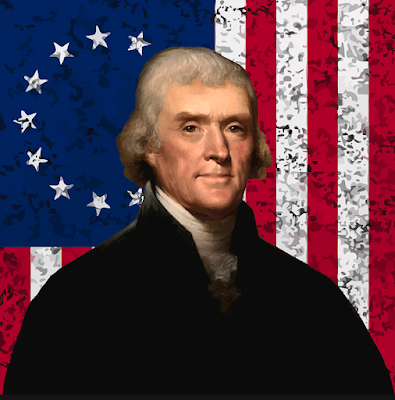
Thomas Jefferson
There are myriad books about Thomas Jefferson as well as extensive collections of Jefferson's correspondence and writings. Burstein’s latest addition to the oeuvre is an intimate history of Thomas Jefferson (1743 - 1846), whom author Andrew Burstein calls "one of the most polarizing figures in American history." The writer notes, "I have spent a sizable chunk of my career with [Jefferson] and have at length arrived at a place where I feel I can tackle the largest questions that have hamstrung a slew of professional historians." From the book, I'm left with the impression Burstein read everything written about Jefferson as well as everything Jefferson himself read - starting with the ancient philosophers.
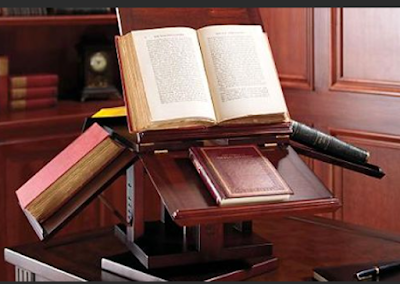
Thomas Jefferson had an extensive library and a rotating bookstand for his voluminous reading
Burstein's goal is to be scrupulously fair, and he elucidates Jefferson's vast erudition, good intentions, and positive qualities while exposing Jefferson's arrogance, hypocrisy, and sometimes questionable ideals. Burstein emphasizes that customs and sensibilities of Jefferson's time were different than modern times, and we can't judge Jefferson by current standards (except when we can).
One may laud Jefferson for writing the Declaration of Independence, and appreciate his vision of democracy, and his determination to keep the new nation from becoming an autocracy akin to a monarchy. Jefferson spent much of his political career - and fought long and hard against 'Hamiltonian monocrats' - to achieve this lofty goal.
Jefferson is also admirable for his devotion to his (White) children and grandchildren; love of nature; interest in agricultural science; design and construction of Monticello; support for education (more for men than women); and other positive qualities.
Monticello
Conversely, (in my view) Jefferson should be deplored for his ownership of slaves; callous treatment of Indians; male entitlement; and relegation of 'good southern wives' to the status of breeders.
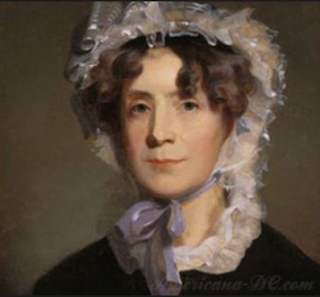
As an example of the latter, Burstein writes, "A planter's wife fully expected to spend the greater part of her marriage pregnant...[Jefferson's] daughter Patsy Jefferson would bear twelve children....from the age of nineteen to forty-five. She accepted her lot as a breeder of the next generation, even after having witnessed her own mother's decline." On that subject, Jefferson's wife Martha (whom he called Patty) was repeatedly 'brought to bed' after childbirth, and after several pregnancies "her recovery from childbirth became increasingly uncertain." Patty died four months after giving birth to her sixth child Lucy, who survived only 12 days. It would seem, though Jefferson loved Patty, he was willing to sacrifice her health and life to enlarging his 'legitimate' family.
Martha (Patty) Jefferson
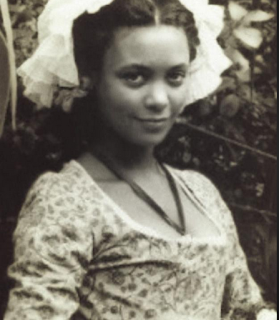
Jefferson never remarried, but went on to have six children with his slave Sally Hemmings - children who had little to show for their distinctive lineage. Burstein addresses Jefferson's liaison with Sally Hemmings, but the nature of their relationship - whether affectionate or just libidinous - remains a mystery. Since "the Jeffersons' intimate correspondence was deliberately destroyed" personal information is spotty.
Sally Hemmings
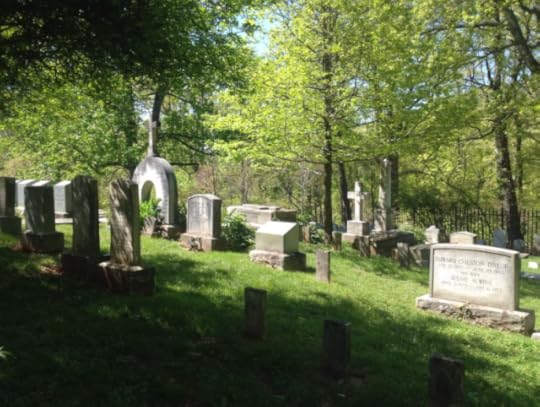
Burstein aims to unearth Thomas Jefferson's psyche by analyzing his interests, behavior, relationships, migraine headaches, debts, friends, enemies, children, grandchildren, pet mockingbird, diplomatic position as minister to France, taste for expensive French food and wine; contribution to the nation (as a governor, cabinet member, vice-president, and president); penchant for lavish entertaining in the President's House (now the White House); people Jefferson allowed to be buried in the Monticello cemetery; and so on.
Dining Room at Monticello
Cemetery at Monticello
I'll provide a feel for the narrative by citing a few of Burstein's topics, but keep in mind my observations cover a tiny fraction of the book.
Jefferson was a family man and gentleman scholar who couldn't resist politics. Jefferson had lofty ambitions, and he maneuvered, solicited support, and derided his opponents and enemies. Jefferson was thin-skinned, vengeful, and snobby, and his rhetoric provides a peek at his attitudes.
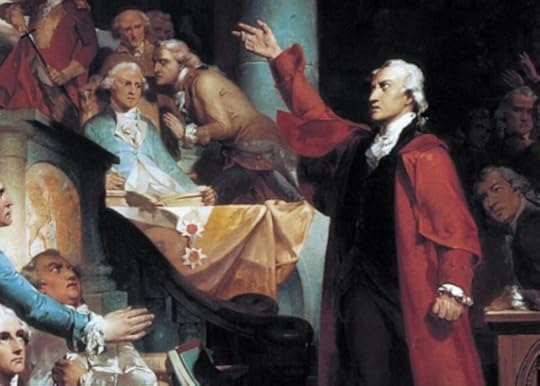
One of Jefferson's targets was Patrick Henry. Henry was less educated and less well-read than Jefferson, but he was a much better orator. Jealous, and fearing Henry would thwart his own ambitions, Jefferson called Henry "a rottenhearted, money-grubbing rube, a phony, too lazy to read a book from cover to cover" and a "blabberer who was not very bright."
Patrick Henry was a renowned orator
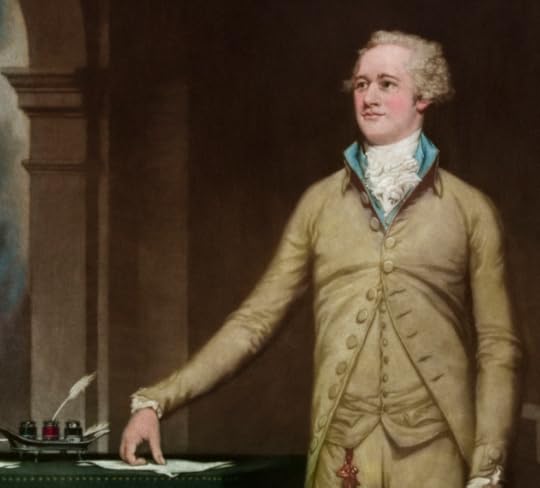
Jefferson also feuded with Caribbean-born Alexander Hamilton, whose ancestry Jefferson viewed as inferior to his own Virginia heritage. Both Jefferson and Hamilton were in President Washington's first cabinet, Jefferson as Secretary of State and Hamilton as Secretary of Treasury. 'Federalist' Hamilton favored strong central government while 'Republican' Jefferson favored states' rights, and the two men detested one another.
Alexander Hamilton
At the end of his cabinet term in 1793, Jefferson "produced on the page the nastiest possible attack on Hamilton's character." In a letter to Washington, Jefferson wrote: "I will not suffer my retirement to be clouded by the slanders of a man whose history, from the moment at which history can stoop to notice him, is a tissue of machinations against the liberty of the country which has not only received and given him bread, but heaped its honors on his head." Burstein notes: "The inference to be drawn from Jefferson's words is unmistakable: instead of appreciating the good fortune that plucked the humbly born youth from obscurity...Hamilton had taken upon himself to pass summary judgment on a Virginian of respectable lineage."
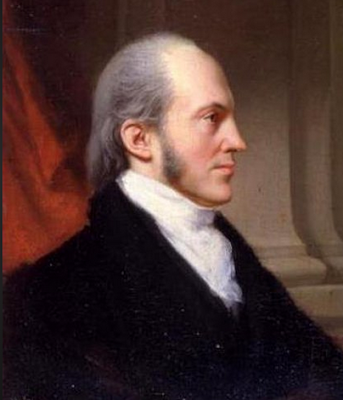
Another Jefferson bugaboo was Aaron Burr. Jefferson and Burr were rivals in the presidential election of 1800, and Burr later became infamous for his 1804 duel with Alexander Hamilton - which resulted in Hamilton's death. In an attempt to rehabilitate himself, Burr bought land in Louisiana, hoping to expand into Texas/Mexico.
Aaron Burr
General James Wilkinson, a scandal-ridden officer with an EXTREMELY dubious reputation, spread the word that Burr planned to establish an independent country in the southwest, separate from the United States. Jefferson knew Wilkinson was a dishonest scoundrel, but decided to accept his word on this one subject. Thus Jefferson "leveled a devastating series of accusations against [Burr], doing him harm in the most public way imaginable." Burr was arrested and tried for treason, but acquitted.
Riffing on this period in American history, Burstein notes: "The irregularities and intrigues that punctuate this era in American politics are stunning. Rumormongering, physical threats, sensational duels, newspaper wars, sedition trials, slavery debates, and sexual slurs marked an erratic public discourse."
Jefferson was interested in the subject of sex, both intellectually and literally. Jefferson would read books about sex, and sometimes mentioned the subject in letters and musings. With respect to behavior, Jefferson was less than strictly honorable. When he was a 25-year-old bachelor, Jefferson made sexual advances on the wife of Jack Walker, who was one of his best friends. Burstein observes: "[Jefferson] did so on more than one occasion, and if the gossipy record is to be believed, he didn't stop after he was married." Moreover, hints in Jefferson's account books (diaries/spending ledgers) connect him with other women, both married and single.
Jefferson's friend Jack Walker learned of Jefferson's perfidy years later, and "only when the men were entering their sixties and Jefferson was the occupant of the President's House was the indiscretion publicized and Jefferson forced to endure public shaming."
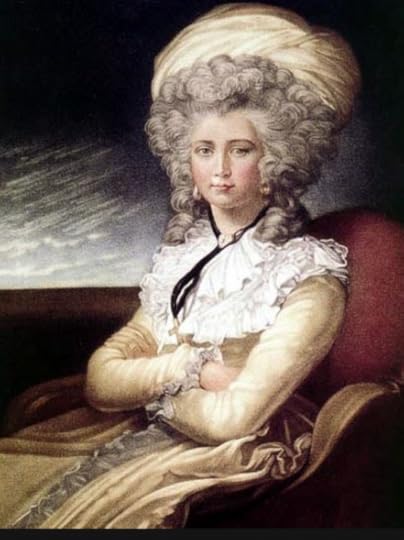
Burstein writes much more about Jefferson's infatuations, and expands on the 1786 'Head and Heart' love letter Jefferson (now a widower) wrote to Maria Hadfield Cosway, a married artist and musician Jefferson met in France.
Maria Hadfield Cosway
Jefferson's reputation probably suffers most from his attachment to the institution of slavery, which seems to belie "the powerful enduring statement about human dignity and equality he penned in 1776."
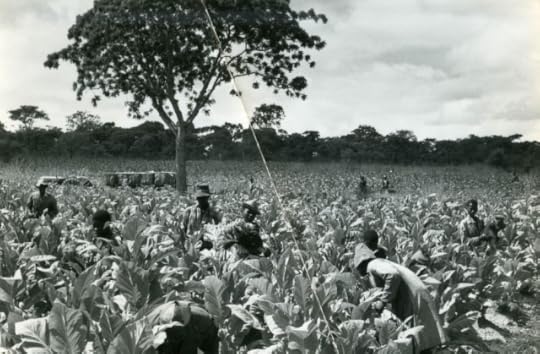
Jefferson inherited land and slaves from his father and then from his father-in-law. Jefferson's substantial Virginia property came with back-breaking debt, which Jefferson tried to repay by selling tobacco. Jefferson's situation was shared by many Virginia planters, who suffered from "a declining tobacco economy, imprudently negotiated loans, and reliance on a slave-based economy in which the perverse idea of breeding human property for sale increasingly became the resort of large landowners."
Slaves working in a tobacco field
When Jefferson was pressed on the relative cost-effectiveness in hiring versus purchasing a slave, and comparing both to the cost of a White laborer, Jefferson calculated that "hiring ultimately worked against the planter....and added gratuitously that the Negro does not perform quite as much work, nor with as much intelligence."
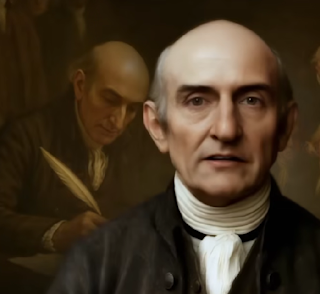
To be fair, Jefferson was (a little bit) ambivalent about slavery. Jefferson's law mentor George Wythe, a distinguished legal scholar and signer of the Declaration of Independence, believed Virginia should end slavery. After the Revolutionary War, Wythe urged Jefferson to take steps in that direction, and Jefferson briefly tested the waters among Virginia's plantation owners. However, Jefferson was "married to the strong, unbending prejudice of his class and loath to see Blacks as full citizens....His heart wasn't in it, and he evidently felt too little guilt about his slave owning."
George Wythe
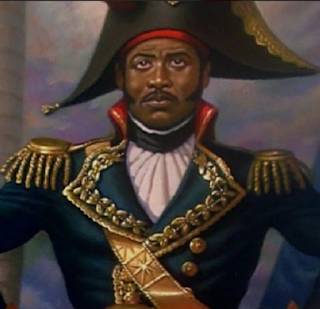
On and off during his life, Jefferson considered the subject of abolition, but "it was never a cause Jefferson would stick his neck out for, and there is no evidence that he ever believed that free Blacks held a stake in American society." Nevertheless, Jefferson foresaw a time when slaves would be freed, and he believed Whites would refuse to live as equals with Blacks. In Jefferson's view, there would have to be a permanent separation of the races, and he speculated about Haiti as the "most practicable destination for the feared, the unwanted, in a society made by and for people with English surnames."
The Governor-General of Haiti, Jean-Jacques Dessalines (1804)
My review provides a small taste of the book, and I DON'T want to give the impression that Burstein focused on the racier aspects of Jefferson's persona. The book is a serious treatment of the third president, a man who's been both lavishly praised and relentlessly critiqued over the years. Burstein admires Jefferson, but isn't shy about exposing his shortcomings. I'd urge both Jefferson fans and detractors to read the book, and to peruse the book's illustrations and appendices, which add extra tidbits to the narrative.
Books about history aren't my go-to genre, but the controversy about Jefferson made me curious to read Burstein's book. The narrative is well-written and informative, and I'd recommend it to readers interested in the subject.
Thanks to Netgalley, Andrew Burstein, and Bloomsbury Publishing for a copy of the book.
Thomas Jefferson remains one of the most complex and contradictory figures in American history—a brilliant author of ideals of liberty who simultaneously participated in and benefited from the institution of slavery, even fathering children with an enslaved woman. This tension between principle and practice makes him endlessly fascinating, and also endlessly challenging for historians and readers alike.
In this biography, Andrew Burstein enters the crowded field of Jefferson scholarship with what he describes, as his title suggests, as a more intimate portrait of the man behind the public legacy. Rather than focusing solely on Jefferson’s political achievements or philosophical writings, Burstein seeks to get inside Jefferson’s mind—exploring his motivations, insecurities, ambitions, and personal relationships. The book traces Jefferson’s life from his upbringing in Virginia through his years as a revolutionary, diplomat, president, and elder statesman, weaving together close readings of his letters and writings with careful examinations of his actions and decisions.
Burstein is particularly effective at highlighting the ways in which Jefferson’s private thoughts often diverged from his public persona, revealing a figure both deeply principled and deeply conflicted. The book does not shy away from the darker aspects of Jefferson’s life, including his ownership of enslaved people and his relationship with Sally Hemings, but situates these within the broader context of his era and his own internal contradictions.
Readers who already have some familiarity with Jefferson’s life and legacy will likely get the most out of this biography, as Burstein builds upon existing scholarship rather than providing a simple introductory overview. That said, I found the book consistently engaging and thought-provoking throughout. It offers a nuanced, layered, and human portrait of a founder whose brilliance and failings remain central to understanding the American story.
Burstein’s knowledge and deep research allows the reader to travel back in time and have a conversation with TJ. My opinion of TJ is more confused than ever and his view of the world reminds me of Steve Jobs reality distortion field. Worth the read and glad I came across it!
I really enjoyed this book. There were times I thought the author would fall into Jefferson idolatry but he didn’t. Well worth it to read if you have an interest in the founding fathers.