

What do you think?
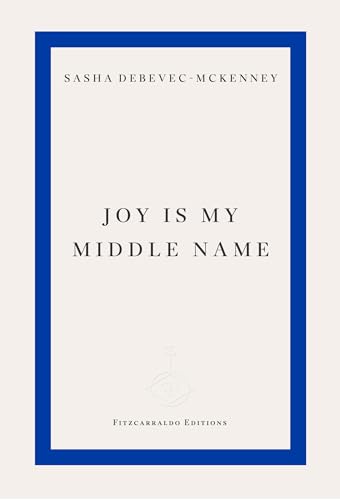
Joy Is My Middle Name
Joy Is My Middle Name documents crawling through your twenties and emerging into your thirties. Walking uneasy cities and rural towns, talking about sex, race, womanhood, addiction, sobriety, consumerism and pop culture, these poems pull at the edges of the performed self with conversational ease.
Humble, giddy, bold, empathetic, subversive, hilarious, lithe – the collection feels like a conversation with your greatest friend, over the best dinner. Full of stories, character, awkward silence, relatable sentiment; the buzz of perfect moments are funnelled onto the page.
Humble, giddy, bold, empathetic, subversive, hilarious, lithe – the collection feels like a conversation with your greatest friend, over the best dinner. Full of stories, character, awkward silence, relatable sentiment; the buzz of perfect moments are funnelled onto the page.
96 pages, Paperback
Published July 3, 2025
Ratings & Reviews
Friends & Following
Create a free account to discover what your friends think of this book!
Community Reviews
Displaying 1 - 30 of 72 reviews

August 8, 2025
I picked up the Fitzcarraldo edition of this in Foyles at Waterloo Station and I love everything about it. Most importantly, every poem in it is brilliant. But it’s also a very nice little book. The paper quality is excellent, the font is lovely and easy to read, the text is well laid out, and the amusing, informative notes at the back deepen your insight into the poems and are a joy in themselves.
The first poem is called CENTO FOR THE NIGHT I TRIED STAND UP, which sets the tone perfectly. A cento is a patchwork of lines written by other people, in this case, various stand-up comedians, credited in the notes. This tells you the poet is aware of form and prepared to experiment. I love it when modern poets take well-established verse forms and have fun with them. It shows they’re aware of tradition and care about craft.
The title tells us she has tried stand-up. In other words, she likes making people laugh. A lot of poems in this collection do that. Some even read like stand-up routines. One is actually called STAND-UP ROUTINE.
This cento is, of course, funny. How can it not be when it uses lines from comedians? But it’s more than funny. It’s clever, endearing, and makes you think:
“…There is nothing /
you can do to us that we are not already doing /
to ourselves.”
In the notes, Sasha says this poem is inspired by Nicole Sealey’s “Cento for the Night I said, ‘I love you.’” There can be a self-referential, cliquey aspect to modern poetry that makes outsiders like me feel excluded, but I looked up Sealey’s poem and loved it. Sasha opened up the poetic landscape for me and broadened my horizon. She achieves so much with this opening poem.
Many of the poems are political. That’s inescapable. But they are playfully political. One is called I FEEL LIKE IF I’M NOT WRITING POLITICAL POEMS I’M WASTING MY TIME SO I MADE THIS CONTAINER FOR MYSELF IN WHICH NOT TO BE POLITICAL.
Let’s look at one of her nature poems, BERKSHIRES IN JULY.
She’s on vacation in the Berkshires, Massachusetts, and the first thing she notices is a huge sign saying her GPS might not work. Then:
The train full of recyclables passed /
underneath me.
I like the line break here. I can sense the rumbling vibration of the train as it passes underneath her, imposing itself on her vacation. It’s one of the many things that trouble her conscience and create anxiety.
It’s a short poem but I was surprised by how much I wanted to say about it. There’s gentle irony in almost every line. Although she’s describing the Berkshires, she does so through the perspective of a city dweller. She worries about recycling, chewing, what she should eat, how she should exercise. She must be productive — "don’t waste time," she reminds herself.
She doesn’t waste time going to the movie theatre even though she went five times because it’s only a ten-minute walk away. That’s very funny and funnier still on re-reading, after you’ve seen the “don’t waste time” line. This is a poem that rewards re-reading. It doesn’t yield all its pleasures immediately.
She loses her cell phone signal when calling her therapist. But what is she doing calling her therapist on vacation? The therapy sessions add to her anxiety because of the weak signal. The refrain “Do you hear me?” is repeated by the therapist but represents all the poet’s anxiety. She wants to be heard. That’s why she writes poems. There’s gentle self-mocking humour but it’s also semi-serious. This is one of the poems that has something in common with stand-up comedy. We can relate to it.
There’s a small note of triumph when she pees into a Dunkin Donuts cup on top of the highest peak. We remember the “don’t eat carbs” mantra and there’s another joke there. Then the poem ends on a small note of hope:
Since last week, when the monarch /
butterfly was declared endangered, /
I’ve seen four of them.
I’ll single out one more poem. It’s simply called LIKE. The poet is working as a waitress and shows a customer to a table at the back. The restaurant is crowded so:
he said, “You are packing /
us in here like on slave ships,”
Offended, the poet doesn’t confront the man directly but instead shows us a number of similes that could have been used instead. It’s a confident exhibition as the images spill onto the page. At first they’re funny, inventive, unexpected. But in the second stanza the tension rises until the poem reaches an explosive climax:
… Like the flames /
in a fire, like the fingers in my fist.
Beneath the wit is deep unease, a recognition of how language can wound, and how poetry can respond. The final image is violent but the poem itself is disarming. It shows us that metaphor matters and that casual speech can offend by association with historical oppression. What we compare things to reveals our values, our blind spots, and our political awareness.
This poem reminds me of Beethoven’s Diabelli Variations. Diabelli invited composers to write a variation on his waltz. Initially dismissive of the banal theme, Beethoven wrote 33 variations in a monumental exploration of musical ideas. Sasha responds to a single offensive remark with a virtuosic display of poetic imagery. She doesn’t hit the man, she destroys him with poetry.
What a magnificent response and what a magnificent collection. Joy Is My Middle Name is witty, political, emotionally intelligent, and formally inventive. It’s a book that makes you laugh as much as it makes you think, and in doing so, begs to be heard.
The first poem is called CENTO FOR THE NIGHT I TRIED STAND UP, which sets the tone perfectly. A cento is a patchwork of lines written by other people, in this case, various stand-up comedians, credited in the notes. This tells you the poet is aware of form and prepared to experiment. I love it when modern poets take well-established verse forms and have fun with them. It shows they’re aware of tradition and care about craft.
The title tells us she has tried stand-up. In other words, she likes making people laugh. A lot of poems in this collection do that. Some even read like stand-up routines. One is actually called STAND-UP ROUTINE.
This cento is, of course, funny. How can it not be when it uses lines from comedians? But it’s more than funny. It’s clever, endearing, and makes you think:
“…There is nothing /
you can do to us that we are not already doing /
to ourselves.”
In the notes, Sasha says this poem is inspired by Nicole Sealey’s “Cento for the Night I said, ‘I love you.’” There can be a self-referential, cliquey aspect to modern poetry that makes outsiders like me feel excluded, but I looked up Sealey’s poem and loved it. Sasha opened up the poetic landscape for me and broadened my horizon. She achieves so much with this opening poem.
Many of the poems are political. That’s inescapable. But they are playfully political. One is called I FEEL LIKE IF I’M NOT WRITING POLITICAL POEMS I’M WASTING MY TIME SO I MADE THIS CONTAINER FOR MYSELF IN WHICH NOT TO BE POLITICAL.
Let’s look at one of her nature poems, BERKSHIRES IN JULY.
She’s on vacation in the Berkshires, Massachusetts, and the first thing she notices is a huge sign saying her GPS might not work. Then:
The train full of recyclables passed /
underneath me.
I like the line break here. I can sense the rumbling vibration of the train as it passes underneath her, imposing itself on her vacation. It’s one of the many things that trouble her conscience and create anxiety.
It’s a short poem but I was surprised by how much I wanted to say about it. There’s gentle irony in almost every line. Although she’s describing the Berkshires, she does so through the perspective of a city dweller. She worries about recycling, chewing, what she should eat, how she should exercise. She must be productive — "don’t waste time," she reminds herself.
She doesn’t waste time going to the movie theatre even though she went five times because it’s only a ten-minute walk away. That’s very funny and funnier still on re-reading, after you’ve seen the “don’t waste time” line. This is a poem that rewards re-reading. It doesn’t yield all its pleasures immediately.
She loses her cell phone signal when calling her therapist. But what is she doing calling her therapist on vacation? The therapy sessions add to her anxiety because of the weak signal. The refrain “Do you hear me?” is repeated by the therapist but represents all the poet’s anxiety. She wants to be heard. That’s why she writes poems. There’s gentle self-mocking humour but it’s also semi-serious. This is one of the poems that has something in common with stand-up comedy. We can relate to it.
There’s a small note of triumph when she pees into a Dunkin Donuts cup on top of the highest peak. We remember the “don’t eat carbs” mantra and there’s another joke there. Then the poem ends on a small note of hope:
Since last week, when the monarch /
butterfly was declared endangered, /
I’ve seen four of them.
I’ll single out one more poem. It’s simply called LIKE. The poet is working as a waitress and shows a customer to a table at the back. The restaurant is crowded so:
he said, “You are packing /
us in here like on slave ships,”
Offended, the poet doesn’t confront the man directly but instead shows us a number of similes that could have been used instead. It’s a confident exhibition as the images spill onto the page. At first they’re funny, inventive, unexpected. But in the second stanza the tension rises until the poem reaches an explosive climax:
… Like the flames /
in a fire, like the fingers in my fist.
Beneath the wit is deep unease, a recognition of how language can wound, and how poetry can respond. The final image is violent but the poem itself is disarming. It shows us that metaphor matters and that casual speech can offend by association with historical oppression. What we compare things to reveals our values, our blind spots, and our political awareness.
This poem reminds me of Beethoven’s Diabelli Variations. Diabelli invited composers to write a variation on his waltz. Initially dismissive of the banal theme, Beethoven wrote 33 variations in a monumental exploration of musical ideas. Sasha responds to a single offensive remark with a virtuosic display of poetic imagery. She doesn’t hit the man, she destroys him with poetry.
What a magnificent response and what a magnificent collection. Joy Is My Middle Name is witty, political, emotionally intelligent, and formally inventive. It’s a book that makes you laugh as much as it makes you think, and in doing so, begs to be heard.
September 27, 2025
The best poetry collection I’ve read all year.
November 26, 2025
I picked this up on a whim in September and then found out that Sasha was visiting the same bookshop I bought it in, so I was able to meet her & get my book signed :) she is so clever & I love this book so much

July 16, 2025
didn’t love this as much as i thought i would. some poems got a laugh out of me, but a lot had titles better than the actual poem content.

August 12, 2025
So awesome. I loved reading through the final section of Debts, Sources, Notes and discovering more poems and stories! What a fun treat before closing the book.
August 15, 2025
I’ll come back to this often
August 8, 2025
Very good poetry. And also I KNEW(!) I wasn’t the only person that cut up worms as a kid.
December 28, 2025
I had to read this again before the year was over. It’s perfect and my favorite read of 2025.

October 19, 2025
Una brutalidad de poemario. En todos los sentidos y desde la mayor admiración.
"Joy is my middle name!
can it please feel like that for once!
Joy is my mother fucking middle name!"
"Joy is my middle name!
can it please feel like that for once!
Joy is my mother fucking middle name!"

March 25, 2026
It was not easy for me to connect to these poems. They just didn't work for me. Yet, it had an interesting section at the very end named "Debts, Sources, Notes". That section talked about the stories behind most poems and I realized that I should have taken the humor into account while reading them.
They sure had an element of humor along with some playfulness. When we consider this, they could be more enjoyable. I did not, and I did not enjoy them as much as possible.
Below I am bringing a few pieces of the book:
They sure had an element of humor along with some playfulness. When we consider this, they could be more enjoyable. I did not, and I did not enjoy them as much as possible.
Below I am bringing a few pieces of the book:
The doctor told me there are two kinds of people: unhealthy people who refuse to get help, and healthy people who always think they’re dying.
dying would be like changing the channel
I get a little lonely when I pull my car into the driveway and see my car’s not there.
Today he’s teaching me how to paddle a canoe. You don’t have anything to worry about, he says. I feel the boat rocking beneath me but I keep my elbow straight like his. We’re sweethearts, he says, against the sunset — and I become the me in the middle of this lake
People are bad. Except the one girl I saw pause to throw the tennis ball back over the fence.
She’ll be 45 percent you, 45 percent me, 10 percent microplastics, but we’ll love her as if she were 100 percent human, just like our parents tried to.
I don’t pray to God, I ask my angels for favors.
It’s not what you can do for your country, it’s what you do despite it.
February 15, 2026
Ok, I feel old now - although she might be older than me, who knows…
Or maybe I feel a longing for poetry and not stand up poetry?
Some pieces were nice, some alright but a lot didn’t touch me and that’s not so good.
There are things like the No Fap post from Reddit? Like is it taken from there or by here published there… that were funny, that felt a bit more complete than others.
But one thing I am sure of is that she looooves ice cream, always has, always will.
Or maybe I feel a longing for poetry and not stand up poetry?
Some pieces were nice, some alright but a lot didn’t touch me and that’s not so good.
There are things like the No Fap post from Reddit? Like is it taken from there or by here published there… that were funny, that felt a bit more complete than others.
But one thing I am sure of is that she looooves ice cream, always has, always will.
Read
March 29, 2026accidentally got this poetry book out from the library Started reading it because I was getting the train to meet my friends for a walk in the forest on four hours sleep and it was thinnest book I had and would fit the best in my bag. I really liked it! It felt like being on twitter in 2018 in a good way. I know that sounds bad. I don’t read poetry normally!
Read
June 4, 2026Highlights:
“Three weeks ago, I put “nachos” in as an uber destination”
“If you have health insurance, it really is worth the attention, breaking a bone”
“This isn’t as impressive as when I saw that pig herd sheep”
All of r/nofap found poem
“Three weeks ago, I put “nachos” in as an uber destination”
“If you have health insurance, it really is worth the attention, breaking a bone”
“This isn’t as impressive as when I saw that pig herd sheep”
All of r/nofap found poem

December 9, 2025
I feel like crying
May 9, 2026
Literally perfect one of the best collections I’ve ever read. So so so funny and smart. I want to get high with Sasha
July 29, 2026
There are a few great poems in here, rather unfortunately, sandwiched between sneering instagram posts and pop culture references. The end notes are actually quite nice in a Substacky, late milennial Twitter kind of way. Anyone whose favorite baseball player is Torii Hunter deserves some credit.
November 15, 2025
There is so much life in these poems. Don’t skip the end notes.

Read
December 9, 2025ILY Sasha! This book grows more and more interesting the more you read.

May 13, 2025
“Welcome to the place / where my jokes come from. Please / adjust your expectations, dear reader. / We've got a lot of shit to talk / about. I'm happy you're here. / I need you.” The opening stanza from the opening poem (‘Cento for the Night I Tried Stand-Up’) in Sasha Debevec-McKenney’s blistering collection Joy Is My Middle Name perfectly sets the tone for the rest of the collection: carefully constructed to balance craft and candour, painfully, at times even obnoxiously funny (I say that with deep affection for the obnoxiously funny). In her notes at the end of the collection (‘Debts, Sources, Notes’) — a piece in its own right — she astutely and wryly observes “I believe poetry and stand-up are the same, except stand-up routines take the audience's enjoyment into consideration. Also, stand-ups don't try and hide the fact that, at their core, they only want to be liked.” ‘Sestina Where Every End Word Is Lyndon Johnson’ is another perfect example of her weaponising humour, and is the kind of poem that pushes form and language to their limits. But there are moments where her dark humour is utterly sobering, as in one of the collection’s standouts, ‘On Days I Believe in the Death Penalty’: “In polite conversation at an otherwise / empty bar, a man told me / he was proud his family fought / for the Confederacy, and I said I wish / your whole bloodline had ended there: / thin and shoeless on a battlefield, / neck blown open. I got kicked out / of the bar. Tonight, in Bushwick, / in line at a taco truck pop-up, / in the middle of an art gallery, / I thought to myself, this wouldn't be the worst place / for a bomb to go off.” Who else is delivering such precise blows in poetry right now? It stopped me and keeps stopping me every time I think about it. Debevec-McKenney’s debut collection is published 3 July by Fitzcarraldo, who are cementing their poetry list — following Seuss and Olayiwola — as one of the best in contemporary publishing. Thanks so much to Fitzcarraldo for the early proof!
January 1, 2026
two-star, bramble, robe, irregularity, Stonewall’s, especially, cleanse, monarchs, tall, guilt-free
October 17, 2025
The fact that Sasha is from my hometown of Windsor, CT is literally the coolest thing about Windsor, CT. Apologies to the guy from NRBQ, but Sasha takes the W on this one.
Raw and emotional one second, and walloping you with a “Deep Thoughts” level one liner joke the next, Sasha’s writing is thoughtful, vulnerable, exceptionally hilarious and relentlessly surprising (You never know what’s coming next save for maybe a president or an ice cream cone!) The way I see it, any book of poetry that not only leaves the reader wanting to check out more of the author’s work, but also wanting to tune into the survivalist reality show “Alone” is pretty darn special.
A lovely, informative, and memorable time, to say the least!
Raw and emotional one second, and walloping you with a “Deep Thoughts” level one liner joke the next, Sasha’s writing is thoughtful, vulnerable, exceptionally hilarious and relentlessly surprising (You never know what’s coming next save for maybe a president or an ice cream cone!) The way I see it, any book of poetry that not only leaves the reader wanting to check out more of the author’s work, but also wanting to tune into the survivalist reality show “Alone” is pretty darn special.
A lovely, informative, and memorable time, to say the least!

August 15, 2025
Just as Debevec-McKenney's notes on each poem at the back of the book provide essential commentary that can't be separated from the content of each piece, the collection itself can't quite stand on its own without a great deal of contextualizing. In the end, I wasn't very impressed, though I did find my way into a few of these and came away from the book pleased to be acquainted with the poet's voice. She's nice, funny, and every once in a while she lets her guard down long enough to be something like poignant, but mostly she's (justifiably) angry and there's a numbness pervading this collection that stops the reader from getting too close.

July 14, 2025
A debut that makes you giddy and say shit like “oh, we’re so back.” Politically charged, self-aware, funny, compassionate poems that embody life in all its love, grief and frustrations. Reading this evoked thrilling sensations in me that I once felt after drinking multiple passionfruit martinis in quick succession at All Bar One, and I felt it again after reading Sasha’s debut.
January 20, 2026
Thanks to the publisher for this gifted copy. This review is my honest opinion.
3⭐ and some change rounded up. This whole collection felt either like a very clever standup set with moments that make you pause or giggle, or like you’re hanging out together having intimate conversations. By the cover, I went into this expecting some political commentary; did not expect a central thread of former and current presidents, but it totally works. Some parts were harder to relate to (i.e., heavy focus on hard partying and skinniness), but it wasn’t a deal-breaker as there’s still so much more to take away from.
⭐ Recommendation: for those who know that reading is political; those who are not as familiar with poetry but want a place to start; but be careful: mentions of addiction, sobriety, and ED throughout
3⭐ and some change rounded up. This whole collection felt either like a very clever standup set with moments that make you pause or giggle, or like you’re hanging out together having intimate conversations. By the cover, I went into this expecting some political commentary; did not expect a central thread of former and current presidents, but it totally works. Some parts were harder to relate to (i.e., heavy focus on hard partying and skinniness), but it wasn’t a deal-breaker as there’s still so much more to take away from.
⭐ Recommendation: for those who know that reading is political; those who are not as familiar with poetry but want a place to start; but be careful: mentions of addiction, sobriety, and ED throughout

July 22, 2026
Absolutely outstanding collection of poetry about navigating your chaotic twenties - covering race, gender, relationships, american presidents, the history of slavery and stand-up comedy...as someone also obsessed with the fact that LBJ whacked his dick out whenever he felt undermined or bored or out of his depth the fact there is a whole poem about it made me so happy. i lvee this collection and it joins my other fave poetry collections about naviating the world as a woman in your twenties and thirites which come from Hannah Sullivan and Hera Lindsey Birrd. This will be one I return to, enjoy and seek wisdom from again and again.

August 5, 2026
i enjoyed it. it is funny. earnest. shameless. crRraaazy. and relatable. which i really love when i am reading contemporary poetry. but the first few poems were not hitting for me. it did took time for me to appreciate the voice and the style. which by the end of the collection i have loved so much. i love the discussion of the politics in the book because most of it are just lived experience of the minority. but it feels so grand and serious yet unfortunately mundane because that is our world rn. we have had allowed too much bs.

February 1, 2026
Winner of the 2026 Dylan Thomas Prize
I read this poetry collection – the author’s first– due to its longlisting for the 2026 Dylan Thomas Prize, a prize for authors writing in English aged 39 and under (Thomas himself having died at that age) which is open to novels, short story collections, poetry collections and plays – one of three poetry collections this year.
I must admit poetry is not my preferred literary medium so that this is normally the only time of the year that I would read it but I did enjoy this lively collection – one which the blurb by the publishers Fitzcarraldo (who are quickly adding to their literary reputation with their poetry collections after their hiring of Rachel Allen from Granta – Allen playing a huge role in shaping these poems into a collection) describes as “a conversation with your greatest friend, over dinner” but which for me as a different age and gender from the late 20/early 30 year old woman narrating the poems I would perhaps describe as like a brilliant overheard conversation between two mutual friends (so more eavesdropping than experience for me).
The reasons I think the areas in which the collection worked for me were down to two reasons:
The first was more subliminal but is what I later found out was the author’s key inspiration (British surreal/alternative comedy – she lists the brilliant Stewart Lee as her favourite but also The Peep Show, Armano Ianucci) and I think this meant I identified with the offbeat nature of the writing. The author herself says that “I believe poetry and stand-up are the same. Except stand-up routines take the audience’s enjoyment into consideration. Also stand-ups don’t try and hide the fact that, at their core, they only want to be liked”.
The second was more obvious and was where I took that closing quote from: a lengthy “Debts, Sources, Notes (after Robert Caro)” section – 15 pages of dense notes on the poems (which compares to some 80 well spaced pages of the poems themselves). To a large extent these notes exist for the author to point out what in the poems is autobiographical and what details are not – but it also served for me, as someone who often struggles with poetry as being too allusive and searching out interviews about the poems, to anchor myself poem by poem without the need for Googling.
The Robert Caro reference refers to his Pulitzer Prize, National Book Award, National Book Critics Circle Award winning series of biographies on Lyndon Johnson known to be only for their taking longer to write than as Johnson’s Presidency and for their famous extensive notes. Another poem “Sestina Where Every End Word is Lyndon Johnson” does exactly what it says in undermining that poetic form with the President’s name. And although the author notes its her least favourite in the collection (as she does not think its mean enough about its subject and seems more popular with her white readers) for me it speaks to a wider issue I had with the novel – the narrators’ (and in this case author’s) obsession with historical US presidents (from Lincoln to Carter to Obama) which does not interest me for all that I appreciate it is deeply caught up with the poet and her narrators’ deeply felt interest in the US Civil rights movement.
One recurrent idea is sampling from other sources and effectively using them to form a poem – the opening “Cento For The Night I Tried Stand Up” has a series of lines taken from famous comedians; another poem draws on the author’s old Twitter account, another from Real Housewives of New York City taglines.
And the latter is an example of the second entirely personal barrier I had to really appreciating the poetry – for all its UK alternative comedy stylistic motivations, the material is very American, drawing on US shows and culture: Fast and Furious, Babe and so on (the latter did work for me in an quirky poem where the poet imagines how someone who witnesses a once in a lifetime event – such as the crowd seeing a pig herd sheepdog – could ever then adapt to celebrating normal achievements) – as well as US Sports (American football teams and players, basketball players both feature).
So overall a worthwhile if mixed (for personal preference reasons) experience – my favourite poem probably Like – where a waitress riffs in her head (and to increasing righteous anger) at the casual use of a racist metaphor by a customer:
I read this poetry collection – the author’s first– due to its longlisting for the 2026 Dylan Thomas Prize, a prize for authors writing in English aged 39 and under (Thomas himself having died at that age) which is open to novels, short story collections, poetry collections and plays – one of three poetry collections this year.
I must admit poetry is not my preferred literary medium so that this is normally the only time of the year that I would read it but I did enjoy this lively collection – one which the blurb by the publishers Fitzcarraldo (who are quickly adding to their literary reputation with their poetry collections after their hiring of Rachel Allen from Granta – Allen playing a huge role in shaping these poems into a collection) describes as “a conversation with your greatest friend, over dinner” but which for me as a different age and gender from the late 20/early 30 year old woman narrating the poems I would perhaps describe as like a brilliant overheard conversation between two mutual friends (so more eavesdropping than experience for me).
The reasons I think the areas in which the collection worked for me were down to two reasons:
The first was more subliminal but is what I later found out was the author’s key inspiration (British surreal/alternative comedy – she lists the brilliant Stewart Lee as her favourite but also The Peep Show, Armano Ianucci) and I think this meant I identified with the offbeat nature of the writing. The author herself says that “I believe poetry and stand-up are the same. Except stand-up routines take the audience’s enjoyment into consideration. Also stand-ups don’t try and hide the fact that, at their core, they only want to be liked”.
The second was more obvious and was where I took that closing quote from: a lengthy “Debts, Sources, Notes (after Robert Caro)” section – 15 pages of dense notes on the poems (which compares to some 80 well spaced pages of the poems themselves). To a large extent these notes exist for the author to point out what in the poems is autobiographical and what details are not – but it also served for me, as someone who often struggles with poetry as being too allusive and searching out interviews about the poems, to anchor myself poem by poem without the need for Googling.
The Robert Caro reference refers to his Pulitzer Prize, National Book Award, National Book Critics Circle Award winning series of biographies on Lyndon Johnson known to be only for their taking longer to write than as Johnson’s Presidency and for their famous extensive notes. Another poem “Sestina Where Every End Word is Lyndon Johnson” does exactly what it says in undermining that poetic form with the President’s name. And although the author notes its her least favourite in the collection (as she does not think its mean enough about its subject and seems more popular with her white readers) for me it speaks to a wider issue I had with the novel – the narrators’ (and in this case author’s) obsession with historical US presidents (from Lincoln to Carter to Obama) which does not interest me for all that I appreciate it is deeply caught up with the poet and her narrators’ deeply felt interest in the US Civil rights movement.
One recurrent idea is sampling from other sources and effectively using them to form a poem – the opening “Cento For The Night I Tried Stand Up” has a series of lines taken from famous comedians; another poem draws on the author’s old Twitter account, another from Real Housewives of New York City taglines.
And the latter is an example of the second entirely personal barrier I had to really appreciating the poetry – for all its UK alternative comedy stylistic motivations, the material is very American, drawing on US shows and culture: Fast and Furious, Babe and so on (the latter did work for me in an quirky poem where the poet imagines how someone who witnesses a once in a lifetime event – such as the crowd seeing a pig herd sheepdog – could ever then adapt to celebrating normal achievements) – as well as US Sports (American football teams and players, basketball players both feature).
So overall a worthwhile if mixed (for personal preference reasons) experience – my favourite poem probably Like – where a waitress riffs in her head (and to increasing righteous anger) at the casual use of a racist metaphor by a customer:
As I led the man through
the crowded restaurant
and to his table at the back
he said, you sure are packing
us in here like on slave ships
when he could have said
anything else: packing us in here
like daisies into a grocery-store
bouquet, packed together
like the pages of a wet book,
like A-listers in a Wes Anderson movie,
like hemorrhoid cream in an unopened tube,
like pennies in a pickle jar,
like forty to fifty exuberant
rural children in an underfunded
classroom, like a family of polar bears
crowded together on a floating sheet of ice—
he could have said, even,
like your ass in those jeans.
Blood in a syringe, silver compact
vehicles on the beltline at rush hour,
styrofoam tight in its cardboard box.
Yes, I was packing him in there,
like textured ground-beef material
into a Taco Bell Grilled Stuft Burrito,
like Amish girls in the back of a white van
on the way to Walmart. Like bone regrowing
inside a plaster cast. Like the flames
in a fire, like the fingers in my fist.

September 22, 2025
Absolutely adored this collection. It has such range and had me laughing out loud and then quietly crying. The fascination with the American Presidents is interesting and adds a historical element to the generally very female led commentary. It is very accessible and really a complete joy to read. I will come back to this in the future to dip in and out of.
November 7, 2025
I loved these poems, especially with the notes at the end adding context. I have some real quotable lines that I loved and some poems will stay in your mind long after you’ve finished. Yes some poems caused this old white person to raise an eyebrow or two, but what an entree into the poet’s mind this book is. I love it and will re-read parts often.
August 29, 2026
i don't wanna say it but fvck it i'll say it: this one is biasa aza.. i really wanted to love it, especially because the title made me expect something a little more memorable.. but unfortunately, joy is my middle name didn't quite reach the expectations i had going in.. maybe it's a me problem, but still...
Displaying 1 - 30 of 72 reviews