

What do you think?

Übung der Nacht: Tibetische Meditationen in Schlaf und Traum
Einführung in die tibetische Methode des Traum-Yoga, die uns Träume bewusst erleben lässt
Traum-Yoga ist eine in Tibet seit alter Zeit bekannte meditative Praxis. Der Praktizierende versucht dabei, auch während der Nacht bewusst zu bleiben, um auf die eigenen Träume Einfluss zu nehmen. Traum-Yoga führt zu hoher Bewusstheit und Gelassenheit und unterstützt die spirituelle Entwicklung. Es hilft u. a. bei der Bewältigung von Stress oder Versagensängsten und bringt uns der „Erleuchtung“ näher.
Traum-Yoga ist eine in Tibet seit alter Zeit bekannte meditative Praxis. Der Praktizierende versucht dabei, auch während der Nacht bewusst zu bleiben, um auf die eigenen Träume Einfluss zu nehmen. Traum-Yoga führt zu hoher Bewusstheit und Gelassenheit und unterstützt die spirituelle Entwicklung. Es hilft u. a. bei der Bewältigung von Stress oder Versagensängsten und bringt uns der „Erleuchtung“ näher.
350 pages, Kindle Edition
First published January 1, 1998
About the author
Tenzin Wangyal
43 books135 followersGeshe Tenzin Wangyal Rinpoche (བསྟན་འཛིན་དབང་རྒྱལ་ bstan 'dzin dbang rgyal; b. 1961) is a teacher (lama) of the Bön Tibetan religious tradition. He is presently based in the United States of America, where he founded the Ligmincha Institute in 1992 as a 501(c)3 nonprofit organization, in order "to preserve the ancient teachings, transmissions and practices of the Bön Buddhist tradition."
The degree of "Geshe" is the highest academic achievement of traditional Tibetan culture, roughly equivalent to a Doctorate in Divinity; it's use in names is similar to that of the Western "Doctor." Similarly, "Rinpoche" is an honorific, meaning "Precious one," frequently bestowed on respected teachers.
The degree of "Geshe" is the highest academic achievement of traditional Tibetan culture, roughly equivalent to a Doctorate in Divinity; it's use in names is similar to that of the Western "Doctor." Similarly, "Rinpoche" is an honorific, meaning "Precious one," frequently bestowed on respected teachers.
Ratings & Reviews
Friends & Following
Create a free account to discover what your friends think of this book!
Community Reviews
Displaying 1 - 30 of 115 reviews

February 5, 2014
Reading this book was quite a bit like doing schoolwork – the text was dense and required concentration, and I was left with pages upon pages of jot notes by the end of it. The many assignments within the text can be difficult, too. Practicing this book requires that you’ve already developed some fundamental visualization skills, since the majority of Tenzin’s exercises use them. Also, since a relatively small amount of the book is dedicated specifically to lucid dreaming, and the technique he offers is complex and involved, this isn’t the ideal book for lucid dreaming beginners either (See Daniel Love, Stephen LaBerge and Robert Waggoner for that).
Now that I’ve probably scared you away from this book, I do want to say that despite its difficulty, it was a fascinating read. Some of the visualization exercises are pretty profound, like one he calls Guru Yoga, which is a visualization meditation where you imagine your ultimate guru (Jesus, God, Buddha, etc), generate feelings of intense love and devotion, and then merge their energy with yours. It’s an uplifting exercise, and Tenzin notes that this love expressed to a higher entity is really just love you’re expressing to yourself. Aww.
As I mentioned above, his lucid dreaming technique is very involved, requiring you to wake up every two hours in the night and do a different visualization/set a different intention. For the less hardcore, he does mention you can have success waking up just once in the night, which is similar to more mainstream lucid dreaming techniques (where you wake up toward morning, stay up for half an hour or so, and then go back to bed to practice lucid dreaming).
And just when you thought lucid dreaming was the ultimate night time experience, this guy takes it to the next level and introduces the concept of ‘clear light sleep’. Clear light sleep is when you maintain awareness even during the parts of the night when you’re in non-REM (non-dreaming), which is a mind-blowing idea. He explains that it is possible (albeit quite difficult) to achieve, and it involves a blissful union of self in the clear light (sort of what us Westerners might call heaven). I’ll be revisiting these ideas when I feel like I’m ready to step it up.
Much of the book is a discussion on the nature of reality, which gives the mental groundwork to successfully lucid dream. For example, if you walk through life with low awareness, with your mind off in outer space, not paying attention to your physical existence, then how to you expect to have high awareness/lucidity in dreams? Plus he spends a lot of time talking about that fun philosophical idea of life being a dream.
Pros:
-Lots of spiritual food for thought here.
-Not for beginners – it helps to have some basic understanding of Lucid Dreaming, spiritual philosophy and Buddhism to read this. I mark this as a ‘pro’ because there are so many books out there for the ultimate beginner already.
-Bang for your buck – at 350 pages, it’s a long and involved read.
-Fascinating concepts (like the clear light sleep) that aren’t talked about anywhere else – unique content.
Cons:
-Uses a lot of Tibetan Buddhist dogma to explain concepts (For example, he refers often to six realms of cyclic existence which includes the god, demi-god, human, animal, hungry ghost and hell realms, all corresponding to a particular vice). This isn’t a big con, and is comparable to when books correspond their ideas to Christian dogma, but I prefer more straight-talk, and less esoteric-talk.
-not entirely practical for someone wanting to dive into lucid dreaming practice. This is more the kind of book you read when you’ve already been practicing lucid dreaming for a time, and are ready for new concepts.
I think my pages of jot notes attest to the fact that I would recommend this book, given you’re not a novice. Bring an open mind and prepare to spend a lot of time with this one.
Now that I’ve probably scared you away from this book, I do want to say that despite its difficulty, it was a fascinating read. Some of the visualization exercises are pretty profound, like one he calls Guru Yoga, which is a visualization meditation where you imagine your ultimate guru (Jesus, God, Buddha, etc), generate feelings of intense love and devotion, and then merge their energy with yours. It’s an uplifting exercise, and Tenzin notes that this love expressed to a higher entity is really just love you’re expressing to yourself. Aww.
As I mentioned above, his lucid dreaming technique is very involved, requiring you to wake up every two hours in the night and do a different visualization/set a different intention. For the less hardcore, he does mention you can have success waking up just once in the night, which is similar to more mainstream lucid dreaming techniques (where you wake up toward morning, stay up for half an hour or so, and then go back to bed to practice lucid dreaming).
And just when you thought lucid dreaming was the ultimate night time experience, this guy takes it to the next level and introduces the concept of ‘clear light sleep’. Clear light sleep is when you maintain awareness even during the parts of the night when you’re in non-REM (non-dreaming), which is a mind-blowing idea. He explains that it is possible (albeit quite difficult) to achieve, and it involves a blissful union of self in the clear light (sort of what us Westerners might call heaven). I’ll be revisiting these ideas when I feel like I’m ready to step it up.
Much of the book is a discussion on the nature of reality, which gives the mental groundwork to successfully lucid dream. For example, if you walk through life with low awareness, with your mind off in outer space, not paying attention to your physical existence, then how to you expect to have high awareness/lucidity in dreams? Plus he spends a lot of time talking about that fun philosophical idea of life being a dream.
Pros:
-Lots of spiritual food for thought here.
-Not for beginners – it helps to have some basic understanding of Lucid Dreaming, spiritual philosophy and Buddhism to read this. I mark this as a ‘pro’ because there are so many books out there for the ultimate beginner already.
-Bang for your buck – at 350 pages, it’s a long and involved read.
-Fascinating concepts (like the clear light sleep) that aren’t talked about anywhere else – unique content.
Cons:
-Uses a lot of Tibetan Buddhist dogma to explain concepts (For example, he refers often to six realms of cyclic existence which includes the god, demi-god, human, animal, hungry ghost and hell realms, all corresponding to a particular vice). This isn’t a big con, and is comparable to when books correspond their ideas to Christian dogma, but I prefer more straight-talk, and less esoteric-talk.
-not entirely practical for someone wanting to dive into lucid dreaming practice. This is more the kind of book you read when you’ve already been practicing lucid dreaming for a time, and are ready for new concepts.
I think my pages of jot notes attest to the fact that I would recommend this book, given you’re not a novice. Bring an open mind and prepare to spend a lot of time with this one.

March 28, 2013
This book provides what I would consider to be the best practices of lucid dreaming and dream practice. The author doesn't focus on the psychology of dreams, though he does provide some insights on what dreams can reveal about issues you're working on. Instead the focus of this book is on how the techniques can be used to help you release attachment to those issues and achieve a state of connection with the universe, without being drawn back to samsaric existence. It's a very good book to read, but an even better one to do the practices. I've started doing them and already noticed some positive results. I'd recommend this book for anyone interested in learning more about Dzogchen and for anyone who wants to use dream yoga for spiritual and physical well being.

June 29, 2017

"When I was thirteen, my kind root master, Lopon Sangye Tenzin, a man of great knowledge and realization, prepared to teach one of the most important and esoteric teachings in the Bön religion: the Great Perfection (Dzogchen) lineage of the Oral Transmission of Zhang Zhung (Zhang Zhung Nyan Gyud)....
Some of the students remembered no dream, which was considered a sign of obstacles. Lopon had them begin appropriate purification practices and delayed the beginning of the teaching until each student did have a dream."
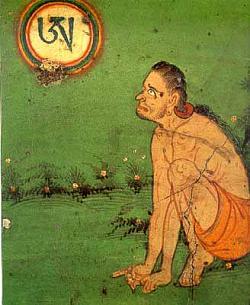
His father wouldn't do it, but his mother, a pratictioner of Bön, would tell about her dreams.
Tenzin Wangyal approaches the dream world as a reality per se, unlike what we're used to, separating reality from dream: "There is nothing more real than dream". His abilities allow him, when facing a puzzling dream (not knowing its interpretation) to have a lucid dream and consult with his master.
The book may teach you how to reach the moment when, hopefully, one day, you'll be able to recognize, within a dream, that you're dreaming. It requires preparations Tenzin can provide you with.
"There are two general stages of dream practice: the conventional and the non-conventional, or the dualistic and non-dual. We have primarily focused on the first, which is connected with working with dream images and stories, with our responses to experience and our emotions, with dream's effects in us and the effects of our practice in dream, and with developing greater awareness and control. The non-conventional level of practice involves neither the content of dreams nor our experiences of them, but rather the non-dual clear light. This is the final goal of dream practice and of sleep practice."
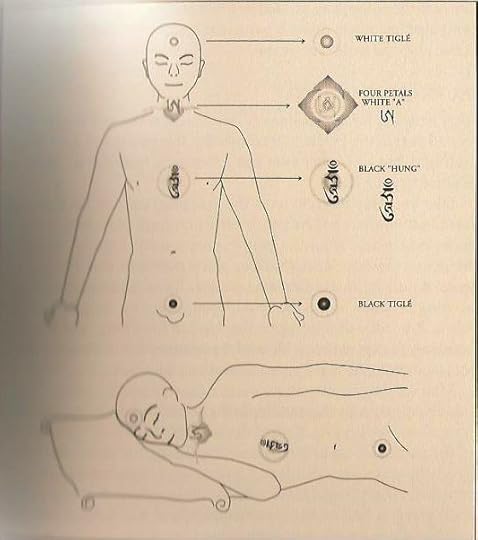
Awareness in a important element; so is the knowledge that in the usual dreams there are "different realms/levels of experience".
UPDATE
https://www.discovermagazine.com/mind...

August 27, 2008
The author of this book, Tenzin Wangyal Rinpoche, is a lama of Bon Tibetan beliefs. Throughout "The Tibetan Yogas of Dream and Sleep" he describes the nature of dreams, and, inevitably, existence, and provides methods for incorporating dreams and their importance into our lives.
That's probably about the worst possible summary a person could give of this insightful book, so I'll end my summarizing there. As with "Sri Isopanisad" the last book I read about spirituality, it's hard to assign a star rating for this material. It's even hard for me to offer an opinion, as I'm far from being an expert on the subject matter.
So, I will say that I found this book very informative, offering fairly detailed information on a topic new to me, and, I'm assuming, many of its readers. Tenzin Wangyal Rinpoche states at the beginning of the book that these dream practices are not commonly taught to ordinary people, certainly not Westerners, and it is his goal to provide people with limited knowledge of dreams with some understanding of what he has learned through the Tibetan tradition. He feels this is important, as recently the West has become more and more interested in dreams and their meanings, with a philosophy more to do with psychology than anything else.
The first half of the book provides techniques and information for those new or relatively new to dream study. The second half is a continuing of this learning but is designed for one already fairly deep in the practice.
That's probably about the worst possible summary a person could give of this insightful book, so I'll end my summarizing there. As with "Sri Isopanisad" the last book I read about spirituality, it's hard to assign a star rating for this material. It's even hard for me to offer an opinion, as I'm far from being an expert on the subject matter.
So, I will say that I found this book very informative, offering fairly detailed information on a topic new to me, and, I'm assuming, many of its readers. Tenzin Wangyal Rinpoche states at the beginning of the book that these dream practices are not commonly taught to ordinary people, certainly not Westerners, and it is his goal to provide people with limited knowledge of dreams with some understanding of what he has learned through the Tibetan tradition. He feels this is important, as recently the West has become more and more interested in dreams and their meanings, with a philosophy more to do with psychology than anything else.
The first half of the book provides techniques and information for those new or relatively new to dream study. The second half is a continuing of this learning but is designed for one already fairly deep in the practice.

October 5, 2013
I didn't actually finish the book. I just gave up on it. while I am fascinated by lucid dreaming, I can't get through all the mystic nonsense in this text. The odd thing is this book is probably more down to earth than most Buddhist/mystic texts. I just can't take chakras & energy flow seriously. Even trying to treat it as a metaphor is a stretch.

April 8, 2021
This is a wonderful book, but it certainly is not for beginners and it's not for people who haven't had any exposure to Buddhism/eastern religion. I would also argue that an understanding of Kashmir Shaivism helps when reading this book--It's a philosophy that's closely related to Bön Buddhism but it rectifies the ontological mistake that Buddhists make when describing sunya (void). Sunya isn't "emptiness" or "void", even though it is sometimes translated that way. It is the pulsating, vibrating light (spanda) of the universal subjectivity that creates the universe and exists in all living beings. It comes from the fusion of purusha and prakrti, Shiva and Shakti. When experienced directly, this fusion turns into the transparent luminosity of awareness, much like the rigpa that is described in Bön Buddhism. It's simply a different way of describing and understanding the same phenomenon.
That being said, the visualizations and practices that this book presents in the context of Bön Buddhism are very helpful for people who are interested in dream yoga and yoganidra. I've seen some progress already in my dream state and I haven't even been practicing for very long, which tells me that the Tibetans are really onto something with this upaya. Would highly recommend for meditators who are interested in taking yoga to the next level!!
That being said, the visualizations and practices that this book presents in the context of Bön Buddhism are very helpful for people who are interested in dream yoga and yoganidra. I've seen some progress already in my dream state and I haven't even been practicing for very long, which tells me that the Tibetans are really onto something with this upaya. Would highly recommend for meditators who are interested in taking yoga to the next level!!

January 20, 2021
Really interesting ideas here. I appreciated how clearly they were written, and in such a comforting and friendly tone. There was a lot of emphasis on doing what works for you, not getting frustrated if you don't succeed, and being flexible and adapting the practices to what better fits each individual. I find that sometimes books or talks like this can be overwhelming, but this was portrayed in a very approachable way.
The content of this book is about Dream and Sleep Yoga, the practice of using lucid dreams and the experience of sleep to further one's meditation and awareness practices, and, as the author says, to prepare for death. I've been wanting to learn how to lucid dream for years now, and one of the approaches recommended in this book was totally different from what I'd usually heard: rather than doing "reality checks" throughout the day to determine the difference between wakefulness and sleep, this approach lied in recognizing the dream-like nature of all reality, and the dream-like nature of waking life. So I thought that was cool.
Overall, this was a really cool book. I will definitely be returning to it and its ideas over time.
The content of this book is about Dream and Sleep Yoga, the practice of using lucid dreams and the experience of sleep to further one's meditation and awareness practices, and, as the author says, to prepare for death. I've been wanting to learn how to lucid dream for years now, and one of the approaches recommended in this book was totally different from what I'd usually heard: rather than doing "reality checks" throughout the day to determine the difference between wakefulness and sleep, this approach lied in recognizing the dream-like nature of all reality, and the dream-like nature of waking life. So I thought that was cool.
Overall, this was a really cool book. I will definitely be returning to it and its ideas over time.

April 28, 2012
I really wanted to like this book but I didn't. I found it far too religious and instructional for my liking. Not being a Buddhist I found the first 40% of the book a hard trek through Buddhist ideology, as the first 40% are just that. What I ultimately was hoping for was to read about experience which for me is always the greatest teacher. Religion and religious instruction, I find, impede my learning.
In the end I didn't get much out of the book at all to improve my lucid dreaming, which is the reason I picked up this book: I was hoping to get some insights into the practice of Lucid Dreaming through a different cultural perspective.
Hence this book is probably most beneficial to Buddhists who want to enrich their practice through sleep and dream yogas. For anyone who's not a Buddhist, there are many far better books out there on Lucid Dreaming.
In the end I didn't get much out of the book at all to improve my lucid dreaming, which is the reason I picked up this book: I was hoping to get some insights into the practice of Lucid Dreaming through a different cultural perspective.
Hence this book is probably most beneficial to Buddhists who want to enrich their practice through sleep and dream yogas. For anyone who's not a Buddhist, there are many far better books out there on Lucid Dreaming.

December 17, 2013
I can't help but feel lucky every time I put down a book like this. Lucky that Tibetan Buddhist writings are so available and varied so far away from their place of origin, and in my own language. I rate many of these books as "amazing," not always because they read that way necessarily, but because the content is often so amazingly poignant, inspiring and deeply-rooted in years upon years of constant engagement. That is a little bit of a tainted rating system, but then, I really don't care to rate most of these books anyway. In fact, I considered not rating anything that is a guidebook, or manual, unless it is some kind of sales pitch or marketing scheme veiled as a manual.

May 12, 2025
I’m not spiritual enough for this, I wanted lucid dreaming techniques not the answers to enlightenment

March 11, 2016
I stumbled upon this book in a used bookstore, and didn’t know what to expect--but was intrigued. It’s a book on the Tibetan Bön approach to dream yoga and sleep yoga, written by a Bön lama (monk.) Dream yoga is a term used in Buddhism and other Eastern traditions to refer to what is called lucid dreaming in Western scientific circles. My review will focus on the more than 3/4ths of the book that deals in dream yoga (lucid dreaming.) The 40-ish pages that deal with sleep yoga are outside my wheelhouse. The author suggests that that part is for initiates who are familiar with certain background concepts. I’m not an initiate, and—in fact—I have no idea whether there is any merit to sleep yoga practice. Lucid dreaming is a well-studied and documented phenomena, but, as far as I know, what the author calls sleep yoga remains unstudied. All I can say is that the part on dream yoga is readily comprehensible, despite much of it being couched in spiritual terms, but a lot of the section on sleep yoga is arcane and ethereal.
As it happens, I was pleasantly surprised with the portion of the book about dream yoga. Having read a number of books dealing with the subject recently, I wasn’t sure whether I would learn anything that was both new and useful. But I was exposed to ideas that were new, useful, and mind-blowing. There were a few ideas for helping one to achieve lucid dreaming—mostly through practices carried out during the day—that I’d not seen in other works, at least not put in such clear terms. Also, while there is a lot of reference to the Bön and Buddhist spiritual traditions, this didn’t result in the explanations being needlessly complicated or arcane. There is a lot of information that one doesn’t need if one is a secular practitioner, but many readers will find it interesting, even if it’s not necessary to advance their practice.
The book is organized into six parts: 1.) The Nature of Dream, 2.) Kinds and Uses of Dreams, 3.) The Practice of Dream Yoga, 4.) Sleep, 5.) The Practice of Sleep Yoga, and 6.) Elaborations. The last part has information pertinent to both dream yoga and sleep yoga.
There are some graphics in the book including photos, line drawings, and tables. Most of these aren’t essential, but some make it easier to imagine what the author is describing (e.g. when he discusses sleeping positions.) The book has a glossary and bibliography. The former is useful, and the latter doesn’t hurt (but it’s only one page and offers only a handful of citations.) The glossary is mostly of foreign terms, but includes English terms specific to the religious traditions discussed. It offers both Tibetan and Sanskrit variants of the word if they exist, which is a nice feature. There is also an appendix which summarizes the crucial practices elaborated upon in the book.
I’d recommend this book for those interested in developing a lucid dreaming practice. I will say that it may not be the best first book to read on the subject, unless you are a practitioner of Bön or intend to be. (For that, I would recommend Charlie Morley’s “Lucid Dreaming: A Beginner’s Guide…” which I recently reviewed.) However, this book makes an excellent follow up once one has read a book that is couched in simpler terms (i.e. not specific to a certain spiritual tradition) and which reports on the science. I found that the book gave me a number of new ideas, and—in fact—offered some insightful ideas.
As it happens, I was pleasantly surprised with the portion of the book about dream yoga. Having read a number of books dealing with the subject recently, I wasn’t sure whether I would learn anything that was both new and useful. But I was exposed to ideas that were new, useful, and mind-blowing. There were a few ideas for helping one to achieve lucid dreaming—mostly through practices carried out during the day—that I’d not seen in other works, at least not put in such clear terms. Also, while there is a lot of reference to the Bön and Buddhist spiritual traditions, this didn’t result in the explanations being needlessly complicated or arcane. There is a lot of information that one doesn’t need if one is a secular practitioner, but many readers will find it interesting, even if it’s not necessary to advance their practice.
The book is organized into six parts: 1.) The Nature of Dream, 2.) Kinds and Uses of Dreams, 3.) The Practice of Dream Yoga, 4.) Sleep, 5.) The Practice of Sleep Yoga, and 6.) Elaborations. The last part has information pertinent to both dream yoga and sleep yoga.
There are some graphics in the book including photos, line drawings, and tables. Most of these aren’t essential, but some make it easier to imagine what the author is describing (e.g. when he discusses sleeping positions.) The book has a glossary and bibliography. The former is useful, and the latter doesn’t hurt (but it’s only one page and offers only a handful of citations.) The glossary is mostly of foreign terms, but includes English terms specific to the religious traditions discussed. It offers both Tibetan and Sanskrit variants of the word if they exist, which is a nice feature. There is also an appendix which summarizes the crucial practices elaborated upon in the book.
I’d recommend this book for those interested in developing a lucid dreaming practice. I will say that it may not be the best first book to read on the subject, unless you are a practitioner of Bön or intend to be. (For that, I would recommend Charlie Morley’s “Lucid Dreaming: A Beginner’s Guide…” which I recently reviewed.) However, this book makes an excellent follow up once one has read a book that is couched in simpler terms (i.e. not specific to a certain spiritual tradition) and which reports on the science. I found that the book gave me a number of new ideas, and—in fact—offered some insightful ideas.

January 2, 2012
No matter what your point of entry, Tenzin Wangyal Rinpoche has created a gem for practitioners, philosophers, intellectuals and spontaneous lucid dreamers alike.
With patience and openness, Rinpoche takes the esoteric topic of dream yoga, or conscious dreaming/sleep, and lays it open as an accessible aspiration for all practitioners without oversimplifying its very subtle complexities.
After an ample and inclusive philosophical walk through the the foundations of Buddhist/Bon practice, you'll suddenly find yourself rubbing elbows with one of the most complex and secret practices of all--Dzogchen. Don't be mistaken--you'll still need a teacher and weeks, months, even years of practice. But Rinpoche's compassionate and realistic tone makes the bliss of dream yoga feel like a real and viable eventuality for even the most flawed among us.
Few teachers are willing to lay out the nuts and bolts "procedures" of such an esoteric art to an open audience, but that's exactly what you'll find here. Whether you are Buddhist or non-Buddhist, beginner or tantric yogi, you'll find something fruitful in this refreshing and relevant explanation of a mysterious and transformative practice.
With patience and openness, Rinpoche takes the esoteric topic of dream yoga, or conscious dreaming/sleep, and lays it open as an accessible aspiration for all practitioners without oversimplifying its very subtle complexities.
After an ample and inclusive philosophical walk through the the foundations of Buddhist/Bon practice, you'll suddenly find yourself rubbing elbows with one of the most complex and secret practices of all--Dzogchen. Don't be mistaken--you'll still need a teacher and weeks, months, even years of practice. But Rinpoche's compassionate and realistic tone makes the bliss of dream yoga feel like a real and viable eventuality for even the most flawed among us.
Few teachers are willing to lay out the nuts and bolts "procedures" of such an esoteric art to an open audience, but that's exactly what you'll find here. Whether you are Buddhist or non-Buddhist, beginner or tantric yogi, you'll find something fruitful in this refreshing and relevant explanation of a mysterious and transformative practice.

September 14, 2021
For those who practise Tibetian Yoga, specifically Tantra this book is fantastic. I should also note this book is ideal for those who have at least a basic understanding of Tibetan Buddhist concepts.
If you are not well versed in what I've listed above this book may be a bit confusing.
I find most who review this book seemed to be only looking for how to lucid dream, this book gives you practises for daily life, understanding sleep, lucid dreaming, and going beyond lucid dreaming. Keep that in mind , it's not a book that's just about lucid dreaming, that's where a lot of confusion around this book is.
If you are not well versed in what I've listed above this book may be a bit confusing.
I find most who review this book seemed to be only looking for how to lucid dream, this book gives you practises for daily life, understanding sleep, lucid dreaming, and going beyond lucid dreaming. Keep that in mind , it's not a book that's just about lucid dreaming, that's where a lot of confusion around this book is.

July 23, 2017
This book is the appearance of a first seminar that the Rinpoche gave in the Netherlands in 2001.
It gives an interesting insight in the Bön 'philosophy'. It is good to come in connection with what living and dreaming is all about. Then i found it rather strange when Tenzin told the story about the grass blade in the top of his head in the monastery during a power exercise ?
It gives an interesting insight in the Bön 'philosophy'. It is good to come in connection with what living and dreaming is all about. Then i found it rather strange when Tenzin told the story about the grass blade in the top of his head in the monastery during a power exercise ?

November 5, 2010
outstanding. the most eloquent articulation of dharma i've come across yet. now to develop my dream yoga practice until non-duality is all that's left.
March 21, 2023
This is a good read for anyone interested in exploring the world of dreams and lucid dreaming. The book provides insightful information on the history and philosophy behind Tibetan dream practices and offers practical guidance on how to achieve lucidity in dreams. As the author himself puts it, "Going to sleep is a little like dying, a journey taken alone into the unknown. Ordinarily, we are not troubled about sleep because we are familiar with it, but think about what it entails. We completely lose ourselves in a void for some period of time, until we arise again in a dream. When we do so, we may have a different identity and a different body". This book may just help you navigate that journey a little more consciously.
However, the book is too wordy for the actual content it presents. Some sections feel unnecessarily repetitive, making it challenging to stay engaged. The book also feels like it is clearly written for a western audience. This is not necessarily a bad thing, but it does detract from the authenticity of the book at times.
That being said, the practical guidance provided in the book is helpful for those looking to explore lucid dreaming. The practices outlined require commitment and dedication, but with patience and practice, readers may find themselves experiencing the benefits of lucid dreaming.
However, the book is too wordy for the actual content it presents. Some sections feel unnecessarily repetitive, making it challenging to stay engaged. The book also feels like it is clearly written for a western audience. This is not necessarily a bad thing, but it does detract from the authenticity of the book at times.
That being said, the practical guidance provided in the book is helpful for those looking to explore lucid dreaming. The practices outlined require commitment and dedication, but with patience and practice, readers may find themselves experiencing the benefits of lucid dreaming.

April 2, 2024
Although we've been reading up more specifically on Hinduism recently, this book quickly made it into our priorities, as sleep and dreaming are a specific focus for us. Rinpoche opens with his personal tale, then moves into the object and ontology of his method- what sleep and dream are and why we should attend to them, and then into his methods specifically. We'll have to read this again in a physical format to digest it, but from a first listen through, we're excited to put to use some of his basic methods for setting intentions to sleep and dream in a more concerted and productive way!

September 19, 2024
Great methodology and practice. Just a bit too much personal narrative for me.
August 15, 2023
A fresh perspective on dreaming - Rinpoché steps away from exploring the subjective content of dreams, and focuses on how we can successfully observe the nature of mind in dream and sleep states. The book offers a diverse set of techniques and practises. Some are detailed and challenging to integrate into routine (i.e. waking 2 hours, then 4 hours, then 2 hours with intervals of breathwork practice), but some are simpler practises that can be done before falling asleep, and throughout the day. I recommend to read this book slowly and carefully.

July 14, 2014
I find Tenzin Wangyal's books to be very well written, and this one is no exception. His explanations of dream practice are very clear, with much supporting information and additional practices that can be incorporated. A great supplement to transmission in order to dive into the practices and explore dreamlands.

May 10, 2024
A very thought provoking and inspiring read. Regardless of personal beliefs, the philosophical ideas in this book are fascinating to explore. And, if you are already practiced in (and interested in expanding) visualisation and awareness techniques, this book is a brilliant step. Very grounding and acknowledges the potential obstructions of modern/western society with some helpful reassurances.

October 22, 2024
Kitabın genelinde genel geçer bilgiler var. Çok dişe dokunur alıştırmalar yada ufuk açıcı algı kapıları yok. En beğendiğim öneri: "Gün boyunca, sürekli olarak her deneyimin bir rüya olduğu farkındalığında kalın. Her şeyi rüyadaki bir nesne olarak, her olayı rüyadaki olaylar olarak. her insanı rüyadaki insanlar olarak karşılayın" oldu.
June 18, 2014
didn't find approachable to beginners

January 9, 2016
Very good book. Although I think some prior knowledge is appropriate.
Recommend either way !! :)
Recommend either way !! :)

August 14, 2021
The Tibetan Yogas of Dream and Sleep
By Tenzin Wangyal Rinpoche
Recently I have been doing some reading on Buddhism. This was the third book about it that I read this year. After reading Suzuki’s “Essays on Zen Buddhism” I was looking for something that was more of a practical guide to the meditation practices. I read “Peace of Mind: Becoming Fully Present” by Thich Nhat Hanh which was really the perfect book for that. I picked up this book because I have always been interested in dreams as a phenomena. In reading it I did pick up some tips for meditation, but there was much more to it than that. While the aspects on Dream and Sleep were interesting, implementing them would require some level of belief in deities that I wouldn't be willing to engage in. It was enlightening, though, about beliefs in Tibet.
So like all religions Buddhism has its sects. Zen differs from Bӧn or Dzogchen Buddhism - and this book focused on Dzogchen Buddhism. Having read Suzuki’s book, which was very thorough, I was able to identify similarities and differences between the two sects - which made the book interesting to read. Also, one of the ways this book differed vastly from the other two was the mythology and dependence on mythical beings and chakras, colored channels within the body, spirits and so on. I offhand discard the notion of one group’s mythical beings being able to guide me any better than another group’s mythical beings. What I liked about Zen is that it seemed to say that we are our own source of guidance - that deep down the answers exist in us all already.
I never determined that I would convert to Buddhism because I have no reason to. Nevertheless, like most things that I read, I did come across some thought provoking ideas in addition to the meditation tips that I was really seeking. If I shared them all with you this review would become inordinately lengthy and filled with block quotes, and it would become more time consuming to write. So I am going to stick with one quote for this review (hears a collective sigh of relief). In the final two pages the author gives this piece of advice: “If the clear light seems a distant goal, just try continuously to maintain the positive experiences of peace and joy….. Generate gratitude and appreciation during every moment….Feel these qualities in the body, see them in the world, and wish them for others.” (p. 207-8). This seems like sound advice in this hostile world regardless of one’s faith - in fact I am confident in making the following conjecture: these principles of peace, joy, gratitude and wishing the same for others is core to any scriptural teaching of any faith. They are an important defense in a world governed by unhinged capitalism.
Still, I couldn't get excited enough to give it five stars. It was worth the read for the nuggets, but a lot of panning went on to get to the gold.
By Tenzin Wangyal Rinpoche
Recently I have been doing some reading on Buddhism. This was the third book about it that I read this year. After reading Suzuki’s “Essays on Zen Buddhism” I was looking for something that was more of a practical guide to the meditation practices. I read “Peace of Mind: Becoming Fully Present” by Thich Nhat Hanh which was really the perfect book for that. I picked up this book because I have always been interested in dreams as a phenomena. In reading it I did pick up some tips for meditation, but there was much more to it than that. While the aspects on Dream and Sleep were interesting, implementing them would require some level of belief in deities that I wouldn't be willing to engage in. It was enlightening, though, about beliefs in Tibet.
So like all religions Buddhism has its sects. Zen differs from Bӧn or Dzogchen Buddhism - and this book focused on Dzogchen Buddhism. Having read Suzuki’s book, which was very thorough, I was able to identify similarities and differences between the two sects - which made the book interesting to read. Also, one of the ways this book differed vastly from the other two was the mythology and dependence on mythical beings and chakras, colored channels within the body, spirits and so on. I offhand discard the notion of one group’s mythical beings being able to guide me any better than another group’s mythical beings. What I liked about Zen is that it seemed to say that we are our own source of guidance - that deep down the answers exist in us all already.
I never determined that I would convert to Buddhism because I have no reason to. Nevertheless, like most things that I read, I did come across some thought provoking ideas in addition to the meditation tips that I was really seeking. If I shared them all with you this review would become inordinately lengthy and filled with block quotes, and it would become more time consuming to write. So I am going to stick with one quote for this review (hears a collective sigh of relief). In the final two pages the author gives this piece of advice: “If the clear light seems a distant goal, just try continuously to maintain the positive experiences of peace and joy….. Generate gratitude and appreciation during every moment….Feel these qualities in the body, see them in the world, and wish them for others.” (p. 207-8). This seems like sound advice in this hostile world regardless of one’s faith - in fact I am confident in making the following conjecture: these principles of peace, joy, gratitude and wishing the same for others is core to any scriptural teaching of any faith. They are an important defense in a world governed by unhinged capitalism.
Still, I couldn't get excited enough to give it five stars. It was worth the read for the nuggets, but a lot of panning went on to get to the gold.

July 29, 2020
Tenzin Wangyal is a Bon teacher. Bon is a religion that has been in Tibet way before Buddhism was introduced to Tibet in the 9th century by Padmashambhava. Even though Buddhist and Bon practitioners don’t like each other and both think their own religion is better than the other, they are essentially the same. They have so much in common. Bon also has a buddha that they can the primordial enlightenment. Dzogchen practice of Bon and Nyingma school of Tibetan Buddhism is the same.
When I first read this book, I was afraid I have to give up my practice of Buddhism to adopt Bon. But rest assured because whether you’re religious or atheist, you will benefit from many practice from this book.
Their practice of dream yoga is very detailed and being used also by Buddhist Tantric practitioners. The visualizations Tenzin provides are very detailed and useful. Even simple thing such as the Nine Point purification breathing is beneficial and simple to do whenever, wherever you are. It is especially useful to do before you start a meditation session.
I particularly love his explanation of the 6 realms even though I’ve encountered many teachings about it.
Lots of practices from this book are easy can be incorporated in your daily life. Even if you don’t do any, simply reading it to expand your knowledge is enough. I highly recommend it : )
When I first read this book, I was afraid I have to give up my practice of Buddhism to adopt Bon. But rest assured because whether you’re religious or atheist, you will benefit from many practice from this book.
Their practice of dream yoga is very detailed and being used also by Buddhist Tantric practitioners. The visualizations Tenzin provides are very detailed and useful. Even simple thing such as the Nine Point purification breathing is beneficial and simple to do whenever, wherever you are. It is especially useful to do before you start a meditation session.
I particularly love his explanation of the 6 realms even though I’ve encountered many teachings about it.
Lots of practices from this book are easy can be incorporated in your daily life. Even if you don’t do any, simply reading it to expand your knowledge is enough. I highly recommend it : )
December 31, 2021
There was some useful information in this book, but I suppose I'm not really the intended audience, so a lot of it was hard for me to relate to. I'm not extremely well-versed in Buddhism, and found it hard to accept some of the foundational beliefs that seem to underpin the author's views here.
I tried to appreciate the author's point of view and learn something nonetheless. However, I was particularly put off by a sentence he used to describe a posture on page 109: "The position is somewhat similar to sleeping in a first class seat on an airplane: you recline but are not completely prone."
It came off very casual, as if he expected anyone reading this book to be able to relate to that. I had already developed the impression that the forms of Buddhism popularized in the west are a kind of spiritualism exclusively for the well-to-do, out of touch with ordinary people and the particular struggles they face, and this only reinforced that.
So that left a bad taste in my mouth and kind of colored my experience of the rest of the book. Every time he talked about the need to free oneself from "grasping and aversion" all I could think was, "Well, that's easy for you to say. You can afford to fly first class! The rest of us have to worry about how we're going to pay for our meals and rent every month."
I tried to appreciate the author's point of view and learn something nonetheless. However, I was particularly put off by a sentence he used to describe a posture on page 109: "The position is somewhat similar to sleeping in a first class seat on an airplane: you recline but are not completely prone."
It came off very casual, as if he expected anyone reading this book to be able to relate to that. I had already developed the impression that the forms of Buddhism popularized in the west are a kind of spiritualism exclusively for the well-to-do, out of touch with ordinary people and the particular struggles they face, and this only reinforced that.
So that left a bad taste in my mouth and kind of colored my experience of the rest of the book. Every time he talked about the need to free oneself from "grasping and aversion" all I could think was, "Well, that's easy for you to say. You can afford to fly first class! The rest of us have to worry about how we're going to pay for our meals and rent every month."

February 27, 2022
very interesting. practically useful and deeply flawed.
An account of dream and sleep yoga within the Tibetan Bon Buddhist tradition. Or the Bon tradition which significantly predates it. Lucid dreaming is one focus. Inevitably the question is asked, ‘dreaming is to lucid dreaming as supposedly waking experience is to ???’. An easy analogy which may be empty. I respect the depth of learning, experience and compassion of the author / teacher. He has lots of good advice on practices not just for would be lucid dreamers but would be conscious beings in general. The extensive Buddhist philosophising leaves me a little cold. How many thousands of words and thoughts does it take to assert that Ultimate Reality is entirely beyond words and thoughts. Hmmm. —- That the material world is just an illusion. Hmmm. —— These kinds of subjectivist / idealist ontologies have many flaws, gaps and contradictions. Medieval and pre medieval fantasies, lacking much in empirical or verifiable consequences. Did they even know about the organic brain. Very physical, very material. Severe damage due to injury or disease will quickly convince you that minds are built out of brains so to speak. They do not pre exist in the void and imagine them. I mean really what a load of nonsense. Go study some modern neuroscience. Physics. Chemistry.
An account of dream and sleep yoga within the Tibetan Bon Buddhist tradition. Or the Bon tradition which significantly predates it. Lucid dreaming is one focus. Inevitably the question is asked, ‘dreaming is to lucid dreaming as supposedly waking experience is to ???’. An easy analogy which may be empty. I respect the depth of learning, experience and compassion of the author / teacher. He has lots of good advice on practices not just for would be lucid dreamers but would be conscious beings in general. The extensive Buddhist philosophising leaves me a little cold. How many thousands of words and thoughts does it take to assert that Ultimate Reality is entirely beyond words and thoughts. Hmmm. —- That the material world is just an illusion. Hmmm. —— These kinds of subjectivist / idealist ontologies have many flaws, gaps and contradictions. Medieval and pre medieval fantasies, lacking much in empirical or verifiable consequences. Did they even know about the organic brain. Very physical, very material. Severe damage due to injury or disease will quickly convince you that minds are built out of brains so to speak. They do not pre exist in the void and imagine them. I mean really what a load of nonsense. Go study some modern neuroscience. Physics. Chemistry.

August 15, 2020
A guidebook that explains the nature of reality. Very good.
I love how this author presents views not often shared in this part of the world. Most of the teachings he presents resonate with me. I love the tips for lucid dreaming that he provides. It is a fascinating subject.
That said, I found the dream yogas hard to follow. It's definitely something that will need re-reading and a lot of practice. I would like more material on the breathing techniques.
The main area where I stopped resonating with it has to do with the Buddhist view of samsara being nothing but suffering, and that our goal should only be to experience nirvana, or empty clear light. This brings a feeling of despair and sadness to me. It's not that I disagree entirely, most people do live lives that have too much suffering, out of ignorance. But I also believe life can be so much greater than this, and does not have to be suffering. We can have life that is mostly happy and pleasurable by increasing awareness. So that way, we don't have to give up on it entirely, we can enjoy the ride. So instead of focusing on leaving life, illusions of mind, etc., I would rather focus on learning and teaching others to live life to the fullest, within the laws of the universe.
I love how this author presents views not often shared in this part of the world. Most of the teachings he presents resonate with me. I love the tips for lucid dreaming that he provides. It is a fascinating subject.
That said, I found the dream yogas hard to follow. It's definitely something that will need re-reading and a lot of practice. I would like more material on the breathing techniques.
The main area where I stopped resonating with it has to do with the Buddhist view of samsara being nothing but suffering, and that our goal should only be to experience nirvana, or empty clear light. This brings a feeling of despair and sadness to me. It's not that I disagree entirely, most people do live lives that have too much suffering, out of ignorance. But I also believe life can be so much greater than this, and does not have to be suffering. We can have life that is mostly happy and pleasurable by increasing awareness. So that way, we don't have to give up on it entirely, we can enjoy the ride. So instead of focusing on leaving life, illusions of mind, etc., I would rather focus on learning and teaching others to live life to the fullest, within the laws of the universe.
November 19, 2019
This is the clearest book on Tibetan Dream Yoga that I have come across. Tenzin does not hold anything back when explaining the context and techniques of his tradition. Some of the other authors I have read on this subject excel in obscurity, which leaves you feeling like you have just participated in a power play, or that you really need "initiation" by the teacher concerned if you want to get to the meat (oops, is that appropriate idiom in relation to Buddhism?). Tenzin starts the book with an explanation of the goal of both Dream Yoga and Sleep Yoga practices--a transformative experience he calls the "Clear Light"--and then explains the day-time and night-time practices involved in great detail, as well as the appropriate deities to supplicate. I have yet to gain sufficient control of the lucid dream state to perform the various Dream Yoga exercises he recommends, but did some experience some success (I think) with the, apparently much more difficult, Sleep Yoga practice when, in the hypnopompic state, I experienced the "blue light". It only happened the once, but it was enough to affirm the validity of these forms of yoga. Definitely worth reading!
Displaying 1 - 30 of 115 reviews