

What do you think?
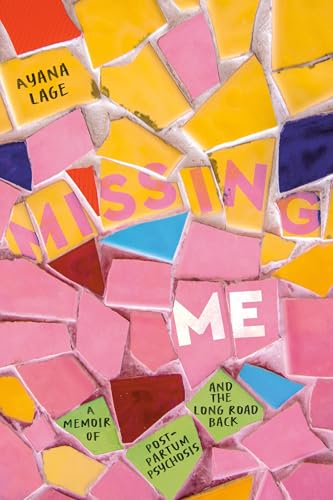
Missing Me: A Memoir of Postpartum Psychosis and the Long Road Back
When writer and blogger Ayana Lage became pregnant, she prepared as any parent voraciously researching, Redditing, preparing for anything. And having experienced a previous miscarriage, she braced herself for the worst. But days after giving birth, Ayana’s sense of control began to break when God started speaking to her. After growing up Pentecostal and longing to hear from God, she heard him audibly for the first time—and often. God told her that she had been chosen. He told her that her daughter was the second coming of Jesus Christ. She carried around notebooks to ensure she didn't miss any divine words. Eventually, she was diagnosed with post-partum psychosis and sent to a psychiatric ward, unable to see loved ones or her baby and sometimes unsure whether she'd actually had a baby at all.
Her once-rational thought process was consumed with delusions, and overnight, the self-professing people-pleaser turned into a fearless charismatic, obeying what she believed to be God’s orders—including pulling the fire alarm to force an evacuation in the hospital—and shouting at anyone who disagreed with her. Slowly, the medication and treatment began to work, and when she was well enough to be released, the hard road to recovery began.
Ayana struggled to adjust to normal life after the breaks she endured—both the psychosis itself and the experience of feeling betrayed by her mind. Once a fierce mental health advocate, she remained hesitant to share about psychosis, because of the stigma associated with this mental health disorder.
Drawing from Ayana’s notebooks and medical records, Missing Me is a gorgeously-written exploration of the revelations Ayana received during her psychotic episode, the surprising lessons about her life and faith revealed in the aftermath, and the long road to trusting her mind once again.
Her once-rational thought process was consumed with delusions, and overnight, the self-professing people-pleaser turned into a fearless charismatic, obeying what she believed to be God’s orders—including pulling the fire alarm to force an evacuation in the hospital—and shouting at anyone who disagreed with her. Slowly, the medication and treatment began to work, and when she was well enough to be released, the hard road to recovery began.
Ayana struggled to adjust to normal life after the breaks she endured—both the psychosis itself and the experience of feeling betrayed by her mind. Once a fierce mental health advocate, she remained hesitant to share about psychosis, because of the stigma associated with this mental health disorder.
Drawing from Ayana’s notebooks and medical records, Missing Me is a gorgeously-written exploration of the revelations Ayana received during her psychotic episode, the surprising lessons about her life and faith revealed in the aftermath, and the long road to trusting her mind once again.
208 pages, Hardcover
Published March 17, 2026
About the author
Ayana Lage
1 book35 followersAyana Lage is a blogger and freelance writer with bylines in The Washington Post, Cosmopolitan, Glamour, and more. She has a B.S. in journalism from the University of Florida. When she’s not working, you’ll find her exploring her hometown of Tampa, Florida, with her husband and two children.
Ratings & Reviews
Friends & Following
Create a free account to discover what your friends think of this book!
Community Reviews
Displaying 1 - 30 of 110 reviews

July 18, 2025
An impartial review.
On an earnest note, I'm thrilled to share this book with you all. Thank you for your interest!
On an earnest note, I'm thrilled to share this book with you all. Thank you for your interest!

April 29, 2026
A beautiful, raw, honest memoir that will help so many new parents and anyone struggling with mental illness, body insecurity and/or complicated feelings about Christianity. Ayana’s vulnerability does us all a huge service. Read this book!

April 13, 2026
I’m so grateful Lage wrote this book. Though I haven’t personally dealt with psychosis, I too had a very difficult and traumatic postpartum experience and it was so validating to read Ayana’s story. I’m so impressed by her vulnerability and thought the way this was written—weaving in her journals and treatment notes—was so powerful. There are parts of this that will stay with me for a long time.
Thank you to NetGalley and the publisher for the eArc!
Thank you to NetGalley and the publisher for the eArc!

April 5, 2026
Ayana Lage (b. 1993) is an American writer and social media influencer. Her 2026 memoir Missing Me is a memoir of her battle with postpartum psychosis, a rare and dangerous postpartum complication, which Lage experienced after the birth of her first child. This memoir is presented in fragmented form, from Lage's perceptions and journals taken during her postpartum psychosis experience, clinical notes from providers who cared for her at the time, and many snippets interspersed throughout of her earlier and later life depicting her struggles with mental health, body image, diet, pregnancy, etc. I appreciated Lage's honesty, though this memoir does show many of the typical issues of memoirs written by young people who haven't lived enough life to conceptualize the world outside of their own experiences and perspectives.
Further reading:
Inferno: A Memoir of Motherhood and Madness by Catherine Cho - another memoir focusing on postpartum psychosis
Brain on Fire: My Month of Madness by Susannah Cahalan
My statistics:
Book 63 for 2026
Book 2369 cumulatively
Further reading:
Inferno: A Memoir of Motherhood and Madness by Catherine Cho - another memoir focusing on postpartum psychosis
Brain on Fire: My Month of Madness by Susannah Cahalan
My statistics:
Book 63 for 2026
Book 2369 cumulatively

January 7, 2026
Thank you to Net Galley for the ARC in exchange for this honest review.
Missing Me is an unflinchingly honest memoir that sits at the intersection of postpartum psychosis, faith, and the quiet devastation of shame. Lage writes with a rawness that feels both intentional and necessary—this is not a book that tries to make suffering palatable or recovery necessarily neat.
What resonated most for me was the way Lage captures the experience of growing up in a conservative evangelical Christian context while battling mental illness. Her exploration of faith healing, particularly the devastating sense of rejection when healing doesn’t come, is painfully familiar and powerfully rendered. The idea that faith is supposed to “fix” you, and the shame that follows when it doesn’t, lingers throughout the book in a way that feels deeply true.
Her reflections on pregnancy, miscarriage, and postpartum psychosis are equally striking. The obsessive praying, the rumination on catastrophic outcomes, and the relentless fear that something terrible will happen to the people you love felt incredibly relatable. Lage also weaves in themes of body dysmorphia and disordered eating with striking honesty, especially in moments like her reflection on weight loss: “Could we get better? Probably. But do we want to?” That question alone captures the complicated comfort of illness and the resistance to letting it go.
The memoir also does a strong job of articulating the crippling fear of others’ perceptions—the way shame attaches itself to every perceived mistake, even when those mistakes are born of illness. That emotional truth is one of the book’s greatest strengths.
That said, the structure was challenging at times. The narrative skips around quite a bit, which occasionally disrupted the emotional flow. Additionally, Lage sometimes refers to herself in the third person (“Ayana goes to breakfast”), explaining that “she is me, and I am her, but it all happened to somebody else.” While I understand the dissociative purpose behind this choice, it pulled me out of the story more than it grounded me.
Missing Me is an honest and vulnerable memoir that will resonate deeply with readers who have experienced postpartum mental illness, religious trauma, or the isolating weight of shame. It isn’t always easy to follow, but it is undeniably sincere, and that sincerity makes it worth reading.
Missing Me is an unflinchingly honest memoir that sits at the intersection of postpartum psychosis, faith, and the quiet devastation of shame. Lage writes with a rawness that feels both intentional and necessary—this is not a book that tries to make suffering palatable or recovery necessarily neat.
What resonated most for me was the way Lage captures the experience of growing up in a conservative evangelical Christian context while battling mental illness. Her exploration of faith healing, particularly the devastating sense of rejection when healing doesn’t come, is painfully familiar and powerfully rendered. The idea that faith is supposed to “fix” you, and the shame that follows when it doesn’t, lingers throughout the book in a way that feels deeply true.
Her reflections on pregnancy, miscarriage, and postpartum psychosis are equally striking. The obsessive praying, the rumination on catastrophic outcomes, and the relentless fear that something terrible will happen to the people you love felt incredibly relatable. Lage also weaves in themes of body dysmorphia and disordered eating with striking honesty, especially in moments like her reflection on weight loss: “Could we get better? Probably. But do we want to?” That question alone captures the complicated comfort of illness and the resistance to letting it go.
The memoir also does a strong job of articulating the crippling fear of others’ perceptions—the way shame attaches itself to every perceived mistake, even when those mistakes are born of illness. That emotional truth is one of the book’s greatest strengths.
That said, the structure was challenging at times. The narrative skips around quite a bit, which occasionally disrupted the emotional flow. Additionally, Lage sometimes refers to herself in the third person (“Ayana goes to breakfast”), explaining that “she is me, and I am her, but it all happened to somebody else.” While I understand the dissociative purpose behind this choice, it pulled me out of the story more than it grounded me.
Missing Me is an honest and vulnerable memoir that will resonate deeply with readers who have experienced postpartum mental illness, religious trauma, or the isolating weight of shame. It isn’t always easy to follow, but it is undeniably sincere, and that sincerity makes it worth reading.
This entire review has been hidden because of spoilers.

March 29, 2026
This is a very intersting memoir about mental illness. The author is a journalist so as you would imagine the story is well told. I think this would a good read for anyone who knows someone with a mental illness. This book is great for understanding and empathy of others.
I listened to the audio version which I thought worked well. Thank you to NetGalley for the alc!
I listened to the audio version which I thought worked well. Thank you to NetGalley for the alc!

August 26, 2026
This book seems like an odd choice for someone who has never been pregnant and has hopes that won’t change. But I’ve followed Ayana for years on social media and bought the book as soon as it was released.
I’m not following the Lindsay Clancy case but it is a major topic of conversation right now, so maybe that’s why I decided it was time. Regardless, I’m glad that I did.
This story is gripping. The subject matter is sensitive but the writing is terrific and the honesty with which Lage tells her story is admirable. Her experiences with anxiety, panic, and eventually psychosis are both interesting and difficult to read, at times.
Experiencing hormonal imbalances via the gift of perimenopause, there are symptoms that others experience when pregnant - my hair texture has changed, for example. But I think not knowing if you can trust when your brain is telling you to be reliable and having that lingering doubt - forever- is the most challenging and drastic experience.
I’m not following the Lindsay Clancy case but it is a major topic of conversation right now, so maybe that’s why I decided it was time. Regardless, I’m glad that I did.
This story is gripping. The subject matter is sensitive but the writing is terrific and the honesty with which Lage tells her story is admirable. Her experiences with anxiety, panic, and eventually psychosis are both interesting and difficult to read, at times.
Experiencing hormonal imbalances via the gift of perimenopause, there are symptoms that others experience when pregnant - my hair texture has changed, for example. But I think not knowing if you can trust when your brain is telling you to be reliable and having that lingering doubt - forever- is the most challenging and drastic experience.

March 22, 2026
“Missing Me” is memoir of postpartum psychosis, but it’s also a rare look at what it’s like to live with chronic mental illness. It is so refreshing to see mental illnesses, medication and therapy discussed in the same way we talk about chronic physical ailments. The story is beautifully told in an authentic, vulnerable voice that oozes with self awareness, just as a good memoir should.

April 12, 2026
I’ve followed Ayana Lage on Instagram since during the pandemic, and have appreciated the way that she shares her experiences with postpartum psychosis. Her book details her mental health history, her experiences with pregnancy loss, and her hospitalization days after giving birth to her daughter. This book is difficult at times to read, as her Ayana truly went through some terrible times, but I think it’s an important story to share and I’m sure is helpful to others who have dealt with similar situations.


Review of advance copy received from Netgalley
“Missing Me” is the story of content creator Ayana Lage’s struggle with postpartum psychosis after the birth of her first child. It also covers the topics of religious trauma, pregnancy loss, body image issues and disordered eating, racism, and her complicated relationship with social media.
I’m a longtime follower of Ayana’s and have always been so impressed with how open she is in sharing her story. This book is no exception. I think it was especially brave of her to share excerpts from her journal entries during the time she struggled with psychosis, as well as excerpts of her medical record from that time.
That said, I think it could have benefited from stronger editing. The biggest issue is the structure – the timeline jumps around all over the place and there’s seemingly no rhyme or reason to it. I think it would have benefited from a more traditional linear structure. Also, the writing tended towards being more clinical feeling. And maybe it’s a deliberate choice, but sometimes she writes in the first person and sometimes she writes in the third person. This is meant to demonstrate her tendencies towards disassociation but it didn’t really work for me.
If you don’t feel like those style choices would bother you, you may enjoy this book. A number of readers said they enjoyed it even though they can’t relate at all to her background and experiences and I think that speaks volumes about her story.
PS: Thank you to NetGalley and Worthy Books for providing me with an Advanced Reading Copy in exchange for an honest review. All thoughts and opinions are my own!
I’m a longtime follower of Ayana’s and have always been so impressed with how open she is in sharing her story. This book is no exception. I think it was especially brave of her to share excerpts from her journal entries during the time she struggled with psychosis, as well as excerpts of her medical record from that time.
That said, I think it could have benefited from stronger editing. The biggest issue is the structure – the timeline jumps around all over the place and there’s seemingly no rhyme or reason to it. I think it would have benefited from a more traditional linear structure. Also, the writing tended towards being more clinical feeling. And maybe it’s a deliberate choice, but sometimes she writes in the first person and sometimes she writes in the third person. This is meant to demonstrate her tendencies towards disassociation but it didn’t really work for me.
If you don’t feel like those style choices would bother you, you may enjoy this book. A number of readers said they enjoyed it even though they can’t relate at all to her background and experiences and I think that speaks volumes about her story.
PS: Thank you to NetGalley and Worthy Books for providing me with an Advanced Reading Copy in exchange for an honest review. All thoughts and opinions are my own!
November 18, 2025
Missing Me is billed as the author’s experience with postpartum psychosis, but it truly is so much more than that. I’ve followed the author on social media for quite some time and when I first saw that she wrote a book, I was unsure if I could identify with the subject matter as I am not a mother. Boy was I wrong. Ayana discusses her earlier years of mental health issues and previous psychiatric stays and I could relate all too well. At one point she wrote something that reminded me of sitting in the hospital waiting room prior to one of my first stints. Suddenly I got up and yelled “this doesn’t happen to people like me”, people like me being an upper middle class woman from a good family. And yet, mental health issues can happen to anyone.
The obsession with her body… also relatable. Are there even women who don’t have these all consuming thoughts?
And the distancing herself from religion. I’ve been an atheist for years, growing up in a not really religious family. I found her take on religion and the shame and guilt experienced from not being the perfect Christian wife to be sad… yet honest.
I truly admire the author writing this book. Mental health is NOT talked about enough and people suffer in silence as a result. It shouldn’t be that way.
Missing Me is very well written and quite a page turner. I’m so thankful I read this. I look forward to reading many more from Ayana in the future. A solid 4.5 stars.
Thank you to NetGalley, Worthy Publishing, and the author, Ayana Lage, for access to this ARC.
The obsession with her body… also relatable. Are there even women who don’t have these all consuming thoughts?
And the distancing herself from religion. I’ve been an atheist for years, growing up in a not really religious family. I found her take on religion and the shame and guilt experienced from not being the perfect Christian wife to be sad… yet honest.
I truly admire the author writing this book. Mental health is NOT talked about enough and people suffer in silence as a result. It shouldn’t be that way.
Missing Me is very well written and quite a page turner. I’m so thankful I read this. I look forward to reading many more from Ayana in the future. A solid 4.5 stars.
Thank you to NetGalley, Worthy Publishing, and the author, Ayana Lage, for access to this ARC.

March 19, 2026
Wow, what a rare and brutally honest first-person perspective on postpartum psychosis, a mental disorder rarely discussed from the victim's point of view but rather in headlines and documentaries.
Ayana took a no-holds-barred approach to this sensitive topic, and even though she admits she is embarrassed and humbled by what transpired, she wrote it all out for the world to see. She explains not only the postpartum aspect of her mental health, but the decades of struggle she had leading up to it and the years that followed it.
Her story highlights extremely important aspects of the availability of mental health resources (she was lucky to not only have access but to have an extremely supportive network, which she does a great job at acknowledging), the financial and personal burdens involved, and how difficult it is to rebuild after a mental break.
Highly recommend this for anyone interested in a very unique and deeply touching memoir.
4.75 stars, rounded up to 5. The only part of the book I struggled with was the narrative's sporadic jumps backwards and forwards (sometimes in months, sometimes in years), which left me a little disoriented. I had to piece all of the parts together in my mind to make it more of a chronological life story, but maybe other readers would enjoy this aspect.
Thank you, NetGalley and Worthy Publishing, for the opportunity to read an advanced reader's copy in exchange for my honest opinions.
Ayana took a no-holds-barred approach to this sensitive topic, and even though she admits she is embarrassed and humbled by what transpired, she wrote it all out for the world to see. She explains not only the postpartum aspect of her mental health, but the decades of struggle she had leading up to it and the years that followed it.
Her story highlights extremely important aspects of the availability of mental health resources (she was lucky to not only have access but to have an extremely supportive network, which she does a great job at acknowledging), the financial and personal burdens involved, and how difficult it is to rebuild after a mental break.
Highly recommend this for anyone interested in a very unique and deeply touching memoir.
4.75 stars, rounded up to 5. The only part of the book I struggled with was the narrative's sporadic jumps backwards and forwards (sometimes in months, sometimes in years), which left me a little disoriented. I had to piece all of the parts together in my mind to make it more of a chronological life story, but maybe other readers would enjoy this aspect.
Thank you, NetGalley and Worthy Publishing, for the opportunity to read an advanced reader's copy in exchange for my honest opinions.
January 5, 2026
This memoir was a quick read but a difficult one. The tone is open and inviting but like the author’s mind, the narrative jumps around and can be very hard to follow. The author struggled with a lifetime of anxiety and then experienced severe postpartum psychosis after the birth of her first child. While I’ve never experienced psychosis, so much of what she wrote about anxiety resonated with me. I found the book hard to read because it made me afraid psychosis is just around the next corner. I know it’s not, but the same way the author is afraid of it reemerging, I felt anxious about any similarities. I think it’s just that she’s a good author and can make any of her experiences seem relevant to the reader, but…I’m not sure.
Her experiences as a black woman raised Pentecostal were also fascinating as they pertained to her mental health experiences. For example, she was raised to believe that it’s totally normal for god to talk to and through people. No reform or conservative Jew in my circles would feel that way—how would psychosis look different for us?
Thanks to the author for a good read and for NetGalley and the publisher for the opportunity to read an advance reader copy in exchange for my honest review.
Her experiences as a black woman raised Pentecostal were also fascinating as they pertained to her mental health experiences. For example, she was raised to believe that it’s totally normal for god to talk to and through people. No reform or conservative Jew in my circles would feel that way—how would psychosis look different for us?
Thanks to the author for a good read and for NetGalley and the publisher for the opportunity to read an advance reader copy in exchange for my honest review.
December 10, 2025
Thank you to Netgalley for an early copy in exchange for an honest review.
I had never heard of postpartum psychosis before hearing about the author's story so I feel like I learned a lot. It did jump around a lot to different timelines which I could sometimes see the reasoning for, and other times I couldn't. I wish it was written in more of a linear fashion. That aside, it was very well written and the excerpts from her journal entries while being hospitalized for postpartum psychosis were very raw and emotional. She was hearing directly from God, not sleeping and was unsure if her baby actually existed. It takes a lot of strength to put your story out there like that and I admire the author.
I had never heard of postpartum psychosis before hearing about the author's story so I feel like I learned a lot. It did jump around a lot to different timelines which I could sometimes see the reasoning for, and other times I couldn't. I wish it was written in more of a linear fashion. That aside, it was very well written and the excerpts from her journal entries while being hospitalized for postpartum psychosis were very raw and emotional. She was hearing directly from God, not sleeping and was unsure if her baby actually existed. It takes a lot of strength to put your story out there like that and I admire the author.

November 10, 2025
Thank you to NetGalley and the publisher for providing this book in exchange for an honest review.
I can't even begin to imagine how scary psychosis is at any time but soon after having a child?! Terrifying!
Ayana reflects on her anxiety and depression growing up but the psychosis is definitely the worst of her mental health issues. Her time in the psychiatric hospital is informative and sometimes quite shocking.
I can't even begin to imagine how scary psychosis is at any time but soon after having a child?! Terrifying!
Ayana reflects on her anxiety and depression growing up but the psychosis is definitely the worst of her mental health issues. Her time in the psychiatric hospital is informative and sometimes quite shocking.
April 13, 2026
I’ve followed Ayana on Instagram for quite a few years now- which definitely gives this book some extra context- but even if you know nothing about the author, Missing Me is definitely worth the read (and also Ayana is worth the follow on social media)! As a mother I knew to watch out for PPD and PPA, but I’m not sure if I’d ever even heard of postpartum psychosis until Ayana began speaking out about her experience. This book was incredibly informative and eye-opening!

May 17, 2026
One of the better memoirs I’ve read. Ayana truly let’s us into her mind and shares her highs and lows with readers. Thankful that she was brave enough to share her story and take up this space as a black woman that has experienced postpartum psychosis. These stories help lessen the stigma of mental illness and hopefully bring attention and resources to those who need the support.

August 15, 2026
This book is an incredible account of Ayana's experience with postpartum psychosis. I had no idea that this was something that existed until this book. This knowledge has helped me in my own personal life. Ayana's story is so raw and important to be shared. Highly recommend this book.
April 4, 2026
3 1/2 *

Read
May 27, 2026Excellent memoir about mental health, including maternal mental health and postpartum psychosis. Highly recommend for anyone interested in the topic, and definitely for all mental health practitioners. Very poignant and insightful. Another impressive debut!
August 17, 2026
Although it was horrid, I loved the way this book was written. so talented, and so impressive to find a way to tell this story with the medical notes, journals, and reflections .

March 18, 2026
This was a heavy read, and I'm sure, an even heavier lived experience. Ayana Lage offers the reader insight into her complex, heart wrenching experience of postpartum psychosis. I definitely found that some parts resonated strongly with me due to my own history of postpartum mood disorders, making it an especially emotional read for me. Kudos to the author for sharing her story helping to normalize new moms allowing themselves to be vulnerable and brave as they navigate the unexpected challenges that can come with motherhood.

December 3, 2025
Thanks to NetGalley & Worthy Publishing for the ARC!
Ayana Lage’s Missing Me: A Memoir of Postpartum Psychosis and the Long Road Back is a courageous post-mortem on a terrifying episode, but it’s more of a head-turning anecdote than a page-turning story.
Every year, it seems like there’s one or two memoirs that ascend to the top of the cultural conversation because of the strength of their elevator pitch. Missing Me seems poised to be the memoir of 2026 because you can’t get much hookier than a cold plunge into the hell of psychosis. Thankfully, Ayana Lage's written voice is even stronger than the hook.
Missing Me is remarkably vulnerable. Lage populates its pages with excerpts from her hospital journals, and her hallucinatory reflections are as heartbreaking as they are chilling. This book may be one of the most effective depictions of the distance between the self and the mind, and the author writes with startling lucidity about pain that collapses categorization. For example, when she describes childhood suicidal ideation, she writes, “I am too young to watch PG-13 movies but old enough to crave the end.”
I mean, wow.
As someone who shares a lot of Ayana Lage’s religious history and her struggle with debilitating anxiety and paranoia, so much of Missing Me resonates. It’s devastating to look at others and feel like your spiritual lexicon is just completely unequipped for the realities of life. Lage articulates this isolating grief so beautifully, and I think her writing will generate some helpful conversation in communities of faith.
The challenge with this book—and any book about health—is that illness disrupts narrative. Mental illness can defy it entirely. It’s horrifying because it shows the fragility of the stories we tell about ourselves. Panic attacks, eating disorders, and religious trauma are all part of Lage’s life, but the book doesn’t quite work when she tests them for continuity, particularly because she relies heavily on time-jumping vignettes that read like, and here's another bad thing that happened to me. Instead, her writing is at its best when she accepts contradiction. For example, what is one to do when they only experience unmitigated self-love during psychosis? How does one navigate faith when the only time it’s intuitive is when it’s most destructive?
Questions like these drive the final third of the book, and Lage skillfully invites readers into their squeamishness. When the author wonders if closure is even possible, the existential uncertainty is visceral. Unfortunately, I’m not sure we get enough time with Lage’s recovery journey to really have an answer. Despite the title's promise of a "long road back," the book doesn’t really conclude; it just abruptly ends. This approach resonates as more truthful than, say, a romanticized take on lessons learned, but it re-casts the whole project with an uneasy voyeurism. Without a more robust “interpretation” of the author’s realizations, it feels like the bizarre revelations are the point. Ultimately, I think the book would have benefitted from a few more years of distance—time for a more defined perspective.
I am so glad Missing Me exists. More importantly, I’m so glad that Ayana Lage is well and able to reconstruct something meaningful out of unfathomable pain. She has a gift for articulating darkness as a way of naming light, and I think this book will help many people with their own stories, even if it can’t quite stand as its own.
Ayana Lage’s Missing Me: A Memoir of Postpartum Psychosis and the Long Road Back is a courageous post-mortem on a terrifying episode, but it’s more of a head-turning anecdote than a page-turning story.
Every year, it seems like there’s one or two memoirs that ascend to the top of the cultural conversation because of the strength of their elevator pitch. Missing Me seems poised to be the memoir of 2026 because you can’t get much hookier than a cold plunge into the hell of psychosis. Thankfully, Ayana Lage's written voice is even stronger than the hook.
Missing Me is remarkably vulnerable. Lage populates its pages with excerpts from her hospital journals, and her hallucinatory reflections are as heartbreaking as they are chilling. This book may be one of the most effective depictions of the distance between the self and the mind, and the author writes with startling lucidity about pain that collapses categorization. For example, when she describes childhood suicidal ideation, she writes, “I am too young to watch PG-13 movies but old enough to crave the end.”
I mean, wow.
As someone who shares a lot of Ayana Lage’s religious history and her struggle with debilitating anxiety and paranoia, so much of Missing Me resonates. It’s devastating to look at others and feel like your spiritual lexicon is just completely unequipped for the realities of life. Lage articulates this isolating grief so beautifully, and I think her writing will generate some helpful conversation in communities of faith.
The challenge with this book—and any book about health—is that illness disrupts narrative. Mental illness can defy it entirely. It’s horrifying because it shows the fragility of the stories we tell about ourselves. Panic attacks, eating disorders, and religious trauma are all part of Lage’s life, but the book doesn’t quite work when she tests them for continuity, particularly because she relies heavily on time-jumping vignettes that read like, and here's another bad thing that happened to me. Instead, her writing is at its best when she accepts contradiction. For example, what is one to do when they only experience unmitigated self-love during psychosis? How does one navigate faith when the only time it’s intuitive is when it’s most destructive?
Questions like these drive the final third of the book, and Lage skillfully invites readers into their squeamishness. When the author wonders if closure is even possible, the existential uncertainty is visceral. Unfortunately, I’m not sure we get enough time with Lage’s recovery journey to really have an answer. Despite the title's promise of a "long road back," the book doesn’t really conclude; it just abruptly ends. This approach resonates as more truthful than, say, a romanticized take on lessons learned, but it re-casts the whole project with an uneasy voyeurism. Without a more robust “interpretation” of the author’s realizations, it feels like the bizarre revelations are the point. Ultimately, I think the book would have benefitted from a few more years of distance—time for a more defined perspective.
I am so glad Missing Me exists. More importantly, I’m so glad that Ayana Lage is well and able to reconstruct something meaningful out of unfathomable pain. She has a gift for articulating darkness as a way of naming light, and I think this book will help many people with their own stories, even if it can’t quite stand as its own.

Review of advance copy received from Netgalley
📚Missing Me
✍🏻Ayana Lage
Blurb:
When writer and blogger Ayana Lage became pregnant, she prepared as any parent voraciously researching, Redditing, preparing for anything. And having experienced a previous miscarriage, she braced herself for the worst. But days after giving birth, Ayana’s sense of control began to break when God started speaking to her. After growing up Pentecostal and longing to hear from God, she heard him audibly for the first time—and often. God told her that she had been chosen. He told her that her daughter was the second coming of Jesus Christ. She carried around notebooks to ensure she didn't miss any divine words. Eventually, she was diagnosed with post-partum psychosis and sent to a psychiatric ward, unable to see loved ones or her baby and sometimes unsure whether she'd actually had a baby at all.
Her once-rational thought process was consumed with delusions, and overnight, the self-professing people-pleaser turned into a fearless charismatic, obeying what she believed to be God’s orders—including pulling the fire alarm to force an evacuation in the hospital—and shouting at anyone who disagreed with her. Slowly, the medication and treatment began to work, and when she was well enough to be released, the hard road to recovery began.
Ayana struggled to adjust to normal life after the breaks she endured—both the psychosis itself and the experience of feeling betrayed by her mind. Once a fierce mental health advocate, she remained hesitant to share about psychosis, because of the stigma associated with this mental health disorder.
Drawing from Ayana’s notebooks and medical records, Missing Me is a gorgeously-written exploration of the revelations Ayana received during her psychotic episode, the surprising lessons about her life and faith revealed in the aftermath, and the long road to trusting her mind once again.
My Thoughts:
The story jumps from time period to time period without a recognizable pattern, but it kept me on my toes and reinforced the feelings of confusion and instability. The excerpts from her journal entries while being hospitalized for postpartum psychosis were very raw and emotional. She was hearing directly from God, not sleeping and was unsure if her baby actually existed. It takes a lot of strength to put your story out there like that and I admire the author.
Thanks NetGalley, Worthy Books and Author Ayana Lage for the advanced copy of "Missing Me" I am leaving my voluntary review in appreciation.
#NetGalley
#WorthyBooks
#AyanaLage
#MissingMe
⭐️⭐️⭐️⭐️
✍🏻Ayana Lage
Blurb:
When writer and blogger Ayana Lage became pregnant, she prepared as any parent voraciously researching, Redditing, preparing for anything. And having experienced a previous miscarriage, she braced herself for the worst. But days after giving birth, Ayana’s sense of control began to break when God started speaking to her. After growing up Pentecostal and longing to hear from God, she heard him audibly for the first time—and often. God told her that she had been chosen. He told her that her daughter was the second coming of Jesus Christ. She carried around notebooks to ensure she didn't miss any divine words. Eventually, she was diagnosed with post-partum psychosis and sent to a psychiatric ward, unable to see loved ones or her baby and sometimes unsure whether she'd actually had a baby at all.
Her once-rational thought process was consumed with delusions, and overnight, the self-professing people-pleaser turned into a fearless charismatic, obeying what she believed to be God’s orders—including pulling the fire alarm to force an evacuation in the hospital—and shouting at anyone who disagreed with her. Slowly, the medication and treatment began to work, and when she was well enough to be released, the hard road to recovery began.
Ayana struggled to adjust to normal life after the breaks she endured—both the psychosis itself and the experience of feeling betrayed by her mind. Once a fierce mental health advocate, she remained hesitant to share about psychosis, because of the stigma associated with this mental health disorder.
Drawing from Ayana’s notebooks and medical records, Missing Me is a gorgeously-written exploration of the revelations Ayana received during her psychotic episode, the surprising lessons about her life and faith revealed in the aftermath, and the long road to trusting her mind once again.
My Thoughts:
The story jumps from time period to time period without a recognizable pattern, but it kept me on my toes and reinforced the feelings of confusion and instability. The excerpts from her journal entries while being hospitalized for postpartum psychosis were very raw and emotional. She was hearing directly from God, not sleeping and was unsure if her baby actually existed. It takes a lot of strength to put your story out there like that and I admire the author.
Thanks NetGalley, Worthy Books and Author Ayana Lage for the advanced copy of "Missing Me" I am leaving my voluntary review in appreciation.
#NetGalley
#WorthyBooks
#AyanaLage
#MissingMe
⭐️⭐️⭐️⭐️

August 17, 2026
This is the third memoir I’ve read by a woman who experienced postpartum psychosis. Taking this into consideration, I am not as shocked by my own feeling of fear and empathy towards these women - it’s now just there, stable, consistent, and unwavering. These stories are terrifying and deeply personal. I can understand why it would be so frightening to tell their family and friends about what they’ve experienced.
Ayana’s story is quite different from the other two I read. She grew up with religion, so her delusions were strongly based around the faith she had grown up with. I felt sadness for her, knowing that these delusions made her feel so special and important, and then when she came out of psychosis, she felt its absence.
She also dealt with mental health issues growing up, which deepened my sadness reading this. She struggled with her mental health and her self-image. In many ways, I resonated with this aspect of her story. The desire to be important, to be the best, to be the one that is known for being this way. It’s exhausting and impossible to maintain, if it could ever even be achieved. It’s a layer of perfectionism and it’s extremely difficult to live with.
Ayana was also a heavy social media user, I’m not sure if she would be classified as an influencer but I would describe her as such. She was used to spilling her life to the world. This aspect gave her story an interesting note. When psychosis started, she was public about her emotions and thoughts. After having her second baby, she deleted the app from her phone to prevent herself from saying anything public again.
I appreciated her voice as a woman of colour. In full honesty, I didn’t pick up much explicit linking to this part of her identity. It was primarily focused on her growing up either the church. I do not mean to belittle anything, but rather point it out. Maybe when I read it a second time in the future I’ll remember more of these details and will pick up on this more than her talking about her psychosis.
She reveals her story by jumping around her timeline. While I appreciated many of the links she made between events that happened 13 years before her psychosis to something that happened a few months before or after, it was a bit difficult to read and follow at times.
Highly recommended.
Ayana’s story is quite different from the other two I read. She grew up with religion, so her delusions were strongly based around the faith she had grown up with. I felt sadness for her, knowing that these delusions made her feel so special and important, and then when she came out of psychosis, she felt its absence.
She also dealt with mental health issues growing up, which deepened my sadness reading this. She struggled with her mental health and her self-image. In many ways, I resonated with this aspect of her story. The desire to be important, to be the best, to be the one that is known for being this way. It’s exhausting and impossible to maintain, if it could ever even be achieved. It’s a layer of perfectionism and it’s extremely difficult to live with.
Ayana was also a heavy social media user, I’m not sure if she would be classified as an influencer but I would describe her as such. She was used to spilling her life to the world. This aspect gave her story an interesting note. When psychosis started, she was public about her emotions and thoughts. After having her second baby, she deleted the app from her phone to prevent herself from saying anything public again.
I appreciated her voice as a woman of colour. In full honesty, I didn’t pick up much explicit linking to this part of her identity. It was primarily focused on her growing up either the church. I do not mean to belittle anything, but rather point it out. Maybe when I read it a second time in the future I’ll remember more of these details and will pick up on this more than her talking about her psychosis.
She reveals her story by jumping around her timeline. While I appreciated many of the links she made between events that happened 13 years before her psychosis to something that happened a few months before or after, it was a bit difficult to read and follow at times.
Highly recommended.

Review of advance copy received from Netgalley
4.75 stars.
As an individual who has not experienced pregnancy nor any form of psychosis, I didn't expect to relate this as deeply as I did. It shouldn't have been a surprise given that this is not my first exposure to Ayana's writing but I am still so fortunate to feel so seen in my own mental health struggles.
I was at first skeptical whether the time jumps would work. We've introduced to this pattern in Chapter One which is where it feels the most rough around the edges. I'd say each "XXX time before" has a standard deviation of sorts; it can feel like we're introduced to aspects a little further back or forward from the header anchor. The mechanism feels smoother from Chapter Two onward, where Lage pulls us into the questions and longings and bargainings of Ayana past contrasted with the seemingly antithetical version of self who requires hospitalization. This is where she works her magic.
With this memoir, Lage has continued to push conversations as she has for many years. This book is important for the realities of pregnancy, birth, and the postpartum period, and the pervasive shame when such a life-changing event doesn't happen as the photo-worthy, straightforward spectacle we want it to be. It also is a real account for how vulnerable all of us are to the challenge that is being human. Yes, there are genetic factors, environmental factors, etc., that point to one's likelihood of struggling with mental health in their lifetime, but there isn't one clear checklist for the matter or for each condition. Lage navigates topics familiar to many of us--religion and church culture, weight loss culture--and shows how it isn't always an unexpected tragedy, it is often life itself and what we deem as expected, innocuous, or the norm. By not remaining silent and palatable, we can break barriers, and Lage will be right there with us.
I am so proud to support this debut work as well as endlessly grateful to Ayana and Worthy Publishing for providing this book for review consideration via NetGalley. All opinions are my own.
As an individual who has not experienced pregnancy nor any form of psychosis, I didn't expect to relate this as deeply as I did. It shouldn't have been a surprise given that this is not my first exposure to Ayana's writing but I am still so fortunate to feel so seen in my own mental health struggles.
I was at first skeptical whether the time jumps would work. We've introduced to this pattern in Chapter One which is where it feels the most rough around the edges. I'd say each "XXX time before" has a standard deviation of sorts; it can feel like we're introduced to aspects a little further back or forward from the header anchor. The mechanism feels smoother from Chapter Two onward, where Lage pulls us into the questions and longings and bargainings of Ayana past contrasted with the seemingly antithetical version of self who requires hospitalization. This is where she works her magic.
With this memoir, Lage has continued to push conversations as she has for many years. This book is important for the realities of pregnancy, birth, and the postpartum period, and the pervasive shame when such a life-changing event doesn't happen as the photo-worthy, straightforward spectacle we want it to be. It also is a real account for how vulnerable all of us are to the challenge that is being human. Yes, there are genetic factors, environmental factors, etc., that point to one's likelihood of struggling with mental health in their lifetime, but there isn't one clear checklist for the matter or for each condition. Lage navigates topics familiar to many of us--religion and church culture, weight loss culture--and shows how it isn't always an unexpected tragedy, it is often life itself and what we deem as expected, innocuous, or the norm. By not remaining silent and palatable, we can break barriers, and Lage will be right there with us.
I am so proud to support this debut work as well as endlessly grateful to Ayana and Worthy Publishing for providing this book for review consideration via NetGalley. All opinions are my own.

March 13, 2026
I’ve been a fan of Ayana Lage for years for her irreverent sense of humor, clear political stances, and, most of all, her vulnerability. In her debut memoir, she uses her experience as a journalist and freelance writer to tell the story of her darkest days experiencing postpartum psychosis after the birth of her daughter five years ago. The story is powerful and beautifully written, and will resonate with anyone who has given birth, experienced anxiety, or ever called themselves a mental health advocate but struggled to sympathize with the less savory aspects of psychosis and other more stigmatized mental illnesses.
As a longtime follower, I was already familiar with the contours of Ayana’s story—a heavily religious upbringing, deeply loving relationships with her family and her husband, who was childhood sweetheart, and lifelong struggle with mental health that exploded into psychosis after giving birth for the first time. This book goes deep; Ayana parses through her childhood struggles with anxiety and depression and the complex relationship with faith throughout it all. Interspersed throughout are reflections on her time in the psych ward, doctor’s notes detailing her mental state during treatment, and the extreme ups and downs of delusions that made her feel on top of the world and the paranoia and fear that came alongside them.
I feel privileged to get to read such a personal account of a condition that is so stigmatized yet far from rare. Postpartum depression and anxiety are somewhat acknowledged, but we have a long way to go in understanding and supporting mothers who experience more extreme mental illness after birth. I believe Missing Me will be a big part of telling this necessary story and destigmatizing postpartum psychosis.
Thank you to NetGalley and the publisher for a free eARC in exchange for an honest review!
As a longtime follower, I was already familiar with the contours of Ayana’s story—a heavily religious upbringing, deeply loving relationships with her family and her husband, who was childhood sweetheart, and lifelong struggle with mental health that exploded into psychosis after giving birth for the first time. This book goes deep; Ayana parses through her childhood struggles with anxiety and depression and the complex relationship with faith throughout it all. Interspersed throughout are reflections on her time in the psych ward, doctor’s notes detailing her mental state during treatment, and the extreme ups and downs of delusions that made her feel on top of the world and the paranoia and fear that came alongside them.
I feel privileged to get to read such a personal account of a condition that is so stigmatized yet far from rare. Postpartum depression and anxiety are somewhat acknowledged, but we have a long way to go in understanding and supporting mothers who experience more extreme mental illness after birth. I believe Missing Me will be a big part of telling this necessary story and destigmatizing postpartum psychosis.
Thank you to NetGalley and the publisher for a free eARC in exchange for an honest review!

Review of advance copy received from Netgalley
Missing Me wasn’t an easy read. The media portrays post partum psychosis in a myriad of ways and none of them seem to have much sympathy for the human behind the diagnosis. We see stories like Andrea Yates and Lindsay Clancy and it’s easy to make the correlation between PPP and tragedy.
Missing Me definitely looks into the loss of self and reality with post partum psychosis as Ayana believes her baby is Jesus and is afraid to have anyone else around her, for fear of her coming to harm. Do I think that some of this could have been due to her growing up in an evangelist household? Probably, who knows what’s buried deep down in there but I think that Lage is really vulnerable while also being delicate in how she writes about herself. Lage spends quite a bit of time reflecting on moments in her life when she relief heavily on her faith to heal or fix various things going on with her, and her conflicting feelings when that doesn’t come to pass for her.
Lage writes with incredibly honesty about struggling with the perception of others- will they judge her, is she a good enough mother in their eyes, and subsequently is she healed enough for them.
I don’t think that reading this made me feel like just anyone can have this diagnosis and I think it opens the pathway for additional conversations on the scale that postpartum depression can have- not every instance of postpartum depression is just the “baby blues” and not every instance of postpartum psychosis ends in tragedy.
Missing Me is due to be published March 17, 2026 and I received an advanced copy from Netgalley in exchange for my review.
Missing Me definitely looks into the loss of self and reality with post partum psychosis as Ayana believes her baby is Jesus and is afraid to have anyone else around her, for fear of her coming to harm. Do I think that some of this could have been due to her growing up in an evangelist household? Probably, who knows what’s buried deep down in there but I think that Lage is really vulnerable while also being delicate in how she writes about herself. Lage spends quite a bit of time reflecting on moments in her life when she relief heavily on her faith to heal or fix various things going on with her, and her conflicting feelings when that doesn’t come to pass for her.
Lage writes with incredibly honesty about struggling with the perception of others- will they judge her, is she a good enough mother in their eyes, and subsequently is she healed enough for them.
I don’t think that reading this made me feel like just anyone can have this diagnosis and I think it opens the pathway for additional conversations on the scale that postpartum depression can have- not every instance of postpartum depression is just the “baby blues” and not every instance of postpartum psychosis ends in tragedy.
Missing Me is due to be published March 17, 2026 and I received an advanced copy from Netgalley in exchange for my review.

March 26, 2026
Thank you to Hachette Audio, the author, and NetGalley for a chance to preview this title. As with all memoirs, I will not be critiquing her experiences but rather the book itself.
Conditions and illnesses that are unique to women have always fascinated me. In this book a woman tells her story about her postpartum psychosis after the birth of her first child. The story is raw and she tells how she struggled with panic attacks since a young age and had a deep seated need to be liked throughout her life. When her postpartum psychosis breaks, she starts believing that she is prophet and nothing else matters besides what God is telling her. She is angry, loud, rude, disruptive, and does not care what anyone thinks as long as God keeps talking to her. She is forthcoming about her fundamentalist religious background and how that probably played a huge role in her mental health, both the illness itself and lack of seeking treatment ("I believed that I should pray the attacks away and God will heal me").
Unfortunately, the book itself was very disjointed. The time jumps went from "16 years before" to "3 months after" to "7 years before" and so on. It made it difficult for me to get a full grasp on what happened and when. I listened to this on audiobook and the times where something was added after the original recording was jolting and so glaring that it often took me out of the story.
Overall, I would recommend this book if you are struggling with mental illness and are afraid to get help due to religious "restrictions." I think it would be very helpful to know that you are not alone.
Conditions and illnesses that are unique to women have always fascinated me. In this book a woman tells her story about her postpartum psychosis after the birth of her first child. The story is raw and she tells how she struggled with panic attacks since a young age and had a deep seated need to be liked throughout her life. When her postpartum psychosis breaks, she starts believing that she is prophet and nothing else matters besides what God is telling her. She is angry, loud, rude, disruptive, and does not care what anyone thinks as long as God keeps talking to her. She is forthcoming about her fundamentalist religious background and how that probably played a huge role in her mental health, both the illness itself and lack of seeking treatment ("I believed that I should pray the attacks away and God will heal me").
Unfortunately, the book itself was very disjointed. The time jumps went from "16 years before" to "3 months after" to "7 years before" and so on. It made it difficult for me to get a full grasp on what happened and when. I listened to this on audiobook and the times where something was added after the original recording was jolting and so glaring that it often took me out of the story.
Overall, I would recommend this book if you are struggling with mental illness and are afraid to get help due to religious "restrictions." I think it would be very helpful to know that you are not alone.
Displaying 1 - 30 of 110 reviews