Jump to ratings and reviews
Rate this book

White Moss

Rate this book
A poetic and fiercely moving Russian novel of tradition, change, and thwarted desire by an internationally celebrated writer from the Indigenous Nenets community of northern Siberia

Perfect for readers of Ceremony by Leslie Marmon Silko, the work of Louise Erdrich, and other emotionally powerful, lyrical narratives of global Indigenous communities


Providing rare, direct insight into the beauties and struggles of the Indigenous reindeer-herding Nenets community of the Russian north, White Moss tells a piercingly moving coming-of-age story of the conflict between individual dreams and collective life.

On the eve of his wedding, young Alyoshka pines for an earlier love. Ilne chose to leave the nomadic Nenets community behind 7 years before, moving to the city and taking his heart with her. As the seasons have passed and his mother has grown older, Alyoshka has been under increasing pressure to marry and fully embrace the Nenets’ age-old customs of home and family. Unwilling to give up his hope for another life, the young man struggles against everything he has been taught to accept, while other painful transitions shake the stability of the small camp and minor human tragedies play out against the cold expanse of the tundra.

With bursts of lyricism and a Chekhovian eye for human frailty, Anna Nerkagi crafts a multi-voiced drama of tradition and change within her Indigenous community.

192 pages, Kindle Edition

First published January 1, 1996

44 people are currently reading
610 people want to read

About the author

Anna Nerkagi

3 books10 followers
Anna Nerkagi is a Nenets writer, novelist, and social activist of the Nenets people in Siberia, writing in Russian language.

Ratings & Reviews

What do you think?
Rate this book

Friends & Following

Create a free account to discover what your friends think of this book!

Community Reviews

5 stars
46 (18%)
4 stars
99 (40%)
3 stars
84 (34%)
2 stars
14 (5%)
1 star
2 (<1%)
Displaying 1 - 30 of 65 reviews
Profile Image for Angela M .
1,484 reviews2,105 followers
January 15, 2026
I enjoy novels that present something new to learn about and that’s what led me to read this book about the Nenets, an indigenous people of Siberia, who are nomad reindeer herders. It’s described as a coming of age novel , but it was the struggle of the aging character that I found to be the most moving part of the story. Reflections on the culture, the roles of women and men, and the desire to keep the way of life continuing was front and center. A way of life remote from any conveniences and a struggle to survive . A young man, heartsick since the girl he loved left and never returned grapples with the old ways of his people and finding his own way. I didn’t connect with him in a way that made me interested in his finally becoming a man. Perhaps something missing for me in the translation. An old man struggles with finding his place when he no longer has women in his family to keep his tent and a table for him. I felt for him. While interesting , I found it very slow moving. Beautiful cover.


I received a copy of this book from Pushkin Press through Edelweiss.
Profile Image for 〽️onicae.
94 reviews6 followers
February 3, 2026
Fuoco ancestrale

E quando mi ricapiterà di addentrarmi nel bianco della tundra in pieno inverno... di trovare riparo nel Čum - tipica tenda dei nenec, nomadi siberiani - di bere tè bollente con i vicini, di osservare le donne ravvivare il fuoco, di ascoltarle mentre implorano il fuoco di proteggere i loro figli, di stupirmi nel percepire la risposta del fuoco. Quando mai mi ricapiterà di osservare, nascosta tra gli alberi, gli uomini nenec cacciare la volpe argentata, viaggiare a bordo di slitte trainate dalla squadra di renne che hanno allevato negli anni e rispettato come figlie.

Gli eventi in questo romanzo sono ridotti all'osso; eppure, quando ho chiuso il libro, mi è sembrato di essere rientrata da un lungo viaggio ai confini del mondo conosciuto. Un viaggio ancestrale, alla ricerca delle radici più remote, dove il rispetto della natura, degli animali e delle tradizioni nenec è motivo di sopravvivenza per quel piccolo e isolato microcosmo nomade.

È un libro sulla solidarietà all'interno della comunità ma anche sulla solitudine. La solitudine del giovane Aleska, combattuto tra l'adesione alle tradizioni che costituiscono il suo nucleo più profondo, e il desiderio, naturale e legittimo, di andare oltre i confini della tundra, di raggiungere l'amata Ilne che ha invece fatto una scelta di rottura con il popolo nenec.
Ma è anche la solitudine del vecchio Petko, padre di Ilne, che, rimasto solo, non trova più ragione di essere all'interno della comunità; dovrà rinnovare se stesso e il patto con la vita per trovare un nuovo centro:

"A un tratto si sentì triste e chissà perché desiderò essere un albero, non un albero giovane, spensierato, ma uno dal tronco possente, piegato dai venti del nord, con rami-braccia e radici-ricordi nascoste nelle profondità della terra. Nel cuore della notte, con l'anima sofferente, avrebbe frusciato dolcemente per non inquietare gli altri con il suo triste canto e nessuno si sarebbe accorto che non era un albero, ma un vecchio solitario>>.

Sono due solitudini, quella del giovane che ha perso l'amata e quella del vecchio che ha perso la figlia, che non comunicano, che si perdono nel bianco lattiginoso della neve; troveranno una soluzione ciascuno contemplando se stesso e i segnali della natura circostante.

E poi c'è la forza della madre del giovane che deve tenere vivo ad ogni costo il focolare e che quindi costringe il figlio a sposare una donna che lui non ama. È l'ennesima solitudine narrata: quella della ragazza non vista dal marito, costretta a un matrimonio umiliante.

Può sembrere tutto molto triste; eppure ognuno dei personaggi evolverà e sarà pronto ad accogliere la nuova primavera in arrivo.

Anna Nerkagi, autrice che non conoscevo, è una nenec; racconta del suo popolo che porta nel cuore e al quale ha fatto ritorno da adulta, dopo che l'autorità sovietica la allontanava dalla famiglia quando era ancora piccola. La sua scrittura è poetica, lirica. I temi trattati ancestrali, eterni. È la donna, secondo la cultura nenec, la responsabile del fuoco necessario alla sopravvivenza.

Non vedo grandi differenze con le nostre tradizioni, dove la nostra cultura, che chiamiamo patriarcale, è custodita e si mantiene viva con il fattivo, e non sempre consapevole, contributo delle donne.
Profile Image for Sofia.
1,364 reviews303 followers
March 7, 2026
I enjoyed Nerkagi's writing. Her words flow over the ice, through the cold, next to the fire ................

She writes about the nomadic Nenets who live on the Siberian tundra and follows their rhythm. To survive is such a hostile environment they follow the path of their ancestors with their set rhythms and patterns, words and practices where weather, reindeer and humans are intertwined in a dance of survival.

Through these we see that the humans are still humans, with their needs, dreams, wishes, emotions, decisions and perseverance.

Beautifully told.


An ARC kindly provided by author/publisher via Netgalley.
Profile Image for Andrea.
1,118 reviews29 followers
April 16, 2026
Recently translated into English for the first time, this 1996 novel explores the traditions and values of the indigenous, reindeer-herding Nenets people from the Siberian tundra. I was captivated by the book's cover, but then also drawn in by its contemplative style. It's a fairly simple story with the focus mainly on two Nenets men, aged at either end of the adult spectrum.

Alyoshka, 26, has no business remaining unmarried at that age. He has dragged his heels for so long that the elders have had to take matters into their own hands and find him a wife. His attitude to the woman, the elders and the whole situation is nothing short of petulant. We soon come to understand why.

Petko, already an Old Man, is mired in grief, having lost his wife a year ago. Neither of his daughters visit these days, and he's afraid of becoming a burden on the small community. He decides to pack up his tent and live off his sledge.

There are several other characters that play an important role in the story, too. Alyoshka's mother is fretful about what her son is doing and hopes to draw enough strength to set him on the right path. Vanu worries about his old friend Petko, but then along comes Khasawa and his mute daughter, and they really need help too...

It's a hard life; difficult by anyone's standards, I would think. But at the end of the day, these characters are just like anyone else, valuing family, love and dignity.

With thanks to NetGalley and the publisher for a digital copy to read and review.
Profile Image for Clarissa.
755 reviews22 followers
April 3, 2023
Die Sprache ist unglaublich zart und poetisch, genau wie die verhandelten Themen. Es geht um Menschen in einer Gemeinschaft, die Traditionen hinterfragen oder mit Veränderungen umgehen lernen müssen, während ihre Umwelt eine ständige Herausforderung ist und sie eigentlich auf ihren Zusammenhalt angewiesen sind. Einiges an der beschriebenen Hierarchie hat mir nicht so gut gefallen, aber das macht es nicht weniger wahr, also habe ich lieber ein ungeschöntes Bild. Es geht auch um die Schwierigkeiten, die indigenen und nomadischen Völkern begegnen mit zunehmendem Eingriff von außen, zum Beispiel dem Versuch, die Kinder im Bildungssystem Russlands unterzubringen, wodurch sie aber 10-11 Monate im Jahr von ihrer Familie getrennt sind und sich von der Lebensweise entfremden. Dieses Buch ist wieder ein Beweis dafür, dass Geschichten von indigenen Stimmen wichtig und bereichernd sind.
Profile Image for Cortnie.
134 reviews7 followers
Read
January 6, 2026
Thank you to NetGalley and Pushkin for the e-arc of White Moss.

Just as people trample on the earth's flowers, not noticing broken stems and crumpled petals, so do they fail to notice that they themselves murder love. One moment of cowardice, a measure of self-deceit- and love is dead.


Translated from Russian and labeled as a coming of age story, this lyrical, parabolical story is reminiscent to the reading experience of The Alchemist by Paulo Coehlo. We are taken into the Siberian Tundra to experience the lives and culture of the nomadic Nenets, indigenous reindeer herders, who are deeply connected to the land and animals around them. They are a microcosm of a way of life, long gone for the rest of the world.

This is more than a coming of age story though, this is a reflection on aging, community, tradition, cultural identity. It examines the human condition regarding our own identity at the end of life and the complexity of family ties. Disappointment, grief, love, failure are central themes throughout these vignettes of the characters, and at times moved me to near tears in their beauty and depth. I highlighted so many quotes throughout this short book.

At times the story telling felt a bit clunky, which may or may not be translation related. I honestly found the "main character" who the synopsis mentions to be insufferable, and his narrative was the least engaging to me. The elders in the community were much more rich and fully fleshed than Alyoshka, it was hard not to be entranced by them.

All in all this was a beautifully written story, that didn't quite stick the landing for me, but I would highly recommend for the journey alone, and the stunning prose.
Profile Image for Translator Monkey.
799 reviews27 followers
October 14, 2025
Not much to offer regarding this book other than it is beautifully written and masterfully translated. Anna Nerkagi had my heart in her hands so many times, I'm certain her fingerprints are there for good. And Irina Sadovina is now among my ten favorite translators. Really nice work.

Dear Pushkin Press: Feel free to add the translator's names to the covers of your publications. Given the nature of your publishing house, one would think this shouldn't need to be stressed.

I'll try to convince the Goodreads staff to put the translator's name on this book's page. They only provide the details given to them by the publisher, so I get it.

If you'd like to read excerpts from 'White Moss,' visit Sadovina's website, irinasadovinacom.

Thanks to Edelweiss, Pushkin Press, and Anna Nerkagi for allowing me the opportunity to read a pre-pub digital ARC in exchange for this review.
Profile Image for Lodovica.
30 reviews22 followers
October 5, 2025
Leggere questo libro é stato come vedere The Revenant, a rallentatore, due volte di seguito.
Profile Image for Alice.
25 reviews
June 30, 2021
Wunderschöne, poetische Naturbeschreibungen treffen auf Tragik. Ein neuer Blick auf das Zusammenleben. Mensch und Mensch. Mensch und Natur. Natur und Natur.
Profile Image for Gill Bennett.
239 reviews4 followers
February 15, 2026
This was a really fascinating book about the nomadic Nenets who herd reindeer in Northern Siberia. In addition the writing is exquisite and poetical, which brings the lives of these isolated people vividly to life.
The narrative focuses on a small group who live in hide tents which are easy to dismantle as they follow the seasons finding good places for their animals to graze.
There are so many themes: the insidious nature of Russian influence for example by forcing the children to leave the camps and go to boarding schools; the close ties between the reindeer and the Nenets despite the fact the animals are all eventually slaughtered; the deep spirituality of the Nenets people and the Word; the destructive power of alcohol in isolated and impoverished communities; a story of unrequited love that nearly destroys a small family unit; the traditions of the Nenets.
Overall a thoughtful read and one I could highly recommend.
Profile Image for Lyn Cartner.
95 reviews1 follower
February 27, 2026
I thought this was beautiful. I subscribed to The Brick Lane book club because I wanted something different and this was certainly it. cultural identity love, loss, grieving and aging. so much in such a slim volume.
Profile Image for Maria.
460 reviews19 followers
January 17, 2026
This is an interesting and slow paced story about a small Nenets community. As mentioned in the description, Alyoshka faces a conflict between what he wants as an individual and the tradition of community in his culture.

I felt it was difficult to focus on the beginning of the book. There were a lot of things that I didn't understand at first and the POV jumps around a bit. Things become more clear the more you read. Around the halfway mark I started to get really invested and didn't want to put it down,

Something I found really unique about White Moss was the feeling of isolation the book gave me. It felt almost like I was watching a play and someone is just offstage but I can't quite see beyond the curtain. The book's scope feels narrow, in a good way. It emphasizes the loneliness felt by many characters, in my opinion. I am glad I read this and would love to read more by this author if more is translated.
Profile Image for Genevieve Helene.
239 reviews3 followers
March 27, 2026
I thought this was well written but it just didn't hold my attention. I found myself daydreaming whilst reading. The protagonist is essentially mourning a lost relationship when he is persuaded by his mother to take a wife. There seems to be some confusion as to whether he bonds with her or not. We are led to believe that he briefly does but then that appears to vanish. I don't really feel as though I know the characters, and at no point did I really care what happened to them. I have given it three stars, rather than less than three, because I feel that my disinterest doesn't stem from the quality of the writing, it just isn't a style that worked for me.
Profile Image for Paula.
1,010 reviews226 followers
February 13, 2026
A slow burn,gorgeously written,thought provoking gem.
Profile Image for Aila Krisse.
212 reviews6 followers
Did Not Finish
February 26, 2026
DNF at 25%
I really like stories about nomadic groups and as a Finn and language nerd I've always been very interested in the various Uralic peoples that are indigenous to the Russian north. Most media about and by these people is in Russian - which I don't speak - so when I saw that this English translation of a novel by a Nenets author existed I got so excited. Unfortunately, it just really did not work for me. The writing is certainly very stylistically distinct, which may have contributed to this DNF. Though I suspect it is mostly due to the fact that I hardly ever read Literary Fiction and so I'm just so used to a very different type of writing than this.
Profile Image for Ginath13.
305 reviews5 followers
April 27, 2026
White Moss is a book in translation that takes us to the Russian tundra, where we get a close-up look at the Nenet culture, which is defined by the nature surrounding it. The Nenets are a nomadic people who live in portable tents, and rely on reindeer herding to survive this harsh environment. This is a rich culture steeped in tradition with clearly defined roles for each of its members. In White Moss, we see multiple instances in which tradition is challenged by some of the younger generation. This is a quiet and, at times, brutal story that I found quite beautiful in many ways.
Profile Image for Laurel.
473 reviews21 followers
January 26, 2026
A poetic and atmospheric introduction to the Nenets’ culture. At times it was a bit difficult for me to understand and therefore, it warrants a second reading. A spiritual and human book, celebrating the natural world. The conflict between tradition and the individual.
Profile Image for Lee by the Light ✨.
81 reviews5 followers
February 22, 2026
I love stories about suffering, and this little Russian novel did it well. I picked it for the gorgeous cover and the author being named Anna too. Her writing is poetic and beautifully sad. Alyoshka’s struggle between personal desires and duties, and his burning longing for his young love was heartbreaking. Beyond the romance, it had more depth with grief and aging too. Such a unique setting about nomadic reindeer herders. I loved discovering this culture.
Profile Image for Monair.
122 reviews9 followers
September 15, 2025
Reseña de Musgo blanco (Leído en esta edición: https://www.goodreads.com/book/show/5...) :

“La vida es una lucha callada por uno mismo y contra uno mismo.” (Pág. 204)


En primer lugar, no considero que sea una mala novela, pero en definitiva no fue para mí y acabó siendo una lectura frustrante. Se trata de una historia que se mantiene en la misma línea que Aniko del clan nogo, pero esta vez enfocada en temas como el amor adolescente, la transición a la adultez y los últimos años de la vejez. Y, a pesar de que estos dos últimos son temas muy llamativos y relevantes, la novela se me hizo tediosa por ese punto de vista tan machista que es parte del estilo de vida nenezo y que pensé que toleraría mejor. Igualmente, todo el tema del “amor” adolescente (entre comillas porque, aunque en la novela el amor se aborda de diferentes maneras, en mi opinión, encapricharse o enamorarse por primera vez no es amor en sí: debería tener otro nombre y no ese) de uno de los protagonistas abarcó más tiempo del necesario, tornándose fastidioso y entorpeciendo mi lectura.

- Aunque se supone que es una especie de secuela de Aniko del clan nogo, tras haber leído ambas novelas me atrevería a decir que no es del todo cierto; me refiero a que podrían leerse perfectamente de manera independiente pues, aunque sí comparten un protagonista que se llama igual (Alioshka), dicho personaje no parece tener la misma actitud entre ambos libros y de hecho su pasado (en específico sus años de adolescencia) no tiene nada que ver con lo mencionado en Aniko del clan nogo: es que ni siquiera el personaje de Aniko es mencionado en Musgo blanco. El Alioshka de esta última podría tener otro nombre y según yo no se notaría la diferencia, y ya que el final de la primera es un poco abrupto, pensé que en esta aparente secuela se profundizaría en lo que quedó pendiente. Pero no. No fue así.

Ahora bien, el tema de los roles de género fue demasiado molesto para mí, y reconozco que es una cuestión subjetiva: no porque lo justifique, sino porque pensé que asimilaría mejor el contexto en el que se desarrolla dicho tema. Sin embargo, me chirriaron muchas cosas y no logré empatizar tanto con los personajes. A modo de ejemplo:

“[...] Ella se acostó sobre su estómago y se cubrió la cabeza con las manos [...] [Su esposo] agitó la correa haciéndola vibrar en el aire. La mujer gimió, pero no intentó abandonar la cama. Los dos primeros golpes rompieron el vestido, y la piel debajo de la cintura ardió como el fuego. [...] él jamás le había aplicado el castigo tradicional recomendado por la corte cruel presidida por la diosa Yamina.” (Pág. 231)


¿¿?? Quiero decir, entiendo que todo se desenvuelve dentro de un contexto muy diferente al que yo conozco, pero que una esposa se haya emborrachado a modo de protesta por una decisión de su marido al acoger a un amigo anciano que se quedó solo, y que por dicho acto de rebeldía su esposo haya sido deshonrado, ¿ya es razón suficiente para darle correazos a su mujer como si se tratara de un niño pequeño?... El choque cultural es evidente, pero a mí me descolocó y no conseguí asimilarlo, por así decirlo.

NOTA. Yamina (Я'Миня) es la madre fundadora del mundo para los nenezos.

- Y durante toda la novela no dejan de recalcarse aquellas cosas, decisiones y actividades que solo realizan los hombres y no las mujeres, y viceversa. El cómo una mujer no puede entender bien la mente de su esposo, y viceversa. El cómo una mujer debe aspirar a ser una buena ama de casa, que atiende a su marido cazador cuando este llega de su labor, que mantiene avivado el fuego del hogar, y que se encarga de tener descendencia. Todo esto es entendible, pero admito que fue demasiado para mí, y no estaba en el mejor estado de ánimo para leer acerca de un estilo de vida “[...] tal y como manda la ancestral tradición neneza” (Pág. 302) como aparece textualmente en la novela.

NOTA. Honestamente esta situación me cansó y la lectura se me hizo cuesta arriba en varios momentos. E insisto: es una cuestión personal.

- De todos modos, hay varias reflexiones muy destacables, sobre todo en relación a la vejez y el fin de la vida. Por ejemplo:

“La cría de reno no se levanta enseguida sobre sus patas tras haber nacido, y el hombre tarda años en entrar en razón.” (Pág. 247)


“A veces es más fácil arrastrar piedras pesadas que decir una palabra.” (Pág. 270)

NOTA. Sin embargo, algunas reflexiones en relación al primer “amor” o al hecho de que un hombre no debería exteriorizar las penas y pesares sufridos en su vida, están rodeados de cierta ambigüedad; ambigüedad que al final de la novela no termina de resolverse del todo a mi parecer. O bueno, sí se habla de afrontar la vejez y apoyarse en tus amigos en momentos difíciles y sí se habla de afrontar la vida aunque no se ajuste a lo que realmente querríamos, pero no sé... Hay cosas en torno a esos temas con las que a veces percibí ambigüedad en el texto, aunque admito que quizá es culpa mía y no supe interpretar el momento o contexto en el que se mencionaban, pues es probable que no siempre fueran lo que realmente quería exponer la autora, sino lo que pensaba un personaje en particular en una situación en particular.

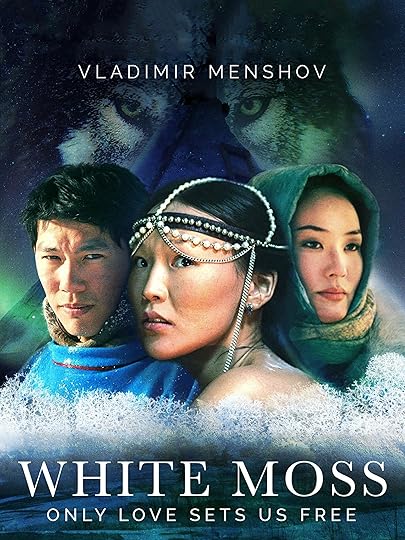
NOTA #2. Como dato adicional, la novela cuenta con una adaptación al cine (White moss [Белый ягель], 2014) que quizá me anime a ver en algún momento.


En conclusión, no fue una novela para mí. A pesar de que cuente con reflexiones interesantes, terminó siendo una lectura tediosa y frustrante, sobre todo por estar tan centrada en roles de género tan marcados, con comportamientos y actitudes molestos y reprobables en mi opinión, aun considerando el claro choque cultural. Recomiendo más su “novela previa”, es decir, Aniko del clan nogo.
Profile Image for CanadianReader.
1,337 reviews199 followers
February 7, 2026
Hans Christian Andersen’s “The Snow Queen” was a favourite of mine in childhood. In that story, I first encountered Laplanders, also known as the Sami, people of the reindeer. However, until reading White Moss I knew nothing about the Nenets, another group of indigenous reindeer herders, who live on the Yamal Peninsula in northwest Siberia, over a thousand miles east of the traditional lands of the Sami.

A brief introductory note informs us that the author of this novel, Anna Nerkagi, a Nenets woman, was born on the Polar Ural tundra in 1951. At age six, she was taken away from her parents to attend a Soviet boarding school. She went on to university in a city east of the Urals, but ultimately returned to her homeland with her husband. There she set up a school where Nenets children could receive an education that did not discount their culture.

White Moss focuses on the conflict between traditional life and modernity. Written in Russian, it was originally published in 1996. Now Irina Sadovina has translated it into English for the Pushkin Press. While the book is a rich, fascinating, informative, and spiritual one that provided me with considerable insight into a culture very different from my own, it also posed some challenges. As a Canadian, I’m aware of the history of my own government’s repressive measures against indigenous people—not the least of which was the residential school system that separated children from their parents, prohibited them from speaking their own language, and cut them off from their culture. That was useful knowledge to have in reading this book, because it turns out that things were not so different for the Nenets at the hands of the Soviets. However, additional online research was required in order to understand aspects of Nenets’ culture, particularly the people’s spiritual beliefs and their interactions with the Soviets, both of which figure in the novel.

Boarding schools that deprived children of their language and culture were not the first Soviet impositions on the Nenets. Starting in the 1930s under Stalin, these patriarchal and patrilineal nomadic people were forced to live on “kolkhozy”—collective farms/villages—and to pay taxes in reindeer meat. Traditional husbandry of reindeer herds was replaced by the modern methods of Soviet “experts,” including the industrial slaughter of the reindeer. (Some of the most moving sections of Nerkagi’s novel focus on the relationship between the male characters and their animals. Every Nenets man has a special reindeer. Associated with rituals and considered sacred, it is not harnessed or killed until it can no longer walk.) I believe it’s accurate to say that the Nenets men were most adversely affected by Soviet policies and practices. Deprived of their identity and authoritative role as herders, men were given responsibilities on kolkhozes which were regarded as the traditional work of women. Many Nenets men, diminished and demoralized, turned to alcohol. It should be noted, however, that unlike the Sami who have become sedentary, the Nenets resisted control and have been able to maintain their traditional ways. Nearly all the details I’ve mentioned here make their way into Nerkagi’s novel.

It is not clear exactly when White Moss is set, but it appears to be sometime during the last quarter of the twentieth century. It is, I think, notable and perhaps a little surprising that the female author should have chosen a male as her central character. I don’t know how representative Nerkagi’s 26-year-old protagonist, Alyoshka, is of the young Nenets men of his generation, but it appears that male experience offered greater scope for the author to explore the conflict between traditional and modern ways, the values of a collectivist culture and an individualistic one. It seems to me that Nenets men had/have more to lose by joining the dominant society.

The novel opens with Alyoshka’s frustrated widowed mother bringing back a girl from another clan for her eldest son to marry. What plot impetus there is derives from the question of whether he will accept this young woman as his wife. For years, Alyoshka has been stalled, arrested in assuming the mantle of Nenets manhood. He has longed for and awaited the return of Ilne, his childhood sweetheart, who left for school one year while he stayed back to help his mother and younger siblings. Ilne has never returned to her people (and her perspective is entirely absent in the novel). Her father, Petko, is also devastated by her abandonment. His wife has died, and he’d hoped his daughter would rejoin him to tend the fire and the table—the traditional role of the Nenets woman—and, most of all, that she would marry Alyoshka.

Nerkagi skillfully and often lyrically presents the dilemmas and points of view of the young man and the old one. We are also given insight into the minds and experiences of Alyoshka’s mother (apparently widowed when her children were young), Petko’s close friend Vanu, and another Nenets man, Khasawa, who has suffered great hardship and a significant rift with his acquisitive Russian-acculturated adult children who return to demand their patrimony, as they’ve learned Russian offspring do. It is the order of things in Nenets life for children to care for the parents who nurtured them without expectation of reward. Both Petko and Alyoshka’s mother have worries about who will keep them now that they are old. I found Nergaki’s exploration of the anxieties of these two Nenets elders to be very moving.

Alyoshka has experienced enough modern schooling to imagine a marriage that is not dictated by tradition—superstitious rituals, the strict gender roles of the Nenets, and the expectation to produce children—but one that is freer, more a relationship of equals. He naively and idealistically believed that Ilne understood and shared his view that theirs was a spiritual bond. He must come to terms with the fact that she did not and reconcile himself to the reality of his situation. While his struggle is at the centre of the novel, the challenges of the other characters are also depicted in some depth, and by the end I felt I had a sense of culture and values of these indigenous people.

This is not your typical contemporary novel. It requires patience and a certain amount of work. My interest in the subject matter enabled me to persist, and I’m glad I did. This is a rewarding and often beautiful novel that is deserving of another reading. Having said that, I’ll state again the perspective of a young female Nenets woman is noticeably absent. (Yes, we have an idea of the suffering of the bride Alyoshka’s mother has brought to him, but it is a glimpse only.) I tend to think that if I’d been faced with Ilne’s choice—that is, if I’d been offered an alternative to the rigid sex roles of the Nenets—I would’ve chosen just as she did.

Thank you to Net Galley and Pushkin Press for a free prepublication copy of this book.
Profile Image for _libriamici_.
54 reviews5 followers
November 13, 2024
Il racconto è ambientato nella Tundra, dove un giovane, rimasto a vivere con la famiglia, si trova diviso tra l’attesa del ritorno della ragazza che ama, partita per la città, e il proseguire la sua vita sapendo che nessun'altra potrà mai prendere il suo posto nel suo cuore.

La scrittura dell’autrice è estremamente poetica e in certi punti quasi astratta, tanto che la forma prende il sopravvento sulla trama. Si percepisce un forte legame con la cultura delle popolazioni della Tundra, e i temi del legame familiare e dell’amore sono centrali. L’autenticità del racconto è evidente, grazie alla conoscenza diretta dell’autrice dei luoghi e delle tradizioni. Tuttavia, proprio per questo, mi sono trovata immersa in una cultura che non viene spiegata del tutto, con l'uso di parole in lingua locale che restano un po' misteriose per chi legge.

È stata una lettura interessante, anche se non ha del tutto rispecchiato le mie aspettative. Resta il fatto che *Utopia Edizioni* ha un catalogo che sicuramente terrò d’occhio, ricco di titoli intriganti!
Profile Image for letturalmente.
42 reviews7 followers
March 2, 2024
"Muschio bianco" - Anna Nerkagi
⭐️⭐️⭐️⭐️

Se di "Aniko" mi sono infatuata, di "Muschio bianco" mi sono innamorata.

Il libro affronta con maestria il tema delle scelte fondamentali della vita: restare o andare, accogliere o respingere, tradizione o modernità, amare o idealizzare l'amore, vivere nel presente o rimanere ancorati al passato, perdonarsi o punirsi. Attraverso il viaggio dei personaggi, raccontato con uno stile immaginifico e poetico, ricco in aforismi, l'autrice esplora i dilemmi universali della nostra esistenza, dall'amore alla morte, mostrando quanto possa essere condivisa l'esperienza umana nei suoi momenti di smarrimento e riflessione. "Muschio bianco" è un romanzo coinvolgente che lascia un'impronta profonda, perché non importa dove sorge il sole se, alla fine, ognuno di noi può sentirsi perso per poi riscoprirsi e ritrovarsi.
Profile Image for Doreen.
1,285 reviews50 followers
April 10, 2026
3.5 Stars

This novel, written in Russian and first published 30 years ago, is now available in English.

I had never heard of the Nenets, Indigenous people living in Siberia in the Russian Arctic. This book focuses on these reindeer-herding nomads.

Alyoshka is 26 years old when he reluctantly agrees to be married, though he pines for Ilne who left the community years earlier for life in the city. He struggles between tradition and duty and his personal desires. Alyoshka’s mother worries about her son’s unwillingness to follow age-old customs which emphasize the importance of marriage and family. Petko, Ilne’s father, is grieving the loss of his wife and suffers loneliness since his daughter has abandoned him. An old man, he contemplates his role in the community during his remaining years and his death.

The time period is unclear but there are references to the Soviet Union so obviously it is set pre-1991. What is clear is that it is a period of transition in the lives of the Nenets. Their traditional lifestyle is facing opposition. For instance, the government removes children from their families and takes them to boarding schools where Indigenous languages and native culture are banned. Other Soviet-era interference is also mentioned in terms of the corrupting influences of money and alcohol. The Soviet administrators who are to assist the Nenets know nothing about them: “These strangers resembled heads sewn on foreign bodies with rotten threads, and sewn on the wrong way besides, back of the head pointing forward, eyes backward.”

This is a slow-paced, quiet, reflective novel. There is little action; the focus is on characters’ internal struggles. I appreciated that Alyoshka, Petko, and Alyoshka’s mother all achieve some insight and peace.

I enjoyed learning about the culture of the Nenets. Their lives are very much shaped by reindeer herding: “the reindeer was the root of the life of the Nenets, its soul” and “reindeer were not money but brothers in this life – untiring, sacred brothers in destiny and in grief.” They have a great respect for the land and its resources since “all living things share the same fate.” The men hunt for food but do not take more than necessary: “hunting is not murder and not a game of hide-and-seek with the beast and with one’s own conscience, but a struggle. An honest struggle of equals.”

The community has a strong sense of community obligations. Alyoshka’s mother believes that the meaning of life is to live and to work honestly. Vanu, Petko’s friend, speaks of the laws of work and of kindness. The men bemoan the fact that children have forgotten “the law of their land: children feed fathers and mothers once they stand on their own feet” and have adopted “the foreign law: to take from the parent while he can still give.”

As so many societies, Nenets society is very patriarchal: “Only a man could be the master of the Great Life. For that, he was given strength and intelligence. And the woman was the mistress of the hearth . . . she had a duty to be near [the man].” I found it interesting that, other than Ilne who has abandoned life on the tundra, women are not named. Petko’s wife is only referred to as the Lamdo woman. Women hesitate to speak at gatherings; for instance, Alyoshka’s mother makes a request only “after the period of silence that befits a woman.” Women wait for the man to eat: “they would not touch the food, however hungry they were, until he ate the first bite.” On her wedding day, a bride sits “in the place where a Nenets woman sat only once in a lifetime. Beside the groom: not on the floor planks, where she would have her eternal place for all the days of her life.” To keep the tent warm, to look after her husband, is “the first commandment that a woman, a wife, a mother had to follow. This was her main job on earth.” There is an attempt to emphasize the importance of women, but, for me, it doesn’t lessen her secondary status and “the endless work of a woman.” Petko’s wife died so “Now there was no one to set the family tea table in the morning, no one to mend the boots, to start the fire. When a woman dies, she takes half of life with her . . . [and] takes away a part of your soul.” Unfortunately, what remains with me is a horrific scene where a woman is beaten with “a sturdy trace made of walrus hide,” described as “the age-old instrument of punishment.”

As befits the Nenets’ animistic worldview, the author uses lyrical prose replete with nature imagery. Metaphors and similes using trees, animals and birds abound: “His short, troubled sleep resembled the oblivion of a bird who had nested on an impregnable rock covered in a cold, murky fog” and “Khasawa looked like a ptarmigan plucked by a hawk” and “Their words, sharp like the calls of ravens who had spied a carcass, seemed like a violent argument” and “he felt that an empty space had formed near his heart or inside it, like in a bird’s nest when the last fledgling flies away, leaving only the down from its feathers.”

The author, born in the Polar Ural tundra, belongs to the Indigenous Nenets community. She was separated from her parents by the Soviet authorities and sent to a boarding school, but as a young woman she returned to the nomadic way of life. Obviously she is uniquely able to describe the lives and customs of her people and the challenges they face. White Moss reminds me of Stolen by Ann-Helén Laestadius (https://schatjesshelves.blogspot.com/...) which is about the Sámi living in northern Sweden. I recommend both books to readers who enjoy learning about Indigenous cultures.

Note: I received an eARC from the publisher via NetGalley.

Please check out my reader's blog (https://schatjesshelves.blogspot.com/).
Profile Image for Andy Weston.
3,313 reviews242 followers
January 20, 2026
A nice idea, but the slow nature of the telling of the story doesn’t suit Nerkagi’s writing. I read some reviewers call it ‘meditative’ prose, but I found it tedious and struggled to keep concentration.
Profile Image for Marcello.
7 reviews
July 20, 2024
Tempo di lettura del libro
4 ore o poco più

Cosa ho trovato in “Muschio bianco”
L'inquietudine di essere lasciati indietro, il precario legame tra generazioni, amore e pietà, il peso delle aspettative degli altri, fare delle scelte e diventare adulti. Vivendo nella tundra siberiana.

Il libro comincia così
Le nozze del giovane vicino erano state per Petko come un granello di sale su una ferita aperta. Il matrimonio è una tappa importante, essenziale della vita, e nessun dolore, neppure il più atroce, dovrebbe impedire all’esistenza di scorrere, proprio come un masso, scagliato in un fiume, non può invertirne il corso. L’acqua lo aggirerà e di nuovo riprenderà a fluire com’è stabilito che sia.


L'autrice
Anna Nerkagi (1952) appartiene alla comunità dei nenec, nomadi della Siberia. Le autorità sovietiche la separarono dalla famiglia, costringendola a vivere in collegio. In quel periodo apprese il russo, lingua in cui scrive tuttora. Nel 1980 dopo il suo esordio letterario è tornata a vivere nella tundra. Qui ha fondato una scuola per dedicarsi all’educazione dei giovani nenec. Si batte da decenni per la salvaguardia e la valorizzazione della cultura delle minoranze in Russia.

"Muschio bianco" e "Aniko"
Utopia Editore ha anche tradotto in italiano un altro romanzo di Nerkagi, Aniko, ambientato sempre nella tundra sovietica e con protagonisti nenec. "Aniko" è l’esordio letterario di Nerkagi nel 1977 mentre "Muschio bianco" è di vent’anni dopo. Anche se c’è sicuramente un legame forte tra questi due libri, con temi simili, si possono leggere indipendentemente. Io ad esempio ho letto prima "Muschio bianco", poi "Aniko" (che si concentra di più sulla quotidianità dei nenec), e infine ho riletto "Muschio bianco".

Cose che ho approfondito dopo aver letto “Muschio bianco”
I due libri di Nerkagi sono ambientati durante il periodo sovietico, nella seconda metà del novecento. Già nei libri si percepiva l'incombere di trasformazioni irreversibili nella quotidianità dei nenec; volevo conoscere l'evolversi di questi cambiamenti.

Secondo un documentario di una decina di anni fa della BBC all'epoca nella tundra siberiana vivevano ancora circa 10000 pastori nomadi con 300000 renne.
Le renne sono utilizzate come cibo, per la pelliccia, per fabbricare utensili ma anche come mezzo di trasporto durante le migrazioni stagionali per trovare “pascoli” di licheni, che le renne mangiano dopo aver scavato sotto agli strati di ghiaccio che ricoprono il terreno. Le renne sono anche vendute ai grandi macelli della zona, che distribuiscono sul mercato internazionale la carne come ingrediente gourmet e le pellicce. Vedendo nel documentario le centinaia di renne ammassate e pronte ad andare al macello mi è tornato subito in mente il personaggio di Chasava in "Muschio bianco", il dolore e la colpa che prova nei confronti delle sue renne.
I macelli e gli impianti di estrazione di gas naturale rappresentano le principali occupazioni alternative al fare i pastori.

Anche oggi, come nei libri di Nerkagi, a certo punto della sua esistenza un nenec deve decidere se rimanere un nomade della tundra oppure se sistemarsi in città. C’è però un’importante differenza rispetto ai tempi raccontati nei due romanzi di Nerkagi, “Muschio bianco” e “Aniko”. Se nei libri la vita cittadina è una tentazione, pregustata negli anni della giovinezza quando i nenec vivono in collegi lontani dalla famiglia, oggi ormai questa scelta è quasi obbligata dal ridursi degli spazi di migrazione dei nenec a causa dei nuovi impianti di estrazione di gas naturale e le morie delle renne, rese molto più frequenti dal cambiamento climatico (prima succedeva solo una volta per generazione) e che mandano ogni volta sul lastrico decine di famiglie. Oltre agli impianti stessi, pure l’ampliarsi della rete di collegamenti ferroviari necessari al trasporto del gas naturale ha complicato sempre più lo spostamento delle renne attraverso la tundra.
Lo sfruttamento del suolo era cominciato negli anni ‘70 e ‘80 sotto al governo sovietico. Difatti già in “Aniko” si ritrovano dei riferimenti ai primi sviluppi dell’industria estrattiva in Siberia, con geologi mandati in giro per la tundra in cerca di giacimenti. La stessa Nerkagi è laureata in geologia.

Anche se negli ultimi anni c’è stata una maggiore sensibilizzazione sul tema, l’educazione scolastica, oggi come ieri, è sia fonte di emancipazione che di perdita delle radici per i nenec: sono state aperte delle scuole nomadiche ma è sempre in vigore il sistema nato a metà del secolo scorso che prevede l’allontanamento dei bambini dalle famiglie per lunghi periodi e la sistemazione in collegi. Nel documentario della BBC, una delle protagoniste, Natasha, racconta come lei sia sì soddisfatta della sua vita attuale di nomade della tundra ma che da giovane avrebbe voluto continuare a studiare per diventare medico se sua madre non si fosse opposta. E probabilmente stiamo parlando di fine anni '90 / inizi anni 2000 dato che nel documentario Natasha avrà circa una trentina di anni.

"Muschio bianco" si apre con la celebrazione di un matrimonio combinato. Anche il matrimonio di Natasha è stato combinato dai suoi genitori. Alla domanda della documentarista della BBC se anche lei in futuro avrebbe deciso per il matrimonio dei suoi figli Natasha risponde che dipende, se i suoi figli torneranno a vivere nella tundra oppure se sceglieranno di vivere in città.
In “Muschio bianco” il protagonista Alëška, ormai ventiseienne, cede alle richieste insistenti della madre per farlo sposare ma poi una volta sposato si rifiuta di accettare la moglie come tale perché lui ama un’altra, la figlia di Pekto che però non vive più lì e che non è mai tornata.
Lui si sposava senza amore e Petko non aveva più rivisto la figlia, l’unica che avrebbe potuto riscaldare d’affetto la sua vita, nei giorni che ancora gli restavano.
Profile Image for Amalia Gkavea.
39 reviews
January 21, 2026
‘’The heart doesn’t count. The heart is stupid.’’

This is a harsh world we are led into. A frozen land inhabited by people whose hearts have turned to ice, moulded in hardship, isolation and uncertainty. Why is it always our heart that turns to ice so easily? Why do we think that the answer to survival is sacrificing love and desire? Since when do propriety and obedience guarantee survival?

Giving voice to the Nenet community of northern Siberia, Anna Nerkagi demonstrates the deepest human emotions and allows us to face the questions and possibly discover the answers. A Herculean task, really. What can be more draining than acknowledging our life has been a bloody waste?

‘’But no. Love flees, taking back its beautiful soul and leaving behind a scraggly skeleton.’’

Alyosha is trapped in a marriage of convenience. The woman he loves has left for the city, having the courage to forge her own fate, according to her will and not in obedience to ancient sets of principles which dictate that the man is far superior to the woman. A woman is treated only a little better than an animal. Equality and choice are unknown words in this community. Her father has denounced her and only Alyosha has remained to weep for her. But how hard it is to weep for someone who hasn’t died but simply left, not considering you reason enough to stay. His mother thinks that producing children is the sole purpose of his existence, so that the lineage doesn’t die, so that the people keep on perpetuating this sorrowful existence.

‘’The loon weeps for what has been. But when it starts to wail on the shore in the middle of a clear day, it annoys people with its pathetic, terrible cry.’’

It’s a hard review I have to write, I confess. As hard as the convictions permeating the narrative which find me in absolute disagreement. How can I find it in my heart to sympathise with mothers who exercise the worst kind of emotional dictatorship over their children? For men who think that a woman’s mind is simply not able, let alone worthy, to question and understand? Yes, the writing is extremely beautiful. It is poetic, reads like a fable, and very often veers into the philosophical. It both kept me at a distance and brought me closer as my feelings of rage and loathing were boiling. The heartache and the injustice jump out of every page, and it was too much to bear at times.

Duty. Duty. Duty. What about love? What about trust? What about choice? Why is a person coerced into compromising into a life that will make them miserable just because family, religion or nation demand it? Think of it and let us all think of our lives and our choices. I am certain we won’t be able to face the answers most of us are willing to suppress. Hide and obey. Stay within a convenient, safe, religion-accepted, socially-demanded, utterly proper, meaningless life. No fire. No desire. No soul. Herd your cows. Breed. Eat and die. Human waste.

What a sad existence.

It’s a quick read, beautiful and demanding. Even though the writing style and the characters didn’t resonate with me, even though the language became too flowery in parts, in my opinion, without purpose, even though the plot is almost non-existent, you need to read it to come into contact with people who live in a universe of their own. Isolated. Forgotten. Voiceless. And this state of unwilling inertia gives birth to cruelty.

Read it to face questions that you might be terrified to address. Read it to witness the human hypocrisy in all its rotten glory.

‘’If life was a journey, then what was love? And why was his soul aching with love?’’

Many thanks to Pushkin Press and NetGalley for the ARC in exchange for an honest review.

My reviews can also be found on https://theopinionatedreaderblog.word...
Profile Image for Fran .
826 reviews945 followers
January 1, 2026
“Without the reindeer, a Nenets becomes a land-bound rock.”

“There is no heavier woe, then to become in your life a person without a table.”

Alyoshka’s mother knew the Great Life contained the truth: to live and to work, honestly. “She needed to communicate her decision to the soul of the tent…(she) lovingly stroked the three thick, mighty poles…They were sacred…They carried the weight of the past…silently guarding the shadows and souls of the departed…Where there are children, there is no death…When buying a woman, a man buys life.” The elders traveled through the tundra to find a woman for Aloyshka “whose hands would be not lazy but quick and deft.” He needed to be married. A woman would give life to the fire and the tent. Aloyshka felt that his mother was preparing to trap him into such a marriage.

For seven years, Aloyshka pined for Ilne, Petko’s daughter; however, she never returned home after residential boarding school. She lived far away and spoke words in a new language. As in “centuries past, people still needed to survive on their own, but today’s children got lost in this life like in a thick unfamiliar forest.” Take Aloyshka who shunned adult responsibilities including hunting. Now he must be responsible for everything, his words would be law in his tent. His woman would be the mistress of the hearth. She would sit by his knee, becoming a part of him. This was the truth of life.

Petko’s daughter Ilne chose not to return home to her reindeer herding family. Since Petko’s wife had died, there was no one to set the family tea table in the morning or to start a fire. He left his tent-poles and reindeer hides on a sledge in a Nenets ancestral site and now occupied the empty side of Vanu’s tent.

Vanu wanted to give back what was borrowed. “Everyone sees debt differently: in one person’s eyes it can be as small as a sniff of tobacco, while another may spend their entire life tormented by not being able to give back what was taken.” “Every man had a reindeer team which was his pride, his joy…Vanu would sometimes think that the reindeer understood each other no worse than humans.”

Khasawa traveled from camp to camp, like an orphan. His tent-poles were cracked, his reindeer hides patched. One day, his children returned wearing heavy fur coats over Russian clothes.
Khasawa spoke-sang a yarabts ( his life story). “Reindeer were not money, but brothers in this life.” If he were to become reindeerless, he could not migrate. The children claimed it was Khasawa’s duty to turn his reindeer into money. “They forgot the law of their land: Children feed fathers and mothers once they stand on their own two feet…” Khasawa walked among his reindeer and wept.

Given that today’s youth dream of the world at large, this read highlights the need to maintain the Nenets language and reindeer migration patterns. Author Anna Nerkagi returned to the nomadic way of life in the 1980s. She started the Tundra School for Nenets Children embracing both traditional and modern education. A highly recommended read.

Thank you Pushkin Press and Net Galley for the ARC in exchange for an honest review.


Profile Image for Sam.
289 reviews1 follower
March 9, 2026
**3 stars**

*White Moss* by Anna Nerkagi is a quiet, reflective novel that explores the tensions between tradition, personal longing, and the slow transformation of life in the Siberian tundra. Written from within the Indigenous Nenets community, the book offers a rare and intimate perspective on a culture shaped by reindeer herding, harsh landscapes, and strong communal expectations.

At the center of the story is Alyoshka, a young man on the verge of marriage who finds himself haunted by the memory of Ilne, the woman he once loved. Years earlier, she left the nomadic camp for the city, choosing a different future and leaving Alyoshka behind. As his wedding approaches and his mother grows older, the pressure on him to fulfill his role within the community becomes impossible to ignore. What unfolds is less a traditional plot and more a meditation on what it means to belong to a place and a people while still yearning for something beyond them.

Nerkagi’s prose is often strikingly lyrical. The tundra is rendered with vivid clarity, its endless snow, fragile plant life, and quiet seasonal rhythms shaping every aspect of the characters’ lives. The natural world is not simply a backdrop but a living presence that mirrors the emotional states of the people who inhabit it. Moments of stillness, reflection, and observation give the novel a contemplative quality that feels both intimate and melancholic.

The novel also examines the subtle fractures within the community itself. As different characters confront change in their own ways, tensions arise between tradition and adaptation, duty and personal desire. Nerkagi portrays these conflicts with empathy and nuance, rarely framing them in simple terms of right or wrong. Instead, she shows how deeply rooted cultural expectations can both sustain and constrain the individuals who live within them.

However, the same elements that make the novel thoughtful can also make it feel distant at times. The narrative structure is loose and occasionally fragmented, moving between perspectives and reflective passages that sometimes disrupt the emotional momentum of the story. Alyoshka’s internal struggle is compelling in theory, but the novel often approaches it indirectly, which may leave readers wanting a deeper emotional connection to his choices and motivations.

The pacing is also very slow, with long stretches devoted to atmosphere and observation rather than clear narrative progression. While this style reinforces the reflective tone of the novel, it can make the story feel more like a series of impressions than a fully developed arc.

Still, *White Moss* remains a meaningful and culturally significant work. Its value lies not only in its story but also in the perspective it offers, bringing attention to the experiences and traditions of the Nenets people through a deeply personal lens.

Ultimately, *White Moss* is a poetic and contemplative novel that rewards patient readers, even if its understated storytelling may not resonate equally with everyone.
Profile Image for Jo’s Haunted Library.
50 reviews4 followers
January 4, 2026
My first read of 2026 and it was a great one. I am always trying to learn more about other cultures
and before reading White Moss I did not know anything about the Indigenous Nenets nomadic community.

White Moss is set in the background of the Siberian tundra, an environment that is as cold and beautiful as it is unforgiving. This is a book about survival, loss, grief and love, about the sacrifices of the unnamed women who keep the tent fires burning and about the strength of a community that tries to keep Nenets culture whilst fighting the greed of the modern Soviet men. It is also a book that centers the importance of Indigenous tradition and how essential reindeer are to Nenets survival.

When I stated reading it I knew it would be a slow read but one that would stay with me. The translation is beautifully done and the writing is poetic and emotionally charged. At times I felt the despair of the individuals whose lives we become familiar with: young Aloyshka, old man Petko, Vanu and Khasawa. 

Aloyshka has been waiting seven years for the woman he loves to come back to the camp. However, he is now a man being pressured into marriage by his mother. 
Old man Petko suffers in his grief of losing family and his daughter who does not come back to camp anymore. He battles with feelings of belonging in the community and old age.
Vanu, who wants to help his old friends and loved ones and to give back what he can. 
Khasawa, a broken man who despairs in overwhelming guilt of losing his family and his reindeer.

A heartfelt read that gives us a glimpse of the Nenets’ Word and Great Life and the weight it carries.

The author herself, Anna Nerkagi, belongs to the Indigenous Nenets nomadic community and returned to the Yamal Peninsula in 1980 after having being taken by the Soviet authorities from her family as a child, and sent to a boarding school where Indigenous identity was banned. I definitely want to read her other works.

This was a 5 🌟 read for me, and will keep thinking about it for a long time.

Thank you Puskin Press for sending me an early copy
Displaying 1 - 30 of 65 reviews