Young Susumu Serikawa is at a turning point. Should he continue his boring school education or chase his dream of becoming Japan's most famous actor? And how can he do that now that his father is dead, his mother is bedridden and his older brother is a university dropout?
In the hands of skilled author Osamu Dazai, Susumu's dilemma becomes a uniquely powerful tale of teenage angst and survival. Based on the diary of a real-life actor, Serikawa's entries are full of biting judgement and egotism alternating with shame and self-reproach—but also a touching idealism and faith that ultimately guide him forward.
This novel, translated into English for the first time, probes the same self-destructive dynamics that torment the young characters in Dazai's other works, but with a vastly different outcome. The bold, contemporary translation by Michael Day delivers an unforgettable new protagonist for Dazai's many fans.
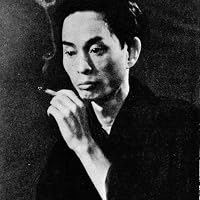
Osamu DAZAI (native name: 太宰治, real name Shūji Tsushima) was a Japanese author who is considered one of the foremost fiction writers of 20th-century Japan. A number of his most popular works, such as Shayō (The Setting Sun) and Ningen Shikkaku (No Longer Human), are considered modern-day classics in Japan. With a semi-autobiographical style and transparency into his personal life, Dazai’s stories have intrigued the minds of many readers. His books also bring about awareness to a number of important topics such as human nature, mental illness, social relationships, and postwar Japan.
A diary entries of a teenager about his life, family and aspiration to become an actor. Said to be inspired from a real life actor, this book felt very much Dazai and his cynicism and i like it for how unflinchingly honest the protagonist is
not my favorite osamu dazai book, but some parts felt like my diary was published without my permission. it had moments that were painfully familiar, like reading thoughts i never knew how to put into words.
I want them to carve this on my tombstone: “He loved making other people happy more than anything!”
Whenever I finish reading a book by Dazai I’m always left feeling empty, emotional but slightly hopeful - especially with this book. Based on a real actor’s diary, the story wove in Dazai’s usual writing style that I’ve grown to adore, but this time we’re dealing with a protagonist that faces his demons instead of wallowing in sadness. At this point I think I’ve read all the english translated books by Osamu Dazai, but I’ll wait excitedly for if ever I find more.
I was glad this book was short because there wasn’t much to grab onto. I would’ve given it three stars but the translator’s choices were really odd. This book was written in 1940s Japan and they use millenial and Gen Z slang throughout in the translation.
ngl i feel like imma forget abt this book in like 2 weeks. the plot is very nothingburger its a chill slice of life for like 75% of the story. The highlight of this book is definitely the narration by Susumu. Very relatable, engaging writing that delves deep into his inner thoughts that many of US can relate to. Felt like I was back in my old body during certain points. Def worth the read. Not as dark as Dazai is known for. I'm curious to read those now. Maybe I'll pick up No Longer Human or schoolgirl. I should get a diary.
Dazai takes us through the eyes of a young actor as they realize there is no path returning without tears, but at the very least the struggle will bring joy to others in the end.
3.5 and while I am trying to rate this book on its own merits, there are some bonkers things about the translation I need to address, see the last paragraph of this review.
Typical Dazai protagonist, a young man swinging wildly between hope and despair, between thinking himself the greatest and the dumbest, between swearing to study his ass off and immediately losing the will to do so. Sees himself as apart from the world in both a good way and a bad way. Honestly relatable.
The translator's note finds this story hopeful (in the vein of Dazai's better-known and more melancholy books I suppose) but I'm not sure. While it's true Susumu by the end is determined to stick out his [not especially well-earned] spot in a prestigious acting troupe even though he hates the daily grind but he knows there are little moments that make it worth it . . . every step in this book we've seen him more or less give up when things get even a little bit hard. So maybe he has really found the place where he will stick it out . . . or maybe he'll give up in another year.
OKAY. About the translation, touted on the back as a "bold contemporary" one. I liked the contemporary language for the most part, it made it very readable . . . however there is a fair amount of MODERN SLANG peppered throughout that was distracting and downright made me feel like I was losing my mind. Phrases like "sorry for roasting you" "this place is killing my vibe" "it was a dumpster fire of a day" "shoot your shot" took me RIGHT OUT. This book, like most of Dazai's books, are of a specific time and place, a strange time in Japan during and post WWII, and so I really disliked this choice.
I know this book is new to English-language literature, but I have not seen a single other person say anything about this and it really made me feel crazy.
I personally loved this book. A few days prior, I had read Haruki Murakami’s “Men Without Women,” and it reminded me of “Drive My Car.” The only similarities really being the narrator’s careers in acting. Except, these two shared different reasons and idealizations about the art. It was really cool to make those connections.
I’ve fallen in love with Dazai’s writing style, especially after reading his notable works. In this piece, I kept forgetting that it wasn’t his own fictional story, but a retelling of his friend’s diary. I found it interesting that Dazai replaced his friend’s romanticism of Marxism with a devotion to Christianity and God. Dazai’s own novels reflect a dark, twisted philosophy that seems to be nihilistic or existential at times. I never would’ve taken him as a man who would respect religion. Unless Dostoevsky left an impression on him, I would’ve assumed he’d take up atheism.
I liked Susumu Serikawa’s character, it felt relatable to me as a teenager. The fear of failure, the dread of the unknown; it’s all captured beautifully in this piece. It reminds me of “Schoolgirl,” another book close to my heart.
“It wasn’t that I thought that I was handsome and everyone else was ugly. That’s ridiculous. If I were really that handsome, I wouldn’t care what other people looked like. I’d have a high tolerance for other people’s ugliness. The thing is that people like me, people who hate what they see in the mirror, can’t help noticing how other people look. I sympathize with other ugly people, thinking, What a drag it is to look like that. I can’t not notice” (Dazai, 52).
This quote genuinely shocked me. It was surprising to see someone blatantly confess a vice. It was impactful to see such vulnerability in this section. I remember that this is supposed to be a teenage boy’s diary, but not everyone will admit to a shameful quality. It made me relieved that everyone goes through periods of insecurity and doubt, that it’s not a sin to undergo human emotion.
i wanted to love this much more than i did, and being a big Dazai fan who has worked his way through almost all his translated works, i had pre-ordered this and was super excited, but this was a, surprisingly, sparse experience for me. really, it is a 2.5 for me, although i have rounded up to a 3 because i have put a considerable amount of its failings down to the translation. with Dazai’s other English translated works, whether Self-Portraits, The Setting Sun, No One Knows, No Longer Human, The Flowers of Buffoonery, or The Beggar Student, i feel as though i can flick to almost any page and grab a fistful of words, phrases, sentences, or passages that provoke some kind of inspiration, insight, or reflection in me, but here there were very few underlinings, which for me is unusual with Dazai, and i think that largely comes down to how strange this translation felt.
that is not to say there is nothing here as the diary swings between arrogance and self-doubt in a way that feels very reflective of the melodrama of youth. there is, also, something interesting in being able to physically track his development through the pages, moving from someone who is not quite as bright-eyed as the framing might suggest towards a more realistic adult. i also liked the fact that the diary does not proceed with the rigid consistency of a day-by-day account, with entries varying in length, gaps naturally emerging, and the structure consequently feeling much more like an actual diary than a carefully constructed narrative pretending to be one. it has also, somewhat unexpectedly, made me want to start journaling myself, and, by journaling, i mean that i have been thinking about the contents of my day in my head and then have consistently failed to actually write any of it down. i have blamed this on not having the perfect notebook, although i am increasingly convinced that there is no such thing and that this is simply another excuse. there are also some observations about the selfishness of society that felt surprisingly applicable to the post-Covid world. 'If you don't lose your footing on your own, there's always someone who will try to knock you down; is perhaps the sentiment that stayed with me most, particularly because the diary repeatedly reveals how precarious the narrator’s confidence actually is, with his arrogance and insecurity constantly coexisting, with one often seeming to be a defence against the other. i also cannot entirely agree with the interpretation of the ending as hopeful. yes, by the end he seems determined to stick out his acting career, and there is certainly a greater sense of realism and resolve in him than there was earlier in the diary, but we have also watched him repeatedly give up whenever things become even slightly difficult, and i found myself wondering whether this newfound determination is genuinely a transformation or simply the latest phase in the cycle? perhaps that uncertainty is more interesting to me than a straightforwardly hopeful reading.
however, the translator’s choices are honestly confusing. yes, i understand that this is the diary of a teenager and that slang and colloquialisms will inevitably be present in the original, but translating a Japanese diary from the 1940s with phrases like 'sorry for roasting you', 'this place is killing my vibe', 'fugly', 'foodies', and 'it was a dumpster fire of a day' is so jarring that it repeatedly pulled me out of the book. it does not feel 'contemporary' in an organic way but rather that Day has forcibly transplanted modern slang into 1940s Japan. surely these cannot be the closest or most appropriate equivalents to the original phrasing? the result, to me, is anachronistic and actively detrimental to the reading experience, so much so i am cautious about buying Tuttle translations, particularly if Michael Day is going to produce another similarly 'bold, contemporary translation'. even the blurb seems to impose a dilemma on the book that is not really there by asking whether our diary's author should continue his education or chase his dream of becoming Japan’s most famous actor, but he never really wanted to continue his education in the first place. considering how frequently he avoids going to school, 'continue' already implies a sustained commitment that simply does not exist, and consequently feels as though the marketing has constructed a neat coming-of-age conflict that the diary itself does not, or very limitedly, present. had this been translated in a way that preserved more of the period and personality of the original language, such as by McCarthy or Keene, i think i might have found considerably more to admire.
“There’s nobody who doesn’t suffer. Smile while you fast.”
“Justice with a Smile” is a book that, quite frankly, deviates from Osamu Dazai’s known works—or so the majority say, since this is my first book from him. It is a biographical work based on the diary of a friend of Dazai who was a kabuki actor, though if I am correct, Dazai did tweak parts of it.
We follow a bright-eyed boy who, despite his attitude, is filled with hopes and dreams. He is not a stranger to thinking unpleasant things about the people around him, and yet he possesses a quality that is almost admirable. He has staggering self-esteem, but also strong self-efficacy. His inner monologues feel heavily influenced by Dostoevsky, Tolstoy, and even Nietzsche. At times, he almost leans toward a Napoleonic self-perception similar to Raskolnikov from Crime and Punishment if given the wrong push. The difference is that he is not nihilistic. In some ways, he almost feels like an anti-Raskolnikov.
He desires to be different and often views himself as above his peers, but time and time again he is met with humility and breaks down because of it. Yet somehow, he still manages to pick himself up the next day. He refuses to give in to normality. And he cares extremely for his family. He loved his brother and sister unconditionally and genuinely feels that he can conquer the extreme hardships of his family. What makes this even more compelling is that his motivations are not rooted solely in wanting to become an actor for the sake of fame or recognition. Rather, he sees acting as his final path and is driven by the desire to make people happy. He wants to give happiness to others. Similar to Raskolnikov, Susumu feels he is untouchable. A genuine confidence and grin of someone who feels he is above with pure intentions.
“Serving justice with a smile.”
Following this teenage boy as he develops and continues striving toward his vision almost feels like a testament to humanity itself: the ability to be beaten down repeatedly and yet never fully succumb to despair.
“The human race is pathetic, me included, but I wouldn’t let despair get the best of me.”
That being said, despite the sentiments and meaning I personally took from this book, I still feel that it lacked something powerful for me. The diary format—while I understand it is part of the artistic intent of the work—lessened some of the emotional heaviness. Instead of deeply immersing me emotionally, it felt more like a raw observation of a human life.
I started Justice with a Smile shortly after its U.S. publication, and I only recently picked it up again after being inspired while reviewing my own pithy diary entries from when I was teenager. The greatest curse in life is having been sixteen at some point (probably).
Justice with a Smile is a departure from Dazai’s usual gloomy story wheelhouse. Don’t fret—you will still find the typical Dazai tropes, including the glorious ambitions of the youngest son, high school as a form of ritual humiliation, and sudden ego drops met with bountiful episodes of hope. The work is said to be largely based on the diary of a close friend’s younger brother, but Dazai shows his hand through the continuous Goethe and Dostoevsky references (almost obnoxiously so). Christianity also takes center stage, which may or may not be a revision of the original diarists Marxist-sympathies. In the 1920s and 1930s, Japan cracked down on communist organizations; Dazai became involved in leftist organizations and provided them funding in his college years, which he later renounced after police and family pressure.
Other reviewers have commented that Susumu’s constant opining and changing whims seem unrealistic or overly childish; I thought otherwise. If anything, the bold and modern translation occasionally made it difficult for me to engage with the “period piece” aspect of the work. I don't think it necessarily detracts from the work, but it is certainly a choice.
Justice with a Smile was written shortly after Dazai was rejected on medical grounds from wartime mobilization as a writer, during what is often called the “middle period” of his career. This was a comparatively stable period of his life, especially when placed between the turmoil of his twenties and the much darker postwar years that produced The Setting Sun and No Longer Human. The brighter tone of Justice with a Smile makes this a particularly interesting piece.
[ Thank you to Tuttle Books and edelweiss+ for the advanced copy ]
I am a huge fan of Dazai's work and have been thrilled that more of it is being translated (and even re-translated).
The diary format of Justice with a Smile is still very characteristic of Dazai's typical style. It is full of the familiar self-deprecation and somewhat manic excitement in the protagonist as we follow him at the end of his time in grade school and his entry into college and the arts. What I did enjoy in this story was how childish the protagonist is while still feeling as though he is so much smarter than everyone else. He isn't stupid, but he's blinded by his own attempts at intellectualism that he makes foolish mistakes like so may of us (myself included) make during the transition from youth to adulthood.
Sadly though, I was somewhat bored with this one the longer it went on, and found the translation majorly lacking. There were instances of modern phrases ("bro", "dumpster fire", etc.) that took me away from time period of the story (1940s) and even attempting to write out dialect from another prefecture as something that resembles the accent of a stereotypical English orphan kid in London took me out of the Tokyo setting entirely. I found myself questioning the translation choices more than I was focused on the story. Being the Dazai fan that I am, it was disappointing to be let down by the translation and while I will always read anything that gets translated, I will be hesitant to purchase translations done by Michael Day based on Japanese literature.
Carries more hopeful tones than his more famous masterpieces, it follows a story of Susumu (inspired by real life actor T) and his inner mythology youth..until a failure breaks him. I love how this book is told in diary format hence we can see the inner conflict, the self acceptance, the resignation slowly enters, and make their own stand. It breaks everything he told himself; breaking his arrogance, self assurance (a little bit too much on that). and he surely can succeed as an actor. Real life hits, and he realized..sometimes i need to be smeared to appear cleaner and brighter.
But can you blame him though? He bloomed a little early- at the wee age of 16 and convinced his frontal lobe os developed, thinking everyone else is miserable and he has so much to live for? Blessed the innocence (and ignorance). Luckily his sh*t hits the fan pretty early and it dawns that just because you’re struggling, you are not social. It concludes with acceptance and honestly, I love how fleeting the tone is.
My favorite Dazai novel yet. Despite its innocuous diary-like presentation, with simple and colloquial prose designed to mimic that of a talented but contemptuous teenage actor, this novel is rich with storytelling gusto, strong narrative voice, and insight into the idealistic, self-destructive Japanese mind. Dazai's writing is intimate like no other; he wields ordinary language with such subtlety, conveying the harmonic overtones of delusional grandeur and slinking shadows of self-doubt in plain sentences that are truly befitting of a personal journal. The result is a narrator that leaps off the page, one that stays with you, a three-dimensionality you can relate to. I personally found myself struck by the narrator's relationship with his own ideals (or rather his rather vain infatuation with the aesthetic of the idealistic), his relationship to an imperfect but compassionate brother, and ultimately, his journey in overcoming himself in the arts scene as he seeks redemption and a brighter horizon.
Novel Justice with a Smile ini menghadirkan sisi lain dari Osamu Dazai, penulis legendaris Jepang di balik No Longer Human. Pada novel ini, dikisahkan tentang pencarian jati diri seorang remaja. Tokoh utamanya, Susumu, sedang bimbang, antara melanjutkan pendidikan atau mengejar mimpinya menjadi aktor paling terkenal di Jepang. Namun tanpa keberadaan ayah yang sudah meninggal, ibu yang sakit, dan kakak yang menyerah pada hidup, impiannya terasa jauh dari jangkauan. Berdasarkan kisah nyata dari buku harian seorang aktor muda, novel ini menggambarkan pergulatan batin, tekad, dan keinginan untuk bertahan di tengah tekanan sosial dan keluarga. Dazai menampilkan protagonis yang berbeda dari biasanya, seorang remaja penuh semangat yang berjuang menertawakan nasib di tengah keputusasaan. Inilah karya introspektif tentang mimpi, kegetiran hidup, dan keberanian untuk tetap tersenyum dalam menghadapi kenyataan. https://blog.periplus.com/2025/10/27/...
I was somewhat surprised to be honest by this book - Osamu Dazai is known for writng rather nihlistic and morose novels such as the two classic canon texts No Longer Human and The Setting Sun, whereas this novel while still featuring a misanthropic and self hating narrator is if anything inspirational and even christian, with the protagonist Susumu winning over adversity and achieving his goals of becoming an actor through perseverance and belief in god. In deed regarding christianity, the narrator quotes verses from the bible a lot and the novel even starts off with a quotation of a hymn, a stark contrast to the very negative if anything ironic portrayal of the religion in his later works like per se no longer human where he states that he can "not believe in heaven but only in hell". I am not super religous but reading the book made me want to go to church. I wish this more hopeful version of Dazai was featured more to be honest.
This entire review has been hidden because of spoilers.
I picked this copy up at Readings in Carlton. While I am biased, and this is not one of his best, in the world of literature Dazai is always a Five star writer. There are some brief lapses in the novel (for example when the protagonist berates an aunt and the dialogue smacks of being contrived), but the beauty and clarity of his writing, combined with his deep and honest insight of the human plight is so far above the madding crowds. Read Dazai if you are prepared to face harsh realities. His prose reveals the view from an icy moutain top - it blasts all pretences away.
4/5 stars. Diary format and was rather gripping towards last 1/3 of the book and I couldn’t stop. Was really curious about main character growth. Finished the book in a flight in one-shot. Happy ending and rather optimistic ending given all the depressive moments throughout the plot. Don’t really understand why the title of the book is Justice With A Smile after reading till the end though. But still a very nicely paced book and main character was appealing.
I don’t know, i don’t feel anything towards this book. Maybe because i spent so much time finishing it. Almost 6 months? Well it’s too long. But after all, this book could give me a new perspective on self-destruction or nowadays people call it as ptsd? A mental disorder that affects someone after losing their important ones. A point of view of teenage who lost his purpose in life and faced the reality of the world alone.
My third book of this author. Osamu Dazai, haven't disappointed me yet. This novel is by far, one of his works that the themes are not melancholic or filled with dread. Rather, it reminds me of somewhat of Natsume Sōseki's "Sanshirō". It has this funny, yet satirical, and cynical themes that I have found in Dazai. By far, not one of his best works like "The Setting Sun" and "No Longer Human" but I enjoyed reading this. It was short and funny.
While this might seem one of dazai's rare books where he gives his characters hope and a happy ending, it really isn't all that. Dazai is capable of giving his characters hope while still containing the miseries they suffered. The last hymn completes the book beautifully, i hope more readers will appreciate it.
The translators note was nice too, I'm so thankful for the context and references provided at the end.
some parts towards the end were so painfully insufferable (and not in the good way either because i love an insufferable main character TO AN EXTENT sorry i guess i draw the line at annoying EXTREMELY judgemental teenage boy) but the last 30ish pages really drew me back in. some entries were so painfully relatable and that’s what kept me reading. i’d also like to get through all of dazai’s translated novels so ya this wasn’t my fave considering no longer human is my favorite book of all time
Honestly just not my personal favorite. It feels wrong to admit but unfortunately whatever is happening in my life sometimes can affect how I enjoy books. Maybe a better word is how I interpret them. It was still hopeful in lots of ways, Osamu Dazai is still a great author, I will be reading more of his books. I really like the hymn at the end.
Despite the main character being a raging prick with disastrous mood swings, I kept finding myself rooting for him. Perhaps Dazai’s talent lies within making despicable characters that, for the most part, I find annoying and selfish, into characters that catch brief glimpses of humanity and those worthy of sympathy.
honestly the most disappointing dazai ive read, doesnt have the feel that his writing usually does, while this could be a translation thing, the story didnt really appeal to me, and i hate the diary format in everything so
I thought all of Dazai’s novels were depressing, until I read this book. A surprisingly hopeful novel that dissects an inspiring actor’s youth as he navigates his religion and personal struggles. Overall, a pretty book.
"I've got to stay honest, stay tough and plow through. If I din't know something, I'll let everyone know. If I can't do smoething, I'll come out and say it.
Stop trying to impress people, and it turns out life is surprisingly simple. Atop this rock I will build a humble house."