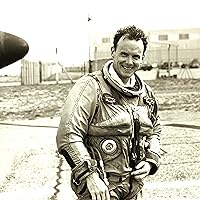
Flashes in the Dark Volume 1: USAF Covert Operations and Nuclear Intelligence in Argentina, 1946-1957, by Gustavo Maron. Helion & Company Limited, Warwick, England, Mar, 2026. Illustrations, Photographs, Maps, Endnotes, 92 pages, $29.95. ISBN 10 1804519359, ISBN 13 978-1804519356.
Gustavo Maron was born in Argentina and graduated from the Law School of the National University of Cuyo and is a professor of Aeronautical Law at four Argentine Universities. In his book, Flashes in the Dark, Maron explores a captivating yet underreported facet of contemporary military history: the clandestine aerial operations conducted by the United States Air Force (USAF) in Argentina during the Cold War. This period of geopolitical tension between the United States and the Soviet Union lasted from 1945 until the late 20th century, culminating in the USSR's collapse due to multifaceted social, political, and economic challenges.
The book derives its title from the initial “flashes” of information that the author uncovered over more than two decades of extensive research, involving a vast array of documents, photographs, and testimonies about U.S. air missions in Argentine airspace. These operations, often shrouded in secrecy, were executed without the knowledge of both Argentine political and military authorities. The author aims to unveil the long-hidden details of U.S. military activities in Latin America, particularly in Argentina, enriching public understanding of this critical history.
The narrative traces its roots to the post-World War II era, concurrent with the establishment of the USAF as an independent branch of the armed forces in 1947. Shortly after, in August 1948, the Air Force Office of Atomic Energy (AFOAT—1) was established to oversee the Atomic Energy Detection System (AEDS). This top-secret entity sought to monitor foreign atomic tests and related nuclear activities, specifically targeting the Soviet Union, France, and China.
Significantly, AFOAT—1's first success came with the detection of the Soviet Union’s inaugural atomic test on August 29, 1949. Radioactive debris from this test was identified by a modified Boeing WB-29 Superfortress, which was ostensibly flying for meteorological research. This triggered a pivotal disclosure by President Harry S. Truman, marking a turning point in international perceptions of Soviet nuclear capabilities and eroding Soviet secrecy.
Throughout the Cold War, this intelligence-gathering strategy was repeatedly executed, garnering vital information for U.S. leadership. The utilization of ostensibly meteorological aircraft for espionage highlights the levels of secrecy surrounding these operations; they were publicly justified under the premise of conducting atmospheric research. Notably, the operations conducted by AFOAT—1/AFTAC remained classified until 1975, a full year after USAF ceased its permanent bases in Argentina.
The author details how nuclear espionage in Argentina commenced as early as 1946, utilizing Douglas C-47 Skytrain and C-54 Skymaster aircraft to identify uranium deposits essential for nuclear weaponry. These missions expanded to incorporate the Boeing WB-29 Superfortress, which surveilled Argentina’s own covert atomic initiatives on Huemul Island.
Maron also discusses the High-Altitude Air Sampling Program (HASP) and how its plan began in 1957 for Argentina. The HASP program was designed to achieve the highest possible sampling density over a single cross section of the planet. The U-2 Dragon Lady began its overflights in 1958 under Operation CROWFLIGHT.
The utmost secrecy surrounding all these operations was so profound that even key Argentine military units lacked awareness of their full scope. Airports in Ezeiza and Mendoza, critical for these missions, operated without explicit oversight from the Argentine Air Force.
In light of the sensitive nature of these revelations, the Maron meticulously cites sources and documents, paving the way for future researchers to explore this unprecedented aspect of military history further. Flashes in the Dark is a significant contribution that sheds light on the secretive undertakings of U.S. military operations in Argentina, enriching the discourse on Cold War dynamics and geopolitics in Latin America.