

What do you think?

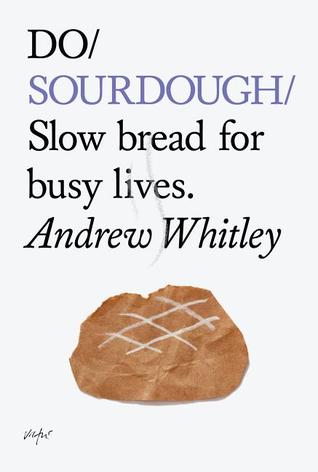
Do Sourdough: Slow Bread for Busy Lives
One of the oldest yet simplest, tastiest and most nutritious breads you can make, Sourdough needs only flour, water, salt – and a little time. But what if time is the one thing you don’t have?
In Do Sourdough, Andrew Whitley – a baker of over 30 years who has ‘changed the way we think about bread’– reveals how the slow fermentation that’s key to real sourdough can happen while we’re asleep or at work. And by using his simpleand fuss-free method, everyone can make this wonderful bread at home. Discover:
The basic tools and ingredients you need to get started
How to create – and refresh – your own sourdough starter
Recipes for basic loaves, sourdough pizza, ciabatta, crumpets and more
A 7-day plan for the bread you don’t devour immediately
The result isn't just fresh bread made with your own hands and in your own time. It’s the chance to learn new skills, make something to share with family and friends, and change your world – one loaf at a time.
Andrew Whitley has 'changed the way we think about bread’ (BBC Food and Farming award judges). A baker for over 30 years, his company Bread Matters runs some of the most authoritative bread-making courses in the UK - popular with enthusiastic amateurs and professional cooks alike.
In Do Sourdough, Andrew Whitley – a baker of over 30 years who has ‘changed the way we think about bread’– reveals how the slow fermentation that’s key to real sourdough can happen while we’re asleep or at work. And by using his simpleand fuss-free method, everyone can make this wonderful bread at home. Discover:
The basic tools and ingredients you need to get started
How to create – and refresh – your own sourdough starter
Recipes for basic loaves, sourdough pizza, ciabatta, crumpets and more
A 7-day plan for the bread you don’t devour immediately
The result isn't just fresh bread made with your own hands and in your own time. It’s the chance to learn new skills, make something to share with family and friends, and change your world – one loaf at a time.
Andrew Whitley has 'changed the way we think about bread’ (BBC Food and Farming award judges). A baker for over 30 years, his company Bread Matters runs some of the most authoritative bread-making courses in the UK - popular with enthusiastic amateurs and professional cooks alike.
158 pages, Kindle Edition
First published April 27, 2014
Ratings & Reviews
Friends & Following
Create a free account to discover what your friends think of this book!
Community Reviews
Displaying 1 - 22 of 22 reviews
July 8, 2016
Prior to reading this book, I'd never baked a loaf of bread in my life. After an extended trip to Europe, I've found myself spending a lot of money on sourdough breads, to the point that I can barely stomach the Chorleywood stuff. I like to tell myself that life is too short not to eat good bread. At some point, I got the idea to bake my own and then I stumbled upon this book.
It took me a while to take the leap of faith and actually make my first loaf. I just had to find a good source of reasonably priced organic flour and some time. So I followed the instructions to make a rye leaven, feeding it every day for the four days and finding the warmest place for it (turns out the mantel of the fireplace reaches a nice cosy 30°C), being winter time here. Only at one point did I have doubts, but it came back to life after we turned the heating on. At the end I had a really lovely honeycomb appearance through the side of the jar.
Then came the bread. I followed the recipe to make a Rye-Wheat bread (p. 63-66) in a loaf tin with my rye starter. While following the advice from Ch. 3 (Your First Sourdough Bread). This made it a little more complicated than necessary, as I had read in Ch. 2 that you only need to make a rye leaven for all kinds of bread and that Rye ferments more easily. Furthermore, the recipe for the rye leaven came before the wheat one. Unfortunately the next chapter assumes you made the wheat one. Most of the details still apply, it's just a matter of using different quantities. Still it'd be nice if the book explained that the next chapter uses a wheat starter, to save reading ahead. So I made my production dough, then later on the soaker, kneaded them together. Juggling the book and sticky hands certainly proved a challenge. I opted for a slower overnight proof and it rose like magic. Although it hadn't reached the top of the tin, this is probably due to the quantity of dough. So I baked it and was excited to see the crust rise even more.
The proof is in the pudding as they say and the bread turned out to be quite a delight. I'm amazed at what I managed to achieve having read just one book. I had my doubts along the way and may have even made the odd mistake but it still all worked out. I am certainly no sourdough expert and I am sure I still have much more to learn, though I am looking forward to baking my next loaf (hopefully it works out just as well as my first) and hopefully many more after that. Many have said that you need to buy a starter and surely if you make your own, then it'll take some trial and error to find that perfect strain of yeast with perfect flavour. Though I was pleasantly surprised with the flavour of mine.
I'd say I've read 80-90% of the book now with the remainder just particulars of different recipes. While there might be a few editing errors (i.e. as mentioned above, also while there is a formula to refresh the rye starter there isn't one to refresh a wheat starter, but you can probably guess the ratio by looking at other recipes), overall it's a very good and concise guide. This does of course mean that it may lack some details and indeed a few more recipes would be nice. I'll probably need to look for another book to cover these gaps, but at least I feel like I'll get my moneys worth now that I have started.
It took me a while to take the leap of faith and actually make my first loaf. I just had to find a good source of reasonably priced organic flour and some time. So I followed the instructions to make a rye leaven, feeding it every day for the four days and finding the warmest place for it (turns out the mantel of the fireplace reaches a nice cosy 30°C), being winter time here. Only at one point did I have doubts, but it came back to life after we turned the heating on. At the end I had a really lovely honeycomb appearance through the side of the jar.
Then came the bread. I followed the recipe to make a Rye-Wheat bread (p. 63-66) in a loaf tin with my rye starter. While following the advice from Ch. 3 (Your First Sourdough Bread). This made it a little more complicated than necessary, as I had read in Ch. 2 that you only need to make a rye leaven for all kinds of bread and that Rye ferments more easily. Furthermore, the recipe for the rye leaven came before the wheat one. Unfortunately the next chapter assumes you made the wheat one. Most of the details still apply, it's just a matter of using different quantities. Still it'd be nice if the book explained that the next chapter uses a wheat starter, to save reading ahead. So I made my production dough, then later on the soaker, kneaded them together. Juggling the book and sticky hands certainly proved a challenge. I opted for a slower overnight proof and it rose like magic. Although it hadn't reached the top of the tin, this is probably due to the quantity of dough. So I baked it and was excited to see the crust rise even more.
The proof is in the pudding as they say and the bread turned out to be quite a delight. I'm amazed at what I managed to achieve having read just one book. I had my doubts along the way and may have even made the odd mistake but it still all worked out. I am certainly no sourdough expert and I am sure I still have much more to learn, though I am looking forward to baking my next loaf (hopefully it works out just as well as my first) and hopefully many more after that. Many have said that you need to buy a starter and surely if you make your own, then it'll take some trial and error to find that perfect strain of yeast with perfect flavour. Though I was pleasantly surprised with the flavour of mine.
I'd say I've read 80-90% of the book now with the remainder just particulars of different recipes. While there might be a few editing errors (i.e. as mentioned above, also while there is a formula to refresh the rye starter there isn't one to refresh a wheat starter, but you can probably guess the ratio by looking at other recipes), overall it's a very good and concise guide. This does of course mean that it may lack some details and indeed a few more recipes would be nice. I'll probably need to look for another book to cover these gaps, but at least I feel like I'll get my moneys worth now that I have started.

September 29, 2019
It was reading the novel Sourdough (2018) for my book group which inspired me to find out how to bake my own Sourdough.
I'm still yet to bake my first sourdough however I found Do Sourdough: Slow Bread for Busy Lives to be easy to follow and inspirational.
The proof will be in the loaves.
4/5
I'm still yet to bake my first sourdough however I found Do Sourdough: Slow Bread for Busy Lives to be easy to follow and inspirational.
The proof will be in the loaves.
4/5

July 27, 2017
Great, simple, straightforward guide to getting started with Sourdough (which can be pretty overwhelming).
I've successfully made 2 loaves so far using the guide in this book, a Rye loaf and a wheat loaf using a Rye starter.
I did have to change the feeding pattern a bit to get a really lively starter, but the breads were delicious.
I've successfully made 2 loaves so far using the guide in this book, a Rye loaf and a wheat loaf using a Rye starter.
I did have to change the feeding pattern a bit to get a really lively starter, but the breads were delicious.
July 19, 2015
One of the best Sourdough recipe books I have ever read. It does work a treat!!

October 26, 2019
The approach to making a starter and even sourdough breads is much different compared to the number of similar methods presented online. Of course, when it comes to sourdough, there are no wrong methods, and this one is another interesting way of making long fermented breads. It's a good guide for the beginners, which would've been better with a larger section about shaping. For someone interested in the science behind the sourdough (some of which I've read on the author's website) there isn't a dedicated section. I don't like the constant disdain for commercial yeast and chemical leavening agents. I still give it 4 stars as the approach is different, and makes the reader feel like anyone can bake sourdough at home.
November 24, 2019
I've had this book for a while and this week I finally made my starter, production sourdough and finally sourdough bread. It was so easy and allowed loads of free time in between stages. I did it on a weekend to trial but it could easily be done midweek overnight and then while you're at work before baking. I'm delighted.
March 26, 2023
a QUICK read for slow bread
This book just like bread matters by the same author off in depth knowledge delivered in crumbs across the reading of the chapters. The book is written with s simple approach which enables the book to be picked up by seasoned professionals and home cooks alike. Highly recommended
This book just like bread matters by the same author off in depth knowledge delivered in crumbs across the reading of the chapters. The book is written with s simple approach which enables the book to be picked up by seasoned professionals and home cooks alike. Highly recommended

August 12, 2019
If I would have to learn baking something else, I’d be happy to rely on Andrew Whitley’s experience again. As well as to be taught by him. The way he built the narrative made the study curious and truly enjoyable!
March 21, 2020
Andrew demystifies the complex seeming processes involved with baking naturally leavened bread. Clear instructional writing and a digestible level of detail.
Baker's percentages would be a helpful addition to the formulas.
Baker's percentages would be a helpful addition to the formulas.

July 26, 2018
Easy to rwad and follow. Started my starter...now for somw bread!

August 25, 2019
New project. Really clear text

October 16, 2019
Good little book, packed with useful information about starting and maintaining a sourdough starter, a few recipes, and ideas to fit sourdough bread into your busy schedule.

November 21, 2019
Seems to contradict other sourdough advice
Read
May 18, 2025Intense but some useful tips.
December 29, 2025
Simple sourdough bread making.

June 21, 2019
Great book! Simple and easy to follow approach to making sourdough. Great to have on hand for reference, and includes recipes for pizza dough, crumpets, and more!

January 30, 2016
Very exhaustive summary, although having now tried various different sourdough approaches it is clear to me that creating your own personal sourdough, with your own tools, flour and starter is a matter of experience rather than learning from a book.
The most useful part of this book has been the concept of creating a production starter from the original starter and then fermenting this before going to final dough stage.
Unfortunately, among all the FAQs and recommendations in this book it does not answer the basic question (that I believe many home bakers experience) "how to stop the dough from spreading in the oven".
Overall, worthy of a read, but don't treat this (or any other sourdough book) as gospel.
The most useful part of this book has been the concept of creating a production starter from the original starter and then fermenting this before going to final dough stage.
Unfortunately, among all the FAQs and recommendations in this book it does not answer the basic question (that I believe many home bakers experience) "how to stop the dough from spreading in the oven".
Overall, worthy of a read, but don't treat this (or any other sourdough book) as gospel.

May 14, 2014
Very good read, explains a lot about making great bread in detail but in a way that's very accessible! it could do with a few more recipes to make it more exciting but in general to get the basics nailed this is a must buy!

December 25, 2014
Top Christmas present! It has been an uncharacteristically quiet Christmas Day so I have read this cover to cover today. Now I can't wait to get some more sourdough on the go. Clear explanations of how sourdough works and lots of different recipes.

Read
June 27, 2014Finally! I have success with sourdough. This book helped so much.

January 2, 2015
An excellent introduction and guide to cooking sourdough bread. If you haven't tried sourdough before, buy this and try it. If you've tried and failed (like I had) buy this and try it again.
Read
January 1, 2018A good start, but look at You Tube.
Displaying 1 - 22 of 22 reviews