

What do you think?

When the Movies Were Young
Ratings & Reviews
Friends & Following
Create a free account to discover what your friends think of this book!
Community Reviews
Displaying 1 - 8 of 8 reviews

September 25, 2018
“Now there are grass and flower beds growing over my little burial place of the beads, for the Mission has been restored; but even were it not so, the movie actress of today would surely rather lounge in her limousine than squat on old Mother Earth, digging up Indian beads.”

July 29, 2009
Charming account of the early days of the Griffith's association with Biograph, filled with lots of fascinating anecdotes. Gets off to a slow start but picks up when familiar names start showing up. Tries to be light and cast it all as great fun, but I still get the feeling that Biograph was a lot more tense place than Vitagraph.
September 3, 2024
🖍️ What a gem of a book!
When the Movies Were Young was written by D.W. Griffith’s first wife, Linda Arvidson, and when I finished the first chapter, I was all in for more history of the early years of moviemaking. This is a chatty book, written with a comfortable attitude, and with a refreshing frankness that made reading worthwhile without condescension and snobbery. Linda Arvidson gave a peek into the details of making movies, costuming (the actors and actresses would not only use their own clothing, but they would scour second-hand stores for clothing), the mechanics of lighting, scene preparations, and experimenting with cameras. She also discusses many, many movies (on my list to watch!), including "The Unchanging Sea," "Willful Peggy," “Birth of a Nation,” “Broken Blossoms,” et al. We learn tidbits about actors and actresses (Mary Pickford, Kate Bruce, Marian Leonard, Charlie Chaplin, Blanche Sweet, et cetera). I was surprised that no mention was made of Olive Thomas. (actress; model; wife of Jack Pickford; sister-in-law of Mary Pickford).
I learned about Kinemacolor and Mutoscopes!
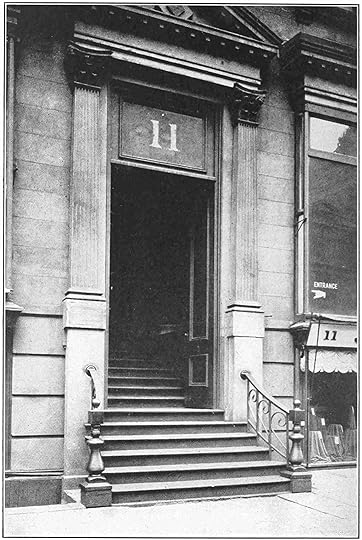
One of saddest facts is that the original building for Biograph studio located at 11 E. 14th Street, New York City no longer exists. Built in the 1840s-50s (according to Linda Arvidson), my research revealed that the building burnt down in the 1970s and is now the real estate is part of the New York City sanitation department.
The black and white photographs are fun to study, too, and I wanted more. I did smirk when the author wrote about presenting movies to the public, that there were sometimes questions among the actors and actresses regarding the intelligence of the audience, that is, would the public understand the meaning of a film version of Pippa Passes by Robert Browning. I would daresay that the public then would know of Browning's "Pippa," more than the general movie-going public today.
📙Published in 1925.
*•̩̩͙ *How I happened upon this book: It showed up as I was looking for another e-book to read.
જ⁀➴
🟢The e-book version can be found at Project Gutenberg.
✴︎⋆✴︎⋆✴︎⋆✴︎
When the Movies Were Young was written by D.W. Griffith’s first wife, Linda Arvidson, and when I finished the first chapter, I was all in for more history of the early years of moviemaking. This is a chatty book, written with a comfortable attitude, and with a refreshing frankness that made reading worthwhile without condescension and snobbery. Linda Arvidson gave a peek into the details of making movies, costuming (the actors and actresses would not only use their own clothing, but they would scour second-hand stores for clothing), the mechanics of lighting, scene preparations, and experimenting with cameras. She also discusses many, many movies (on my list to watch!), including "The Unchanging Sea," "Willful Peggy," “Birth of a Nation,” “Broken Blossoms,” et al. We learn tidbits about actors and actresses (Mary Pickford, Kate Bruce, Marian Leonard, Charlie Chaplin, Blanche Sweet, et cetera). I was surprised that no mention was made of Olive Thomas. (actress; model; wife of Jack Pickford; sister-in-law of Mary Pickford).
I learned about Kinemacolor and Mutoscopes!
One of saddest facts is that the original building for Biograph studio located at 11 E. 14th Street, New York City no longer exists. Built in the 1840s-50s (according to Linda Arvidson), my research revealed that the building burnt down in the 1970s and is now the real estate is part of the New York City sanitation department.
The black and white photographs are fun to study, too, and I wanted more. I did smirk when the author wrote about presenting movies to the public, that there were sometimes questions among the actors and actresses regarding the intelligence of the audience, that is, would the public understand the meaning of a film version of Pippa Passes by Robert Browning. I would daresay that the public then would know of Browning's "Pippa," more than the general movie-going public today.
📙Published in 1925.
*•̩̩͙ *How I happened upon this book: It showed up as I was looking for another e-book to read.
જ⁀➴
🟢The e-book version can be found at Project Gutenberg.
✴︎⋆✴︎⋆✴︎⋆✴︎
October 4, 2021
The title might suggest a nostalgic longing for the age of innocence we think we’re looking at in those early silent films. But if there was ever an age of innocence, it certainly wasn’t that one, as film historians have revealed at length. And this memoir by D.W. Griffith’s wife, Linda Arvidson, is written with affection but without undue sentimentality.
It’s true that she looks back almost with disbelief at the time when the penny-arcade ‘flickers’ evolved into the film as we know it, when the young industry was conducted behind a few doorways on East 14th Street, with actors walking in unchallenged and wardrobe-baskets piled up on the stairs. And it is fun to watch the arrival of the unknown Goldwyn and DeMille, Mary Pickford and Lillian Gish.
Not that actresses had names at that time, because the producers did not want to encourage a star-system, least of all Griffith, who held out longest, even as the fan-mail poured in, demanding to know their identities.
A one-reeler (15 minutes) was assumed to be all that the public could be expected to watch, but Griffith was the one to challenge that, soon offering them an incredible 5-reeler at two dollars a seat, instead of the usual ten cents. You may guess that this was ‘The Birth of a Nation’, on which the book closes, rather disappointingly, without telling us anything about the story of the production.
Meanwhile, her version of the discovery of Hollywood is just one of many, suggesting that something is being hidden. Is it true that Griffith and Mack Sennett had been warned to get out of New York, as they were liable for arrest for too much under-age mischief? And why did so many actresses who had worked for Sennett deny so emphatically that they had ever been one of his Bathing Belles? An age of innocence it was not.
It’s true that she looks back almost with disbelief at the time when the penny-arcade ‘flickers’ evolved into the film as we know it, when the young industry was conducted behind a few doorways on East 14th Street, with actors walking in unchallenged and wardrobe-baskets piled up on the stairs. And it is fun to watch the arrival of the unknown Goldwyn and DeMille, Mary Pickford and Lillian Gish.
Not that actresses had names at that time, because the producers did not want to encourage a star-system, least of all Griffith, who held out longest, even as the fan-mail poured in, demanding to know their identities.
A one-reeler (15 minutes) was assumed to be all that the public could be expected to watch, but Griffith was the one to challenge that, soon offering them an incredible 5-reeler at two dollars a seat, instead of the usual ten cents. You may guess that this was ‘The Birth of a Nation’, on which the book closes, rather disappointingly, without telling us anything about the story of the production.
Meanwhile, her version of the discovery of Hollywood is just one of many, suggesting that something is being hidden. Is it true that Griffith and Mack Sennett had been warned to get out of New York, as they were liable for arrest for too much under-age mischief? And why did so many actresses who had worked for Sennett deny so emphatically that they had ever been one of his Bathing Belles? An age of innocence it was not.
August 15, 2012
I really enjoyed this book about very early cinema. This book is primarily about the early development of the film industry on the east coast, written by silent film director D.W. Griffith's wife. It seems like all the people involved at this very early stage of filmmaking had a really great time figuring out the genre when there was no pressure to make exorbitant amounts of money. They would go out filming in the countryside of New York State and the locals would be highly suspicious of these people wielding strange equipment and acting out scenes in their little towns or fields. There is an amusing account in the book of how shameful it was to be a movie actor at this time because the stage was considered the only legitimate medium for acting. Arvidson discusses the early careers of some of the later stars when they were involved with Biograph in the 1910s, including Mary Pickford. A very fun read for those interested in early film history!
June 20, 2012
I really enjoyed this book. I read it when I was in high school, but considering that I don't remember anything of it, I imagine I didn't have a clue what I was reading. It was a bit gossipy (Linda Arvidson clearly thought Mack Sennett was a dick and that Lillian Gish was a fake), but gave me a good sense of the every day work of being an actor in the period of 1908-1911. The little details were the most interesting to me--getting lunch, grease paint freezing, playing cards on the train out to California.

August 10, 2013
I was really excited about reading this one, being as the author was the first wife of famous silent-era director D.W. Griffith. The book was originally published in 1925 and my copy was from a republish in 1968.
The writing was of its time - formal, yet flowery - and while this was probably to be expected, it was impossible to ignore and it grated on my nerves. There also is no index so I couldn't even skip to sections I might be interested in reading, so I abandoned this one.
The writing was of its time - formal, yet flowery - and while this was probably to be expected, it was impossible to ignore and it grated on my nerves. There also is no index so I couldn't even skip to sections I might be interested in reading, so I abandoned this one.

August 23, 2008
Cheerfully biased, deliberately selective, and slyly insightful but ultimately one of the most important memoirs of the silent era.
Displaying 1 - 8 of 8 reviews