The post-colonial birth, life, and death of the collective consciousness known as the Animal.
Middle-aged streamer twins in Bayamón, Puerto Rico, are the first human beings to successfully connect―sharing their consciousness across 34 translucent cables. In that moment, the Animal is born, an intracerebral force that quickly grows to encompass anthills of synaptically entwined bodies, a floating library kitchen redolent of rice and beans far above the Mississippi river, and a transhuman compound in a future Cuba on the Isle of Youth.
Circling back and forth and ever progressing, Animal Spiral moves through 400 years of human, and then post-human history, beginning with a revolution on the streets of San Juan and ending with five brilliant the Squash (humanoid), Calima (beetles), Yemayá (eels), Coatlicue (serpents), and Juracán (anthropomorphic birds), who have millions of bodies and all the world’s intelligence, but only want to no longer be alone. This is a buoyant, joyous ode to possibility, a warning about the dangers of neglecting what makes us human, and an astonishing exercise of the flexibility and capacity of liminal spaces. Loneliness is a collective disease! We defend our right to madness! Brave are not the ones who resist; brave are the ones who let go!
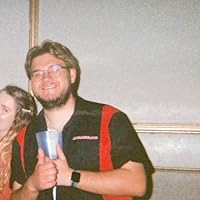
Luis Othoniel Rosa nació en Bayamón, Puerto Rico en 1985. Es el autor de las novelas 'Otra vez me alejo' (Buenos Aires: Entropía 2012; San Juan, PR: Isla Negra, 2013) y 'Caja de fractales' (Buenos Aires: Entropía, 2017; Puerto Rico: La Secta de los Perros, 2018), y del libro académico Comienzos para una estética anarquista: Borges con Macedonio (Chile: Cuarto Propio, 2016; 2nda edición expandida y con un nuevo prólogo en Argentina: Ediciones Corregidor, 2020). Caja de fractales fue traducida como Down with Gargamel! por el poeta Noel Black (Argos Books, 2020). Estudió en la Universidad de Puerto Rico (Río Piedras) y tiene un doctorado por la Princeton University en literatura latinoamericana. Es el editor de El Roommate: Colectivo de Lectores. Actualmente enseña en la Universidad de Nebraska en Lincoln y trabaja en tres proyectos de libros: una novela sci-fi sobre una mente colectiva, El gato en el remolino, una serie de ensayos sobre literatura puertorriqueña, Los fines de la literatura: Poéticas anticapitalistas en Puerto Rico, y una serie de ensayos filosóficos sobre Lo ingobernable. No tiene ninguna prisa en terminar estos proyectos
__________________ (English)
Luis Othoniel Rosa was born in Bayamón, Puerto Rico in 1985. He is the author of two novels, Otra vez me alejo, (Argentina Entropía 2012; Puerto Rico: Isla Negra 2013) and Caja de fractales (Argentina: Entropía 2017; Puerto Rico: La Secta de los Perros, 2018). The last one was recently translated as Down with Gargamel! (USA: Argos Books, 2020). He is also the author the academic book Comienzos para una estética anarquista: Borges con Macedonio [Beginnings for an Anarchist Aesthetics: Borges with Macedonio] (Chile: Cuarto Propio, 2016; 2nd expanded edition with a new prologue in Argentina: Ediciones Corregidor, 2020). He studied at the University of Puerto Rico (Río Piedras) and holds a Ph.D. in Latin American literature from Princeton University. He is the editor of El Roommate: Colectivo de Lectores. He currently teaches at the University of Nebraska-Lincoln, and works on three book projects: a long sci-fi novel about a hivemind titled El gato en el remolino / The Cat in the Downward Spiral, a scholarly book about Puerto Rican literature titled Los fines de la literatura: Poéticas anticapitalistas en Puerto Rico and series of philosophical essays titled, Lo ingobernable / On Unruliness
I fear I've yet to see a positive review of this and I'm quite sad about that --- Charco Press has announced their 2026 catalogue, and this definitely caught my eye... impatiently waiting
Animal Spiral is Katie Marya's translation of El gato en el remolino by Luis Othoniel Rosa.
This is published by Latin American translation specialist Charco Press, but here, Charco Press actually commissioned and published the Spanish-language original alongside the translation, and the translation itself prepared in parallel with the book and in a highly collaborative process.
The different between the English and Spanish language titles is also a conscious one, reflecting a deliberate stylistical difference between the two versions, as the author explained in an interview for Asympote Journal: "In Spanish, the novel tends toward long, baroque, and exaggerated sentences, while in English, the sentences tend to be more compact and dramatic."
This is a far-ranging, ambitiously creative speculative fiction book, in the tradition of say Octavia Butler or Ursula le Guin.
Fibonacci numbers do seem to fascinate literary fiction writers, but here they are integral to the novel's plot as well as it's format. In terms of the format, the novel comes with an explanation suggesting it can, like Cortázar’s Hopscotch and Macedonio Fernández’s Museo de la Novela de la Eterna, be read in at least two ways:
This novel is designed following the mathematics of spirals, and there are at least two ways to read it.
In successive order, the chapters grow in length according to the mathematics of eddies and in a cyclical temporality that jumps between the past and the future (growing spiral). Order of chapters: 1,1,2, 3, 5, 8, 13, 21, 34, 55, 89 and 144.
In chronological order of the Animal's years, indicated in the index for each chapter, starting with year 1 (2034) to year 377 (2411), a spiral with two zigzagging helices. Order of chapters: 89, 34, 13, 5, 2, 1, 1, 3, 8, 21, 55, 144.
(although in English, at least, the novel doesn't quite have the courage of its own convictions in keeping the chapter length strictly to the pattern of the sequence)
I read it in successive order, which is how it is printed, with short chapters beginning in the middle of the story, and growing in length as they reach further into the past and future. I suspect chronological would have made for an easier reading experience, so that what happens unfolds in order and it mixes up the chapter lengths, but perhaps one less true to the novel's design.
There's a bravura overview of human history cleverly linked to the Fibonacci sequence with some academic liberties, so e.g. the mega-volcano Toba’s eruption, generally estimated at 71-74,000 years ago, and which some scientists believe almost wiped out the human race, is here dated to precisely 75,025 years ago. But most of the novel is set in our immediate future.
The essential premise of the novel, is that the world first falls under the sway of the Green Alliance, a Western-centric oligarch-controlled eco-fascist organisation, as concerns over climate change are used to seize control of resources, and then a wave of AI-like tech displaces many human jobs. But a counter-revolution begins in 2034 when two (rather oddly, fraternal) twins, Teenage Mutant Ninja Turtle loving YouTube content creators from Puerto Rico, are persuaded, by a dissident scientist with a lab in Ecuador, to connect their minds via a new piece of technology to create inter-cerebral synapses. This new technology spreads, creating a form of global inter-cerebral entity, the Animal, which effectively takes on and defeats the Green Alliance.
Various key figures emerge in the movement (actual individuals, or 'viral transmission entities.?) - Alice, the great originary; Unrra aka Unrraca; Professor O; the Romanian; the Grower; the Archeologist (the last holdout of the Green Alliance); the Cat Historian (who is a cat, cats play a key role, as the Spanish title suggests); Mayra, the Translator (no prizes for guessing who inspired that name); the Coder; and the Pumpkin (a form of AI) - and part of the novel's pleasure is figuring out their origin stories, relationships and rivalries.
And the Coder is the first to encapsulate the importance of the Fibonacci sequence as an alternative to binary - the orange-violet colour a key motif captured on the novel's cover:
Do you know, Coder, that our algorithms are as old as the Greeks? Between Parmenides (whatever is, is, and cannot not be) and Aristotle (the law of the excluded third), we created the mathematics by which our computers are governed. And there are many Latin American philosophers today who question this logic.
They say that there are things that sometimes are and are not at the same time. What we understand as logic' is not something universal, but rather a series of Western values we believed to be universal just because those six white empires conquered the world. Could we create an algorithm governed by another mathematics?
A mathematics that corresponds more precisely to the biological world? To the body? Fractal numbers, spiral numbers, quantum physics, forms that come from nature, something less abstract. Could we forget those Os and 1s, could we forget the binary? [...] Following his teachers advice, he tries out sequences he finds in nature. He studies flowers, the sequence of spirals, and the Fibonacci numbers: 0, 1, 1, 2, 3, 5, 8, 13, 21, 34, 55, 89, 144, etc. He thinks the reason computers can only decipher rudimentary processes in the brain is that binary mathematics (0s and 1s) only allow them to "read' the first three steps in the spiral sequence. (0, 1, 1.)
Using this new algorithm governed by spiral math, he codes a perfect flower into a spiral software - a flower with crystal leaves, iridescent violet and orange petals, veins of electric cables, and roots made of transparent silicone that never stop moving, never stop looking for food, always following the microchip at the center which will learn to develop itself in circles, always feeding on metals found in the urban decay of Bayamón.
The novel's final section, in either order of reading, 'Chapter 144: you know the world is about to end. Years 144-377 (2178-2411)' begins with humanity in hiberation, and a passage rather reminscent of the Blade Runner "Attack ships on fire off the shoulder of Orion" speech:
I have seen things with my legions of bodies that the Animal could never imagine. I've seen two stars, their orbits entwined in a black hole, buried in our tentacle of the Milky Way. One star's ultraviolet rays mixing with the orange rays of another, both colors sucked into the darkness of the black hole, light contorted like chromatic liquid. I have seen microorganisms, almost immortal, inhabiting the most hostile regions of the bottom of the sea with joy, unaffected by the sulfur and the heat, calling out to their counterparts to reproduce a language made of light and color. I have seen so much in these 89 years since the shutdown. And everything I've seen is documented information. It won't die with me. But my astonishment will die, my experience will die, lost forever in this solitary galaxy.
The Pumpkin says all this to the Cat Historian, her only interlocutor, in a galaxy without conversations.
And then takes the novel both into more inter-stellar territory but also firmly back to planet earth.
Overall - I must admit at any given time I had little idea what was going on (if it was a shorter book and more to my taste, I suspect a re-read in chronological order would be sensible) but fascinatingly done.
A vast, ambitious novel in the tradition of Solenoid and the big Bolaño novels, Animal Spiral glimpses centuries into the future of a planet whose people find a way to decolonize and connect, making technology and ecology work together by literally connecting minds through cables into a larger mind-created internet sort of conglomerate called The Animal, where “someones” are formed, entities that perceive the minds connecting and creating them.
The novel tackles these ideas with ever lengthening chapters, offering “at least” two ways to read it, either forward through or from the inside out in tradition of “the mathematics of spirals.”
This sounds like great fun, and there are a few chapters that are. The only problem is that the book just isn’t very good.
It’s got a serious “tell, don’t show” problem that bored holes in my head like it was getting ready to connect me to the cables.
I was able to get over that some, but then these extremely, unnecessarily long stretches of all-“plot”-no-vibes sequences of actions taken by uninteresting, unreachable main characters left me bereft of interest.
I also just couldn’t get away from the idea that the author didn’t much know what he was talking about.
(Random nonsense about the cervix and Fibonacci, it all just makes zero sense 😭)
Still, even still, I do somewhat respect the hustle here. Mostly, though, it’s just an agenda-driven sermon of a novel filled in with cats and random boring sexual encounters and a bunch of big ideas summed up in one-word names to make it feel cryptic (animal, pumpkin, someones, Galacticas, etc).
The ideas wanted to land this novel, but I got the idea the author really didn’t know much about math, physics, neurology, anatomy or computing from the vague ways in which he was forced to talk about concepts.
Novel research needs to lead to understanding, not just goofy plot pushers. They say “write what you know” for a reason, not because everything should be autofiction, but because readers can tell when you’re faking it and bad at faking it.
Maybe this is a dumb statement, but I’d have loved this book if it had been any good.
Ultimately my issue with this book is that it's boring. It's trying artificially to create intrigue by being vague and weird but it just falls flat. Dnf
This is one of those books where I feel like everyone who says it is amazing is just lying because it's an incomprehensible mess of a novel and i read several hundred pages without really understanding anything at all, I tried reading it both ways, maybe I'm missing something, clearly I am. I really am only leaving a review so I never read anything by this writer again
Nueva lectura de los libros elegibles para los International Booker Prize. Tras terminar el libro, me pareció muy interesante: las notas del escritor y de la traductora, Katie Marya, dónde explican la riqueza del proceso creativo de la obra. El autor se inspiró del proceso de traducción e incorporó voces de todos aquellos que participaron en el proceso de creación de la novela, lo cual hace que esta traducción, como el propio autor indica, pueda considerarse como una obra propia. La novela de este autor puertorriqueño, es una novela utópica, de ciencia ficción con tintes filosóficos, literarios. En mi opinión, las partes más interesantes son aquellas en las que el autor reflexiona sobre obras como Frankenstein o el Quijote, mostrando las diversas formas de interpretar la obra, algo que te lleva a reflexionar y ver desde otra perspectiva esos clásicos literarios. Un aspecto importante es el propio estilo narrativo. La novela no se organiza por capítulos, que sigan un orden cronológico fijo. La obra se estructura siguiendo un orden de espiral matemático, saltando del pasado al presente, siguiendo un orden de 1, 1, 2, 3, 5, 8, 21, 34, 55, 89 y 144. Esa estructura de espiral matemática también se aplica a la cronología en la que se ambienta la trama, que abarca desde el primer año 2034, al año 377, año 2344. La novela narra el nacimiento, desarrollo y desaparición de una conciencia denominada Animal, una entidad formada por los seres humanos, que consiguen enlazar sus cerebros mediante una tecnología denominada sinapsis intercerebral. En un principio, esta conciencia era una especie de investigación científica, que nació en el Caribe, pero que se extendió al resto del mundo durante 377 años. El autor, a través de sus páginas, recrea los distintos problemas a los que esa conciencia se va a enfrentar: revoluciones, crisis de natalidad, capitalismo, cambio climático, colonialismo, crítica literaria, problemas incluso de traducción, las nuevas tecnologías. En cierta forma, ese futuro utópico, está reflejando los mismos problemas a los que nos enfrentamos hoy en día, y es fácil para el lector, identificarse con algunas de las situaciones. El comienzo, un tanto desgarrador, la muerte de uno de los hermanos, conlleva el descubrimiento de que la conciencia, de ese hermano fallecido, continúa existiendo. A partir de ese descubrimiento, el autor reflexiona sobre la muerte, sobre el dolor de perder a los seres queridos, y la necesidad de seguir conectados a ellos, para seguir sintiéndose vivos. Cada persona, que pierde a alguien, va a buscar respuestas, en la conciencia del fallecido. Y esa conexión va a cambiar sus vidas. A partir de ese momento, el orden establecido: capitalismo, propiedades, acaba, lo que da a lugar a una sociedad sin propiedad privada, sin clases, sin dinero, sin privacidad, una sociedad en la que incluso se quiere eliminar la muerte. A partir de esa decisión, surge un debate sobre lo que es la muerte y cómo desterrarla del vocabulario. Y es interesante porque esa sociedad utópica va alejando la idea del propio individuo por la idea del colectivo, algo que se enfatiza con las palabras. Hermanas (sisters), que se repite mucho en las conversaciones y debates establecidos. La propia traductora explica que se utiliza esa connotación femenina para referirse al colectivo, ya que el propio autor utiliza el plural femenino, ellas, en vez de ellos, y ella lo incluye en la traducción. Otro aspecto interesante es lo que ocurre cuando esa conciencia Animal muere, y surgen otras formas de inteligencia artificial, las cuales heredan su legado. Al final, el autor se pregunta qué significa realmente para ser humano sobrevivir, y, además, incita a reflexionar sobre qué significa para el ser humano la vida, qué significa en el mundo la existencia de un individuo. Me gusta la reflexión sobre los límites de la tecnología, justo en un momento en que está surgiendo la inteligencia artificial, ya nos hace pensar si en un futuro llegaremos a perder la capacidad de pensar y reflexionar, o dependeremos mucho de la tecnología para sobrevivir. Un hecho que me sorprendió fue la incorporación de talleres estudiando la literatura universal, incluso criticando obras como el Quijote y Frankenstein, y no profundizando en la literatura puertorriqueña. Aunque hay que reconocer, que el autor cita y se inspira, en muchos de los textos que conforma la obra, en obras latinas. Se trata de un libro de tintes filosóficos, una lectura compleja, que particularmente reflexionar sobre la sociedad actual. Una lectura, que no es para todo tipo de lectores, debido a su complicada estructura y la profundidad de su mensaje, pero que merece la pena leer, ya que el autor, y la propia traductora, han hecho un trabajo inmenso, recreando un mundo muy diferente del nuestro, y con una gran variedad de voces muy creativas y ricas.
Hmmm! So, I have thoughts about this book. On paper, it works. A critique on a tech-reliant, capitalist society screaming, begging for its end. However, this end is where it gets a little… confusing? Tiring? Something of the sort. I was tired, reading this. It didn’t grip me, and I wasn’t super excited to read more and find out. I just…read. And read some more, until I was done. It’s innovative, for sure. Following humans in a post-capitalist society forming a collective consciousness called ‘the Animal’, this book transcends the boundaries of logic. It floats somewhere between reality and absolute fantasy. Overall, decent speculative fiction. I just got a bit tired.
Unfortunately, it just didn’t hit the mark for me. The ambition was there, and I loved the questions it explored around humanity and what it means to be human. I just think with some more editing and experience, this could have been SO much better. There were a lot of really interesting ideas that I wanted to see developed a little more. Even though the execution didn’t fully work for me, I can definitely appreciate what the author was trying to do.
ANIMAL SPIRAL, a collaborative novel by Luis Othaniel Rosa and colleagues, translated by Katie Marya, is a mind-blowing read. My review is up in Asymptote Journal.