Whether drizzled into our tea or used as a term of endearment, honey is relished around the world as a natural sweetener with healing properties. Yet this humble food – that requires very little processing for human consumption – has far greater cultural significance than simply satisfying sugar cravings. In its long history, honey has been variously treasured – as a metaphor, food, medicine and a preservative.
Folklorist and food scholar Lucy M. Long details how this ‘nectar of the gods’ has featured in politics, religion, economics and popular culture around the world for centuries. From being used in sacred rituals by ancient cultures, it remains just as significant to human civilization today, even in the face of the alarming ecological crisis threatening bee populations everywhere.
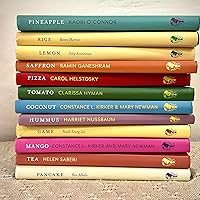
Complete with cross-cultural recipes and vibrant illustrations, A Global History is a surprising and satisfying treat.
Considering that India, Central America, Malaysia, Central Africa, Eritrea and Ethiopia, the Amazon, Russia, Egypt, New Zealand, and Nepal feature in this book, it is hardly fair to dismiss it as 'Eurocentric.' It is a 'honey' of a book, deftly bouncing between medical, historical, cultural, linguistic, religious, mythological, military, economic, botanic, and biological aspects of honey. Who knew that dandelions are catnip for bees? Or that honey can be a weapon? Or that bees really aren't that busy? There is lots to learn and ponder about in this short book. I guess it's a case of personal taste, but I would rather have more information about honey than recipes.
Interesting book in the Edible series about a product that has become controversial because of the decline of bees due to pesticides. It is fashion now to keep bees at your farm and beekeeping provides an agricultural tax exemption.