

What do you think?

Felony Review: Tales of True Crime and Corruption in Chicago
Ever wonder what it’s really like to be a criminal prosecutor in a city like Chicago? Felony Review is a vivid, behind-the-scenes account of the years Randy Barnett spent as a young prosecutor in the Cook County State’s Attorney’s Office during the late 1970s and early 1980s—an era of violent crime and widespread corruption in the criminal courts of Chicago.
With firsthand immediacy and sharp insight, Barnett recounts the murder investigations, grisly police station confessions, courtroom tactics, and moral dilemmas he faced while rising through the ranks from chaotic misdemeanor courts, to the city’s pioneering Felony Review Unit, to the felony trial courts. Along the way, he reflects on why criminals confess to the police; how to maintain your integrity while working within a corrupt system; and why the exclusionary rule, which bars illegally obtained evidence from being used in court, was a good thing but should be replaced.
A bracing true-crime narrative told by a prosecutor who went on to become one of the country’s leading legal thinkers, Felony Review brings to life the gritty realities of big-city justice—and shows why being a real prosecutor is better than TV. It is a book for lovers of true crime stories, for lawyers, and for anyone who aspires to be a courtroom lawyer.
With firsthand immediacy and sharp insight, Barnett recounts the murder investigations, grisly police station confessions, courtroom tactics, and moral dilemmas he faced while rising through the ranks from chaotic misdemeanor courts, to the city’s pioneering Felony Review Unit, to the felony trial courts. Along the way, he reflects on why criminals confess to the police; how to maintain your integrity while working within a corrupt system; and why the exclusionary rule, which bars illegally obtained evidence from being used in court, was a good thing but should be replaced.
A bracing true-crime narrative told by a prosecutor who went on to become one of the country’s leading legal thinkers, Felony Review brings to life the gritty realities of big-city justice—and shows why being a real prosecutor is better than TV. It is a book for lovers of true crime stories, for lawyers, and for anyone who aspires to be a courtroom lawyer.
240 pages, Hardcover
Published March 17, 2026
Ratings & Reviews
Friends & Following
Create a free account to discover what your friends think of this book!
Community Reviews
Displaying 1 - 8 of 8 reviews

Review of advance copy received from Publisher
Randy Barnett is an American lawyer and legal scholar who began his career as a prosecutor in the Cook County State's Attorney's Office during the late 1970s and early 1980s - a time of widespread crime and corruption in Chicago.
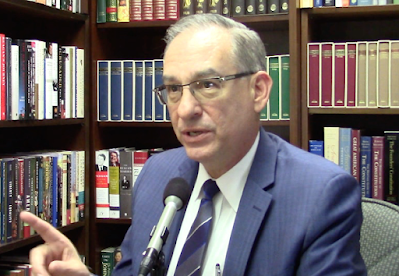
Randy Barnett
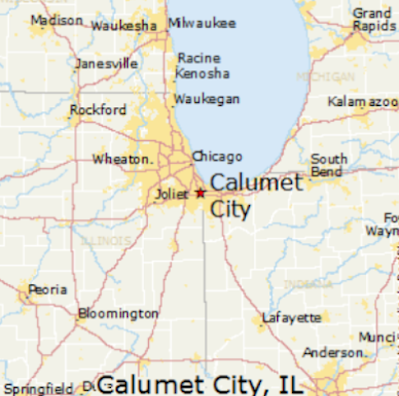
Barnett grew up in Calumet City, Illinois, a town of about 28,000 south of Chicago, on the border of Illinois and Indiana. Calumet City was largely a blue collar Catholic town, and Randy, who's Jewish, attended and had his bar mitzvah at Temple Beth El, across the border in Munster, Indiana.
Barnett graduated from Northwestern University and Harvard Law School, where he prepared to practice criminal law. After getting his J.D. in 1977, Randy went to work in the Cook County State's Attorney's Office in Chicago, and experienced the nitty gritty of prosecuting wrongdoers.
Barnett writes, "In this book, I will tell the tales of my rise from felony arraignments, to misdemeanor branch courts, to misdemeanor jury courts, to auto theft court, to Felony Review, and finally to the felony trial courts at 26th and California. There I went from a 3rd chair to a 2nd, before ending my tenure as a 1st chair in a felony trial courtroom."
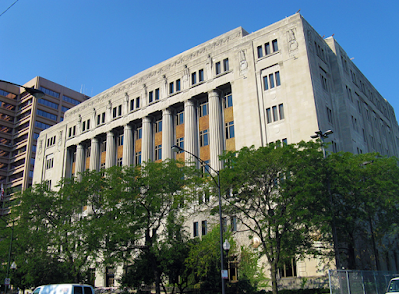
Chicago's Criminal Court Building at 26th and California
Barnett became a prosecutor at an auspicious time, because the criminal courts were expanding in response to the rising crime rate in the U.S. in the 1960s and 70s. On the downside, law enforcement in Chicago was rife with graft and corruption. Barnett writes, "My career as a criminal prosecutor was not only the story of fighting crime; it was at least as much about working in, but not being tainted by, the Cook County criminal justice system. I remember those years as a wild ride that offered many lessons that both law students and anyone interested in the law should know. As for everyone else - well, it really was better than TV."
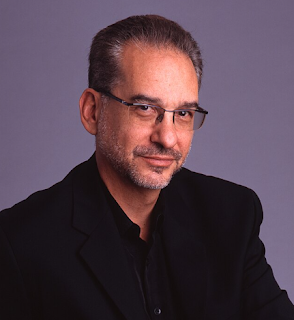
Randy Barnett
Barnett describes many incidents as he climbed the ladder in the Cook County criminal justice system, starting with preparing paperwork for arraignments. Randy then moved on to handling misdemeanors and preliminary hearings, and relates the following experience. "If you are old enough to remember the courtroom scenes in 'Hill Street Blues' (below), you have an inkling of the kind of chaos....people were packed in elbow to elbow for the eighty cases a day - meaning eighty defendants, eighty groups of friends and family and lawyers, as well as eighty sets of victims, witnesses, and cops, all of them jostling and jockeying for air and space. All of them watching the 'show' being performed by the judge and the attorneys."
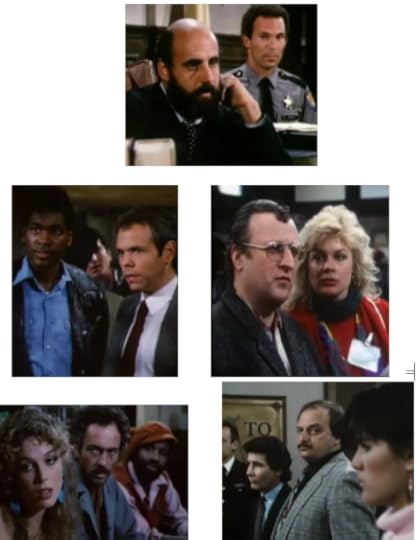
Scenes from Hill Street Blues (1981 - 1987)
An honest jurist named Judge John Crowley handled the misdemeanor courtroom, and Randy acknowledges, "In all my years as an assistant state’s attorney, my four months in....John Crowley’s courtroom might well have been the most valuable of my legal career. It was there that I learned how to spot the bullshit, and to stand my ground against the pressures of the cops, lawyers, and witnesses, and to stand up even to [Judge Crowley]. And it was important that I see just how an honest judge could operate in a corrupt system."
As examples of two crooked judges, Barnett cites John “Gentleman Jack” Reynolds and John J. (“JJ”) McDonnell, both of whom presided over misdemeanor jury trials.
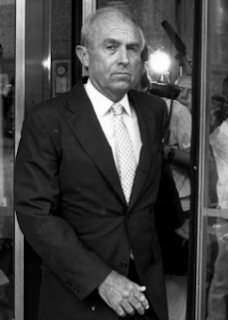
Judge John Reynolds
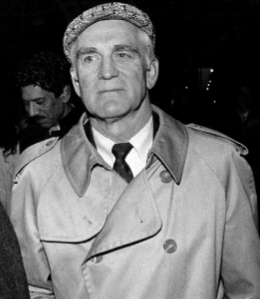
Judge John J. McDonnell
After one or the other judge had been bribed, the lawyers would then waive their client’s right to a jury, whereby the client would either be acquitted at a fixed bench trial or, more often, receive a sweetheart sentence like supervision after pleading guilty. The two judges were said to dislike each other because they competed for bribes.

Randy writes, "I remember sitting with JJ in his dimly lit chambers as he held a stogie and said, 'You know that Jack Reynolds is such a kink [corrupt]. Any day now I expect the feds to be crashing down the door.' JJ must’ve figured that, by talking to me like that, I wouldn’t think he was just as corrupt as Reynolds."
Barnett is especially proud of his time in the Felony Review unit. A subheading in 'The Chicago Reader' article titled 'The Booking Reviewers' describes the Felony Review program in a nutshell: "In most American cities, decisions about whether or not to book felony charges are made by police. In Chicago, they are made by the State’s Attorney’s Felony Review team - a group of lawyers who are mostly young, often bright, and almost always on the firing line.”
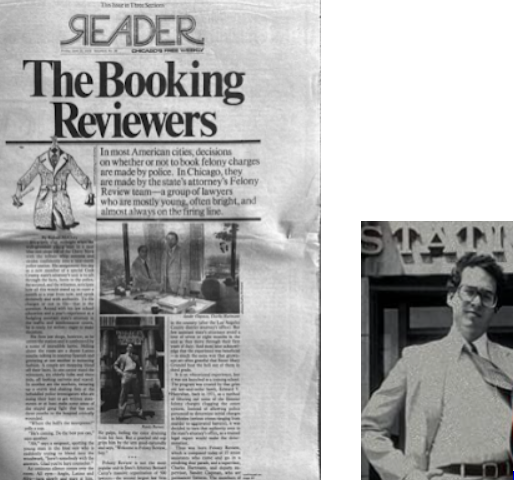
Randy Barnett is on the cover of The Chicago Reader
Barnett writes, "Young prosecutors assigned to Felony Review....had their own Chevy Nova squad cars, complete with police radios, that they would use to travel to district police stations or to crime scenes. A Felony Review ASA’s job was to assess the evidence, interview the cops and the witnesses, conduct lineups, approve search warrants, and obtain statements from the accused, if possible. Many of these statements were either full confessions or otherwise 'inculpatory' - which is to say, they would be incriminating down the line. Felony Review meant genuine, authentic review. No rubber-stamping just because the cops had arrested someone. The unit rejected about 40 percent of the cases the Chicago Police Department called it in to evaluate."
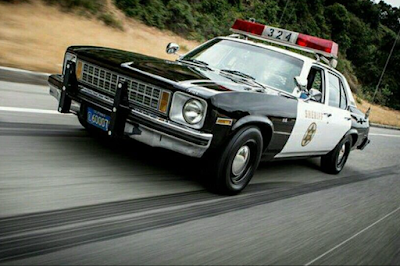
Felony Review ASAs had their own squad cars
When ASA Randy Barnett eventually became 3rd chair in a felony courtroom, he learned to prosecute cases from the 2nd and 1st chairs. As 3rd chair, Randy's responsibilities included ordering all the police reports, photos, and crime lab tests, and occasionally writing legal memos. After accruing experience, Randy became a 2nd chair, and - in June 1981 - he became 1st chair in the felony courtroom of Judge Leonard R. Grazian.
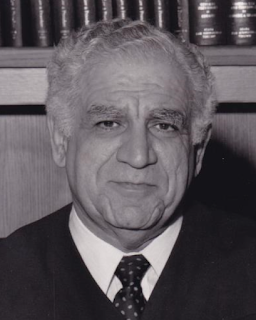
Judge Leonard R. Grazian
Barnett notes, "[As 1st chair] the management of a courtroom was now in my hands. I would get to decide who tried which case [and] I would make the plea bargain decisions." Randy had three jury trials in front of Judge Grazian. One was a murder case in which a homeless man named Billy Clark used a piece of lumber to beat a couple, Joel Gunther and Katherine Feely, who were sleeping on mattresses in a vacant building. Gunther was killed and Feely survived. Clark was tried for murder, and Randy describes a fateful mistake he made during that trial - which resulted in a reversal. I won't give away spoilers.
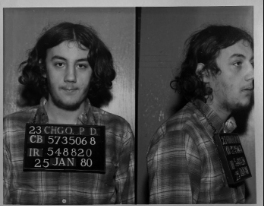
Billy Clark was charged with murder
Barnett helmed other jury trials as well, in front of Judge Grazian and other jurists, before leaving the Cook County State's Attorney Office to become a law professor. This and other aspects of Barnett's long and successful career are briefly touched on in the book.
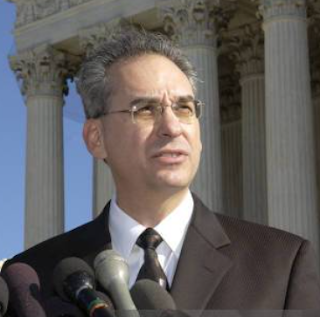
Randy Barnett
'Felony Review' is filled with anecdotes about lawsuits that were fixed, crimes that were committed, and cases in Barnett's purview, including robberies, murders, and rapes. Some of the crimes were unspeakably horrific - literally the stuff of nightmares. I'll briefly describe one example, from the time Barnett was in the Felony Review program.
► Colombian immigrant Cesar Marin got drunk and decided to rob Kim's liquor store, which was owned by Korean immigrants Ryok Kim and Ihn Kang Kim.

Generic Liquor Store
During the burglary, Marin forced Mr. and Mrs. Kim to go down to the basement, where he shot and stabbed them. The Kims were moaning and bleeding on the floor as Marin went upstairs, left the basement, and nailed a two-by-four to the basement door, so the Kims would be shut in. Mrs. Kim was able to climb the stairs, rip and claw a hole in the door, and get out to call for help. Mr. Kim died but Mrs. Kim survived and was hospitalized.
Among other things, Barnett's part in this was to go to the hospital with a photo array to show Mrs. Kim. Randy recalls, "It was heartrending to see her lying there, tubes coming out of her, including a drain from her nose. Her hand trembled as she took each photo and studied it. I will never forget how the sight of Marin’s face in the picture disturbed her so utterly and instantly that the fluids began to pour through the tube in her nose as she repeatedly poked the photograph with her outstretched index finger." Randy signed off on charging Marin with murder.
There are many more stories like this in the book, which contains excellent lessons for aspiring criminal attorneys, and interesting tales for true crime fans. Highly recommended.👍
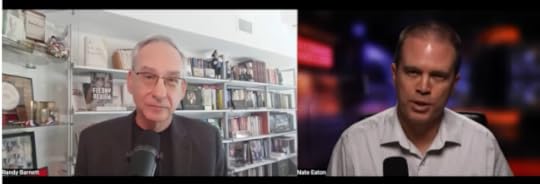
East Idaho News on YouTube: Randy Barnett being interviewed about 'Felony Review' by reporter Nate Eaton
Thank you to publicist Simone Jung for a copy of the book.
You can follow my reviews at https://reviewsbybarbsaffer.blogspot.com
May 24, 2026
Prosecutor, Professor, TV Critic
Randy Barnett spent nearly four years beginning in 1977 as a Cook County Assistant States Attorney (ASA). This is his story about those formative years.
By way of background…..the 1970’s Cook County States Attorney employed over five hundred assistants. Turnover was high. Career progression was structured but also very fast paced. We follow Barnett as he progresses from misdemeanor screening to hearings to Felony Review to preliminary hearings before Judges, and finally to felony trials. Felony Review is interesting and unusual. ASA’s were assigned 24/7 to Chicago Police Districts and Areas. They met with Officers and Derectives, interviewed witnesses, occasionally visited crime scenes, and interrogated(with a stenographer) suspects. TThey approved or disapproved formalcharges. Barnett’s experiences in Felony Review are a very interesting “fish out of water” story. Barnett’s case vignettes paint a vivid picture of urban law enforcement and prosecution.
However, what makes his experience truly unique is the pervasive corruption in the Cook County judicial system. Barnett incredulously witnesses apparently inexplicable case resolutions. Then he realizes through casual conversations that there is a deeply embedded network of corrupt Judges, Police Officers defense attorneys, and “fixers.” He reports his suspicions, is encouraged not to resign, and advised that proving, as opposed to suspecting, corruption is virtually impossible. Interestingly, Barnett describes his elected bosses, the States Attorneys as flawed but honest. Unbeknownst to him, he is also witnessing Operation Greylord, an elaborate federal sting observation, which targeted the system and resulted in the arrests and convictions of police officers, fixers, but more importantly and many of the corrupt Judges. The sting occurred because one of Barnett’s colleagues approached the U,S. Attorneys Office, volunteered to pose as a corrupt ASA and later defense attorney, was sworn in as an FBI Special Agent, and spent years exposing and testifying about the corruption. Barnett is, of course, unaware of the sting and his accounts of interacting with the targets are a fascinating portrayal of an honest professional trying to cope with a broken system.
Barnett’s case vignettes are interesting but not extraordinary. What makes this book stand out is the corruption and his response to it.
After moving ro academia, Barnett thrived and he became one of the most influential proponents of the “originalism” philosophy of judicial review.
Interestingly, he includes correspondence with the Producers of Hill Stret Blues and LA Law in which he takes issue with television’s portrayal of prosecutors. Surprisingly, he received detailed, respectful responses from TV land. He also revealed an almost encyclopedic knowledge of late twentieth century police procedural and legal dramas.
Full disclosure. I was a thirty two year career prosecutor amd began my career in 1976. My jurisdiction epwas not systemically corrupt but a neighboring, much larger jurisdiction was as corrupt as Barnett’s Cook County and I dealt with “spillover” from lawyers, police, and criminals who believed my colleagues and I were for sale. This made the book even more compelling.
I unequivocally recommend this relatively short autobiography and portrait of an honest lawyer navigating a thoroughly dishonest criminal justice system.
Randy Barnett spent nearly four years beginning in 1977 as a Cook County Assistant States Attorney (ASA). This is his story about those formative years.
By way of background…..the 1970’s Cook County States Attorney employed over five hundred assistants. Turnover was high. Career progression was structured but also very fast paced. We follow Barnett as he progresses from misdemeanor screening to hearings to Felony Review to preliminary hearings before Judges, and finally to felony trials. Felony Review is interesting and unusual. ASA’s were assigned 24/7 to Chicago Police Districts and Areas. They met with Officers and Derectives, interviewed witnesses, occasionally visited crime scenes, and interrogated(with a stenographer) suspects. TThey approved or disapproved formalcharges. Barnett’s experiences in Felony Review are a very interesting “fish out of water” story. Barnett’s case vignettes paint a vivid picture of urban law enforcement and prosecution.
However, what makes his experience truly unique is the pervasive corruption in the Cook County judicial system. Barnett incredulously witnesses apparently inexplicable case resolutions. Then he realizes through casual conversations that there is a deeply embedded network of corrupt Judges, Police Officers defense attorneys, and “fixers.” He reports his suspicions, is encouraged not to resign, and advised that proving, as opposed to suspecting, corruption is virtually impossible. Interestingly, Barnett describes his elected bosses, the States Attorneys as flawed but honest. Unbeknownst to him, he is also witnessing Operation Greylord, an elaborate federal sting observation, which targeted the system and resulted in the arrests and convictions of police officers, fixers, but more importantly and many of the corrupt Judges. The sting occurred because one of Barnett’s colleagues approached the U,S. Attorneys Office, volunteered to pose as a corrupt ASA and later defense attorney, was sworn in as an FBI Special Agent, and spent years exposing and testifying about the corruption. Barnett is, of course, unaware of the sting and his accounts of interacting with the targets are a fascinating portrayal of an honest professional trying to cope with a broken system.
Barnett’s case vignettes are interesting but not extraordinary. What makes this book stand out is the corruption and his response to it.
After moving ro academia, Barnett thrived and he became one of the most influential proponents of the “originalism” philosophy of judicial review.
Interestingly, he includes correspondence with the Producers of Hill Stret Blues and LA Law in which he takes issue with television’s portrayal of prosecutors. Surprisingly, he received detailed, respectful responses from TV land. He also revealed an almost encyclopedic knowledge of late twentieth century police procedural and legal dramas.
Full disclosure. I was a thirty two year career prosecutor amd began my career in 1976. My jurisdiction epwas not systemically corrupt but a neighboring, much larger jurisdiction was as corrupt as Barnett’s Cook County and I dealt with “spillover” from lawyers, police, and criminals who believed my colleagues and I were for sale. This made the book even more compelling.
I unequivocally recommend this relatively short autobiography and portrait of an honest lawyer navigating a thoroughly dishonest criminal justice system.

August 4, 2026
I will admit that I flew through this book in a single day. Others have described the writing style as "dry," but I found it to be entertaining. (Trust me, I'm the first one to opt out of reading dry material. The LSAT is notorious for this and just about killed me.) This was a firsthand account of a brilliant scholar, thinker, and lawyer who worked his way up the ladder as a prosecutor in a severely corrupt county district attorney's office. We know that things like this happen, but getting a behind-the-scenes look was truly a gift. While practicing criminal law specifically is not on my radar, it is still extremely interesting and captured my attention. Who doesn't want to read about the "untouchables" reaping what they've sown?
There were just a few things that were off-putting to me that made this a 4-star, instead of a 5-star, review:
1. Some parts felt simply unnecessary. I could've done without the elaborate, 6-7 page letters to the producers of Barnett's favorite tv series. Fill those pages with more corruption stories, please. But I feel like a lot of the parts that I found unnecessary were a part of the book to glorify the author, and shine the limelight on his superiority and intelligence. Which leads me to my next point...
2. While his words, thoughts, and experiences do seem genuine, I don't believe that Barnett has a single humble bone in his body. This book reads as a continuous pat on the back and "Look at me!" As if he is God's gift to Chicago and the justice system as a whole.
On the other hand, however, I can understand his ego and feelings of pride in himself, as his accomplishments are impressive and commendable! I imagine that I will have a bit of an ego and some serious confidence when I complete law school and have found some success in my chosen practice. The thing with Barnett, though, is that it seems he had a lot of connections that made his success possible - through prior connections, he was able to obtain his clerkship during law school, he was able to lock down a position in the D.A.'s office, etc. These were not connections he made while networking as a young, aspiring lawyer, but family connections. Not all law students have the privilege of connections. Barnett admits himself that if not for his connections, he would've never been hired by the D.A.'s office.
With all of that being said, I do not necessarily hold these things against him. While this entertaining book was one of corruption, true crime, and an inside look at what being a successful prosecutor really is, this was also a memoir of Barnett's life and career. It is difficult to critique a memoir; who am I to criticize the way someone describes himself or his life and successes?
Overall, I would re-read this later on down the road, and I plan to read more of Mr. Barnett's books.
There were just a few things that were off-putting to me that made this a 4-star, instead of a 5-star, review:
1. Some parts felt simply unnecessary. I could've done without the elaborate, 6-7 page letters to the producers of Barnett's favorite tv series. Fill those pages with more corruption stories, please. But I feel like a lot of the parts that I found unnecessary were a part of the book to glorify the author, and shine the limelight on his superiority and intelligence. Which leads me to my next point...
2. While his words, thoughts, and experiences do seem genuine, I don't believe that Barnett has a single humble bone in his body. This book reads as a continuous pat on the back and "Look at me!" As if he is God's gift to Chicago and the justice system as a whole.
On the other hand, however, I can understand his ego and feelings of pride in himself, as his accomplishments are impressive and commendable! I imagine that I will have a bit of an ego and some serious confidence when I complete law school and have found some success in my chosen practice. The thing with Barnett, though, is that it seems he had a lot of connections that made his success possible - through prior connections, he was able to obtain his clerkship during law school, he was able to lock down a position in the D.A.'s office, etc. These were not connections he made while networking as a young, aspiring lawyer, but family connections. Not all law students have the privilege of connections. Barnett admits himself that if not for his connections, he would've never been hired by the D.A.'s office.
With all of that being said, I do not necessarily hold these things against him. While this entertaining book was one of corruption, true crime, and an inside look at what being a successful prosecutor really is, this was also a memoir of Barnett's life and career. It is difficult to critique a memoir; who am I to criticize the way someone describes himself or his life and successes?
Overall, I would re-read this later on down the road, and I plan to read more of Mr. Barnett's books.
August 15, 2026
Very mixed bag. 5-star-plus subject matter if you like true crime and, like me, think you might have been a lawyer in a different life -- interesting mix of judicial philosophy, behind-the-scenes courtroom tales, vivid character sketches, and crime narratives.
2-star organization -- seemingly random sequencing of stories, and (as usual these days, IMO) not much editing, more of a notebook dump from his years as a prosecutor prior to becoming law school faculty. Worst is the reprinting at the end of a couple very long letters he wrote to producers of TV shows (Hill Street Blues, LA Law) about what was unrealistic in them, along with the responses he got. As an only-nonfiction reader, I probably shouldn't be the one to pontificate about this, but it's kind of in the nature of fiction to compress, embellish, dramatize relative to real life, or else all shows/movies/plays/novels that involve a character's office-based work life would include a lot of boring meetings, scenes of our hero reading long memos, etc.
Beyond the inclusion of extraneous material, there was also a bit of completionism. He's understandably proud of a near-perfect record of getting guilty judgments [and declining to prosecute where that didn't seem just or likely], but the wish to spike the ball after every touchdown leads him to include some cases where there apparently wasn't much to say -- just a couple paragraphs accompanying a mug shot of bad guy X who did something terrible.
Also 2 stars for the corruption piece. He mentions, usually in passing, quite a few judges, lawyers, politicians in Chicago who were on the take, but for the most part doesn't have the goods or the story. After a while it's not interesting just to hear "everybody knew X was corrupt, and eventually he was caught".
"All told" [as WaPo now starts a paragraph every day on the business page before giving stock market closing values], I was waffling between 4 and 3 stars, but have to land on 3 given he alludes to working as a high school student for Congressperson "Abner Mikvah" (p. 4). As the spouse of an old friend of Abner Mikva's (no h) daughter, I have to ding him for that.
2-star organization -- seemingly random sequencing of stories, and (as usual these days, IMO) not much editing, more of a notebook dump from his years as a prosecutor prior to becoming law school faculty. Worst is the reprinting at the end of a couple very long letters he wrote to producers of TV shows (Hill Street Blues, LA Law) about what was unrealistic in them, along with the responses he got. As an only-nonfiction reader, I probably shouldn't be the one to pontificate about this, but it's kind of in the nature of fiction to compress, embellish, dramatize relative to real life, or else all shows/movies/plays/novels that involve a character's office-based work life would include a lot of boring meetings, scenes of our hero reading long memos, etc.
Beyond the inclusion of extraneous material, there was also a bit of completionism. He's understandably proud of a near-perfect record of getting guilty judgments [and declining to prosecute where that didn't seem just or likely], but the wish to spike the ball after every touchdown leads him to include some cases where there apparently wasn't much to say -- just a couple paragraphs accompanying a mug shot of bad guy X who did something terrible.
Also 2 stars for the corruption piece. He mentions, usually in passing, quite a few judges, lawyers, politicians in Chicago who were on the take, but for the most part doesn't have the goods or the story. After a while it's not interesting just to hear "everybody knew X was corrupt, and eventually he was caught".
"All told" [as WaPo now starts a paragraph every day on the business page before giving stock market closing values], I was waffling between 4 and 3 stars, but have to land on 3 given he alludes to working as a high school student for Congressperson "Abner Mikvah" (p. 4). As the spouse of an old friend of Abner Mikva's (no h) daughter, I have to ding him for that.

Review of advance copy
I’m fascinated by true crime and I've read a wide range of topics and cases, but it’s not often that I’ve been able to experience it from a legal point of view (outside of famous trials). I was excited to receive the opportunity to read Randy E. Barnett’s memoir.
Criminal prosecutor Randy Barnett shares decades of experience in court, based in Cook County (Chicago, IL). Although this is, at its core, a memoir, it’s also a collection of various true crime cases told from his perspective. With this, the reader also gets a glimpse at the political side of law (local politics in particular).
I enjoyed the compilation of the various cases. As a linear autobiography, it felt a bit choppy due to most of the chapters being short and focused on the case itself, but that's also what made the book stand out to me. It was a unique read, and I liked being able to read a more intimate account of not only the inside of law offices, but also a part of the country I’ve never visited. Also, the inclusion of pictures was a nice touch, which was placed in correlation with the text (nothing graphic).
A huge thanks to Books Forward for sending me a free ARC of the book!
Criminal prosecutor Randy Barnett shares decades of experience in court, based in Cook County (Chicago, IL). Although this is, at its core, a memoir, it’s also a collection of various true crime cases told from his perspective. With this, the reader also gets a glimpse at the political side of law (local politics in particular).
I enjoyed the compilation of the various cases. As a linear autobiography, it felt a bit choppy due to most of the chapters being short and focused on the case itself, but that's also what made the book stand out to me. It was a unique read, and I liked being able to read a more intimate account of not only the inside of law offices, but also a part of the country I’ve never visited. Also, the inclusion of pictures was a nice touch, which was placed in correlation with the text (nothing graphic).
A huge thanks to Books Forward for sending me a free ARC of the book!
April 22, 2026
If you’re into criminal law as a matter of the practice of it, if you’re as well into the theory of it, if you want to see what legal ethics are like in practice where high principles inform conduct adjacent to corruption in some parts of the administration of criminal justice in Cook County, Chicago, if you want engagement with a terrific legal thinker who on getting a Harvard Law School degree decided to get into the administration of criminal justice fray at the expense of a much higher salary and less fraught work, and if you like down to earth, conversational writing that doesn’t sacrifice either precision, quality or complexity, get and read Randy Barnett’s Felony Review. It will more than satisfy all of these likes and wants.
And bonus, Randy Barnett’s appended letters, some long, to producers of a few good TV cop and lawyer drama shows like Hill Street Blues are the happy marriage of a DA who knows what he’s talking about and an astute critic.
Nothing in all of it not to like, learn from and enjoy.
And bonus, Randy Barnett’s appended letters, some long, to producers of a few good TV cop and lawyer drama shows like Hill Street Blues are the happy marriage of a DA who knows what he’s talking about and an astute critic.
Nothing in all of it not to like, learn from and enjoy.

Review of advance copy received from Publisher
Felony Review by Randy Barnett
Considering the popularity of “True Crime” podcasts and reality TV shows, Barnett’s book should be a hit with crime aficionados. Barnett doesn’t just talk about it; he lived it. That puts this book in a category of its own.
The characters are real-life people, some laudable, and many despicable. Real life is often more interesting, and sadly, sometimes more disturbing than fiction. A horrific placement of a shotgun will haunt me, as I have no experience to relate that type of depraved behavior to, for which I am thankful.
The style is dry but the crimes are not.
This is a good book for fans who are entertained by eye-popping, criminal behavior.
Considering the popularity of “True Crime” podcasts and reality TV shows, Barnett’s book should be a hit with crime aficionados. Barnett doesn’t just talk about it; he lived it. That puts this book in a category of its own.
The characters are real-life people, some laudable, and many despicable. Real life is often more interesting, and sadly, sometimes more disturbing than fiction. A horrific placement of a shotgun will haunt me, as I have no experience to relate that type of depraved behavior to, for which I am thankful.
The style is dry but the crimes are not.
This is a good book for fans who are entertained by eye-popping, criminal behavior.

August 17, 2026
An entertaining and informative memoir of four years in the office of the State's Attorney in Chicago from the period just before I started graduate school in Hyde Park.
Displaying 1 - 8 of 8 reviews