I've read a bunch of the 33 1/3 series over the last couple of years, and I've enjoyed all of them to varying degrees, though some more than others. This book, though, may be better than all of the ones I've read before. It's only about 100 pages long, so really more of a novella than a proper book, but it manages to combine the more character driven fiction/memoir elements of some books in the series with the straight up detailed reviewing of others, and in so doing, become superior to both approaches on their own.
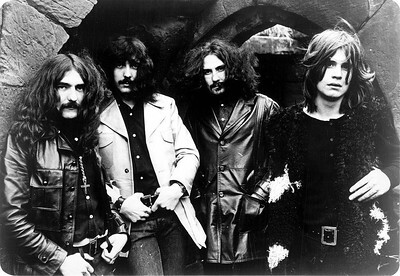
"Master Of Reality" is told from the point of view of Roger Painter, a high school student who has been committed by his mother and stepfather to a mental institution. He's either just turned 16 or is still not quite 16 yet, and he's the sort of kid who has spent a lot more time skipping school and smoking weed in his basement than he has doing any sort of studying. His crude journal entries make this obvious. See, the book is his journal, which he's forced to keep by the employees of the mental institution where he's staying. He knows they read his journal, so he's unwilling to write anything of substance in the journal. At first, his entries are just expletive-filled tirades, but after a few days of this, he switches tactics and starts trying to convince the man reading the journal, Gary, to give him back his Walkman and tapes. He swears to Gary that the tapes will make him feel better than any pills or therapy could, and that he'd really be ok if he could at least listen to Black Sabbath's "Master Of Reality", his favorite of all the tapes he has with him. This leads to enthusiastic if rough and uneducated descriptions of how great "Master Of Reality" is, in which Roger dissects each song and explains why they're so important to him.
But before he gets through the entire album, the journal ends, only to be picked up 10 years later by the now-adult Roger, who leads a solitary existence working as a restaurant manager and living in the tiny apartment in a beat-down part of town that his restaurant wages earn him. He's just broken up with his girlfriend, and in going through all of his stuff in order to move out of their shared place into his new solo apartment, he found his old journal from his time in a mental institution, where he apparently stayed until his 18th birthday when they had to let him out. He decides to write a letter to Gary, and tell him all of the things about Black Sabbath and about Roger himself that he never got a chance or had the words to explain back when he was younger. The earlier parts of the book are affecting, depicting as they do the emotional struggle of a kid locked in a mental institution on a very visceral level. If anything, though, this later section is even more affecting, as Roger has matured enough to learn how to express himself more accurately and more in-depth. I don't want to go too into the adult Roger's attempts to fully explain himself, as I fear it will spoil the ending, but I did think that he (and John Darnielle, the actual author) hit upon a powerful and important truth about why it is that teenagers--and adults--who don't fit in with their peers and with mainstream society often turn to music that appears outwardly negative for solace.
I had heard, when I first read about this book, that it was a sequel to "The Best Ever Death Metal Band Out Of Denton", a song by Darnielle's band, The Mountain Goats. Having now read the book, I would say that this is true in a spiritual if not literal sense. Both "Master Of Reality" and "The Best Ever Death Metal Band Out Of Denton" explore the topic of misfit kids finding solace in angry and negative music. However, "Master Of Reality" goes far more in depth on the subject, and it's the kind of book that I'd hope anyone could understand. For me, I felt like it allowed me to understand something about myself that I'd never really been able to comprehend. I would like to think that I could also loan this book to someone like my dad, who never seemed to get me when I was a teenager, and maybe it would help him understand who I am and where I'm coming from, and why I'm into the things I'm into. That said, I doubt it would work out that way. My dad would close his mind to the concepts discussed in this book the same way he closed his mind to my Slayer and Black Flag records when I was growing up. But if you are someone with an open mind, if you have found yourself wondering over the years why you or people you care about might find some really positive inspiration in music that seems outwardly negative, abrasive, and anti-social, you should really read this book. John Darnielle has answered some important questions about fundamental subjects within it. I feel that reading this book enriched my life, and it would probably enrich yours too.