

What do you think?
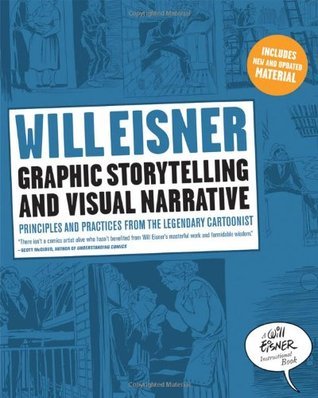
Sequential Art #2
Graphic Storytelling and Visual Narrative
"There isn't a comics artists alive who hasn't benefited from Will Eisner's masterful work and formidable wisdom."―Scott McCloud, author of Understanding Comics In Graphic Storytelling and Visual Narrative , Will Eisner―one of the most influential comic artists of the twentieth century―lays out the fundamentals of storytelling and their application in the comic book and graphic novel. In a work that will prove invaluable for comic artists and filmmakers, Eisner reveals how to construct a story and the basics of crafting a visual narrative. Filled with examples from Eisner's work as well as that of artists like Art Spiegelman and R. Crumb, this essential work covers everything from the fine points of graphic storytelling to the big picture of the medium, including how to:
192 pages, Paperback
First published February 1, 1996
About the author
Will Eisner
762 books548 followersWilliam Erwin Eisner was an American cartoonist, writer, and entrepreneur. He was one of the earliest cartoonists to work in the American comic book industry, and his series The Spirit (1940–1952) was noted for its experiments in content and form. In 1978, he popularized the term "graphic novel" with the publication of his book A Contract with God. He was an early contributor to formal comics studies with his book Comics and Sequential Art (1985). The Eisner Award was named in his honor and is given to recognize achievements each year in the comics medium; he was one of the three inaugural inductees to the Will Eisner Comic Book Hall of Fame.
Ratings & Reviews
Friends & Following
Create a free account to discover what your friends think of this book!
Community Reviews
Displaying 1 - 30 of 68 reviews

September 29, 2013
Disappointing. Eisner's reputation as a master cartoonist does not translate well to telling others how to do it--and furthermore, his examples from his own work of how to do it don't exactly work as ringing endorsements of his argument. This book is profusely illustrated (mostly with Eisner's own work, though some classic work by other hands appears too) to demonstrate his generally superficial and underdeveloped comments on various aspects of graphic storytelling. There are insights here, sure, but since Eisner never devotes more than a few hundred words to any one point, there's just no sustained or developed articulation of a theory of graphic narrative. Instead we get assertions and assumptions about how such narratives work (admittedly from someone with years of experience with them), followed by demonstrations of these assertions/assumptions in action (many original to the book) by Eisner. These demosntrations by and large are not impressive. I suppose that one could say all he's doing is providing demonstrations of the ideas, not really fully-developed narratives, but several of the examples are in fact previously-published works so presumably represent his idea of the best example from his oeuvre to demonstrate the point. And even these are for the most part pretty simplistic narratively and psychologically, and stylistically hyperbolic. Not that there's anything wrong with exaggerated style, but it militates against the thesis here that comics can be used to serious and subtle ends, I think. I suppose for someone who has some drawing skill but who is unfamiliar with comics while also having a desire to give comics a try (of whom I doubt there are many), this book would be a useful primer, but a primer is all that it is, really, and I have the impression that we're supposed to think it's much more than that.

May 27, 2020
I guess I prefer Eisner’s theoretical writings to McCloud’s.

February 25, 2023
Lighter reading than I was expecting but nonetheless much worth it! It worked for me as a very good summary about the art of creating comics with many visual examples in addition. Revealing his skilfulness with an economic text Eisner shares a lot about the ways of writing comics. Really recommend both as an introductory reading in the theme and as an Eisner masterclass in a book format.

September 22, 2013
Um estudo sobre narrativas com suporte gráfico realizado através do próprio conceito de narrativas gráficas :) O livro tem um valor enorme sobre dois aspectos: num momento em que o Storyteling volta a ser considerado como é um dos meios mais efetivos para comunicação em áreas tão destintas quanto Gestão Empresarial e UX, é um manual prático e ilustrado de representar, refletir e comunicar ideias. Ao mesmo tempo funciona como uma introdução riquíssima à arte sequencial, com exemplos retirados da obra de artistas como Frans Masereel, Otto Nückel, Art Spiegelman, Al Capp, Hal Foster, Crumb e o próprio Will Eisner. Livro altamente indicado, pelo conteúdo e deliciosa leitura.

November 2, 2013
If you want an introduction about storytelling, or if you're looking for inspiration for visual storytelling, this is the book to pick. Brilliantly written and artistically inspiring for anyone trying to model, design or create new stories.

July 6, 2018
Kinda phoned in and full of dated stereotypes. Pass.

October 25, 2022
Passear pelos Insights de um Mestre

May 8, 2019
The book is thin on explanations, and set in large type perhaps to make up for the word count. The author seems to detest film, and encourages the use of stereotypical characters for storytelling.

July 2, 2023
I love Will Eisner’s books but I think this is perhaps a little out of date now. The section on stereotypes stands out to me on this. Even though he points out stereotypes contribute to demeaning groups of people and perpetuating racism, he says comic folks need to rely on them to quickly convey who and what a person is, such as making a ‘wimp’ a short guy who isn’t attractive and wears glasses whereas a ‘hero’ is a muscular white guy with blonde hair. I get that comics are a quick and fast medium in terms of engagement, but so are TV shorts, flash fiction and short stories, but we wouldn’t tell those writers stereotypes are what you need to make a character.
In novel writing, we are told that things like clothes, body language, speech, dialogue, and character priorities are what instantly paints a immediate picture in a person’s mind as to the character. Comic writers can and should do this too as writers themselves. This is reflected in today’s most beloved comics. A young black boy can be a hero in Spiderman, middle school girls of all backgrounds can be adventurers in Lumberjanes and the thin dark-haired man with the villain mustache/goatee combo can be good father figure mentor in Nimona.
In novel writing, we are told that things like clothes, body language, speech, dialogue, and character priorities are what instantly paints a immediate picture in a person’s mind as to the character. Comic writers can and should do this too as writers themselves. This is reflected in today’s most beloved comics. A young black boy can be a hero in Spiderman, middle school girls of all backgrounds can be adventurers in Lumberjanes and the thin dark-haired man with the villain mustache/goatee combo can be good father figure mentor in Nimona.

September 21, 2009
Will Eisner, a master of comic art, on what makes for successful visual storytelling.
Eisner discusses the history of using visual narrative as a art/literature form and his concerned with changing the perception that comics are for 'people of low literacy and limited intellectual accomplishment.'
Most of the techniques and tips Eisner provides lend themselves more for the adventure and joke genre but I was really fascinated by the examples he provided of early woodblock print novels being published early in the 20th century; really stunning artwork illustrating stories dealing with the complexities of the human condition (works by Frans Masereel, Otto Nuckel, and Lynd Ward).
A bit of a gripe; as a product of his time, Eisner's assumptions of the comics creators/audience is heavily male biased. It is refreshing and encouraging to see the contemporary infusion of female writers, artists, and readers to the realm of visual storytelling.
Eisner discusses the history of using visual narrative as a art/literature form and his concerned with changing the perception that comics are for 'people of low literacy and limited intellectual accomplishment.'
Most of the techniques and tips Eisner provides lend themselves more for the adventure and joke genre but I was really fascinated by the examples he provided of early woodblock print novels being published early in the 20th century; really stunning artwork illustrating stories dealing with the complexities of the human condition (works by Frans Masereel, Otto Nuckel, and Lynd Ward).
A bit of a gripe; as a product of his time, Eisner's assumptions of the comics creators/audience is heavily male biased. It is refreshing and encouraging to see the contemporary infusion of female writers, artists, and readers to the realm of visual storytelling.

March 23, 2022
Mais um ótimo livro de Eisner, que apesar de não ser tão profundo, estabeleceu as bases para os estudos de comics atualmente. Confesso que, para quem já tem algum conhecimento das artes sequenciais, o livro acaba por se tornar raso e básico, mas a sua importância para o campo de estudo permanece.
Eisner explica sobre a narração gráfica e sequencial com poucas palavras e muitos exemplos visuais, dá uma boa base para qualquer um que queira aprender mais sobre comics e estabelece conceitos importantes que viriam a ser melhor aprofundados futuramente. Embora eu ainda prefira o trabalho de McCloud, tenho certeza que sem esse livro, boa parte dos estudos de comics teriam sido atrasados.
Essa leitura também se torna muito interessante para escritores, roteiristas e qualquer um que trabalhe com storytelling, visto que aborda bem as técnicas de narrativa.
Eisner explica sobre a narração gráfica e sequencial com poucas palavras e muitos exemplos visuais, dá uma boa base para qualquer um que queira aprender mais sobre comics e estabelece conceitos importantes que viriam a ser melhor aprofundados futuramente. Embora eu ainda prefira o trabalho de McCloud, tenho certeza que sem esse livro, boa parte dos estudos de comics teriam sido atrasados.
Essa leitura também se torna muito interessante para escritores, roteiristas e qualquer um que trabalhe com storytelling, visto que aborda bem as técnicas de narrativa.

June 27, 2021
I’m adding this book to my shelf of non-fiction teaching books because that is why I read it. I want to teach incorporating more visual literacy. I want to use more graphic novels and show the validity of the medium. This book doesn’t exactly fit my purpose for reading it but it’s close. Eisner has many connections to writing narratives. He discusses comics as important visual media, especially given the visual nature of the internet. I enjoyed this book and found it far less dry than I thought it’d be. I also came out of reading it with some teaching ideas and narrative prompts.

June 19, 2018
Libro muy interesante para adentrarse en el mundo de la narración gráfica. Al principio trata el tema de narrar con imágenes, cosa que me ha parecido muy importante como fotógrafo. Más adelante se me ha hecho algo más cuesta arriba. También queda algo desactualizado al ser del 2008.
Aún así lo recomiendo, lo que tiene lo tiene muy bien explicado y los ejemplos son obras a tener en cuenta para todo fan.
Aún así lo recomiendo, lo que tiene lo tiene muy bien explicado y los ejemplos son obras a tener en cuenta para todo fan.

December 7, 2022
If you can only read one, you probably ought to stick with Scott McCloud's Making Comics, but assuming that's not the case, this was a nice supplement to the Will Eisner series and for rounding out my approach to comics. It tends to be a bit heavier on the examples and lighter on the take-aways, but the space of his thinking continues to be worthwhile to exist in.
January 24, 2026
Just very outdated, not to Esiner's fault, however. It's just that a lot of his points no longer make sense or are relevant due to the technological/cultural developments that have happened in the last three decades. Here are two examples:
Streaming/Video: Ignoring that DVDs already existed in the 1990s, Eisner's entire point about films/video forcing the reader to watch the whole thing without stopping becomes silly once you acknowledge that videos can also be stopped and skipped ahead. This wouldn't be too bad if he didn't continually insist that this was the major defining feature between film and comics, making the transfer of skills between them silly/wrong. Insisting that comics have a unique difficulty due to the reader being able to take pauses, turn back, or skip ahead is a bold statement to make in today's media environment.
Modern comic publishing: Any consumer of contemporary comics in the big 2026 knows that they're often published from chapter to chapter, or even page to page. Once again, Eisner's point that comics must be written in a certain way due to the fear of audiences skipping ahead is silly. Because one: reading a chapter is so quick that there isn't a point in skipping, and two: when a couple of chapters are the only thing you'll be getting in a month, there isn't any incentive to be quick about reading them. Of course, you could involve discussion of binge reading and etc, but it's not as if Eisner discussed them either.
Just these two changes have made massive shifts in the relevance of Eisner's musings, and this ignores the massive influence of Japanese, Chinese and Korean aesthetics in modern visual entertainment. As well as the introduction of the top-down view, the influence of modern graphic design, etc. This, paired with a fairly rudimentary introduction to comic (or even story-telling in general), makes this book about "Graphic Storytelling and Visual Narrative" fairly narrow and unhelpful when understanding contemporary visual storytelling. Apart from some interesting insights here and there, I wouldn't say this book is particularly relevant
Streaming/Video: Ignoring that DVDs already existed in the 1990s, Eisner's entire point about films/video forcing the reader to watch the whole thing without stopping becomes silly once you acknowledge that videos can also be stopped and skipped ahead. This wouldn't be too bad if he didn't continually insist that this was the major defining feature between film and comics, making the transfer of skills between them silly/wrong. Insisting that comics have a unique difficulty due to the reader being able to take pauses, turn back, or skip ahead is a bold statement to make in today's media environment.
Modern comic publishing: Any consumer of contemporary comics in the big 2026 knows that they're often published from chapter to chapter, or even page to page. Once again, Eisner's point that comics must be written in a certain way due to the fear of audiences skipping ahead is silly. Because one: reading a chapter is so quick that there isn't a point in skipping, and two: when a couple of chapters are the only thing you'll be getting in a month, there isn't any incentive to be quick about reading them. Of course, you could involve discussion of binge reading and etc, but it's not as if Eisner discussed them either.
Just these two changes have made massive shifts in the relevance of Eisner's musings, and this ignores the massive influence of Japanese, Chinese and Korean aesthetics in modern visual entertainment. As well as the introduction of the top-down view, the influence of modern graphic design, etc. This, paired with a fairly rudimentary introduction to comic (or even story-telling in general), makes this book about "Graphic Storytelling and Visual Narrative" fairly narrow and unhelpful when understanding contemporary visual storytelling. Apart from some interesting insights here and there, I wouldn't say this book is particularly relevant

July 3, 2018
I actually have the original '95 edition of this book (then just called "Graphic Storytelling"), so mine's not as shiny and mod as the one pictured here. But the meat in the middle is the same, and that's what I'm gonna talk about.
Will Eisner was a giant in the business and the perfect person to write this book.
He actually attacks the topic in a way that might catch you off-guard, showing you the process behind such blindly-accepted aspects of comic books as pacing (especially when it comes to making your reader turn the page at the right time) and the reader's understanding of the action vs. characters expressing the action explicitly through dialogue.
Mind. Blown.
With a ton of examples (sometimes, to be fair, maybe too long of an example), classic monochrome comic panels, pages, and strips, and insider information like you'll get nowhere else, this book's a must-have.
Will Eisner was a giant in the business and the perfect person to write this book.
He actually attacks the topic in a way that might catch you off-guard, showing you the process behind such blindly-accepted aspects of comic books as pacing (especially when it comes to making your reader turn the page at the right time) and the reader's understanding of the action vs. characters expressing the action explicitly through dialogue.
Mind. Blown.
With a ton of examples (sometimes, to be fair, maybe too long of an example), classic monochrome comic panels, pages, and strips, and insider information like you'll get nowhere else, this book's a must-have.

November 8, 2025
Mais um ótimo livro de Eisner, que apesar de não ser tão profundo, estabeleceu as bases para os estudos de comics atualmente. Confesso que, para quem já tem algum conhecimento das artes sequenciais, o livro acaba por se tornar raso e básico, mas a sua importância para o campo de estudo permanece.
Eisner explica sobre a narração gráfica e sequencial com poucas palavras e muitos exemplos visuais, dá uma boa base para qualquer um que queira aprender mais sobre comics e estabelece conceitos importantes que viriam a ser melhor aprofundados futuramente. Embora eu ainda prefira o trabalho de McCloud, tenho certeza que sem esse livro, boa parte dos estudos de comics teriam sido atrasados.
Essa leitura também se torna muito interessante para escritores, roteiristas e qualquer um que trabalhe com storytelling, visto que aborda bem as técnicas de narrativa.
Eisner explica sobre a narração gráfica e sequencial com poucas palavras e muitos exemplos visuais, dá uma boa base para qualquer um que queira aprender mais sobre comics e estabelece conceitos importantes que viriam a ser melhor aprofundados futuramente. Embora eu ainda prefira o trabalho de McCloud, tenho certeza que sem esse livro, boa parte dos estudos de comics teriam sido atrasados.
Essa leitura também se torna muito interessante para escritores, roteiristas e qualquer um que trabalhe com storytelling, visto que aborda bem as técnicas de narrativa.

August 24, 2019
i think my problem with eisner is how he constructs a point. in school, we’re taught point, evidence, explain. eg:
P: Maus’s style suits its story in these ways
E: some panels from the comic
E: this is how these elements mean it suits the story
and it’s the explain that’s missing - you’re bombarded with all these examples of what he’s talking about, but not even the analytical footnotes found in the early chapters of the previous book. it’s just a short summary of a point about storytelling and then look at this comic. with the added fact that most of the points are ones i’ve heard before, there’s not much being given in terms of instruction or insight. i want ANALYSIS, dammit. pick it APART, will.
liked the lynd ward bit, but he didn’t say much about it. just read vertigo for yourself
P: Maus’s style suits its story in these ways
E: some panels from the comic
E: this is how these elements mean it suits the story
and it’s the explain that’s missing - you’re bombarded with all these examples of what he’s talking about, but not even the analytical footnotes found in the early chapters of the previous book. it’s just a short summary of a point about storytelling and then look at this comic. with the added fact that most of the points are ones i’ve heard before, there’s not much being given in terms of instruction or insight. i want ANALYSIS, dammit. pick it APART, will.
liked the lynd ward bit, but he didn’t say much about it. just read vertigo for yourself

January 8, 2021
A short, yet precious, guide for understanding and making comics and/or graphic novels. With great examples to look at, Will Eisner lessons on how visual narrative works, why, and which are the differences between them is a must read for any aspiring author.
As it often happens with this kind of books and guides, the section on the most recent techniques and distribution methods is short and not that useful. This said, I still have 5 stars to this book because Will Eisner died in 2004, which made for him physically impossible to develop that chapter further. Nonetheless, Mr.Eisner showed to be well aware of what the future of comics would have been with the pioneering of websites and blogs during the earliest years of the 2000s.
As it often happens with this kind of books and guides, the section on the most recent techniques and distribution methods is short and not that useful. This said, I still have 5 stars to this book because Will Eisner died in 2004, which made for him physically impossible to develop that chapter further. Nonetheless, Mr.Eisner showed to be well aware of what the future of comics would have been with the pioneering of websites and blogs during the earliest years of the 2000s.

February 28, 2021
Um bom livro de introdução às novelas gráficas do ponto de vista dos criadores.
Uma obra do Mestre Will Eisner que nos mostra as técnicas de contar uma história gráfica, a importância do narrador, das personagens e do estilo que o autor usa para dar o ambiente certo a uma história, seja de romance ou terror.
A mais-valia do livro está nos exemplos desenhados pelo próprio Eisner, incluíndo tiras de grandes autores que foram pioneiros em diversas formas de BD, começando nas tiras diárias dos jornais de há 100 anos.
Um livro para voltar sempre e um guia para quem quiser experimentar os caminhos da BD.
Comecem numa fanzine, desenhem as próprias histórias.
Uma obra do Mestre Will Eisner que nos mostra as técnicas de contar uma história gráfica, a importância do narrador, das personagens e do estilo que o autor usa para dar o ambiente certo a uma história, seja de romance ou terror.
A mais-valia do livro está nos exemplos desenhados pelo próprio Eisner, incluíndo tiras de grandes autores que foram pioneiros em diversas formas de BD, começando nas tiras diárias dos jornais de há 100 anos.
Um livro para voltar sempre e um guia para quem quiser experimentar os caminhos da BD.
Comecem numa fanzine, desenhem as próprias histórias.
January 15, 2019
I think I was expecting something closer to the Scott McCloud book (which was really good) or more of a book form of every frame a painting youtube channel. but this was a page of an idea then a miniature form of a comic showing the idea in action, no notes on the side or summary or anything. so cool in that it is an author showing he really understands how comics and graphics work together sometimes leaning more to one side then the other (a mix of narration thrown in) but not a good teaching book.

June 16, 2022
Maybe it is not as impactful as the Comics and the sequential art but nevertheless, it is a must-read for anybody dabbling in comics. the level of influence of Eisner on comics is stupendous; in fact I think that it is quite rare that one individual has such a strong effect on an art form (they are hand in hand with alan Moore on this for the case of comics). I love how he explains the concepts and his style is always so fresh, with that touch of genius in expressing human feeling with gestures, facial details, and posture. He is a great teacher.

October 24, 2017
This book is filled with a lot of helpful information, especially if you know very little about storytelling (like myself). However, the book is not long, and it's very easy to blow through the whole book without remembering much of what you just read. I recommend taking your time, reading deliberately, and really analyzing the example literature provided. If you plan on making comics, perhaps try to apply the lessons from each chapter in a strip of your own after reading each one.
September 23, 2018
"A Will Eisner Instructional Book"
Instructional indeed, and superficial too.
This book must be shelved in the "dummies" section of bookstores. You expect way more than that if it's Will Eisner instructing. If you regard yourself as a very beginner in either reading graphic novels or studying graphic storytelling, go ahead and have a look at the content.
Instructional indeed, and superficial too.
This book must be shelved in the "dummies" section of bookstores. You expect way more than that if it's Will Eisner instructing. If you regard yourself as a very beginner in either reading graphic novels or studying graphic storytelling, go ahead and have a look at the content.

October 16, 2020
Una expansión sobre el libro anterior. Agrega una mayor reflexión e inteligencia práctica acerca de la creación de historietas. Está más destinada a creadores y dibujantes de cómic que al público general, pero tiene algunas herramientas pragmáticas que permiten un criterio sólido (aunque discutible) para la crítica del medio.
June 2, 2026
Less an instructional or historical book, this feels more like Eisner musing over the different things that make up a comic, then showing examples of what he's talking about. Rarely does he actually dive into details, instead glossing over the subject, which I found disappointing, but I will definitely hang onto this just as an example of how one of the masters of the craft thought about comics.

March 16, 2023
Un clásico sobre el arte secuencial;
Will Eisner es un verdadero maestro del cómic y aunque siempre uno quiere más y la obra se hace corta y es que podría ser más exhaustiva en algunos puntos no importa mucho si eres fan de Will Eisner
Will Eisner es un verdadero maestro del cómic y aunque siempre uno quiere más y la obra se hace corta y es que podría ser más exhaustiva en algunos puntos no importa mucho si eres fan de Will Eisner

May 24, 2018
Wish I could have spent a bit more time with this but forgot I had it and then it was due. Tore through it. I did enjoy it.

November 7, 2018
Though I liked reading it, I found it not as helpful as I wished. It has a lot of examples, but it lacks of actual information. Still I would say it is still a must read of the field.
October 17, 2020
Saggio super interessante
È triste arrivare alla fine e accorgersi che la maggior parte dei consigli per approfondire non sono disponibili in italiano, ma sicuramente leggerò quelli disponibili
È triste arrivare alla fine e accorgersi che la maggior parte dei consigli per approfondire non sono disponibili in italiano, ma sicuramente leggerò quelli disponibili
Displaying 1 - 30 of 68 reviews