

What do you think?

A maior prisão do mundo: uma história dos territórios ocupados por Israel na Palestina
Neste livro, Ilan Pappe reconstrói a história da ocupação israelense nos territórios palestinos, sobretudo após 1967, quando o Estado judeu rasgou definitivamente o Plano de Partilha aprovado pela Assembleia Geral das Nações Unidas em 1948 e tomou conta de Jerusalém, da Cisjordânia e da Faixa de Gaza. O autor revela que a entidade sionista possuía desde 1963 um plano para administrar os palestinos nas regiões ocupadas, e que estava apenas esperando uma oportunidade para colocá-lo em ação — oportunidade que se apresentou com a Guerra Árabe-Israelense, conhecida em Israel como Guerra dos Seis Dias. Quase sessenta anos depois, essa monstruosa megaprisão — os territórios ocupados —, marcada pela humilhação, pela vigilância e pela violência cotidianas, deu lugar a um campo de extermínio onde o direito internacional humanitário, que nunca foi respeitado pelos ocupantes, agoniza em imagens reproduzidas incessantemente nas redes sociais, diante da revoltante inação da imprensa e de governantes de norte a sul do planeta. "A terceira geração de prisioneiros palestinos está lá, à espera de que o mundo reconheça seu sofrimento e se dê conta de que, enquanto essa opressão prosseguir, será impossível discutir de modo construtivo a opressão em outros lugares do Oriente Médio", escreve Pappe. "A imunidade que Israel recebeu encorajou outros regimes e outras oposições a acreditar que os direitos humanos e civis são irrelevantes. O desmonte da megaprisão na Palestina enviará uma mensagem diferente e mais esperançosa a todos os que vivem nessa parte conturbada do mundo."
373 pages, Kindle Edition
First published November 8, 2016
About the author
Ilan Pappé
105 books1,937 followersIlan Pappé is a professor with the College of Social Sciences and International Studies at the University of Exeter in the UK, director of the university's European Centre for Palestine Studies, co-director of the Exeter Centre for Ethno-Political Studies, and political activist. He was formerly a senior lecturer in political science at the University of Haifa (1984–2007) and chair of the Emil Touma Institute for Palestinian and Israeli Studies in Haifa (2000–2008).
Pappé is one of Israel's "New Historians" who, since the release of pertinent British and Israeli government documents in the early 1980s, have been rewriting the history of Israel's creation in 1948, and the corresponding expulsion or flight of 700,000 Palestinians in the same year. He has written that the expulsions were not decided on an ad hoc basis, as other historians have argued, but constituted the ethnic cleansing of Palestine, in accordance with Plan Dalet, drawn up in 1947 by Israel's future leaders. He blames the creation of Israel for the lack of peace in the Middle East, arguing that Zionism is more dangerous than Islamic militancy, and has called for an international boycott of Israeli academics.
His work has been both supported and criticized by other historians. Before he left Israel in 2008, he had been condemned in the Knesset, Israel's parliament; a minister of education had called for him to be sacked; his photograph had appeared in a newspaper at the centre of a target; and he had received several death threats.
Pappé is one of Israel's "New Historians" who, since the release of pertinent British and Israeli government documents in the early 1980s, have been rewriting the history of Israel's creation in 1948, and the corresponding expulsion or flight of 700,000 Palestinians in the same year. He has written that the expulsions were not decided on an ad hoc basis, as other historians have argued, but constituted the ethnic cleansing of Palestine, in accordance with Plan Dalet, drawn up in 1947 by Israel's future leaders. He blames the creation of Israel for the lack of peace in the Middle East, arguing that Zionism is more dangerous than Islamic militancy, and has called for an international boycott of Israeli academics.
His work has been both supported and criticized by other historians. Before he left Israel in 2008, he had been condemned in the Knesset, Israel's parliament; a minister of education had called for him to be sacked; his photograph had appeared in a newspaper at the centre of a target; and he had received several death threats.
Ratings & Reviews
Friends & Following
Create a free account to discover what your friends think of this book!
Community Reviews
Displaying 1 - 30 of 218 reviews

December 9, 2023
This book tells the origin of the world’s largest open-air prison (Gaza). It shows how Israel’s army thinking that “having acted with impunity in 1948, there was no reason to expect any serious rebuke for, or obstacles to, a similar policy of ethnic cleansing in June 1967.” “The basic view (was) that downsizing the (occupied) population in the immediate aftermath of the (’67) war was a viable and opportune modus operandi before the dust settled and the ‘peace process’ commenced.” “The fewer the Palestinians, the easier it would be to police them in the new mega-prison that was constructed.” How thoughtful giving the people you illegally occupy, “a collective punishment for a crime never committed.” This book is dedicated to those who prefer NOT to stand by while “millions of people were being treated in such an inhumane and dehumanizing way – just because they were not Jews.” Israelis are self-appointed wardens of this prison where “they are the constant abusers, dehumanizers and destroyers of Palestinian rights and lives.”
The term occupation is meant to mean temporary, but now older than 75 years, Israel’s occupation seems permanent as long as the US keeps financing its settler-colonial baby with buckets of cash. Any violent sociopath would hail this longest military occupation in world history; even Hitler would have to be impressed. Ilan says the few nations that broke free from such settler-colonialism was Algeria, Zimbabwe and South Africa. Israel’s job is make sure Palestinians never succeed in stopping Zionist settler-colonialism or they literally die trying. Israel is like a motor with two speeds: Ethnic Cleansing speed (slow), and Genocide speed (fast). Living peaceably with one’s neighbors of all races and creeds (as happened for centuries in that area) is never an option historically that settler-colonials consider.
When you covet the land belonging to others, and merely buying the land you want seems too fair and just, try settler-colonialism. Take other people’s shit by force; when stopped, cry and play victim, shout Anti-Semitism! Or don’t forget, Self-Hating Jew. Works every time like a charm. Just controlling Palestinians isn’t enough; you must force them to leave or kill them if you want that cherished white-only demographic for voting. Moshe Dayan demanded “freedom of action” to ignore International Law, “without these actions we would have ceased to be a combative people and without the discipline of a combative people we are lost.” That’s pretty funny when you EVERY combative people you can think of went the way of the Dodo – Sparta, the Vikings, Mongols, Romans, the Huns, Nazis…
Livia Rokach (a Zionist when she said this) summed up Israel saying it “has no international obligations (to international law)” and “it must see the sword as the main, if not the only instrument.” “Towards this end it may, no – it must – invent dangers, and to do this it must adopt the method of provocation and revenge.” “And above all – let us hope for a new war with the Arab countries, so that we may finally get rid of our troubles and acquire our space.” Livia provides here the perfect condensation of Israel’s History thus far: invent dangers, provoke others until they respond and when even one of yours is hurt, it’s nasty-assed disproportionate revenge time.
Ilan says US weaponry played an important role in Israel’s victory in the ’67 War. When you want to kill your fellow humans, having the most advanced US fighter jets sure can help. “As in 1936 and again in 1948, the main weapon against the Palestinian people was collective punishment.” Noam in Fateful Triangle gives several telling quotations by top Israelis admitting they were the aggressive party in the ’67 War. Ilan also offers evidence here on page 30. It went to war “to expand the state”; Noam says in 1967 Israel deliberately chose expansion over security. In 1973, AIPAC was bringing in $1 billion in aid per year. AIPAC alone destroyed the career of Senator J. William Fulbright. What does AIPAC mean anyway: Acquisitive Israel Provoking And Clusterbombing? or America Investing in Provoking And Clusterbombing? Israel’s Post ’67 Dilemma: How do you rule non-Jews without expelling them or granting them citizenship? “In 1967, politicians, academics, generals and civil servants set about turning the West Bank and the Gaza Strip into a mega-prison the biggest seen on earth.” “What began in 1967 and continues to this day is an ethnic cleansing operation based on land expropriations.”
International Laws Broken by Israel: the second article of the UN 1945 Charter (acquiring land through annexation) the Fourth Geneva Convention Article 49(6) (1949) which is about colonizing land you know damn well you are occupying. And it’s illegal to transfer non-indigenous people there (settlers anyone?). The average Israeli didn’t have to think of the people in the occupied territories until the First Intifada in 1987. “The official decision to colonize (after ’67) was a grave violation of international law. The Geneva Convention requires an occupying power to affect the existing order in the occupied territory as little as possible during its tenure. One aspect of this obligation is that it must leave the territory to the people it finds there.” And Article 49 of the Geneva Conventions says occupying powers can’t “deport or transfer” people in that occupied area.
Jerusalem had a seventh century Muslim cemetery; its graves were removed at night to make way for the Simon Wiesenthal Museum of Tolerance. You can’t make this shit up. And “to ensure that Muslims could not reach this sacred site, it was surrounded by an electric fence.” Everyone knows barbed wire is for sissies. Israel then built an expressway through an old Muslim cemetery in Haifa. I can picture elderly Palestinians singing “When I get to my Semi-Final Resting Place”. In 1976 Zionist Yitzhak Rabin explained it well to the cameras, “we do not build settlements to evacuate them.”
Here’s Israeli journalist Amos Kenan reporting from Beit Nuba: Elegant stone houses, orchards of fruit trees around each house – olives, peach and vine trees – and next to them cedars. All the orchards nicely cultivated and maintained…In the morning the first bulldozer arrived and demolished the first house. In ten minutes, the house, the orchard and the trees were gone. The house and its contents were destroyed…After the third house was destroyed, the refugee’s convoy began to make its way towards Ramallah.”
To assure the “ethnic purity of the Jewish State” Palestinians had to be confined “in their own areas as ‘inhabitants’ not citizens”. Here’s top army guy Mordechai Gur in 1967: “we need to create the circumstances that would induce the people to leave. We need to pressure them, but in such a way that would not cause them to resist, but to leave. This should be encouraged among both refugees and permanent residents so they would feel there is no hope in the [Gaza] Strip from an agricultural perspective.” In ’67 Israel expels “nearly 180,000 Palestinians” which Ilan calls ethnic cleansing. Shimon Peres gets a Nobel Prize as though he “played no part in the colonization of Palestine.”
“The soldier told how he and his comrades entered a Palestinian school, locked about 20 eight-year-old boys in a classroom, threw in some gas grenades and kept the children in there for quite a while, causing such a panic that at least half of them jumped out of the windows, breaking their legs in the fall. This was punishment for stone throwing by students at nearby college who were not caught.” Zionist RX: Inflict trauma on the occupied but don’t forget to start scaring them young. Pretend they are Thespians; tell them to (or make them) ‘break a leg’.
First Intifada: The First intifada lasts around six years and 1,000 Palestinians are killed and more than 120,000 are arrested (many under the age of sixteen).” “Israel reacted to this basically non-violent uprising with great violence.” “The Swedish branch of Save the Children estimated that between 23,600 and 29,900 children required treatment for injuries sustained from beatings in the first two years of the Intifada, a third of whom are under the age of ten.” Hamas only starts in 1987. At this time “Palestinians were prohibited from using cars in roads close to settlements.” So, a lot of times you could not drive there or “easily walk there.” A Palestinian who walked near settlements “endangered his life as soldiers and settlers could have harmed him (B’Tselem report).” “Destruction of the infrastructure was intentional” said the head of Israeli Military Intelligence. Intentional unemployment, bad water, and electricity, all to make you leave. So humane. 48 cases of murdering Palestinians with the 1st Intifada, and only one settler was charged with murder - Zionist ‘justice’.
The Second Intifada: Oslo was not a genuine peace process and Arafat didn’t wreck it triggering the Second Intifada. Israel’s final offer at Oslo was so insulting that high ranking Israelis said they would not have signed it if they were Palestinian. “By 2007, 40 percent of the West Bank was already under direct rule by Israel or, in other words, annexed, for all intents and purposes, to Israel.” West Bank Palestinians can’t use the Tel Aviv Ben Gurion airport. All West Bank major roads are apartheid roads because Palestinians aren’t allowed to use them.
“By September 2013, one hundred and thirty-four (69.4%) of the 193 member states of the United Nations had recognized the State of Palestine within the Palestinian territories.” “Since 2005, the settlers have become even more brutal and barbarous in their treatment of the people of the West Bank.” Today the West Bank has 400,000 settlers and 3,000,000 Palestinians.
John Dugard (UN special rapporteur) calls all this “creating the prison and then throwing the key into the sea.” This book and many others show that when occupier sadistically and intentionally kills far more of the occupied than the occupied kill of the occupier, the occupier is only creating MORE resistance in the future, and thus can only expect MORE terror – It’s called ‘Blowback’, or as Elvis said, ‘Return to Sender’.
Zionists like to believe what Israel has done since 10/7/23 can’t possibly be genocide, perhaps because the murdered aren’t Jewish. However since 2006, Israel’s actions were seen as genocide: “It met UN Article 2’s definition of genocide” and the weapons used against Palestinians “were intended to kill.” “According to B’Tselem (a conservative organization), the Israelis killed 141 children in 2006.” “On November 1st, 2006, in less than forty-eight hours, the Israeli’s killed seventy civilians.” AIPAC fantasy: If the occupier does it, it’s defense, if the occupied with no place to go does it, its terrorism. According to this dangerously warped logic, the Jews who resisted the Warsaw Ghetto and the Nazis would then be terrorists and not courageous freedom fighters. Isn’t blatant hypocrisy fun?
Israel’s self-appointed job is repeatedly to push Palestinians to acts of blowback, and any return violence is an engraved invitation to disproportionally kill any number of the occupied. Israel: Courageously Shooting Fish in an Occupied Barrel since 1967.
Yet another great book by Ilan Pappe. I’ll be reviewing all his books, because not ONE of my Zionist Facebook friends from College has ever posted ANY concern for the plight of those illegally occupied by Israel. It appears they have more sympathy for the lobsters trapped in a tank at a seafood restaurant. After all, those lobsters don’t threaten blatant settler-colonialism – but people with active functioning morals DO. It’s the job of ALL of us, to demand ALL states follow international law, even delightfully rogue states like the US and Israel. Our taxpayer dollars annually for decades going to settler-colonial Israel to repress or murder people who under occupation won’t conveniently either leave or die - such a noble calling. Bravo, Ilan.
The term occupation is meant to mean temporary, but now older than 75 years, Israel’s occupation seems permanent as long as the US keeps financing its settler-colonial baby with buckets of cash. Any violent sociopath would hail this longest military occupation in world history; even Hitler would have to be impressed. Ilan says the few nations that broke free from such settler-colonialism was Algeria, Zimbabwe and South Africa. Israel’s job is make sure Palestinians never succeed in stopping Zionist settler-colonialism or they literally die trying. Israel is like a motor with two speeds: Ethnic Cleansing speed (slow), and Genocide speed (fast). Living peaceably with one’s neighbors of all races and creeds (as happened for centuries in that area) is never an option historically that settler-colonials consider.
When you covet the land belonging to others, and merely buying the land you want seems too fair and just, try settler-colonialism. Take other people’s shit by force; when stopped, cry and play victim, shout Anti-Semitism! Or don’t forget, Self-Hating Jew. Works every time like a charm. Just controlling Palestinians isn’t enough; you must force them to leave or kill them if you want that cherished white-only demographic for voting. Moshe Dayan demanded “freedom of action” to ignore International Law, “without these actions we would have ceased to be a combative people and without the discipline of a combative people we are lost.” That’s pretty funny when you EVERY combative people you can think of went the way of the Dodo – Sparta, the Vikings, Mongols, Romans, the Huns, Nazis…
Livia Rokach (a Zionist when she said this) summed up Israel saying it “has no international obligations (to international law)” and “it must see the sword as the main, if not the only instrument.” “Towards this end it may, no – it must – invent dangers, and to do this it must adopt the method of provocation and revenge.” “And above all – let us hope for a new war with the Arab countries, so that we may finally get rid of our troubles and acquire our space.” Livia provides here the perfect condensation of Israel’s History thus far: invent dangers, provoke others until they respond and when even one of yours is hurt, it’s nasty-assed disproportionate revenge time.
Ilan says US weaponry played an important role in Israel’s victory in the ’67 War. When you want to kill your fellow humans, having the most advanced US fighter jets sure can help. “As in 1936 and again in 1948, the main weapon against the Palestinian people was collective punishment.” Noam in Fateful Triangle gives several telling quotations by top Israelis admitting they were the aggressive party in the ’67 War. Ilan also offers evidence here on page 30. It went to war “to expand the state”; Noam says in 1967 Israel deliberately chose expansion over security. In 1973, AIPAC was bringing in $1 billion in aid per year. AIPAC alone destroyed the career of Senator J. William Fulbright. What does AIPAC mean anyway: Acquisitive Israel Provoking And Clusterbombing? or America Investing in Provoking And Clusterbombing? Israel’s Post ’67 Dilemma: How do you rule non-Jews without expelling them or granting them citizenship? “In 1967, politicians, academics, generals and civil servants set about turning the West Bank and the Gaza Strip into a mega-prison the biggest seen on earth.” “What began in 1967 and continues to this day is an ethnic cleansing operation based on land expropriations.”
International Laws Broken by Israel: the second article of the UN 1945 Charter (acquiring land through annexation) the Fourth Geneva Convention Article 49(6) (1949) which is about colonizing land you know damn well you are occupying. And it’s illegal to transfer non-indigenous people there (settlers anyone?). The average Israeli didn’t have to think of the people in the occupied territories until the First Intifada in 1987. “The official decision to colonize (after ’67) was a grave violation of international law. The Geneva Convention requires an occupying power to affect the existing order in the occupied territory as little as possible during its tenure. One aspect of this obligation is that it must leave the territory to the people it finds there.” And Article 49 of the Geneva Conventions says occupying powers can’t “deport or transfer” people in that occupied area.
Jerusalem had a seventh century Muslim cemetery; its graves were removed at night to make way for the Simon Wiesenthal Museum of Tolerance. You can’t make this shit up. And “to ensure that Muslims could not reach this sacred site, it was surrounded by an electric fence.” Everyone knows barbed wire is for sissies. Israel then built an expressway through an old Muslim cemetery in Haifa. I can picture elderly Palestinians singing “When I get to my Semi-Final Resting Place”. In 1976 Zionist Yitzhak Rabin explained it well to the cameras, “we do not build settlements to evacuate them.”
Here’s Israeli journalist Amos Kenan reporting from Beit Nuba: Elegant stone houses, orchards of fruit trees around each house – olives, peach and vine trees – and next to them cedars. All the orchards nicely cultivated and maintained…In the morning the first bulldozer arrived and demolished the first house. In ten minutes, the house, the orchard and the trees were gone. The house and its contents were destroyed…After the third house was destroyed, the refugee’s convoy began to make its way towards Ramallah.”
To assure the “ethnic purity of the Jewish State” Palestinians had to be confined “in their own areas as ‘inhabitants’ not citizens”. Here’s top army guy Mordechai Gur in 1967: “we need to create the circumstances that would induce the people to leave. We need to pressure them, but in such a way that would not cause them to resist, but to leave. This should be encouraged among both refugees and permanent residents so they would feel there is no hope in the [Gaza] Strip from an agricultural perspective.” In ’67 Israel expels “nearly 180,000 Palestinians” which Ilan calls ethnic cleansing. Shimon Peres gets a Nobel Prize as though he “played no part in the colonization of Palestine.”
“The soldier told how he and his comrades entered a Palestinian school, locked about 20 eight-year-old boys in a classroom, threw in some gas grenades and kept the children in there for quite a while, causing such a panic that at least half of them jumped out of the windows, breaking their legs in the fall. This was punishment for stone throwing by students at nearby college who were not caught.” Zionist RX: Inflict trauma on the occupied but don’t forget to start scaring them young. Pretend they are Thespians; tell them to (or make them) ‘break a leg’.
First Intifada: The First intifada lasts around six years and 1,000 Palestinians are killed and more than 120,000 are arrested (many under the age of sixteen).” “Israel reacted to this basically non-violent uprising with great violence.” “The Swedish branch of Save the Children estimated that between 23,600 and 29,900 children required treatment for injuries sustained from beatings in the first two years of the Intifada, a third of whom are under the age of ten.” Hamas only starts in 1987. At this time “Palestinians were prohibited from using cars in roads close to settlements.” So, a lot of times you could not drive there or “easily walk there.” A Palestinian who walked near settlements “endangered his life as soldiers and settlers could have harmed him (B’Tselem report).” “Destruction of the infrastructure was intentional” said the head of Israeli Military Intelligence. Intentional unemployment, bad water, and electricity, all to make you leave. So humane. 48 cases of murdering Palestinians with the 1st Intifada, and only one settler was charged with murder - Zionist ‘justice’.
The Second Intifada: Oslo was not a genuine peace process and Arafat didn’t wreck it triggering the Second Intifada. Israel’s final offer at Oslo was so insulting that high ranking Israelis said they would not have signed it if they were Palestinian. “By 2007, 40 percent of the West Bank was already under direct rule by Israel or, in other words, annexed, for all intents and purposes, to Israel.” West Bank Palestinians can’t use the Tel Aviv Ben Gurion airport. All West Bank major roads are apartheid roads because Palestinians aren’t allowed to use them.
“By September 2013, one hundred and thirty-four (69.4%) of the 193 member states of the United Nations had recognized the State of Palestine within the Palestinian territories.” “Since 2005, the settlers have become even more brutal and barbarous in their treatment of the people of the West Bank.” Today the West Bank has 400,000 settlers and 3,000,000 Palestinians.
John Dugard (UN special rapporteur) calls all this “creating the prison and then throwing the key into the sea.” This book and many others show that when occupier sadistically and intentionally kills far more of the occupied than the occupied kill of the occupier, the occupier is only creating MORE resistance in the future, and thus can only expect MORE terror – It’s called ‘Blowback’, or as Elvis said, ‘Return to Sender’.
Zionists like to believe what Israel has done since 10/7/23 can’t possibly be genocide, perhaps because the murdered aren’t Jewish. However since 2006, Israel’s actions were seen as genocide: “It met UN Article 2’s definition of genocide” and the weapons used against Palestinians “were intended to kill.” “According to B’Tselem (a conservative organization), the Israelis killed 141 children in 2006.” “On November 1st, 2006, in less than forty-eight hours, the Israeli’s killed seventy civilians.” AIPAC fantasy: If the occupier does it, it’s defense, if the occupied with no place to go does it, its terrorism. According to this dangerously warped logic, the Jews who resisted the Warsaw Ghetto and the Nazis would then be terrorists and not courageous freedom fighters. Isn’t blatant hypocrisy fun?
Israel’s self-appointed job is repeatedly to push Palestinians to acts of blowback, and any return violence is an engraved invitation to disproportionally kill any number of the occupied. Israel: Courageously Shooting Fish in an Occupied Barrel since 1967.
Yet another great book by Ilan Pappe. I’ll be reviewing all his books, because not ONE of my Zionist Facebook friends from College has ever posted ANY concern for the plight of those illegally occupied by Israel. It appears they have more sympathy for the lobsters trapped in a tank at a seafood restaurant. After all, those lobsters don’t threaten blatant settler-colonialism – but people with active functioning morals DO. It’s the job of ALL of us, to demand ALL states follow international law, even delightfully rogue states like the US and Israel. Our taxpayer dollars annually for decades going to settler-colonial Israel to repress or murder people who under occupation won’t conveniently either leave or die - such a noble calling. Bravo, Ilan.

December 16, 2024
کتاب اصلا و اصلا ترجمهی خوبی ندارد. ترجیحا به زبان اصلی خوانده شود.
---
کتاب «بزرگترین زندان زمین» نوشته ایلان پاپه، تاریخنگار اسرائیلی، به موضوع شکلگیری رژیم اشغالگر اسرائیل و سیاستهای سرکوبگرانه آن علیه فلسطینیان میپردازد. این کتاب با نگاهی انتقادی به تاریخ معاصر فلسطین و اسرائیل، به بررسی ابعاد مختلف اشغال و نظامیسازی سرزمینهای فلسطینی میپردازد. برای تحلیل کتاب، میتوان آن را به چند بخش اصلی تقسیم کرد:
۱. معرفی زمینه تاریخی و ایدئولوژیکی اشغال فلسطین
موضوع: در این بخش، ایلان پاپه پیشینه تاریخی تأسیس اسرائیل و ایدئولوژی صهیونیسم را توضیح میدهد. وی نشان میدهد که چگونه این ایدئولوژی از ابتدا بر پایه حذف تدریجی فلسطینیان و ایجاد یک "دولت یهودی" شکل گرفته است.
تحلیل: تأکید نویسنده بر سیاستهای استعمارگرانه و طرحریزی سیستماتیک برای اشغال فلسطین.
نقش قدرتهای غربی، بهویژه بریتانیا، در فراهمسازی زمینه برای تأسیس اسرائیل.
---
۲. نظام زندان و نظامیسازی سرزمینهای اشغالی
موضوع: در این بخش، پاپه توضیح میدهد که چگونه رژیم اسرائیل به تدریج یک نظام کنترلی و نظامی ایجاد کرده است که فلسطینیان را در مناطق اشغالی محدود و سرکوب میکند.
تحلیل: استفاده از روشهای سرکوب جمعی مانند دیوار حائل، نقاط بازرسی، و محدودیتهای رفتوآمد.
اسرائیل با استفاده از ابزارهایی مانند زندانهای گسترده و سرکوب حقوق بشر، فلسطینیان را به شهروندانی درجه دوم تبدیل کرده است.
۳. سیاستهای تبعیضآمیز و جداسازی نژادی
موضوع: پاپه به ساختارهای آپارتاید و تبعیض سیستماتیک اسرائیل علیه فلسطینیان میپردازد. او توضیح میدهد که چگونه قوانین و سیاستهای اسرائیلی بهطور سیستماتیک فلسطینیان را از حقوق اساسیشان محروم کرده است.
تحلیل: نویسنده اسرائیل را با رژیم آپارتاید آفریقای جنوبی مقایسه میکند.
تأکید بر نقش قوانین و سیاستهایی که فلسطینیان را از زمینهایشان آواره و آنان را از دستیابی به منابع اولیه مانند آب و برق محروم میکند.
۴. مقاومت فلسطینیان در برابر اشغال
موضوع: بررسی مقاومت مردمی فلسطین، از جمله انتفاضهها و واکنش اسرائیل به این مقاومتها.
تحلیل: پاپه بهجای تمرکز بر خشونت فلسطینیان، به ریشههای مقاومت آنها و شرایط غیرانسانی که باعث چنین واکنشهایی میشود، میپردازد.
او نشان میدهد که مقاومت فلسطینیها نه فقط یک واکنش بلکه تلاشی برای بقا در برابر سرکوب سیستماتیک است.
۵. نقد حمایت بینالمللی از اسرائیل
موضوع: نقش قدرتهای جهانی، بهویژه ایالات متحده و اروپا، در حمایت از اسرائیل و تداوم اشغالگری بررسی میشود.
تحلیل: نویسنده سیاستهای دوگانه غرب در مورد حقوق بشر و دموکراسی را به چالش میکشد.
سکوت سازمانهای بینالمللی در برابر جنایات اسرائیل بهعنوان نشانهای از ناکارآمدی جامعه جهانی در حمایت از عدالت معرفی میشود.
۶. نتیجهگیری و آینده فلسطین
موضوع: پاپه آینده این درگیری و امکان صلح در منطقه را مورد بحث قرار میدهد.
تحلیل: نویسنده بر اهمیت عدالت، پایان اشغالگری، و به رسمیت شناختن حقوق فلسطینیان بهعنوان پیششرطهای هرگونه صلح پایدار تأکید میکند.
پیشنهاد یک دولت مشترک و غیرنژادی بهجای مدلهای جداییطلبانه کنونی.
جمعبندی کلی
کتاب «بزرگترین زندان زمین» یکی از تحلیلهای انتقادی قدرتمند درباره تاریخ و سیاستهای اسرائیل است که با استناد به شواهد تاریخی و تجربیات میدانی، خواننده را با واقعیتهای تلخ سرکوب فلسطینیان آشنا میکند. ایلان پاپه با نگارش این کتاب تلاش میکند سکوت رسانهها و تاریخنگاری رسمی درباره نقش اسرائیل در ایجاد بحران انسانی فلسطین را به چالش بکشد.
---
کتاب «بزرگترین زندان زمین» نوشته ایلان پاپه، تاریخنگار اسرائیلی، به موضوع شکلگیری رژیم اشغالگر اسرائیل و سیاستهای سرکوبگرانه آن علیه فلسطینیان میپردازد. این کتاب با نگاهی انتقادی به تاریخ معاصر فلسطین و اسرائیل، به بررسی ابعاد مختلف اشغال و نظامیسازی سرزمینهای فلسطینی میپردازد. برای تحلیل کتاب، میتوان آن را به چند بخش اصلی تقسیم کرد:
۱. معرفی زمینه تاریخی و ایدئولوژیکی اشغال فلسطین
موضوع: در این بخش، ایلان پاپه پیشینه تاریخی تأسیس اسرائیل و ایدئولوژی صهیونیسم را توضیح میدهد. وی نشان میدهد که چگونه این ایدئولوژی از ابتدا بر پایه حذف تدریجی فلسطینیان و ایجاد یک "دولت یهودی" شکل گرفته است.
تحلیل: تأکید نویسنده بر سیاستهای استعمارگرانه و طرحریزی سیستماتیک برای اشغال فلسطین.
نقش قدرتهای غربی، بهویژه بریتانیا، در فراهمسازی زمینه برای تأسیس اسرائیل.
---
۲. نظام زندان و نظامیسازی سرزمینهای اشغالی
موضوع: در این بخش، پاپه توضیح میدهد که چگونه رژیم اسرائیل به تدریج یک نظام کنترلی و نظامی ایجاد کرده است که فلسطینیان را در مناطق اشغالی محدود و سرکوب میکند.
تحلیل: استفاده از روشهای سرکوب جمعی مانند دیوار حائل، نقاط بازرسی، و محدودیتهای رفتوآمد.
اسرائیل با استفاده از ابزارهایی مانند زندانهای گسترده و سرکوب حقوق بشر، فلسطینیان را به شهروندانی درجه دوم تبدیل کرده است.
۳. سیاستهای تبعیضآمیز و جداسازی نژادی
موضوع: پاپه به ساختارهای آپارتاید و تبعیض سیستماتیک اسرائیل علیه فلسطینیان میپردازد. او توضیح میدهد که چگونه قوانین و سیاستهای اسرائیلی بهطور سیستماتیک فلسطینیان را از حقوق اساسیشان محروم کرده است.
تحلیل: نویسنده اسرائیل را با رژیم آپارتاید آفریقای جنوبی مقایسه میکند.
تأکید بر نقش قوانین و سیاستهایی که فلسطینیان را از زمینهایشان آواره و آنان را از دستیابی به منابع اولیه مانند آب و برق محروم میکند.
۴. مقاومت فلسطینیان در برابر اشغال
موضوع: بررسی مقاومت مردمی فلسطین، از جمله انتفاضهها و واکنش اسرائیل به این مقاومتها.
تحلیل: پاپه بهجای تمرکز بر خشونت فلسطینیان، به ریشههای مقاومت آنها و شرایط غیرانسانی که باعث چنین واکنشهایی میشود، میپردازد.
او نشان میدهد که مقاومت فلسطینیها نه فقط یک واکنش بلکه تلاشی برای بقا در برابر سرکوب سیستماتیک است.
۵. نقد حمایت بینالمللی از اسرائیل
موضوع: نقش قدرتهای جهانی، بهویژه ایالات متحده و اروپا، در حمایت از اسرائیل و تداوم اشغالگری بررسی میشود.
تحلیل: نویسنده سیاستهای دوگانه غرب در مورد حقوق بشر و دموکراسی را به چالش میکشد.
سکوت سازمانهای بینالمللی در برابر جنایات اسرائیل بهعنوان نشانهای از ناکارآمدی جامعه جهانی در حمایت از عدالت معرفی میشود.
۶. نتیجهگیری و آینده فلسطین
موضوع: پاپه آینده این درگیری و امکان صلح در منطقه را مورد بحث قرار میدهد.
تحلیل: نویسنده بر اهمیت عدالت، پایان اشغالگری، و به رسمیت شناختن حقوق فلسطینیان بهعنوان پیششرطهای هرگونه صلح پایدار تأکید میکند.
پیشنهاد یک دولت مشترک و غیرنژادی بهجای مدلهای جداییطلبانه کنونی.
جمعبندی کلی
کتاب «بزرگترین زندان زمین» یکی از تحلیلهای انتقادی قدرتمند درباره تاریخ و سیاستهای اسرائیل است که با استناد به شواهد تاریخی و تجربیات میدانی، خواننده را با واقعیتهای تلخ سرکوب فلسطینیان آشنا میکند. ایلان پاپه با نگارش این کتاب تلاش میکند سکوت رسانهها و تاریخنگاری رسمی درباره نقش اسرائیل در ایجاد بحران انسانی فلسطین را به چالش بکشد.
November 6, 2023
في خضم الأحداث المؤلمة التي عايشها الأخوة الفلسطينيون في في غزة خلال الشهر المنصرم، وكل ما رأينا من مجازر دموية ارتكبها الصهاينة الهمجيون بدم بارد انتقاما لخيبتهم الاستخباراتية والعسكرية في يوم السابع من أكتوبر. ولا تزال أعداد الضحايا من نساء وأطفال ومدنيين تتضاعف يوما تلو الآخر.
خلال كل هذه الأحداث المتسارعة قررت قراءة كتاب المؤرخ اليهودي إيلان باببي والذي يحمل عنوان (أكبر سجن في العالم، تاريخ الأراضي المحتلة). ويعمل المؤلف أستاذا للتاريخ في إحدى الجامعات البريطانية وكان يعمل سابقا في جامعة (إسرائيلية _ أعزكم الله) وتركها نظرا لآراءه النقدة والمهاجمة لتاريخ (إسرائيل_ أعزكم الله).
يقدم المؤلف تفاصيل دقيقة جدا لنشأة الكيان المحتل بدءا بهجرة اليهود إلى فلسطين بعد الهولوكوست، وعد بلفور لإقامة دولة الاحتلال، دور عصابات الهاجانا، تهجير الفلسطينين من أراضيهم سنة ثمانية وأربعين، جرائم الاحتلال خلال النكبة، جرائم الاحتلال خلال سنة النكسة واحتلال سيناء والضفة وغزة والجولان، نشأة منظمة التحرير الفلسطينية، معاهدة السلام مع مصر . وكذلك يشرح تفاصيل احتلال جنوب لبنان والصراع المستمر والمتوسع من الثمانينات حتى يومنا الحاضر.
يخصص الكتاب مساحة كبيرة لمناقشة تحول غزة إلى أكبر سجن في الهواء الطلق في العالم. وكيف ستؤدي سياسات المحتل إلى تفجر الوضع لا محالة عاجلا أو آجلا. وبالفعل صدق المؤلف في تحليله الذي نشره قبل اربع سنوات في هذا الكتاب.
أنصح بقراءة الكتاب لكل من يرغب في معرفة جذور الصراع القائم بين الصهاينة والفلسطينيين، ولكل من يرغب أن يتأكد بأن المطامع الإسرائيلية وأساليب القمع والتهجير والإبادة الجماعية هي من أسس العقيدة الصهيونية والتي مارستها بكل صلف وبربرية عبر التاريخ.
خلال كل هذه الأحداث المتسارعة قررت قراءة كتاب المؤرخ اليهودي إيلان باببي والذي يحمل عنوان (أكبر سجن في العالم، تاريخ الأراضي المحتلة). ويعمل المؤلف أستاذا للتاريخ في إحدى الجامعات البريطانية وكان يعمل سابقا في جامعة (إسرائيلية _ أعزكم الله) وتركها نظرا لآراءه النقدة والمهاجمة لتاريخ (إسرائيل_ أعزكم الله).
يقدم المؤلف تفاصيل دقيقة جدا لنشأة الكيان المحتل بدءا بهجرة اليهود إلى فلسطين بعد الهولوكوست، وعد بلفور لإقامة دولة الاحتلال، دور عصابات الهاجانا، تهجير الفلسطينين من أراضيهم سنة ثمانية وأربعين، جرائم الاحتلال خلال النكبة، جرائم الاحتلال خلال سنة النكسة واحتلال سيناء والضفة وغزة والجولان، نشأة منظمة التحرير الفلسطينية، معاهدة السلام مع مصر . وكذلك يشرح تفاصيل احتلال جنوب لبنان والصراع المستمر والمتوسع من الثمانينات حتى يومنا الحاضر.
يخصص الكتاب مساحة كبيرة لمناقشة تحول غزة إلى أكبر سجن في الهواء الطلق في العالم. وكيف ستؤدي سياسات المحتل إلى تفجر الوضع لا محالة عاجلا أو آجلا. وبالفعل صدق المؤلف في تحليله الذي نشره قبل اربع سنوات في هذا الكتاب.
أنصح بقراءة الكتاب لكل من يرغب في معرفة جذور الصراع القائم بين الصهاينة والفلسطينيين، ولكل من يرغب أن يتأكد بأن المطامع الإسرائيلية وأساليب القمع والتهجير والإبادة الجماعية هي من أسس العقيدة الصهيونية والتي مارستها بكل صلف وبربرية عبر التاريخ.

October 15, 2021
An important book detailing the policies used to control the West Bank and Gaza post-1967 and the historical background behind those policies.
Unfortunately Ilan Pappe delved very deep into meeting minutes and details on policy but could not deliver coherent points like he did in his previous (excellent) books such as “The Ethnic Cleansing of Palestine” and “10 Myths about Israel”.
The book does get repetitive at some point and I struggle to see the relevance of some events mentioned in the book, and not because they are irrelevant but because Ilan Pappe did not properly deliver his thesis on the said historical event.
Nevertheless, I’d recommend reading it for anyone interested in Israeli internal policy and their rationalizations for more land grabbing and mass punishment of the Palestinian people.
Unfortunately Ilan Pappe delved very deep into meeting minutes and details on policy but could not deliver coherent points like he did in his previous (excellent) books such as “The Ethnic Cleansing of Palestine” and “10 Myths about Israel”.
The book does get repetitive at some point and I struggle to see the relevance of some events mentioned in the book, and not because they are irrelevant but because Ilan Pappe did not properly deliver his thesis on the said historical event.
Nevertheless, I’d recommend reading it for anyone interested in Israeli internal policy and their rationalizations for more land grabbing and mass punishment of the Palestinian people.

October 22, 2023

Original title: The Biggest Prison on Earth: A History of the Occupied Territories
"Era [lista] tan completa como los israelíes esperaban que fuera; contenía incluso una relación de libros prohibidos en Cisjordania, especialmente para niños y niñas. En la lista jordana se incluía El diario de Anna Frank, mientras que la lista israelí citaba La estructura de las revoluciones cientificas de Thomas Kuhn (presumiblemente porque contenía la palabra revolució en el título)".
In the book's preface
https://www.zeit.de/2008/07/P-Pappe
https://www.palestinechronicle.com/my...
UPDATE
GAZA a "demolition site".
Just like the 2023 map?
Israel, seems, becoming "greater".
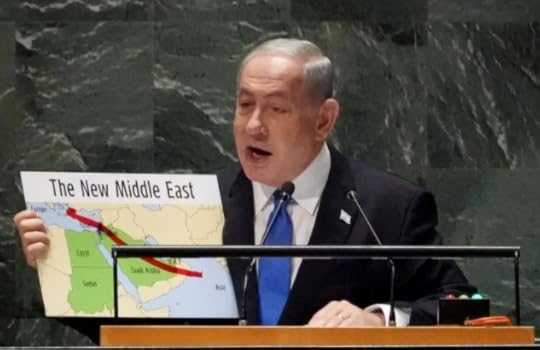
True, it remains a sort of concentration camp, despite all the "good news".

February 10, 2024
I will read anything that this man writes. If you want to understand the historical context of Israel’s current war on Gaza and the genocide that they are currently inflicting with the purpose of colonizing the Gaza Strip, read Ilan Pappe’s books. Start with The Ethnic Cleansing of Palestine, a detailed and harrowing account of the events that took place in 1948, and follow it with this book, which explains how Israel designed and implemented the occupation of the West Bank and the Gaza Strip. After this, I will move on to the books he co-wrote with the legend Noam Chomsky.
Ilan Pappe was an insider in Israeli political society until he broke off and went against the state, criticizing it’s inhumane and illegal occupation of Palestine. Born and raised in Israel, he knows Hebrew and is able to access Israel’s public historical records and follow the official narrative in the news. What he has done is not only brave but is a favor to the whole world. We deserve to know the truth about how deliberately and tactically Israel planned and carried out its gradual takeover of Palestine. The world deserves to know that they did indeed intend for this, and they were willing to kill hundreds of thousands of innocent people along the way. When you get into the details of what Israeli political leaders said in meetings and what they wrote down in their plans, it’s truly chilling. I’m seething.
Ilan Pappe was an insider in Israeli political society until he broke off and went against the state, criticizing it’s inhumane and illegal occupation of Palestine. Born and raised in Israel, he knows Hebrew and is able to access Israel’s public historical records and follow the official narrative in the news. What he has done is not only brave but is a favor to the whole world. We deserve to know the truth about how deliberately and tactically Israel planned and carried out its gradual takeover of Palestine. The world deserves to know that they did indeed intend for this, and they were willing to kill hundreds of thousands of innocent people along the way. When you get into the details of what Israeli political leaders said in meetings and what they wrote down in their plans, it’s truly chilling. I’m seething.

November 17, 2023
4 things occurred in 1948 that allowed for the ethnic cleansing of Palestinian to happen:
1) the British withdrawal of Palestine after ruling it for 30 years
2) the lingering effects of the atrocities of the Holocaust on western public opinion
3) the disarray in the Arab world
4 )the coordination of a competent and determined Zionist leadership
These factors led to over half of all Palestinians being expelled, half their towns being destroyed, and over 80% of Palestine becoming ruled by Israel. This was the final act of the colonization of Palestine that the Zionist movement had been committed to since the late 1800s. Veterans of this cleansing would later become the very same leaders of Israel in 1967, when Israel came for the remaining 20% of the land. In 1967, however, a second ethnic cleansing was deemed infeasible. There was fear that it would awaken a global anti-Israel consciousness that had been suppressed in 1948 to atone for the Holocaust. The 1967 government was also made up of a larger forum of elites that included those who would have objected to a master plan of cleansing. The solution was to occupy the newly obtained territories in 1967 indefinitely, and put Palestinians living in these new territories into what is, in essence, the largest open air prison in history. In 1948 Israel had imposed a military rule on any Palestinians remaining within Israel, thereby stripping them of any rights or organizational capacity. By conquering the territory it so badly coveted in 1967 without actually annexing it, Israel imposed this military rule onto its newly subjugated Palestinians without actually turning them into citizens of Israel. This allowed Israel to shift its militarized subjugation of Palestinians from domestic Israel to the newly occupied territories.
Many Zionists viewed the compromise with Jordan in 1948, which gave them 22% of historical Palestine, as a mistake. They believed this area (the West Bank as well as Egypt’s Gaza Strip) was to be part of the historical dominion of the Zionist movement. A cross section of the Israeli ruling class, including high ranking military generals, pushed for military intervention into the West Bank so that it could be incorporated into the Israeli state. They first tried to beat the war drums by claiming that Jordan was not following the armistice agreement set down by Israel. Later, these war hawks claimed that a preemptive strike would be necessary to prevent Jordan from falling to the Pan-Arab movement. Besides the West Bank, Israeli elites were also committed to the conquest of the Gaza Strip, a small strip of land most of the ethnically cleansed victims of the Nakba had been pushed into. After the 1948 ethnic cleansing the Strip became governed by Egypt under military rule, with Egypt claiming that it would remain so until Palestinians were given back Palestine. Egypt was led from the early 1950s onward by Gamal Abdel Nasser, the de facto head of the Pan-Arab movement. Zionists portrayed Nasser and the Arab nationalist movement as an existential threat to Israel, but this fear did not equate with reality. Nasser, throughout the early 1950s, actually attempted to make peace with Israel and soften relations between Egypt and the Zionist state. In 1953, using secret channels, Nasser offered to heavily tone down Egypt’s anti-Israel rhetoric in exchange for Israel lobbying America for a more pro-Egyptian policy. Especially important to the Nasser administration was getting the British empire to fully withdraw out of Egypt, which they believed the U.S. could do; Israel refused.
In 1955 Israel bombed an Egyptian military base in the Gaza Strip as punishment for allowing Palestinian guerillas to hide there and use it as a launching pad for attacks into Israel. The effect of this was to humiliate Nasser and completely derail any hopes for cordial relations between Egypt and Israel. Then, in October of 1956, Egypt joined an alliance with France and Britain to overthrow Nasser, and then went to war with Egypt in what was known as the Suez Campaign. During this campaign, which was stopped by discouragement from both the United States and the Soviet Union, Israel seriously considered annexing the West Bank until the United States got wind of these plans, which the hegemon entirely discouraged and prevented.
By 1957 a few developments had transpired that made the Israel elite more hawkish and uncompromising. One was the development of the American Israel Public Affairs Committee (A.I.P.A.C), which gave Israel more lobbying influence within the American political system. Next, France began not only sending Israel $30 million worth of high-tech military equipment, but also helped them lay the foundation for their nuclear armament facility. This allowed Israel to further inflame conflicts with Syria over contested territories between the two nations without fear that Syria could seriously retaliate. France agreed to this because of their concerns over Syria’s involvement in the Algerian liberation struggle, and hoped that Israel would help force a regime change in Syria.
By 1963 Israel already had formal plans in place to use their own internal military oppression of internal Arab communities as a model for how they would rule the West Bank should they conquer it. Israel continued to poke, prod, and provoke its neighbors, using their willingness to foster Palestinian guerillas as an excuse for launching violent raids. In 1965 Israel launched a raid into the West Bank where they killed dozens and wounded hundreds, including members of Jordan’s armed forces, in an attempt to collectively punish Palestinians for their incursions into Israel. Israel also provoked their neighbors in Syria by periodically sending settlers into disputed territories and diverting waterways away from Syria and into Israeli reservoirs. These actions would often result in Syrian military retaliation, whose military paled in comparison to Israel’s, especially Israel’s Air Force. In fact, one of the biggest factors leading to Israel's success in 1967 was that they were armed with the most up-to-date tanks and airplanes, courtesy of the United States and the LBJ administration. As the Syrian and Israel militaries went tit-for-tat throughout 1966 on the battlefield, the Syrian government and their Soviet advisors began seeing the pattern of escalation and feared that a war/Israeli invasion would soon be imminent. To prevent this, Syria formed alliances with Egypt, Iraq, and Jordan in the hopes that a formal defensive alliance would deter Israel from invading them. This gambit failed.
The 1967 war is portrayed in Israeli mythology (and therefore in Western canon) as one in which Israel had to preemptively strike its enemies, who were ready to invade and crush the Zionist empire. This is not supported by reality. Most notably, Israel had incorporated a policy of intentional provocation, harassment, and humiliation of its Arab neighbors in order for them to boost their own war rhetoric. For example, Israel attacked the Golan heights in 1967 on the anniversary of the founding of Syria’s ruling Baath Party in an attempt to, in the words of Israel’s defense minister: “humiliate Syria”. It also repeatedly attacked the West Bank with a strategy designed to inflict maximum damage. Humiliated leaders had the options of either losing face with their base by accepting Israeli provocations without protest, or ramping up their own rhetoric/actions to counter Israel’s. Israeli and American intelligence (which was basically also Israeli intelligence, seeing that James Angelton was essentially an Israeli asset) both stressed that Egypt had neither the ability nor intention to invade Israel, and that their troop movements were entirely defensive in the days leading up to the war. During the time frame surrounding the start of the war, the director of the CIA, Richard Helms, stated in newly declassified memos) “who will win?… (we know Israel can) defend successfully against simultaneous attacks on three fronts… while mounting successfully a major offensive on the fourth”. The Israeli Chief of Staff, Yitzhak Rabin, also reported on May 21, 1967 that Nasser’s military moves were a “propagandistic move and not yet an aggressive one as the Egyptians have not yet moved tanks into the (Sinai) Peninsula”. Being aware of this, the decision to intentionally stoke fears of a ‘second Holocaust’ amongst the Israeli public shows that the ruling class was consciously trying to manufacture mass hysteria and consent for a war. After the war in 1968, Rabin would reiterate his point in an interview with Le Monde when he said “I do not think Nasser wanted war”. He was not the only high ranking Israeli official to publicly voice dissent against the prevailing Zionist narrative. Years later, the Israeli Chief of staff during the war, Moshe Dayan, admitted in an interview that Israel’s policy was intentionally provocative at the time in order to appease Jewish settlers near the Syrian border.
3 days into the war Israel controlled all of historical Palestine and ruled over 1 million Palestinians in the West Bank, as well as more than 400,000 Palestinians in the Gaza Strip. One of the first decisions made by Israel was to outright ban any Arab militaries from operating in the occupied territories, which were now firmly to be placed under the control of the state of Israel. Many Israeli government officials and other elites did not believe ethnically cleansing these newly occupied territories would be politically possible, yet it was also widely accepted that integrating such a large number of Arabs into Israeli citizens was not a smart move either. What developed was a ‘carrot and stick’ method of rule over these de facto political prisoners. When the occupied Palestinians were “good” they could be granted rights such as being allowed to commute to Israel for work. However, when they were bad these rights were stripped away and the state’s stick was used; indiscriminate violence became a mass punishment for any behavior deemed unruly in the territories.
Within a year after peace had been declared Israel had already partitioned off sections of the occupied territories into “Jewish” and “Palestinian” areas. Israel used military decrees and military rule as justification for the colonization of the West Bank, which Israel almost immediately colonized around 50% of. By the 1990s Israel had colonized around 65% of the Bank. Colonization had the effect of disconnecting Palestinian towns and population centers from each other. By breaking up the West Bank into many small, disconnected centers of Palestinians, their ability to form any sort of unified state was completely hampered. The colonization process went hand in hand with the turning of the West Bank and Gaza strip into open air prisons.
All this was accompanied by an economic strategy which was originally formulated and implemented around 1967 and still persists today. The goal was to find a way to economically exploit the occupied territories while still keeping their population at arms length in terms of granting them rights and citizenship. Israeli officials, strategists, and a mix of economists developed a strategy that sought to use the basic economic necessities of Palestinians as rewards for ‘good behavior’ that could be stripped away any time Israel wanted to. First, Israel decided that the only legal currency to be used in the occupied territories would be the official currency of Israel. Occupied Palestinians were then transformed into a cheap, totally captive labor force supplemented with cheap wages while being granted none of the rights won by Israeli workers through their trade union movement. This process is described by Pappe as “economic colonization”, under which Israel would export cheap goods into the occupied territories, who in return would provide Israel with unregulated and highly exploited laborers. Israeli industry was gifted a monopoly on the occupied territories, while the labor they provided was colluded against to be kept out of Israel’s unions/labor movement.
Early on, many Israeli leaders saw the Palestinians in the occupied territory as simply unconnected, disparate enclaves rather than a singular community held together by a national consciousness. However, as Palestinian resistance mounted, especially in Gaza, which has always historically resisted Israeli brutalization, the carrot and stick rule of mass/widespread collective punishment became the norm. Collective punishment as a response to Palestinian insubordination included: mass arrest without trial, demolition of houses, long curfews, and mass break-ins into Palestinian homes without warning. Anyone caught aiding or embedding a member of the PLO or PLA was sentenced to 15 years in prison for the first decade of the occupation. This combined with Palestinian curiosity towards their new reality led to low resistance in the first decade of the occupation, allowing for the implementation of what Pappe calls an open prison model, which worked as long as there continued to be little Palestinian resistance. The rewards granted by the open prison model were that local Palestinian municipalities were granted a degree of autonomy, Palestinian labor was allowed to be absorbed into the Israeli labor market, and Palestinian goods were allowed to be freely transported to neighboring Arab countries, through which Israel circumvented embargoes placed upon it by essentially using the territories as middleman for Israeli goods to enter into the wider Arab market.
By 1979, land originally confiscated in the occupied territories for military bases had been converted into Jewish colonies. This process, partially a reaction to urban sprawl and growing settler populations, created major monitoring/observation centers right in the middle of the open prisons. While Jewish settlements/communities expanded, Palestinian communities were legally forced to remain consolidated. This was done by making complex systems of Jewish-only roads, enforcing regulations that prevented Palestinians from extending buildings, excluding Palestinians from joining construction planning committees, and forcing Plaestinians to pay exorbitant licensing fees to build any new buildings. The goal throughout the 1980s and up to today was to limit the growth and expansion of Palestinian communities and their population in favor of Jewish settlements and population growth.
The open prison model began to collapse, starting with the failed assassination of an Israeli ambassador in London, in 1982. The failed assassin was a member of an organization that was founded by a CIA asset. This event was used as a Casus belli to justify launching aerial bombardments into PLO bases in Lebanon, a plan Israel had been desiring to enact for years. Israel then invaded Lebanon and Beirut, resulting in widespread and heavily documented atrocities and war crimes at the hands of Israeli militants. This invasion essentially destroyed any real military capability and political power of the PLO, but it also locked Israel down in a Vietnam-Esq quagmire inside Lebanon against Lebanese guerillas. By 1985, as Israeli soldiers began making tours of duty in both occupied Lebanon and the Occupied Palestine territories, the distinction between the combat zones of Lebanon and the residential zones of Gaza and the West Bank were blurred. The Israeli army employed what it called an ‘iron fist policy’ towards any resistance within either of the 3 territories. This process completely stripped away all features of the open prison model except for the right of occupied Palestinians to work in Israel. From 1969 -1977 the number of people in occupied areas employed in Israel grew from a few thousand to over 100,000 (around 50% of the labor force of the occupied territories). This economic relationship, which simultaneously turned the markets of the occupied territories into Israel’s second biggest export market while converting their labor force into near-slaves with no social/labor rights, unions, or health insurance, was entrenched enough to only become dislodged by the second intifada. As Palestinian laborers began lashing out against their employers and anyone they could get their hands on (often through knife attacks), young males, (the majority of this workforce) had more and more restrictions placed on their ‘right to work’. The oppression resulting from restriction of Palestinian community growth, Israeli control of Palestinian water rights, and the restriction of any economic rights of Palestinians were the main causes of the intifadas.
On December 2, 1987 a truck killed 4 people in a Gazan refugee camp, sparking the first intifada. Although this event is usually pointed to as the first moment of the intifada it was, in fact, one of many simultaneous events that culminated in the uprising. These mainly took the form of civil disobedience through mass demonstrations, peaceful protests, impromptu roadblocks, boycotts, general strikes, refusing to pay taxes to Israel, rock throwing, and the occasional Molotov cocktail attack. The response to this from Israel can best be described as a frenzied rage. Thousands of Palestinians were killed during the intifada (which lasted around 6 years), most of them in peaceful protests that were fired upon by Israeli soldiers; over 120,000 people were arrested, most of them under 16 years old; 10s of thousands of people were beaten, half of which were children under the age of 10. Alongside this display of unhinged raw violence, Israel also forcibly closed thousands of Palestinian businesses and enforced mass curfews. Israel met this Palestine movement of mostly non-violent civil disobedience with untethered hatred and aggression. This ultimately collapsed the open prison model until the Oslo accords.
1) the British withdrawal of Palestine after ruling it for 30 years
2) the lingering effects of the atrocities of the Holocaust on western public opinion
3) the disarray in the Arab world
4 )the coordination of a competent and determined Zionist leadership
These factors led to over half of all Palestinians being expelled, half their towns being destroyed, and over 80% of Palestine becoming ruled by Israel. This was the final act of the colonization of Palestine that the Zionist movement had been committed to since the late 1800s. Veterans of this cleansing would later become the very same leaders of Israel in 1967, when Israel came for the remaining 20% of the land. In 1967, however, a second ethnic cleansing was deemed infeasible. There was fear that it would awaken a global anti-Israel consciousness that had been suppressed in 1948 to atone for the Holocaust. The 1967 government was also made up of a larger forum of elites that included those who would have objected to a master plan of cleansing. The solution was to occupy the newly obtained territories in 1967 indefinitely, and put Palestinians living in these new territories into what is, in essence, the largest open air prison in history. In 1948 Israel had imposed a military rule on any Palestinians remaining within Israel, thereby stripping them of any rights or organizational capacity. By conquering the territory it so badly coveted in 1967 without actually annexing it, Israel imposed this military rule onto its newly subjugated Palestinians without actually turning them into citizens of Israel. This allowed Israel to shift its militarized subjugation of Palestinians from domestic Israel to the newly occupied territories.
Many Zionists viewed the compromise with Jordan in 1948, which gave them 22% of historical Palestine, as a mistake. They believed this area (the West Bank as well as Egypt’s Gaza Strip) was to be part of the historical dominion of the Zionist movement. A cross section of the Israeli ruling class, including high ranking military generals, pushed for military intervention into the West Bank so that it could be incorporated into the Israeli state. They first tried to beat the war drums by claiming that Jordan was not following the armistice agreement set down by Israel. Later, these war hawks claimed that a preemptive strike would be necessary to prevent Jordan from falling to the Pan-Arab movement. Besides the West Bank, Israeli elites were also committed to the conquest of the Gaza Strip, a small strip of land most of the ethnically cleansed victims of the Nakba had been pushed into. After the 1948 ethnic cleansing the Strip became governed by Egypt under military rule, with Egypt claiming that it would remain so until Palestinians were given back Palestine. Egypt was led from the early 1950s onward by Gamal Abdel Nasser, the de facto head of the Pan-Arab movement. Zionists portrayed Nasser and the Arab nationalist movement as an existential threat to Israel, but this fear did not equate with reality. Nasser, throughout the early 1950s, actually attempted to make peace with Israel and soften relations between Egypt and the Zionist state. In 1953, using secret channels, Nasser offered to heavily tone down Egypt’s anti-Israel rhetoric in exchange for Israel lobbying America for a more pro-Egyptian policy. Especially important to the Nasser administration was getting the British empire to fully withdraw out of Egypt, which they believed the U.S. could do; Israel refused.
In 1955 Israel bombed an Egyptian military base in the Gaza Strip as punishment for allowing Palestinian guerillas to hide there and use it as a launching pad for attacks into Israel. The effect of this was to humiliate Nasser and completely derail any hopes for cordial relations between Egypt and Israel. Then, in October of 1956, Egypt joined an alliance with France and Britain to overthrow Nasser, and then went to war with Egypt in what was known as the Suez Campaign. During this campaign, which was stopped by discouragement from both the United States and the Soviet Union, Israel seriously considered annexing the West Bank until the United States got wind of these plans, which the hegemon entirely discouraged and prevented.
By 1957 a few developments had transpired that made the Israel elite more hawkish and uncompromising. One was the development of the American Israel Public Affairs Committee (A.I.P.A.C), which gave Israel more lobbying influence within the American political system. Next, France began not only sending Israel $30 million worth of high-tech military equipment, but also helped them lay the foundation for their nuclear armament facility. This allowed Israel to further inflame conflicts with Syria over contested territories between the two nations without fear that Syria could seriously retaliate. France agreed to this because of their concerns over Syria’s involvement in the Algerian liberation struggle, and hoped that Israel would help force a regime change in Syria.
By 1963 Israel already had formal plans in place to use their own internal military oppression of internal Arab communities as a model for how they would rule the West Bank should they conquer it. Israel continued to poke, prod, and provoke its neighbors, using their willingness to foster Palestinian guerillas as an excuse for launching violent raids. In 1965 Israel launched a raid into the West Bank where they killed dozens and wounded hundreds, including members of Jordan’s armed forces, in an attempt to collectively punish Palestinians for their incursions into Israel. Israel also provoked their neighbors in Syria by periodically sending settlers into disputed territories and diverting waterways away from Syria and into Israeli reservoirs. These actions would often result in Syrian military retaliation, whose military paled in comparison to Israel’s, especially Israel’s Air Force. In fact, one of the biggest factors leading to Israel's success in 1967 was that they were armed with the most up-to-date tanks and airplanes, courtesy of the United States and the LBJ administration. As the Syrian and Israel militaries went tit-for-tat throughout 1966 on the battlefield, the Syrian government and their Soviet advisors began seeing the pattern of escalation and feared that a war/Israeli invasion would soon be imminent. To prevent this, Syria formed alliances with Egypt, Iraq, and Jordan in the hopes that a formal defensive alliance would deter Israel from invading them. This gambit failed.
The 1967 war is portrayed in Israeli mythology (and therefore in Western canon) as one in which Israel had to preemptively strike its enemies, who were ready to invade and crush the Zionist empire. This is not supported by reality. Most notably, Israel had incorporated a policy of intentional provocation, harassment, and humiliation of its Arab neighbors in order for them to boost their own war rhetoric. For example, Israel attacked the Golan heights in 1967 on the anniversary of the founding of Syria’s ruling Baath Party in an attempt to, in the words of Israel’s defense minister: “humiliate Syria”. It also repeatedly attacked the West Bank with a strategy designed to inflict maximum damage. Humiliated leaders had the options of either losing face with their base by accepting Israeli provocations without protest, or ramping up their own rhetoric/actions to counter Israel’s. Israeli and American intelligence (which was basically also Israeli intelligence, seeing that James Angelton was essentially an Israeli asset) both stressed that Egypt had neither the ability nor intention to invade Israel, and that their troop movements were entirely defensive in the days leading up to the war. During the time frame surrounding the start of the war, the director of the CIA, Richard Helms, stated in newly declassified memos) “who will win?… (we know Israel can) defend successfully against simultaneous attacks on three fronts… while mounting successfully a major offensive on the fourth”. The Israeli Chief of Staff, Yitzhak Rabin, also reported on May 21, 1967 that Nasser’s military moves were a “propagandistic move and not yet an aggressive one as the Egyptians have not yet moved tanks into the (Sinai) Peninsula”. Being aware of this, the decision to intentionally stoke fears of a ‘second Holocaust’ amongst the Israeli public shows that the ruling class was consciously trying to manufacture mass hysteria and consent for a war. After the war in 1968, Rabin would reiterate his point in an interview with Le Monde when he said “I do not think Nasser wanted war”. He was not the only high ranking Israeli official to publicly voice dissent against the prevailing Zionist narrative. Years later, the Israeli Chief of staff during the war, Moshe Dayan, admitted in an interview that Israel’s policy was intentionally provocative at the time in order to appease Jewish settlers near the Syrian border.
3 days into the war Israel controlled all of historical Palestine and ruled over 1 million Palestinians in the West Bank, as well as more than 400,000 Palestinians in the Gaza Strip. One of the first decisions made by Israel was to outright ban any Arab militaries from operating in the occupied territories, which were now firmly to be placed under the control of the state of Israel. Many Israeli government officials and other elites did not believe ethnically cleansing these newly occupied territories would be politically possible, yet it was also widely accepted that integrating such a large number of Arabs into Israeli citizens was not a smart move either. What developed was a ‘carrot and stick’ method of rule over these de facto political prisoners. When the occupied Palestinians were “good” they could be granted rights such as being allowed to commute to Israel for work. However, when they were bad these rights were stripped away and the state’s stick was used; indiscriminate violence became a mass punishment for any behavior deemed unruly in the territories.
Within a year after peace had been declared Israel had already partitioned off sections of the occupied territories into “Jewish” and “Palestinian” areas. Israel used military decrees and military rule as justification for the colonization of the West Bank, which Israel almost immediately colonized around 50% of. By the 1990s Israel had colonized around 65% of the Bank. Colonization had the effect of disconnecting Palestinian towns and population centers from each other. By breaking up the West Bank into many small, disconnected centers of Palestinians, their ability to form any sort of unified state was completely hampered. The colonization process went hand in hand with the turning of the West Bank and Gaza strip into open air prisons.
All this was accompanied by an economic strategy which was originally formulated and implemented around 1967 and still persists today. The goal was to find a way to economically exploit the occupied territories while still keeping their population at arms length in terms of granting them rights and citizenship. Israeli officials, strategists, and a mix of economists developed a strategy that sought to use the basic economic necessities of Palestinians as rewards for ‘good behavior’ that could be stripped away any time Israel wanted to. First, Israel decided that the only legal currency to be used in the occupied territories would be the official currency of Israel. Occupied Palestinians were then transformed into a cheap, totally captive labor force supplemented with cheap wages while being granted none of the rights won by Israeli workers through their trade union movement. This process is described by Pappe as “economic colonization”, under which Israel would export cheap goods into the occupied territories, who in return would provide Israel with unregulated and highly exploited laborers. Israeli industry was gifted a monopoly on the occupied territories, while the labor they provided was colluded against to be kept out of Israel’s unions/labor movement.
Early on, many Israeli leaders saw the Palestinians in the occupied territory as simply unconnected, disparate enclaves rather than a singular community held together by a national consciousness. However, as Palestinian resistance mounted, especially in Gaza, which has always historically resisted Israeli brutalization, the carrot and stick rule of mass/widespread collective punishment became the norm. Collective punishment as a response to Palestinian insubordination included: mass arrest without trial, demolition of houses, long curfews, and mass break-ins into Palestinian homes without warning. Anyone caught aiding or embedding a member of the PLO or PLA was sentenced to 15 years in prison for the first decade of the occupation. This combined with Palestinian curiosity towards their new reality led to low resistance in the first decade of the occupation, allowing for the implementation of what Pappe calls an open prison model, which worked as long as there continued to be little Palestinian resistance. The rewards granted by the open prison model were that local Palestinian municipalities were granted a degree of autonomy, Palestinian labor was allowed to be absorbed into the Israeli labor market, and Palestinian goods were allowed to be freely transported to neighboring Arab countries, through which Israel circumvented embargoes placed upon it by essentially using the territories as middleman for Israeli goods to enter into the wider Arab market.
By 1979, land originally confiscated in the occupied territories for military bases had been converted into Jewish colonies. This process, partially a reaction to urban sprawl and growing settler populations, created major monitoring/observation centers right in the middle of the open prisons. While Jewish settlements/communities expanded, Palestinian communities were legally forced to remain consolidated. This was done by making complex systems of Jewish-only roads, enforcing regulations that prevented Palestinians from extending buildings, excluding Palestinians from joining construction planning committees, and forcing Plaestinians to pay exorbitant licensing fees to build any new buildings. The goal throughout the 1980s and up to today was to limit the growth and expansion of Palestinian communities and their population in favor of Jewish settlements and population growth.
The open prison model began to collapse, starting with the failed assassination of an Israeli ambassador in London, in 1982. The failed assassin was a member of an organization that was founded by a CIA asset. This event was used as a Casus belli to justify launching aerial bombardments into PLO bases in Lebanon, a plan Israel had been desiring to enact for years. Israel then invaded Lebanon and Beirut, resulting in widespread and heavily documented atrocities and war crimes at the hands of Israeli militants. This invasion essentially destroyed any real military capability and political power of the PLO, but it also locked Israel down in a Vietnam-Esq quagmire inside Lebanon against Lebanese guerillas. By 1985, as Israeli soldiers began making tours of duty in both occupied Lebanon and the Occupied Palestine territories, the distinction between the combat zones of Lebanon and the residential zones of Gaza and the West Bank were blurred. The Israeli army employed what it called an ‘iron fist policy’ towards any resistance within either of the 3 territories. This process completely stripped away all features of the open prison model except for the right of occupied Palestinians to work in Israel. From 1969 -1977 the number of people in occupied areas employed in Israel grew from a few thousand to over 100,000 (around 50% of the labor force of the occupied territories). This economic relationship, which simultaneously turned the markets of the occupied territories into Israel’s second biggest export market while converting their labor force into near-slaves with no social/labor rights, unions, or health insurance, was entrenched enough to only become dislodged by the second intifada. As Palestinian laborers began lashing out against their employers and anyone they could get their hands on (often through knife attacks), young males, (the majority of this workforce) had more and more restrictions placed on their ‘right to work’. The oppression resulting from restriction of Palestinian community growth, Israeli control of Palestinian water rights, and the restriction of any economic rights of Palestinians were the main causes of the intifadas.
On December 2, 1987 a truck killed 4 people in a Gazan refugee camp, sparking the first intifada. Although this event is usually pointed to as the first moment of the intifada it was, in fact, one of many simultaneous events that culminated in the uprising. These mainly took the form of civil disobedience through mass demonstrations, peaceful protests, impromptu roadblocks, boycotts, general strikes, refusing to pay taxes to Israel, rock throwing, and the occasional Molotov cocktail attack. The response to this from Israel can best be described as a frenzied rage. Thousands of Palestinians were killed during the intifada (which lasted around 6 years), most of them in peaceful protests that were fired upon by Israeli soldiers; over 120,000 people were arrested, most of them under 16 years old; 10s of thousands of people were beaten, half of which were children under the age of 10. Alongside this display of unhinged raw violence, Israel also forcibly closed thousands of Palestinian businesses and enforced mass curfews. Israel met this Palestine movement of mostly non-violent civil disobedience with untethered hatred and aggression. This ultimately collapsed the open prison model until the Oslo accords.

July 17, 2019
I mean, I really don't see the point anymore with this sort of thing -- a small group of liberals will do the whole beautiful tears thing over this sort of thing, fascists will dismiss it with the whole "It didn't/isn't happening and, if it did, it'd be a good thing." thing they do, reasonable people will feel sad and powerless, and crazy people will find it just a little harder not to kill themselves, or worse.
I'm tired.
I'm tired.

December 29, 2021
عربيه يا ارض فلسطين
قدس و مهد و عهد و دين
انجيل قرأن و جرس و اذان
و غضب ينطق يوم حطين
بيت الرب كرامه شعب
تفديك ارواحنا يا بلادى
اسمك دايم يا فلسطين
احلى بلاد الدنيا بلادى
يا بلادى يا بلادى
فيها تشوف فرحه اولادى
يا بلادى يا بلادى
و نخيلها العالى اوتادى
هى الاب و هى الام
و هى القوه حرب و سلم
اسمك دايم يا فلسطين

أكبر سجن على الأرض
بيروقراطية الشر
شروط الآيديولحية الصهيونية المسبقة
تطهير عرقي وإبادة جماعية تدريجية
استعمار استيطاني ومستوطنين وحوش
كيف يمكن إنتاج معرفة حقيقية عن واقع الاستعمار في فلسطين في ظل وجود مستعمر يحتكر سردية التاريخ ليشوه تاريخ شعب ويستبدله بتاريخ آخر؟ ربما يكون هذا الكتاب مساهمة في فضح الممارسات اليومية، القديمة الجديدة، والمستمرة لطمس الواقع التاريخي وتدمير الذاكرة والهوية الفلسطينية الهادفة في مجملها للتطهير العرقي والإبادة الجماعية لشعب بأكمله. إيلان بابيه يقدم كتاباً مميزاً تعيد السردية الحقيقية إلى مكانها وزمانها الأصليين والحقيقيين، وذلك من خلال كشف وثائق جديدة ودحض السردية الصهيونية. فحينما تتحدث السلطة، وأقصد هنا حينما يتحدث الاستعمار، فهو يتحدث عن نفسه في النهاية وعن صورته، التي لطالما حاول المستعمر الصهيوني سترها تحت غطاء القانون والعدالة والدفاع عن النفس، وهم بعيدين كل البعد عن ذلك.
قدس و مهد و عهد و دين
انجيل قرأن و جرس و اذان
و غضب ينطق يوم حطين
بيت الرب كرامه شعب
تفديك ارواحنا يا بلادى
اسمك دايم يا فلسطين
احلى بلاد الدنيا بلادى
يا بلادى يا بلادى
فيها تشوف فرحه اولادى
يا بلادى يا بلادى
و نخيلها العالى اوتادى
هى الاب و هى الام
و هى القوه حرب و سلم
اسمك دايم يا فلسطين
أكبر سجن على الأرض
بيروقراطية الشر
شروط الآيديولحية الصهيونية المسبقة
تطهير عرقي وإبادة جماعية تدريجية
استعمار استيطاني ومستوطنين وحوش
كيف يمكن إنتاج معرفة حقيقية عن واقع الاستعمار في فلسطين في ظل وجود مستعمر يحتكر سردية التاريخ ليشوه تاريخ شعب ويستبدله بتاريخ آخر؟ ربما يكون هذا الكتاب مساهمة في فضح الممارسات اليومية، القديمة الجديدة، والمستمرة لطمس الواقع التاريخي وتدمير الذاكرة والهوية الفلسطينية الهادفة في مجملها للتطهير العرقي والإبادة الجماعية لشعب بأكمله. إيلان بابيه يقدم كتاباً مميزاً تعيد السردية الحقيقية إلى مكانها وزمانها الأصليين والحقيقيين، وذلك من خلال كشف وثائق جديدة ودحض السردية الصهيونية. فحينما تتحدث السلطة، وأقصد هنا حينما يتحدث الاستعمار، فهو يتحدث عن نفسه في النهاية وعن صورته، التي لطالما حاول المستعمر الصهيوني سترها تحت غطاء القانون والعدالة والدفاع عن النفس، وهم بعيدين كل البعد عن ذلك.

March 20, 2023
It was hard for me to write this review because I care about the Palestinians, the Israelis, and the truth. I don’t like to give negative reviews but this book deserves it.
Ilan Pappe dedicated THE BIGGEST PRISON ON EARTH “To the Palestinian children, killed, wounded, and traumatized by living in the biggest prison on earth.”
If he really cared about the lives of those children, he would write a book that is not filled with lies, distortions, omission, and propaganda. The book, while popular among people who hate the idea of a democratic Jewish state in the Middle East will find a lot of support for their prejudices within it but will not find ideas that will show positive information about Israeli nor negative information about the Palestinian leaders. That attitude does not help the Palestinians at all.
Ilan Pappe’s anti-Israel bias is obvious throughout THE BIGGEST PRISON ON EARTH: Israel is always wrong and guilty. The Palestinians are always right and innocent victims.
For example, the Ottoman Empire controlled historic Palestine for several centuries. It did not establish an independent Palestinian state. After the British took over the area following WWI, the Balfour Declaration said historic Palestine would become a Jewish homeland, as it had been for centuries before the Jews were ousted in 63 CE. Arabs (they were not referred to as Palestinians until 1964 with the formation of the PLO) living in the new state were asked to remain and become Israeli citizens. Those who left did so partly because their leaders told them they should so the Jews could be wiped out and the Arabs could return to take the land. Those that did remain, became citizens.
Mt. Scopus, home to Hebrew University, Hadassah Hospital, and the Knesset had been located there for several decades. In 1937, the Palestinian flag had a Jewish star. The Palestinian Orchestra and the members of the Palestinian Brigade which fought along side the British in WWII were both comprised of Jews. (The Arab leaders supported Hitler.)
Millions of people have become refugees since 1945. Most of them were resettled within fifteen years with the help of the United Nations Human Rights Council Agency for Refugees. About 875,000 of them had families that lived in Arab countries for almost 2000 years but were forced out by their Arab countrymen. Only the Palestinians were considered to be refugees even if they had never lived in that land. And only the Palestinians remained living in refugee camps because their co-religionists and brothers refused to grant them citizenship.
When Jordan captured the West Bank in the 1948 War, the entire area became off limits to Jews. Jews were evicted from their homes, synagogues became barns and cemetery tombstones were used to pave roads.
They Arab states attacked the new state in 1949, 1967, and 1973 and lost every time. The positions where the fighting stopped in 1949, the Green Line, became a temporary border. The final border was to be determined by Israel and the Palestinians. Jordan took over the West Bank while Egypt took over Gaza. Neither country made any effort to establish an independent Palestinian state nor was any pressure put upon them to do so.
Since World War II, there have been scores millions of immigrants throughout the world. Most have been resettled within fifteen years. This includes the 850,000 Jews evicted from their ancient homes in Arab countries. Only the Palestinians have remained refugees for a longer period of time. Part of the reason is that only UNWRA considers people who are descendants of the people who left in 1948 are counted as refugees, even those who have become citizens of other countries. Other reasons include the refusal of other Arab countries to grant them citizenship and the Palestinian leaders who, for political purposes, have refugee camps in the West Bank and Gaza, areas totally controlled by Palestinians.
Over the years, despite agreements for the Arab and Israeli governments to reach a peace agreement and determine permanent borders, the Palestinian leaders repeatedly refused to sign such an agreement because it would mean recognizing Israel as a Jewish state. They also refused to present any alternative agreement.
Until that happens, The West Bank was divided into three areas: Area A was under Palestinian control. Eighty percent of the Palestinians live there. Area B was under the security control of both Israel and the PA. Area C was under Israeli control where about 500,000 Israelis live. The original UN plan calls for border adjustments to provide security. The details were to be worked out by the two parties. When Jews and Palestinians try to work together, e.g., Palestinians working in Jewish-owned businesses on the West Bank where they earn the same salaries and receive the same benefits, there is pressure (e.g., from the BDS movement) to close the businesses which results in the loss of jobs and income.
Peace treaties between Israel and Egypt and Israel and Jordan eventually did occur and Israel returned the Sinai to Eqypt. Jordan took over the West Bank.
I received a copy of this book from LibraryThing Early Reviewers.
Ilan Pappe dedicated THE BIGGEST PRISON ON EARTH “To the Palestinian children, killed, wounded, and traumatized by living in the biggest prison on earth.”
If he really cared about the lives of those children, he would write a book that is not filled with lies, distortions, omission, and propaganda. The book, while popular among people who hate the idea of a democratic Jewish state in the Middle East will find a lot of support for their prejudices within it but will not find ideas that will show positive information about Israeli nor negative information about the Palestinian leaders. That attitude does not help the Palestinians at all.
Ilan Pappe’s anti-Israel bias is obvious throughout THE BIGGEST PRISON ON EARTH: Israel is always wrong and guilty. The Palestinians are always right and innocent victims.
For example, the Ottoman Empire controlled historic Palestine for several centuries. It did not establish an independent Palestinian state. After the British took over the area following WWI, the Balfour Declaration said historic Palestine would become a Jewish homeland, as it had been for centuries before the Jews were ousted in 63 CE. Arabs (they were not referred to as Palestinians until 1964 with the formation of the PLO) living in the new state were asked to remain and become Israeli citizens. Those who left did so partly because their leaders told them they should so the Jews could be wiped out and the Arabs could return to take the land. Those that did remain, became citizens.
Mt. Scopus, home to Hebrew University, Hadassah Hospital, and the Knesset had been located there for several decades. In 1937, the Palestinian flag had a Jewish star. The Palestinian Orchestra and the members of the Palestinian Brigade which fought along side the British in WWII were both comprised of Jews. (The Arab leaders supported Hitler.)
Millions of people have become refugees since 1945. Most of them were resettled within fifteen years with the help of the United Nations Human Rights Council Agency for Refugees. About 875,000 of them had families that lived in Arab countries for almost 2000 years but were forced out by their Arab countrymen. Only the Palestinians were considered to be refugees even if they had never lived in that land. And only the Palestinians remained living in refugee camps because their co-religionists and brothers refused to grant them citizenship.
When Jordan captured the West Bank in the 1948 War, the entire area became off limits to Jews. Jews were evicted from their homes, synagogues became barns and cemetery tombstones were used to pave roads.
They Arab states attacked the new state in 1949, 1967, and 1973 and lost every time. The positions where the fighting stopped in 1949, the Green Line, became a temporary border. The final border was to be determined by Israel and the Palestinians. Jordan took over the West Bank while Egypt took over Gaza. Neither country made any effort to establish an independent Palestinian state nor was any pressure put upon them to do so.
Since World War II, there have been scores millions of immigrants throughout the world. Most have been resettled within fifteen years. This includes the 850,000 Jews evicted from their ancient homes in Arab countries. Only the Palestinians have remained refugees for a longer period of time. Part of the reason is that only UNWRA considers people who are descendants of the people who left in 1948 are counted as refugees, even those who have become citizens of other countries. Other reasons include the refusal of other Arab countries to grant them citizenship and the Palestinian leaders who, for political purposes, have refugee camps in the West Bank and Gaza, areas totally controlled by Palestinians.
Over the years, despite agreements for the Arab and Israeli governments to reach a peace agreement and determine permanent borders, the Palestinian leaders repeatedly refused to sign such an agreement because it would mean recognizing Israel as a Jewish state. They also refused to present any alternative agreement.
Until that happens, The West Bank was divided into three areas: Area A was under Palestinian control. Eighty percent of the Palestinians live there. Area B was under the security control of both Israel and the PA. Area C was under Israeli control where about 500,000 Israelis live. The original UN plan calls for border adjustments to provide security. The details were to be worked out by the two parties. When Jews and Palestinians try to work together, e.g., Palestinians working in Jewish-owned businesses on the West Bank where they earn the same salaries and receive the same benefits, there is pressure (e.g., from the BDS movement) to close the businesses which results in the loss of jobs and income.
Peace treaties between Israel and Egypt and Israel and Jordan eventually did occur and Israel returned the Sinai to Eqypt. Jordan took over the West Bank.
I received a copy of this book from LibraryThing Early Reviewers.

October 26, 2017
The author has thoroughly researched his material to present his case; I found it to be objective and for the most part impartial. He didn't end with some hopeful solution. And having read the book I see why. It seems to me that there may now be no solution that will be satisfactory to the Israelis & the Palestinians. I do recommend the book to all who care about peace, on both sides. It does show a side too often overlooked.

September 15, 2025
Ilan Pappé’s The Biggest Prison on Earth is a provocative and forcefully argued history of Israel’s administration of the West Bank and Gaza since 1967. This book is a natural follow up to his heroic book, Ethnic Cleansing of Palestine. Ilan meticulously proves that the occupation was not an improvised military response to the Six-Day War but a carefully designed system of control that he compares to a prison regime. The settlements, checkpoints, and military law were not accidental outcomes but deliberate strategies to manage and fragment the Palestinian population and Ilan points to the cabinet meetings in the early 1960s where meticulous plans were discussed, debated and reviewed detail plans to conquer, occupy and govern the West Bank and Gaza.
Pappé begins with the immediate aftermath of 1967, tracing how Israel’s military government crafted legal mechanisms to govern the newly conquered territories while avoiding direct annexation. He then shows how, decade by decade, these policies hardened into a framework of surveillance, movement restrictions, and settlement growth. The narrative mixes policy analysis with vivid accounts of everyday life under occupation, attempting to capture both the decisions made in Israeli cabinets and their consequences for Palestinian civilians.
One of the book’s strengths lies in its unflinching use of Israeli sources to argue that the occupation was never meant to be temporary. Pappé cites government minutes, military directives, and legal rulings to demonstrate that Israel’s leaders envisioned the territories as permanently subordinate. His metaphor of the “prison” is meant to convey not only physical control—through walls, permits, and closures—but also psychological domination, the sense of being permanently confined. For readers accustomed to narratives of the occupation as a security necessity, this framing is unsettling and challenges mainstream assumptions.
The Biggest Prison on Earth is a searing indictment of the structures of Israeli control in the West Bank and Gaza, and it will resonate with readers who see the occupation as an entrenched system rather than a temporary state of affairs. Sadly, Ilan is as quite prophetic when he released the book on 2015 — he discussed that the once Israel had the pretext, the next assault on Gaza would be the worst due to the impunity Israel has gotten away with since 1967 in the occupied territories. And anyone with two eyes and a cell phone connection can see the sheer destruction being rained down upon the population (half children) of Gaza.
Pappé begins with the immediate aftermath of 1967, tracing how Israel’s military government crafted legal mechanisms to govern the newly conquered territories while avoiding direct annexation. He then shows how, decade by decade, these policies hardened into a framework of surveillance, movement restrictions, and settlement growth. The narrative mixes policy analysis with vivid accounts of everyday life under occupation, attempting to capture both the decisions made in Israeli cabinets and their consequences for Palestinian civilians.
One of the book’s strengths lies in its unflinching use of Israeli sources to argue that the occupation was never meant to be temporary. Pappé cites government minutes, military directives, and legal rulings to demonstrate that Israel’s leaders envisioned the territories as permanently subordinate. His metaphor of the “prison” is meant to convey not only physical control—through walls, permits, and closures—but also psychological domination, the sense of being permanently confined. For readers accustomed to narratives of the occupation as a security necessity, this framing is unsettling and challenges mainstream assumptions.
The Biggest Prison on Earth is a searing indictment of the structures of Israeli control in the West Bank and Gaza, and it will resonate with readers who see the occupation as an entrenched system rather than a temporary state of affairs. Sadly, Ilan is as quite prophetic when he released the book on 2015 — he discussed that the once Israel had the pretext, the next assault on Gaza would be the worst due to the impunity Israel has gotten away with since 1967 in the occupied territories. And anyone with two eyes and a cell phone connection can see the sheer destruction being rained down upon the population (half children) of Gaza.

December 27, 2023
For over 70 years Palestinians have been paying the price for Europe failing the Jewish people. And that price has been intolerably high. It is possibly at its highest right now. October 7th, 2023 did not happen out of nowhere. And the bloody genocide that the Israelis have unleashed after it too has its strong and old roots in previous decades. This is a very balanced account of the history of Palestine post-1948. And with all that balance, it still clearly spells out that Israel is a colonial project that needs to be dismantled.

November 16, 2023
We are watching the fatal final chapter of this opening air prison experiment play out on the news right now. And it's horrifying that the international community are still doing nothing. But then it is horrifying that they haven't done anything during the last 75 years of massacres, ethnic cleansing, occupation and apartheid.

February 11, 2022
وجدت الكتاب في احدى مكتبات جرير في الرياض ، ورفضوا بيعه لي بحجة ان الكتاب منع حديثا من التداول (في النصف الثاني من ٢٠٢١)
بعد عدة اسابيع وجدت الكتاب في معرض الرياض الدولي الكتاب ، لا غفر الله لمن منعه من التداول وسحبه من رفوف المكتبات
بعد عدة اسابيع وجدت الكتاب في معرض الرياض الدولي الكتاب ، لا غفر الله لمن منعه من التداول وسحبه من رفوف المكتبات

December 5, 2018
Textbook of Palestinian propaganda

February 27, 2026
me he acordado mucho de la crítica de Mohammed El-Kurd a que haya un mayor respeto por las figuras israelíes que por las palestinas, y tiene toda la razón, pero no perdáis la oportunidad de leer esta joya.
Pappé lleva a cabo un trabajo historiográfico absolutamente brutal. leer de una forma tan bien explicada el modus operandi de Israel para convertir Palestina en una prisión para los palestinos es algo desagradable de pelotas, pero muy esclarecedor.
leyendo algo así solo cabe desear la victoria total de la resistencia palestina por todos los medios necesarios.
ya había leído sobre la concepción de gaza como la prisión a cielo abierto más grande del mundo (o como campo de concentración), pero me gusta que Pappé vaya más allá y explique cómo Israel impone en toda Palestina una prisión a cielo abierto y, en caso de no aceptarla sumisamente, recurra a la dinámica de la prisión de máxima seguridad. lo hace con un repaso brutal de la historia de la opresión israelí, haciendo hincapié en cómo esto es algo transversal al sionismo en todos sus grados, denunciando que las figuras israelíes concebidas como de paz tienen siempre las manos manchadas de sangre.
los sionistas no son más que carceleros, nuestro deber es defender todos y cada uno de los motines palestinos hasta que terminen (terminemos) por derribar la prisión.
Palestina será libre. 🇵🇸
Pappé lleva a cabo un trabajo historiográfico absolutamente brutal. leer de una forma tan bien explicada el modus operandi de Israel para convertir Palestina en una prisión para los palestinos es algo desagradable de pelotas, pero muy esclarecedor.
leyendo algo así solo cabe desear la victoria total de la resistencia palestina por todos los medios necesarios.
ya había leído sobre la concepción de gaza como la prisión a cielo abierto más grande del mundo (o como campo de concentración), pero me gusta que Pappé vaya más allá y explique cómo Israel impone en toda Palestina una prisión a cielo abierto y, en caso de no aceptarla sumisamente, recurra a la dinámica de la prisión de máxima seguridad. lo hace con un repaso brutal de la historia de la opresión israelí, haciendo hincapié en cómo esto es algo transversal al sionismo en todos sus grados, denunciando que las figuras israelíes concebidas como de paz tienen siempre las manos manchadas de sangre.
los sionistas no son más que carceleros, nuestro deber es defender todos y cada uno de los motines palestinos hasta que terminen (terminemos) por derribar la prisión.
Palestina será libre. 🇵🇸
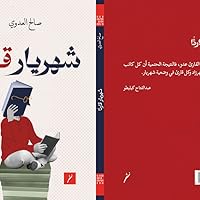
June 8, 2024
إيلان بابيه هو أحد الأكاديميين الذين اهتموا بدراسة واقع الأراضي المحتلة انطلاقا من كونه رجل عاش على الأرض المحتلة فترة لا بأس بها، ومن ناحية أخرى كونه يهودي (معاد للصهيونية) يتحدث من الداخل وهذا ما يميز الكتاب الذي بين أيدينا.
قبل أن يغادر بابيه الكيان الصهيوني المحتل عاش بعضا من مراهقته ومن ثم التدريس الأكاديمي وهو يشهد فكرة السجن الكبير، وكيف تطورت الفكرة لتصبح سجنا مشدد الحراسة، يتوسع ويضيق وفقا للطريقة التي يراها المحتل مناسبة للتعاطي مع صاحب الأرض الذي ينبغي أن يعيش تحت الذل والمهانة ونظام المكافأة والعقاب تماما كما يتم ترويض فئران التجارب.
يروي بابيه قصصا كثيرة مقلبا محاضر اجتماعات للحكومات الصهيونية منذ نشأتها عام 48 مرورا بالنكسة (أو المسرحية المدمرة) عام 67 التي يأكد المؤلف بأنها نزلت من السماء لتحقيق مصالح الكيان الغاصب، ويأكد مرة أخرى بأن لو لم يبدأ جمال عبدالناصر الحرب فإن قيادات الصهاينة سوف تبحث عن عذر آخر لكي تبدأ حربا أخرى لأنها وبكل بساطة كانت قد حددت هدفها باحتلال الضفة الغربية وقطاع غزة قبل ذلك بفترة طويلة من الزمن.
قراءة تاريخ فلسطين المحتلة، والعودة إلى مثل دراسات بابيه في هذا الكتاب وغيره يجعلنا ندرك بأن الحرب طويلة وأن الفكرة الصهيونية مهزومة من الداخل قبل أن تهزم من الخارج، ربما يصدمنا ما ينقله بابيه عن منظمات حقوقية تنبأت عام 2016 بأن قطاع غزة لن يكون صالحا للعيش بحلول عام 2020، ثم يكتب لنا أن نعيش في عام 2023 هذه الحرب الشعواء التي لم تبق ولم تذر، والتي تشهد على صمود الفلسطيني ويقينه التام بالنصر العاجل، وأن غزة هي التي تعيش في وقت نموت نحن في كل يوم بسبب خذلاننا وقلة حيلتنا وهواننا على العالم.
لم تفلح أساليب العدو الغاصب على مر العقود من أن تفت من عضد وعزيمة الفلسطيني الذي يعيش إما في السجن المفتوح أو في السجن المشدد الحراسة ،قابضا على مفتاح المنزل/ العودة/ الحرية ولو بعد حين.
قبل أن يغادر بابيه الكيان الصهيوني المحتل عاش بعضا من مراهقته ومن ثم التدريس الأكاديمي وهو يشهد فكرة السجن الكبير، وكيف تطورت الفكرة لتصبح سجنا مشدد الحراسة، يتوسع ويضيق وفقا للطريقة التي يراها المحتل مناسبة للتعاطي مع صاحب الأرض الذي ينبغي أن يعيش تحت الذل والمهانة ونظام المكافأة والعقاب تماما كما يتم ترويض فئران التجارب.
يروي بابيه قصصا كثيرة مقلبا محاضر اجتماعات للحكومات الصهيونية منذ نشأتها عام 48 مرورا بالنكسة (أو المسرحية المدمرة) عام 67 التي يأكد المؤلف بأنها نزلت من السماء لتحقيق مصالح الكيان الغاصب، ويأكد مرة أخرى بأن لو لم يبدأ جمال عبدالناصر الحرب فإن قيادات الصهاينة سوف تبحث عن عذر آخر لكي تبدأ حربا أخرى لأنها وبكل بساطة كانت قد حددت هدفها باحتلال الضفة الغربية وقطاع غزة قبل ذلك بفترة طويلة من الزمن.
قراءة تاريخ فلسطين المحتلة، والعودة إلى مثل دراسات بابيه في هذا الكتاب وغيره يجعلنا ندرك بأن الحرب طويلة وأن الفكرة الصهيونية مهزومة من الداخل قبل أن تهزم من الخارج، ربما يصدمنا ما ينقله بابيه عن منظمات حقوقية تنبأت عام 2016 بأن قطاع غزة لن يكون صالحا للعيش بحلول عام 2020، ثم يكتب لنا أن نعيش في عام 2023 هذه الحرب الشعواء التي لم تبق ولم تذر، والتي تشهد على صمود الفلسطيني ويقينه التام بالنصر العاجل، وأن غزة هي التي تعيش في وقت نموت نحن في كل يوم بسبب خذلاننا وقلة حيلتنا وهواننا على العالم.
لم تفلح أساليب العدو الغاصب على مر العقود من أن تفت من عضد وعزيمة الفلسطيني الذي يعيش إما في السجن المفتوح أو في السجن المشدد الحراسة ،قابضا على مفتاح المنزل/ العودة/ الحرية ولو بعد حين.

July 7, 2021
Another banger from Pappe. Read this after Ethnic Cleansing... For a complete history of Israel/Palestine. Pappe is a passionate and courageous historian and writer, but this doesn't feel biased or hysterical, because Pappe is also a very good researcher and extremely thorough. He's becoming one of my favorites in this field. I hope he keeps writing.

May 3, 2024
تحياتي لك عزيزي إيلان
توضيح وافٍ وكافٍ لكل تضليل تروج له الصهيونية
هو انتشال من الجهل الذي يفرضه علينا إعلام محلي وعربي وعالمي مضلل ويكيل بمكيالين لتغطية الهزيمة النفسية
كتاب دسم جداً ومليء بالمعلومات التي استفدت منها كثيراً
تقديري لك وتحياتي لنزاهتك
توضيح وافٍ وكافٍ لكل تضليل تروج له الصهيونية
هو انتشال من الجهل الذي يفرضه علينا إعلام محلي وعربي وعالمي مضلل ويكيل بمكيالين لتغطية الهزيمة النفسية
كتاب دسم جداً ومليء بالمعلومات التي استفدت منها كثيراً
تقديري لك وتحياتي لنزاهتك

May 26, 2024
Un libro necessario per comprendere i fatti odierni e capire come si è arrivati al genocidio in atto ancora oggi.
Il popolo palestinese merita che ci si informi al meglio dell’occupazione in atto da mezzo secolo.
Il popolo palestinese merita che ci si informi al meglio dell’occupazione in atto da mezzo secolo.

May 14, 2024
Very effectively tracks the origin and evolution of the max security prison (Gaza) and open air prison (West Bank) models of occupation in Palestine. Great book that covers so much.
October 9, 2017
Note: I received a free, pre-publication copy of this book in exchange for an online review.
This book is about the Israeli governments treatment of the Palestinians living in the West Bank and the Gaza Strip – territories which were seized by Israel in the 1967 Six-day War. Although I do not think the book is very well written, it covers an important subject and presents information the author extracted from Israeli government archives, so I think it is worth reading.
As a result of the 1967 Six-Day War, Israel gained control of two territories: the West Bank and the Gaza Strip. The author writes that these occupied territories posed a dilemma for the Israeli government: expelling the Palestinians from the territories would generate highly unfavorable international response and violate international law; however, giving them Israeli citizenship would result in a Palestinian political majority within the state of Israel. The government's solution, according to the author, was to effectively turn these occupied territories into large prisons for the Palestinian residents. And the occupation has continued from 1967 to the present with no end in sight. The author uses archival records of high level government meetings held shortly after the war. The most damaging evidence in support of the author's thesis is government's own words.
The story is tragic. A drawback of the book is that the writing is the lack of objectivity and completeness. The authors makes good use of original sources to support his premise, yet frequently goes beyond objective evidence and tries to infer the thoughts or intentions government officials. The book also does not seem to provide a complete picture. The author may disagree with many decisions that the government made, but it would have been better if he had tried to include describe more of what the political conditions were and what choices were available.
The writing quality is about average, but could be better. A minor but annoying habit of his is to use variations of the phrase “... on the ground” (“facts on the ground”, “policy on the ground” , “forces on the ground”, “correspondents on the ground”, etc, etc). This phrase indicates a discrepancy between reality and perception, but after being used more than two dozen times, it loses its impact. Also, although the author has a strong case to make, he overwhelms the reader with details. At the start of chapter three, he writes, “When examining it closely as we do here, colonization can become very tedious. … Let me also urge the reader to study it closely.” The tragic events that are about to be described are anything but “tedious”. If the book fails to convey that, it is the fault of the book, and not the nature of the events. I am reviewing a pre-publication copy of the book which does not include maps, figures, or tables, and perhaps the published version may. Hopefully there will be visual aides to clearly communicate this important story.
This book is about the Israeli governments treatment of the Palestinians living in the West Bank and the Gaza Strip – territories which were seized by Israel in the 1967 Six-day War. Although I do not think the book is very well written, it covers an important subject and presents information the author extracted from Israeli government archives, so I think it is worth reading.
As a result of the 1967 Six-Day War, Israel gained control of two territories: the West Bank and the Gaza Strip. The author writes that these occupied territories posed a dilemma for the Israeli government: expelling the Palestinians from the territories would generate highly unfavorable international response and violate international law; however, giving them Israeli citizenship would result in a Palestinian political majority within the state of Israel. The government's solution, according to the author, was to effectively turn these occupied territories into large prisons for the Palestinian residents. And the occupation has continued from 1967 to the present with no end in sight. The author uses archival records of high level government meetings held shortly after the war. The most damaging evidence in support of the author's thesis is government's own words.
The story is tragic. A drawback of the book is that the writing is the lack of objectivity and completeness. The authors makes good use of original sources to support his premise, yet frequently goes beyond objective evidence and tries to infer the thoughts or intentions government officials. The book also does not seem to provide a complete picture. The author may disagree with many decisions that the government made, but it would have been better if he had tried to include describe more of what the political conditions were and what choices were available.
The writing quality is about average, but could be better. A minor but annoying habit of his is to use variations of the phrase “... on the ground” (“facts on the ground”, “policy on the ground” , “forces on the ground”, “correspondents on the ground”, etc, etc). This phrase indicates a discrepancy between reality and perception, but after being used more than two dozen times, it loses its impact. Also, although the author has a strong case to make, he overwhelms the reader with details. At the start of chapter three, he writes, “When examining it closely as we do here, colonization can become very tedious. … Let me also urge the reader to study it closely.” The tragic events that are about to be described are anything but “tedious”. If the book fails to convey that, it is the fault of the book, and not the nature of the events. I am reviewing a pre-publication copy of the book which does not include maps, figures, or tables, and perhaps the published version may. Hopefully there will be visual aides to clearly communicate this important story.

October 16, 2023
لا طاقة عندي والله ولا استطاعة لكتابة مراجعة مع يحصل لإخواننا في غزة من إرهاب وابادة هذه الأيام!
لكن هذا كتاب مهم، مهم جداً لفهم قضية فلسطين وما حصل فيها منذ النكبة 1948 والى النكسة 1967 والى سنة صدور هذا الكتاب نهاية 2016! فهم التاريخ يجعلك تفهم الواقع الذي نعيشه الآن.
لكن هذا كتاب مهم، مهم جداً لفهم قضية فلسطين وما حصل فيها منذ النكبة 1948 والى النكسة 1967 والى سنة صدور هذا الكتاب نهاية 2016! فهم التاريخ يجعلك تفهم الواقع الذي نعيشه الآن.

July 9, 2021
One of the so called "new historians", Illan Pappe is certainly controversial to say the least. Due to his writings which describe a history quite the opposite of what we have been indoctrinated with for so may years. Pappe has been subjected to public criticism, condemnation in the Israeli Parliament, attacks on his writings by another Israeli historian Benny Morris, calls for him to be fired from his job at Haifa University, and daily death threats. In 2007 he accepted a position with the University of Exeter and is now an expatriate in the United Kingdom. His book "The Biggest Prison on Earth", describes the plan to create and the process of creation of a prison out of the occupied territories of Gaza and the West Bank. I had always thought, particularly about Gaza that the Israeli's had created a huge ghetto. Something they would be familiar with from their own history. In the book Pappe describes that the Palestinians have been condemned to these open air prisons for a crime never committed. "The U.S. may incarcerate more people than any other nation, but its ally Israel runs the world’s largest prison". Palestinians are offered two types of prisons. One with self administration and little rights and the other as punishment for any resistance, a prison of severe punishment. We see this on the news. All the while Israel is constantly taking more land and creating more settlements in the occupied territories. The book describes how all this works. Israel's crimes against humanity, violations of international laws, and the military domination of a people captured in an open air prison. I wish more people would question the state narrative. Israel likes to paint itself as the victim, but if you read the book you will not accept that premise. There is a lot to consume in this book and a lot to challenge your concept of the realities of the Palestinian Israeli conflict. If you are an American you may come away from this book with an anger that our government has been supporting these Israeli crimes for so many decades.

February 4, 2024
Un saggio che ricostruisce la storia del conflitto israelo-palestinese, concentrandosi in particolare sui metodi di colonizzazione, pulizia etnica e confinamento della popolazione palestinese nella prigione a cielo aperto di Gaza.
Due caratteristiche rendono alcuni capitoli del testo di non facilissimo accesso: spesso Pappé entra molto nel merito della questione, facendo riferimenti specifici che rischiano di far perdere il quadro generale a chi non ha una conoscenza pregressa approfondita; l’ordine degli eventi non è sempre presentato con chiarezza estrema e talvolta si rischia di perdere il filo.
Col senno di poi, dunque, non sarebbe il primo libro che sceglierei per affrontare la questione. Rimane tuttavia un testo necessario per approfondire in seconda battuta la situazione di cocente attualità.
Due caratteristiche rendono alcuni capitoli del testo di non facilissimo accesso: spesso Pappé entra molto nel merito della questione, facendo riferimenti specifici che rischiano di far perdere il quadro generale a chi non ha una conoscenza pregressa approfondita; l’ordine degli eventi non è sempre presentato con chiarezza estrema e talvolta si rischia di perdere il filo.
Col senno di poi, dunque, non sarebbe il primo libro che sceglierei per affrontare la questione. Rimane tuttavia un testo necessario per approfondire in seconda battuta la situazione di cocente attualità.

November 14, 2023
"The conventional Israeli policy of ethnic cleansing, employed successfully in 1948 against half of Palestine's population and against hundreds of thousands of Palestinians in the West Bank in 1967, was of no use here. You could slowly transfer Palestinians out of the West Bank, and in particular, out of the Greater Jerusalem area, but you could not do it in the Gaza Strip once you had sealed it as a maximum-security prison camp. The result, as I have argued elsewhere, was the onset of a policy of incremental genocide by Israel against the Gaza Strip."
Ilan Pappé
Ilan Pappé

July 9, 2024
الكتب اللي بتتكلم عن الجرائم ضد الإنسانيه لازم تكون معرفه عامه .. يعني تدرس ف المدارس والجامعات مش مجرد كتب يقراها الناس اللي بيحبوا يقروا وخلاص .. فلسطين خصوصا
ايلان بابيه مولود بعد النكبه ف حيفا ده اول كتاب اقراه ليه وغالبا مش هيكون الاخير
ايلان بابيه مولود بعد النكبه ف حيفا ده اول كتاب اقراه ليه وغالبا مش هيكون الاخير

July 4, 2024
There is so much that could be said about this book. It is by far the most painful book I have read about Palestine. And by far the most disturbing portrayal of Israel. I have never heard any writer or historian more hostile towards israel than Illan Pappe. I think he gets away with it because he is Jewish and Israeli. Israel is cruel and has unprecedented immunity, but in Pappe’s writing, Israel is almost mystical numb-minded and tactical evil, and I find that hard to believe. I think hate is stupid. I think Israel is losing nadh as been losing.
The book mainly talks about the West Bank only, which is ruled by the PA - no hamas here, only full control of Israel of the lives of unarmed people. It tracks the intifdas, the first and the second, as well as the Oslo accords (oddly enough it mentions that Arafat was forced into Oslo by Egypt and Jordan).
The however starts by redefining the narrative of occupation and some secret documents from the government about the 1967 war, which was made public - the author says that it promoted the writing of the book.
The strength of the book - and Illan Pappe in general - lies on its access to Israeli governmental documents and references from Israeli archives. It cements how shameless Israel is and careless in regards to international community and the world.
One of the harshest realisation in reading this book, was the familiarity of the political oppression in Israel, which entailed torture, mass arrests without charges, jail sentencing without trials, the secret police - all similar to Egypt with different names. If Israel has 4 thousand Palestinans in ‘administrative detention’, Egypt has an estimated sixty thousands.
The book mainly talks about the West Bank only, which is ruled by the PA - no hamas here, only full control of Israel of the lives of unarmed people. It tracks the intifdas, the first and the second, as well as the Oslo accords (oddly enough it mentions that Arafat was forced into Oslo by Egypt and Jordan).
The however starts by redefining the narrative of occupation and some secret documents from the government about the 1967 war, which was made public - the author says that it promoted the writing of the book.
The strength of the book - and Illan Pappe in general - lies on its access to Israeli governmental documents and references from Israeli archives. It cements how shameless Israel is and careless in regards to international community and the world.
One of the harshest realisation in reading this book, was the familiarity of the political oppression in Israel, which entailed torture, mass arrests without charges, jail sentencing without trials, the secret police - all similar to Egypt with different names. If Israel has 4 thousand Palestinans in ‘administrative detention’, Egypt has an estimated sixty thousands.
August 20, 2025
5 ⭐️
Even better than Pappe's book I read last year on 1948. So incredibly sad and infuriating. if you feel like yourself lacking context for what is happening in the present day this is a really good start. Of course don't just read one author not a bad idea to start with Pappe's other work for context of what happens in this book though. I do feel like I retained a lot more from reading this and will refer back to this in my head more often
Even better than Pappe's book I read last year on 1948. So incredibly sad and infuriating. if you feel like yourself lacking context for what is happening in the present day this is a really good start. Of course don't just read one author not a bad idea to start with Pappe's other work for context of what happens in this book though. I do feel like I retained a lot more from reading this and will refer back to this in my head more often
Displaying 1 - 30 of 218 reviews