In this debut novel, a young woman in the Rocky Mountains, separated from the ancestral rhythms of her home in Scotland, turns to ancient rituals to find solace and connection. With shades of Olga Tokarczuk, Ali Smith, and Rachel Cusk, Hovel is a book for those fascinated by female interiority.
Homesickness takes many forms. Alone in the mountains because of her husband’s job, occupied by little more than online video captioning she calls “kitten work,” our narrator becomes fascinated by the not-long-gone life of her Scottish ancestors, a time when the lamplighter took the night off for the full moon, girls bathed their faces in morning dew, and people sang to the seals.
Her husband, however, is unsure of the emotional efficacy of cooking by candlelight, peeing in the woods, and writing vexed letters to the mayor about the birds living in the doomed aspens behind their apartment building. Especially because the letters are being read, out loud, at the town meetings attended by unimpressed neighbours. But our narrator is bewitched by the liminality of memory.
In a novel of compelling poetic precision and depth, Ross captures the lengths we go to for connection when we’re alone, following threads of personal history and fascination to conclusions one can only reach when there’s too much time on one’s hands and it’s too cold to go outside.
Ailsa Ross writes about people, art and history for Outside, the Guardian, and the BBC. She grew up in the north of Scotland and lives in the Canadian Badlands. Her debut novel, Hovel – about a restless woman who resists the temptation to run away from her dishevelled life – will be published by Strange Light / Penguin Random House in March 2026.
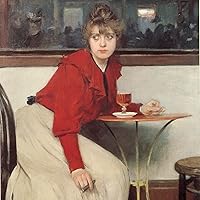
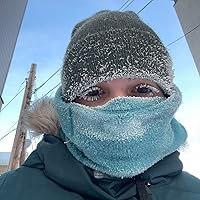
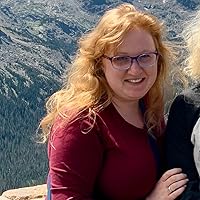
I think that this book is getting a bit of a hard time on here because it is being read by people expecting something else. Hovel is a very quiet novel, and it reads more like memoir/reflection in a lot of ways. It is also fragmentary. The blurb compares it to Rachel Cusk and Olga Tockarczuk but Sebald is probably a more accurate reference point. There are photographs in the text, and Ross is very much concerned with memory and history.
There is practically nothing in terms of plot but this doesn't stop the book from being interesting, touching and relevant. A Scottish woman lives in rural Canada with her partner, and she misses her family and her country. Her homesickness is almost paralyzing at times, not helped by her new hometown being quite a lackluster place. She takes many walks in nature, thinking back, thinking forward, trying to create new traditions. She puzzles the unanswerable question: Is love enough to give up everything else, as someone who has a choice about where she lives? At the same time, the modern world, which has given her freedom, has also enabled this kind of dilemma: She works online at something silly (she calls it "kitten work.") Screens and tech allow her to speek to her family often enough that, sometimes, she hardly notices that she never sees them. They send her photographs of deer in the garden, knowing she'll like them. She might as well be there. But she's not.
If the book has a weakness, it is perhaps that it's sometimes too wide-ranging. The author knows many things, the protagonist has visited many countries, and sometimes anecdotes stray very far from the home turf. My own preference was for those that towed the line of the home/away dichotomy, particularly those about Scottish history (I just loved a section on the women of the Hebrides), but also those considering women who have lived far from home (and far from civilization) more broadly.
In the final section, she travels back to Scotland for a wedding, and this part was also lovely. I expect some readers wanted more resolution, a final decision of some kind. But life isn't precisely like that. The protagonist's accent had changed. That was telling enough.
there were a lot of things i liked about this. the writing is beautiful and the narrator’s ruminations create an inner atmosphere that is lonely, and cold, and wet as her surroundings.
to summarize the novel: a woman faced with a town she feels disconnected from spends an entire book contemplating how she lives through the lenses of nature, ancestry, and tradition. she makes bids for connection; she observes the living around her (animal, bug, stranger); and, braided into these reflections, are bits of history, told in a way that shows us how much of it has been lost in our day to day …and how much can be found if you look.
this is a conceit i liked, but as the book was winding down, i wanted the narrator to do something, anything, as a culmination of all the ruminations. instead, the book just.. ends. and this gutted the entire thing for me.
perhaps if this had been more fiction and less memoir, the narrator could’ve made that choice. i imagine the narrator didnt because the author is still with her husband, perhaps still living in the states. and, no shade to this author, but perhaps she shoudve written about someone like herself, but not herself.
because this book is not about her relationship, yet, by her own admission, she moved to the rocky mountains from scotland because chose romantic love over community and her homeland. it is the cornerstone the book sits upon. but, as it stands, i dont understand why. and, not only do we never get a reason for this decision, it seems incongruous with the woman i met ln this work. by the end of this book, though it is clear the narrator genuinely loves her husband, i had begun to hate him. (his condescension, his annoyance at her eccentricities.) i genuinely thought she would leave… but she doesn’t.
there is meaning to observing life, there is meaning to a deep and cavernous interiority. we can find meaning anywhere, everywhere, and not just that but everything outside ourselves has a deep, historical meaning too. isnt that wonderful? isnt that powerful?
but what happens when the modern woman observes, learns, and documents the meaning of history and the world around us? does it change her? no. it seems this modern woman would rather be married than let that change take place.
I really enjoyed buddy reading HOVEL by Ailsa Ross with my friend Kate! I liked the diary entry writing style in this novel and the use of images and poetry. At times the writing was a little too meandering for me but the word choices like slammakin, schlutt, dook and palaver were interesting. There were some lovely descriptions like “my skin was switching on” and the feelings of your body when swimming or standing on cool tiles. I found this a novel to just go with the flow of the poetic writing without any plot.
Thank you to Strange Light Books for the gifted review copy!
This book is a lovely meditation on life, place, and finding ones's way in it. The use of photos throughout serves to slow the reading down and be present. I could see this book not landing for some folks but for those who like a meandering journey it will be a good match.
Yearning personified. I felt very connected to the narrator of this book and also learned a few tips about harvesting things. Also 5/5 Banff/canmore/mountain town slander
“The ageing of mothers is something nobody notices
I wasn’t ready to read that.
I notice the ageing of my mother. I notice everything about her. I see her so little.”
Hovel by Ailsa Ross was a book that reminded me to go slow, take in the world around me. It was the perfect companion on weekend outings, just myself, the trees and a lot of rain.
I liked a lot about the book, the writing, how thoughtful the narrator was, aware of their own self.
But as I neared the end, I craved more than just existence. I wanted more for the narrator, wanted them to get up, to do more than just exist as they are. I don’t know really, it left me with a lot of unsettled emotions, maybe frustration.
The writing was beautiful, made me think a lot, yet left wanting more.
Thank you @mcclellandstewart and Strange Light for a copy of this book. All thoughts are my own.
Based on the synopsis of the book, I could not wait to read this one and I fully expected to love it, but... that wasn't really the case. The book was very different than what I thought it would be. First off, its not written in a narrative form and comes off more as an exercise at stream of consciousness. That can be ok, but this one just felt too difficult. I never felt like I was able to get into it. The writing is great, oftentimes beautifully poetic. I just didn't really enjoy it.
A beautiful exploration of interiority and the way we try to connect with ourselves, others, and history. A curious lovechild of auto-fiction/theory and locked room mystery.
I really wanted to like this more. The writing is beautiful and the narrator for the audiobook was fantastic (thank you, libro.fm). But ... it just fell short. I literally was shocked when the book ended because it did not feel concluded in the slightest
This book has an unconventional structure which I think makes it effective at creating the sense of loneliness and homesickness the protagonist is feeling. As her thoughts wander, so does the story but I found it less distracting than other readers might. My thoughts wander all over too as I experience the world, learn, and reflect what all this existence stuff is...or isn't. Interesting read. I enjoyed it.
Hovel by Ailsa Ross is about a young woman in the Rocky Mountains who, separated from the ancestral rhythms of her home in Scotland, turns to ancient rituals to find solace and connection.
Whew… this one felt like homework.
The novel unfolds almost entirely through the narrator’s internal, meandering dialogue, occasionally interrupted by photographs that blur the line between fiction and memoir. The atmosphere is undeniably moody (cold air, isolation, longing), and Ross is clearly interested in themes of displacement, lineage, and the human need for ritual. There’s an intellectual ambition here that I can respect.
But respect and enjoyment are not the same thing.
I knew within the first few pages this was not going to be a book for me. The prose leans heavily inward, circling the same ideas without much narrative propulsion. The photographs, while intriguing in concept, didn’t ground the story so much as further fragment it. I kept waiting for the emotional core to crystallize, for the rituals to feel transformative rather than scattered and distracting.
Readers who enjoy meditative, experimental fiction rooted more in atmosphere than plot may find something to admire here. For me, it felt dense and distant, a book I appreciated more in theory than in practice.
Thank you to Penguin Random House Canada, Strange Light & NetGalley for the ARC.
The closest thing I can think to compare this to, tonally and structurally, is Karl Ove Knausgard's Seasons Quartet. The writing is similarly lucid and meditative and unhurried: there's a little bit of plot in this book, it drives things forward when necessary, but you're really here for the writing. And the writing is stunning.
I think it's common, among Americans in the 21st century, to feel almost absurdly cut off from the simpler, harsher, more brutal existences of our ancestors even from just a few generations back. And while we're all happy to benefit from better medicine, safer living conditions, fewer sudden deaths, etc., we look at our comfortable lives spent doing meaningless desk work and long for something a bit more wild and alive.
Ross captures that feeling beautifully, but without ever veering into nostalgia, and without romanticizing the past in a way a lesser book would have done. It's the literary equivalent of going out into the forest, laying down in a clearing, and allowing yourself to be consumed by moss. And I mean that as the highest praise.
I’ll say right off the bat that I don’t think this book is for everyone (mostly because of its meandering structure). I’m also having a hard time putting into words why I enjoyed this book, but I’ll give it a shot.
The book reads like a scrapbook with photographs, the protagonist’s experience, dialogue, historical stories, and random facts. It’s a mish mash of stories and the transitions aren’t clear, which can make this difficult to read for some.
The book does a good job conveying the sense of isolation that the protagonist is feeling. The book documents her attempts at connecting with nature, people in the town, her family, herself, animals, history, and places. Some stories are random and/or weird. Despite the structure of the book, there were some stories that I enjoyed. I also appreciated the Notes at the end, where the author shares all her references for historical and scientific information.
Another book that many would say has a writing style that is beautiful. Yet, it did not work out.
I wanted to like this one more. I was looking forward to it. A story about a woman who lives in the Rockies, leaving Scotland. She is separated from all she knew and is making her life in Canada. This is a story about reflecting on all that is important. Apparently the hard copy has pictures too. Since I did Audiobook, I cannot say whether the pictures helped the story or not. The existence of pictures does highlight that this book was a cross between a fictional story and a memoir. She goes from one story to the next….sometimes the stories seem to connect, other times they did not, at least I couldn’t see the connection. The narrator really highlights two connections, first with the natural world and 2nd with the ways of her ancestors. These connections were all that held my interest, and even they weren’t enough.
Hovel sets out with an intriguing premise, examining solitude, domestic space, and the friction between self-sufficiency and modern societal demands. At its best, the prose offers observant, reflective passages about environment and physical labor.
However, from an analytical perspective, the book struggles significantly with structure and narrative momentum. The narrative frequently stalls in circular reflections, where routine takes precedence over insight, leading to an uneven pace that dampens thematic progression. Instead of building a cohesive through-line or developing its central arguments about isolation and autonomy, the text relies heavily on repetitive anecdotes that don't quite cohere into a broader synthesis. While the underlying questions are worthwhile, the execution lacks the analytical rigor and disciplined framing needed to sustain engagement across the full arc. It ultimately feels like an evocative long-form essay stretched too thin.
Hovel is a book that drifts from one thought to the next as the narrator experiences a year of seasons changing. She writes about how she has moved away from Scotland to an isolated town in Canada, and through this year she attempts to re-connect with nature and her ancestral past. Although meaningful, the writing could've been more concise. We got too many stories from other perspectives, that didn't seem to relate to the narrator. Focusing only on how she was using her Scottish traditions to counter the loneliness would've really driven home the themes of personal history, isolation and being a woman in this modern age.
My favorite quote: 'Now I'm in a strange house with a man. All those ancestors with their hands in mine, with their mouths and their tears. They're in my heart I know.'
Thank you to Penguin Random House Canada and NetGalley for the advanced copy!
Hovel is a powerful and honest look at struggle, survival, and the meaning of home. Ailsa Ross’s writing stands out for its clarity and emotional impact, bringing difficult realities to life without losing sight of the people behind them.
The book’s quieter pace may not work for everyone, but the thoughtful storytelling gives the experiences room to breathe. Its strongest moments come from the personal details and the way it captures resilience in everyday life.
Overall, Hovel is a moving and important read that will appeal to readers who value real stories, social observations, and writing that stays with you long after finishing.
I can completely see why readers drawn to gritty, introspective nature writing and radical self-reliance might appreciate Hovel. Ailsa Ross does an admirable job capturing the raw, unforgiving reality of carving out an existence in a damp, decaying stone cottage without romanticizing the cold, the isolation, or the physical toll.
For me personally, though, the reading experience felt just as heavy and stalled as the repairs. The narrative meanders through historical and ecological reflections at the expense of momentum, and the brooding, repetitive introspection ultimately created an emotional barrier I couldn’t cross. It’s authentic, but I felt drained rather than moved.
this is probably a 3.5/4 star book - the writing is honestly incredible, so so beautiful and I love books that tie nature to anything
this felt like one woman’s journey through a sense of self discovery, concerns about her marriage and a mix of diary entries with nature x anthropology themes
to be honest I cannot say too much more because I feel I had lost the plot, but the writing was so addictive to read I continued on
the book itself was beautiful - the cover, the quotes, the stories of the people attached to where the narrator was was very good
Ik weet niet waarom, er is geen verklaring voor, maar ik heb echt genoten van 'Hovel'. Heb als een klein kind zitten giechelen als er weer een absurde zin of situatie passeerde. Het is de eerste roman van Ailsa Ross. Het was zeker geen gepolijste ervaring. Soms las ik door op wilskracht omdat je echt niet altijd mee kan met de gekke ideeën of situaties. En toch kijk ik met plezier terug op de leeservaring en ga ik Ailsa Ross in de gaten blijven houden.
This was a thoughtful, contemplative debut. Not a lot happens and it is very slow moving but i loved the Scottish setting and the many observations the author/narrator makes. I doubt it will be one for everyone but I enjoyed it and look forward to what the author writes next. It was also good on audio narrated by Rebecca Auerbach.
Very enjoyable and pensive, with a narration that marries intimacy and naïveté to earthiness and nous. Both a love of the land (that is to say, nature in all senses) but also a love of the world (biblical sense, humans, nature, culture, our spirit). Some passages really cut through and touched on things I've not seen elsewhere. Remarkable for a first novel.
lyrical, unique, and a bit strange, if you like Olga Tokarczuk (Drive your Plow Over the Bones of the Dead) this is definitely a fun one for you to read, and the photos break the flow in an interesting and disorienting way. 5 stars. tysm for the arc.
Hovel is a raw and reflective read that captures struggle, resilience, and the search for belonging. Ailsa Ross’s honest storytelling and strong sense of place make it a powerful, thought-provoking experience.
Hovel had a decent start, but it never really pulled me in. The story moved slowly, and I didn’t feel much connection with the characters. A few parts were interesting, but overall, it felt dull and left me wanting more.
Kind of a pretty little philosophical meditation on what it means to be separated from our roots and nature. Has some little gems, but is a book in which absolutely nothing happens. Basically a Celtic girl’s Zen and the Art of Motorcycle Maintenance.
Not what I expected based off of the summary on the back cover. I had hoped for a more cohesive read but this was a bit too contrived and literary for me.