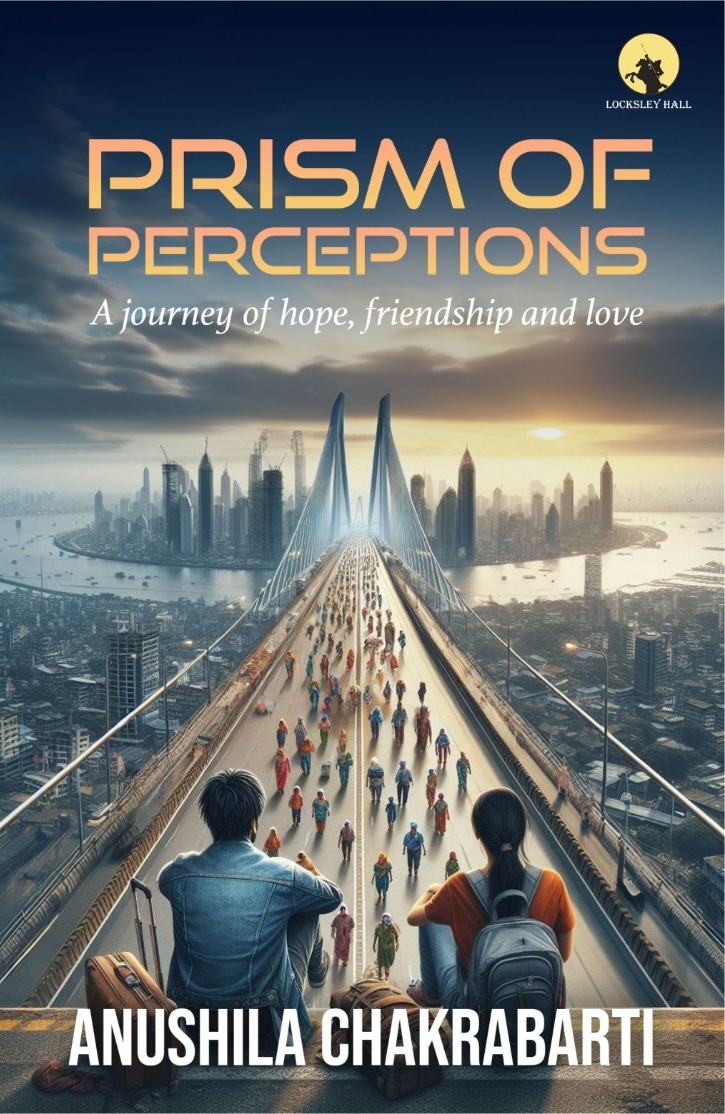
I didn’t pick up this book casually. Like many people, I thought I had closed the chapter on 2020. I wasn’t sure I wanted to reopen it. But Prism of Perceptions made it clear, very quickly, that this story isn’t about the virus alone. It’s about what the virus revealed.
The novel follows Zana and Trillian, two strangers who arrive in Mumbai just as the city begins to shut down. Around them move other lives: a doctor stretched beyond his limits and migrant workers forced to walk hundreds of miles when the city leaves them behind. Their paths don’t collide loudly. They overlap quietly, the way real lives often do during crisis.
The doctor’s storyline stayed with me the longest. Chakrabarty refuses to turn him into a hero on a pedestal. He is tired. He doubts himself. There is a moment when he loses a patient and does nothing dramatic. No speech. No breakdown. He simply sits. That stillness carried more weight than pages of anguish. It felt honest. Grief, in real life, often looks like that.
The migrant workers’ march is written with restraint, which makes it harder to forget. We all saw those images years ago, but here the focus is on sensation: aching feet, hungry children, the fear of the next step. The writing doesn’t aim to shock. It asks you to remember. I had to stop reading more than once, not because it was loud, but because it was familiar.
Zana and Trillian unfold slowly. At first, they seem peripheral. Then you realize they are the spine of the book. Their identities emerge in layers, mirroring the masks everyone wore during those months. Some masks protected. Some concealed. Some were the only way to survive. The reveals feel earned, never rushed.
What gives this book its weight is balance. It doesn’t dramatize suffering, and it doesn’t soften it either. Alongside fear and loss, there are small acts of kindness: shared food, silent support, people holding on even when they’re empty.
Years from now, numbers will blur. What will remain are impressions—the silence, the fear, the fragile hope. Prism of Perceptions captures those impressions with care. It doesn’t offer escape. It offers recognition.
That honesty is its strength, and the reason it lingers long after the last page.