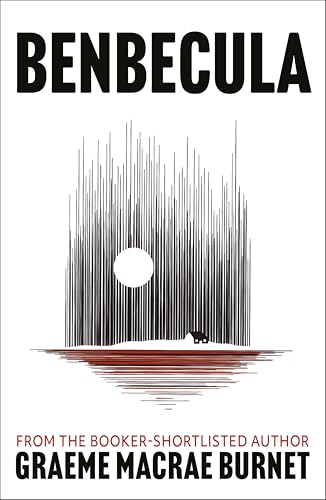
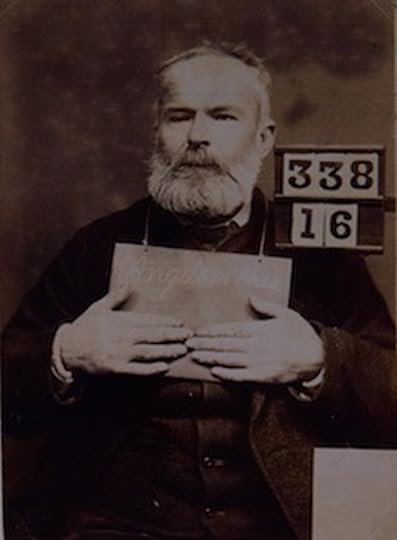
On 9 July 1857, Angus MacPhee, a labourer from Liniclate on the island of Benbecula, murdered his father, mother and aunt. At trial in Inverness he was found to be criminally insane and confined in the Criminal Lunatic Department of Perth Prison.
Some years later, Angus's older brother Malcolm recounts the events leading up to the murders while trying to keep a grip on his own sanity. Malcolm is living in isolation, ostracised by the community and haunted by this gruesome episode in his past.
From Graeme Macrae Burnet, the Booker-shortlisted author of His Bloody Project, comes a dark, psychological thriller, leavened by moments of black humour and absurdity.
Graeme Macrae Burnet was born in Kilmarnock in 1967. He studied English Literature at Glasgow University before spending some years teaching in France, the Czech Republic and Portugal. He then took an M.Litt in International Security Studies at St Andrews University and fell into a series of jobs in television. These days he lives in Glasgow.
He has been writing since he was a teenager. His first book, The Disappearance of Adèle Bedeau (2014), is a literary crime novel set in a small town in France. His second novel, His Bloody Project (2015), revolves around the murder of a village birleyman in nineteenth century Wester Ross. He likes Georges Simenon, the films of Michael Haneke and black pudding.
I absolutely love how Macrae Burnet employs this real-life triple murder case not to feed his readers a true crime sensationalist gore fest with a little poverty porn, but to attack us with a very haunting demonstration of how perceptions are unstable: We are all unreliable narrators of our lives, voluntarily and involuntarily, and it has consequences for us and those around us. The novel's narrator is Malcolm MacPhee, whose brother Angus bludgeoned to death their parents and aunt on the 9th of July 1857. Macrae Burnet has researched how the case that took place among destitute crofters on the Outer Hebrides played out, because according to the sparse newspaper coverage and the legal documents often containing reports by illiterate Gaelic speakers translated into English, no one seemed to have truly investigated what drove Angus to commit his heinous crimes, he was simply declared a maniac.
We learn about the events, re-constructed by the author with added extrapolations to fill the glaring holes in the documentation, after the events have happened, with an alcoholic Malcolm now living alone and as a pariah, his parents dead, Angus institutionalized and his two other siblings gone to a place where no one knows them and their backstory. Malcolm describes himself as a brain in a skull house, skillfully evoking tropes of haunted houses and troubled minds à la The Fall of the House of Usher. We learn about the behavioral eccentricities and violent outbursts of Malcolm, the possible trigger for his turn for the worse, and about the reactions of the family and the town folk, all burdened by hardship and mostly a lack of means and education. What deeply impresses me is how Macrae Burnet subtly opens up questions and possibilities regarding what might have happened and what might have motivated characters, thus pushing readers to think about what they register, what they process, what conclusions they draw, both in a text and in life.
John of John is set on Lewis and Harris, "Benbecula" on ... well: Benbecula - is there a 2026 trend to set your Scottish novel on the Outer Hebrides? If so, I'm getting behind it, especially when masters like Stuart and Macrae Burnet evoke the rough atmosphere of these surroundings (these novels have seriously motivated me to travel there and see for myself). The question how alcohol influences the characters, and what role mental illness plays (and which mental illness(es) might have afflicted the family) made me think of Ottessa Moshfegh's McGlue which also gives us an impaired narrator, but Macrae Burnet is clearly here to offer long dead real-life people a degree of humanity and empathetic attention they never received when they were still alive.
There is also an overlap with the fictional His Bloody Project: Documents Relating to the Case of Roderick Macrae, shortlisted for the Booker ten years ago - and I hope "Benbecula" will show up on that list as well (not only because the internet recently seems to loooove 2016). An absorbing read that intelligently challenges readers without needing confetti and noise and postmodern tricks.
Read His Bloody Project: Documents Relating to the Case of Roderick Macrae years ago from the same author and remembered being engrossed in the writing, and this one is on the same level. This is a fictional account of a real tragedy and it kept my attention throughout. Creepy atmosphere, leaves questions...good stuff.
Perhaps if I hadn’t already read the astonishing His Bloody Project, a Booker Prize finalist for 2016, I wouldn’t have been slightly underwhelmed with this one. Both books have unreliable narrators (my favorite kind), both take place in 19th century rural Scotland, both illuminate a feudal type setting of poverty-stricken crofters, and both books show the violent savagery of a triple murder. However, the postmodern style of HBP contains “Found Documents,” news clippings, anthropology clippings and several narrators. Benbecula is a bit more claustrophobic, with one narrator—the murderer’s brother, who is himself descending into insanity and calls himself a mirror of his brother. In this case, the victims are the mother, father, and aunt of the murderer, Angus McPee. I also didn’t know that this novella is part of a series of Polygon’s Darkland Tales, where different authors (Val McDermid, Denise Mina, David Greig, and others) explore specific events of Scottish history but through a contemporary perspective.
I appreciate that here again, Burnet’s sophisticated language skills forces the reader to look between the lines for the truth, but don’t expect him to tie it up in a bow for you. Mental illness was viewed and treated in a primitive way in 1857, when these murders took place. He does have a rather long (and, imho, unnecessary) Afterword in which he talks about this. However, I felt like a fairly educated or knowing reader would have been able to discern this on their own. I have a slight disagreement with Macrae Burnet’s disagreement about “maniacal”—I do think, for example, that certain diseases like bipolar and some psychoses can show itself with maniacal behaviors, a sort of on-top-of-the-world to the nth degree. (I am a psychiatric RN, so I’m speaking from an area of experience). The term may also have some semantic differences with modernity, but not so much as to not associate it with splitting hairs.
The narrator, Malcolm MacPhee, is living in the family home in Benbecula, where his brother committed the murders. (This is inspired or based on a true event.) He is isolated and ostracized, with his only visitors are an alcoholic priest and the kindly neighbor, Mrs. MacLeod. It’s obvious that Malcolm has sexual fantasies of her when she helps bathe him once a month. There’s no question that Malcolm will make you cringe, but the author knows how to keep you intrigued with your own empathy for the character. It takes a skilled and talented writer to paint a potential madman with such feeling. His descent into madness will pull you right along, just as the voices he hears grip him, too.
“...I find myself wondering...whether I am the mind that goads me or I am the mind that reasons with the other mind. And I feel that I am not one man but two men.”
This was a 3.5 for me, but I’ll also blame my ignorance of the Polygon’s Darkland Tales. For that reason, I am rounding up to 4 stars, giving Macrae Burnet the benefit of the doubt.
One day in 1857, Angus MacPhee, son of a crofter on the small island of Benbecula in the Outer Hebrides, beat his father, mother and aunt to death, and ran off. The islanders got up a hunting party and eventually tracked him down, and he was taken off to the mainland to face trial. Some years later, his brother, Malcolm, tells us the story of his family – how they lived, Angus’ growing fits of violent insanity, and what happened to the surviving siblings afterwards.
“The ninth of July began perfectly normally. The fact that I know the calendar date is enough to tell you that it did not continue in a routine manner for this is the day that my account has been leading up to. I do not suppose that many among you would have the least interest in the incidents I have thus far related were it not for the fact that they serve as a prelude to violence. When a tale promises bloodshed no one leaves their seat, and you may rest easy that I do not mean to disappoint you.”
This is one of Polygon’s Darkland Tales series of novellas, in which “the best modern Scottish authors offer dramatic retellings of stories from the nation’s history, myth and legends. These are landmark moments from the past, viewed through a modern lens and alive to modern sensibilities”. They are certainly getting some top writers to contribute – Jenni Fagan, Val McDermid, Denise Mina, et al. – but Burnet, in my not-so-humble opinion, is the biggest coup of all: one of the two best living Scottish authors, the other being Andrew Greig. So my expectations were high for this, and Burnet met them with effortless ease.
The subject matter shares similarities with Burnet’s Booker-nominated His Bloody Project, but, much though I admired that book, I felt that in Benbecula Burnet achieves a more consistently authentic voice for his narrator, and a remarkable level of ambiguity in such a short space, where he places great trust in the reader to look between the lines for things implied but never stated. In his afterword, Burnet takes us through the very sketchy records which exist of the actual investigation and witness statements, so that we can see how he has interpreted and built on these. He also tells us the outcome of the trial and of Angus’ subsequent life in asylums for the criminally insane. The “modern sensibilities” aspects of his retelling of this true story are in the consideration of how mental illness was viewed and treated both in the community and by authority, and the cruelty of life-long incarceration without any real form of treatment.
The family have a small croft with one rig of poor land which doesn’t produce enough even for a bare subsistence, so they supplement their income by harvesting kelp and hiring themselves out as labourers. The father drinks, as do all the men, and the mother, as Malcolm depicts her, seems withdrawn – she cooks and tends her fire, but rarely steps outside the croft. The aunt lives in a small hovel behind the house, helping with the household duties. The four siblings are all grown – sister Marion and her three brothers, Malcolm, Angus and the youngest, John, a quiet, self-effacing boy on the cusp of manhood. Angus has always been unstable, but recently his fits of madness have been growing more frequent and more violent. We learn that the young girls in this tiny community are scared of him, and it seems with good reason. The authorities demand that the family keep him under control, but this is not easy when they can’t afford the fees to put him in an asylum. A grim Catch-22 – the state will incarcerate him for free but only after he’s committed a crime serious enough to warrant it.
A few years later, as Malcolm tells us the story, he is all alone. His parents and aunt are dead, Angus is incarcerated, and we learn that John and Marion have both left. But how much of what Malcolm tells us can we trust? Malcolm has given up – the rig goes unplanted, he no longer works and he depends on the goodwill of a neighbour to keep the house in any kind of state fit for living. It is clear he too is suffering from mental illness, but is this because of what has happened to his family, or is it a hereditary trait? If the latter, how sane was he during the events he’s describing? There are subtle hints throughout of incest as part of life – not uncommon in such tiny communities – and the associated problems that come with in-breeding. And there is a mystery – why did John and Marion leave? Where did they go?
Burnet’s writing is wonderful, as always, and diving deeply into complex characters is one of his great strengths. Angus may be the murderer here, but it is the slow and subtle reveal of the state of Malcolm’s troubled mind that lingers long after the horror of the brutal crime begins to fade. Along the way, Burnet gives a bleak but authentic picture of subsistence living – merely getting from one day to the next, with no hope or ambition for better. There is no romanticisation of crofting life here, nor of the claustrophobic inheritance that comes from generations living and marrying within the same few square miles.
This may be slighter in length than his other books, but it has all the same depth and integrity of characterisation that has become a hallmark of Burnet’s work. Highly recommended.
NB This book was provided for review by the publisher, Polygon Books.
Benbecula, part of the Darkland Tales series, is based on the true story of a gruesome triple murder carried out in July 1857 on a small island in the Outer Hebrides. The author fills in the gaps in the available documentary evidence about the case to explore the events leading up to the murder.
Our narrator is Malcom MacPhee, the elder brother of Angus, the man responsible for the murder who was committed to the Criminal Lunatic Department of Perth Prison following his trial. It’s many years after the murder and Malcolm is living alone in the family home. He lives in a state of squalor, rarely bathing or venturing outside. His days are spent reflecting on his role in past events, especially the increasingly erratic behaviour of Angus, and pondering on his own mental state. Perhaps it’s true, he thinks, his family is ‘a poisoned lineage’.
Shunned by most of the villagers, Malcom’s only visitors are the local priest and a Mrs MacLeod who, seemingly of her own volition, turns up periodically to clean the house, force him to bathe and cut his hair; the latter he finds strangely erotic.
As he looks back on the past, Malcolm paints a picture of a very strange family who scrape a meagre living from tending a small strip of land (a ‘rig’) and collecting kelp from the shoreline. The most, possibly only, sensible person in the household in his sister Marion but the island has nothing to offer her except years more of the same backbreaking mundane tasks. Malcolm’s father is mostly inebriated and his mother spends her days obsessively tending the fire, sitting in front of it with her legs splayed.
Uncontrollable sexual urges and a capacity for violence lurk just under the surface. In the case of Angus these emerge from time to time in manic episodes. Angus’s violent outbursts and strange behaviour are an increasing burden on the family. They cannot afford to have him confined to an institution so they must be constantly vigilant. In practice this task falls to Malcom and Marion.
But how much can we trust Malcolm’s account of events? After all, we learn Malcolm shares some of the same violent and sexual impulses as Angus. For example, he interprets a cat tormenting a half-dead mouse as an entertainment put on for his benefit. And although he manages to control – just – most of his impulses, instead acting them out in his imagination, there is one very chilling act he carries out in reality. Through these and Malcom’s own insights into his unstable mind, the author provides just enough ambiguity to leave us wondering if there’s more to events than meets the eye.
This is not a book in which the crime itself dominates. In fact, the description of the murders doesn’t come until late in the book. Instead it’s much more an exploration of notions of hereditary insanity and attitudes towards mental illness prevalent at the time. The afterword provides details of source documents but also of the cruelty endured by Angus during his long incarceration. If this all sounds pretty depressing, rest assured there are moments of absurdity and dark humour.
My Shelf Awareness review: Graeme Macrae Burnet's sixth novel, the intriguing, darkly comical Benbecula, recounts a real-life mid-19th-century murder spree on a tiny Scottish island. It is at once a pitch-perfect historical reconstruction and a frank depiction of hereditary mental illness.
The aging MacPhees and their four adult children scrape together a living on an Outer Hebridean croft by growing potatoes and gathering kelp. On July 9, 1857, 26-year-old Angus kills his parents and aunt and flees to a smaller island. When apprehended, he initially lies that he saw a tinker enter the house but soon matter-of-factly confesses. His excuse--absurd to readers but perfectly logical to him--involves a bowl of porridge.
Burnet (Case Study) depicts the troubled MacPhee family through the memories of Angus's irascible older brother, Malcolm. Angus's behaviors would today be associated with neurodivergence and mental illness but then signaled depravity: disruptiveness at school, flapping and moaning, public masturbation, and aggression that could only be controlled by tying him up. According to a neighbor, "some members of the family had occasionally fits of insanity." And indeed, Malcolm--alone, visited weekly by a caretaker, and haunted by visions of his departed family--seems just as troubled as his brother.
An afterword reveals the novel's source documents and casts a compassionate eye on Angus who, no matter his misdeeds, suffered abominably during 42 years of incarceration. As in his novel His Bloody Project, a finalist for the Booker Prize, Burnet proves himself a master of the faux historical testimony--and the unreliable narrator.
(Posted with permission from Shelf Awareness.) (3.5)
Benbecula is a short sharp and often darkly witty novel, drenched in the atmosphere of the island. The entire book is written from the POV of Malcolm McPhee, it is his recollection of the murders of his mother father and aunt at the hands of his own brother, Angus. Malcolm recounts how his life has been changed by the murders, how he lives and of course the events that led to that day.
The writing is stunning, wordy and lyrical and Robin Laing’s narration compliments it beautifully.
I can imagine this working beautifully in a stage adaptation with Malcolm at the forefront and the events playing out in the background.
Huge thanks to W F Howes LTD and NetGalley for the opportunity to review this ALC 🎧
Creates a fascinating sense of place and time that’s suffused with sadness about the historical treatment of mental health, while not forgetting to be a thrilling documentation of an inexplicable crime. The juxtaposition of the crime and the setting gives it much of its potency but the choice of narrator is its masterstroke, giving it an air of melancholy internalised suffering. And while I would usually think it undermined the fictionalisation beforehand, the afterword detailing the known historical (lack of) facts really adds to it.
Graeme Macrae Burnet is one sly little devil. This would be a perfect 5 star read, had only he given up a couple more pages to the reader! Im saying 4.5, but had he not been asked to write a novella as opposed to a full length novel, one cannot fault him the short page count.
True to form, Burnet drops a couple of seemingly inconsequential bread crumbs early on in this novel, one of which made me go “wait, what did this short little sentence just say??” before being pulled along and almost forgetting about it. But at the book’s conclusion - bam! As I often end up doing with his clever tales, I went back and re-read a certain early section where a double tap of hints (I think) were like little bitty, scrawny threads that (may have) tied to the final revelation. As I’ve said before, he is sneaky!
There are early comments about how the potato blight reflects family weaknesses which line up with later commentary made by a neighbor. The rot isn’t singular.
If you’re not familiar with what old Scottish pieces of farmland were (are still?) called nor understand why anyone would go collect seaweed off the beach to sell, this read might have you googling a bit. I adored “His Bloody Project” (and was tickled to encounter one of its characters mentioned here), so being right back in that time frame and somewhat nearby physical setting was like a return trip for me.
The book blurb and better reviewers than I am will give you details, but in short: the novella reads like the memoir of the last family member still present on their plot of land. He explains right out of the chute why nobody else is there, and at one point reaches through the page to suggest that he does understand that the reader is probably only following his words in order to get to the bloody stuff. And he promises to deliver. The tone is dreary and mysterious and suspenseful. Why did another sibling suddenly go haywire? Did perhaps being beaten regularly as a child, due to his rascally hijinks, cause him to fall apart? Or were the cute little boy acts of defiance just harbingers of things to come? Who else in the family may have been a bit off or were they just embarrassed by the ne’er do well? Did something awful happen to said sib while having been sent away on a work detail?
This book is a Thinker, not a Thriller. Your average book club may or may not enjoy digging into the storyline, but if I were a literature teacher or professor, boy, would this be fun to examine. To that end, the closing section with testimony from various witnesses, if they can be called that, is important.
Back in the remote, bleak landscape of his Booker shortlisted His Bloody Project, for an earthy tale of murder and mania. A departure for the previous Darkland series in taking an obscure family murder tale rather than dealing with royalty, rebellion or well mined history of Scotland, but like the other books in the series, the short novella leaves you wanting more at the end - it's all too brief and comes to an abrupt and sudden end (the last 30 pages are historical documentation rather than story). The writing is atmospheric and dark and very good.
Burnet tells a good tale, but this isn’t at the standard of the first three books of the Darkland Tales series. It misses the dark humour that make the books Greig, Warner, Fagan and Mina so memorable. Expectations are high after such a great start to the series, and this doesn’t live up to that high standard.
it's a good book about a historical murder that takes place in Benbecula. it's from the brother of the murderers perspective. id say it's a bit too similar to his bloody project and I think slightly weaker partly because it covers such similar material and partly because it doesn't quite go into why the murders happened as much.
having said that I liked his bloody project and more of the same was welcome.
I get swept up in his way of writing!! I found this really interesting as I had no idea the murders had happened, having heard lots of stories and folklore - this story has never been mentioned!! It mentions my favourite Gaelic word bùrach, my maiden name MacRury and where I grew up Uiskevagh! Knowing the places he was talking about Liniclate, Creagorry etc - I could picture the whole story so well!
A fictionalized account of a true crime in 1850s Scotland. A young Angus MacPhee brutally murders his father, mother, and aunt. The story is told from the perspective of his brother, Malcolm, tracing the events leading up to the tragedy and its aftermath. Very solid, confident writing in true Burnet fashion—clearly in the same vein as His Bloody Project. Gritty, dirty, and raw, with philosophical musings and real psychological depth. Heavily researched, with a thorough and rewarding afterword.
Sinister and lonesome historical true crime. I loved Malcolm’s narrative and the ending was very good. A lot of questions remained, but in the Afterword the author relates the witness statements of the true events. I really love the way this story was recreated. Usually I don’t love or seek true crime stories, but this one is a part of a series about dramatic retellings of Scottish history, myth and legend.
Scottish author Graeme Macrea Burnet is probably best known for his Booker shortlisted novel His Bloody Project, a dark literary crime novel that centred around a series of murders in the Scottish Highlands in the late 1860s. His latest book, Benbecula, is a in a similar vein. Based on the true story of a triple murder on a remote Scottish island in the 1857. Benbecula is part of the Darkland Tales, a series of novels by some of the best Scottish authors that retell and reimagine stories from Scottish history and myth and that has included works by crime fiction authors like Val McDermid (Queen Macbeth) and Denise Mina (Rizzio). There are no secrets in Benbecula. On its opening page narrator Malcolm MacPhee tells readers that this is the story of his brother Angus who “did to death my father, my mother and my aunt, all in the most brutal and purposeful fashion”. Malcolm lives on his own in the family cottage, his other sister and brother having moved away after the incidents that he relates. The tale then oscillates between Malcolm’s strange, solitary life where he is supported by some of the locals, and the story of the months leading up to his brother’s crime. As with his other novels, Burnet does not just tell a story. He uses the narrative to give a fascinating picture of a particular time and place. The residents of the island of Benbecula, and the MacPhee family in particular live on the edge of extreme poverty. They earn money by harvesting kelp but it is tough work and they make little more than they need to survive. Attempts to find other work are fraught. So the family flounders when they find themselves having to manage the increasingly erratic Angus and keep him home despite the problems that he causes in town as they would have to pay to send him to an institution. Burnet rounds the novel out with a lengthy Afterword which provides historical sources, a description of the trial of Angus MacPhee, including the use of the very new insanity defence, and then information about MacPhee’s institutionalised life after that. Benbecula does not have the meta-textual flourishes that distinguish Burnet’s more recent books Case Study and his George Gorski trilogy (the third of which, A Case of Matricide recently won the Ned Kelly Award for Best International Crime Fiction). But it has a distinct narrative voice which instantly engages and carries readers through some fairly dark events and gives readers an glimpse into the lives of marginalised Scots in the late Nineteenth Century.
I love the Darkland Tales novellas - various Scottish authors reimagining events in Scottish History.
This one takes us to 1857 on the island of Benbecula where Angus Macphee murders his parents and aunt. The author has taken what few court records exist - mostly the precognition statements - and woven a story around ten. In Scots law precognition is the process of gathering witness statements in advance of the court hearing.
From these we get a picture of a deeply disturbed young man living with his parents and siblings. Not a happy family and quite isolated within their community - quite possibly due to his erratic behaviour. After a number of incidents, the family are forced to restrain him during his worst episodes until one day he snaps and kills his family. The only reason his siblings survive is because they are working the fields and the shoreline.
The story is told from the perspective of his brother Malcolm and it really is quite a claustrophobic read told in the beautiful language the author is famous for.
"There is always something to occupy me, whether it is the smoking of my pipe or the thinking of thoughts, for a pipe will not smoke itself and the thoughts will not think themselves."
At the end of the book we learn more of the actual records and facts and what became of Angus. Only thing missing for me is what really became of the siblings. I'll have to do some research of my own!
I think the concept of this was very interesting, taking a horrendous crime & trying to articulate how it may have played out from what evidence is still available. Although, from the perspective of the brother I just found some aspects of the story really strange. I think it could have benefitted from also trying to tell the story from the perspective of the other surviving family members too. I just did not enjoy being in the head of the brother all the time.
The afterward also offer some really interesting information & from this I think how the community was represented was probably a pretty close similarity.
Having also read His Bloody Project I could also see a lot of similarities in the style and pace of the stories.
If your a fan of true crime this may appeal to you.
This was as bleak as the Benbecula landscape, in a positive sense. It’s no small feat that Graeme has brought this historical crime to life, especially since recording of details are patchy and incomplete at best. It’s extremely interesting to read the ways in which madness and mental illness was regarded within isolated communities and by regional authorities during this time period.
In spite of this being a short read, you get a real sense of depravity from the descriptions of Angus’s actions and imminent crimes. Likewise, the slow but impactful account of the descent into madness in the aftermath within his brother Malcolm is compulsive.
Benbecula is the retelling of the murders in 1857 on an island of a family of poor farmers by their son. The father, mother and aunt were killed by their deranged son, and the story is told from the viewpoint of the oldest son. The author is one of my favorite crime writers, and I read the story in one day. The writing style reminds of several other authors similar to the Southern Gothic style of Flanders O’Connor, Carson McCullers and even Billy Bob Thornton’s Slingblade. The setting is very to the film The Banshees of Inishiren. The writing is both grim and humorous, and that sort of dark humor is my cup of tea.
In the same vein as 'His Bloody Project' and all the better for it. Not a pleasant read, this one. Bleak, dirty, rough, and likely all to real for the time and place. Our characters are poor, quite so, and live seemingly as much out of spite as for any enjoyment they might be having from their work or their lives. Whisky is prevalent, and whether it is the cause or effect is hard to know. Hard to imagine living like this and not resorting to one's baser natures and unseemly desires.
Going to see Graeme tonight talking about this baby so I had to get cracking. Mind you, this was not a chore, don’t get me wrong - what a brilliantly dark and punchy tale of murder and madness. And only 130 pages - I’d recommend to a friend.
I’m itching with questions. Where did John and Marion go? Is there a hint of incest? Is Malcolm as devilish as Angus? You tell me sort of thing. I was getting big Catcher in the Rye X The Stranger energy from this iykyk. Anyways.
Part of the Darklands Tales, this is a fictional account of a 19th century Scottish murder. The language is as sparse as the landscape and there's a sense of impending doom throughout.
I couldn't empathise with any of the characters and found the 'true' tale of familicide left me cold. I was disappointed with this one as I've enjoyed his other books very much. He is, without doubt, a talented writer but there was so much cruelty in this tale that it made it unpalatable for me.
Big enjoyer of evocative descriptions of day to day life (means of sustenance, modes of labour) in contexts with which I am not familiar (northern Scottish islands in 1850s)
This is apparently part of a series where authors write about historical crimes through a modern lens. That makes sense, because that’s exactly what this does - no more, no less.