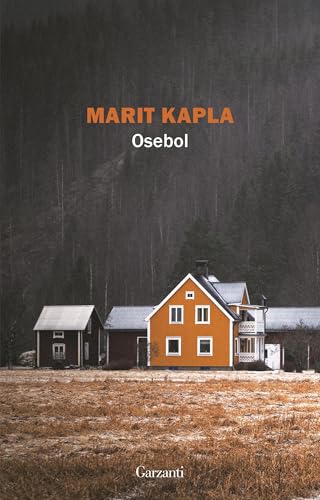
Sulle sponde del fiume Klarälven, nel fitto paesaggio boschivo della Svezia sudoccidentale, si nasconde il villaggio di Osebol. È un luogo dove il tempo sembra essersi fermato, i rumori delle città lasciano il posto al fruscio del vento tra gli alberi e la natura regna indisturbata. Negli ultimi decenni i progressi tecnologici nell’industria del legname e la migrazione verso i centri urbani hanno visto la popolazione ridursi a poche decine di persone – coppie che si sono stabilite qui in cerca di tranquillità e silenzio, giovani che hanno scelto di ristrutturare vecchie case appartenute ai genitori o ai nonni, qualche turista che si è innamorato del posto al punto da trasferircisi. Eppure, anche mentre il villaggio si svuota, la vita continua. Nell’arco di tre anni e mezzo, Marit Kapla ha intervistato quasi tutti gli abitanti di Osebol di età compresa tra i diciotto e i novantadue anni, e ha trasformato le loro parole nei versi di uno straordinario poema narrativo. Ne è nato il ritratto corale di un microcosmo in continuo mutamento, dove dolori e gioie, inimicizie e amori, riflessioni sul passato e sul futuro si avvicendano in un racconto suggestivo, capace di innalzare l’ordinario a straordinario e di trasmettere il piacere semplice delle piccole cose. Tradotta in cinque lingue e vincitrice del prestigioso August Prize nel 2019, Osebol è un’opera assolutamente unica nel panorama della poesia, che sorprenderà e avvincerà anche i lettori italiani.
Marit Kapla, född 4 september är en svensk kulturjournalist och författare. 2019 tilldelades hon Augustpriset i den skönlitterära klassen för sin debutbok Osebol.
This is another five-star book. It is a book about love: the author’s love for a small town in the Swedish countryside; her love for the people who lived—and live—in this small town in the Swedish countryside; and of those people’s love for the town they live in. I love this book.
När Osebol blev nominerad till Augustpriset blev jag glad men trodde inte att den skulle vinna pga föregående års vinnare Ædnan. Jag tänkte att de var för lika varandra. På ett sätt är de väl det också, men Osebol är minst lika värd priset.
Älskar den här hypnotiska meditativa existentiella reportagediktboken om en avbefolkad by med omnejd. Det pratas ibland om olika röster inom litteraturen, vilka som får höras och inte. Här får glesbygdens människor komma till tals, med sina dialektala uttryck och talspråk. Det är livsöden, funderingar, drömmar, sorger, vad man får och inte får säga, hopplösheten, men också att hoppet lever. Jag lyssnade och den är briljant inläst av författaren själv.
Osebol, a random village in Sweden, is the focus of this 800-page oral history. Kapla interviewed a variety of people who live there/have lived there. I don't exactly know what I was expecting, whether I expected it to be deeper than it is. The mundanity of it struck me in the end as being the most profound thing about it. Over the many voices, people complain about the local bridge, the wolf problem, the landscape, the Swedes (from the foreigners who moved there). They also talked passionately (the passion showed through) about their childhoods, partners past and present, the natural world of Sweden and the evolution of the village against the backdrop of their lives. The noun "sonder", which is that realisation that everyone has a life as deep and complex as your own, those little jamais vu moments on planes and trains, is essentially the driving force of this book.
Vilken grej! Helt tagen av hur saker går in i varandra här. En plats sammanflätas med människor som fogas ihop med varandra och blir till litteratur, poesi. Vackert!
Osebol isn’t written by Marit Kapla. It is a polyphonic and communal book where Kapla is less of an author and more of an ethnographer and an editor. The conceit of this book is that Kapla interviewed every single person in the small Swedish village of Osebol, a village home to only 40 people, and copied down their stories. And it’s their words which make up this book.
In minimalist verse, a village speaks, and we're lucky to be able to listen. It’s an existential project as Osebol, and the lifestyle that the rather isolated villagers live, is dying in an increasingly post-industiral and urbanized world. Industries have moved to the cities and most of the rural population has followed suit. Many of the speakers in Osebol are over the age of 60 and so their words are, in some ways, an elegy for this lost world.
Osebol is profound in its simplicity. It’s a litany of the ordinary. A communal chorus of the everyday. There’s real poetry in this book and it’s spoken by the most ordinary of people.
Not only was this book’s minimalism a refreshing break from the maximalist prose I’ve been reading so much of lately, but it was also one of the most moving books I’ve read this year.
The idea of the book is beautiful and the execution is exceptional. Highly recommended.
Marit Kapla has gone back to the small village of Osebol in Sweden where she grew up to interview the majority of the remaining 40-odd inhabitants. The ages and concerns to the various interviewees vary but are always of interest and the book builds up a picture of a rural community in gradual decline.
Hör ni det också? sa jag och gick ut för vi hade elmätaren på en stolpe med massor av luftledningar och grejor.
Så till slut kom jag på... det är tystnaden jag hör som jag inte hade hört på tjugo år i Stockholm.
En liten by i Värmland, med folk från hela Europa, både de som bott där i hundratals år och de som hamnat där nyligen. Nästan Aleksijevitjskt; Kaplan bara låter deras monologer och dialoger stå där de står, medan tystnaden fyller i runt ikring. Där finns ingen katastrof, bara ett utdraget frågetecken; vad blir kvar...?
Önskar bara att hon inte översatt så mycket till rikssvenska, men dä ä itnô å häng ôpp sä på.
Men jag fick anmärkan på att jag nyttjade sprit och att jag tjoade och stampade i bakcen när jag dansade för det stod inte i böcker att de gjorde det.
Då frågade jag vad är ett danslag till för?
Ja, det är för att bevara bygdens kultur.
Ja, sa jag men då är jag inne på det rätta för i Ekshärad har vi söp och stamp i backen i alla tider.
Interviewen is een kunst op zich. Juist die vragen weten te stellen waarop iemand interessant kan antwoorden, of die juist een aanzetje in zich hebben om breeduit op de praatstoel te gaan zitten. Onvergetelijk voor mij was bijvoorbeeld het dubbel interview van Rik Felderhof met Herman Brood en Majoor Bosshardt uit 1996. Meer als 25 jaar geleden, Herman dood, de majoor dood, maar het is me altijd bijgebleven.
Ik ben nog nooit in Zweden geweest.
Osebol is een gehucht in Zweden, het ligt ongeveer 400 kilometer ten noordwesten van de hoofdstad Stockholm. Naar de Noorse hoofdstad Oslo is het zo’n 200 kilometer. Marit Kapla heeft er gewoond, tot ze naar de bovenbouw van de middelbare school ging en door de week in Torsby ging wonen. Daarna trok ze steeds verder weg. In 2016 is de journaliste teruggegaan om er met de bewoners te praten. In een tijdsbestek van twee jaar kwamen ze bijna allemaal aan het woord en legden de basis voor het eerste boek van Kapla, “Osebol”. De veertig stemmen in het boek behoren toe aan de bewoners van 25 huizen. Na elk “interview” zien we op een kaartje aan welke van de 25 stippen de verteller gekoppeld is. Afgezien van de stippen, waaraan vaag de oppervlaktevorm van het huis is af te leiden, geven de kaarten geen informatie. Er zijn geen wegen, geen rivier, geen hoogtelijnen. Ook wat de interviews betreft moeten we het doen met heel weinig: enkel de woorden, de stem van de bewoners krijgen we aangeboden. Geen vragen, geen verwijzingen naar de woning of naar het uiterlijk van de geïnterviewde. Het resultaat was voor mij, als lezer, verrassend. Je wordt niet afgeleid, zit als het ware zelf tegenover de spreker. Je hoort de woorden onverbloemd, ongeromantiseerd, ongekleurd. Je leest ze hoe ze uitgesproken zijn. Het zijn zijn woorden, direct. Tegelijkertijd zijn het juist die woorden die je een idee gaan geven van de man of de vrouw die vertelt, het uiterlijk, en van de plek waar hij of zij woont en waar de woorden uitgesproken zijn.
De passages zijn dermate kort en ritmisch van opbouw dat ze iets poëtisch krijgen.
De oudjes vertellen hoe het vroeger was, de opkomst en de ondergang van de skipiste, de houtkap en het transport over de rivier. Ze hebben Osebol zien veranderen en delen hun zorgen, die van vandaag en die voor de toekomst. De vergrijzende “provincie” leidt net als overal in Europa tot voorzieningen die steeds verder wegbezuinigd worden en beslissingen van hogerhand worden voor de bewoners steeds moeilijker te slikken. En toch zijn er jongeren die blijven, die terugkeren of die komen. Of een enkele buitenlander die de eenvoud van Osebol en de rust van de bossen in de regio weten te waarderen.
I found this one at work and mistakenly thought it had been shelved in the wrong section. The cover looked way too abstract to be non-fiction and it's not a small volume (800 pages). So I picked it up and turned it over and flipped to a random page and what I was confronted with was...
a scattering of tiny grey squares...
and then what, at first glance, looked like poetry...
but you learn that it's the voices of the villagers. All of whom were interviewed to capture their perspectives on all manner of topics that matter to them.
I like that. I've always had a soft spot for anything that aims at capturing ordinary people's experiences. I think it is so important, especially for places that are changing rapidly. So much of history has been imprinted and passed down only by the wealthy.
I had a great time reading this book. It left me feeling all Mys (pronounced mees - ultra cosy - hopefully I used that right, I've been inspired)
Because my dream is to live in a little house in a forest with animals and growing my own food. I think people will go back to that way of living. The last century has been an absolute failure of an experiment.
The sad thing is that much has already been lost, and even more will be, before we correct our course.
'It's a long time since you saw bullfinches, isn't it?'
Marit Kapla vann Augustpriset 2019 för sin bok Osebol och efter att ha läst den förstår jag varför den är så hyllad. Det är en reportagebok där Kapla intervjuat nästan alla invånare i den lilla Värmländska byn Osebol. De berättar om sina minnen, upplevelser, känslor och livsöden. Många av berättelserna har fokus på hur det är att bo på en alltmer urholkad och bortprioriterad landsbygd. Språket är oerhört vackert och stämningsfyllt.
Jag rekommenderar den här till de som har anknytning till Värmland, de som gillar att läsa om hur det var att leva i Sverige förr och till alla som någon gång levt på landsbygden, oavsett var i Sverige.
Marit Kapla set out to ask the inhabitants of Osebol one simple question:
“Why did you end up here up in the forest?”
And wrote the answers like a poem like this where you feel the voices like they are sitting across from you on a couch or in the kitchen brewing tea.
They all sound so old and nonchalant like they are dreaming because they are for the most part and there is a nostalgia for a Sweden without mobile phones where the old bridge could still be crossed without risk and for some with less foreigners stealing the good work.
But that’s what is so human the honest truth of the voice that can be so crass and also gentle about this little forest where the wolves are a nuisance and the factories shift away from chipwork and the ski lifts shut from the lack of tourism.
You get some people moving up to Osebol from Stockholm or Budapest or Oslo just to fall asleep with open windows because the air is better.
You get some who come for the elk and the quiet or maybe even for the commune.
Not many came for the people but the people are good for the most part and almost like a family. They pitch in, help out. Treat each other’s kids like their own.
They wait in the dark for the school bus so that they don’t have to wait in traffic and work the forestry machines which beats being just a number in a big city.
There’s always something to do. It’s not always boring, especially to those who were born there and die there there’s always a knitting group or bingo or a fish to pickle
it’s not so bad really even without the postal service now and the old bridge fenced off
you still get the trees and the river and the forest and of course it’s simpler there and it’s like for once in your life without the exhaust and fumes and all the constant needing to be somebody important you, yes it’s like that, It’s like you can breathe.
An oral history of a once prosperous lumber town now drifting into desuetude and failed by local government. Kapla has rendered the interviews she conducted as free verse - a technique sensitively preserved in Peter Graves’s translation - and the result is poetry from the quotidian. A nuanced, poignant and immersive volume, easily the best thing I’ve read this year.
Hur det mest vardagliga i vanliga människors liv blir som poesi. Det gäller bara att ta sig tid att lyssna. Var och en har sin egen värdefull historia att berätta och alla historier tillsammans blir en otroligt fin bok.
Osebol ger röst åt glesbygden, åt ålderdomen, åt de som bor kvar när alla andra flyttat till stan. Men de som berättar har inte bara en röst, utan varsin och många fler. Generationer hörs mellan raderna. Relationer vecklas ut. Starka relationer där även de som dött finns kvar. Minnet av dem man älskat är så starkt närvarande.
Vackert porträtt av en by på landsbygden. Tror att det var extra effektfullt för mig när jag kan relatera mycket till min egna uppväxt och människorna i min omgivning. Dock är den alldeles för lång, blev otroligt uttråkad under mittenpartiet. Dessutom känns det som en stor del av innehållet består av gamlingar som pratar om "den gamla goda tiden" och "det var bättre förr". Så tröttsamt.
Den här boken är ganska annorlunda från vad jag brukar läsa och består av ganska korta intervjuer med invånare i Osebol. I början hade jag svårt att komma in i handlingen, eftersom det hastigt och lustigt byter till en ny person. Allt eftersom förstod jag rytmen och då fastnade jag även för många livsberättelser. Jag gillade särskilt de delar som rörde ämnen som jag kan relatera till (skola, ungrare och relationer) men även bitar där jag inte kan så mycket (skogsarbete, graffitisanering och jordbruk). Att läsa ett tidsdokument som rör sig över många nationaliteter och generationer är ändå fint!
"En stad fungerar inte utan landsbygd". Kapla lyckas i sina intervjuer fånga bilden av ett litet samhälle och vad som händer när invånarna flyttar därifrån. Reportage som lyckas ringa in olika personers erfarenheter och åsikter, på ett ärligt och nyanserat sätt.
Really liked it! Made me think a bit of Svetlana Alexevich. It was sad and fascinating. She's captured a range of voices, in a beautiful way. An important comment on today's society.
Osebol är fantastisk läsning. Alla röster som en bit in blir till en väv, tätnar och skapar nya mönster just som man tror att bilden är satt.
Blir smått mållös. Och börjar svamla om saker som litteraturens kraft. Men har svårt att hitta bättre ord för Osebol. Den flyter fram, alldeles omistlig.
Värmland, Värmland, Värmland. Mitt hjärtas landskap. Min finaste dialekt.
Och Osebol är en av alla värmländska orter som tidigare varit full av liv - vuxna, barn, industri, flera affärer och skolor. Men när industrierna försvann blev människor arbetslösa och många flyttade till större orter. Vissa vill inte flytta. Och jag älskar dem för det.
I boken om Osebol får vi träffa dem som alltid bott där och de som förälskat sig i landskapet och flyttat dit. De som kämpat för att bygden ska fortsätta leva och de som accepterat dess död. Flyktingar, flergenerationsosebolare, unga och gamla. Mest gamla, för det är så demografin ser ut.
Och jag har gråtit och blivit förbannad och rörd och skrattat. Och älskat hur Kapla låter den värmländska dialekten ta plats i stor litteratur.