A dazzlingly original new voice in literary fiction for fans of Ali Smith, Mohsin Hamid and Elif Shafak
The Renovation is a heart-breaking portrait of one family caught in the tides of history, grappling with grief, exile, politics and the painful absurdity of love
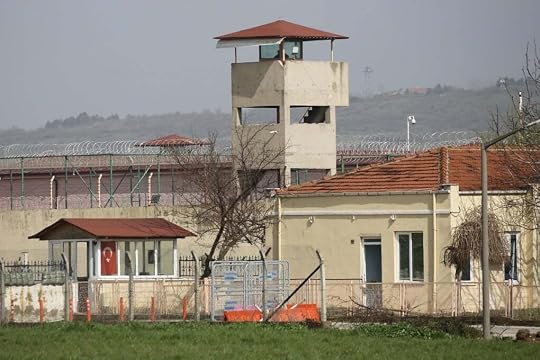
Dilara’s father is disappearing. His memories are collapsing, dementia stealing a little more of him each day. She has persuaded him to move in with her, hiring builders to adapt her apartment to his new needs, but when the renovation is complete she discovers a big problem: instead of a new en-suite bathroom, the builders have installed a Turkish prison cell.
At first she is outraged. There has surely been some mistake. Dilara’s family are exiles – they left Turkey many years ago and have never been back. The last thing she wants is a piece of her estranged homeland appearing uninvited in her new home.

But as the weeks pass, her indignation gradually gives way to curiosity. Beyond the cell door, she glimpses Turkish guards going about their work. Through the cell walls, she hears Turkish prisoners murmuring, rustling, crying out in their sleep. And in the strange, impossible air of the cell itself, she smells the sesame scent of freshly baked simit, she tastes the fine dust of the Anatolian steppe on her tongue.
Even as she struggles to care for her father, to keep the family finances afloat and stop the wheels coming off her marriage, Dilara is drawn back again and again to the mysterious prison cell, and through it to a city that once belonged to her – to the salt wind off the Marmara, the sky full of gulls and domes and minarets – drawn inexorably back to Istanbul.
"Hope is a symptom of the strangeness of life. Who was I to say what is and isn't possible while I hid in a prison in my bathroom?"
"When there is something missing from you, how do you fill the space? Do you describe the boundary of the void obsessively, or simply cover its shapelessness with a veil?"
Is it too early to identify a Booker nominee for 2026?
The Renovation by Kenan Orhan is a book that requires attention.
Dilara with her husband and father are exiles. They have moved to a village near Salerno in Italy to escape the persecution of her father in Turkey- an outspoken opponent of the Erdogan administration. Leaving behind the control of a government and the rise of political prisoners. However, life changes when the request for a new bathroom is turned upside down when the builders install a Turkish prison cell. and Dilara's father life changes as the shadow of Alzheimers deepens and he closes in on himself.
Dilara finds herself bewitched by this room - she hears the voices of female prisoners, the orders of guards and the aromas of a past life. She is drawn to the cell as a place of escape.
The metaphorical comparison of living in a new country with no friends to feeling imprisoned is evident; the decline of her father as his world closes down and he withdraws into his own solitary existence( a personal cell); the continual fear of persecution and potential repercussions echo through Dilara's mind especially as she reflects upon the turmoil caused in their lives in Turkey and subsequent "escape". as well as the isolation of being away from family and a past life. Dilara finds solace in a cell.
This is a story of millions fleeing wars, political conflicts and regimes and the internal struggles and the cells that people find themselves living within longing to be free in their homelands.
Powerful, haunting, captivating - a book that will leave you unsettled but equally makes us reflect upon the harsh realities of life.
With its fantastical premise and candidly raw emotional core, The Renovation is a powerful literary gem. I’m glad I was drawn in by its outlandish hook—a botched renovation where a residential bathroom inexplicably transforms into a prison cell—judging on the subject matter alone, I might have passed it by as too literary for my taste. The touch of magical realism is seamlessly woven throughout, holding my attention and pulling me into a vulnerable, deeply human character study. More than once, I found myself double-checking to make sure this wasn’t a nonfiction memoir—the protagonist’s journey feels that vivid and real.
The Renovation tackles heavy themes: a parent’s dementia and Türkiye’s political turmoil over the past decade. Despite this, it never feels overwrought; instead, it’s resonant and surprisingly balanced. For someone who doesn’t regularly engage with Türkiye’s politics, it’s also insightful without being overly academic. As an immigrant myself, I found the depiction of complicated feelings toward one’s homeland strikingly accurate—on the surface, countless reasons to leave, yet underneath, an unbreakable emotional longing. Oddly enough, Crying in H Mart by Michelle Zauner kept coming to mind while I was reading this—likely because of its reflective portrayal of a parent–child relationship.
Ultimately, The Renovation was a refreshing change of pace from my usual thriller and horror reads: more introspective and serious, yet still delightfully quirky thanks to its unconventional setup and fluid, unpretentious writing style. There’s so much metaphor and symbolism to unpack that I know this story will stick with me for a long time.
**This ARC was provided by the publisher via NetGalley in exchange for an honest review. Much appreciated!**
For every exile, there is a family of hostages, a host of lovers, friends, colleagues, rivals, affable greengrocers, lascivious taxi drivers - all left behind in their hostage's bindings, and the country calls out that it misses you, don't you miss it back?
How does one escape a homeland turned dictatorship? As it turns out, one cannot — the prison follows them wherever they go. In a feat of magical realism, Kenan Orhan vividly depicts what it means to never escape one's country of origin, especially when forced to flee. Considering my own country's long but definitive path toward an outright dictatorship, I can't say I haven't been thinking about leaving recently, so this novel hit too close to home. And that's good. I needed to know that, even if I left, the prison would follow me.
In this story we follow Dilara, a Turkish school psychologist who has exiled herself to Italy. Our story starts when what was supposed to be a renovated bathroom turns out to be a cell in a well-known Turkish prison. In this tale we explore a plethora of topics such as being a caregiver of your dad, homesickness for a country you abandoned, and the ambiguity it brings. It was filled with beautiful and purple prose and a very rich inner monologue.
While the premise is quite bizarre, the book is mainly character-focused, accepting the magical realism that is present throughout it. The book could be described as melancholic, with lots of longing, whether it's for a dead parent, an absent husband, or the past that will never come back. Additionally, as we follow the past timeline where she still lived in Turkey, we get a lot of insight about the political climate and historical facts, which was reminiscent of The Island of Missing Trees by Elif Shafak. Overall, a highly recommended novel for those who are looking for an emotional novel with some touches of magical realism.
Thanks to NetGalley and Farrar, Straus and Giroux for the eARC in exchange for an honest review!
The Renovation by Kenan Orhan is a haunting, surreal debut, a meditation on memory, displacement and psychological scars. When her second bathroom is renovated to resemble a notorious prison cell. Dilara, a psychologist caring for her dementia suffering father in Italy, is troubled by this invasion of a past they were attempting to escape into this, their present. Orhan keeps the reader guessing, and reality and fiction fuse as the narrative books deepen into the reader, with the lyricism of Orhan's prose carrying us through.
This was a staggering debut in its ambition - and though I feel a second read might solidify it in my mind - on first reading it is still gripping and insightful. I am certainly very keen to see what Kenan Orhan does next - I feel we might be at the beginning of a great career here.
Thank you to Netgalley and the publishers for the ARC.
The premise of the novel is surreal and delivers on the magic realism: An exile from Turkey living in Italy with her ailing father discovers, in place of a renovated bathroom, an en suite prison cell. Not just any prison cell, but a specific women's prison in Turkey—effectively creating a portal or hinge between her two worlds.
Home and homeland. Home and "step father country" as the narrator Dilara once describes it, feeling as though her very identity is different in Italy due to, among other things, living in a new language. And not just because she's less proficient:
"As we learn a new language... we become a different person. As we access different linguistic structures, our personalities shift: to refelct the different concepts available to us through different words... In Italian, I have become a more buoyant peroson. I know the words for happy, nice, beautiful, joyful, kind, generous, love, warmth... I'd lost that melancholic language I had grown so reliant upon in Turkish." But the realization itself is a melancholic one, full of regret and yearning.
I found these reflections on personhood in relation to nationhood fascinating, especially because the narrator's father is in the late stages of dementia and losing his memories. In fact, he's never really left Turkey due to his mind's degeneration. Yet he's surely becoming less of the person he used to be—but is he less of a person all together?
Honestly, Dilara's yearning for a Turkey that doesn't exist anymore due to the authoritarian government and her evolving relationship with her father (the descriptions of caretaking a deteriorating parent are truly moving) are the highlights of this book.
The prison as an extended metaphor becomes clear and maybe a bit too pat by the end—I won't spoil it. But shockingly, given the premise and subject matter, the pace feels off as though there's a lack of stakes. The novel becomes a slog at times, indulging in historical exposition dumps that sit atop the story like a film rather than being absorbed into and enriching the texture of the prose.
Ultimately, I'm happy I read it for several key moments and passages but I did need to force myself to finish.
[I received an advance copy of this book through NetGalley. Thank you to the publisher! Opinions are my own.]
The very first page of The Renovation is a dedication, to all caregivers. The story itself opens with the main premise, that a botched bathroom renovation job has replaced Dilara and her husband’s apartment bathroom in Italy with a prison cell in Türkiye. From there we learn a bit about Dilara’s family history, and that she is a Turkish immigrant to Italy and taking care of her aged father who has been suffering from dementia. At this point I wasn’t too impressed. Imprisonment as a metaphor for caregiving, it’s a bit on the nose. But the novel has more to say and the metaphor becomes more layered. It goes on to explore the political conditions in Türkiye that caused Dilara and her husband and father to leave for an unfamiliar country, and what exactly she left behind. It explores the hidden costs of a state’s slide into an authoritarian regime. The prison becomes a metaphor for both the personal and the political, and the way those aspects of one’s life are vitally enmeshed. Ultimately it had me fully engrossed. Feels like whatever the opposite of an escapist read would be, reading from 2025 Chicago, but because of that it felt necessary.
The Renovation feels like walking through a family home where every wall has absorbed a secret. Kenan Orhan doesn’t just tell a story; he builds an emotional architecture where each room holds a different burden: memory, shame, longing, and the uneasy pull of heritage that never sits still. The result is quietly devastating in the best possible way.
At the center of it all is the daughter and her father, whose Alzheimer’s adds a painful layer of erosion to an already fragile relationship. Orhan handles this with a kind of soft precision: the grief isn’t loud, but it’s persistent, like a drip you can’t fix behind the walls. Watching her navigate a parent who is simultaneously present and disappearing mirrors the larger themes of cultural displacement. Memory becomes unreliable, identity shifts, and the past refuses to stay in one piece.
This makes the home renovation metaphor land beautifully.Even the placement of the prison entrance says something. Sure, it can be interpreted as a simple matter of convenience or architectural strangeness, but it also resonates with the symbolic weight bathrooms often carry in literature. Bathrooms mark vulnerability and the collapse of the public self, and this book uses them exactly that way. They are pressure points of the story: whenever she steps into that space, something shifts. Truth rises. The emotions she keeps contained everywhere else begin to seep through. The bathroom becomes a tiny, tiled threshold where she confronts what she doesn’t want to see, making it a strangely fitting gateway to a deeper form of confinement she hasn’t fully named. It is a private stage where transformation or breakdown has no witnesses but the reader.
The father’s illness echoes through these spaces too. There’s a tenderness in how Orhan depicts the physical realities of care: cleaning, managing, tending to a body that no longer obeys. It’s intimate and raw, but never sentimental.
The themes woven through the narrative, migration, rootlessness, the splintering weight of identity, feel grounded and honest. Orhan doesn’t tidy up the mess; he lets displacement and memory sit as they are, jagged and unresolved. That restraint is part of what gives the novel its staying power.
It isn’t perfect. At times the emotional distance is stronger than I wanted, and certain transitions feel slightly abrupt. But the atmosphere, the emotional intelligence, and the quiet symbolic echoes make the book linger long after the last page.
A layered, intimate novel that explores memory, loss, and belonging with remarkable subtlety. It understands that the homes we inhabit are never just structures; they are repositories for every version of ourselves we haven’t figured out how to let go of.
Thanks to NetGalley and Hamish Hamilton for the advanced copy of this title in return for an honest review.
This sounded very intriguing and I really wanted to read it.
It is a very bizarre premise, the idea of your newly renovated bathroom actually being a prison cell in another country. I wonder where Kenan got his idea from. But it is deeper than just a mistaken bathroom development.
The analogies are clear but not overused. The main female, Dilara, her husband her father are exiles, and the idea of being stuck and imprisoned in an unfamiliar environment is clear. Their worlds are shrinking, both their physical world and their own lives, shutting down, hiding in themselves, and they almost put themselves in their own personal cell, as it where. It also become a sort of escape for Dilara, somewhere she can be enclosed and have other people responsible for her for a change.
My nan died of Dementia in 2016 and it was a full-on year before that where she gradually and then rapidly deteriorated. And it's difficult to explain to other people who haven't experienced it just how dementia seeps into every aspect of a life - of that person and their family. But Kenan has done it very well here. He doesn't sensationalise it, but instead handles it with honesty and respect.
There aren't chapters as such, just a few parts. I love a short, snappy chapter, so I'm usually a grump when it comes to long books or ones split into parts. And I'm on the fence here. It is a relatively short book and so even having long sections didn't feel too long. Having said that, I'd have liked those parts to be split slightly into chapters because you read 20% of the book before you get a breather a the end of the part. But that's solely a personal opinion.
I can see this being very popular with the award boards. Which would normally mean I didn't like it, because I find books on prize lists a bit too literary and serious for my liking. And this does have that element but it's also a very powerful and enjoyable story with interesting characters.
I don't think I've read anything like this before, and yet there was something niggling at me that it reminded me of something. And it took a while but it reminded me of I Who Have Never Known Men. It's nothing like the plot or characters, but it just had a similar tone. And even though I wasn't a big fan of IWHNKM, I was a fan of this, it's original, it's weird, it's heartfelt, it's quick to read, and just really enjoyable.
Dilara and her husband left Turkey, along with Dilara's father - an academic and political opponent to the regime, who is slowly descending into dementia.
This novel describes the frustrations and marvels of exile. As the trio adapts to their new life in Italy, Dilara has to get used to caring for her father. He starts mistaking her for her mother. He forgets words. He forgets that his country is turning into a dictatorship, and together with his daughter, they yearn for a place that no longer exists.
Caring for a parent with dementia is not for a faint of heart. It is like grieving a person who is, technically, still alive. Memories blend together. The past and the present collapse into each other. Dilara tries to hold on to her father's fading memories - the last remaining traces of her mother, who died young.
And then, there is exile. Dilara has to get used to the idea that they will not go back to Turkey. Everything is shifting. What used to be comforting and familiar no longer exists. Their favourite restaurant has closed. Their friends have changed. Their home country does not quite feel like home anymore. Their bathroom has been replaced by a prison.
Kenan Orhan's narration follows the flow of memories of Dilara, in a proustian way. Every sensation, every little detail of life can open the Pandora's box. It feels like Dilara's childhood memories are overlapping with her present-life in Italy. The family relationships shift, and she gets used to caring for her father as if he was her son. In the meantime, Dilara explores the Turkish prison that has magically appeared in her apartment. She tries to understand the transformation that her country is going through.
A beautiful novel, worth 5 stars. Two very difficult topics (exile and dementia), explored with respect and humour. This could have been an extremely sad novel. Somehow, Kenan Orhan holds on to the little things, and turns it into a comforting read. Dilara has a difficult life, but she refuses to be a victim. Her father remains witty and loving, even as dementia messes up with his memories and personality. And somehow, an unexpected prison can also become a window into another country.
Thank you #NetGalley and Farrar, Straus and Giroux for the ARC. What a beautiful surprise.
Dilara, a child psychologist, her husband and her father have fled Erdogan’s Turkey. It has become clear that they are no longer safe there after her father was placed on leave from his university professorship and the family was black listed due to his outspoken views. He has also been diagnosed with Alzheimer’s disease. Exiled in Italy, as her father’s condition worsens, Dilara discovers that instead of a renovated bathroom, there now is a cell in a Turkish women’s prison off her bedroom. Initially she is horrified and tries to conceal the cell from her anxious husband who abandons her when he discovers it. She finds herself drawn into spending time there, as she longs for a tangible link to the Turkey of her childhood and an escape from the stress of caring for her father.
The Renovation is a surreal, and at times nightmarish portrayal of exile and memory loss that is rich in symbolism. I found that the writing became overly detailed at times at the expense of clarity, perhaps reflecting Dilara’s loss of control of her situation. The portrayal of guilt experienced for leaving a homeland in crisis, the fear of forgetting when faced with the daily reality of a loved one slipping into memory fog is particularly insightful.
This is a timely book that resonates on many levels.
My thanks to NetGalley and the publishers, Farrar, Straus and Giroux for the opportunity to read and review this early copy.
Kenan Orhan’s debut novel, The Renovation, is a surreal and haunting meditation on exile, memory, and the psychological toll of displacement. Set in Salerno, Italy, the story follows Dilara, a woman adrift in her new life as she cares for her aging father and hypochondriac husband. Her mundane obsession with renovating a second bathroom takes a bizarre turn when the finished room is revealed to be a Turkish prison cell—a literal and metaphorical intrusion of her exile.
The prison cell becomes a powerful metaphor for the immigrant experience: isolation, nostalgia, and the invisible walls built by grief and political trauma. Then there is Dilara’s father, suffering from dementia, who represents the fading connection to homeland and identity.. I did not enjoy some of the more surreal elements—prison guards, other prisoners but others of scents, sights, sounds were evocative.
Orhan’s prose is elegant and disquieting, laced with dark humour and introspection. e.g.
“Hope is a symptom of the strangeness of life. Who was I to say what is and isn’t possible while I hid in a prison in my bathroom?”
Obviously this story is about the millions who live in metaphorical cells, longing for a home that may no longer exist and leading lives in an adopted country where they are second class citizens. .I think this will be a novel for next year’s awards.
I read an ARC provided by Netgalley and the publishers.
"The Renovation" is the story of Dilara, a Turkish woman living with her husband in Italy, seeking respite from the repressive regime/politics of Erdoğan. Her elderly father, who has dementia, comes to live with them, and it is to improve their home's facilities for him that the renovation of the title takes place.
The narrative voice reminded me of 'Unless' by Carol Shields and 'My Name is Lucy Barton' by Elizabeth Strout: chatty, matter-of-fact, taking the reader into their confidence in a way which is beguiling and flows along, with many personal reflections and tangents. In this story, there is also a striking, surreal element - the home's new bathroom turns out to be the cell of a prison in Istanbul. ("That's not right. This is supposed to be a waterfall shower with two heads and massaging jets and a marble bench.")
In some paradoxical way, even though it is a prison cell, it becomes a focus for Dilara's homesickness - she is delighted by speaking Turkish to one of the guards, and the sounds and scents of the city beyond the cell are evoked vividly. As a metaphor it has potential to be a bit heavy-handed - but the author carries it off with elegant writing, concision and a glimmer of humour.
Many thanks to the publisher and NetGalley for the advance copy.
*Thanks to NetGalley and the publisher for an advance reader copy of this novel in exchange for an honest review.*
The Renovation follows Dilara who has hired builders to renovate her apartment but instead of an en-suite bathroom, the builders have installed a Turkish prison cell. Her father has dementia and is rapidly declining but the Turkish prison cell provides a reprieve for Dilara despite her initial outrage. Dilara’s family left Turkey years ago but the Turkish prison cell draws her back to Istanbul and dredges up memories of her past.
This book is written well and this author has a lot to say about the immigrant experience. It is clear Dilara has conflicting feelings about her home country but had to leave due to the dangerous political situation. This felt like an honest and realistic portrayal of what it is like to care for someone with dementia. It was sad to see Dilara’s father decline and generally this is quite a bleak novel. Personally I didn’t know the political situation is/was like that in Turkey and that was interesting to read about. I’m giving this 4 stars and I’d recommend it.
Keenan Orhan’s The Renovation is an inventive and understatedly powerful novel built around a striking premise. Dilara, a Turkish woman living in Salerno with her husband and her father — whose dementia is worsening — hires builders to create a second bathroom. Instead, what appears is a fully formed Turkish women’s prison cell. From this moment, reality begins to tilt. Guards materialise, sounds echo from unseen inmates and the cell becomes a portal into memories of a homeland marked by political turmoil, fear and loss.
The novel moves between the practical pressures of caring for an ageing parent and the psychological weight of exile. Orhan handles these themes with quiet precision: the disorientation of dementia, the instability of contemporary Turkey, the unresolved pull of the place Dilara left behind and the dislocating sense of not fully belonging anywhere. The surreal device of the prison cell works remarkably well, becoming a metaphor for both political oppression and the internal confinements of grief, memory and identity.
Impressive and distinctive. Hopefully it will do well.
Thanks to NetGalley for the e-arc of this book in exchange for an honest review.
Dilaria has her Italian bathroom renovated, but when she peeks at what the builders have done, it is the inside of a Turkish prison cell.
This book is so clever and deals with so many themes, such as dementia, displacement, political unrest, grief, oppression and poverty. I thought this might be too absurd for me, but I was so engaged in the story and the way that Orhan grabs the reader with an enticing inciting incident and compels them to stay for the writing and the unfurling of a complex political and familial history.
Dilaria is a captivating character - Orhan achieves the balance of humour I love: announcing something harrowing and cutting straight through it with wit: 'Something like an explosion cut open the sky. It might have been an earthquake, everything in the apartment rattled and standing at the stove, I was thinking it was a shame to have wasted such good cuts of beef before the earth swallowed us up.'
Being personally affected by dementia, this book hit different: 'Hardly a person. He was the leftovers of a life.'
A unique story, refreshing prose - I will think about this book for a long time.
Thanks to Netgalley and FSG for the ebook. Dilara’s father is a distinguished professor in a university in Istanbul, but suffers an assault because of his political stances and is eventually removed from the university. Dilara also loses her job by association. The family flees to Italy before her husband also loses his job. Once in Italy, Dilara takes care of her father, who is quickly sliding into dementia. The novel takes an exciting turn when Dilara has the second bathroom redone and ends up instead with a working Turkish prison cell in a women’s prison. As surreal and scary as this sounds, Dilara feels a certain amount of comfort in the cell and with her fellow prisoners.
Gorgeous storytelling - all at once mysterious, moving, and disorienting. Dilara and her husband are renovating their bathroom in their home in Italy. The contractors are increasingly secretive about their work. When they complete it, Dilara is shocked to discover her new bathroom looks just like a notable Turkish prison. At first she is shocked and repulsed, but slowly she finds herself drawn to the other women staying there. At the same time, Dilara is dealing with an absentee husband and a father with dementia.
Thank you very much to Farrar, Straus and Giroux and NetGalley for the opportunity to read a copy.
The Renovation is a surreal, deeply resonant novel that struck a personal chord with me. I was drawn in by its original and unsettling premise—a woman discovering that her newly renovated bathroom has inexplicably become a Turkish prison cell—and stayed for its haunting exploration of exile, memory, and identity.
Kenan Orhan masterfully blends dark humor with sharp political commentary, particularly on contemporary events in Turkey. Through Dilara’s bizarre entrapment, he captures the disorientation of displacement and the psychological toll of immigration. The metaphor of the prison as both a literal and emotional space—reflecting the immigrant’s estrangement from home—was especially powerful.
This is a poignant, inventive novel that lingers long after the final page. Highly recommended for anyone interested in stories of migration, political unrest, or the strange spaces where the personal and political collide.
This book was such a pleasant surprise: intriguing blurb and the story delivers.
We follow the characters in the life in Turkey, and post-exile, their life in Italy, as they navigate now having a "home" which is desperate from their "homeland".
Along with the loss of identity this exile brings, we also follow the struggles of a caregiver: the mental and physical exhaustion that Alzheimer's brings to those around. What was also an excellent parallel was the loss of memories due to the brain shrinking, and the loss of memories due to exile as one begins to forget minor details of life back home.
What does it mean to be forced to be an emmigrant versus if it is ones choice? What mental prisons are we sentencing ourselves to, to escape the physical jail cell?
This book warrants a second read down the line, as there was so much to reflect on and relate to.