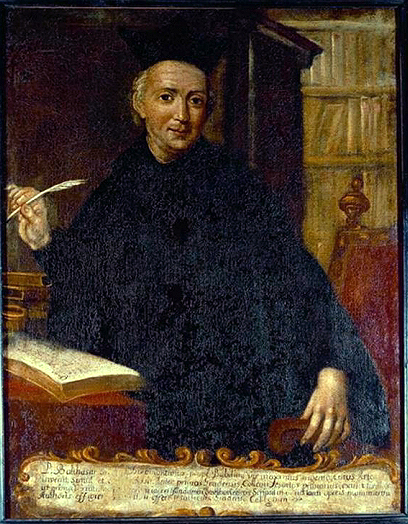
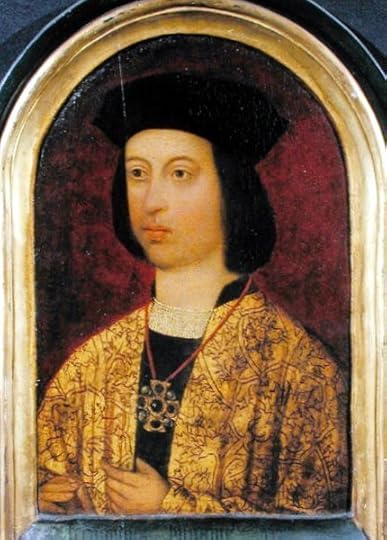
BALTASAR GRACIÁN Y MORALES (1601-1658), nació en Belmonte, cerca de Calatayud, en el seno de una familia con marcada tendencia religiosa, lo que le condujo a profesar en la Compañía de Jesús. Gracián trató de disociar su faceta de religioso de la de intelectual, razón por la cual nunca sometió sus obras a la aprobación de la Compañía, lo que era de rigor, actitud que le reportó un largo contencioso con la misma, y como consecuencia de él, avances y retrocesos en el escalafón, pues no bien había alcanzado la cátedra de Escritura en Zaragoza, dio a la imprenta el “Criticón” y ello le valió la destitución, así como una reprensión pública. Gracián concibe la existencia, tanto en lo físico como en lo moral, como una lucha sin tregua, en la que no descarta una actitud práctica, de ahí su interés por el adiestramiento del hombre con objeto de que sea capaz de sobrevivir. El secreto del éxito será el doble filo de la discusión y la prudencia. Su pesimismo radical, su humor negro y amargo, nos muestran el lado oscuro de la existencia. En palabras de Blecua: “Gracián es un intelectual puro, para quien el goce mayor reside en la inteligencia.” “El político don Fernando el Católico” (1640). Segunda sonada ocasión, tras “El príncipe” de Maquiavelo, en que el monarca es presentado como modelo de gobernante. Aquí se trata, a la vez, de un estudio histórico y de un juicio a la persona con un propósito doctrinal; resultando, como en la ocasión anterior, un auténtico tratado de filosofía política y del arte de gobernar. Con todo, lo más sobresaliente de la obra es el estilo, natural y brillantísimo, con que está redactada.
Baltasar Gracián y Morales, SJ, formerly Anglicized as Baltazar Gracian, was a Spanish Jesuit and baroque prose writer and philosopher. He was born in Belmonte, near Calatayud (Aragón). His proto-existentialist writings were lauded by Nietzsche and Schopenhauer.
The son of a doctor, in his childhood Gracián lived with his uncle, who was a priest. He studied at a Jesuit school in 1621 and 1623 and theology in Zaragoza. He was ordained in 1627 and took his final vows in 1635.
He assumed the vows of the Jesuits in 1633 and dedicated himself to teaching in various Jesuit schools. He spent time in Huesca, where he befriended the local scholar Vincencio Juan de Lastanosa, who helped him achieve an important milestone in his intellectual upbringing. He acquired fame as a preacher, although some of his oratorical displays, such as reading a letter sent from Hell from the pulpit, were frowned upon by his superiors. He was named Rector of the Jesuit college of Tarragona and wrote works proposing models for courtly conduct such as El héroe (The Hero), El político (The Politician), and El discreto (The Discreet One). During the Spanish war with Catalonia and France, he was chaplain of the army that liberated Lleida in 1646.
In 1651, he published the first part of the Criticón (Faultfinder) without the permission of his superiors, whom he disobeyed repeatedly. This attracted the Society's displeasure. Ignoring the reprimands, he published the second part of Criticón in 1657, as a result was sanctioned and exiled to Graus at the beginning of 1658. Soon Gracián wrote to apply for membership in another religious order. His demand was not met, but his sanction was eased off: in April of 1658 he was sent to several minor positions under the College of Tarazona. His physical decline prevented him from attending the provincial congregation of Calatayud and on 6 December 1658 Gracián died in Tarazona, near Zaragoza in the Kingdom of Aragón.
Gracián is the most representative writer of the Spanish Baroque literary style known as Conceptismo (Conceptism), of which he was the most important theoretician; his Agudeza y arte de ingenio (Wit and the Art of Inventiveness) is at once a poetic, a rhetoric and an anthology of the conceptist style.
The Aragonese village where he was born (Belmonte de Calatayud), changed its name to Belmonte de Gracian in his honour.
This book is fascinating because it is so very tedious.
Baltasar Gracián y Morales (1601-1658), a Jesuit, belongs to the Spanish pantheon of writers. He is mostly known for his El Criticón,-- which I have not (yet) read, except in excerpts. A novel in three parts with a philosophical ‘penchant’ that during the eighteenth century it drew the attention of the French ‘philosophes’, and a century later of German thinkers.
Interested that I am lately in Fernando II of Aragón (1452-1516), I was very glad to find this cheap and illustrated Kindle edition. I had not been aware that Gracián had also written a biography on this monarch from more than one century earlier. This book was originally published in 1640 and includes the signature and identity of its censor.
What is interesting and boring about this particular work is that Gracián must have been following what was the convention of biographies of great political figures. With the tone of direct and beautifully written propaganda, Fernando is first introduced as a model of past and future Kings, and to this follows an account of generalities interspersed with a series of comparisons with past historical figures. The comparisons, though, are not much more than an enumeration of heroes from varied origins, and in this gallery we meet Cyrus the Great, Romulus, Constantine, Trajan, Charlemagne, followed by a long etcetera.
Learning little about Fernando, we learn however about the history of the practice of history writing. If the great historians of classical times were revered during the Baroque age, it seems they were used more as adornments in their writing than as models for historiography. Reading this made me realize why the great nineteenth century historians were such groundbreakers.
Gracián’s elegant writing however, invites me to revisit his work with El Criticón.
Short book which half are names of world kings and leaders and their attributes. Also, when talking about queens, language inappropriate for these times- however in 1500s was normal.
The good: few powerful phrases that reading old Spanish offers.
“la eminencia real no está en el pelear, sino en el gobernar”