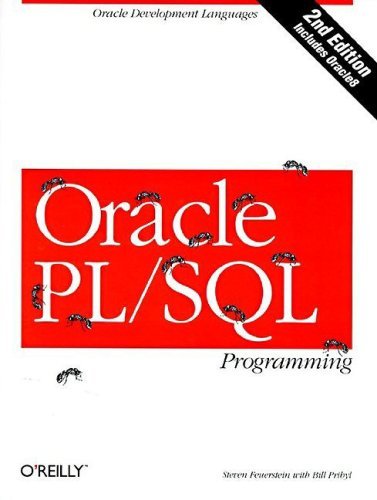
The first edition of "Oracle PL/SQL Programming" quickly became an indispensable reference for both novice and experienced PL/SQL developers. This new edition covers Oracle8 and includes chapters on Oracle8 object types, object views, collections, and external procedures. It also covers new datatypes and functions, and contains new chapters on tuning, tracing, and debugging PL/SQL programs. The companion diskette contains an online Windows-based tool offering access to more than 100 files of source code and documentation prepared by the authors.
Excellent book for PL/SQL programmers. Each section has abundant examples which cover all the scenarios. Steven feuerstein is a world renowned expert in PL/SQL language and there is no dearth of tips and tools of using the language from the master himself. This book is definitely Steven's greatest. Along with explaining the features available in the language, it also includes advice on best practices on testing,debugging and improving the code quality. Almost all the essential tools available for a developer in PL/SQL has been clearly explained and demonstrated with examples.
Steven also created a website PL/SQL challenge which is a great platform to practice your coding skills. So, once you complete reading this book my suggestion would be to complete the PL/SQL practice tests in this site : https://plsqlchallenge.oracle.com/
I used this to study for the Oracle PL/SQL OCP exam (1Z0-146). Having just passed it, I feel I must recommend it for this purpose. It covers all the exam topics, and goes into further detail on several topics, which I found to be useful for filling out the gaps. It also covers topics from the previous exam (1Z0-144) which I mostly skipped over, having completed that exam earlier. It lacks any control questions after each chapter, which might have been useful.
While somewhat dry in places (unavoidable given the subject material) I found it to be thorough. A good supplement to Oracle's student guide.
A better question is how much I understood. Enough is the answer. About 30% is actual. I'll come back to this when I need it. I'm praying that SQL becomes all drag and drop which I suppose it moving in this direction anyways, so it's a matter of time.
I'd done PL/SQL before but some time ago, so got this book as a reference for reviewing and understanding PL/SQL code I was working with on a new software system.