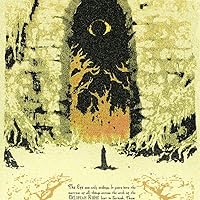
The Galaxy was caught in the crushing vice of a struggle for power. The political titans of the planets of Mankind were making their bids for supremacy. The Counce, man of strange powers, authority in the spheres of intellect; and Bassett, man of money-powers, financial and business wizard. As the association of human worlds drew near the teetering edge of revolution, one of those men would be ina position to triumph. The only thing that neither side could foresee was that there were OTHERS hovering among the stars, looking for new worlds to conquer!
John Brunner was born in Preston Crowmarsh, near Wallingford in Oxfordshire, and went to school at St Andrew's Prep School, Pangbourne, then to Cheltenham College. He wrote his first novel, Galactic Storm, at 17, and published it under the pen-name Gill Hunt, but he did not start writing full-time until 1958. He served as an officer in the Royal Air Force from 1953 to 1955, and married Marjorie Rosamond Sauer on 12 July 1958
At the beginning of his writing career Brunner wrote conventional space opera pulp science fiction. Brunner later began to experiment with the novel form. His 1968 novel "Stand on Zanzibar" exploits the fragmented organizational style John Dos Passos invented for his USA trilogy, but updates it in terms of the theory of media popularised by Marshall McLuhan.
"The Jagged Orbit" (1969) is set in a United States dominated by weapons proliferation and interracial violence, and has 100 numbered chapters varying in length from a single syllable to several pages in length. "The Sheep Look Up" (1972) depicts ecological catastrophe in America. Brunner is credited with coining the term "worm" and predicting the emergence of computer viruses in his 1975 novel "The Shockwave Rider", in which he used the term to describe software which reproduces itself across a computer network. Together with "Stand on Zanzibar", these novels have been called the "Club of Rome Quartet", named after the Club of Rome whose 1972 report The Limits to Growth warned of the dire effects of overpopulation.
Brunner's pen names include K. H. Brunner, Gill Hunt, John Loxmith, Trevor Staines, Ellis Quick, Henry Crosstrees Jr., and Keith Woodcott. In addition to his fiction, Brunner wrote poetry and many unpaid articles in a variety of publications, particularly fanzines, but also 13 letters to the New Scientist and an article about the educational relevance of science fiction in Physics Education. Brunner was an active member of the organisation Campaign for Nuclear Disarmament and wrote the words to "The H-Bomb's Thunder", which was sung on the Aldermaston Marches.
Brunner had an uneasy relationship with British new wave writers, who often considered him too American in his settings and themes. He attempted to shift to a more mainstream readership in the early 1980s, without success. Before his death, most of his books had fallen out of print. Brunner accused publishers of a conspiracy against him, although he was difficult to deal with (his wife had handled his publishing relations before she died).[2]
Brunner's health began to decline in the 1980s and worsened with the death of his wife in 1986. He remarried, to Li Yi Tan, on 27 September 1991. He died of a heart attack in Glasgow on 25 August 1995, while attending the World Science Fiction Convention there
aka K H Brunner, Henry Crosstrees Jr, Gill Hunt (with Dennis Hughes and E C Tubb), John Loxmith, Trevor Staines, Keith Woodcott
Winner of the ESFS Awards in 1980 as "Best Author" and 1n 1984 as "Novelist"..
The World Swappers is a fast-paced espionage novel set in a future where Earth is facing imminent population and economic problems and rising tensions with their colony worlds. There are two main groups vying for control, aliens lurking in the background, and a nice mix of technology involving matter transmission vs. FTL, etc. I thought the planet Ymir was especially well-described. It's a fun, quick read that was first published in 1959 as half of one of the Ace Double books, bound with an A.E. van Vogt novel, Siege of the Unseen. Ace re-released it as a stand-alone in 1967 with a very good Frank Kelly Freas cover, and then again in 1976 with a Don Punchatz that I found un-appealing.
Vintage 1959 sci fi. Most amusing to me was the fact that future physicists on a spaceship use analog slide rules to assist their advanced computations. A short but solid plotline, and an enjoyable early work from Brunner.
John Brunner was one of my favourite authors back when I started. He wrote succinctly with amazing well-considered ideas. His books were generally short and with no need for over-characterisation. I am always on the lookout for ones I have not read.
This is a short book (only 153 pages) and can be read in an afternoon. Its shortness means that it only gets 4 stars but the ideas are wonderful if of their time.
If you have a couple of hours (maybe three) you could do a lot worse.
I gave this book a 3, though realistically in my mind it would be a 3.25 or maybe 3.5 if that was an option.
I found this book and half a dozen other sci-fi books from the same era in the free bin outside of a bookstore one day. I thought the art was funky and the synopsis on the back sounded interesting.
20 pages in I was bored and somewhat confused as to who was who but as the story progressed by page 40 I was starting to become interested. Halfway through the book I really liked where the story was going and the manipulation by the primary group was intriguing.
The story came to a somewhat predictable conclusion, though mostly satisfying. I’m still not 100% clear on the details of the body swapping after death and until the end it seemed like an afterthought that wasn’t necessary to the story.
I would have liked to explore the life of the young Ymerian girl after she adapted to life on Earth, but it seems like that character was mostly just in the book to serve a specific purpose. We do get a small update at the end of the book.
Over all it was an enjoyable book, short and sweet and the first book I’ve read by this author. After reading up on him there are a few other books I’d like to check out.
This entire review has been hidden because of spoilers.
I don't know anything about the genesis of this book, but I have to assume that Brunner produced it fast, or early, or in some other way wasn't really paying attention. I admit that I'm not a big Brunner fan (no, not even Stand on Zanzibar), but I've like his other work much more than this.
Here, Brunner has barely the germ of an idea, and does very little with it. The beginning of the book is catchy, with one mysterious, powerful stranger intercepting a mysterious, intelligent merchant. But the book never takes off from there. There are eventually aliens, and there's a token effort at some sociology. But essentially, this is a series of minor obstacles that are solved (within hours) by technology in altogether incredible ways, with all sorts of collateral damage that's barely even recognized.
It might have been an acceptable story if written in the '20s or '30s. But for a book published in 1959, it's just not nearly good enough.
World swappers is an early work by Brunner. It is short and dense in the same way a lot of books written in the forties or the fifties tend to be. It has several threads, and a fast pace but does not leave you behind. I will say that the characters do sometimes lack depth, it is definitely an early work, none the less it is a good book that I have re-read a couple times over the years.
The book is set several centuries past us developed the first FTL ships, and when dozens of worlds were colonized. It's about two people/organizations who are both trying to solve the same problem, even if one does not realize it. The first is Bassett, a business man who under normal conditions would be the top guy on earth after he puts in his time (a few more decades) he could then spend the latter half of his life as the de-facto ruler. The second is Counce, centuries before the book started, just as humans were going in the stars, he discovered how to build the Transfax by accident. The Transfax is a teleporter then can go between stars, and can even change matter to other forms. It could end hunger, and disease, providing anything anyone ever wanted for practically nothing. However he realized quickly after he build the first one that it could also end mankind, even in theory you could not shield from someone sending a bomb to you via Transfax. So long as you know where your enemy was you could kill him, and once the Transfax was out you could easily make more of them. To let everyone have it could mean the end of mankind, to let no one have it would be a breach of his duty to his fellow man. He decided to compromise. He founded an organization, selecting the best people he could find to use the Transfax to help in what ways they could without revealing that it exists. They could play the long game because they could use it to come back from death and to reverse old age. They also used psychological modeling to make sure they got no bad eggs.
It is a very interesting book, partly because it has such a optimistic view of mankind via Counce and his people. Yet on the other side you have Basset and other such horrible people. It shows that a book does not need to be wholly optimistic or pessimistic, it can be both.
While traveling, I bought "The World Hoppers" by John Brunner in a vintage 1959 edition. This was the first Brunner book I read and it accomplished a great deal in just 156 pages. Themes include first contact, human immigration through space, and control over highly advanced technology.
The novel's strength was its approach to first contact. The novel features a secret society of long lived humans who have been working at preparations to meet alines for years. Their long term focus on making first contact peaceful is striking.
The other science fiction strength on display here was the focus on immigration through space. We have the people of Earth ("Earth born") who are viewed as entitled, wealthy, and demanding. In contrast, humans living on many of the colony worlds see themselves as having a distinct "better than Earth" mentality.
The most extreme version of the "human character changes when settled on different planets" theme is the fundamentalist settlers on a frozen planet called Ymir. This cold planet reminded me strongly of the planet Hoth in "The Empire Strikes Back" - that was my first mental image (though to be fair, this novel came out decades before the Star Wars films).
Overall, I'd give the book 3.5 stars. The greatest strengths are noted above. The weaknesses, perhaps driven by the book's shortness, are the less developed characters. I enjoyed it as a classic SF novel.
This entire review has been hidden because of spoilers.
Way back.. John Brunner's Atlantic Abomination was the first of my trove of old sci fi paperbacks I've been working though... I'm now close to 1/2 way done with them, and I noticed this one in the pile, and such a different cover, it got moved up to the top.
It's got some really interesting stuff going on... written in 1959, yet with no nuclear holocaust. Instead, we have a world that colonized BEFORE the Earth was wrecked, and as a result Earth is a great place to live with a super high standard of living, while the colonies often struggle... especially Ymir, which, as the name sounds is an ice ball that strict religious types (no mention of what religion) eek out a hard scrabble existance.
Then there's the secret cabal that are trying to prepare humans for 'the Others'... who also happen to have the 'transfax' which is a combo of a transporter and a replicator with unlimited range. It just so happens the Others love iceballs, but are the humans ready for first contact? especially those ones?
While the near magic of the transfax was kinda too much, not to mention the fact that it was a secret, if you take that as a given, it's a really good first contact novel with a unique set up to the future world. I'd definitely recommend it for classic sci fi fans.
Features an opening chapter that is everything you could want from a sci-fi espionage novel, though as it goes on and the intrigue is replaced by more clear stakes, it really becomes less interesting. We get a few ideas that Brunner would delve into more later on, particularly the humanistic eugenics stuff that surrounds Stand on Zanzibar, but for better or worse he really has no time to linger.
Everything the characters are doing is motivated by this very paranoid Cold War era - game theory? where you have to take their word that the assumptions they are working under are correct. This isn't a criticism, as beneath the tension of whether each branch of the plan will succeed is the question of just how rational and well informed everyone truely is. Feels like an OG episode of Star Treck where the main concern is still diplomacy but everyone is a underhanded CIA agent. The fact that everything works out was a shame.
Quite a philosophical book, using two men (of course: this was published in 1959) to show different worldviews in handling relationships between Earth and her colony planets. In echoes of Asimov's Foundation books, one of the men - Counce - has superior knowledge and resources compared with the other, the more mercenary Bassett. There's some unexpected cruelty in the story, clearly showing, to me at least, that one view is that the end justifies the means. But despite that it's a very readable Brunner book
Definitely not one of Brunner's top runner novels. Seems like one that was quickly written to sell for a sci-fi magazine back in the day. It has its moments, but is a bit directionless at times. It tells of two men who are competing for influence among Earth's colonized planets. They also see a coming of an alien species and one of the men has a idea for a gesture of goodwill toward them. Maybe with a bit more of this story fleshed out it could have been a bit better.
I found this story very engaging and compelling, any enjoyed it quite a lot.
I usually don't read short stories because it usually takes longer to get into the characters. Also, when I become really engaged with the characters I like to be able to live with him for a while, and not have the ending come too soon.
However the characters and progression of the story or done so well that I am surprised how much I enjoyed it.
Counce and Bassett between them have strange powers and control of financial and business interests, but they also have to deal with the planets that humankind has colonized, including the ice world of Ymir. Counce has invented something called the transfax which can teleport between star systems, among other things. And there is an alien species that they are coming into contact with.
Interesting read. Given the technology, immortality and instant travel would follow. But should it apply to everyone? Should the world be run by the businessmen or those who truly care about others? And what if we are not alone and the Others will be here soon...Mr. Brunner's speculations on these questions make for an enjoyable story. Recommended.
"Here I am, he thought, one man, and I’m giving away a world, arbiter of the fate of my own race and another. There has never been a man with so much power."
review of John Brunner's The World Swappers by tENTATIVELY, a cONVENIENCE - February 18, 2013
After I read Rudyard Kipling & John Brunner's The Science Fiction Stories of Rudyard Kipling (you can read my review of that here: http://www.goodreads.com/book/show/44... ) I decided that it was time to finally read something by Brunner, a writer I've long since been aware but've never gotten around to until now. SO, I went to a used bkstore & got 5 novels of his + another 8 novels by Jules Verne that I'd previously never heard of.
Some of the Brunners & all of the Vernes are published by Ace. They're all the same size & w/in a narrow number-of-pp range: 127-191. In other words, they're written to fit market restrictions. Of course, the Verne's weren't originally written for Ace, they were written for Ace's predecessors. Now, I like Ace, they've published some great stuff. I'm just calling attn to commercial limits that many readers might not think about. It's just like the old days of "feature films": they had to be a minimum of 70 minutes to get distribution.
So what's my take on Brunner? Will he enter my pantheon of SF favorites? Will he join the company of Philip K. Dick, Samuel Delaney, Stanislav Lem, J. G. Ballard, & the Strugatsky Brothers? Not quite.. at least not quite yet.. Somehow, the market restrictions bleed thru a little too much. Of course, Dick was writing under the same restrictions & I LOVE his writing. But, somehow, Brunner doesn't QUITE pull it off. On the other hand, he's not a 'series writer', the ultimate commercial debasement (not INTRINSICALLY, more just-the-way-it-goes). When I ask someone what SF they like & they rattle off the names of their favorite series I tend to think that maybe what they like are soap operas, space soap operas perhaps, but still soap operas.
I'm reading the 5 Brunner bks in the order they were published in, The World Swappers, being from 1959, being the earliest one. In Brunner's bio at the beginning he says: ""I don't regard myself in any sense as a quote creative writer unquote, I prefer to communicate with my audience, not make them puzzled, and consequently am not all that fond of literary obscurities such as typify modern, recognized, literature."" - & maybe that's part of why I sortof find Brunner 'functional' rather than inspired.
W/in the novel, Brunner has a character say: ""Check the school records over the centuries - the infant geniuses have gone on to become business giants and administrators, not social reformers, artists, poets. Intelligence manifested as common sense."" (p 27) Really? I don't think I agree. I'm sure that 'genius' is widely manifested in many possible ways.
Later, when Earthlings & post-Earthlings are confronted w/ the impending presence of another technically sophisticated life-form, the leader of a group trying to control the interface w/ them is in this exchange:
""Tell them to drop what they're doing and come here at once. Maybe someone will think of something."
""And if they don't?" Katya sounded as though she knew the answer to that; Wu gave it to her regardless.
""Then I guess we just have to blow them to bits."" (p 78)
The novel's about the ultimate grandiose, manipulative, & imaginative resolution to this conflict & I think Brunner pulls it off in a competent & somewhat inspired way. But, by his own admission, he's not a "creative writer" - & it shows. One thing I often say about P. K. Dick is that where other, more prosaic, SF novelists (like Brunner) END their bks is just the halfway point for Dick. In other words, Dick is so inspired that he has TWO spectacular surprise endings, he's not just satisfied w/ one. Brunner doesn't go that extra light-yr.
To me Brunner is a major figure of 60s and 70s SF. His ‘big 4‘ novels of the late 60s/early 70, (Stand on Zanzibar, The Sheep Look Up, The Shockwave Rider and Jagged Orbit) form a block of work few writers can match; even so, they are perhaps more admired and respected than loved. Cover of The World Swappers by John Brunner.
The World Swappers is a much earlier work -- 1959 according to the imprint page, when Brunner was around 24 years old and had already been publishing for seven years, and was trying to make it as a full-time writer,
It draws on numerous conventions of space opera -- matter transmission, faster than light travel, aliens, supermen (well, sort of). Brunner played with the matter transmitter off and on throughout his career. Another one that that comes to mind is The Infinitive of Go a much later tale with an asperity and astringency that I liked, though probably not to everyone‘s taste. This is a much earlier tale, and closer to the heart of space opera. Yet there remains a sense of calculation to it, as if Brunner the craftsman did not quite manage to hide the scaffolding from the reader. Someone who appears set to be a major character hardly appears again after the first chapter. Characters are wheeled in and out like gears being shunted back and forth in a gearbox, with nothing but the needs of the plot to impel them. Nowhere is there are character to root for.
The quote on the front cover says ‘very competent‘, but nothing more effusive. And it's right. The story hangs together, every part functions, we get to an ending that manages to wrap up what went before. Did I care? No. Can I see that the author knows how to write? Yes.
For the completist Brunnerfile, Brunnerphile only.
Humanity has expanded to thirty planets and for now Earth is living in a period of comfort. Counce knows that in forty or eighty years Earth will have problems providing for an increasing population, but none of the other planets will want emigrants from Earth. One of the planets is Ymir, a cold inhospitable place, the ten million residents there are indoctrinated from birth to have a disdain for luxury. This planet is the key. By the way, it turns out humanity isn't alone in the galaxy, Counce's group has discovered evidence of the Others on Regis.
Counce has accumulated a group of about three thousand people that share the same empathy he has. His group, thanks to his discovery, has technological marvels. He decided to become the custodian of these marvels, like matter transmission and extended life, rather than reveal them. Even with all of his resources he still needs the help of Bassett. Bassett has the ships that can do a mass emigration and general knowledge of the Transfax would be bad.
Brunner has done a fine job of creating all the pieces and then fitting them together like a jigsaw puzzle. A fast and entertaining read. The suspension of disbelief goes a bit further in this feel good novel. You have one group that has a monopoly on these fantastic capabilities, and it happens to be a group that if not altruistic is at least empathetic and wants the best for everyone including the aliens. The aliens just happen to be comfortable on planets that are basically intolerable for humans. And, wow, the reach of the transfax.
The synopsis on the back of the book makes this story sound much more menacing than it is.
The story is set in a future time when we have colonized other planets but still have some difficulty in travelling between them, although there is some trade and travel that happens. It is about a group of humans who are trying to create an ideal first contact situation. It is a complex problem but well done for a short (153 pages) novel. We see a lot of different aspects of human nature played out, and the world-building is believable. The story doesn't get bogged down with explanations of how their advanced technologies work, nor with overly in-depth backstories of each of the characters and colonies. I really like that it is kept simple, with just enough detail to get a good mental picture and just long enough for the events to play out.
The synopsis says "The Galaxy was caught in the crushing vice of a struggle for power" and "The only thing that neither side could foresee was that there were others hovering among the stars, looking for new worlds to conquer!", which doesn't give an accurate feel for the book whatsoever.
Two powerful interstellar magnates vie for control of human-controlled space in this early (1959) John Brunner novel. This is the only novel of Brunner's that I've read, but I have to assume that he improved considerably later since he produced two very highly regarded novels, "The Sheep Look Up" and "Stand on Zanzibar." This book is a bit of fluff that displays all of the worst traits of Golden Age science fiction--a naïve faith in the ability of extraordinary individuals (invariably scientists) to engineer the optimum human destiny, and a maddening tendency toward endless exposition delivered through interminable conversations. The hero, Counce, subjects people to horrendous fates, including starvation and torture, all in the name of a greater good--and they love him for it later. I don't think this novel has ever been reprinted (I came across it in a used book store), and I can understand why.
Two powerful interstellar magnates vie for control of human-controlled space in this early (1959) John Brunner novel. This is the only novel of Brunner's that I've read, but I have to assume that he improved considerably later since he produced two very highly regarded novels, "The Sheep Look Up" and "Stand on Zanzibar." This book is a bit of fluff that displays all of the worst traits of Golden Age science fiction--a naïve faith in the ability of extraordinary individuals (invariably scientists) to engineer the optimum human destiny, and a maddening tendency toward endless exposition delivered through interminable conversations. The hero, Counce, subjects people to horrendous fates, including starvation and torture, all in the name of a greater good--and they love him for it later. Boo.
Wer verdient es am ehesten, die Milchstraße zu beherrschen? Ist es Counce, der geniale Wissenschaftler, der eine Entdeckung von größter Tragweite gemacht hat . . .? Oder ist es Bassett, der galaktische Händler und Finanzmagnat, dessen Raumschiffe die Güter fremder Welten zur Erde bringen ... ? Counce und Bassett - jeder ein Gigant auf seinem Gebiet! Doch die beiden Anwärter auf die ultimate Macht haben nicht mit den Fremden gerechnet, deren Raumschiff bereits die Galaxis durchstreifen - auf der Suche nach Welten, die sich erobern lassen ...
In einer Reszension habe ich gelesen: "Ein netter Zeitvertreib." Und genau das ist es, Durchschnittskost.
A Man From UNCLE kind of space opera where the secret organization of good guys have matter transmitters rather than spaceships, a technology that also allows them to take ridiculous chances and still avoid death. I first read this fifty years ago, and was sufficiently impressed to remember great chunks of it, particularly the miserable ice planet Ymir and its population of masochistic religious fanatics. I found it again this year, and I wasn't disappointed. It begins in great style, and zips along nicely thanks to the Ace Double page limits of its original publication. Not without its darker aspects, but none the less fun to read.
What happens when humans run into evidence that they are not alone in their sector of the galaxy? Thriller about a time in the future when malcontents have gone off to populate other planets and Earth is overcrowded once more. Some people have discovered how to 'fax' themselves around, while the rest of the race use spaceships. Complicated plot investigates business moguls and a secret society that figures out the Others are on their way home. Maybe humans don't have to blow away the aliens...
Conventional "sci-fi" from the Fifties ( it was published in 1959). The main reason I read it is that it is by British science fiction author John Brunner (1934-1995), one of my favorite SFF authors when I was a kid. But this is early Brunner and he's constrained by the limited number of pages ACE required. A story dealing with first contact with aliens, colonizing other planets, the development of advanced tech, and the rivalry of two powerful Elon Musk or Jeff Bezos- types for dominance--there's too much going on to be covered well in only 156 pages! Too bad. 3/5 stars at best.
This was one of the first books I ever bought when I was 12 years old. I didn't read it for a year or two but it was a really good book and I have read it again a couple of times since. I liked the way people could just be recreated if they died and the whole transmat system was great.