Jump to ratings and reviews
Rate this book

Generals Die in Bed

Rate this book
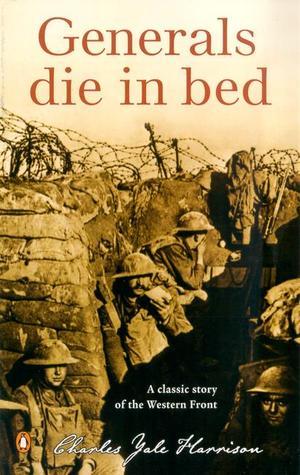
Drawing on his experiences in the First World War, Charles Yale Harrison tells a stark and poignant story of a young man sent to fight on the Western Front. It is an unimaginably harrowing journey, especially for one not yet old enough to vote.
In sparse but gripping prose, Harrison conveys a sense of the horrors of life in the trenches. Here is where soldiers fight and die, entombed in mud, surrounded by rats and lice, forced to survive on insufficient rations.

Generals die in bed brings to life a period of history through the eyes of a twenty-year-old narrator, who reminds us that there is neither glamour nor glory in war.

208 pages, Paperback

First published January 1, 1930

50 people are currently reading
1425 people want to read

About the author

Charles Yale Harrison was born in Philadelphia in 1898 but later moved to Montreal with his family. He reportedly left school in grade four following an argument with a teacher about The Merchant of Venice. At the age of sixteen, he took a job with the Montreal Star, but shortly after he enlisted with the Royal Montreal Regiment and fought as a machine-gunner in France and Belgium in the First World War. He was wounded in 1918 during the Battle of Amiens and returned to Montreal, where he married and had a son.

His first novel, Generals Die in Bed, was published in 1930, in both the United Kingdom and the United States, and was compared to such classic war literature as All Quiet on the Western Front and A Farewell to Arms. He subsequently wrote other books—fiction and non-fiction—but none were as well-received as Generals. When not writing, Harrison worked in a variety of jobs, as a theater manager, a reporter, and a public-relations consultant.

Following the death of his first wife in 1931, Harrison remarried but later divorced. He moved to New York, where he died in 1954, survived by his third wife.

Ratings & Reviews

What do you think?
Rate this book

Friends & Following

Create a free account to discover what your friends think of this book!

Community Reviews

5 stars
431 (25%)
4 stars
696 (41%)
3 stars
378 (22%)
2 stars
125 (7%)
1 star
34 (2%)
Displaying 1 - 30 of 183 reviews
Profile Image for Mai.
435 reviews39 followers
May 28, 2025
War is Hell

Whoever said "War is Hell" was absolutely right. The more I read about it, the more shocked I am by the inhumane events and treatment people endure. Whether you're a soldier or a civilian, both will experience horror, fear, pain, and devastating events.

I genuinely believe that those who go to war never truly return, whether they die physically or emotionally. War scars them, destroying their ability to live a normal life. They suffer for the rest of their days, plagued by nightmares, lingering tragic memories, and the constant echoes of blood and screams. It's truly tragic.

And those who start these wars, the high-ranking generals, are always safe in their ivory towers, far removed from the misery they inflict on their people, simply driven by colossal egos.

The story never ends; the same events occur in different eras, and history repeats itself.

I propose that those who vote for war should be the ones fighting on the front lines. It makes no sense to throw people into those terrifying and inhumane trenches, where they face death, fear, cold, starvation, and horror, while those who made the decision to go to war remain safe and sound under their warm blankets.

This was another devastating reality check. Truly, war is hell, and I pray for the innocent souls who paid with their lives to serve the egoistic maniacs in charge.
Profile Image for Helga.
1,386 reviews478 followers
December 10, 2023
I wanna go home, I wanna go home,
The bullets they whistle, the cannons they roar...


This work of fiction, which could be read as a diary of an 18 year old Canadian soldier is an account of the hideousness and ghastliness of war.

They take everything from us: our lives, our blood, our hearts; even the few lousy hours of rest, they take those, too. Our job is to give, and theirs is to take...

In this story about the insignificance of a human’s life in contrast with the ‘greater good’ the unnamed narrator relates his and other soldiers’ experiences in the trenches during the harrowing years of World War I.

-“These people have no right to laugh."
-"But, silly, they are trying to forget."
-"They have no business to forget. They should be made to remember."
Profile Image for Uğur Karabürk.
Author 6 books133 followers
March 30, 2025
Generaller yatakta ölür, askerlerse her yerde. Harrison’un kaleme almış olduğu savaş karşıtı roman Birinci Dünya Savaşı’nda Almanlarla çarpışan Kanadalı askerlere odaklanıyor. Yazar kitapta sadece savaşın bir bölümüne yer vermemiş. Askerleri bazen dinlenirken bazen sıcak sıcağına ateş hattında bazen ise izindekileri günlerine şahit oluyoruz. Tabii savaş devam ederken insanın kanını donduracak bir sürü sahne mevcut.
“Önümüze bir top mermisi düştü. Fry’ın bacaklarının dizlerinden aşağısı kopmuş durumda. Kanlar içinde birkaç adım koşuyor ve yere yığılıyor. Yanından geçerken elleriyle benim bacaklarıma sarılıyor. Kurtar beni diye bağırıyor yüzüme doğru.” Syf. 153
Askerlerin mecburi bir şekilde emirleri uygulamalarıyla bütün yaşanılanların generallere yani en üst mercilere bağlanması da güzel aktarılmış. Fehmi Ardalı’nın çevirisi gayet başarılıydı. Sadece zaman kipleri yer yer okumayı yavaşlattı onda da çevirmen yazarın üslubuna sadık kaldığını belirtmiş. Merak edenlere tavsiye edeceğim bir romandı.
Profile Image for Colleen Fauchelle.
494 reviews76 followers
April 27, 2017
In New Zealand we remember war and death on the 25 April every year and there are serves held all over the country on this day. But I was unwell and unable to go to a service and every year I like to read a story about war at this time. So this year it was this short book set in world war 1 and the trenches.
This story was raw and honest in its telling, it wasn't pretty and sweet and loving. It was mud and lice and rats and guns and death and a lot of walking and then more of the same. You get to know some of the men but don't get attached because some came to a heart breaking end. These men went through so much for us, for our freedom they gave up there's. All we can say is THANK YOU and we will remember you.
Profile Image for Richard.
2,311 reviews193 followers
November 18, 2023
Graphic WWI account of a private’s war in the trenches.

Indeed although a fictional account many believed it was more a firsthand memoire due to the realism and controversial episodes it recounts.

I liked the style, in the first person that makes it more intimate. The writing also reflects at times of short sentences the impact of artillery bombardment or bursts of machine gun fire.

It is very easy to read, well-written, but also quite disturbing in details shared. It challenges the myths of war, the lack of heroes, the futility of it all, how it is misreported and perhaps not in everyone’s interest for it to end.

I particularly enjoyed these asides thrown up. Many of which were reminders to what I had previously read or heard of before but some quite new and with profound implications. None of the story seemed like padding and the use of the first person style made it more intimate.

It is little wonder few survivors were able to talk about their experiences and that a period of time had to pass before the more defining books were written; over 10 years after the conflict ended. Unhappily not soon enough to stop further conflicts and WWII to followed quickly on, as though no-one could remember these times or the senseless killing.

This book initially had its distractors but over time it has become appreciated for what it undoubtedly is, a classic. I am shocked it has taken me so long to find this to be true for myself. It would be remiss of me to fail to recommend it to others as one of the very best novels I have read on WWI.

I now hold it alongside All Quiet on the Western Front, William Owen and the contemporary poets of that day, Goodbye to All That and “O What a Lovely War”.
Profile Image for Tommy.
Author 15 books256 followers
February 5, 2009
This is a seminal work, written and published before All Quiet on the Western Front, which bears a strong resemblance to it. The life of a Canadian soldier in the trenches of World War I allowed little room for nobility or love or friendship, filled as it was with rats, lice, poison gas, the ubiquitous stench of death and the few shattered yards of polluted mud which became his whole world. Written in the simple, flat style of Hemingway, this is a Canadian classic.
Profile Image for Saturday's Child.
1,491 reviews
March 11, 2017
Far from a cheerful read, however one that needs to be read as it tells a young soldier's story from his own experiences. Lest we forget.
Profile Image for Rob Baker.
353 reviews17 followers
February 2, 2019
A straight-forward and stark novelization of a front-line Canadian solider in WWI. Harrison portrays the brutal conditions of fighting and of waiting to fight, and how both can bring out the best and the worst in people. The graphic battle scenes are very disturbing now and were no doubt extremely shocking when the book first came out in 1930.

The author also movingly depicts the touching relationship our hero forges when he gets a week's leave and how hard it is for him to adjust to civilian living having seen/done what he has and knowing he has to return to it.

The book (via the conversations and ruminations of its characters) questions the forces that create war, that keep it going, and that profit from it. Additionally, it mourns for the generations of young men and women whose fate it is to reach young adulthood at the times when that means many will be sent to war and killed.

I don't agree with all of the conclusions the book seems to draw about war, but the main storyline and the portrayals of the day-to-day life of our hero and his comrades are sympathetically and powerfully depicted.
Profile Image for Ben.
33 reviews
December 29, 2021
This book was fucked. Its description of trench warfare was so raw, and honest, and straight-to-the-point. The lice, the wet clothes, the bombardment; the loneliness on leave; the characters you get to know who suffer grisly deaths without any time to process them.

To me, this novel made me live through the eyes of a soldier in trench warfare, whose real enemy isn’t the Germans: it’s the lice, the constant wet clothes, and lack of rations. Harrison’s writing style simply details the events and actions the unnamed narrator goes through; he experiences horrors without any language to process them; no way to relieve oneself from “shell shock”; and a growing sense of disillusionment about the point of the war. Would recommend
Profile Image for alyssa.
350 reviews22 followers
April 17, 2021
First Read:
a very interesting and short read. i’m not really one for war books, i had to read this for a class, but i enjoyed how it was an anti-war book written with real life experience in a fictional novel. personally, i can’t say i really enjoyed the book because it made me uncomfortable, but that just means the book did its job, so it deserves a high rating

Second Read:
yeah i pretty much agree with the first thing i said, this book is captivating and really does what it means to do. The author’s points about war are definitely made and they’re made clearly. Some of the book is sad, gross, etc because it’s a real look at wartime, which was appreciated. Upon second read, i will say that there seems to be a bit of “author fantasy” in this book regarding how the “romances” with the townsfolk were portrayed but who can blame a guy for that honestly.

Third Read:
i had to read this again to do a test on it and i’m not missing out on the goodreads page count
Profile Image for Frank Kelly.
444 reviews28 followers
January 1, 2015
Charles Yale Harrison was an American who volunteered to serve in the Canadian Army when World War I broke out (as did thousands of other Americans). His short (152 page) memoir of the war is a brutal, bloody and shattering account of what was supposed to be a glorious war. Mud, lice, horrific deaths, emptiness, hunger - the daily existence of the average soldier is indescribable. But Harrison does an extraordinary job in such a short work. It is a true classic of World War I literature.
Profile Image for Mike.
328 reviews6 followers
January 19, 2008
This along with All Quiet on the Western Front (including the movie), helps keep war from being romanticized.
Profile Image for Tohru.
16 reviews
March 18, 2024
Wtf, did I just read… on WW1, okay.. well that was raw and absolutely fucking horrid. Very well, a written anti-war novel by Charles Yale Harrison. Idk, I feel like I can write a whole ass essay on this with like 1000 words, but I won’t. It’s just, a really really sad book, reflects our current world, questions capitalism a lot, talks about Revolution, or tries to at least. Talks about how soldiers (the working class) are disposable objects, while generals and officers are considered heroes. Trenches are disgustingly described, nothing fancy about them at all. Idk, it’s really deep… The passages in the final chapter that reverberated with my soul are these ones:

“Wounded, I say to myself again and again. Wounded—home—no more war now—no more lice—a bed. I am glad. Yes… I am happy. I begin to cry.” (147)

“It is Broadbent… After a long while he speaks again… I know it—I’m dying—God—and I’m glad… Mother, he whimpers like a child, mother… Like the hundreds of other men I had seen die, Broadbent dies like a little boy too—weeping, calling for his mother” (147-149)
Profile Image for Julia.
33 reviews
December 28, 2020
Made trench warfare seem even more horrific than I had already imagined. Cool to read about Montreal at that time.
Profile Image for Shortsman.
243 reviews34 followers
November 11, 2022
It only works if you've read some other books about WW1, because he doesn't really describe the environment enough if you don't already have a mental idea of what it was like.
Profile Image for Muaz Jalil.
357 reviews9 followers
December 18, 2022
This is an anti-war story by a Canadian author drawing on his WWI trench experience. Very much like All Quiet on the Western Front. Beyond the jingoism and war cries, this shows the horror. In one scene the protagonist tells a civilian (during his short leave ) that he is a murderer and killed someone in a place and ran; the girl is horrified but when he says it's in the trench and the dead was a 'hun,' she is relieved and jokes how funny he is!!
Profile Image for Danya.
136 reviews
June 14, 2023
Charles Yale Harrison shares the nightmare he and so many others experienced. His recounting of his time on the front in survival mode and of his brief moments of leave where we see he’s just a young man makes it very hard to process.
Profile Image for abrillian.
30 reviews
December 21, 2021
tell me why every two pages there was a single coherent sentence
10 reviews
March 28, 2018
This book shines light on the sad, ugly, and horrific parts of the war that is usually glossed over in modern media. It tells the story how it is and leaves out no detail no matter how small. If you are looking for a historically accurate serious representation of WW1, this book is for you.
Profile Image for Joseph Spuckler.
1,517 reviews33 followers
October 8, 2020
Generals Die in Bed: 100th Anniversary of World War I Special Edition by Charles Yates Harrison is a novel of a soldier's time in the trenches of WWI. Harrison was born in Philadelphia but raised in Montreal. He served as a machine gunner in the Royal Montreal Regiment in WWI, wounded in the battle of Amiens, and became a writer in Montreal and later New York. Generals Die in Bed was serialized in several American and German periodicals in 1928 and eventually published as a novel in 1930.

Perhaps one of the hardest things to remember while reading this book is that it is a novel. It reads as a memoir and with the author’s war experience it is difficult to tell how much is actually fiction -- even to the point of the author, in real life, and the main character both being taken out of the war by a foot wound. It is easy for the average reader to think this is an autobiography. Many more educated people made the same mistake. The Senior Historian at the Canadian War Museum discredited the book by treating it as an autobiography and criticizing Harrison for promoting himself in the book. The book was hailed and condemned at its release. Many of the military commentators had a very low opinion of the book, coming just short of calling it treasonous.

There is little doubt that we today learn much of the war through nonfiction, research, news articles, government documents, memoirs, and letters. Anyone who has written a graduate level paper in history or political science can attest to this. What brings history to life is first hand information, the event being told by the participant. Perhaps, one thing that makes first hand information more valuable in understanding is when it is fictionalized. Not fictionalized in the Hollywood sense of selling a movie, but in the sense of removing inhibitions about telling the whole truth. It may be difficult to reveal friends secrets, or name names for the acts of someone who fell in battle. Fiction, in this sense gives the reader more than the entire story, it gives the reader the feel of the event.

Harrison is able to identify with the soldier, as he was one. His telling of life in the military rings true today. There is questioning. There is a change from patriotism to self preservation. Basic human needs to continue breathing and having a full stomach trump the sense of duty. You do your job, and do it well. You just lose that naive patriotism. You form bonds with those you serve with; that brotherhood becomes as strong as or stronger than family. Those in the trenches where doing the job the vast majority of the population did not want to do. Governments had to force people into uniform with a draft. Harrison’s fiction brings this to life. There is a timeless bond to those in uniform. Give this book to a Marine who fought in Fallujah and he will relate to the feelings, emotions, and actions of soldiers in trenches one hundred years ago. The people may change, but the fighting man is always the same.

Generals die in bed. The higher the rank the better chance of that happening. When the general or officer speaks to the enlisted man of “we”, the enlisted man knows “we” does not include the officer. This was much more pronounced in WWI than today, but the feeling still remains among the enlisted. There is a reason this book was vilified by ranking members of the Canadian military. Generals Die in Bed is a moving account of the war. Perhaps the most moving I read since Johnny Got His Gun, but more real. A great read for anyone wanting to the trench level experience of WWI.
Profile Image for Rhi Carter.
160 reviews3 followers
November 30, 2023
In Generals Die In Bed, Harrison tells a so-close-to-the-ground-you-can-taste-the-dirt story about the Great War. It's extremely effective and impactful in its brevity, and for something I read in half a day it's probably one of the better novels about the war.
Profile Image for Caitlin.
1,082 reviews80 followers
January 31, 2015
ARC provided by Net Galley

I remember reading All Quiet on the Western Front by Erich Maria Remarque All Quiet on the Western Front and being shocked by the stark, brutally honest portrayal of the reality of fighting in the trenches during World War I. Generals Die in Bed was published a year later, in 1930, by an American, Charles Yale Harrison, who had enlisted in the Canadian Army and fought during the climax of the war, 1917-1918. The way in which Harrison throws the reader into the heat of the action through the use of present tense and the total exposure to all the violence and inequality of trench warfare makes it feel like non-fiction, not a novel. I had to keep reminding myself that this was fiction because it felt so incredibly real. The sequences are disjointed, tossing you from rest to the trenches and back over and over with the narrator so much that it becomes a confusing mess. I don't think this is a weakness of the book, it seems to accurately depict what the men experienced and left me unable to put it down. This book deserves to be ranked with All Quiet on the Western Front by Erich Maria Remarque All Quiet on the Western Front and A Farewell to Arms by Ernest Hemingway A Farewell to Arms as some of the very best fiction to come out of that brutal period. I would highly recommend it to anyone interested in what World War I was like, with the caveat that it holds nothing back and can be both heartbreaking and horrifying to read.
Profile Image for Emily.
1 review2 followers
August 14, 2009
I had to read this as part of my 12th grade English curriculum and it pretty much bored me to tears. Most people I know that disliked the novel also harbor a dislike of war narratives, but I'm not in that category at all. I just found it underwhelming and oversimplistic - I understand he was trying to be universal and somewhat 'mechanical / detached', but to me it was without depth, very boring and stilted.
Profile Image for Nikki.
143 reviews26 followers
February 5, 2014
For a book that I was forced to read for school, I was pleasantly surprised.

It is a short novel and very easy to read. The writing is very accessible and almost modern in its style. The story is heartbreaking, revealing the realities of war through the eyes of a young soldier and the illusions they shatter.

I recommend it for a quick read or to anyone interested in WWI.

Now if only I didn't have to write an essay it would be perfect.
Profile Image for Denis.
171 reviews
October 5, 2013
Its simple and uncompromising prose is satisfying to read ... to an extent.
13 reviews1 follower
December 23, 2013
Dull. Narrator was extremely boring. I don't think it made the point it was supposed to.
Profile Image for Pam Tickner.
822 reviews8 followers
January 30, 2016
Beautifully written honest account of the horrors of World War I. A must read.
Displaying 1 - 30 of 183 reviews

Can't find what you're looking for?

Get help and learn more about the design.