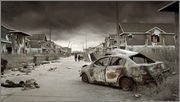
“Bombardavano tutto, e io ero lì in un angolo con quest’aria – che altra aria puoi avere se forse tra un minuto muori? – e Jonathan mi squadra e mi fa: ‘Questo non è un posto per donne’. A uno così, ma che vuoi dirgli? ‘Idiota: questo non è un posto per nessuno’.”
Il 21 agosto 2013 un attacco chimico alla periferia di Damasco ricorda al mondo l’esistenza della guerra in Siria, già in corso da due anni. L’intervento occidentale sembra imminente, decine di giornalisti accorrono alla frontiera per poi sparire delusi quando Obama decide di non bombardare. Lasciano dietro di sé 126.000 vittime accertate, 200.000 stimate, e oltre metà della popolazione sfollata o rifugiata nei paesi vicini: secondo le Nazioni Unite, la peggiore crisi umanitaria dai tempi della seconda guerra mondiale.
Francesca Borri copre per mesi la battaglia di Aleppo da reporter freelance e capisce presto di trovarsi su un duplice fronte: quello di una guerra senza regole, dove non esiste alcuna distinzione tra civili e combattenti, ma anche il fronte quotidiano dei rapporti con i caporedattori e gli altri giornalisti, in cui dominano cinismo, competizione, superficialità.
Un viaggio nella guerra, ma anche nei meccanismi a noi nascosti con cui viene costruito, e spesso distorto, il suo racconto. Un viaggio che investe come un colpo di mortaio tutto quello in cui crediamo – il lavoro, l’amicizia, le ambizioni – e ci costringe a non sprecare più niente della bellezza della vita.
Francesca Borri (1980), studi in relazioni internazionali, dopo una prima esperienza nei Balcani ha lavorato in Medio Oriente, e in particolare in Israele e Palestina, come specialista di diritti umani. Nel 2012 ha deciso di raccontare la battaglia di Aleppo come giornalista freelance, e da allora, i suoi reportage sono stati tradotti in 21 lingue. Cinque anni e 500.000 morti dopo, vive ancora tra Siria e Iraq, e nei momenti di tregua, racconta i palestinesi per «Yedioth Ahronoth», il principale quotidiano israeliano.
As a Syrian I found this book very accurate in many parts, and reflects on how some people are suffering while the others enjoy the luxuries of life, and the contrast in living in such one country. However, the Syrian crises isn't a matter of "Suni-Shie" fight but of thirst for power like many other countries and dictators before, and also the book covers the early days of the Syrian revolution and crisis, therefore it only gives a peak on how this started but not how it involved.
"Commitment". L'impegno e la passione. Francesca Borri racconta i suoi due anni in Siria come reporter freelance: due anni di una guerra in gran parte sconosciuta al mondo (o volutamente dimenticata); racconta, giorno per giorno, di un popolo abbandonato e di una situazione perennemente in stallo: per due anni niente sembra cambiare, se non il numero dei morti, degli sfollati, dei rifugiati (perché torni ad Aleppo, ogni volta, e tra gli sfollati è sempre tutto uguale: cambiano solo i nomi); di una situazione sempre più confusa e complicata, sempre più difficile da analizzare, interpretare. Richiede tempo, richiede studio, richiede pazienza; e richiede presenza, anche se la Siria, poi, è lontana persino quando stai in Siria. Per due anni, con coraggio e sincera passione per il suo mestiere, ha vissuto (se vita era quella) tra la gente, sotto il tiro dei cecchini e i colpi di mortaio, nella parte di Aleppo distrutta, o al confine tra gli sfollati. Perché? Perché una volta che hai visto, semplicemente, non puoi più non vedere [...] e quale che sia la tua scelta, sei responsabile;[...] ci siamo tutti, qui, in realtà. Chi tace e chi no. Chi guarda e chi nega. E racconta anche i suoi due anni di guerra parallela, assurda, all'interno di un giornalismo mondiale non solo superficiale e falso, ma perfino inumano e perfido, lei, Giornalista come pochi. Una scrittura veloce, spiazzante, svincolata, martellante; vera. Corre avanti per poi tornare indietro; a volte sterza, si ferma improvvisamente. Ripercorre i suoi passi. Perché così si è abituata a muoversi in quei due anni: sempre all'erta per tutto, sempre di corsa sotto il fuoco di tutti, dentro a una guerra che sembra la follia, e con la guerra anche dentro di sé (e la battaglia ci si schianta addosso...bisogna spostarsi, e rapidi. [...] Corriamo via come topi, la testa bassa, il secondo colpo che si abbatte ancora più vicino: corriamo ancora più veloci, il terzo, il quarto - ma la trincea è finita.). Eppure senza urlare, perché si blocca anche il respiro quando devi scappare per salvarti la vita. E finisce che anche tu, lettore, ti senti completamente dentro, vivi le sue stesse guerre in prima persona, con le stesse ansie e gli stessi orrori, con tutti gli interrogativi e tutte le sofferenze; fino a ritrovarti, nelle ultime pagine del libro, immerso nella sua stessa calma, nelle riflessioni amare per la sensazione di fallimento e di delusione, come giornalista e come persona; pagine che superano, per intensità e lucidità, ogni altra. Un'analisi competente e approfondita, appassionata e critica. Uno specchio reale e amaro della situazione di appena ieri; situazione che risulta, oggi, sempre più confusa, sempre più tragica.
Sembrano strade, sono La strada di Cormac McCarthy. [...] Solo una grandinata di kalashnikov, all'improvviso, ti risveglia - fuori si ricomincia a sparare, è l'unico segno di vita. Fuori qualcuno muore, qualcuno non è ancora morto. [pag. 107]
Uno dei libri più belli letti nel 2014, pur non essendo un romanzo. Reportage di guerra appassionato e schietto; lucido; reale. Soprattutto reale, in un'epoca in cui la realtà si mistifica, in ogni forma e con ogni scusa. Un cammino di consapevolezza, rapido e ripido. Un inno implicito alla vita. E alla vitalità. La descrizione attonita degli accadimenti bellici Siriani. A condimento, un contorno di situazioni terze, satellitari alla guerra, che con la guerra hanno a che fare, e dalla guerra (di altri) traggono nutrimento. Certi aspetti del giornalismo, ad esempio, immutati nel tempo (vedi libro equivalente, del 1936, firmato da Evelyn Waugh In Abissinia). Il saprofitismo di alcuni professionismi descritto, anzi fotografato, in tutto il suo sconcio sapore. Senza paura. Con la franchezza del precariato che non si fa ossequioso. Tanto basti. Un libro che si trangugia. Da applauso. Per tanti buoni e sani motivi.
Francesca Borri ci racconta, finalmente, cosa succedeva e sta succedendo veramente in Siria. Senza pregiudizi, senza quel velo di ipocrisia messo in atto molto spesso dalla stampa "ufficiale" per non disturbare il manovratore. Lei è stata sul campo, ha visto coi propri occhi e ha rischiato per raccontarci "una storia vera". Come per l'Iraq, la Libia, la Somalia e altri teatri di guerra, anche per la Siria penso si possa tutto sintetizzare nella citazione che l'autrice riporta a pag. 164 del libro: "esiste sempre una soluzione semplice per un problema complesso: quella sbagliata". Finalmente qualcuno che ci ha raccontato la soluzione sbagliata.
Borri's writes as a witness to the horrors of the Syrian conflict. Her only side is that of the Syrians themselves. Her writing is more poetry than prose, and captures in ways no news report I have ever read the horrors of war and the culpability of almost everyone: the hypocrisy of Western governments and their failure to act; NGOs, who happily collect money, but won't cross the border to deliver aid; reporters who are only there for their next big story, and leave as soon as prize season is past; media organizations who only want to talk about deaths, but never about causes; the horrors of bombing raids, on bread queues and hospitals; people (men, women, children) dropping in front of you from sniper fire; planes flying overhead deciding who is to die next; women giving birth in underground tombs, living in sewers with their children, under bombed out cities; death everywhere; constant war; no hope.
The Italian journalist Francesca Borri texted me last week. Her message read, "I am just back from the Maldives...the non-Arab country with the highest number per capita of ISIS fighters, I have been a month with them."
She had interviewed me a few years back and I remember her as being of high integrity and intellectually sharp, unlike most journalists these days. She was back in Ramallah, while awaiting permission to enter Gaza, and wanted to see if we could meet up. She had a book of hers she wanted to gift me.
We met for ice cream a few days later. Francesca proudly passed me her newly translated book, Syrian Dust, and we chatted about her coverage of the war in Syria and her work elsewhere. An amazing person she is, to say the least. We parted and on my way to the car I opened the book to read the inscription. It read, "FOR SAM...MAY BEAUTY NEVER ELUDE YOU AGAIN f." I was not quite sure what she meant. Then I read the book! I now know exactly what she meant.
Syrian Dust is about the collapse of Syria, but it's more than that. It's about the Syrian people paying the price for all of this madness. If you have had, like I did, a hard time understanding how millions of Syrians would risk taking their family, or what remains thereof, and cross the Mediterranean Sea by boat to chance making it somewhere, anywhere, read this book.
Additionally, Francesca takes on an angle which has become taboo to address, the art (and business) of journalism in today's day and age. She bravely calls it out, the journalists, the editors, the papers, the fixers, etc. She rightly points a finger at all those so-called journalists who excitingly write about anything and everything from the comfort of their air conditioned newsrooms, never even seeing the places or people they write about. Francesca, who can now be classified as a war correspondent, is an old-fashion journalist, the few that write from the field, the few that see the eyes of the people thy cover, not only events. My hat is off to her.
To give you a tiny taste of her character, she writes:
"And it’s as if this war has robbed you not of humanity, but has suddenly and still more violently, as if—as if—it’s left you naked in front of the mirror, exposed for what you really are, because you’re all that matters in your life, it bleeds to admit it, but this war hasn’t robbed you of anything, of anything, your humanity, your diverse selves, simply—never existed. All that matters is you. And what kind of a life is a life like that?" ~Francesca Borri, Syrian Dust (2016, Seven Stories Press)
The publisher, Seven Stories Press, notes that "Syrian Dust is a raw and powerful account of the Syrian war that throws the reader right in the middle of it, without any shelter." I totally agree.
I end by passing a message to Francesca here: "FOR FRANCESCA...BEAUTY WILL NEVER ELUDE YOU, BECAUSE YOU ARE BEAUTY ITSELF s."
Francesca, I don't know where I've read it but it also applies to you: You write like breathing. You write like breathing yet, what you write about is so horrible, so horrifying, so absurd; senseless, that it leaves me exhausted: breathless. I can't understand that drive -I'm only a waiter-, the drive to run into a hell while everybody else with a bit of common sense and the possibility to do it is desperately trying to flee away from it, but I thank you. And I fear for you. Even though I don't know you, even though I'll never meet you, even though this book isn't about you, I fear for you. That's the power of good writing. The power to engage other human beings into alien situations, and make them care. That's what you are fucking doing. And I fucking thank you for it.
I first encountered Francesca Borri's writing the same way many did – by reading her much-shared article about the second-class treatment of freelancers on the frontline. And it's exactly this sort of fame which distresses Borri, as she was never the story. It should always have been Syria.
If Borri is still carrying this insidious guilt, she deserves the comfort of knowing that her book will speak to people. And by speak, I mean shout. She captures the complexity and muddied politics of a ruined country through a human lens, and the immense suffering and wasted lives are never secondary concerns. Nor should they be. Because at the end of the day, war is always more than right or wrong. It's about people and their stories – and these should never be forgotten.
An absolute must read for those interested in the Syrian War and Aleppo. Part reporting, part memoir, she does an excellent job not only shining the light on Syria but also on the nonsense of her professional circles and journalism in general.
She has a real knack for making you want to curl up in a ball due to the human suffering element; then hitting you with a acerbic black wit 2 liner that almost makes you feel bad for laughing. This one/two punch style does a superb job of communicating the absurdity that is life in a combat zone, and Ms. Borri clearly has the talent to pull it off.
I obviously couldn't put it down, while not a huge book, I read it in 2 days. Highly recommended.
This book gives you a unpolished view of what the war in Syria looks like, without any villains or good guys. It is a raw report from the front lines that reflects on the ignorance of the West that has the power to construe the Syrian narrative.
I wish all those young people who are gung-ho about fighting and warfare would read this book. I wish all the world leaders and people with any international influence whatsoever would read this book. I wish we would not only read books like this but remember the tragedies and let them move us to seeking and creating peace in our families, our communities, and our world.
A great book and an honest narrative of Syria and Syrians during their darkest hours, which did not turn to be their finest. Borri takes you to the corners one never heard or noticed in the media, telling you Syrians' stories, describing their pains and daily lives. She covers the story of an abandoned people, who are left helpless and defenseless, while their homes, cities, and country become the battlefield for foreign powers and their mercenaries. It is a must-read.
A sad read. Written by an Italian journalist, this is a harrowing and honest look into Syria seven years ago. She very starkly described what she saw, what she learned, what she heard, and how it all affected her. I hope she got some good therapy after this. It is clear she carried the pain and trauma of what she saw even after she left.
E’ un libro importante che credo possa essere una testimonianza essenziale se si vuole (provare a) comprendere veramente la guerra in Siria, se si ha voglia di avere coraggio e aprire gli occhi sul medio oriente, su Aleppo, su Assad. Se si ha il coraggio di guardare oltre le foto che impietosiscono, l’informazione che non informa più oltre il pressapochismo e il sensazionalismo dei titoli a effetto, i luoghi comuni che fanno comodo al mondo che ci sovrasta e ci manipola e – in fondo – anche a noi. È uno sguardo partecipato e attento sulla guerra e sulle guerre, sulla verità separata dalle convenienze, sull’informazione che ci viene propinata e sulla formazione della nostra coscienza di esseri umani. Un accorato e accurato parziale squarcio di verità come un sasso in uno stagno paludoso dove la verità non ci interessa più perché ci sentiamo rassicurati, progressisti e dalla parte del giusto, per molto meno. Se vi sentite a posto solo perché avete letto il diario di Anna Frank e perché condividete quattro foto ad effetto sul medio oriente lasciate perdere questo libro e rimanete pure nel dormiveglia. Questo libro potrebbe davvero turbarvi. L'autrice, classe 1980, è una giornalista freelance che ha passato parecchi mesi dentro Aleppo, dentro la guerra e la morte, oltre ogni convenienza per la passione civica e morale di testimoniare la verità.
This is the most powerful book I have read since Walden. Thank you Francesca Borri for barring witness for those in Syria. Words cannot express the emotions I have after reading this book! Nothing makes sense in the world to allow false politicians to turn a blind eye to the atrocities in Syria. We all should feel shame.
Racconta non della guerra in Siria in sé forse, pur essendo ambientato in buona parte in quello scenario di guerra e raccontandola da dentro per quanto possibile.. o meglio, non racconta solo della guerra in Siria. Un filo conduttore che segue tutto il libro in una sorta di binario parallelo che si intreccia più volte è una forte critica al mondo del giornalismo sotto diversi punti di vista. Numerosi anche i riferimenti agli equilibri politici globali. Molto interessanti le domande che la giornalista/scrittrice si pone in prima persona, in una riflessione che sembra portare al non perdonare e non perdonarsi di non aver fatto abbastanza per i siriani a livello politico, giornalistico e umanitario. Da approfondire gli spunti dati dalle numerose citazioni di colleghi fotografi e giornalisti e ad un professore di diritto internazionale (Cassese). A volte un po' un giornalismo di pancia, e a volte ti arriva dritto un pugno nello stomaco… Anche se tra le parole del suo alfabeto non mi sembra di aver trovato né "R di rabbia" né "S di smarrimento" sono due dei sentimenti che mi sembrano emergere leggendo le sue parole… ma forse è vero, un giornalista non è un notaio che deve limitarsi a riportare numeri e fatti…"Lo sanno tutti i giornalisti che una cosa sono le informazioni, un'altra il giornalismo, che è quello che si costruisce a partire dalle informazioni."
I would gladly read anything that Francesca Borri writes that gets translated into English from her native Italian. Syrian Dust: reporting from the heart of the battle for Aleppo, is a devastating critique of the Syrian conflict and its horrors; and Borri's account can be seen as either incredibly cynical or absolutely realistic. I suspect the latter is closer to the truth since her account ends in 2014 and NOTHING about the war has changed except to have grown worse. Now instead of coping with barrel bombs taking out a building, the Syrians experience Russian jets with high-explosive bombs taking out city blocks. Syrian Dust is a must-read for anyone interested in the Middle East, not just for those interested in the Syrian situation. No organization comes off well in Borri's account, not the Syrian government, not the international community, not the NGOs, not the fighting factions, and not the Press. Borri is even self-critical. There are no winners in Syria.
Syrian Dust is very raw and powerfull book about real people, Syrians trying to survive in war torn Syria. For the most part book is good and I recommend it to everyone who is interested in Syrian war and people. But on the other hand text is sometimes really pathetic and like author is saying "im really streesed, look at me". I really didn't like that preachy part. Other thing that bothered me was her unqestioning support for Syrian opposition. Like she never, not once even tryes to give a glimpse of how supporter of Syrian goverment even thinks. It is really black and white for her, Bashar al-Assad and his supporter are bad, Syrian opposition is good. It is never that black and white and it sucks that she bends her jurnalistic integrity because she likes one side and blindly hates the other side. My biggest no no to the book is when mr. Borri explicitly supports Barack Obamas war intervention in Syria, like is she crazy or what, so much love for Syrian people that they need to suffer even more. So stupid.
So good to read something unselfish in this genre of writing/reporting. So objective and concise, you read her paragraphs and you can really see it, it made me feel sick. Not out for her own benefit in writing this, that's the way it feels, and from a woman's perspective again is always different, she's not paying lip service to anyone or anything. Some perspectives in here that are hard to find - such as the true state of humanitarian involvement for one. The only thing was the printing style... the paper has tatty edges, like it had been 'in a war' or was 'from somewhere rough', that was a bit indulgent/naff.
I’m usually fascinated with anything about Syria and the Middle East. This book didn’t grab me at all. Made it to page 60 and then read a few more pages later on before calling it quits. The author is an Italian journalist who tells stories from her time on ground between 2012 and 2014. Expected more.
So real, unbiased, detailed reporting of time spent in Aleppo during the Syrian War. So amazingly tragic to live there with the civilians who are trying hard to make it, which in turn, makes this book difficult to put down.
One of the most difficult books I've ever read due to the content. Although Borri isn't Syrian, I felt that it was a blunt and accurate reporting. This book is not for the faint of heart, but it's such an important read. Especially with the 12 year anniversary of the conflict coming up.