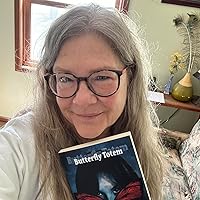
When he learns of his cousin’s strange death, Michael Bloom, a gay, obese college instructor, realizes he must lose weight to avoid a similar fate. He must also end his food/sex relationship with Tabitha Gould, a high-powered attorney with an unusual obsession. While looking for a gym, Bloom meets Cole Parker, the bisexual African American general manager. After Tabitha literally kicks Bloom out, he and Cole hook up. That ends, too, but then Tabitha gives Bloom an offer he can’t refuse. Just as they’re pronounced husband and wife, Cole bursts in and…
Hello, hopefully consumer/fan! I am Curtis Andrew Burton (friends and family call me Tony). I am the author of two novels: Jacob's Letters, which I published in 2019, and Bloom, which I published in April of this year. The two books couldn't be more different: Jacob's Letters is a serious work, an "epistolary bildungsroman," which is a fancy way of saying it's a coming-of-age story told through correspondence. Bloom, however, is a comedy (with a little seriousness) about a gay, obese college instructor who, after hearing of his cousin's demise (he expires in front of his TV while watching fat lesbian porn) decides to make big changes in his life so he doesn't end up like him. While JL was composed from existing information, people and events, Bloom is entirely from my imagination, something I thought I'd lost after finishing the first book. I hope you take the opportunity to check out both my books: they're very accessible, thought-provoking and, above all, entertaining! Thanks for reading!
The first thing Michael Bloom's dead cousin Ronnie gives him is a mirror. Ronnie died alone in his apartment, undiscovered for days, pants around his ankles, his body adhered to the upholstery of his recliner. He was a Tuesday. And Bloom, forty-two years old, obese, closeted, eating Cap'n Crunch alone in his kitchen, recognises the reflection with a clarity that frightens him more than the death itself. This is how Curtis Andrew Burton's second novel begins: with a man staring into the future and deciding, quietly and without fanfare, that he will not be Ronnie.
What follows is one of the more surprising novels you are likely to read this year. Surprising because it does something few novels attempt: it takes an unglamorous, overweight, middle-aged, closeted English lecturer completely seriously as a romantic subject, and makes you believe every page of it.
Burton wastes no time announcing his intentions. The opening paragraph does not describe Bloom's weight so much as perform the cultural act of naming it, piling synonym upon synonym, "heavy, fleshy, meaty, beefy, stocky, rotund, roly-poly," until the reader feels the weight of language before the weight of the man. It is sophisticated technique doing double work: it establishes Bloom's physical reality while simultaneously indicting the world's obsession with cataloguing bodies like his. A novel called Bloom about a man who has spent four decades contracting, making himself smaller, invisible, apologetic, announces its central irony before the first chapter is finished.
The plot, stripped bare, sounds like a self-help pamphlet. Man has crisis. Man finds therapist. Man joins gym. Man loses weight. Man finds love. But Burton understands something most feel-good narratives miss: transformation is unglamorous, granular, and slow. It looks like a kitchen purge, six garbage bags of Cap'n Crunch and Sugar Frosted Flakes and Pop Tarts and Cocoa Puffs driven to a dump. The reader who remembers that these were named lovingly in Chapter 1 as the foods of Bloom's childhood, the foods his mother gave him, feels the weight of what is being thrown away. And it is not calories.
The novel's greatest structural gift is Agnes Dellacourt. Elderly, Black, Southern-inflected, cigar-smoking, Renoir-loving, and possessed of a Chanel suit for every emotional occasion, Agnes is the first person in Bloom's life who sees him clearly. She sees the man beneath the weight, beneath the loneliness, beneath the meticulously maintained routines of a life designed to keep the world at arm's length. She sees all of it in a single fifty-minute session. Warm without being soft, clinical without being cold, she pivots without warning from cheerful irreverence to the flat, sudden question "Michael, do you ever think of suicide?", and the reader feels the shift the way Bloom does: a trapdoor opening in perfectly ordinary floor. She saw something. We are not entirely sure what. That precision of mystery is the point.
Agnes is also, consistently, the novel's funniest character. Her frilly white top with the big blue bow. Her wry delight on learning that her gym referral led directly to a bedroom. Her pros and cons list, weighed with equal gravity between Marvin Gaye and Barry Manilow, that ends in a coin toss because, as she correctly diagnoses, some decisions live below the reach of reason. The coin lands. Bloom looks at it and feels something unexpected: relief. That single word is the novel's bravest. It tells us everything the coin cannot. Bloom has chosen Tabitha. Some part of him needed it to land there. The reader senses, correctly, that the story is not quite over.
Cole Parker, the gym owner who becomes Bloom's love, is introduced with formal brilliance: his face hidden behind a Covid mask for almost their entire first encounter, assembled feature by feature, the diamond studs catching the light, the deep warm voice, the sepia almond-shaped eyes glimpsed for just an instant. The reader falls for Cole the way Bloom does, gradually, almost against his will. When Bloom thinks he might be falling in love, the recognition arrives the way the truest recognitions do: sideways, as surprise. It is the only register that would work for a man who has spent forty years guarding himself from this particular feeling.
Cole's arc is the novel's most psychologically complex achievement, and its most politically honest. A wealthy, prominent, publicly masculine Black man in his fifties, Cole has kept his sexuality managed rather than inhabited, operating on the down low. His argument, delivered in a hammock, that being gay is "a white thing," is the product of a specific history, a specific community, a specific set of pressures that Bloom, for all his intelligence and all his own suffering, has simply never had to contend with in the same way. Burton writes Cole as a man shaped by forces, and in doing so makes his eventual declaration down the synagogue aisle something genuinely costly, therefore genuinely moving. The asymmetry between Bloom's freedom and Cole's persistent inability to grant himself the same is the novel's central tension, named without editorialising. That restraint is what gives it force.
The conversation about race and attraction in Chapter 8 is the novel's most important dialogue, and it earns that distinction. When Bloom uses the word "specimen" and Cole immediately, surgically pushes back, "Like a test sample in a science project?", the novel establishes that this relationship will hold both men accountable, and it does so before they have even kissed. That quality elevates what might have been a straightforward late-life romance into something considerably more honest about the politics of desire.
Tabitha Gould, Bloom's long-time sexual partner, is one of the novel's richest comic creations. A woman who has assembled her face from other women's best features: nose like Streisand, lips like Jolie, chin like Witherspoon. A woman whose marriage proposal is motivated primarily by a corporate acquisition of the Hetty Pig brand. Her deepest love has always been consistent and honest. She has simply been honest about the wrong things. "Ditto," she says, for her wedding vows. The most Tabitha sentence in the novel, and somehow, almost generous.
The wedding chapter is a masterclass in sustained farce that holds the human emotion underneath it without flinching. Rabbi Shulman has a bris in Waban at 6:30. The rings are in a purse. Winnie runs up the aisle. The ring rattles on the floor. And beneath all of it, Bloom walking toward a life he chose with his head, because his heart was pointing somewhere the rest of him was not yet ready to follow. Burton earns every comic beat because the stakes beneath them have been so patiently built across eleven chapters.
On the way to that wedding, Bloom stops the limousine at McDonald's. He orders a Quarter Pounder, large fries, a Coke, chocolate chip cookies. It is ceremony. An old friend, ordered one final time, before the life about to begin. The man who filled six garbage bags with his childhood and drove them to a dump is allowing himself one last meal of the person he used to be. There is more dignity in that stop than in anything that happens inside the synagogue.
Where Bloom falters, it falters consistently and in ways revision could address. Burton's most persistent habit is announcing feelings the prose has already earned. "He was having conflicting feelings" arrives after a scene that has spent pages demonstrating exactly which feelings those are. The novel occasionally loses trust in itself, reaching for the explicit statement when the image has already spoken more eloquently. A recurring agricultural metaphor, deployed to describe Bloom's physical desire for Cole, sits oddly against the novel's otherwise urban, literary prose voice. These are the problems of a writer whose instincts are strong and whose second impulse is sometimes to explain the first one. The revision note is simply: resist.
The levitation sequence that closes the novel, Bloom and Cole's kiss lifting them through the synagogue skylight and into flight, is the right instinct and the novel's most uneven execution. The passage holds the lyrical and the explicitly physical in the same hand but has not yet learned to grip them equally. This is the novel's one unfinished room. It knows where it wants to go. It needs one more careful pass to arrive.
But then: Cole Parker walking down that aisle saying the names aloud. Bayard Rustin. James Baldwin. Langston Hughes. Alvin Ailey. Men whose names he has been reluctant to claim all novel long, announced now in front of a congregation of lawyers and Hetty Pig enthusiasts, because a man he loves is about to marry the wrong person. He is declaring himself. For the first time. In public. At full cost. That this costs him everything he spent fifty years quietly protecting is the measure of what Bloom has done to him, which is exactly what Agnes did to Bloom: made him too honest to keep hiding.
Bloom is a novel about claiming a life before it is too late. A story about the quiet, irreversible, terrifying decision to stop letting your life happen to you and start making it yourself. It holds comedy and grief in the same hand without dropping either, and it does what Burton's first novel, Jacob's Letters, suggested he might one day do: it takes a man nobody would cast as anyone's hero and watches him, slowly, at real cost, become the hero of his own story. He had blossomed. Three words. Twelve chapters. Every one of them earned.
This book surprised me. What begins as a story about weight loss turns into something much deeper, a meditation on loneliness, love, and what it means to truly change.
In Bloom, Curtis Andrew Burton delivers a daring, genre-blending narrative that resists easy categorization. Equal parts character study and satirical drama, the novel explores the consequences of unchecked desire whether physical, emotional, or psychological through the lens of its deeply imperfect protagonist, Michael Bloom.
Rather than offering a conventional arc of redemption, Burton presents transformation as chaotic and often contradictory. Michael’s motivation to lose weight following his cousin’s death initially frames the story as one of self-improvement, yet the novel quickly complicates this premise. His entanglements with Tabitha Gould and Cole Parker are not merely romantic subplots; they function as extensions of his internal conflict, reflecting his oscillation between control and indulgence.
One of the novel’s most striking qualities is its refusal to sanitize its subject matter. Burton writes with an unfiltered directness that foregrounds uncomfortable truths about dependency, particularly the blurred lines between physical appetite and emotional need. This thematic boldness is reinforced by the author’s use of dark humor, which at times feels biting and irreverent, and at others, intentionally disorienting.
The characterization is intentionally exaggerated, occasionally bordering on caricature, yet this stylistic choice aligns with the novel’s satirical undercurrent. Tabitha, in particular, emerges as a figure of both fascination and unease her presence destabilizes the narrative and challenges traditional portrayals of power and desire in romantic fiction. Meanwhile, Cole Parker introduces a quieter, more grounded counterbalance, though his role may feel underexplored in comparison.
From a structural standpoint, the novel moves quickly, favoring momentum over introspection. While this keeps the narrative engaging, it can also limit emotional depth in key moments, especially during pivotal relationship shifts. Readers seeking a more nuanced psychological exploration may find certain developments abrupt.
Despite these limitations, Bloom succeeds in carving out a distinctive voice. It is a novel that prioritizes confrontation over comfort, inviting readers to grapple with its themes rather than passively consume them. Burton’s work stands out for its willingness to push boundaries both thematically and stylistically even at the risk of polarizing its audience.
Verdict: Bloom is an audacious and unconventional novel that will appeal to readers interested in character-driven fiction with a sharp, provocative edge. Its blend of dark humor and emotional intensity makes it memorable, if not always easy to digest.
Curtis Andrew Burton’s Bloom is a provocative and unconventional novel that blends dark humor, romance, and social commentary into a narrative that challenges both its protagonist and its readers. At its core, the story follows Michael Bloom, a deeply flawed yet compelling college instructor whose life is shaped by excess food, sex, and emotional dependency until a family tragedy forces him to confront his mortality and destructive habits.
Burton crafts a narrative that is unapologetically bold, tackling themes of body image, addiction, identity, and self-worth with a tone that oscillates between satirical and deeply introspective. Michael is not an easy character to sympathize with; however, this complexity is precisely what gives the novel its edge. His journey toward transformation physical, emotional, and moral is messy, nonlinear, and at times uncomfortable, reflecting a raw realism that resists romanticization.
The supporting cast adds further dimension to the story. Tabitha Gould, with her intense and unconventional desires, serves as both a catalyst and a mirror to Michael’s own compulsions, while Cole Parker introduces a contrasting dynamic that explores vulnerability, masculinity, and sexuality. Through these relationships, Burton examines the intersections of power, intimacy, and self-destruction.
Stylistically, the novel leans heavily on humor often dark, sometimes abrasive which may not appeal to all readers but effectively underscores the absurdities of the characters’ choices and circumstances. The pacing is brisk, and the narrative rarely lingers, pushing the reader forward through a series of dramatic and often unpredictable developments.
That said, Bloom is not without its challenges. Its explicit content and boundary-pushing themes may feel excessive or alienating to some audiences, and certain character arcs can appear abrupt or underdeveloped. Nevertheless, these elements also contribute to the book’s distinctive voice and willingness to defy conventional storytelling norms.
Ultimately, Bloom is a daring and polarizing work that will resonate most with readers open to its unfiltered exploration of human desire and transformation. Burton delivers a novel that is as unsettling as it is thought-provoking, leaving a lasting impression through its audacity and emotional intensity.
Curtis Andrew Burton’s Bloom operates as a layered exploration of transformation not as a triumphant narrative of self-improvement, but as a complicated, often destabilizing process shaped by impulse, dependency, and identity conflict. Beneath its provocative premise lies a study of control: who possesses it, who relinquishes it, and how it is negotiated through relationships.
Michael Bloom’s inciting fear triggered by his cousin’s death initially frames the novel within familiar territory: the pursuit of physical change as a means of survival. However, Burton quickly subverts this expectation. Weight loss, rather than serving as a clear path toward redemption, becomes entangled with Michael’s unresolved emotional compulsions. His relationship with food mirrors his relationships with others, particularly Tabitha Gould, whose dominance and unpredictability complicate any straightforward reading of intimacy.
The novel’s engagement with sexuality is central, not incidental. Burton uses it as a narrative mechanism to expose vulnerability and power imbalance. Tabitha is written less as a traditional romantic partner and more as a disruptive force one who destabilizes Michael’s already fragile sense of self. In contrast, Cole Parker offers a different model of connection, though his presence ultimately highlights Michael’s inability to sustain equilibrium rather than resolve it.
Stylistically, Burton embraces excess both in content and tone. The prose often leans into discomfort, deliberately resisting subtlety in favor of immediacy. This approach amplifies the novel’s thematic concerns but can also create a sense of narrative overcrowding, where multiple ideas compete for attention without full development. For some readers, this intensity will feel immersive; for others, it may feel overwhelming.
Importantly, Bloom challenges the notion that transformation is inherently positive or complete. Michael’s journey suggests that change without self-understanding risks becoming another form of self-destruction. This refusal to provide clean resolution is one of the novel’s most compelling and divisive qualities.
Bloom by Curtis Andrew Burton is a bold, unconventional novel that blends dark humor, romance, and personal transformation into a story that’s as provocative as it is entertaining. At its core, the book explores themes of self-worth, addiction, and the complicated ways people seek validation—often through unhealthy relationships.
Michael Bloom is not your typical protagonist. As a gay, obese college instructor grappling with the shock of his cousin’s death, he’s forced to confront his own mortality and the destructive habits that define his life. His journey toward self-improvement is messy, nonlinear, and often uncomfortable—which makes it feel authentic. Rather than offering a neatly packaged redemption arc, Burton leans into the chaos of change.
The relationships in the novel are particularly striking. Tabitha Gould is a larger-than-life character whose obsessive and domineering personality adds both tension and dark comedic flair. Meanwhile, Cole Parker introduces a different dynamic—one that is more emotionally grounded, yet still complicated. The push and pull between these characters creates a narrative that is unpredictable and, at times, deliberately over-the-top.
Burton’s writing shines most in its humor. The dialogue is sharp and often outrageous, balancing the heavier themes with moments of levity. However, the same exaggerated tone that makes the book entertaining may not appeal to all readers; some may find the characters’ actions and motivations extreme or difficult to fully connect with.
At just over 150 pages, Bloom is a quick read, but it manages to pack in a surprising amount of emotional and thematic depth. It’s a story about confronting uncomfortable truths—about the body, desire, and self-control—and it doesn’t shy away from being messy or controversial.
Overall, Bloom is an audacious and memorable novel that will resonate most with readers who appreciate dark humor and flawed, unconventional characters. It may not be for everyone, but it’s certainly a book that sparks conversation.
Curtis Andrew Burton’s Bloom is a bold and unconventional exploration of identity, desire, and personal transformation wrapped in a darkly comedic narrative. With a premise that immediately sets it apart, the novel follows Michael Bloom a deeply flawed yet compelling protagonist as he confronts both physical and emotional challenges in the wake of a family tragedy. Burton does not shy away from complexity. Michael is portrayed with raw honesty: a gay, obese college instructor grappling with self-worth, unhealthy habits, and complicated relationships. His dynamic with Tabitha Gould a powerful attorney with an intense and unusual attachment adds a layer of unpredictability that keeps the narrative engaging. Meanwhile, the introduction of Cole Parker brings both emotional depth and tension, offering a contrast that highlights Michael’s internal struggle between comfort, change, and self-acceptance. What makes Bloom particularly striking is its willingness to blur the lines between humor and discomfort. Burton’s writing leans into dark comedy, using it as a tool to explore sensitive themes such as body image, sexuality, and dependency. At times, the narrative may feel exaggerated or chaotic, but this appears intentional mirroring the instability in Michael’s own life. The novel’s pacing is brisk, with dramatic turns that may catch readers off guard, especially toward the climax. While some readers might find certain plot developments abrupt or over-the-top, others will appreciate the unpredictability and the way Burton challenges conventional storytelling norms. Ultimately, Bloom is not a traditional romance or self-improvement story it is a messy, provocative, and at times uncomfortable journey toward self-realization. Readers who appreciate character-driven fiction with edgy humor and unconventional relationships will find this book both engaging and thought-provoking.
Bloom by Curtis Andrew Burton is a bold, unconventional novel that blends humor, romance, and personal transformation in a way that feels both chaotic and deeply human.
At its core, the story follows Michael Bloom, a character who is far from the typical romantic lead. He’s flawed, vulnerable, and often makes messy decisions but that’s exactly what makes him compelling. His journey begins with fear triggered by his cousin’s death and evolves into something much more complex: a struggle with identity, self-worth, and the relationships he uses to cope.
What makes this book stand out is its unapologetic exploration of taboo and uncomfortable dynamics, particularly Michael’s relationship with Tabitha. It’s strange, intense, and at times shocking, but it also highlights how ადამიანები can become trapped in unhealthy patterns. The introduction of Cole brings a different energy more grounded, yet still complicated which adds depth to Michael’s emotional journey.
The tone shifts between dark humor and raw honesty, which keeps the story engaging. It doesn’t try to present a polished or idealized version of growth. Instead, it leans into the awkward, sometimes absurd reality of change.
If there’s one thing to note, it’s that the plot can feel unpredictable and even a bit chaotic, especially toward the climax. But that unpredictability also mirrors Michael’s inner turmoil, making it feel intentional rather than careless.
Overall, Bloom is not a conventional romance or self-improvement story. It’s messy, provocative, and at times uncomfortable—but also honest and oddly relatable. It’s a book for readers who appreciate flawed characters and aren’t afraid of stories that push boundaries.
Curtis Andrew Burton’s Bloom is a bold, unconventional novel that blends humor, romance, and personal transformation in a way that feels both messy and deeply human. At its core, the story follows Michael Bloom, a flawed but compelling protagonist whose journey toward self-awareness is anything but straightforward.
What makes Bloom stand out is its willingness to tackle uncomfortable themes—body image, dependency, and the complicated intersections of love and desire. Michael’s relationship with Tabitha is intense and often unsettling, highlighting the blurred lines between emotional need and self-destruction. In contrast, his connection with Cole introduces a different kind of vulnerability, though it’s just as imperfect and fleeting.
Burton writes with a sharp, often dark sense of humor that keeps the story engaging even when the subject matter becomes heavy. The characters are exaggerated at times, but that seems intentional, reinforcing the novel’s almost satirical tone. Not every moment feels polished, but that rawness adds to the authenticity of Michael’s journey.
The plot takes unexpected turns—especially toward the end—which may feel chaotic to some readers, but it ultimately reflects the unpredictability of real-life relationships and personal growth. If there’s a weakness, it’s that certain character arcs could have been developed more deeply, leaving a few emotional beats feeling rushed.
Overall, Bloom is a provocative and memorable read that won’t appeal to everyone, but for those open to its eccentricities, it offers a unique mix of humor, discomfort, and insight into the struggle for self-change.
Bloom by Curtis Andrew Burton is a bold, unconventional novel that blends humor, romance, and self-reflection into a surprisingly layered story. At its core, the book explores themes of identity, body image, and the complicated ways people seek validation through relationships.
Michael Bloom is not your typical protagonist. As a gay, overweight college instructor grappling with both personal insecurity and the shock of his cousin’s death, his journey feels raw and at times uncomfortably honest. Burton does not shy away from portraying Bloom’s flaws—his dependency on food, his questionable romantic choices, and his struggle with self-worth—which makes him feel real, if occasionally frustrating.
The dynamic between Bloom and Tabitha Gould is particularly striking. Their relationship is bizarre, toxic, and darkly comedic, serving as both satire and commentary on power and obsession. In contrast, Cole Parker introduces a different energy—more grounded yet still complicated—highlighting Bloom’s ongoing search for connection and meaning.
What stands out most is Burton’s tone. The humor is sharp and sometimes absurd, but it never completely undercuts the emotional weight of Bloom’s journey. The story moves quickly, given its short length, though at times the pacing can feel rushed, especially toward the dramatic conclusion.
Overall, Bloom is an offbeat and provocative read. It won’t appeal to everyone, particularly readers looking for a straightforward romance, but those open to messy characters and unconventional storytelling will find it engaging and thought-provoking.
Bloom by Curtis Andrew Burton is a bold, unconventional novel that blends humor, romance, and self-reflection into a surprisingly layered story. At its core, the book explores themes of identity, body image, and the complicated ways people seek validation through relationships.
Michael Bloom is not your typical protagonist. As a gay, overweight college instructor grappling with both personal insecurity and the shock of his cousin’s death, his journey feels raw and at times uncomfortably honest. Burton does not shy away from portraying Bloom’s flaws—his dependency on food, his questionable romantic choices, and his struggle with self-worth—which makes him feel real, if occasionally frustrating.
The dynamic between Bloom and Tabitha Gould is particularly striking. Their relationship is bizarre, toxic, and darkly comedic, serving as both satire and commentary on power and obsession. In contrast, Cole Parker introduces a different energy—more grounded yet still complicated—highlighting Bloom’s ongoing search for connection and meaning.
What stands out most is Burton’s tone. The humor is sharp and sometimes absurd, but it never completely undercuts the emotional weight of Bloom’s journey. The story moves quickly, given its short length, though at times the pacing can feel rushed, especially toward the dramatic conclusion.
Overall, Bloom is an offbeat and provocative read. It won’t appeal to everyone, particularly readers looking for a straightforward romance, but those open to messy characters and unconventional storytelling will find it engaging and thought-provoking.
Bloom by Curtis Andrew Burton is a bold, unconventional novel that blends dark humor, romance, and personal transformation into a compact but striking story.
At its core, the book follows Michael Bloom, a deeply flawed yet compelling protagonist whose life is shaped by grief, insecurity, and complicated relationships. His journey—sparked by the unsettling death of his cousin—pushes him toward change, both physically and emotionally. What makes this novel stand out is how unapologetically it leans into discomfort: the dynamics between Bloom and Tabitha are intense and often unsettling, while his connection with Cole introduces a different, more vulnerable side of him.
Burton’s writing is sharp and at times provocative, using humor to offset heavier themes like self-worth, addiction (both emotional and physical), and identity. The characters are messy and imperfect, which makes them feel real, even when their decisions are frustrating or extreme.
The plot moves quickly, and at just over 150 pages, it’s a fast read—but one that still manages to pack in surprising twists, especially toward the end. Some readers may find the story chaotic or the relationships exaggerated, but others will appreciate its unpredictability and rawness.
Overall, Bloom is not a conventional romance or comedy. It’s a story about transformation, desire, and the complicated ways people try to fill the gaps in their lives. If you enjoy character-driven narratives with dark humor and unconventional relationships, this book is definitely worth checking out.
Bloom is a bold, unconventional novel that blends humor, romance, and self-discovery in a way that feels both refreshing and deeply human. Curtis Andrew Burton delivers a story that isn’t afraid to explore complex themes—body image, sexuality, emotional dependency, and personal transformation—through a protagonist who is as flawed as he is relatable.
Michael Bloom stands out as a compelling central character. His journey begins with fear—sparked by his cousin’s mysterious death—but quickly evolves into something more layered. His struggle with weight, identity, and relationships feels authentic, often uncomfortable, yet ultimately engaging. The dynamic between Bloom and Tabitha Gould is particularly striking, offering a mix of dark humor and emotional tension that keeps the narrative unpredictable.
The introduction of Cole Parker adds another dimension to the story, bringing both warmth and complexity. Their connection feels real, even when it falters, highlighting the novel’s underlying message: growth is rarely linear, and relationships don’t always resolve neatly.
What makes Bloom stand out is its fearless approach to messy, imperfect lives. The humor is sharp, sometimes biting, and the romance is anything but traditional. Burton doesn’t offer easy answers, but instead presents a story about confronting one’s habits, desires, and fears head-on.
Overall, Bloom is an engaging and thought-provoking read that will resonate with readers who appreciate character-driven stories and aren’t afraid of a little chaos along the way.
Bloom by Curtis Andrew Burton is a bold and uncomfortable character study that doesn’t try to make its protagonist likable, and that’s exactly what makes it compelling.
Michael Bloom is messy, flawed, and often frustrating, but he feels real. His struggles with food, sex, and self-worth are portrayed with a rawness that can be hard to sit with at times. The relationships in the book especially with Tabitha and Cole are intense, complicated, and sometimes toxic, but they add depth to the story rather than just shock value.
What stood out most to me was how the novel explores dependency and identity. Michael’s journey isn’t a clean redemption arc, and that ambiguity makes the story feel more honest. The writing leans into dark humor, which helps balance some of the heavier themes, though the tone can shift abruptly.
This isn’t a light or easy read, and it won’t be for everyone. But if you’re interested in flawed characters and stories that dig into uncomfortable emotional territory, *Bloom* is worth your time.
Pros: Complex characters, bold themes, emotionally honest Cons: Uneven pacing, some relationships may feel extreme or hard to connect with
Bloom is a fearless and deeply human story that refuses to fit neatly into one genre. Curtis Andrew Burton crafts Michael Bloom as a flawed, complicated protagonist whose struggles with weight, self-worth, and intimacy feel raw and authentic. What stands out most is how the novel tackles uncomfortable truths about dependency, identity, and emotional vulnerability without softening the edges.
The relationships in this book are messy in the best way. Tabitha is both compelling and unsettling, while Cole provides a contrast that highlights Bloom’s emotional confusion rather than resolving it. The humor woven throughout prevents the narrative from becoming too heavy, but it never undermines the seriousness of Bloom’s internal battle.
This is not a feel-good romance; it’s a story about transformation, often painful and incomplete. Readers who appreciate character-driven fiction with moral ambiguity will find Bloom both engaging and thought-provoking.
Bloom by Curtis Andrew Burton is a quirky, unconventional novel that blends humor, romance, and personal transformation into a fast, engaging read.
The story follows Michael Bloom, a flawed but relatable protagonist struggling with weight, self-worth, and complicated relationships. His journey begins with a wake-up call after his cousin’s death, pushing him toward change not just physically, but emotionally. What makes the novel stand out is its willingness to tackle sensitive topics like body image, sexuality, and dependency with a mix of satire and sincerity.
The relationships in the book are messy and unconventional, especially the dynamic between Bloom, Tabitha, and Cole. These characters are far from perfect, but that’s part of the appeal they feel raw and unpredictable. The humor is often bold and sometimes absurd, which may not work for every reader, but it gives the story a distinct voice.
While Bloom aims to be a humorous and heartfelt exploration of self-improvement and love, it doesn’t always hit the mark. The premise is compelling a man confronting his health and identity after a family tragedy but the execution can feel uneven.
The protagonist’s voice, though intentionally comedic, may come across as overly self-indulgent, making it difficult for some readers to fully connect with him. Additionally, the relationships in the story—particularly the dynamic with Tabitha—can feel exaggerated to the point of implausibility.
Although the novel attempts to balance humor with deeper themes, the tone sometimes wavers, leaving the emotional impact less effective than intended. Despite its ambition and originality, Bloom may work better for readers who enjoy eccentric storytelling rather than those seeking a more grounded romance.
Bloom by Curtis Andrew Burton completely surprised me. What begins as a darkly humorous story about weight loss and self-control quickly evolves into something much deeper—a brutally honest exploration of identity, desire, and self-worth.
Michael Bloom is not your typical protagonist, and that’s exactly what makes this book so compelling. His struggles feel painfully real, especially the way food, sex, and emotional dependency intertwine in his life. The relationships—particularly with Tabitha and Cole—are intense, messy, and incredibly human.
This is not a “clean” or predictable story. It’s bold, unapologetic, and at times uncomfortable but that’s where its brilliance lies. A memorable read that lingers long after the final page.
Curtis Andrew Burton’s Bloom is a bold and unconventional exploration of identity, self destruction, and transformation. Through Michael Bloom, a deeply flawed yet compelling protagonist, Burton examines the intersections of body image, sexuality, and emotional dependency with striking honesty. The narrative balances dark humor with moments of vulnerability, creating a layered portrait of a man grappling with both internal and external pressures. The relationships particularly with Tabitha and Cole are complex, messy, and reflective of Bloom’s evolving self-awareness. While the story occasionally veers into the absurd, it ultimately succeeds as a character-driven novel that challenges readers to confront uncomfortable truths about desire, control, and change.
Curtis Andrew Burton’s Bloom offers an intriguing premise and a cast of bold, unconventional characters, but the execution can feel uneven. Michael’s internal struggle with his health and relationships is relatable, yet the pacing sometimes rushes through key emotional beats. The love triangle (or triangle-adjacent dynamic) between Bloom, Tabitha, and Cole has potential, though it occasionally leans more into shock value than depth. That said, the book’s humor and willingness to tackle taboo topics make it stand out. It’s a fast read with moments of insight, even if it doesn’t fully deliver on all its ideas.
If you like your romance a little weird and a lot chaotic, Bloom might be your thing. This book doesn’t hold back awkward situations, bold characters, and some truly wild relationship drama.
The humor is the highlight here. Michael’s inner dialogue is packed with sarcastic, self-deprecating observations that make even the most uncomfortable moments funny. That said, the story sometimes feels like it’s trying to outdo itself in terms of shock value.
Still, it’s an entertaining read that doesn’t take itself too seriously. Come for the drama, stay for the laughs and maybe a little unexpected heart along the way.
Bloom by Curtis Andrew Burton is a surprisingly heartfelt and humorous exploration of self-worth, identity, and transformation. Michael Bloom is a deeply flawed yet relatable protagonist whose struggles with weight, relationships, and self-image feel authentic rather than exaggerated. The dynamic between Bloom, Tabitha, and Cole adds complexity, blending humor with emotional tension. Burton balances sharp wit with moments of vulnerability, making this more than just a romantic comedy it’s a story about growth and difficult choices. If you enjoy character-driven fiction with messy, real-life dilemmas, this book delivers.
This book doesn’t hold back and I mean that in the best way possible. Bloom is daring, provocative, and refreshingly honest.
Michael’s journey is not a straight path to redemption. It’s messy, unpredictable, and filled with questionable decisions, which makes it feel incredibly real. The author takes risks with the storyline and characters, and it pays off.
I especially appreciated how the novel tackles themes like body image, sexuality, and power dynamics without sugarcoating anything. It’s rare to find a book this fearless. Highly recommended for readers looking for something different and impactful.
There’s something about Bloom that sticks with you. Maybe it’s the unconventional protagonist, or maybe it’s the emotional honesty woven throughout the story. Either way, this is not a forgettable read.
Curtis Andrew Burton has created a character who is deeply flawed yet impossible to ignore. Watching Michael navigate his personal struggles, relationships, and identity is both uncomfortable and fascinating.
The pacing keeps you engaged, and just when you think you know where the story is going, it takes a turn. I found myself thinking about this book long after finishing it—which is always the mark of a great novel.
Bloom stands out as a provocative piece of contemporary fiction that interrogates themes of excess, control, and personal reinvention. Burton’s writing is sharp, often laced with biting humor, yet unafraid to delve into darker emotional territory. The novel’s exploration of unconventional relationships and power dynamics adds a unique dimension to its narrative. Beneath its often chaotic surface lies a thoughtful commentary on how people seek validation and meaning in destructive ways. Readers who appreciate literary fiction with edge and psychological depth will find Bloom both challenging and rewarding.
Curtis Andrew Burton delivers an undeniably original story in Bloom, blending humor, romance, and introspection into a narrative that is as unpredictable as it is engaging. The novel’s strength lies in its willingness to tackle uncomfortable subjects, including body image and unhealthy emotional attachments. However, the pacing can feel uneven at times, and some plot developments lean toward the exaggerated. Despite this, Burton’s distinctive voice and commitment to character authenticity keep the story compelling. Bloom may not appeal to every reader, but it is certainly memorable and thought-provoking.
Bloom has an intriguing premise and some genuinely sharp moments, but it doesn’t always land. Michael Bloom is an unconventional lead, which is refreshing, yet his arc can feel uneven. The relationships particularly with Tabitha and Cole are compelling but sometimes underdeveloped given the book’s short length. The humor works in places, though it occasionally leans too far into absurdity. Still, Burton deserves credit for tackling complex themes like body image, sexuality, and dependency in a way that’s different from typical romance or literary fiction. It’s interesting, but not fully satisfying.
Bloom is a surprisingly heartfelt mix of humor, romance, and self-discovery. Michael Bloom is not your typical main character, and that’s what makes the story stand out. His struggles with weight, loneliness, love, and identity feel honest and relatable, even when the story becomes dramatic or chaotic. The relationship dynamics between Bloom, Tabitha, and Cole keep the novel entertaining, while also exploring deeper themes about self-worth and emotional dependence. Curtis Andrew Burton balances comedy with vulnerability in a way that keeps the pages turning. It’s messy, funny, emotional, and very human.
what an thoroughly strange book. every single character interaction was bizarre and unbelievable. maybe people like this exist in the real world, but i'm glad to have never encountered any of them. Tabitha shouting "Hettie Pig," Mike shouting "HUZZAH!," the therapist asking Mike to take his shirt off, Mike getting boners during swimming lessons from his love interests CHILDREN. wtf? thanks to Goodreads for the free copy of this book, but it's definitely not a book I would ever recommend to anybody...
Bloom delivers plenty of shock value and dramatic moments, especially in its exploration of obsession and impulsive decisions. The premise is intriguing, and the characters are certainly memorable.
However, the pacing can feel abrupt, and some emotional transitions happen so quickly that they lack depth. The relationship dynamics, while intense, may not resonate with all readers.
That said, fans of quirky, dramatic fiction with adult themes may still find it engaging, especially if they enjoy messy, character-driven narratives.