

What do you think?

The Four Chinese Classics: Tao Te Ching, Analects, Chuang Tzu, Mencius
Discover 4 seminal masterworks of Chinese thought—Lao Tzu’s Tao Te Ching, the Analects of Confucius, the Chuang Tzu, and the Mencius—presented in one volume for the first time in nearly 2 centuries
Award-winning translator David Hinton offers fresh insights on the most influential texts on Taoism, Zen Buddhism, Chinese philosophy, and more
Hinton’s award–winning experience translating a wide range of ancient Chinese poets makes these books sing in English as never before. But these new versions are not only inviting and immensely readable—they also apply much-needed consistency to key philosophical terms in these texts, lending structural links and philosophical rigor heretofore unavailable in English. Breathing new life into these classics, Hinton’s new translations will stand as the definitive texts for our era.
Perhaps the most broadly influential spiritual text in human history, Lao Tzu’s Tao Te Ching is the source of Taoist philosophy, which eventually developed into Ch’an (Zen) Buddhism. Equally influential in the social sphere, Confucius’ Analects is the source of social wisdom in China. The Chuang Tzu is the wild and wacky prose complement to the Tao Te Ching. And with its philosophical storytelling, the Mencius adds depth and complexity to Confucius’ vision.
Award-winning translator David Hinton offers fresh insights on the most influential texts on Taoism, Zen Buddhism, Chinese philosophy, and more
Hinton’s award–winning experience translating a wide range of ancient Chinese poets makes these books sing in English as never before. But these new versions are not only inviting and immensely readable—they also apply much-needed consistency to key philosophical terms in these texts, lending structural links and philosophical rigor heretofore unavailable in English. Breathing new life into these classics, Hinton’s new translations will stand as the definitive texts for our era.
Perhaps the most broadly influential spiritual text in human history, Lao Tzu’s Tao Te Ching is the source of Taoist philosophy, which eventually developed into Ch’an (Zen) Buddhism. Equally influential in the social sphere, Confucius’ Analects is the source of social wisdom in China. The Chuang Tzu is the wild and wacky prose complement to the Tao Te Ching. And with its philosophical storytelling, the Mencius adds depth and complexity to Confucius’ vision.
572 pages, Kindle Edition
First published January 1, 301
About the author
David Hinton
35 books100 followersDavid Hinton has published numerous books of poetry and essays, and many translations of ancient Chinese poetry and philosophy—all informed by an abiding interest in deep ecological thinking. This widely-acclaimed work has earned Hinton a Guggenheim Fellowship, numerous fellowships from NEA and NEH, and both of the major awards given for poetry translation in the United States: the Landon Translation Award (Academy of American Poets) and the PEN American Translation Award. Most recently, Hinton received a lifetime achievement award by the American Academy of Arts and Letters.
Ratings & Reviews
Friends & Following
Create a free account to discover what your friends think of this book!
Community Reviews
Displaying 1 - 30 of 31 reviews

June 23, 2020
This book is AMAZING and an absolute must read for anyone interested in Chinese history, religion, and philosophy. I honestly have no idea how to review such a beauty of a book, so I'm just going to put one of my favorite, headache inducing, quotes:
"Name or self: which is precious?
Self or wealth: which is treasure?
Gain or lose: which is affliction?
Indulge love and the cost is dear,
Keep treasures and the loss is lavish.
Knowing contentment you avoid tarnish,
and knowing when to stop you avoid danger.
Try it and your life will last and last."
"Name or self: which is precious?
Self or wealth: which is treasure?
Gain or lose: which is affliction?
Indulge love and the cost is dear,
Keep treasures and the loss is lavish.
Knowing contentment you avoid tarnish,
and knowing when to stop you avoid danger.
Try it and your life will last and last."

April 2, 2017
This is my first experience of classical Chinese thought, and it has made me hungry for more. The four texts in this anthology share several key themes, but are so varied in their ideas and style that it is hard to imagine a richer book of thought and wisdom.
The first text is the Tao Te Ching, traditionally attributed to Lao Tzu. Hinton's rendering of this famous work of spirituality is light and assured. In his translation, it is a perplexing and delightful work of meditative poetry, full of enigmas to tease you out of thought. This was probably my favourite of the four texts. Each 'chapter' is in the form of a short poem, usually of no more than ten lines. It is extremely concise, and each poem is a finely-wrought gem. I found Lao Tzu's fundamental proposition compelling, that the world is at bottom a 'way' or process, which can only be known negatively and which spontaneously gives rise to the 'ten thousand things' of the visible world. In his introduction, Hinton rightly draws comparisons between Lao Tzu's thought and contemporary ecology. He might also have mentioned quantum theory, with its notion of uncertainty, and its vision of the vacuum as a seething void of spontaneously emerging and disappearing particles.
For me, Lao Tzu's greatest insight is that the Way is 'nameless'. The fundamental principle of reality can never be reduced to a concept, but only contemplated as a mystery. No sect, no dogma, no caste has the right or the ability to define it.
The second text is Chuang Tzu, a collection of stories and anecdotes about Taoist sages in the tradition of Lao Tzu. Disappointingly, this edition only includes one fifth of the work. Hinton's argument that only the first fifth of the work really matters rings a bit hollow. He argues that it is probably the most authentic part of the text, but so little is known about Chuang Tzu that it seems absurd to evaluate different parts of the text based on his supposed authorship. On the other hand, the anthology is already 560 pages long, so excerpting this text was probably a good idea. There are some delightful stories here, with swearing and scatological jokes and unexpected twists and turns. Its comic atmosphere is a nice counterpoint to Tao Te Ching's more sombre and religious tone. I found some of the stories a little hard to read because of the characters' strange literal names: Deer-Grace, Master Noble-Tree, Horizon-Imperial, Dame Crookback. Of course, these names were often amusing, and it is not always a bad thing to be made to read something again to make sure you've grasped it. Hinton has a graceful prose style, and the little stories at their best filled me with delight:
The third text is Confucius' Analects. I must admit, I was actually a little disappointed by this text. It is essentially a book of proverbs. Some are wise, some are witty, most are thought-provoking—but they lack the profundity of Lao Tzu's little poems, and lack the detail of Chuang Tzu's little philosophical stories. The main value of reading Analects, for me, was that it prepared me for the final text, which was ...
Mencius, the second great classic of Confucian thought. This was my equal-favourite text in the anthology, along with Tao Te Ching. In a series of stories and anecdotes, Mencius systematises Confucius's thought, and applies it to a range of questions, especially political questions. He is the Plato to Confucius's Socrates, taking up Confucius's ideal of the sage, his concepts of Ritual, Duty and Humanity, and the Taoist notion of Way, and combining them all into a sound and moderate social philosophy. In terms of Western political philosophy, Mencius is a kind of communitarian, who believes that a shared sense of Humanity is the most important institution in society. He argues that we can achieve Humanity by following Duty and by observing Ritual. The most attractive aspect of his philosophy for me is his faith in human nature.
Humanity, Duty and Way are inside us already, for our nature is good. Accordingly, to cultivate yourself, you only need to look within:
Except that he argues that social convention—"Ritual"—is essential to self-realisation, Mencius could almost be Rousseau in passages like this.
The anthology is in beautiful covers, and Hinton's introductions to the four works are concise, astute, and passionate. I really found it a pleasure. There was occasionally some evidence that this was a reprint of four works originally published separately—there was a good deal of repeated material in the four introductions, and in the appendices. And Menius had quite a few typographical errors which seemed to be the result of repagination. But these errors were slight, and did not detract overmuch from the impact this book of fine philosophy can have on the mind.
The first text is the Tao Te Ching, traditionally attributed to Lao Tzu. Hinton's rendering of this famous work of spirituality is light and assured. In his translation, it is a perplexing and delightful work of meditative poetry, full of enigmas to tease you out of thought. This was probably my favourite of the four texts. Each 'chapter' is in the form of a short poem, usually of no more than ten lines. It is extremely concise, and each poem is a finely-wrought gem. I found Lao Tzu's fundamental proposition compelling, that the world is at bottom a 'way' or process, which can only be known negatively and which spontaneously gives rise to the 'ten thousand things' of the visible world. In his introduction, Hinton rightly draws comparisons between Lao Tzu's thought and contemporary ecology. He might also have mentioned quantum theory, with its notion of uncertainty, and its vision of the vacuum as a seething void of spontaneously emerging and disappearing particles.
Way is vast, a flood
so utterly vast it's flowing everywhere.
The ten thousand things depend on it:
giving them life and never leaving them
it performs wonders but remains nameless.
For me, Lao Tzu's greatest insight is that the Way is 'nameless'. The fundamental principle of reality can never be reduced to a concept, but only contemplated as a mystery. No sect, no dogma, no caste has the right or the ability to define it.
The second text is Chuang Tzu, a collection of stories and anecdotes about Taoist sages in the tradition of Lao Tzu. Disappointingly, this edition only includes one fifth of the work. Hinton's argument that only the first fifth of the work really matters rings a bit hollow. He argues that it is probably the most authentic part of the text, but so little is known about Chuang Tzu that it seems absurd to evaluate different parts of the text based on his supposed authorship. On the other hand, the anthology is already 560 pages long, so excerpting this text was probably a good idea. There are some delightful stories here, with swearing and scatological jokes and unexpected twists and turns. Its comic atmosphere is a nice counterpoint to Tao Te Ching's more sombre and religious tone. I found some of the stories a little hard to read because of the characters' strange literal names: Deer-Grace, Master Noble-Tree, Horizon-Imperial, Dame Crookback. Of course, these names were often amusing, and it is not always a bad thing to be made to read something again to make sure you've grasped it. Hinton has a graceful prose style, and the little stories at their best filled me with delight:
Long ago, a certain Chuang Tzu dreamt he was a butterfly – a butterfly fluttering here and there on a whim, happy and carefree, knowing nothing of Chuang Tzu. Then all of a sudden he woke to find that he was, beyond all doubt, Chuang Tzu. Who knows if it was Chuang Tzu dreaming a butterfly, or a butterfly dreaming Chuang Tzu? Chuang Tzu and butterfly: clearly there's a difference. This is called the transformation of things.
The third text is Confucius' Analects. I must admit, I was actually a little disappointed by this text. It is essentially a book of proverbs. Some are wise, some are witty, most are thought-provoking—but they lack the profundity of Lao Tzu's little poems, and lack the detail of Chuang Tzu's little philosophical stories. The main value of reading Analects, for me, was that it prepared me for the final text, which was ...
Mencius, the second great classic of Confucian thought. This was my equal-favourite text in the anthology, along with Tao Te Ching. In a series of stories and anecdotes, Mencius systematises Confucius's thought, and applies it to a range of questions, especially political questions. He is the Plato to Confucius's Socrates, taking up Confucius's ideal of the sage, his concepts of Ritual, Duty and Humanity, and the Taoist notion of Way, and combining them all into a sound and moderate social philosophy. In terms of Western political philosophy, Mencius is a kind of communitarian, who believes that a shared sense of Humanity is the most important institution in society. He argues that we can achieve Humanity by following Duty and by observing Ritual. The most attractive aspect of his philosophy for me is his faith in human nature.
"We are, by constitution, capable of being good," replied Mencius. "That's what I mean by good. If someone's evil, it can't be blamed on inborn capacities. We all have a heart of compassion and a heart of conscience, a heart of reverence and a heart of right and wrong. In a heart of compassion is Humanity, and in a heart of conscience is Duty. In a heart of reverence is Ritual, and in a heart of right and wrong is wisdom. Humanity, Duty, Ritual, wisdom – these are not external things we meld into us. They're part of us from the beginning, though we may not realize it. ..."
Humanity, Duty and Way are inside us already, for our nature is good. Accordingly, to cultivate yourself, you only need to look within:
To fathom the mind is to fathom nature. And when you understand your nature, you understand Heaven. Foster your mind, nurture your nature – then you are serving Heaven.
Except that he argues that social convention—"Ritual"—is essential to self-realisation, Mencius could almost be Rousseau in passages like this.
The anthology is in beautiful covers, and Hinton's introductions to the four works are concise, astute, and passionate. I really found it a pleasure. There was occasionally some evidence that this was a reprint of four works originally published separately—there was a good deal of repeated material in the four introductions, and in the appendices. And Menius had quite a few typographical errors which seemed to be the result of repagination. But these errors were slight, and did not detract overmuch from the impact this book of fine philosophy can have on the mind.

July 6, 2026
At the origin of things there was Thunder, ruler of the Southern Ocean, and Bolt, ruler of the Northern Ocean. And in the Middle Realm, Primal-Dark ruled. Thunder and Bolt often met together in the lands of Primal-Dark, and Primal-Dark was always a most gracious host. Eventually, Thunder and Bolt tried to think of a way to repat Primal-Dark's kindness. They said: 'People all have seven holes so they can see and hear, eat and breathe. Only Primal-Dark is without them. Why don't we try cutting some for her?'from the end of Chuang-Tzu (very Ted Hughes)
So Thunder-Bolt began cutting holes, one each day. On the seventh day, Primal-Dark was dead.
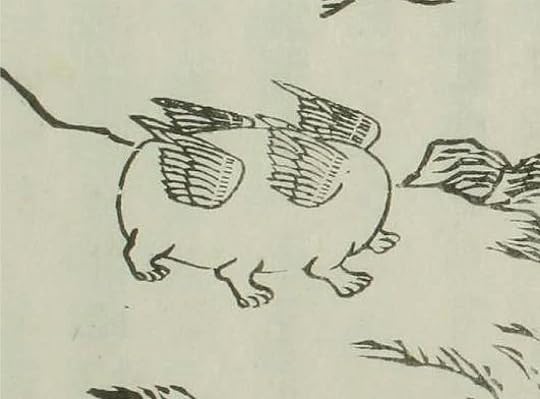
Read most of this in a quite distracted and very-much worldly state of mind finishing up my last week teaching in China. Surprisingly(/unsurprisingly) not the best context to absorb millennia-old spiritual teachings, either Taoist or Confucian. Got more excitement and poetic shivers out of the Daodejing and Zhuangzi, though I found Confucius' no-nonsense approach also pretty fun. Will have to read all again in different translations - although Hinton won me over by the end this time through his strong prose voice, I still had a pretty big feeling I was reading about 60% him and 40% the original texts, which is more than I feel with most translators...
Mencius said: "Everyone has a heart that can't bear to see others suffer. The ancient emperors had hearts that couldn't bear to see others suffer, and so had governments that couldn't bear to see others suffer. If you lead a government that can't bear to see others suffer, ruling all beneath Heaven is like turning it in the palm of your hand.
"Suddenly seeing a baby about to fall into a well, anyone would be heart-stricken with pity: heart-stricken not because they wanted to curry favour with the baby's parents, not because they wanted praise of neighbors and friends, and not because they hated the baby's cries. This is why I say everyone has a heart that can't bear to see others suffer.
"And from this we can see that without a heart of compassion we aren't human, without a heart of conscience we aren't human, without a heart of courtesy we aren't human, and without a heart of right and wrong we aren't human. A heart of compassion is the seed of Humanity. A heart of conscience is the seed of Duty. A heart of courtesy is the seed of Ritual. A heart of right and wrong is the seed of wisdom..."

May 27, 2022
"The Four Chinese Classics" is exactly what it says on the tin. Hinton treats each translation as a stand alone and begins each text with a short introduction that puts each translation into context and offers a short explanation for those unfamiliar with Taoist or Confucian thought.
This was my first foray into Chinese philosophy. I came to this book with a very surface level knowledge of Confucian thought and almost no knowledge of Taoist thought at all so I learned a ton from reading these works.
I recommend new readers to carefully review the introduction and definitions before beginning the readings. Hintons' translation choices are fully explained in the notes/definitions and understanding them ahead of time is very helpful.
I really enjoyed my time with this book and I plan to come back to it once I have a deeper understanding of Chinese philosophy.
This was my first foray into Chinese philosophy. I came to this book with a very surface level knowledge of Confucian thought and almost no knowledge of Taoist thought at all so I learned a ton from reading these works.
I recommend new readers to carefully review the introduction and definitions before beginning the readings. Hintons' translation choices are fully explained in the notes/definitions and understanding them ahead of time is very helpful.
I really enjoyed my time with this book and I plan to come back to it once I have a deeper understanding of Chinese philosophy.

October 20, 2018
The cook put down his knife and replied: "Way is what I care about, and Way goes beyond mere skill. When I first began cutting up oxen, I could see nothing but the ox. After three years, I could see more than the ox. And now, I meet the ox in spirit. I've stopped looking with my eyes. When perception and understanding cease, the spirit moves freely. Trusting the principles of heaven, I send the blade slicing through huge crevices, lead it through huge hollows. Keeping my skill constant and essential, I just let the blade through, never touching ligament or tendon, let alone bone.
Chuang Tzu, from The Four Chinese Classics
A while back people used to talk a great deal about "Eurocentricity", but sometimes we do less about our issues with society than we can: it is actually not possible to be resident on planet Earth and not be dimly aware that China is one of the first-class civilizations of all time, but 'Western' philosophers still often think up excuses not to read its great thinkers. David Hinton, a translator of Chinese poetry, has provided the English "reading public" a compendium of four of the greatest names in ancient Chinese thought in The Four Chinese Classics: Lao Tzu, Chuang Tzu, Confucius and Mencius are presented in one fell swoop.
This foursome contains a division, breaking down into the "mathematical" Lao Tzu and Chuang Tzu and the "dynamical" Confucius and Mencius. Taoism, as articulated in the brief but unforgettable 81 sections of the Tao Te Ching and Chuang Tzu's Inner Chapters, is a spiritual philosophy quite unlike anything else in the ancient world; particularly in the hands of Chuang Tzu, one of the great characters of literature of any age, its good-humored if wild insouciance about the problems of living is quite 'tonic' compared to the oppressive renunciation that characterizes the 'great' religions.
That being said, even 'Caucasians' oriented to Asian thought often do not properly appreciate that Confucius' Analects and Mencius' elaboration of Confucius' thought are actually still greater classics of Chinese culture; the intellectual-bureaucratic culture of the "Mandarins" that characterized Chinese society until the 20th century was shot through and through with the ideas of Confucianism, the philosophy of ethical governance contained within those works formed its 'warp and weft'. (If I may propose a characterization of the relationship between these two works, the Analects provides advice about advising and Mencius covers questions about 'consent', the relationship of actors within the polity to events in the government).
It would be beyond my competence to pronounce upon the quality of Hinton's translations from "Sinitic" or ancient Chinese, but the four complete works provided in this book make good English and Hinton's historical introductions and glossaries are helpful; questions of the relation of these authors to 'Western' philosophy are not covered, but I do see a bit of a hint of Heidegger's Ereignis in Hinton's speculative explanation of the Taoist concept tzu-jan as "occurrence appearing of itself". I strongly recommend this book.

March 13, 2019
Los Cuatro Libros: Analectas, Mencio, La gran enseñanza y El justo medio
Índice
INTRODUCCIÓN
La filosofía confuciana
El contexto histórico
Confucio y las Analectas
Mencio y su obra
El justo medio y La gran enseñanza
Las escuelas filosóficas rivales
El neoconfucianismo
Advertencia sobre la traducción
Cuadro de correspondencias de sonidos
LOS CUATRO LIBROS
Analectas
Libro I. Xue Er
Libro II. Wei Zheng
Libro III. Ba Yi
Libro IV. Li Ren
Libro V. Gong Ye Chang
Libro VI. Yong Ye
Libro VII. Shu Er
Libro VIII. Tai Bo
Libro IX. Zi Han
Libro X. Xiang Dang
Libro XI. Xian Jin
Libro XII. Yan Yuan
Libro XIII. Zi Lu
Libro XIV. Xian Wen
Libro XV. Wei Ling Gong
Libro XVI. Ji Shi
Libro XVII. Yang Huo
Libro XVIII. Wei Zi
Libro XIX. Zi Zhang
Libro XX. Yao Yue
El libro de Mencio
Libro I. Rey Hui de Liang [a]
Rey Hui de Liang [b]
Libro II. Gongsun Chou [a]
Gongsun Chou [b]
Libro III. Teng Wen Gong [a]
Teng Wen Gong [b]
Libro IV. Li Lou [a]
Li Lou [b]
Libro V. Wan Zhang [a]
Wan Zhang [b]
Libro VI. Gao zi [a]
Gao zi [b]
Libro VII. Jin Xin [a]
Jin Xin [b]
La gran enseñanza
El justo medio
Glosario
Cronología
Notas
Bibliografía selecta
Edición pulcra y muy completa de los Cuatro Libros confucianos en castellano. Eran materia de los exámenes imperiales, y se han convertido en textos imprescindibles para profundizar en la cultura china.
Índice
INTRODUCCIÓN
La filosofía confuciana
El contexto histórico
Confucio y las Analectas
Mencio y su obra
El justo medio y La gran enseñanza
Las escuelas filosóficas rivales
El neoconfucianismo
Advertencia sobre la traducción
Cuadro de correspondencias de sonidos
LOS CUATRO LIBROS
Analectas
Libro I. Xue Er
Libro II. Wei Zheng
Libro III. Ba Yi
Libro IV. Li Ren
Libro V. Gong Ye Chang
Libro VI. Yong Ye
Libro VII. Shu Er
Libro VIII. Tai Bo
Libro IX. Zi Han
Libro X. Xiang Dang
Libro XI. Xian Jin
Libro XII. Yan Yuan
Libro XIII. Zi Lu
Libro XIV. Xian Wen
Libro XV. Wei Ling Gong
Libro XVI. Ji Shi
Libro XVII. Yang Huo
Libro XVIII. Wei Zi
Libro XIX. Zi Zhang
Libro XX. Yao Yue
El libro de Mencio
Libro I. Rey Hui de Liang [a]
Rey Hui de Liang [b]
Libro II. Gongsun Chou [a]
Gongsun Chou [b]
Libro III. Teng Wen Gong [a]
Teng Wen Gong [b]
Libro IV. Li Lou [a]
Li Lou [b]
Libro V. Wan Zhang [a]
Wan Zhang [b]
Libro VI. Gao zi [a]
Gao zi [b]
Libro VII. Jin Xin [a]
Jin Xin [b]
La gran enseñanza
El justo medio
Glosario
Cronología
Notas
Bibliografía selecta
Edición pulcra y muy completa de los Cuatro Libros confucianos en castellano. Eran materia de los exámenes imperiales, y se han convertido en textos imprescindibles para profundizar en la cultura china.
March 28, 2018
Puede uno sacar muchas cosas interesantes, pero hay que tener paciencia para leerlo.

July 9, 2025
mha agradat el llibre però potser no tant en un conjunt. diguem que hi ha quatre parts, la primera molt guai i la intro xulíssima, però les altres tres parts (que fan la meitat del llibre) nye. tipo està bé però arriba a ser massa repetitiu suposo. i també no acabo d’estar d’acord amb algunes coses de la filosofia. sí que m’agrada que es reflexioni i es vegi la humanitat en conjunt com naturalment bona però hi ha una jerarquia massa feudal (en la intro ja està explicat i súper bé osigui deboró el traductor). I res m’agrada la història xinesa suposo.
ns si recomano llegirlo, la veritat 🫶
ns si recomano llegirlo, la veritat 🫶

January 26, 2025
Resaltar:
Confucio dijo: «No me entristecería si los hombres no me conocieran, pero sí me afligiría si yo no conociera a los hombres».
Confucio dijo: «Lo que busca el hombre superior se halla en él mismo, lo que busca el hombre vulgar se encuentra en los demás».
Confucio dijo: «Las palabras hábiles confunden la virtud la falta de paciencia en lo pequeño altera los grandes planes»
Confucio dijo: «Es el hombre el que ensancha el Camino y no el Camino el que ensancha al hombre».
Confucio dijo: «No es posible que una persona haga planes para otra cuyo camino es totalmente distinto del suyo».
Confucio dijo: «Hablar descuidadamente lo que se oye a lo largo del camino equivale a tirar la virtud».
Confucio dijo: «Aunque las naturalezas de los hombres están muy próximas, lo que cada uno aprende aparta mucho a unos y otros».
Ziyou dijo: «En caso de luto, se debe llegar hasta el último extremo del dolor, pero hay que detenerse allí».
Si quieres vivir en un mundo mejor, lo negativo que recibes no debe afectar el mundo positivo que tú estás creando.
La función de la belleza (arte) es traer reflexion, calma, orden.
Mencio dijo: «El mal de los hombres reside en que gustan de ser maestros de los otros hombres».
…
Si tras este examen conviene en que ha hecho lo más posible y, aun así, el individuo le sigue tratando mal, el hombre superior se dirá: "Es-te sujeto es brutal y, si es así, ¿cómo se puede distinguir entre él y los irracionales? ¿Por qué tendría yo que crearme dificultades con un irracional"
…
El camino del hombre superior se puede comparar con el hecho de que para llegar lejos hay que empezar cerca y que para subir alto hay que empezar por lo bajo.
Confucio dijo: «No me entristecería si los hombres no me conocieran, pero sí me afligiría si yo no conociera a los hombres».
Confucio dijo: «Lo que busca el hombre superior se halla en él mismo, lo que busca el hombre vulgar se encuentra en los demás».
Confucio dijo: «Las palabras hábiles confunden la virtud la falta de paciencia en lo pequeño altera los grandes planes»
Confucio dijo: «Es el hombre el que ensancha el Camino y no el Camino el que ensancha al hombre».
Confucio dijo: «No es posible que una persona haga planes para otra cuyo camino es totalmente distinto del suyo».
Confucio dijo: «Hablar descuidadamente lo que se oye a lo largo del camino equivale a tirar la virtud».
Confucio dijo: «Aunque las naturalezas de los hombres están muy próximas, lo que cada uno aprende aparta mucho a unos y otros».
Ziyou dijo: «En caso de luto, se debe llegar hasta el último extremo del dolor, pero hay que detenerse allí».
Si quieres vivir en un mundo mejor, lo negativo que recibes no debe afectar el mundo positivo que tú estás creando.
La función de la belleza (arte) es traer reflexion, calma, orden.
Mencio dijo: «El mal de los hombres reside en que gustan de ser maestros de los otros hombres».
…
Si tras este examen conviene en que ha hecho lo más posible y, aun así, el individuo le sigue tratando mal, el hombre superior se dirá: "Es-te sujeto es brutal y, si es así, ¿cómo se puede distinguir entre él y los irracionales? ¿Por qué tendría yo que crearme dificultades con un irracional"
…
El camino del hombre superior se puede comparar con el hecho de que para llegar lejos hay que empezar cerca y que para subir alto hay que empezar por lo bajo.

August 5, 2021
Mencio: ¿Hay alguna diferencia entre matar a alguien con una espada o en hacerlo con un palo?
El rey: No hay diferencia.
Mencio: ¿Hay alguna diferencia entre matar a alguien con una espada o con un mal gobierno?
El rey:No hay diferencia.
Wow, la verdad como una persona que constantemente lee los proverbios de la biblia y además ha leído algunos libros de crecimiento personal etc. Creí que no habría mucho más que añadir al discurso, sin embargo me sorprendió bastante lo mucho que pude sacar, mi parte favorita en general es como todo es tan especifico acerca de una buena política y cómo es muy importante la vida personal, y familiar para ello.
Mis libros favoritos fueron el 2 "la finalidad de la educación" debido a su interés en la educación interpersonal, el conocerse y tener un orden primero en su vida y su familia, y también el de Mencio que reúne unas deducciones bastante interesantes.
Por último creo que es mi primer acercamiento. La cultura china (además de la película de Mulán) así que estoy bastante interesada... Hasta escuché un ep. Del podcast de Diana Uribe acerca de los viajes de Marco Polo.
El rey: No hay diferencia.
Mencio: ¿Hay alguna diferencia entre matar a alguien con una espada o con un mal gobierno?
El rey:No hay diferencia.
Wow, la verdad como una persona que constantemente lee los proverbios de la biblia y además ha leído algunos libros de crecimiento personal etc. Creí que no habría mucho más que añadir al discurso, sin embargo me sorprendió bastante lo mucho que pude sacar, mi parte favorita en general es como todo es tan especifico acerca de una buena política y cómo es muy importante la vida personal, y familiar para ello.
Mis libros favoritos fueron el 2 "la finalidad de la educación" debido a su interés en la educación interpersonal, el conocerse y tener un orden primero en su vida y su familia, y también el de Mencio que reúne unas deducciones bastante interesantes.
Por último creo que es mi primer acercamiento. La cultura china (además de la película de Mulán) así que estoy bastante interesada... Hasta escuché un ep. Del podcast de Diana Uribe acerca de los viajes de Marco Polo.
June 13, 2018
Great books, but I’m not fond of his translation of the Taoist classics.
March 7, 2024
Note: I have read several translations of Dao De Jing and The Analects, so I purchased this book to read the other works. I enjoyed those translations, but I cannot speak to how they compare to others. Nor did I read the translations of the better known texts, so I can't compare them to those I have read.
... but I did enjoy Hinton's commentary on the texts. Each piece begins with an introduction, which can be repetitive but are nonetheless interesting. It is clear that Hinton sees, in China's wuqian nian de lishi, a progression from monotheism in the Shang Dynasty, to the concept of Heaven (Tian) in the Zhou, to the secular humanism of the Warring States period. Hinton says the cause of this change is mediocre leadership under the divine sanction of Shangdi, and I suspect he thinks the West is somewhere along this path too.
It is also clear that Hinton is more interested in Daoism, especially as it relates to Chan / Zen. (I myself am in the opposite camp, finding greater meaning in Confucius as I age.) I liked Hinton's telling of Laozi's final journey to the West, brought on by a contradiction: one should aim to live in harmony with nature, but the dao of man has always been to conquer it.
... but I did enjoy Hinton's commentary on the texts. Each piece begins with an introduction, which can be repetitive but are nonetheless interesting. It is clear that Hinton sees, in China's wuqian nian de lishi, a progression from monotheism in the Shang Dynasty, to the concept of Heaven (Tian) in the Zhou, to the secular humanism of the Warring States period. Hinton says the cause of this change is mediocre leadership under the divine sanction of Shangdi, and I suspect he thinks the West is somewhere along this path too.
It is also clear that Hinton is more interested in Daoism, especially as it relates to Chan / Zen. (I myself am in the opposite camp, finding greater meaning in Confucius as I age.) I liked Hinton's telling of Laozi's final journey to the West, brought on by a contradiction: one should aim to live in harmony with nature, but the dao of man has always been to conquer it.

April 19, 2025
Confucius : -550 - -480
Décevant à la lecture : comme les Aphorismes, un empilement de petites citations et anecdotes, qui se répètent beaucoup.
Intéressant qd même de mieux comprendre un des livres les plus influents de l'Histoire et les valeurs qui ont formé toute l'Asie.
En particulier : humanité (droiture morale), recherche permanente du perfectionnement de soi, respect absolu aux parents puis au prince.
Aussi : volonté de répandre le savoir, les "vertus d'humanité" et l'art de gouverner à tous ceux qui en sont nobles.
Un aspect humaniste extrêmement présent : le but du prince est de rendre son peuple heureux, prospère et vertueux. Il tient sa légitimité du "mandat du ciel", qui se reflète dans l'approbation du peuple : donc le prince qui perd sa popularité perd sa légitimité.
Principe de rayonnement des valeurs / exemplarité : si le prince cultive les vertus et vise à être sage et humain, il le sera avec sa famille qui se comportera de même, puis son gouvernement et l'ensemble du royaume.
Le prince sage et vertueux, bénéfacteur du peuple, rendra son royaume attractif donc renforcera sa position.
Décevant à la lecture : comme les Aphorismes, un empilement de petites citations et anecdotes, qui se répètent beaucoup.
Intéressant qd même de mieux comprendre un des livres les plus influents de l'Histoire et les valeurs qui ont formé toute l'Asie.
En particulier : humanité (droiture morale), recherche permanente du perfectionnement de soi, respect absolu aux parents puis au prince.
Aussi : volonté de répandre le savoir, les "vertus d'humanité" et l'art de gouverner à tous ceux qui en sont nobles.
Un aspect humaniste extrêmement présent : le but du prince est de rendre son peuple heureux, prospère et vertueux. Il tient sa légitimité du "mandat du ciel", qui se reflète dans l'approbation du peuple : donc le prince qui perd sa popularité perd sa légitimité.
Principe de rayonnement des valeurs / exemplarité : si le prince cultive les vertus et vise à être sage et humain, il le sera avec sa famille qui se comportera de même, puis son gouvernement et l'ensemble du royaume.
Le prince sage et vertueux, bénéfacteur du peuple, rendra son royaume attractif donc renforcera sa position.
January 13, 2018
Best quote from the book: "Instead of using a finger to demonstrate how a finger is no-finger, use no-finger to demonstrate how a finger is no-finger. Instead of using a horse to demonstrate how a horse is no-horse, use no-horse to show how a horse is no-horse. All heaven and earth is one finger, and the ten thousand things are all one horse.”
--from Chuang Zi (365 to 290 B.C.), one of the three classics of Taoism
--from Chuang Zi (365 to 290 B.C.), one of the three classics of Taoism
January 9, 2025
Este chinardo un día se despertó y dijo "le voy a dar marco filosófico y épica a comportarse como un embole". Señalé cuatro pasajes que me parecieron que guardaban algo de verdad y sabiduría, pero en líneas generales es repetitivo y apunta a un estilo de vida qué si bien puede llevar a una civilización a cierto tipo de estabilidad y desarrollo, a la larga sería inviable.
February 18, 2020
Hinton translates four of the classic Chinese philosophical classics. His Zhuangzi (Chuang Tzu) is particularly inspired, as he translates the satirical names (Duke ParadeElegance, Master TimidMagpie) that the typical literal rendition of the names obscures.

September 14, 2020
Began this book hoping to understand a bit more about Chinese philosophy. But short texts by Ancients with nothing more than reference to past Ancients and the importance of Rituals (to ensure nothing ever changes) does nothing to increase desire to learn more about it, sadly.

January 8, 2025
I read just the Tao Te Ching. OK translation but not great. Edgy some how and smells like patriarchy.
Would not recomend
Would not recomend

January 14, 2025
The book I read was titled Tao Te Ching Lao Tzu
Translated by Davis Hinton (could not find in catalog)
Translated by Davis Hinton (could not find in catalog)

July 26, 2025
An excellent translation with many helpful note's for all four texts as well as the historical background of them.
September 27, 2025
Shoutout Mencius

Read
June 17, 2026Muy esclarecedor y necesario. Me ha venido genial en esta etapa de mi vida.

June 16, 2021
Enlightening

November 5, 2025
No lo terminé de leer. Resueno con otros filósofos. Simplemente eso.

Read
October 3, 2025The introduction by David Hinton is very good, which unintentionally put the Tao Te Ching itself in a bad light because half of the poems/proverbs are just nonsense.

April 24, 2018
Suis-je passé complètement à côté ?
Il ne s'agit pas de philosophie au sens occidental du terme : Il n'y a pas de raisonnement logique qui analyse de manière contradictoire une situation, un état du monde, et en discute tout les aspects comme le fait par exemple Platon sur la Connaissance, l'Amour, l'organisation politique, la Justice, le Beau etc. On est plus proche d'une collection de phrases type fortune cookies (Ok c'est réducteur mais c'est vraiment mon ressenti).
Et le problème est que soit ces aphorismes sont évidents ("Respecte tes parents", "Traite les autres comme tu voudrais être traité", "Soit honnête", "Être vertueux est mieux que de ne pas l'être" etc.), soit sont dignes d'un autre âge ("Obéis à ton prince"). L'un dans l'autre je n'ai pas bien vu l'intérêt de la chose, finalement très long pour pas grand chose. Le pire est que l'ensemble est plus proche d'un endoctrinement totalitaire, dans le sens ou il pousse à accepter des vérités toutes faites, à ne pas les remettre en question, et donc à ne pas réfléchir par soit-même.
Il ne s'agit pas de philosophie au sens occidental du terme : Il n'y a pas de raisonnement logique qui analyse de manière contradictoire une situation, un état du monde, et en discute tout les aspects comme le fait par exemple Platon sur la Connaissance, l'Amour, l'organisation politique, la Justice, le Beau etc. On est plus proche d'une collection de phrases type fortune cookies (Ok c'est réducteur mais c'est vraiment mon ressenti).
Et le problème est que soit ces aphorismes sont évidents ("Respecte tes parents", "Traite les autres comme tu voudrais être traité", "Soit honnête", "Être vertueux est mieux que de ne pas l'être" etc.), soit sont dignes d'un autre âge ("Obéis à ton prince"). L'un dans l'autre je n'ai pas bien vu l'intérêt de la chose, finalement très long pour pas grand chose. Le pire est que l'ensemble est plus proche d'un endoctrinement totalitaire, dans le sens ou il pousse à accepter des vérités toutes faites, à ne pas les remettre en question, et donc à ne pas réfléchir par soit-même.
August 22, 2023
Agradezco mucho las notas al final del libro y que añada un glosario con el vocabulario en chino para aclarar términos que aparecen continuamente y que forman parte de la filosofía china. Los traduce con la mejor aproximación para no frenar el ritmo de lectura, pero siempre se puede buscar a qué se refiere. La intro con el contexto histórico también se agradece.
No comento nada sobre el contenido porque lo quería leer para entender mejor el pensamiento chino, no para filosofar (aunque lo haga).
No comento nada sobre el contenido porque lo quería leer para entender mejor el pensamiento chino, no para filosofar (aunque lo haga).

May 25, 2013
Los cuatro libros recogen escritos del filósofo Kung Fu Tse o Maestro Kong. El Ta-hio o la Gran Ciencia, el Chung Yung o Doctrina del Medio, el Lun-Yu y el Hia-Lun o Comentarios Filosóficos y el Meg-Tsé y Hia-Meng. La buena conducta ética es el camino de la felicidad.
May 25, 2024
ぶわーーーっと読んだのでもう一回読み直さないといけないかもしれないが、改めて読み返すと意外と読みやすいと思った。特に孟子は現代から見てもあー分かりみ、そうだよね、というのは思う。でも、これを読んでいて性善説!とかにはあまりならない。むしろ官僚道をどう生きるかのいろはな気がする。道教は、確かにあんまりこだわりすぎずに無為自然というのはわかるが、書かれていることがあまりにちょっと具体的(なのか抽象的なのか?)すぎてなかなかとっつきづらい。もう一回、今度は日本語で注釈付きで読んでみようかな。
May 12, 2015
very good job! Bravo Mr Hinton!
Displaying 1 - 30 of 31 reviews