Jump to ratings and reviews
Rate this book

Death in Venice and Other Stories

Rate this book
Death in Venice is a story of obsession. Gustave von Aschenbach is a successful but aging writer who travels to Venice for a holiday. One day, at dinner, Aschenbach notices an exceptionally beautiful young boy who is staying with his family in the same hotel. Soon his days begin to revolve around seeing this boy and he is too distracted to pay attention to the ominous rumors that have begun to circulate about disease spreading through the city. Available exclusively from Vintage Classics.

267 pages, Paperback

First published January 1, 1928

506 people are currently reading
3334 people want to read

About the author

Thomas Mann

1,888 books5,251 followers
Librarian Note: There is more than one author in the GoodReads database with this name. See this thread for more information.

See also:
Serbian: Tomas Man

Thomas Mann was a German novelist, short story writer, social critic, philanthropist, essayist, and Nobel Prize laureate in 1929, known for his series of highly symbolic and ironic epic novels and novellas, noted for their insight into the psychology of the artist and the intellectual. His analysis and critique of the European and German soul used modernized German and Biblical stories, as well as the ideas of Goethe, Nietzsche, and Schopenhauer. His older brother was the radical writer Heinrich Mann, and three of his six children, Erika Mann, Klaus Mann and Golo Mann, also became important German writers. When Hitler came to power in 1933, Mann fled to Switzerland. When World War II broke out in 1939, he emigrated to the United States, from where he returned to Switzerland in 1952. Thomas Mann is one of the best-known exponents of the so-called Exilliteratur.

Ratings & Reviews

What do you think?
Rate this book

Friends & Following

Create a free account to discover what your friends think of this book!

Community Reviews

5 stars
1,002 (25%)
4 stars
1,619 (41%)
3 stars
967 (24%)
2 stars
243 (6%)
1 star
73 (1%)
Displaying 1 - 30 of 429 reviews
Profile Image for William2.
859 reviews4,045 followers
March 2, 2016
Read "Death in Venice." Love and Death. No wonder Woody Allen referenced the story in Annie Hall. Aschenbach, a writer in his fifties, an artist raised by the Kaiser to the aristocracy, sees the boy-god Tadzio on a beach in Venice and promptly loses his reason. It's a very human story. Who hasn't lost their head over someone? The references to Plato's Symposium are spot on. The prose might be a little dense for some. I enjoyed it but found it excruciating, so affecting is its theme. In that sense it reminded me of Knut Hamsun's Pan, another tale of love run amok. Though at least in Pan there's consummation. In Death in Venice the lovers never exchange a word, only glances. Anyway, this is what fiction can do. By the way, this is the preferred translation according to The Oxford Guide to Literature in English Translation, ed. Peter France. I'd like to hear from anyone who's read Joachim Neugroschel's version and the original German.
Profile Image for Nashelito.
287 reviews273 followers
January 28, 2024
​Томаса Манна либонь краще не читати без знання та розуміння фактів з його біографії. І я от читав не знаючи. Лише після того, як послухав розмову про "Смерть у Венеції" та інші новели" від книжкового клубу "Вовчиці" (Господи, прости, якщо ти є), коли побачив, як Емма Антонюк від його новел кінчає і палає — мені трошки прояснилося і заднім числом стало цікавіше. Бо під час читання було страшенно тяжко і нудно.

Звісно, Томас Манн — це Нобелівський лавреат і пише він просто геніально, та можливо мені час трохи попуститися і нарешті почати читати щось з циклів Warcraft або Warhаmmer 40.000.

З чотирьох новел, які увійшли до збірки, виданої "Лабораторією" (започаткувавши таким чином нову серію світової класики) мені найбільше зайшла (зайшов?) "Трістан", де два чоловіки-дебіли замість того, щоби хоч раз у житті увімкнути щось схоже на емпатію, доводять до смерті нещасну жінку, а також більш-менш проканала "Смерть у Венеції", де метафора занепаду Європи така виразна і смердюча, аж екстраполюється на наші дні.

Що відбувається в "Тоніо Крегер", де головного персонажа автор, здається, частково списував з себе — я толком так  і не зрозумів, хоча його закоханість спершу у хлопця, а потім у дівчину обіцяла інтригу, а в "Маріо та чарівник" прекрасно обіграна і показана автором метафора фашизму перетнулася з моєю особистою огидою до всіляких розважальних вистав – від мандрівного цирку до камеді-клабів та 95 варталу.

Я, звісно, планую дати Томасу Манну шанс, коли вийдуть "Будденброки". Зрештою, Нобелівку він отримав ще у часи, коли її давали за якісну літературу, а не політичну "повістку".
Profile Image for Mark.
443 reviews106 followers
January 31, 2024
I read Colm Tóibín’s The Magician last year and was honestly mesmerised by the historical fictional narrative of the life of German Nobel Laureate, Thomas Mann. I knew at the end of that reading that I had to get my hands on Mann’s books, to understand more of him and to hear him through his books many of which appeared to be some sort of processing of Mann’s life and person. Death in Venice seemed a good starting point - a novella of sorts, set within an anthology of other short stories.

I find Mann’s writing intoxicating. There’s something about it that draws me in. Each of the stories in this collection is a masterpiece, reflecting something of Mann in each one. I appreciated the 59 page introduction to the collection by translator David Luke to which I turned at the the end of each story to read expanded notes to help me process and understand what I’d just read.

There is something urgent about each of these stories. It’s not a stressful urgent, but almost some sort of anticipatory urgency, as Mann’s emotions express in their fullness almost like the words are going to burst from the page.

Death in Venice as the culminating story is astounding. Clearly Mann gives some kind of insight into his own being as main character Gustav von Aschenbach, ageing writer, who descends into some kind of vortex of all possessing emotion, rendering him impotent to any other action other than imaginatively obsessing over 14 year old Tadzio, a young boy holidaying with members of his family at the same location in Venice. What transpires is honestly bewitching as Mann is unable to function except by following Tadzio as “feelings he had had long ago, early and precious dolours of the heart, which had died out in his life’s austere service and were now, so strangely transformed, returning to him - he recognised them with a confused and astonished smile.” p270. Eventually, there is nothing else but Tadzio, no other reason for living, no other imagining, ultimately leading to an inevitable outcome.

In some ways all the novellas in this anthology pointed to Death in Venice, each a building block to understanding the Mann. Tonio Kröger, the story immediately preceding Death in Venice is yet another expression of Mann and I found myself identifying and resonating so much with it…. “And occasionally he would reflect: “But why am I peculiar, why do I fight against everything, why am I in the masters’ bad books and a stranger among the other boys?” I get the impression that Thomas Mann deeply harboured so much inside himself. I get that.

I could write so much more about each of these stories. They move me and will stay with me. 5 stars no doubt.
Profile Image for Matthew Ted.
1,007 reviews1,035 followers
February 19, 2021
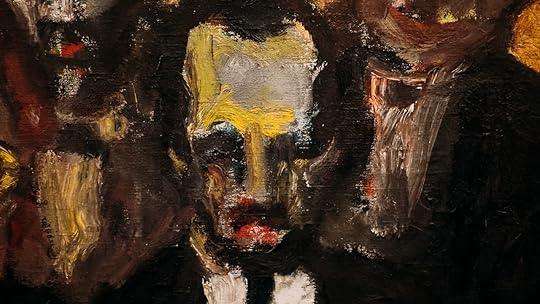
[14th book of 2021. Artist for this review is German painter Emil Nolde.]

Firstly, here are my story updates copied from my currently-reading to display my first impressions. One date is changed, however, as I mistyped it.

"Little Herr Friedemann" [1897] is a German Florentino of sorts. Despite being a story of just 30 pages, it is quite a saddening one. Mann's writing, like most German-speaking writers, is hypnotic without being overstated. There is something wonderfully simple and profound about it, as one can find in Kafka, Rilke, Sebald, Hesse...

"The Joker" [1897] starts well, continues well, and ends slightly less than well, but overall a good story. It is, really, the psychology of the artist (which Mann is famous for), or the dream of the artist. Then, and now, there are expectations in society which make it hard for young people to chase creative endeavours--we look like Jokers, like a child standing proudly and declaring: I want to be an astronaut.

description
"Sechs Herren" (Detail)—1921

"The Road to the Churchyard" [1900] is a fairly bland story. No doubt there is something under the surface with the old man screaming at the boy on the bicycle, whom is renamed Life itself... But in the end there wasn't enough to make it worthwhile or thought-provoking. Weakest story yet.

"Gladius Dei" [1902] is an odd story, comprised of almost one single incident. Worth reading for the explosive tirade about art and its duty near the end of the story, the verbal and narrative climax of the piece. This David Luke translation is quite lovely to read, as I've heard before.

"Tristan" [1903] is excellent, pure delight. It gives me great hope for The Magic Mountain, which I plan to read this year, as it is set in a sanatorium as this is. Again, some wonderful comments on art... The nature of creation and love. I could read pages and pages of Mann's opinions on art and the universe.

"Tonio Kröger" [1903] is fairly brilliant too. At times the narrative felt a little too loose at times, but it is forgiven for how much time it ambitiously covers. Lovely writing, lovely thoughts... Lovely, heartfelt ending.

"Death in Venice" [1912] is a story I feel like I am not old enough to appreciate yet, or perhaps not wise enough. There is something elusively powerful about it, but not so much that I can consciously feel it from the page; I am aware of something hidden between its lines, but cannot access it so far.

description
"Autumn Evening"—1924

As for overarching ideas in Mann's stories, or even novellas, as some of them are in here (I believe "Tristan", "Tonio Kröger" and "Death in Venice" are all regarded as novellas). a lot of them appear across several. Mann is known for his gift as portraying the "psychology of the artist"; this is something I am interested in myself. Many of his characters believe they are part of art, that they are destined to create good art... Or, as Kröger himself puts it:
'Literature isn't a profession at all, I'll have you know—it's a curse. And when do we first discover that this curse has come upon us? At a terribly early age. An age when by rights one should be living at peace and harmony with God and the world. You begin to feel that you are a marked man, mysteriously different from other people, from ordinary normal folk; a gulf of irony, of scepticism, of antagonism, of awareness, of sensibility, is fixed between you and your fellow men—it gets deeper and deeper, it isolates you from them, and in the end all communication with them becomes impossible.'

As for the collection though, "Tristan" is perhaps my favourite. Maybe one day I'll read "Death in Venice" again and join the masses of people who laud it as Mann's masterpiece... But today is not that day.
Profile Image for Steven Godin.
2,782 reviews3,373 followers
February 10, 2022

Thomas Mann is rightly one of those figures who still looms large over literature. 'Death in Venice' is regarded as one of his best works, forming an appropriate ending to this collection, but many of the other stories in this volume are also excellent, and if anything, even match the qualities of Venice. Almost everything included here is worthy of any thoughtful reader's mind. Many of the stories in this collection form variations on a similar theme: that of young men who waste away their lives, only to come to their senses all too late. Naturally, this makes it a rather melancholic read at times, but this is what Mann generally does so well - the death of youth. Which, is a fascinating theme to read about. Although some may feel that the stories seem like templates for novels, this is certainly not the case. Regardless of length, Mann's real skill is his gift for relating the high emotions of his characters in a short space of time, and he pulls it off with eaze, even when they are not obvious to those around them. Because of this, the reader has to approach them with empathy; although Mann's writing is not as formally inventive as some of his contemporaries, perhaps the difficulty of his work lies in its emotional nuances. Fortunately, he shares the empathy of the reader in bringing his characters to life.

Other than Venice my other favourites were - 'The Will for Happiness', 'Harsh Hour', and 'Tonio Kroger'. Some weren't as strong as others, hense the four stars.
Profile Image for Daniela.
190 reviews90 followers
October 12, 2021
I have a complicated relationship with Thomas Mann. I read the Buddenbrooks a few years ago, and while I stood a bit in awe of the fact that Mann wrote it at the tender age of 25, I couldn’t help but think, wait, this is it? The Buddenbrooks is an often retold tale of family decline, which had been done better before Mann and better after him. Formalistically, the Buddenbrooks was excellent. Some scenes were pitch-perfect. Yet something was missing. Verve, perhaps, or feeling. Did Mann care about his characters at all?

I began this collection of short stories and novellas with the same feeling. The first few stories, Herr Little Friedmann, the Joker, and Tristan are all good, but I couldn’t think them very good. I couldn’t think them excellent. Something was still missing. I reminded myself that Mann was still fairly young when he wrote them. Herr Little Friedmann is even a bit amateurish. Tristan, which apparently Mann intended as a satire, fails entirely in its purpose because Mann only manages humour every 200 pages. He is a writer born for tragedy. The feeling that Mann didn't really care prevailed. The stories feel like an exercise in aesthetics. Mann is testing his own abilities as a writer and he is not involved emotionally in any of it. 

This changes radically with Tonio Kruger. Because Tonio is so clearly Mann's Alter Ego - the son of a strict, hard working German father and an eccentric, uncomfortably exotic Southern European Mother - the story feels personal for the first time. Something more than his talents is on the line. Mann is examining himself and as it turns out, he excels at it. Kruger is a coming of age story about a boy who feels misplaced and misunderstood, doomed to experience life from the window panes.  There's an irony there too, for Tonio/Mann is aware of all the things he can't have and rejects everything he has or could have. Mann's self-awareness is tantalizing: he admits to himself and his readers that his angst is a product of his narrow bourgeois upbringing, but he can't free himself from the same shackles he tries to satirize. 

Death in Venice is another monster altogether. So well written that to stress this point seems almost trite. No longer is he young Tonio Kruger. Now Mann is old Gustav Aschenbach, a successful writer whose life is a wasteland of emotions. He travels to Venice in search of Beauty and rest and finds Beauty and Inquietation, which is just another word for love. By going to Venice Gustav finds everything he's been searching for. Even a plague ridden Venice seems a paradise from which no one can escape. Perhaps to ease our conscience, it would be more comfortable to see Tadzio as an Angel of Death, a harbinger of Gustav's imminent destruction, or simply an abstract personification of beauty. But to do so would be to ignore how deeply Gustav fell in love. Gustav pictures himself in turns as a father, a teacher, a mentor and a lover to this 14 year boy - and this is disturbing. But the paradox lies precisely in the fact that this grotesque love is written with all the truth of passionate love: a love which elevates and degrades at the same time. Perhaps no one understood this better than Visconti, who gave us Aschenbach sliding down a wall, laughing and crying at the same time after chasing Tadzio through all of Venice. That scene is a faithful representation of the agony of love, the power it exerts over us, how it distorts our will and makes us hostage to feeling. Aschenbach puts it himself perfectly: he doesn't want to leave Venice because he doesn't want to return to himself. A return to reason would mean the abandonment of love, and that cannot be borne because love, even when painful, grotesque and one might say in this case profoundly disturbing, is pleasurable. 

Perhaps that's what it is. Perhaps Death is the only possible solution, because even without a plague and disease, how could Aschenbach return to himself? He'd be doomed, like a ghost, to wander the Earth, unable to let go of the exhilaration of passion.
Profile Image for Ivan.
129 reviews52 followers
January 20, 2024
найбільш сподобалося Тоніо Крегер і Смерть у Венеції

загалом, я щось не впевнений чи можу і хочу рекомендувати цю книжку до читання іншим
власне, перше знайомство видалось мені трохи нуднуватим
Profile Image for Grandma.
184 reviews29 followers
March 4, 2024
Це гарне читання. Текст легкий аж летючий. Ти не продираєшся, як іноді буває, крізь текст, а тебе підхоплює і несе разом з ним. Мені подобалося читати, настільки, що я захотіла мати собі цю книжку в паперовому вигляді і то було правильне бажання. Виявилося, що то окрема насолода тримати книжку в руках. Але виявилося ще й, що це такого штибу література, яка не одразу дається до повного розуміння (я підозрюю, що це тільки для мене так)
Це був якраз той випадок, коли мені не хотілося, щоб книга закінчувалася
Але, чесно кажучи, я сприймала ці новели, як просто гарні, естетичні розповіді і жалкую, що почала читати, не робивши хоч яку небуть розвідку- куди ж мене несе)
Так, коли ти читаєш детектив, скоріше за все розвідка навіть зайва- є гарний шанс наступити на міну спойлер. Хоча і тут біографію автора теж цікаво прочитати . Але стосовно книжок, як то кажуть з високої полиці, підготовча робота просто необхідна.
Так от, у випадку Манна, у мене все вийшло задом-наперед: спочатку я прочитала новели, а потім вже була біографія, передмова і книжковий клуб «Вовчиці»)
Дякуючи я зрозуміла, що втратила): не зрозумілі сенси, не побачені алюзії. Я все це усвідомлювала заднім числом)
І ще я знаю, що точно буду це перечитувати
Profile Image for robin friedman.
1,945 reviews415 followers
March 28, 2022
Mann's Death In Venice And More

Thomas Mann's masterful short novel "Death in Venice" (1912) tells the story of a distinguished German writer, Gustav Aschenbach, who, at the age of 53 while on holiday in Venice, develops a passion for a 14-year old boy named Tadzio. Mann's story sets the demands and powers of eros, human sexuality, in the form of Aschenbach's feelings for Tadzio, against the life, of intellect, discipline, artistic creation, and order which Aschenbach had, before his fateful passion, attempted to realize in his life. Mann's story is highly organized and beautifully controlled, meeting the artistic and intellectual demands of his protagonist, Aschenbach. Yet the story exudes passion and eroticism, in Aschebach's homosexual attraction for a young adolescent, the dank gondolas of Venice, the fetid epidemic that plagues the city, and the atmosphere of death and destruction that Mann captures in his work. The story is full of allusions to Schopenhauer and Nietzsche, to Plato's Phaedrus and Symposium and, I think, to the Bacchae of Euripides. Mann's story offers a disturbing picture of the claims of sexuality and eroticism, particularly on the life of the mind, and of the consequences of their repression.

I had the opportunity to reread "Death in Venice" in a book group, and my understanding of the work was enhanced by our discussion. It also benefitted from this excellent collection of seven of Mann's early short stories in a volume edited by David Luke. The six other stories in the volume were written earlier than "Death in Venice" and show a unity of theme with this great work. Each of the stories juxtaposes the life of the artist, the outsider trying to observe and understand, with the claims of passion. The artists involved, the passions, and the results differ among the stories, but the underlying theme remains the same.

"Tonio Kroger" (1903), an extended short story, shows an aspiring writer infatuated in his youth with a school friend and, subsequently, with the girl his friend marries. He years to be part of what he deems "the bright children of life, the happy, the charming, and the ordinary" while recognizing that this is not to be for him. "Tonio Kroger" was Mann's own favorite among his works and it presents the theme of "Death in Venice" -- intellect and passion in a different way and light.

The extended story "Tristan" (1903) also is based upon a conflict over a young woman, set in a sanitorium, between a dandified writer and her business-like matter-of-fact husband. Mann's love for Wagner and for music are also at the center of this story.

The remaining four stories also develop the theme of passion as a disturbing force in what appears to be a settled life. I particularly enjoyed the short opening work, "Little Herr Friedemann" (1897) in which a young man who becomes hunchbacked and reserved as a result of an accident in infancy is humiliated and rejected when he feels the stirrings of passion in the person of a beautiful 24 year old married woman.

In delving into the force eroticism exerts on human life, Mann's stories explore a theme which resonates deeply with me and with many readers. This book, with Luke's translation and introduction, is an excellent way of getting to know Mann's stories.

Robin Friedman
Profile Image for E. G..
1,175 reviews797 followers
April 3, 2015
Introduction

--Little Herr Friedemann
--The Joker
--The Road to the Churchyard
--Gladius Dei
--Tristan
--Tonio Kröger
--Death in Venice
Profile Image for Nathan "N.R." Gaddis.
1,342 reviews1,654 followers
Read
April 3, 2015
a brief chronology ::

19xx, May :: purchased Bantam Death in Venice and Other Stories by Thomas Mann.

19xx, June :: read “Death in Venice” in class along with two things from Dubliners, Mrs Dalloway, something from Sartre, something from Robbe-Grillet, and a few other things. Pretty cool.

19xx, May(?) :: saw the Orlando film. Still have not read the novel.

20xx, Sept :: read “Little Herr Friedemann”, “The Joke”, “The Road to the Churchyard”, “Gladius Dei”, “Tristan,” and “Tonio Kröger” in the hops field at midnight. Thought they were pretty fantastic.

20xx, ?? :: read Magic Mountain. Very happy to have done so.

20xx, today :: finally reread “Death in Venice” several years later.

20?? (future) :: watch some filmic translation of “Death in Venice”.

20?? (still the future) :: more Mann ; either Joseph or the one about the composer. Or Buddenbrooks (auf Deutsch?)
Profile Image for Alexandra .
936 reviews362 followers
May 20, 2017
Jetzt gleich mal ein Fazit: Thomas Mann und seine Kurzgeschichten sind meiner Meinung nach total überbewertet. Die Germanisten unter Euch mögen mich hinrichten, aber dieses nutzlose verkrampfte geistige Gehirnwichsen ergibt einfach keinen Sinn. Eines muss man dem Autor lassen: Er kann Schachtelsätze, aber das ist auch schon alles. Ausführliche Details ob dieses Trauerspiels in den Einzelbeurteilungen.


1. Tod in Venedig 2,5 Sterne
Der Beginn ist ein unnötiges verkrampftes nichtssagendes Geschwurbel über Kunst (genaue Beschreibung der Schwurbelei bei Tristan). Als sich der Hauptprotagonist Aschenbach nach Venedig aufmacht, wird die Geschichte zwar mit pädophilen homosexuellen Zügen behaftet aber recht erträglich.

2. Tristan 2,5 Sterne
Auch hier läßt es sich der Autor nicht nehmen, über Musik zu schwurbeln. Der Mann'sche Stil, um es Euch zu beschreiben, ist so wie bei den Leutchen, die zwar selber keine Künstler sind, sich aber bei den sehr progressiven Kulturfestivals in der Foldertextbeschreibung einen auf pseudo-intellektuell abonanieren, indem sie versuchen, präpotent mit der Sprache die Kunst nachzustellen, ohne natürlich auch wirklich mit der Sprache umgehen zu können. Eine Aneinanderreihung von wertlosen Fremdwörtern, Wortschöpfungen und Metaphern, die einfach keinen Sinn ergeben, nicht wissend, dass man manche Kunst einfach erleben und nur die Rahmenbedingungen wie Stil Hintergrund etc. beschreiben sollte. Nachdem man die Beschreibung des Theaterstücks, Musikstücks... gelesen hat, hat man gar keine Ahnung was einen erwartet oder was die Scheisse soll.
Nachdem man sich als Leser durch dieses unsägliche nutzlose Elaborat durchgewühlt hat, kommt wieder etwas Plot und Figurenentwicklung und die Geschichte wird recht erträglich.

3. Die vertauschten Köpfe 0-1 Stern (0 kann man ja in Goodreads gar nicht geben weil dies nicht beurteilt bedeutet)
Das ist wirklich der Gipfel an schlechter Literatur. Auf 100 Seiten nur 1 Szene, die es wert ist, erzählt zu werden. Die vertauschten Köpfe sind wieder mal nutzloses Geschwafel in Form eines indischen Märchens über eine Dreicksgeschichte zwischen zwei Freunden und einer Frau, da tun sich literarische Abgründe auf, die man sich gar ned vorstellen möchte - dagegen ist Tod in Venedig ein mittelmäßiger Lercherlschas ;-).
Meine Empfehlung im Originalton an die Protagonisten, die es verdient haben, alle zu sterben, aber ihre Entleibung einfach zu langsam durchgezogen und mich dadurch leider mit ihrem nutzlosen Dasein viel zu lange gequält haben. "Ja bringts Euch alle um, denn Ihr seids sogar zum ordentlichen hinterlistigen Ehebruch zu deppat und brauchts a Kopftausch Ausrede und extrem viel hirnloses Gelaber als Rechtfertigung für Eurer dreieckiges Swingerabenteuer :D unpackbar."

4. Gladus Dei 3,5 Sterne
Ok diese Story ist durchaus gelungen, aber in Anbetracht der Tatsache, dass dies eine Kurz-Kurzgeschichte von 10 Seiten ist, wäre diese schwerlich auch noch so zu vergeigen, wie die anderen.

5. Schwere Stunde 3 Sterne
Der Hauptprotagonist quält sich bei der Erstellung von literarischer Kunst in einem Schreibprozess einen ab. Nicht schlecht aber eben auch nur 10 Seiten. Eine Geschichte dieses Umfanges können auch Deutschmaturanten in einer Schularbeit.

6. Das Gesetz 3,5 Sterne
Das war die erste Geschichte, die mir im Ansatz ganz gut gefallen hat. Das Gesetz ist die Story von Moses: eine Perlenkette atemberaubender Inkompetenzen - gut angelehnt an die alten Überlieferungen aber aus anderer Sicht erzählt.

Fazit: Wenn ich alles zusammenzähle, kommen 2,5 Sterne raus. Weil es aber der Thomas Mann ist, kriegt er ob seines Namens einen Promibonus, und ich runde sehr gnädig auf.

Ach ja so wie Thomas Mann ständig in seinen Geschichten herumlaviert, möchte ich meine Gefühle bezüglich dieser Lektüre mit dem Zitat von Christian Tramitz aus dem Schuh des Manitu ausdrücken: "Ich bin mit der Gesamtsituation unzufrieden. [...] ständiges sinnloses herumschleichen und dauernd am Marterpfahl."
Profile Image for гейлінка (тгк: книжкова буря).
251 reviews94 followers
March 9, 2024
це було дуже довго і муторно🌝

якби я читала це 2 роки тому, то померла від нудьги, бо на той час цінувала саме сюжет, але зараз я ще аналізую стиль автора і у Манна він чудовий, але в сюжетах він не є сильним

з чотирьох історій мені зайшли найбільше «Трістан» та «Маріо і чарівник» і то остання зайшла через те, що я таки вловила основний посил

скажу, що дуже розчарувала «Смерть у Венеції», адже я дуже сподівалась, що ця історія мені западе в душу, бо анотація була багатообіцяючою
але, на жаль…
щодо «Тоніо Крегера», то це просто історія ні про шо
автор тут ну дуже вже релаксує
взагалі не моє

навіть не знаю чи варто купувати Будденброків
надто вже неоднозначне знайомство вийшло 😳

гляну ще розбір від дівчат з «Палає»
сподіваюсь, що після перегляду ролику зміню свою думку
Profile Image for Olha.
75 reviews6 followers
November 11, 2024
«Смерть у Венеції» - дуже красива і неоднозначна новела. Попри моє негативне ставлення до романтизації подібних сюжетів, варто відзначити, що автор майстерно зберігає певні рамки і описує платонічні почуття героя спочатку як творчий пошук краси, навіть трохи філософський та міфологічний, а згодом як зміну сприйняття власної особистості. Тому ця історія, наче морська хвиля, накриває і повільно огортаючи, відносить на глибину, на темне дно.
Profile Image for Holly Allen.
9 reviews2 followers
January 25, 2021

A beautiful collection of short stories and an eye-opening introduction to Thomas Mann.

These stories conjured such a deep sadness in me that I can feel the words linger at the pit of my stomach. An assembling of protagonists who are unconsciously invisible. Usually an aging man feeling an overwhelming pull towards a beautiful, oblivious character. The protagonist is an outsider who is desperate to find a way in but instead is met with ridicule and degradation. I think the story I’m referring to most here is ‘Little Herr Friedmann’ which I’m certain will haunt me forever, much like the poem ‘Prufrock’ by T.S Eliot which stirs that same uncomfortable feeling.
Profile Image for Андріан.
179 reviews8 followers
March 23, 2025
Важко пройти повз естетичний, але не зовсім практичний примірник Манна від Лабораторії. Його, як спадкоємця європейського реалізму складно назвати захопливим автором, за книжкою якого не помічаєш як летить час. Він майстерно балансує між реалістичним зображенням подій і модерністським підходом до розкриття психології персонажів.

«Це було влучне зауваження; його моральна мужність якраз у тому й полягала, що, не дуже здоровий від природи, він був тільки покликаний до постійних зусиль, а не народжений для них». Тексти Томаса в більшості випадків автобіографічні, у них відображені внутрішні конфлікти, пристрасті та аполітичність автора.
Можливо митець справді не повинен займати позицію, яка би обмежила його засоби творчості.

«Видно, самого тільки небажання замало, щоб надати нам духовної сили; надовго ми не заповнимо життя тим, що не хотітимем чогось робити; не хотіти чогось і взагалі нічого вже не хотіти, а все ж виконувати необхідне - мабуть, надто близькі поняття, щоб від них не постраждала ідея свободи».
Новела про чарівника достатньо дискомфортна, нас змушують спостерігати, а отже і брати участь в приниженнях над юнаком. Це умовна вакцина від тоталітаризму, але чи спрацює вона, коли суспільство інфіковано?
Profile Image for Anastasiia.
17 reviews9 followers
November 6, 2024
Мені дуже-дуже сподобалась форма.
Через всі ярлики типу "висока полиця", "Нобелівський лауреат", я дуже переживала, що сам зміст буде для мене дуже важкий і непідйомний. Але мені вдалося у всіх новелах розгадати центральні алюзії, і це мене дуже порадувало. Однак, ускладнювала прочитання і аналіз збірки схожість героїв. Це наче не давало повністю виокремити і проаналізувати образ, а натомість заплутувало і збивало з думки.

Однозначно буду далі знайомитись з автором.
Profile Image for Reyer.
469 reviews42 followers
October 10, 2023
Nederlands (English below)

De bundel De dood in Venetië en andere verhalen bestaat uit vier korte verhalen van de hand van Thomas Mann (1875-1955). Ik was vooral nieuwsgierig naar Manns beroemde novelle uit 1912 over de oudere schrijver Gustav von Aschenbach die zijn ogen niet kan afhouden van de jonge Tadzio en daardoor de door cholera geplaagde stad niet tijdig verlaat. Afgezien van zijn verlengde verblijf en een grotere zorg voor zijn uiterlijk krijgt de verliefdheid van Von Aschenbach geen gestalte: het is Mann te doen om de overwegingen die daarachter schuilgaan. Meer dan een onbeantwoorde liefde – die ook te zien kan zijn als verlangen naar de jeugd – is De dood in Venetië naar mijn idee daarom een verkenning van de betekenis van kunst en schoonheid.

De verwisselde hoofden uit 1940 sluit op dit thema aan. Voortbouwend op een Indisch verhaal schrijft Mann over Sita, die haar man Shridaman en hun vriend Nanda op een dag onthoofd aantreft. Wanneer zij dankzij een goddelijke inmenging de kans krijgt hen weer tot leven te wekken, vergist ze zich in de hoofden, waarna de vraag rijst wie nu haar echtgenoot is: de persoon met het lichaam of met het hoofd van Shridaman? Aanvankelijk leek de Indische context me wat ongepast voor Mann, die zich het verhaal echter toe-eigent door er een ‘ideeënnovelle’ van te maken in de stijl van een klassieke mythe. Zo onnatuurlijk plechtig als de dialogen tussen de vrienden zijn, zo interessant zijn hun opvattingen over schoonheid.

Schijnbaar immers doet het schone in het geheel geen beroep op ons geweten en noopt ons niet in te gaan op de ziel, zoals het beeld van de bedelaar, juist doordat het ellende uitstraalt, nog altijd wel doet. En toch worden wij ook tegenover de verschijning van het schone schuldig wanneer wij ons alleen maar verlustigen in de aanblik ervan zonder naar het Zijn te vragen, en bijzonder diep, dunkt mij, geraken wij bij het schone in de schuld als wij het wel zien, maar het ons niet ziet.


De novelle Tristan (1903) over het sanatorium Einfried deed me – afgezien van de associatie met De toverberg – weinig, waarschijnlijk omdat ik de klassieke verwijzingen niet herkende. De belangstelling van de teruggetrokken schrijver Detlev Spinell voor mevrouw Klöterjahn en zijn brief aan diens echtgenoot doen wat gekunsteld en aanstellerig aan. Van De wet (1944) over het leven van Mozes, die zijn volk uit Egypte leidt en zich vervolgens moet bewijzen als profeet heb ik daarentegen veel geleerd. Het deed me eraan herinneren dat ik het Oude Testament eens integraal zou moeten lezen.

Mann is een schrijver die stevig uitweidt en op het eerste gezicht niet altijd duidelijk is, maar de lezer veel teruggeeft. Ook zijn korte verhalen intrigeren en leiden tot stof voor discussie.

English

Thomas Mann is as much a novelist as he is an essayist. His short stories Death in Venice and The Transposed Heads are packed with interesting ideas about art and beauty, which are well worth reading. Mann’s sense of context and setting is another aspect to enjoy. Some stories do require some background knowledge however.
Profile Image for Blair.
2,038 reviews5,858 followers
April 19, 2015
I did this a bit of a disservice by reading the first two stories in October last year, and then not picking it up again until January - my intention was to spread the stories out over a couple of months, in the hope that this would make me savour and appreciate them more, but... it didn't really work out. Though a couple of characters grated, and the repetition of themes dulled their impact slightly by the end, I loved these stories, with 'Little Herr Friedemann', 'The Joker', and 'Death in Venice' itself standing out as favourites.
Profile Image for Katya.
289 reviews39 followers
May 5, 2024
історії, після яких ще треба трошки походити, позбирати інформацію для контексту. ще дуже багато спільного є у творах із цієї збірки: герої, антураж, сюжетні лінії.

найбільше сподобалася «Маріо і чарівник», як новела, що найсильніше збурила мої почуття.
стиль Манна кінематографічний і філософський, читати тільки місцями було складно, але загалом сподобалося.

а ще дуже радію наявності передмови, що додає інформації)
Profile Image for Ilona Leonova.
132 reviews5 followers
October 5, 2025
Дуже гарно написані невагомі, ефірні новели.
Не все зрозуміла, але це не заважало насолоджуватись текстом.

В новелах стільки захованих змістів, що їх варто буде перечитати!
Profile Image for Els Lens.
382 reviews23 followers
July 8, 2022
(Ik las 2 van de 4 verhalen: Tristan en De dood in Venetië)
Tristan.
Dit verhaal deed mij heel erg denken aan De Toverberg.
Hier heet het sanatorium ‘Einfried’ en niet ‘Berghof’.
Er zijn, net als in de Toverberg twee dokters, die erg verschillend zijn van karakter en van opvatting.
Er is de ‘femme fatale’, hier mevrouw Klöterjahn, in De Toverberg mevrouw Chauchat.
Er is de schrijver Detlev Spinell, die nog wereldvreemder is dan Hans Castorp.
Mijnheer Klöterjahn deed me denken aan mijnheer Peperkorn, een zeer extravert persoon, levensgenieter, nogal zelfingenomen en met beide voeten op de grond. Geen dromer zoals Spinell.
Bijzonder knappe karaktertekeningen.

De dood in Venetië

Ik had de film gezien tot op het moment dat de mooie jongen verschijnt.
Nu heb ik, eindelijk, het boek gelezen.
Eerst las ik het veel te snel, om te weten hoe het verhaal verder ging, hoewel de titel natuurlijk al verklapt dat er iemand dood gaat. Wie gaat er dood? Aschenbach?, de jongen?, de hele stad?

Ik had het gevoel dat ik het veel te snel had gelezen, dus las ik het meteen opnieuw, en met veel meer aandacht.
Als je het heel traag leest, dan pas ontdek je dat dit een echt meesterwerk is. Er zit zo veel in, buiten het simpele verhaal dat je op het eerste gezicht ziet.
Er is al veel over geschreven. Is het homo-erotisch of gaat het eerder om het verlangen naar schoonheid en naar jeugdigheid?
Aschenbach is geen ouwe geilaard. Hij is gewoon een man, een vijftiger, die verliefd wordt op een uitzonderlijk mooie jongen, en die spijt heeft van de vervlogen jaren, waarin hij altijd zo’n keurige burger was en alles deed zoals het hoorde in zijn (hogere) klasse.
Gaat het eigenlijk, in een diepere laag, over het verval van het oude Europa?
Citaat:
“… keek hij uit over het op dit middaguur niet erg drukke strand en over de zee waar geen zon op scheen en waar de vloed lage, langgerekte golven met een kalme regelmaat naar de oever zond.
Voor de eenzaam-zwijgende is wat hij ziet en wat hem wedervaart tegelijk onscherper en indringender dan voor hem die in gezelschap is; zijn gedachten zijn zwaarwichtiger, vreemder en nooit zonder een zweem van treurigheid.”

Profile Image for Olha Tiumentseva.
116 reviews8 followers
January 20, 2024
Написано дуже гарно. Настільки повні зважені речення, така велика увага деталям, стільки глибоких думок і розмірковувань. Але саме історії (новели) сюжетно чи ідеєю не зачепили.
Найбільше сподобалася новела «Трістан» (вона і перша у книзі). Тут і динаміка була, що дозволило читати швидше, і персонажі яскраві. Напевно її тому і поставили першою, бо вона легше дається до розуміння.
Наступна, «Тоніо Крегер», вже потребувала більшої концентрації. Багато самокопання персонажа. До сумнівності цього тексту додалися згадки про святість рос культури та про визначення вроди, як на мене, за арійським принципом.
Третя новела «Смерть у Венеції», яка, судячи з назви, йде головною, також вирізняється купою роздумів на тему мистецтва (письменництва). Раптове "кохання" трохи додало динаміки, але загалом складно зрозуміти вчинки персонажа.
Остання новела цієї книги “Маріо і чарівник» - найбільш дивна і незрозуміла історія, навіть коментувати її важко.
Profile Image for Nigeyb.
1,475 reviews405 followers
October 27, 2017
Death In Venice was published in 1912 and is the tale of Gustav von Aschenbach, a famous and successful ageing author, who goes on holiday to Venice, and falls in love with a 14 year-old boy. I only read Death in Venice, and not the other short stories in "Death in Venice and Other Stories".

Death In Venice is one of those stories that, for the average reader, needs some explanation from an informed commentator. It's a brief, albeit dense, tale and (thanks to Wikipedia) I can confidently report that the novella is rife with allusions from antiquity forward, especially to Greek antiquity and to German works (literary, art-historical, musical, and visual - from the 18th century onwards).

Prior to heading off to Venice, Gustav von Aschenbach's life is very disciplined and work-orientated. Once in Venice, Aschenbach slowly changes and eventually starts to experience passionate feelings for Tadzio, a 14 year-old Polish boy staying with his family at the same hotel. It's unclear what has prompted these feelings in Aschenbach. Is it a reaction to the constraints of Aschenbach's life prior to Venice? Is he simply just moved by Tadzio's youth and beauty?

According to Wikipedia, Mann's original intention was to write about "passion as confusion and degradation", after having been fascinated by the true story of Goethe's love for 18-year-old Baroness Ulrike von Levetzow, which had led Goethe to write his Marienbad Elegy. The May 1911 death of composer Gustav Mahler in Vienna and Mann's real life interest in a Polish boy during a holiday in Venice were additional experiences occupying his thoughts. He used the story to illuminate certain convictions about the relationship between life and mind, with Aschenbach representing the intellectual. Mann was also influenced by Sigmund Freud and his views on dreams, as well as by philosopher Friedrich Nietzsche who had visited Venice several times.

To what extent is Aschenbach's decline a punishment and does it reinforce the social order? Some cultures would accept Aschenbach's feelings, therefore to what extent might they be considered "natural"? Thomas Mann poses various questions in this story without appearing to come to any definitive conclusions, except that Achenbach's passion, and his illness, appear to be linked and this is presumably the cause of the death in Venice.

It's well written and, whilst dense, easy to follow. Thomas Mann evokes the faded grandeur and decay of Venice, and achieves an increasingly ominous tone as the story progresses. The tale is slight though and the book's preoccupations are too esoteric for my tastes. I doubt I'll bother reading it again though and was expecting to enjoy it more than I did.
Profile Image for Jessica (thebluestocking).
982 reviews20 followers
May 27, 2008
Knocking another one down for the novella challenge, I finished Death in Venice this evening. I’m not sure what exactly I was expecting when I choose this story, but it certainly wasn’t the tale of a respected older writer gentleman who falls in love with a fourteen year-old demigod boy and eventually dies of cholera because of it. Nope. That’s not what I expected at all.

Gustav von Aschenbach sees a strange red-headed man in Munich and suddenly decides to go on vacation. Before retiring to his summer house, he stops in Venice, a city he has visited often. The red-headed man makes numberous appearances throughout the story as a man on the ship, a gondolier, and a street musician. Aschenbach arrives at the hotel and sees Tadzio, a young polish boy, “[p]ale and elegantly reserved, with ringlets of honey-colored hair, a straight sloping nose, a lovely mouth and an expression of divinely belseed solemnity, his face called to mind Greek sculputres of the best period.” Aschenback falls in love with the boy and begins to follow him around Venice. Meanwhile, Venice is suffering from the plague. Aschenback knows this but keeps the secret along with the government officials of Venice. Becoming further and further debased, Aschenback falls ill with the cholera and dies.

I did enjoy the progression of the story, though there, at times, seemed to be a number of digressions that slowed down the plot. However, the story is packed with metaphors and literary allusions to Greek mythology and other arresting techniques. For example, the health of the city of Venice declines at the same rate as does the mental health of our hero. Also, our hero’s greatest written achievement is a short story entitled “A True Wretch.” I think you can guess by this point who turns out to be that True Wretch. The best part about the story is that a second reading would reveal a number of insights that I missed the first time.

Here are a few of my favorite passages:

“But he discovered in the end that his thoughts and inspirations were like the intimations of a dream, which always seem inspired at the time but prove utterly shallow and useless to the waking mind.”

“His nerves lapped up the tooting and jangling, the vulgar pining melodies, for passion criples taste, solemnly following the lure of pleasures that sobriety would either laugh at or reject altogether.”

“Ultimately, we are only as old as we feel in our hearts and minds.”
Profile Image for ❀ Tina ❀.
800 reviews181 followers
June 26, 2021
Der Tod in Venedig: 5 Sterne
Tristan: 4,5 Sterne
Die vertauschten Köpfe: 2 Sterne
Gladius Dei: 2,5 Sterne
Schwere Stunde: 3 Sterne
Das Gesetz 3 Sterne

Insgesamt also 3,3 Sterne
Ich runde einfach mal auf 3,5 Sterne auf ;)
Profile Image for Elena Sala.
496 reviews93 followers
November 23, 2019
This selection of stories includes texts from Thomas Mann's literary beginnings to the sublime "Death in Venice" (1912). Mann used material from his own life and family background in most of his early fiction, including BUDDENBROOKS. Either Lübeck, his native town, or Munich, his city of adoption, is the location in nearly all cases. There are also recurring motifs: the old patrician family home and its garden, the theme of the isolated "outsider" and the capacity of passion, or any infatuation to destroy dignity.

Probably one the most important stories of this collection is Tonio Kröger, a work Mann often referred to as his favorite. This story focuses on the relationship between the artist and society, another recurring subject in his oeuvre. The other text worth mentioning is "Death in Venice ", a landmark achievement of European modernism. This novella is a potentially sordid tale of sexual obsession transformed into symbol and myth. Lust, disease, artistic creativity and death are linked, as a derivation of the nineteenth century pessimist philosophy of Schopenhauer and Nietzsche. The subject is as controversial as Nabokov's LOLITA. The story is about a middle aged man whose object of desire is a fourteen year old boy. As the story is about homosexuality, stalking and pedophilia: it is likely that the use of classical myths could serve, among other things, to camouflage a very disturbing and scandalous topic. "Death in Venice" is a must read; the rest of the stories are quite good, but if you have read BUDDENBROOKS you might find them repetitive.
Profile Image for Данило Депутат.
294 reviews13 followers
February 28, 2024
йооой!!!

прочитав я відгук на ТГ-каналі «Непозбувний книгочитун»: у ньому було рекомендовано подивитися запис обговорення книжкового клубу «Вовчиці» зокрема перед прочитанням цієї книжки з приміткою, що спойлерів там немає. подивився, підтверджую: втім на мою думку, харизма Емми і Яни цю книжку досить відтінила. їх було мені однозначно набагато цікавіше слухати, ніж власне читати книжку.

красиво перекладений текст. формою насолодився. але зміст не став для мене чимось надзвичайним. тематично це не зовсім моє.

наприклад новела «Трістан» — про несправжню любов: два чоловіки перебувають у стані «люблюнеможу», не цікавлячись навіть деталями захоплень жінки. бісячество неймовірне! але справляє враження і залишається в пам’яті.

«Тоніо Креґер» — тут перед читачами постає митець митцевий. з подружкою Лизаветою Іванівною любить обговорювати роскласліт. показово, втім теж не дивує. інші штрихи до портрета не напишу, але вони також показові й бісячі.

«Смерть у Венеції» — алюзію без перегляду відео не зчитав. коли почув — здивувався, і погоджуюсь із нею. але для мене це життя оповідача, що закінчується назвою. потяг до хлопця-підлітка. саме невиражений, зрозуміло, потяг.

«Маріо і чарівник» — читав удруге. сподобалось, як і вперше. зображення фашизму, що його проґавив світ. водночас це призвело до Світових війн.

отже, пробуйте, будь ласка. загалом збірка, на жаль, не сподобалася мені.
Profile Image for Rita (the_bookthiefgirl).
354 reviews84 followers
November 6, 2021
Little Herr Friedman(1897)- 4⭐️

The Joker (1897)-4⭐️

The road to the Churchyard (1900)-3⭐️

Gladius Dei (1902) -3⭐️

Tristan (1903)-4.5⭐️

Tonio Kröger(1903)- 4⭐️

Death in Venice (1912)-4.5⭐️

Displaying 1 - 30 of 429 reviews

Can't find what you're looking for?

Get help and learn more about the design.