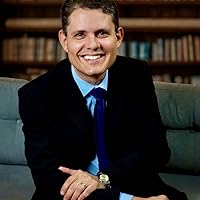
The second of three volumes of essays by Quentin Skinner, one of the world’s leading intellectual historians. This collection includes some of his most important essays on the political thought of the Italian renaissance, each of which has been carefully revised for publication in this form. All of Professor Skinner’s work is characterised by philosophical power, limpid clarity, and elegance of exposition; these essays, many of which are now recognised classics, provide a fascinating and convenient digest of the development of his thought. Professer Skinner has been awarded the Balzan Prize Life Time Achievement Award for Political Thought, History and Theory. Full details of this award can be found at http://www.balzan.it/News_eng.aspx?ID...
Educated at Caius College, Cambridge, where he was elected to a Fellowship upon obtaining a double-starred first in History, Quentin Skinner accepted, however, a teaching Fellowship at Christ's College, Cambridge, where he taught until 2008, except for four years in the 1970s spent at the Institute for Advanced Study in Princeton, New Jersey. In 1978 he was appointed to the chair of Political Science at Cambridge University, and subsequently regarded as one of the two principal members (along with J.G.A. Pocock) of the influential 'Cambridge School' of the history of political thought, best known for its attention to the 'languages' of political thought.
Skinner's primary interest in the 1970s and 1980s was the modern idea of the state, which resulted in two of his most highly regarded works, The Foundations of Modern Political Thought: Volume I: The Renaissance and The Foundations of Modern Political Thought: Volume II: The Age of Reformation.
Nessa obra, Quentin Skinner investiga o ressurgimento do republicanismo como teoria de autogoverno em que uma cidadania virtuosa e educada é vista como a chave para a manutenção da liberdade.
Segundo Skinner, no fim do séc. XIII, começou-se a desenvolver uma ideologia cívica de autogoverno das cidades com formas eletivas de escolha de autoridades. Principalmente com o resgate do pensamento de Aristóteles e Cícero, desenvolveu-se uma tradição neorromana de liberdade.
Nessa tradição, o autogoverno das cidades passou a depender da concórdia em torno do bem comum. Por meio de sistemas eletivos de governantes controlados por um povo virtuoso e educado, os neorromanos acreditavam que seria possível preservar a liberdade.
No séc. XIV, houve uma disseminação de arranjos republicanos: a paz e a liberdade poderiam ser alcançadas e mantidas pela concórdia em torno do bem comum. Virtudes e o império da lei se tornaram pressupostos interdependentes para o florescimento da vida cívica.
Contudo, no séc. XV, em meio à deterioração desse ideal republicano, os príncipes passaram a concentrar mais poderes para garantir estabilidade. Nesse momento, uma visão realista – afastada das virtudes – se disseminou, principalmente por meio de Maquiavel. A política passou a se orientar pela necessidade, não pelas virtudes.
No séc. XVI, católicos, calvinistas e luteranos desenvolveram teorias de resistência ao poder dos príncipes e reis. Para estabilizar a Europa, o pensamento de Hobbes no séc. XVII deslocou a autoridade dos príncipes para o Estado. A soberania se tornou impessoal e se perdeu o ideal de bem comum com a ascensão do pensamento liberal.
Somos produtos dessa era. Reduzimos as virtudes cívicas ao funcionamento das instituições do Estado. Nos afastamos do ideal de bem comum por meio da engenharia burocrática do Estado. É possível, de fato, construir uma boa república afastada de seus ideais de virtudes e bem comum?